UN: Sudan Drone Strikes Killed at Least 880 Civilians between January and April

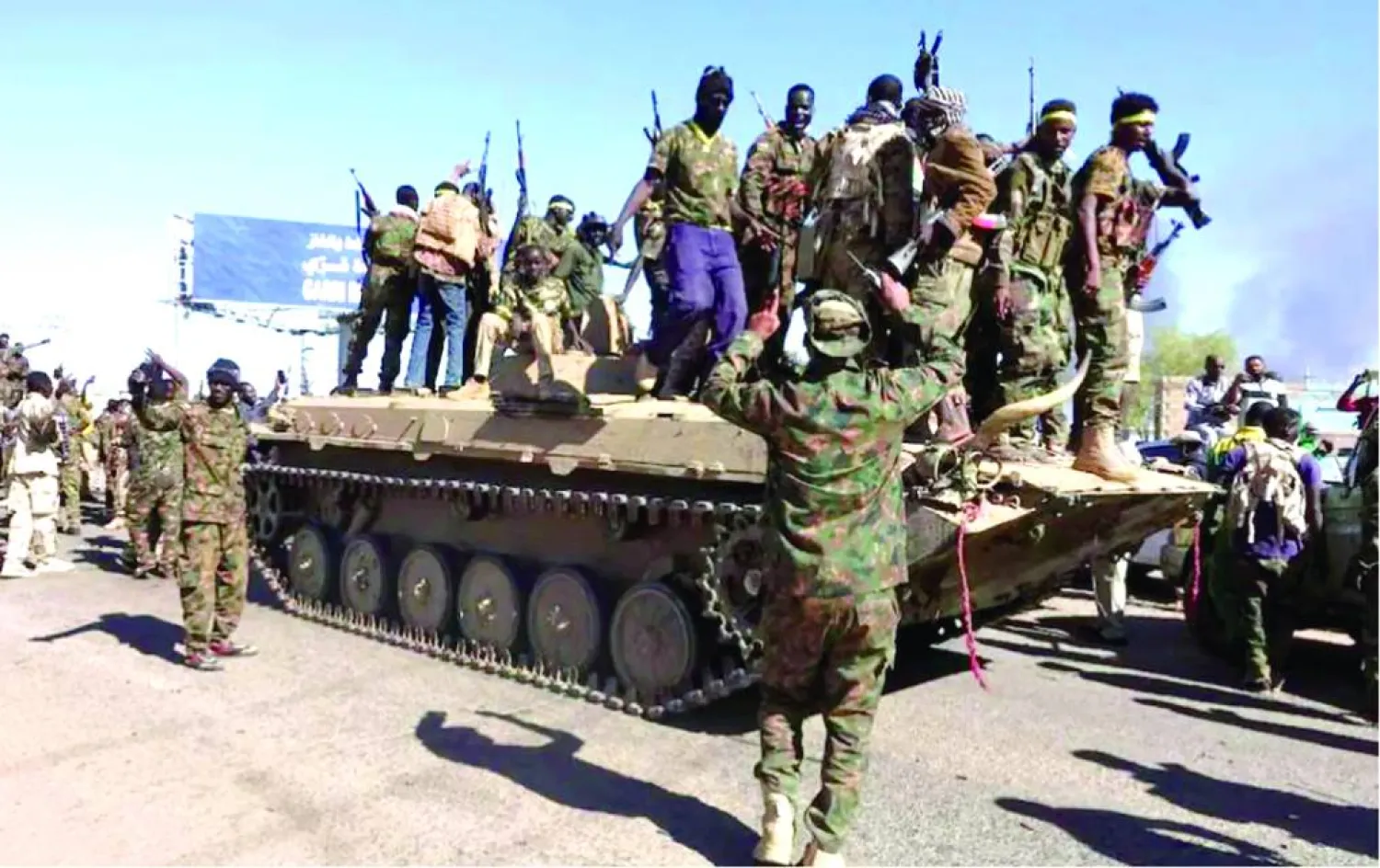
Sudanese Army elements celebrate after seizing control of an area in northern Khartoum Bahri on January 25, 2025 (Reuters)
TT

UN: Sudan Drone Strikes Killed at Least 880 Civilians between January and April

Sudanese Army elements celebrate after seizing control of an area in northern Khartoum Bahri on January 25, 2025 (Reuters)

At least 880 civilians were killed in drone strikes in Sudan between January and April this year, the UN said Monday, warning such strikes were pushing the conflict towards a "new, even deadlier phase".

Drone attacks by both Sudan's army and paramilitary group Rapid Support Forces (RSF), which have been at war since April 2023, have intensified across the country in recent months, reported AFP.

The United Nations rights office said that its Sudan team had determined that "drone strikes accounted for at least 880 civilian deaths -- more than 80 percent of all conflict-related civilian deaths -- between January and April this year".

"Armed drones have now become by far and away the leading cause of civilian deaths," UN rights chief Volker Turk said in the statement.

A growing use of drones allows fighting to continue "unabated" in the rainy season, which in the past has seen a lull, he said.

"An intensification of hostilities in the coming weeks... risks hostilities expanding even further to central and eastern states, with lethal consequences for civilians across enormous areas," he said.

More than three years of civil war in Sudan have already killed tens of thousands, displaced over 11 million and thrust several areas into famine.

But now, Turk warned that "unless action is taken without delay, this conflict is on the cusp of entering yet another new, even deadlier phase".

Most of the civilian deaths attributed to drone strikes in the first three months of the year were recorded in the Kordofan region and Darfur.

Those strikes have continued, with most recently on May 8 drones striking Al Quoz in South Kordofan and near El-Obeid in North Kordofan, reportedly killing 26 civilians and injuring others, the rights office said.

It said belligerents had used drones to repeatedly strike civilian objects and infrastructure, "diminishing access to sufficient food, clean water and health care".

Markets have been repeatedly targeted, with at least 28 such attacks resulting in civilian casualties in the first four months of the year.

Health facilities have been hit at least 12 times, it added.

Now, the rights office said, drone strikes by the RSF and the Sudanese army were increasingly spreading beyond Kordofan and Darfur, to Blue Nile, White Nile and Khartoum.

Turk warned that heightened violence would disrupt provision of critical humanitarian assistance. 

"Much of the country, including Kordofan, is now facing an increased risk of famine and acute food insecurity," he said, adding that the situation was being exacerbated by fertilizer shortages linked to the Middle East war. 


Israel Says One Soldier Killed in Lebanon after Vehicle Overturned

Israeli soldiers carrying the coffin of a soldier killed in southern Lebanon during his funeral in Kfar Saba, Israel, on Sunday (dpa)
TT

Israel Says One Soldier Killed in Lebanon after Vehicle Overturned

Israeli soldiers carrying the coffin of a soldier killed in southern Lebanon during his funeral in Kfar Saba, Israel, on Sunday (dpa)

An Israeli military official ‌said ‌on Thursday a ‌soldier ⁠was killed in ⁠southern Lebanon after a vehicle ⁠had ‌overturned.

The official ‌described the ‌incident ‌as an accident, Reuters said.

Earlier, the ‌military said a soldier ⁠had ⁠died during "operational activity".

The pace of violence in Lebanon has eased recently, but Israeli Defense Minister Israel Katz stressed that his forces would remain in southern Lebanon.

“We have stated that, in any case, we will not withdraw, and up to this moment — and this is a diplomatic achievement — there has been no US request for Israel to withdraw from Lebanon,” Katz said in an interview during a conference of local leaders in Tel Aviv.

Israel and Lebanon are currently holding US-mediated talks in Washington aimed at reaching a diplomatic solution to the conflict, including the disarmament of Hezbollah and the withdrawal of Israeli forces.

Since April, Lebanon has engaged in direct talks with Israel under US pressure, with the aim of ending the latest war between Hezbollah and Israel.

Lebanese authorities have stressed their determination to keep Lebanon’s file separate from negotiations involving Iran, Hezbollah’s main backer.

On Wednesday, Lebanese President Joseph Aoun stressed that “the negotiations in Washington are separate from the meetings held in Switzerland last week between the United States and Iran, which were followed by Qatar and Pakistan.”


Iraqi Judiciary Applies ‘Terrorism Provisions’ to Drones

People watch as smoke billows from an oil warehouse in the Kani Qirzhala area on the outskirts of Erbil, the capital of Iraq's autonomous Kurdistan region, following a suspected drone strike, on April 1, 2026. (Photo by AFP)
TT

Iraqi Judiciary Applies ‘Terrorism Provisions’ to Drones

People watch as smoke billows from an oil warehouse in the Kani Qirzhala area on the outskirts of Erbil, the capital of Iraq's autonomous Kurdistan region, following a suspected drone strike, on April 1, 2026. (Photo by AFP)

Iraq’s Supreme Judicial Council has instructed the country’s courts to apply the provisions of the Anti-Terrorism Law to anyone who manufactures, uses, or possesses drones for unlawful purposes, while a security official said the directive is aimed specifically at curbing the activities of armed factions.

In a brief statement on Wednesday, the Council said it had directed the competent courts to enforce Anti-Terrorism Law No. 13 of 2005 against “anyone who manufactures, uses, or possesses drones employed for purposes contrary to the law.”

The law is Iraq’s principal legal framework for prosecuting terrorist crimes that threaten national unity and public safety, carrying penalties of up to the death sentence for perpetrators, instigators, planners, and financiers.

The directive comes amid months of government efforts to bring all weapons under state control and dismantle armed groups operating outside official security institutions.

An Interior Ministry security official told Asharq Al-Awsat that the judicial directive is “exclusively linked to armed factions” and is intended to increase pressure on them. He said the measure places drone-related offenses under terrorism statutes even though Iraqi law permits the use of officially licensed drones, indicating that it is directed at attacks carried out - or potentially to be carried out - by armed factions.

Speaking on condition of anonymity, the official described drones as one of Iraq’s most serious security challenges because they are easy to transport and operate, while the country lacks effective counter-drone capabilities, a weakness exposed during recent attacks.

Since the outbreak of the US-Israeli war against Iran on February 28, armed factions have carried out hundreds of attacks, many involving drones, against civilian and military targets.

Kurdish sources say cities in the Kurdistan Region alone have come under more than 800 attacks by Iran-aligned factions, ostensibly because of the presence of US forces and Iranian Kurdish opposition groups.

The factions have also launched dozens of drone attacks against vital assets in several Gulf states and Jordan, prompting those countries to issue a joint statement on March 25 condemning the attacks and urging Baghdad to take immediate action to halt operations by Iran-backed armed groups.

Iraq has long permitted drones for civilian, commercial, and official security purposes, provided operators obtain prior approval from the Iraqi Civil Aviation Authority and the relevant security agencies.

In early February, the authority introduced new regulations governing licensing, operating requirements, legal obligations, and approved uses, including media production, filmmaking, advertising, tourism, protection of oil and energy pipelines and public utilities, agriculture, environmental monitoring, border security, and official Interior Ministry thermal-drone operations against smugglers.

Drone manufacturing is also “common in Iraq,” according to Ahmed al-Janabi, a software and telecommunications engineer, though primarily for civilian and service-related uses. He said drone components are widely available on Iraqi markets and enter the country through multiple routes, including smuggling networks from Iran via Sulaymaniyah.

Specialized import offices also supply drones, often disguising component shipments. While authorities routinely confiscate unauthorized drones and impose relatively light prison sentences on violators, al-Janabi said the key change is that such offenses are now prosecuted under the Anti-Terrorism Law.


Beirut Transfers 128 Syrian Convicts Home

Lebanese army soldiers secure the area at the entrance of Zawtar al-Gharbiyah village, southern Lebanon, 23 June 2026, amid a ceasefire between Israel and Hezbollah. EPA/WAEL HAMZEH
TT

Beirut Transfers 128 Syrian Convicts Home

Lebanese army soldiers secure the area at the entrance of Zawtar al-Gharbiyah village, southern Lebanon, 23 June 2026, amid a ceasefire between Israel and Hezbollah. EPA/WAEL HAMZEH

Lebanon has transferred 128 Syrian convicts to their home country, a Lebanese security source told AFP on Wednesday, the second batch of handovers under an agreement the two sides signed earlier this year.

Overcrowded Lebanese prisons host around 2,000 Syrian nationals held on various charges.

Many are still awaiting trial, while hundreds have been brought before military courts on charges of "terrorism" or related offences, including attacks on Lebanese forces.

Others are in custody for alleged membership in militant or armed groups that were opposed to now-ousted Syrian president Bashar al-Assad, who was supported by Lebanon's Hezbollah during the Syrian civil war.

The security source, who requested anonymity, said that Beirut "handed over the second batch of Syrian convicts in Lebanon to Damascus, numbering 128 convicts" on Wednesday.

The transfer follows the handover of more than 130 Syrian detainees in March, under an agreement signed between the two countries the previous month, which will cover almost 300 convicts who have served 10 years or more in Lebanese prisons.

Under the agreement, they will be required to complete the remainder of their sentences in Syria.

At least 260 convicts have now been sent to Syria's Adra prison out of 356 in Lebanon's Roumieh, the source added.

The issue of the detainees had been a sticking point in Beirut-Damascus relations following Assad's overthrow in December 2024.

It was discussed by Lebanese Prime Minister Nawaf Salam during his visit to Damascus in May, where he met Syrian President Ahmed al-Sharaa.

Over the past year, both sides have repeatedly expressed their determination to open a new chapter in their relations.