
Full Story of Al-Saadi’s Arrest; an Iraqi who Coordinated Attacks Across 3 Continents

A photo released by the US Justice Department shows Mohammed Baqer al-Saadi after his arrest (US Justice Department)
TT

Full Story of Al-Saadi’s Arrest; an Iraqi who Coordinated Attacks Across 3 Continents

A photo released by the US Justice Department shows Mohammed Baqer al-Saadi after his arrest (US Justice Department)

The arrest by the US authorities of Kataib Hezbollah figure Mohammed Baqer al-Saadi has drawn renewed attention to the faction’s role in cross-border operations. Many viewed it as the start of tougher US measures against individuals and figures linked to the Quds Force, the regional arm of Iran’s Revolutionary Guards, and what is known as the “Axis of Resistance.”

Because of the highly secretive environment in which Kataib Hezbollah has operated since it was founded by Abu Mahdi al-Muhandis - the former deputy head of Iraq’s Popular Mobilization Forces, who was killed in a US strike in 2020 - soon after the 2003 overthrow of late president Saddam Hussein, ambiguity and scarce information surround most of the group’s senior figures.

That secrecy is reinforced by their reluctance to appear in public, despite the faction’s local influence as one of the groups closest and most closely linked to the Revolutionary Guards.

Link to the Quds Force

Information obtained by Asharq Al-Awsat from factional sources indicates that al-Saadi had close ties to the Quds Force intelligence body. It also suggests he had close ties to a member of that Iranian body who was killed during the 11-day war between the United States and Iran, although some sources said he “liked to claim such ties.”

A review of his photo archive on X, where al-Saadi has been active since 2014, shows that he often appeared alongside Revolutionary Guards commanders. In one video clip, he appeared to exchange words and smiles with the late Iranian President Ebrahim Raisi.

According to the factional sources, al-Saadi “stepped up his visits to Lebanon after the killing of Lebanese Hezbollah leader Hassan Nasrallah in late September 2024, and was also active in moving between Lebanon and Syria during Bashar al-Assad’s rule.”

Sources said al-Saadi’s possession of a “service passport,” usually granted to senior military figures and official personnel, “gave him flexibility to move and travel to other countries.”

From this perspective, the sources explained his latest trip to Türkiye, where he was reportedly caught and arrested. It was also rumored that he was preparing to travel to a European country.

Al-Saadi appeared in more than one circulated photograph with former Iranian Quds Force commander Qassem Soleimani and other figures linked to armed factions and the Revolutionary Guards. Some sources said he preferred to add “Soleimani” to his name.
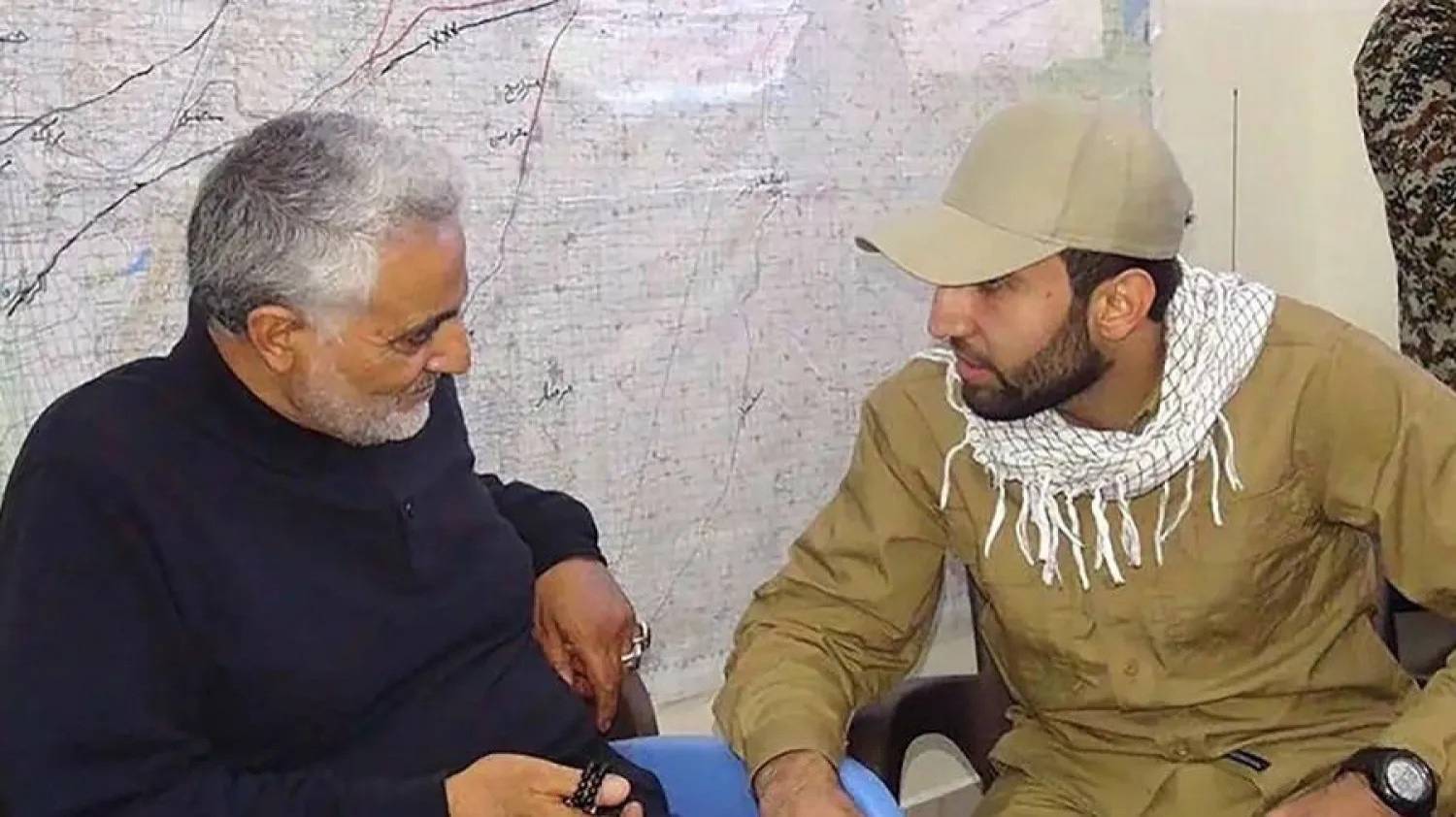
Mohammed Baqer al-Saadi with Qassem Soleimani (US Justice Department)

How was al-Saadi arrested?

According to most Western sources that reported al-Saadi’s arrest in Türkiye and transfer to the United States, he is accused of coordinating and planning at least 18 terrorist attacks in Europe targeting Americans and Jews, all in the name of ending the war in Iran.

After his arrest, al-Saadi appeared in a video message to his mother on a mobile phone screen, urging her to “be patient” and saying they “will not be broken.”

Western sources say he “directed and urged” others to attack US and Israeli interests in retaliation for the war Washington and Tel Aviv are waging against Tehran.

Al-Saadi is also accused of coordinating two additional attacks in Canada, directing others, and attempting to coordinate terrorist attacks inside the United States, including against a synagogue in New York City, according to prosecutors.

The US lists Kataib Hezbollah as a foreign terrorist organization and says al-Saadi has been involved with the group since 2017. Some sources say his father is linked to the Badr Organization, led by Hadi al-Amiri.

Last month, Washington offered a $10 million reward for information on Kataib Hezbollah leader Abu Hussein al-Hamidawi.

CNN had reported a link between Kataib Hezbollah and the group that claimed responsibility for a series of arson attacks targeting Jewish sites across Europe, including synagogues, schools and ambulances.

Al-Saadi faces several charges, including conspiracy to provide material support to a foreign terrorist organization, conspiracy to provide material support for terrorist acts, and conspiracy to bomb a public place.

He appeared in court on Friday in the Southern District of New York, where a judge ordered him detained without bail. He did not enter a plea during the hearing.

The potential repercussions of al-Saadi’s arrest for Kataib Hezbollah remain unclear, as does the nature of the information US agencies may obtain from him and whether it could expose the armed group, which is now at the center of US scrutiny.

According to al-Saadi’s defense lawyer, Andrew Dalack, who spoke to Western media, he was arrested in Türkiye by Turkish authorities, most likely at Washington’s request, and handed over to US authorities without being given a chance to challenge the legality of his detention or his transfer to the United States.

Al-Saadi faces numerous allegations and accusations, including an attempt to arrange the bombing of a prominent synagogue in New York City, as well as targeting two other sites in the United States, Jewish centers in Los Angeles and Scottsdale, Arizona.

Other allegations indicate that al-Saadi agreed to pay $10,000 to carry out the attack, but insisted that it be filmed. Investigators say he insisted the attack be carried out on April 6, and when it did not happen, he sent a text message to the undercover agent the following morning asking why.

Al-Saadi’s record on X

Al-Saadi appears to have been active on X for years, where he often sharply criticized the government of Iraqi Prime Minister Mohammed Shia al-Sudani, which filed a “defamation” lawsuit against him in 2024.

In July 2020, al-Saadi posted on his account a picture of the US Capitol destroyed, alongside images of slain commanders such as Soleimani, with the phrase: “Our revenge for the martyred commanders continues. No negotiations with the occupier.”

He also uses the platform to openly declare support for Iran and the “Axis of Resistance,” and to attack their opponents.

In 2023, al-Saadi posted a screenshot from a maps application of Indian Creek Island in the US state of Florida, a small fortified residential island in Miami-Dade County known in the media as the billionaires’ bunker, where a number of businesspeople, celebrities and politicians live.

Prominent residents include Jared Kushner and his wife Ivanka Trump.


Sudan War: Is A Settlement Drawing Closer?

 A child sits on a hill overlooking a refugee camp near Sudan’s border with Chad in November 2023 (Reuters)
A child sits on a hill overlooking a refugee camp near Sudan’s border with Chad in November 2023 (Reuters)
TT

Sudan War: Is A Settlement Drawing Closer?

 A child sits on a hill overlooking a refugee camp near Sudan’s border with Chad in November 2023 (Reuters)
A child sits on a hill overlooking a refugee camp near Sudan’s border with Chad in November 2023 (Reuters)

After more than three years of war, Sudan is facing a different political and humanitarian moment. The fighting has not stopped, and neither side has won. But the cost of prolonging the war now appears to have outgrown what Sudan, its neighbors, and the wider international community can bear.

As international pressure builds, regional diplomacy gathers pace and the humanitarian collapse deepens, one question is echoing through political and media circles: Is Sudan’s war nearing a settlement, or is the country slipping into another long conflict like those that scarred its past?

Sudan’s history offers little comfort. Its major wars have often lasted decades. The first civil war in the South ran for 17 years, from 1955 to 1972. The second lasted 22 years, from 1983 to 2005. The Darfur war continued for about 17 years, from 2003 to 2020. All ended only after a return to dialogue, understanding, and peace. That history leaves many Sudanese fearing that the current conflict could become a new chapter in the country’s long, open-ended wars.

But others argue this war is different.

Since fighting erupted between the army and the Rapid Support Forces in April 2023, both sides have bet on a swift military victory. As the war enters its fourth year, the limits of that bet are clear. Battles have spread from Khartoum to Port Sudan, Darfur, Kordofan, and Blue Nile.

They have not delivered a decisive victory for either side. Instead, they have plunged Sudan into one of the world’s worst humanitarian crises.

As the battlefield grows more complex, the international community increasingly sees Sudan’s war as a threat beyond Sudan itself. Rising tensions in the Red Sea, fears that chaos could spread through the Horn of Africa, and growing displacement and illegal migration have pushed Western and regional capitals to intensify pressure for a political settlement.

In that context, the recent Berlin conference marked an important milestone. Dozens of countries and international organizations agreed that Sudan’s crisis “cannot be resolved militarily” and voiced clear support for a comprehensive negotiating track.

The United States and the European Union have also stepped up diplomatic efforts to push for a ceasefire, amid growing fears that instability could spread across the region.

One of the clearest signs of this shift came from Massad Boulos, senior adviser to the US president for Arab and African affairs. He said there was “no military solution” to the conflict in Sudan and pointed to an “international consensus” on pushing the parties toward negotiations and a ceasefire.

He also cited US efforts to support humanitarian truces that could pave the way for a permanent halt to the fighting.

The shift does not mean a settlement is imminent. But it does show a growing conviction among influential powers that continued war could lead to the full collapse of the Sudanese state, a scenario feared by many regional and international actors, especially Sudan’s neighbors.

Recent months have also brought more active regional diplomacy than in the war’s early years, when the conflict was often described as the “forgotten war.”

Coordination has grown among the African Union, the Intergovernmental Authority on Development and the Arab League, alongside Gulf, Egyptian and African moves aimed at preventing Sudan’s disintegration or its slide into an open arena for regional conflict.

Those actors know the war will not threaten Sudan alone. It could directly affect Red Sea security, international trade and the stability of neighboring states. That makes a political settlement a regional necessity, not only a Sudanese demand.

Inside Sudan, the army still speaks the language of continued military operations. Yet it has left the door ajar to political solutions. In remarks carrying clear political weight, Burhan recently said that “anyone who reaches conviction and lays down arms, the homeland’s embrace is open to him.”

Observers saw the message as an attempt to open the way for possible settlements, or to encourage defections from the Rapid Support Forces by offering implicit guarantees to those ready to return and join new arrangements.

Still, Burhan continues to say the army is “moving ahead with restoring the state and its institutions.”

That reflects the military establishment’s firm political and military ceiling in any future negotiations, and shows that the path to a comprehensive settlement remains highly complicated, despite mounting pressure to end the war.

Humanitarian pressure

The strongest pressure on all sides may no longer be military or political. It is humanitarian.

The United Nations and international food agencies have warned that Sudan is facing one of the world’s largest hunger crises. According to the Integrated Food Security Phase Classification, or IPC, report issued in May 2026, about 20 million Sudanese are suffering acute food insecurity, while tens of thousands face the risk of famine.

Several areas could face a humanitarian catastrophe if the war continues.

World Food Program Executive Director Cindy McCain said hunger and malnutrition threaten the lives of millions, urging swift action to stop the crisis from becoming a “major tragedy.”

UNICEF Executive Director Catherine Russell said the humanitarian situation had reached a tragic stage, with children arriving at health facilities “too weak to cry.”

Inside Sudanese circles, calls to end the war are widening, even as divisions persist over what a settlement should look like. Some analysts close to the army say falling public support for continued war does not mean accepting the Rapid Support Forces as a force parallel to the state. Any future settlement, they argue, must be tied to rebuilding a unified military institution.

Observers say rising international pressure, military exhaustion and humanitarian deterioration could push the warring parties toward a political settlement in the coming phase.

Sharif Mohamed Osman, political secretary of the Sudanese Congress Party, said there was “no military solution and no peace without genuine civilian leadership,” arguing that ending the war requires a comprehensive settlement that rebuilds the state and its institutions.

Other observers say Sudan now stands at a delicate balance point between peace and continued war. Political analyst Mohamed Latif says international conditions, external pressure, and civilian suffering make peace “closer than ever.”

But he also says new fighting fronts and regional complexities continue to prolong the conflict, leaving all options open.

From a security and strategic perspective, military expert Brig. Gen. Dr. Jamal al-Shaheed says Sudan is at an extremely dangerous crossroads. One path leads to a political settlement forced by military exhaustion and international pressure.

The other leads to an “extended war,” where neither side can achieve total victory while state institutions slowly erode under military, economic and humanitarian attrition.

Al-Shaheed warns that time is no longer on Sudan’s side, and that every additional day of war doubles the future cost of peace.

Despite all these signals, the biggest questions remain unanswered: Has the war reached the point of exhaustion that usually precedes settlements? Or is Sudan still at the start of a long conflict whose end has yet to take shape?


US Sanctions Target Lebanon’s 'Deep State' Before Washington Security Meeting

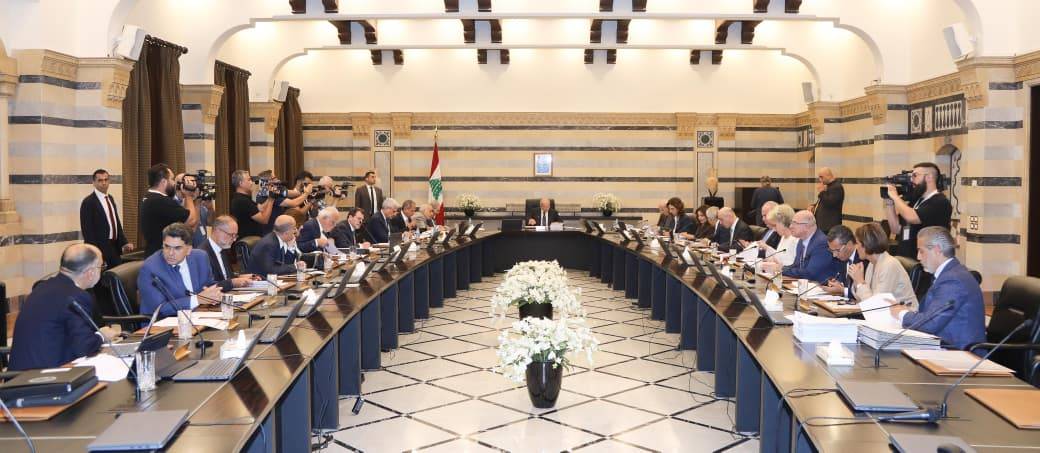
The Lebanese government meets under President Joseph Aoun (Lebanese Presidency)
TT

US Sanctions Target Lebanon’s 'Deep State' Before Washington Security Meeting

The Lebanese government meets under President Joseph Aoun (Lebanese Presidency)

The latest US Treasury sanctions on Lebanese and Iranian figures linked to Hezbollah looked less like another routine political measure and more like a direct warning to the Lebanese state and its security and military institutions.

The sanctions came days before a Lebanese US security meeting in Washington on May 29, expected to address the future of security in southern Lebanon and the state’s role in controlling illegal weapons.

The Treasury measures marked a notable shift. For the first time, they targeted serving officers in official security institutions, signaling that Washington has moved beyond pressuring Hezbollah and its political allies to warning Lebanese state bodies themselves against leniency or obstruction in implementing government and security decisions.

Lebanon has not issued an official response. Ministerial sources told Asharq Al-Awsat that the timing of the sanctions “raises questions, especially since there was no atmosphere suggesting such a step, but the US Treasury has its own considerations.” They said the measures “could have a negative impact on the course of negotiations.”

The US message, decisions are not enough; implementation is required

The sanctions were issued shortly before the Lebanese-US security meeting in Washington, as international pressure mounts on Lebanon to meet its commitments to restrict weapons to the state.

By targeting officers in the army and General Security, Washington appeared to be saying that the problem is no longer limited to whether the Lebanese government has made a political decision. The issue is whether executive and security institutions can carry it out.

Dr. Sami Nader, head of the Levant Institute for Strategic Affairs, said the sanctions target what he called the “deep state” inside Lebanese institutions. For Washington, he said, the problem is no longer only the existence of a political decision, but the lack of actual implementation inside administrations and security and military institutions.

Nader told Asharq Al-Awsat that the United States is signaling that the Lebanese government has, at certain stages, taken decisions related to its security commitments and Hezbollah’s weapons. The Lebanese army, he said, has also drawn up plans and implementation mechanisms.

But according to the US reading, those decisions face obstruction in parts of the state, where some actors work to delay or block implementation, allowing Hezbollah’s influence in official institutions to continue.

Nader said the importance of the sanctions lies in the fact that they do not only target Hezbollah’s political environment. They move toward a direct accusation that the party has influence inside security and military chains of command.

Washington, he said, is effectively saying the problem is no longer inside the Cabinet, where decisions are made, but in what happens after those decisions are issued and passed to the executive and security agencies tasked with enforcing them.

Targeting official officers for the first time carries major political and security significance, Nader said, because it reflects a US conviction that certain figures within certain institutions are obstructing missions aimed at controlling the security situation or implementing government decisions.

The sanctions, therefore, form part of an escalating US track aimed at increasing pressure on official Lebanon before the Washington meeting, “to free the implementation mechanism,” Nader said, and to push the Lebanese state to make clearer commitments on applying decisions and dealing with Hezbollah’s weapons.

Details of the sanctions, officers, lawmakers and the Iranian ambassador

The sanctions covered Iran’s ambassador to Beirut, Mohammad Reza Sheibani, Hezbollah lawmakers Hassan Fadlallah, Ibrahim al-Moussawi and Hussein al-Hajj Hassan, and former minister Mohammad Fneish.

They also targeted two prominent Amal Movement figures, Ahmad Baalbaki and Ali Safawi, as well as Brigadier General Khattar Nassereddine, head of the National Security Department at the General Directorate of General Security, and Colonel Samer Hamadeh, head of the southern suburbs branch at the Lebanese army’s Intelligence Directorate.

The US Treasury Department said those targeted are “embedded in the Lebanese parliament, military, and security agencies,” accusing them of working to preserve Hezbollah’s influence inside state institutions and obstructing the path to peace.

US Treasury Secretary Scott Bessent said Hezbollah is a terrorist organization and must be fully disarmed. He said Washington would continue targeting officials who enable Hezbollah to continue its violent campaign and obstruct lasting peace.

Alongside the sanctions, the US State Department announced a reward of up to $10 million for information leading to the disruption of Hezbollah’s financial mechanisms, another sign that Washington is tightening political, financial and security pressure in the next phase.

The army and General Security respond, loyalty is to the state

The Lebanese army and General Security moved quickly to reject the US accusations, issuing statements that stressed: “Loyalty is to the institution and the homeland.”

The army command said all officers and soldiers “perform their national duties with full professionalism and responsibility.” It said their loyalty is “only to the military institution and the homeland,” and that they carry out their duties away from any pressure or other considerations.

The General Directorate of General Security also voiced full confidence in its officers and personnel, stressing their commitment to laws and regulations and to working “away from any external dictates or pressure.” It said any proven violation would be subject to legal and judicial accountability.

Hezbollah and Amal, sanctions are “intimidation” and pressure on the state

Hezbollah described the sanctions as “an American attempt to intimidate the Lebanese people and an attack on the sovereignty of the state and its security institutions.”

The party said the sanctions “will not affect its choices,” and called the targeting of official officers “a blatant attempt to subject security institutions to the conditions of American guardianship.”

The Amal Movement said the sanctions against figures affiliated with it were “unacceptable and unjustified,” describing them as an attack on the movement’s political role and its position inside the state.

Hezbollah’s parliamentary bloc also condemned the sanctions on lawmakers and officers, calling them direct interference in Lebanese affairs and an attempt to pressure official state institutions into complying with US demands.


Lebanon Not Bound by US Sanctions, No Action Against Officers Yet

A woman holds pictures of Lebanese parliament Speaker Nabih Berri (R) and Hezbollah's leader Naim Qassem (L) while residents of the devastated southern Lebanese border villages protest against the destruction of their villages and being prevented from returning by order of the Israeli army, at Martyrs’ Square in central Beirut on April 30, 2026. (AFP)
TT

Lebanon Not Bound by US Sanctions, No Action Against Officers Yet

A woman holds pictures of Lebanese parliament Speaker Nabih Berri (R) and Hezbollah's leader Naim Qassem (L) while residents of the devastated southern Lebanese border villages protest against the destruction of their villages and being prevented from returning by order of the Israeli army, at Martyrs’ Square in central Beirut on April 30, 2026. (AFP)

Attention in Lebanon is turning to how the state will respond to unprecedented US sanctions that targeted two officers from the army and General Security, along with figures, including MPs, from Hezbollah and its ally the Amal Movement that is headed by parliament Speaker Nabih Berri.

Although Lebanon is not legally bound to comply with the decision, and no direct measures have so far been taken against the two targeted officers, Interior Minister Ahmad al-Hajjar said he had asked General Security Director General Maj. Gen. Hassan Choucair to investigate any violations, if any exist, and take the necessary measures.

No measures yet

Security sources said what was surprising was that the army and General Security had not been notified of the sanctions through official and legal channels, as both commands learned of the measures through statements and the media.

The sources asked: “As long as Col. Samir Hamadeh is the head of the Beirut southern suburbs branch at the Lebanese army’s Intelligence Directorate, who is he supposed to coordinate with on the ground in the southern suburbs?”

They explained that intelligence coordinates with other parties in other areas, while also dismissing as “misguided” claims that significant intelligence was being shared with Hezbollah.

“So far, no measures have been taken against them, and they are still carrying out their duties,” they added.

The US Treasury accuses the two officers of sharing significant intelligence with Hezbollah during the ongoing conflict over the past year.

'Political message’

Legal and constitutional expert Said Malek said the sanctions against officers were “a political message from the US Treasury Department that dealing with Hezbollah, which is internationally banned and whose military wing in Lebanon has effectively been disbanded, has become prohibited and carries consequences.”

He told Asharq Al-Awsat that “the Lebanese state, through the relevant ministries and administrations, is not obliged to comply with the decision, even if it could obstruct the payment of salaries to those targeted, their transactions, or their cooperation with local and foreign agencies.”

“The government may understand the adoption of such decisions, but they are not binding on the state. In other words, nothing requires that these individuals be held accountable or punished, as they are subject to Lebanese laws, not decisions taken by a Western administration,” Malek explained.

Who was targeted?

Among the nine figures targeted by the sanctions were four Hezbollah lawmakers:

  • MP Mohammad Fneish, whom the US Treasury said heads Hezbollah’s Executive Council and is responsible for reorganizing the party’s administrative and institutional structure to preserve its armed presence in Lebanon.
  • MP Hassan Fadlallah, whom the Treasury said helped establish Al-Nour Radio, which is designated by the United States, and served as a senior director at Al-Manar television, also designated by Washington.
  • MP Ibrahim al-Moussawi, a longtime Hezbollah official who currently heads the party’s media committee.
  • MP Hussein al-Hajj Hassan, whom the Treasury described as one of the most prominent figures opposing Hezbollah's disarmament.

In a clear message to the Amal Movement, the sanctions also included Ahmad Asaad Baalbaki and Ali Ahmad Safawi. The Treasury statement said they were security officials in Amal.

“Baalbaki serves as Amal’s security director and coordinates shows of force with Hezbollah’s leadership to intimidate political opponents in Lebanon,” said the Treasury.

“Safawi is the commander of the Amal militia in southern Lebanon. Acting as Baalbaki’s subordinate, Safawi coordinated with and took direction from Hizballah on attacks against Israel as well as leading Amal militia forces in joint Hizballah-Amal military operations against Israel.”

Notably, the sanctions also targeted Mohammad Reza Sheibani, Iran’s ambassador-designate to Lebanon, whom Lebanon’s Foreign Ministry declared persona non grata after withdrawing its approval of his accreditation and asking him to leave Beirut. Sheibani has defied the order and remained in Lebanon.

The US statement noted “Iran’s violation of diplomatic norms, as well as the practices routinely used by the ambassador in communication between the two states, was cited as the reason for Sheibani’s expulsion.”