

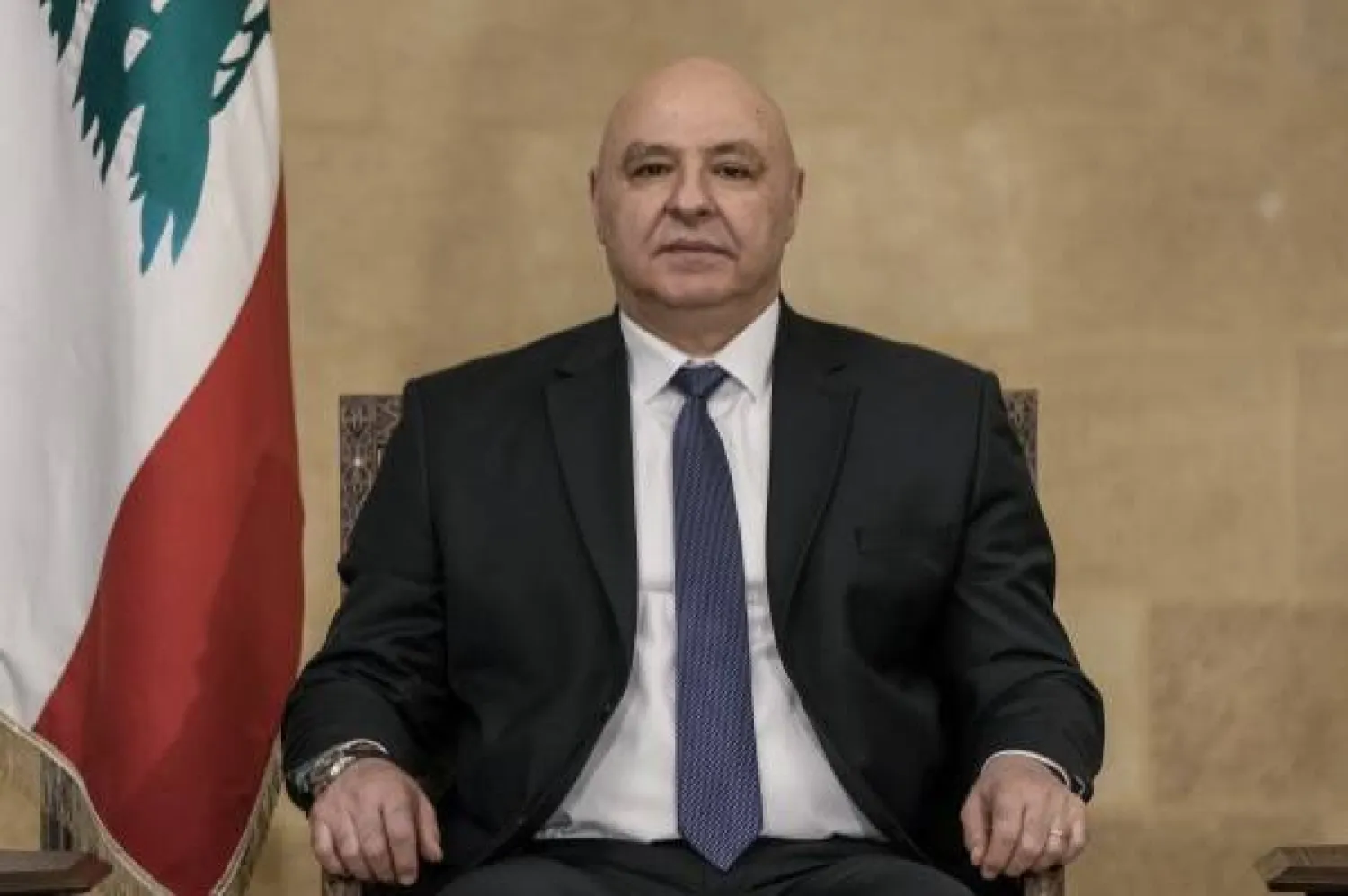

Lebanon President Says He Will Do the 'Impossible' to Stop War with Israel

Lebanese President Joseph Aoun (AP - file photo)
TT

Lebanon President Says He Will Do the 'Impossible' to Stop War with Israel

Lebanese President Joseph Aoun (AP - file photo)

Lebanese President Joseph Aoun said Monday that he would do the "impossible" in order to stop the war with Israel, after a ceasefire and direct talks between the countries failed to end the fighting.

Aoun's comments came as the Israeli army carried out a series of strikes in south Lebanon, while Hezbollah said it had struck a military target in northern Israel.

Since the start of the ceasefire on April 17, Israel has continued to launch strikes, carry out demolitions and issue evacuation orders in south Lebanon, saying it is targeting Iran-backed armed group Hezbollah.

Hezbollah has also maintained its operations against Israeli forces in south Lebanon and northern Israel.

"The framework that Lebanon has set for the negotiations consists of an Israeli withdrawal, a ceasefire, the deployment of the army along the border, the return of the displaced, and economic aid," Aoun said in a statement Monday.

"My duty, based on my position and my responsibility, is to do the impossible, and to choose what is least costly, in order to stop the war against Lebanon and its people," he added.

Last week the truce was extended for 45 days following a third round of talks between Lebanese and Israeli representatives in Washington, discussions which Hezbollah is opposed to.

But the ceasefire has failed to stop the violence, with Hezbollah on Monday saying it had fired a drone at a military target in northern Israel.

The target was "an Iron Dome platform belonging to the Israeli enemy army" based in a military encampment in northern Israel, Hezbollah said, referring to Israel's air defencs system.

The attack was a response to Israeli "violations" of the ceasefire, it added.

Lebanon's state-run National News Agency reported a series of Israeli strikes across the south.

The Israeli military also issued an evacuation warning for three southern Lebanese towns.

The attacks came a day after Israeli strikes killed seven people in Lebanon, including a member of the group Palestinian Islamic Jihad in the country's northeast, far from the Israel-Lebanon border.

Israeli soldiers have invaded and occupied a swathe of south Lebanon, operating inside an Israeli-declared "yellow line" that runs around 10 kilometres (six miles) north of the border. They have carried out large-scale demolitions in the area.

Israeli Prime Minister Benjamin Netanyahu said on Sunday his country was "facing the challenge of neutralising FPV (first-person view) drones", as Hezbollah has increasingly made use of the tech to strike Israeli forces.

Israeli attacks have killed more than 2,900 people in Lebanon since the start of the war, including more than 400 since the ceasefire took effect on April 17, according to Lebanese authorities.



Syria Says Killed Leader of Armed Cell in Tartus

Members of Syria's Internal Security Forces. (SANA)
TT

Syria Says Killed Leader of Armed Cell in Tartus

Members of Syria's Internal Security Forces. (SANA)

Syrian authorities said on Tuesday that they had killed the leader of an armed cell linked to the former government and wounded another member during an operation in the countryside of Tartus.

In a statement, the Internal Security Forces said they had carried out a "carefully planned ambush" after monitoring the four-member group, which was allegedly planning to carry out "terrorist attacks and armed robberies".

The forces said the ensuing clash resulted in the "neutralization of the cell's leader" and the wounding of another member.

The forces confirmed that specialized units are continuing intensive sweep and pursuit operations across the surrounding rural areas to locate and apprehend the remaining fleeing members of the cell.

State security authorities reiterated their commitment to maintaining public order, eliminating remnants of illegal armed groups, and safeguarding civilian lives and property across all Syrian provinces.


Airstrikes, Artillery Fire Wear Down Houthis as Yemeni Army Seizes Strategic Positions

Yemeni army fighters on the Jabal Han front near the city of Taiz. (AFP)
TT

Airstrikes, Artillery Fire Wear Down Houthis as Yemeni Army Seizes Strategic Positions

Yemeni army fighters on the Jabal Han front near the city of Taiz. (AFP)

Yemeni government forces pressed ahead with Operation Dawn of Yemen on Tuesday, stepping up airstrikes, drone attacks and artillery fire against Houthi positions and reinforcements across several fronts, as troops seized more ground in Al-Jawf and fighting continued in Taiz, Dhale and Marib.

Government forces struck Houthi military vehicles and fighter concentrations on several fronts in Al-Jawf.

Combat units from the Emergency Forces and Nation's Shield forces also captured new strategic positions and commanding heights in the province, military spokesman Majed al-Nuzaili said.

The gains were part of an operation aimed at expanding government control in Al-Jawf, he added.

Houthi attacks repelled in Taiz, Dhale

Government forces in Dhale repelled a Houthi assault on their positions in the Hajar sector in the province's northwest, clashing with attackers below Jabal al-Hasha.

A military source said government troops beat back the assault, inflicting casualties and equipment losses and forcing the Houthi militants to retreat.

In Marib, artillery units shelled Houthi positions and vehicles on the northern front. Emergency Forces also struck Houthi fighters and gatherings, killing 16 and wounding others, according to military sources.

In the besieged city of Taiz, government troops and Popular Resistance fighters thwarted Houthi attacks on the Al-Aqroud and Al-Shaqab fronts southeast of the city on Monday.

A military source said Houthi fighters attempted to advance on army positions in Kahlan, but were repelled and suffered losses.

The Houthis also resumed shelling residential neighborhoods in east and north of Taiz, wounding a civilian and damaging homes and residential buildings.

Government forces retake strategic positions

Yemen's military said its latest operations included 17 airstrikes, 123 drone attacks, 60 rocket launcher strikes and 782 artillery attacks against Houthi positions and military assets.

Warplanes carried out 17 strikes against Houthi positions and military capabilities, while drones conducted 123 attacks across Al-Jawf, Marib, Al-Mudaribah and the southwestern front.

Rocket launcher units carried out 60 strikes, while field artillery launched 782 attacks targeting Houthi fortifications, artillery emplacements, sniper positions, troop concentrations and reinforcements.

Spokesman Al-Nuzaili said the strikes inflicted heavy casualties and equipment losses on the Houthis, forcing dozens of fighters to flee their positions in Al-Jawf, Marib and Taiz.


G7 Agrees on Need to Avoid ‘Security Void’ in Lebanon After UN Force Mandate Ends

Under US pressure, the UN Security Council voted last year to end UNIFIL's mandate on December 31, 2026. (AFP)
TT

G7 Agrees on Need to Avoid ‘Security Void’ in Lebanon After UN Force Mandate Ends

Under US pressure, the UN Security Council voted last year to end UNIFIL's mandate on December 31, 2026. (AFP)

G7 foreign ministers agreed on "the need to avoid a security void" in Lebanon after UN peacekeepers pull out, French Foreign Minister Jean-Noel Barrot said on Tuesday after a meeting of the group in Paris.

They also backed "the need to move quickly toward a new security architecture" after the mandate of United Nations peacekeeping forces in Israel's neighbor expires at the end of the year, he said.

But Barrot acknowledged there had been no breakthrough on what should replace the United Nations Interim Force in Lebanon (UNIFIL), which has been in place since 1978 and now counts some 7,500 personnel from nearly 50 countries.

Under US pressure, the UN Security Council voted last year to end UNIFIL's mandate on December 31, 2026.

EU foreign policy chief Kaja Kallas told AFP in October that the bloc favored a UN peacekeeping mandate in south Lebanon.

Lebanese group Hezbollah drew the country into the broader Middle East war by attacking Israel, which responded with massive airstrikes and a ground invasion that Lebanon says have killed more than 4,300 people.

"I am hopeful that we will reach a consensus," said Barrot. "The objective is widely shared: the withdrawal of Israel (from southern Lebanon), the disarmament of Hezbollah (which is pro-Iranian), and the restoration of a strong state that holds a monopoly on the use of arms -- a state capable of ensuring the security and prosperity of all the populations and all the communities in Lebanon."

Israel now maintains troops in a self-declared occupied "security zone" running around 10 kilometers (six miles) inside Lebanon along the border.

"We underscored the need for a robust, credible, and long-lasting security architecture in Lebanon in support of the Lebanese Armed Forces," the ministers said in their final communique.

US Secretary of State Marco Rubio said on Monday that he had discussed the issue with President Emmanuel Macron and suggested that what replaces UNIFIL "doesn't have to be a military mission, it could be a civilian mission."

"We need a verification system trusted by everyone and trusted by both sides that both sides are complying with their obligations under the agreements that are in place," Rubio said.

A transitional mechanism utilizing UNIFIL forces is among the options on the table, a European diplomat said, asking not to be named.

But this could require a UN Security Council resolution and thus run into an American veto, the diplomat warned.

The Europeans are also pushing a proposal for an international military coalition tasked with supporting the Lebanese Armed Forces in their mission to disarm Hezbollah.

However, the formation of such a coalition faces hesitation from Italy, which "remains strongly committed to its presence in Lebanon but appears reluctant to join an ad hoc coalition", partly due to cost concerns, as such missions are not funded by the UN, diplomats said.