

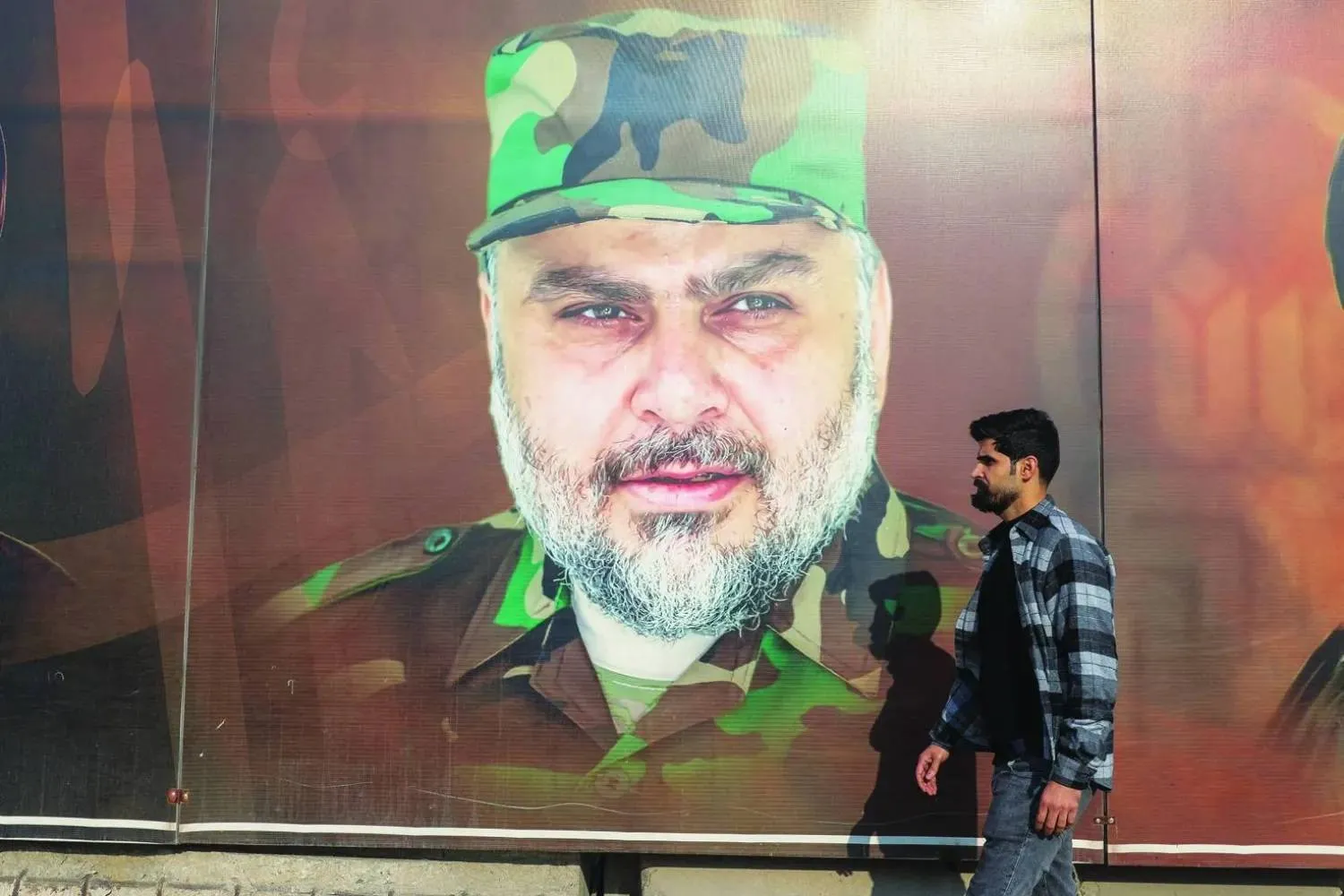

Sadr Says Armed Wing to Join Iraqi Gov’t

An Iraqi man walks past a poster of Moqtada al-Sadr wearing Saraya al-Salam military uniform on a street in Baghdad (AFP)
TT

Sadr Says Armed Wing to Join Iraqi Gov’t

An Iraqi man walks past a poster of Moqtada al-Sadr wearing Saraya al-Salam military uniform on a street in Baghdad (AFP)

Shiite cleric Moqtada al-Sadr, leader of the Sadrist movement, said on Wednesday he had decided to sever his movement’s ties with its armed wing, Saraya al-Salam, and place its members under the authority of the state, in a move that comes amid political and government efforts to restrict weapons to the state and regulate the work of armed factions in Iraq.

Sadr had previously announced that he was dissolving his armed wing, but his latest position coincides with the arrival of a government working under regional and international pressure to disarm armed factions.

Observers said Sadr’s latest decision carries weight because it hands his Saraya al-Salam fighters over to the authority of the new prime minister, Ali al-Zaidi.

“It has become necessary for us to announce the complete separation of Saraya al-Salam from the movement and their full integration into the state and the general authority responsible for military formations, provided that the civilian bodies attached to Saraya al-Salam are transformed into Al-Bunyan al-Marsous, with no offices, weapons, uniforms, titles or anything else,” Sadr said in a statement.

“In the end, I can only thank the military formations of Saraya al-Salam for all their jihad, and may God forgive them,” he added.

Saraya al-Salam is part of the Popular Mobilization Forces through brigades 313, 314, and 315. It carries out security duties across several areas, most notably in Samarra.

Sadr called on “the remaining factions in the Popular Mobilization Forces to separate themselves from partisan and sectarian orders” and urged them to hand over their weapons to the state, saying he had offered such advice years earlier.

Government welcomes move

In a swift response, Iraqi Prime Minister Ali al-Zaidi welcomed the move, describing it as “an important path toward strengthening internal stability and consolidating the principle of restricting weapons to the state.”

Zaidi said in a statement that the current phase “requires unifying efforts and placing the higher national interest first.” He called on all armed factions to work under the umbrella of the state and its official institutions, stressing that the state “is the only authority authorized to carry weapons and enforce the law.”

Sadr’s announcement comes as the Iraqi government seeks to implement a program to restrict weapons to the state, a pledge included in the current government’s ministerial program, alongside discussions within the Coordination Framework over mechanisms to regulate and hand over weapons.

Sources said some factions had shown relative “flexibility” on the issue compared with their previous, more hardline positions, while others still reject including what they call “resistance weapons” in any disarmament measures.

It is widely rumored that five armed factions have agreed to place their weapons under government institutions, without clear details on how the possible process would be carried out, while Harakat al-Nujaba and Kataib Hezbollah have refused to comply with disarmament requests.

Nazim al-Saidi, head of the executive council of Harakat al-Nujaba, said earlier this month that measures to restrict weapons target “uncontrolled” arms that cause “chaos,” not “resistance weapons.”

Former lawmaker Sajjad Salem questioned whether the decision could be implemented, saying Sadr had previously announced the separation of Saraya al-Salam from the movement, “but the decision was not carried out.”

Salem said armed factions rely on weapons to secure their political and financial influence, adding that the Sadrist movement “has an exceptional ability to organize and mobilize with almost no resources,” a reference to the difficulty other factions may face in giving up their weapons.

Former Prime Minister Mustafa al-Kadhimi also commented on the move, saying the decision “stems from a high level of concern for the supreme national interest, and from a deep awareness of the need to push toward strengthening the path of the state and its institutions.” He described it as “a position worthy of praise and welcome.”

The leader of Asaib Ahl al-Haq also paved the way for the handover of his weapons. On Wednesday, he stressed that his political project supports “the state, sovereignty and stability, not a project of chaos,” as he put it.

Qais al-Khazali said in press remarks that “the current phase requires moving toward consolidating state institutions and strengthening their role in confronting internal and external challenges.”

Disarmament plan

Asharq Al-Awsat reported on May 9, 2026, that an Iraqi committee, including Prime Minister-designate Ali al-Zaidi, outgoing Prime Minister Mohammed Shia al-Sudani, and Hadi al-Amiri was working to complete an “executive project” to disarm armed factions before presenting it to Washington, amid mounting US pressure to keep militias away from the new government and state institutions.

The committee had presented militia leaders with “ideas on how to disarm,” but some meetings “did not pass calmly,” according to people familiar with the matter.

The plan includes removing heavy and medium weapons and restructuring the Popular Mobilization Forces, in parallel with expected changes in sensitive security agencies, which could include the intelligence service.

But political sources questioned the government’s ability to implement the project, saying it may be intended to “buy time.” In contrast, prominent factions, including Kataib Hezbollah and Harakat al-Nujaba, have said they reject handing over their weapons “whatever the cost.”


US Assurances Against Expansion of War on Lebanon, Provided Netanyahu Is Given No Pretext

A man rides his motorcycle next to damaged buildings in West Zawtar, southern Lebanon, October 1, 2026. REUTERS/Mohamed Azakir
TT

US Assurances Against Expansion of War on Lebanon, Provided Netanyahu Is Given No Pretext

A man rides his motorcycle next to damaged buildings in West Zawtar, southern Lebanon, October 1, 2026. REUTERS/Mohamed Azakir

A state of uncertainty hangs over the political and security situation in southern Lebanon following the postponement of a US-sponsored Lebanese-Israeli military meeting until after Israel's Knesset elections and the US midterm elections. The delay has prompted the development of a preemptive plan to address the possibility that Israeli Prime Minister Benjamin Netanyahu may seek to expand the security zone by targeting the highlands and hills stretching between Iqlim al-Tuffah and Jabal al-Rihan.

Bridging the period until the Israeli elections on October 27 remains a central concern for Lebanese President Joseph Aoun, who is seeking to contain the repercussions should Netanyahu insist on expanding the security zone.

Asharq Al-Awsat has learned from a political source directly involved in the Lebanese-Israeli negotiations that Aoun is in contact with senior US administration officials, urging them to pressure Netanyahu and prevent him from expanding the security zone if he concludes that such a move is necessary to boost his political standing and secure his return as prime minister.

US Assurances Against Escalation

The political source confirmed that Aoun had received US assurances that Washington would not give Netanyahu the green light to expand the security zone, provided he is given no pretext to justify targeting the highlands between Iqlim al-Tuffah and Jabal al-Rihan.

The source said Hezbollah was the party concerned. With dialogue between Aoun and the group suspended, the president has instead been consulting Parliament Speaker Nabih Berri to convey a message to his ally, Hezbollah, which has continued to observe the ceasefire and has not responded to Israeli attacks and violations.

The source revealed that the decision to convey the message to Hezbollah was prompted by information obtained by security and military officials indicating that the group had taken a series of precautionary measures to prepare for the possibility of Netanyahu expanding the security zone by targeting the highlands between Iqlim al-Tuffah and Jabal al-Rihan.

The source ruled out Hezbollah initiating a ceasefire violation, saying the group would have no choice but to defend itself if its positions came under attack. Residents of the area, however, are concerned that the confrontation could spread from north of the Litani River to their communities, particularly after Hezbollah built fortifications near residential areas.

The source argued that Hezbollah would be forced into an existential battle if it came under attack, considering the area its first, and possibly last, line of defense in the south after Israel established control through firepower over towns near Beaufort Castle, north of the Litani River, which overlooks the area to its south.

The source added that the Internal Security Forces' seizure of a shipment of explosives in Dahr al-Baidar, while it was being transported to Beirut's southern suburbs, had unsettled Hezbollah. The group was consequently compelled to launch media campaigns against President Joseph Aoun and Prime Minister Nawaf Salam to justify why the truck was being sent to it.

Hezbollah Fails to Recover Explosives Shipment

Meanwhile, a parliamentary source close to the Shiite duo said Hezbollah had attempted to recover the truck without having its cargo of explosives confiscated.

The source told Asharq Al-Awsat that Hussein Abdullah, head of Hezbollah's Liaison and Coordination Unit, who succeeded Wafiq Safa, promptly contacted security and military officials in an effort to secure the truck's release, but was unsuccessful.

The source noted that Hezbollah had not expected its request to be rejected. The group argued that the explosives were intended to be transported south for use in confronting the Israeli military should it decide to expand the security zone.

According to the source, Hezbollah's intervention was itself an acknowledgment that the cargo belonged to the group. However, its efforts were met with refusal, along with a firm stance from Prime Minister Nawaf Salam, who called for an expanded investigation.

Salam's position supported a request by Government Commissioner to the Military Court Judge Claude Ghanem to involve the Internal Security Forces' Information Branch in the investigation.

A New Political Phase

The parliamentary source said the refusal to comply with Hezbollah's request sends a message domestically and internationally that Lebanon has entered a new political phase, distinct from the period preceding Aoun's election as president and the formation of Salam's government.

The government has adopted decisions aimed at establishing the state's exclusive control over weapons, beginning south of the Litani River, with the process subsequently extending north of the river to the Lebanese-Syrian border.

The source said these decisions were behind the seizure of the explosives shipment, alongside the government's commitment to enforcing Cabinet decisions prohibiting the carrying, transportation and use of weapons.

Asked about the implications, the source explained that allowing Hezbollah to recover the explosives would, in the eyes of domestic and international observers, effectively signal the collapse of the project to strengthen state authority.

It would also risk prompting the international community to abandon its commitments to helping Lebanon recover, which are conditional on the state exercising exclusive control over weapons. Lebanon would consequently risk falling off the international community's list of priorities if the explosives were returned to Hezbollah.

The source stressed that the seizure of the explosives would increase international attention to Lebanon and strengthen its negotiating position, particularly in light of admissions by the truck driver and his companion that the cargo was to be delivered to an individual in Beirut's southern suburbs known as Zulfiqar.

The source also addressed the campaign launched by Hezbollah's official television outlet, Al-Manar, against Salam over his position on the seizure of the shipment and his insistence on establishing responsibility and revealing Zulfiqar's real identity.

The campaign also targeted Aoun following the European Union member states' approval of a military mission to Lebanon to support and train the Lebanese Armed Forces and Internal Security Forces, helping them extend state authority across the country's entire territory.

According to the source, the campaign against Aoun primarily stems from Hezbollah's belief that the European mission's mandate to support Lebanon's security and military institutions would contribute to placing all weapons under state control.

The mission is not intended to replace the United Nations Interim Force in Lebanon (UNIFIL). Rather, its activities would extend across Lebanese territory.

The source said this prospect is a source of concern for Hezbollah, particularly if it becomes clear that bringing the group's weapons under exclusive state control is part of the European mission's program to help Lebanon extend its authority throughout the country.


Media Rights Group Urges Pressure on Israel over Deadly 2023 Strike

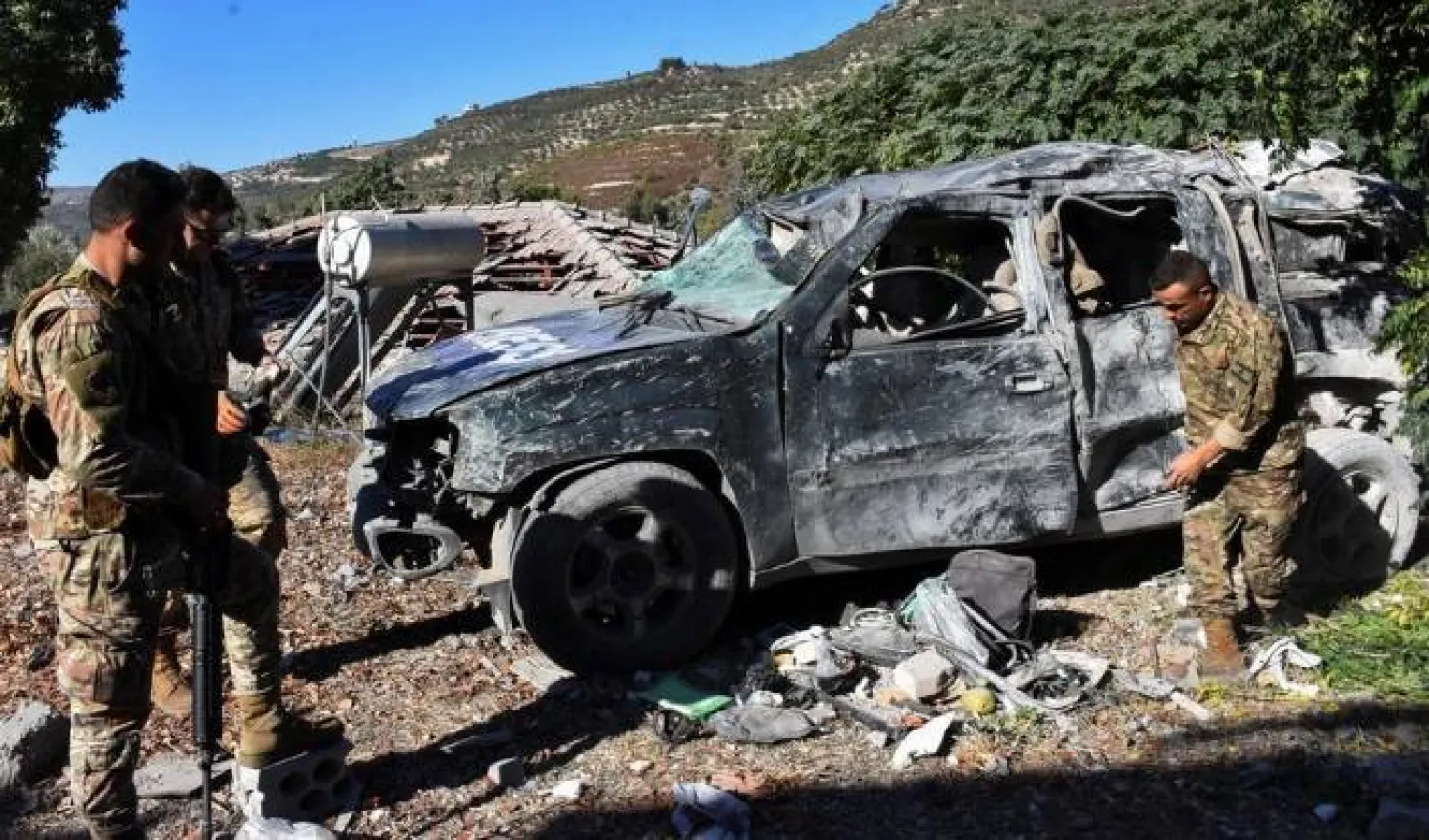
Lebanese army soldiers inspect a damaged vehicle marked with 'Press' at the site of an Israeli strike that killed a few journalists and wounded several others as they slept in guesthouses used by media, Lebanon's health ministry and local media reported, in Hasbaya in southern Lebanon, October 25, 2024. REUTERS/Stringer
TT

Media Rights Group Urges Pressure on Israel over Deadly 2023 Strike

Lebanese army soldiers inspect a damaged vehicle marked with 'Press' at the site of an Israeli strike that killed a few journalists and wounded several others as they slept in guesthouses used by media, Lebanon's health ministry and local media reported, in Hasbaya in southern Lebanon, October 25, 2024. REUTERS/Stringer

The Committee to Protect Journalists on Tuesday urged pressure on Israel including potential economic consequences if it does not hold responsible troops behind a deadly 2023 strike on reporters in Lebanon.

A Reuters journalist was killed and two AFP reporters were seriously wounded when they came under fire in southern Lebanon close to the border with Israel on October 13, 2023.

Investigations by both news agencies as well as several non-governmental groups concluded that Israel carried out the attack.

The Committee to Protect Journalists, a New York-based group advocating freedom of the press, said that the European Union should consider a suspension of its agreement allowing free trade with Israel unless Israel takes responsibility.

"With Israel's blatant failure to take accountability, we call on the international community to pressure Israeli officials to complete a probe naming the units and individuals responsible for the deliberate attacks against journalists," said Sara Qudah, Middle East regional director for the Committee to Protect Journalists.

"The failure to hold those responsible to account," she said, "puts other journalists at risk by allowing impunity to persist."

"The suspension of the EU-Israel Association Agreement is one of the few remaining avenues that could create a meaningful pressure to break this cycle of impunity," she said.

The Israeli military, asked by AFP for an update on the case, said the incident had been "referred to the General Staff Fact-Finding Assessment Mechanism for a comprehensive factual review", without further details on a timeline.

It said the Israeli army “does not target journalists .. It makes every effort to minimize harm to uninvolved civilians while maintaining the security of its troops," it said.

- Israeli envoy says strike a 'mistake' -

Reuters video journalist Issam Abdallah was killed in the strike, which wounded six other journalists.

They included AFP's Dylan Collins and Christina Assi, whose leg had to be amputated after the attack.

Israel's ambassador to France earlier this year for the first time acknowledged that Israeli forces struck the journalists and said it was "a mistake".

Ambassador Joshua Zarka, speaking on French television, said the reporters "were not targeted because they were journalists" as "the soldiers on the ground thought that they were terrorists".

The attack came days after Hamas attacked from the Gaza Strip in the deadliest-ever attack against Israel.

Israel since then has repeatedly pounded Lebanon, saying it is seeking to eradicate Hezbollah, which like Hamas has enjoyed support from Iran's clerical government.

AFP's Assi, who received CPJ's 2026 International Press Freedom Award, said it was critical to see who in Israel was responsible.

"We need to know who did this to us," she said.


Sudan’s al-Burhan Orders Investigation Into Deadly Airstrike on Gold Mine

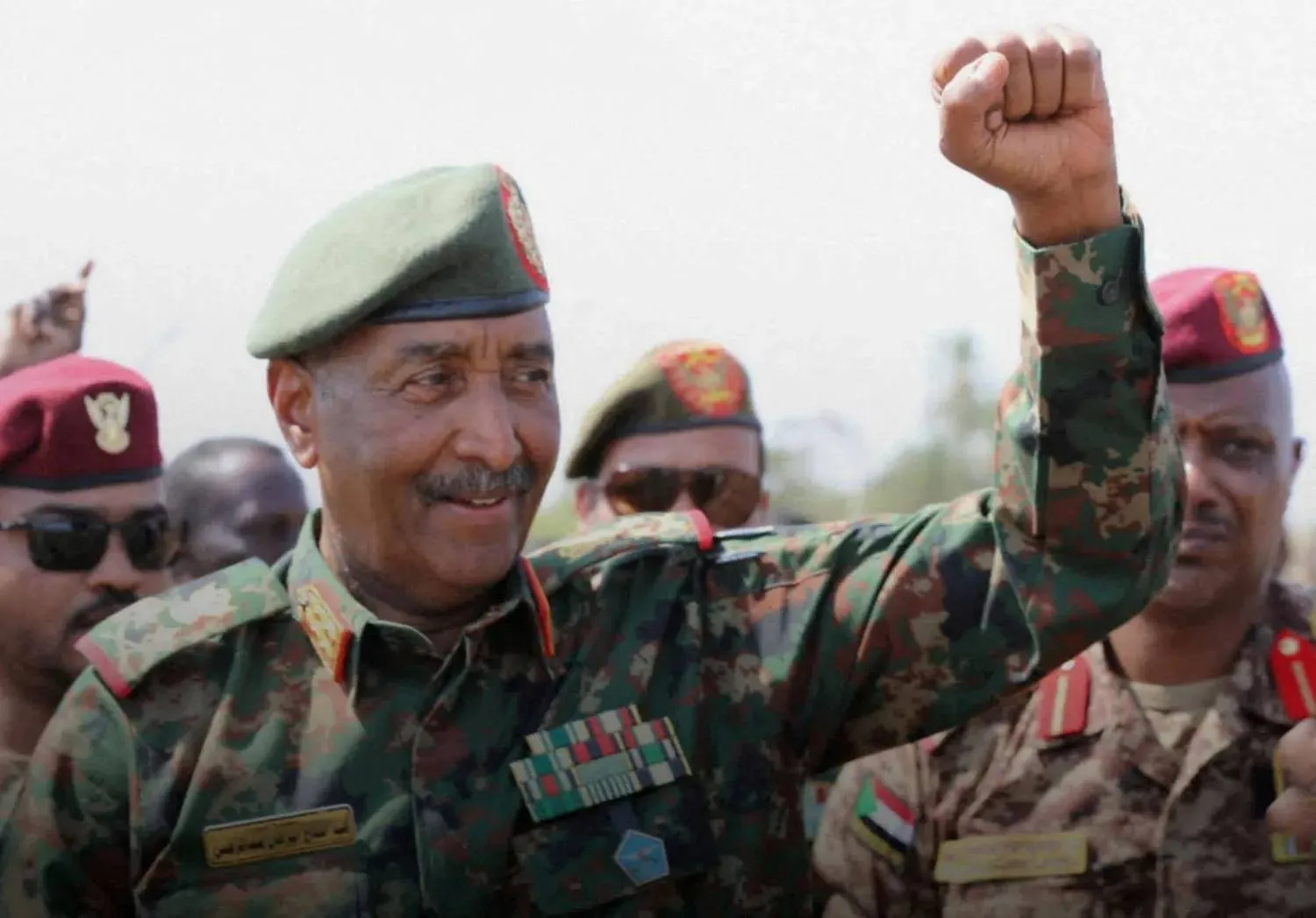
Sudan's army chief Abdel Fattah al-Burhan gestures to soldiers inside the presidential palace after the Sudanese army said it had taken control of the building, in the capital Khartoum, Sudan March 26, 2025. Sudan Transitional Sovereignty Council/Handout via REUTERS
TT

Sudan’s al-Burhan Orders Investigation Into Deadly Airstrike on Gold Mine

Sudan's army chief Abdel Fattah al-Burhan gestures to soldiers inside the presidential palace after the Sudanese army said it had taken control of the building, in the capital Khartoum, Sudan March 26, 2025. Sudan Transitional Sovereignty Council/Handout via REUTERS

Sudan's army chief Abdel Fattah al-Burhan has ordered a probe into what he called a "painful incident" near the Egyptian border, where an airstrike hit a gold mine two days earlier.

The estimated death toll from the airstrike has risen to more than 200 dead, with dozens wounded and missing.

Both the National Umma Party and the Darfur Victims Advocacy organization put the death toll at 200 and the number of injured at around 120.

The Emergency Lawyers, a rights group documenting abuses in the war between Sudan's army and the Rapid Support Forces (RSF), said the strike in the mountainous Jabal al-Uqaydat mining area on Saturday killed 72 people.

In a statement on Monday, Sudan's Transitional Sovereignty Council, which Burhan heads as army chief, said he had formed a fact-finding committee made up of prosecutors, judicial officials and security representatives "to investigate the circumstances of the incident" and "submit a report on the results.”

The council added that Sudanese and Egyptian authorities "had remained in contact" since the strike to determine what happened.

In a phone call with his Sudanese counterpart on Monday, Egyptian Foreign Minister Badr Abdelatty stressed the "mutual respect that binds the two brotherly nations,” including respect for each state's "territorial integrity and safety of its territory and borders.”