US Assurances Against Expansion of War on Lebanon, Provided Netanyahu Is Given No Pretext

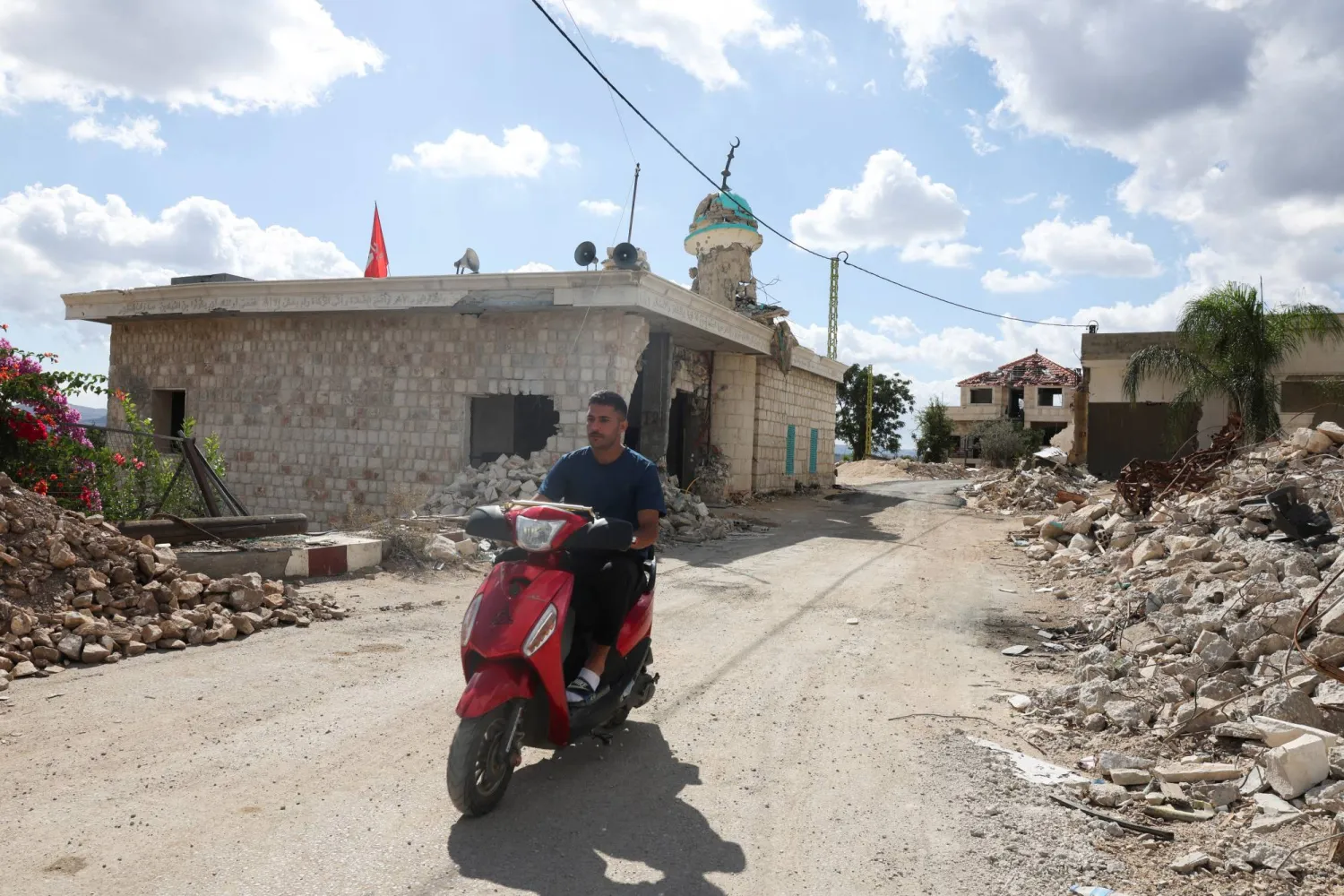
A man rides his motorcycle next to damaged buildings in West Zawtar, southern Lebanon, October 1, 2026. REUTERS/Mohamed Azakir
TT

US Assurances Against Expansion of War on Lebanon, Provided Netanyahu Is Given No Pretext

A man rides his motorcycle next to damaged buildings in West Zawtar, southern Lebanon, October 1, 2026. REUTERS/Mohamed Azakir

A state of uncertainty hangs over the political and security situation in southern Lebanon following the postponement of a US-sponsored Lebanese-Israeli military meeting until after Israel's Knesset elections and the US midterm elections. The delay has prompted the development of a preemptive plan to address the possibility that Israeli Prime Minister Benjamin Netanyahu may seek to expand the security zone by targeting the highlands and hills stretching between Iqlim al-Tuffah and Jabal al-Rihan.

Bridging the period until the Israeli elections on October 27 remains a central concern for Lebanese President Joseph Aoun, who is seeking to contain the repercussions should Netanyahu insist on expanding the security zone.

Asharq Al-Awsat has learned from a political source directly involved in the Lebanese-Israeli negotiations that Aoun is in contact with senior US administration officials, urging them to pressure Netanyahu and prevent him from expanding the security zone if he concludes that such a move is necessary to boost his political standing and secure his return as prime minister.

US Assurances Against Escalation

The political source confirmed that Aoun had received US assurances that Washington would not give Netanyahu the green light to expand the security zone, provided he is given no pretext to justify targeting the highlands between Iqlim al-Tuffah and Jabal al-Rihan.

The source said Hezbollah was the party concerned. With dialogue between Aoun and the group suspended, the president has instead been consulting Parliament Speaker Nabih Berri to convey a message to his ally, Hezbollah, which has continued to observe the ceasefire and has not responded to Israeli attacks and violations.

The source revealed that the decision to convey the message to Hezbollah was prompted by information obtained by security and military officials indicating that the group had taken a series of precautionary measures to prepare for the possibility of Netanyahu expanding the security zone by targeting the highlands between Iqlim al-Tuffah and Jabal al-Rihan.

The source ruled out Hezbollah initiating a ceasefire violation, saying the group would have no choice but to defend itself if its positions came under attack. Residents of the area, however, are concerned that the confrontation could spread from north of the Litani River to their communities, particularly after Hezbollah built fortifications near residential areas.

The source argued that Hezbollah would be forced into an existential battle if it came under attack, considering the area its first, and possibly last, line of defense in the south after Israel established control through firepower over towns near Beaufort Castle, north of the Litani River, which overlooks the area to its south.

The source added that the Internal Security Forces' seizure of a shipment of explosives in Dahr al-Baidar, while it was being transported to Beirut's southern suburbs, had unsettled Hezbollah. The group was consequently compelled to launch media campaigns against President Joseph Aoun and Prime Minister Nawaf Salam to justify why the truck was being sent to it.

Hezbollah Fails to Recover Explosives Shipment

Meanwhile, a parliamentary source close to the Shiite duo said Hezbollah had attempted to recover the truck without having its cargo of explosives confiscated.

The source told Asharq Al-Awsat that Hussein Abdullah, head of Hezbollah's Liaison and Coordination Unit, who succeeded Wafiq Safa, promptly contacted security and military officials in an effort to secure the truck's release, but was unsuccessful.

The source noted that Hezbollah had not expected its request to be rejected. The group argued that the explosives were intended to be transported south for use in confronting the Israeli military should it decide to expand the security zone.

According to the source, Hezbollah's intervention was itself an acknowledgment that the cargo belonged to the group. However, its efforts were met with refusal, along with a firm stance from Prime Minister Nawaf Salam, who called for an expanded investigation.

Salam's position supported a request by Government Commissioner to the Military Court Judge Claude Ghanem to involve the Internal Security Forces' Information Branch in the investigation.

A New Political Phase

The parliamentary source said the refusal to comply with Hezbollah's request sends a message domestically and internationally that Lebanon has entered a new political phase, distinct from the period preceding Aoun's election as president and the formation of Salam's government.

The government has adopted decisions aimed at establishing the state's exclusive control over weapons, beginning south of the Litani River, with the process subsequently extending north of the river to the Lebanese-Syrian border.

The source said these decisions were behind the seizure of the explosives shipment, alongside the government's commitment to enforcing Cabinet decisions prohibiting the carrying, transportation and use of weapons.

Asked about the implications, the source explained that allowing Hezbollah to recover the explosives would, in the eyes of domestic and international observers, effectively signal the collapse of the project to strengthen state authority.

It would also risk prompting the international community to abandon its commitments to helping Lebanon recover, which are conditional on the state exercising exclusive control over weapons. Lebanon would consequently risk falling off the international community's list of priorities if the explosives were returned to Hezbollah.

The source stressed that the seizure of the explosives would increase international attention to Lebanon and strengthen its negotiating position, particularly in light of admissions by the truck driver and his companion that the cargo was to be delivered to an individual in Beirut's southern suburbs known as Zulfiqar.

The source also addressed the campaign launched by Hezbollah's official television outlet, Al-Manar, against Salam over his position on the seizure of the shipment and his insistence on establishing responsibility and revealing Zulfiqar's real identity.

The campaign also targeted Aoun following the European Union member states' approval of a military mission to Lebanon to support and train the Lebanese Armed Forces and Internal Security Forces, helping them extend state authority across the country's entire territory.

According to the source, the campaign against Aoun primarily stems from Hezbollah's belief that the European mission's mandate to support Lebanon's security and military institutions would contribute to placing all weapons under state control.

The mission is not intended to replace the United Nations Interim Force in Lebanon (UNIFIL). Rather, its activities would extend across Lebanese territory.

The source said this prospect is a source of concern for Hezbollah, particularly if it becomes clear that bringing the group's weapons under exclusive state control is part of the European mission's program to help Lebanon extend its authority throughout the country.


UNRWA's Gaza Employees March Against Job Cuts

An amputee walks with crutches next to a girl carrying a pot with a meal from a charity kitchen past rubble in the Jabalia camp for Palestinian refugees in the northern Gaza Strip on October 24, 2026. (AFP)
TT

UNRWA's Gaza Employees March Against Job Cuts

An amputee walks with crutches next to a girl carrying a pot with a meal from a charity kitchen past rubble in the Jabalia camp for Palestinian refugees in the northern Gaza Strip on October 24, 2026. (AFP)

Employees of the UN agency for Palestinian refugees marched through Gaza's Nuseirat refugee camp on Monday to protest expected job cuts by the vital service provider, AFP journalists reported.

Dozens of men, women and children walked through the streets of the central Gaza camp, heading towards one of the agency's many schools in Gaza.

UNRWA, as the agency is known, is one of the Palestinian territory's largest service providers, offering healthcare and education, as well as crucial coordination for humanitarian relief since the start of the Israel-Hamas war in October 2023, making use of its thousands of staff and logistics networks.

"This march and this event are intended to make it clear that we oppose the dismissal of any employee, because dismissing employees means ending services for refugees and a decline in the quality of services," head of the staff union Mustafa al-Ghour told AFP.

Demonstrators including UNRWA beneficiaries held signs that read "No to job cuts" and "No to reducing refugee services".

"The agency has been experiencing unprecedented financial and operational difficulties for some time now and difficult decisions may be necessary in the near future," UNRWA spokesman Jonathan Fowler told AFP.

Fowler said that the matter was currently under review and that the agency could not comment in more detail for the time being.

UNRWA currently employs 10,500 people in Gaza, and 4,500 in the occupied West Bank.

In September, UNRWA's acting commissioner-general Christian Saunders had warned he would be forced to cut long-term services to refugees if his agency could not begin to bridge a $100 million shortfall in the next two months.

Israel has repeatedly accused UNRWA of providing cover for Hamas, claiming that some of its employees took part in the group's October 7, 2023 attack on Israel that sparked the war.

Legislation severing ties with the agency and banning it from operating on Israeli territory took effect in January 2025.

A series of investigations, including one led by France's former foreign minister Catherine Colonna, found some "neutrality-related issues" at UNRWA but stressed Israel had not provided conclusive evidence for its headline allegation.


Fighting Against Houthis Resumes on Bab Al-Mandab Front

Southern Giants Brigades forces clash with the Houthis on the Lahj and Bab Al-Mandab fronts (Military Media)
TT

Fighting Against Houthis Resumes on Bab Al-Mandab Front

Southern Giants Brigades forces clash with the Houthis on the Lahj and Bab Al-Mandab fronts (Military Media)

Fighting against the Houthis resumed on the Bab Al-Mandab front on Monday, coinciding with fierce clashes in Lahj Governorate and advances by the Southern Giants Brigades in Al-Mudarabah and Ras Al-Arah district.

Meanwhile, government forces deployed military reinforcements to Al-Maqatirah district in northern Lahj to regain the initiative and recapture areas seized by the Houthis in recent days, while maintaining their positions on the front lines surrounding Taiz.

Clashes resumed on the Bab Al-Mandab front early Monday morning, with the Southern Giants Brigades taking part in military operations that resulted in the recapture of several positions and advances in contested areas, according to field sources. The fighting also left Houthi fighters dead and wounded.

The renewed battles coincided with continued clashes in Al-Mudarabah and Ras Al-Arah district in western Lahj, where the Giants Brigades regained control of strategic positions, including Jabal Safan and Qarn Al-Shamayah, while fighting continued in the Al-Majza and Zurayqat Al-Sham areas on the district's outskirts.

In a related development, the Southern Giants Brigades denied reports that their forces had withdrawn from Dhubab, Kahbub and their positions along the western coast.

Aseel Al-Saqaldi, director of the forces' media center, said their units remained deployed at their positions and would not withdraw under pressure from what he described as rumors and false claims.

Al-Saqaldi added that the forces' presence in Dhubab marked the beginning of a theater of operations that he said would extend as far as Saada, reaffirming their commitment to continuing the fight against the Houthis and pressing ahead with military operations.

Regaining the Initiative

In Al-Maqatirah district in northern Lahj Governorate, government forces deployed substantial reinforcements from the Southern Giants Brigades and Nation's Shield Forces.

The reinforcements took over the headquarters of the Tur Al-Bahah Military Axis Command and immediately joined the front lines against the Houthis, in a move aimed at recapturing areas seized by the group in recent days.

Field sources said government forces and the Popular Resistance had thwarted Houthi attempts to advance and seize additional territory, forcing the attackers to retreat after inflicting casualties and equipment losses.

The arrival of reinforcements is part of broader military efforts to regain the initiative in the district and prevent the Houthis from expanding their control over positions and high ground that have witnessed clashes in recent weeks.

Taiz: Government Forces Hold Their Ground

In Taiz Governorate, government forces and the Popular Resistance continued to repel Houthi attacks on the fronts surrounding the city, with fighting persisting along the southeastern axis.

Operations focused on thwarting Houthi movements and targeting the group's reinforcements and military positions.

The Taiz Military Axis Command reported that government forces, supported by military aircraft, carried out strikes against Houthi positions and concentrations in the Bardad area of Wadi Anqab on Jabal Sabr, destroying a military vehicle.

Other strikes targeted positions in Hisn Al-Mukhaaf and areas of Al-Misrakh district in the southern part of the governorate.

The command added that air defenses shot down two Houthi drones on the Sabr front as fighting continued across several sectors, with government forces maintaining their positions and preventing the group from making further breakthroughs.

Separately, local sources reported that Houthi fighters raided and forcibly seized the homes of government, political and community figures in Al-Shamayatayn district, south of Taiz.

According to the sources, the properties included the home of Water and Environment Minister Tawfiq Al-Sharjabi in the village of Sharjab, the home of former Baath Party leader Qasim Sallam, and the home of Brigadier General Abdulwahab Al-Sharjabi.

The incidents come amid an expanding Houthi presence in several districts of the governorate, raising concerns about further seizures of private property and the targeting of government officials, politicians and community figures.

Air Support and Military Operations

On the broader military front, the Yemeni army announced that it had carried out 1,272 targeting operations during the 24 hours preceding Sunday evening as part of Operation Fajr Yemen.

The operations targeted Houthi concentrations, reinforcements, fortifications, firing positions, vehicles and supply assets.

Colonel Majed Al-Nuzayli, spokesperson for the Yemeni Armed Forces, said the operations had weakened the group's capabilities, supported government advances and helped recapture positions in Al-Jawf Governorate.

He noted that operations were continuing on the northern fronts and in Marib and Al-Bayda, as well as on the southern and southwestern fronts.

Al-Nuzayli added that the operations had resulted in the neutralization of approximately 500 Houthi field commanders and fighters, along with the destruction or disabling of 169 vehicles, pieces of equipment and heavy weapons.

He reaffirmed that military operations would continue, with the necessary precautions taken to protect civilians and civilian objects.


Arab League Secretary-General: Palestinian Cause True Test of International Order’s Credibility

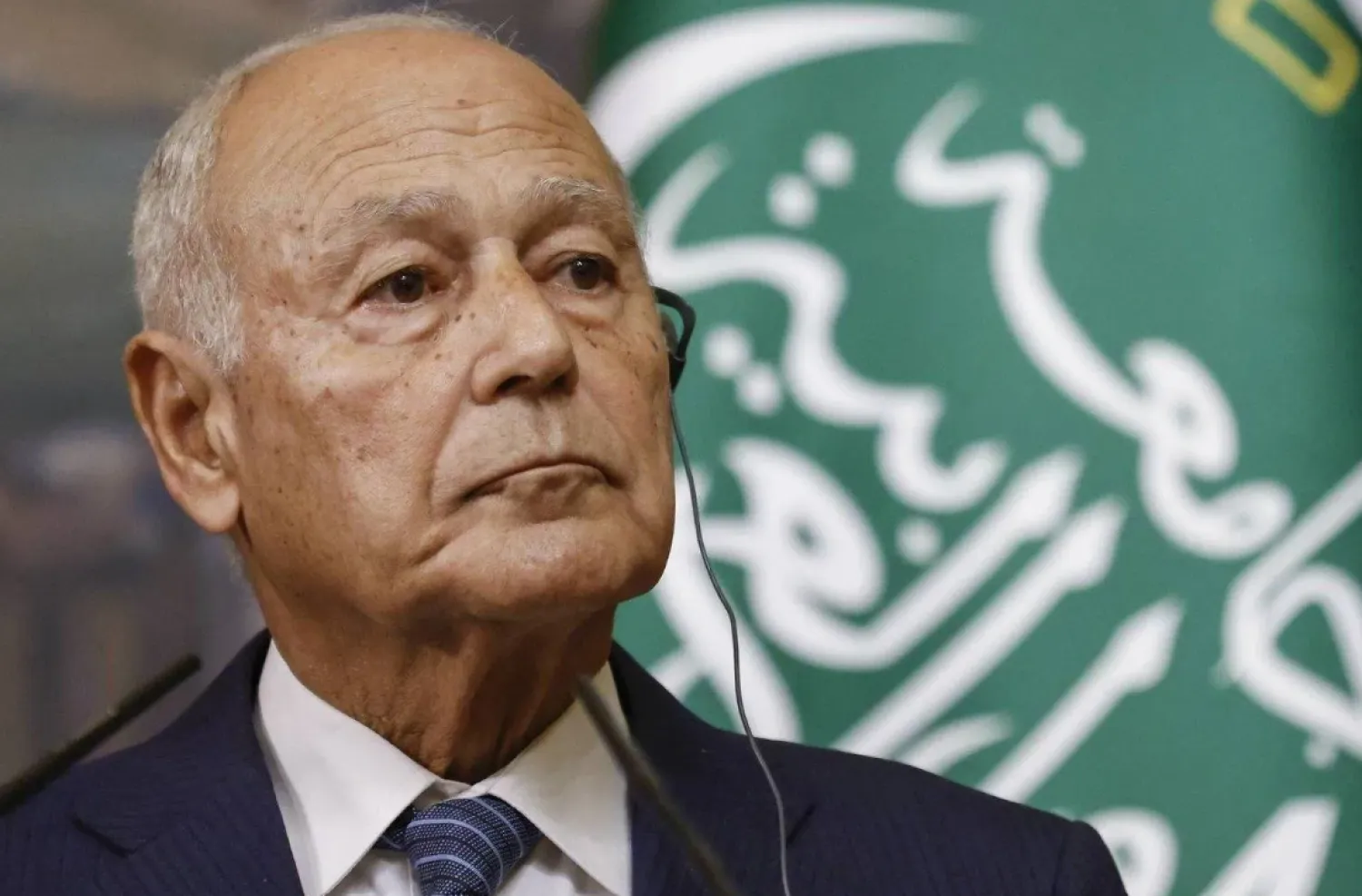
Secretary-General of the Arab League Ahmed Aboul Gheit. (Asharq Al-Awsat)
TT

Arab League Secretary-General: Palestinian Cause True Test of International Order’s Credibility

Secretary-General of the Arab League Ahmed Aboul Gheit. (Asharq Al-Awsat)

Arab League Secretary-General Nabil Fahmy affirmed that the Palestinian cause is a true test of the credibility of the international order, in light of persistent double standards and Israeli violations of international law, stressing the need to end the occupation and establish an independent Palestinian state.

He also underscored the importance of preserving the unity, sovereignty, and territorial integrity of Arab states and supporting their national institutions as a fundamental pillar of security and stability, SPA reported.

Fahmy made the remarks during an open dialogue at the third edition of the Cairo Forum, where he reviewed the main challenges facing the Arab region, explored ways to strengthen security and stability, and discussed the role of joint Arab action in responding to regional and global shifts.

He explained that Arab security extends beyond military considerations to include political, economic, social, and developmental dimensions. He highlighted the crises and instability affecting Syria, Sudan, Lebanon, Yemen, and the Arab Gulf region, noting that addressing them requires looking beyond their immediate manifestations to tackle their root causes, foremost among them weak institutions and the accumulation of political, economic, and social challenges.

Fahmy stressed the need to move from merely managing the repercussions of crises to adopting proactive approaches that prevent their recurrence. He also emphasized strengthening cooperation and integration among Arab states, establishing balanced relations with neighboring countries based on respect for sovereignty and non-interference in internal affairs, and engaging with the wider world on the basis of parity and shared interests.