
With 19 Ports and 70 Upgraded Silos, Egypt Aims to Become Global Grain Hub

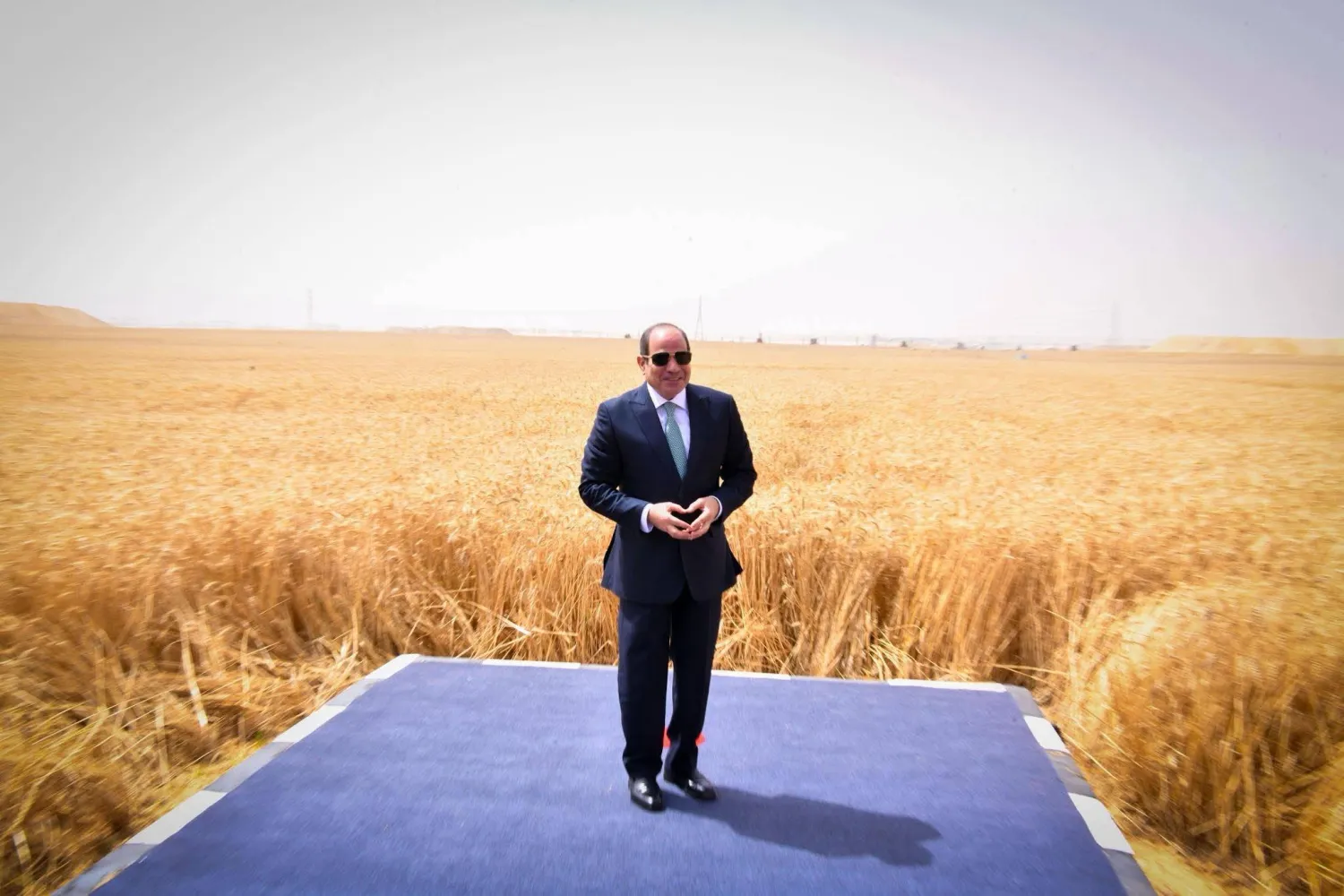
Egyptian President Abdel Fattah al-Sisi during the inauguration of the New Delta project days ago. (Egyptian Presidency)
TT

With 19 Ports and 70 Upgraded Silos, Egypt Aims to Become Global Grain Hub

Egyptian President Abdel Fattah al-Sisi during the inauguration of the New Delta project days ago. (Egyptian Presidency)

Egypt is intensifying efforts to position itself as a global hub for grain storage and trade as regional conflicts continue to disrupt international food supply chains.

Cairo’s push is anchored in its strategic geographic location, a network of 19 commercial ports and recently upgraded grain silos with expanded storage capacity. Economists interviewed by Asharq Al-Awsat described the initiative as part of Egypt’s broader ambition to play a larger role in regional food security and global supply stability.

In televised remarks Monday, Amr Abdo, a member of the Federation of Egyptian Chambers of Commerce, said that plans to establish a global strategic grain storage center were “an urgent necessity” amid escalating regional conflicts and supply-chain disruptions.

Abdo noted that Egypt’s strategic partnership with Russia — the world’s largest grain exporter — gives Cairo access to advanced storage technologies and technical expertise that help reduce spoilage and moisture loss while securing wheat imports at competitive prices.

The initiative gained momentum during the Fifth International Grain Forum, held in the Russian city of Sochi from May 20 to 23. On the sidelines of the event, Egypt’s Supply and Internal Trade Minister Sherif Farouk met Russian Agriculture Minister Oksana Lut and outlined Egypt’s goal of establishing “an integrated global logistics center for grains and edible oils.”

Farouk characterized the project as one of Egypt’s most important strategic initiatives, designed to transform the country into a regional and international hub for the storage, trading and processing of grains and food commodities.

He added that Egypt’s strategic location, combined with major upgrades to ports, economic zones and transportation networks, creates significant opportunities for Russian companies and institutions to participate through direct investment and technology transfer in storage, transport, silo management and logistics services.

Major storage expansion

According to Egyptian government figures, Egypt now operates 70 grain silos nationwide built to modern technological standards as part of a national program aimed at increasing wheat and grain storage capacity and safeguarding strategic reserves.

Economic expert Medhat Nafea, a member of the cabinet’s economic advisory committee, said that Egypt boasts substantial advantages that could help make the project viable.

He pointed to the country’s location, its 19 commercial ports, expanded silo capacity, modern storage infrastructure and Egypt’s potential role as a transit hub for exports.

Nafea stressed that transforming Egypt into a regional grain center would require major investments in storage capacity, digitalization and transportation networks, though he added that the goal “appears realistic” through cooperation with Russia.

Khaled El-Shafei, head of the Capital Center for Economic Studies, described the initiative as a potentially transformative step that could significantly strengthen Egypt’s role in securing global supply chains.

“Egypt’s move toward establishing a global grain hub could represent an unprecedented economic and developmental leap,” El-Shafei remarked, noting that Egypt’s geographic position linking East and West, along with its status as a gateway to Africa, gives it major strategic advantages.

International coordination

On April 20, Egyptian Prime Minister Mostafa Madbouly chaired a meeting to review developments related to plans for a global center for the storage, supply and trade of grains and edible oils.

Officials indicated that technical studies are being prepared for discussions between President Abdel Fattah al-Sisi and leaders of several countries as part of broader efforts to strengthen cooperation on food security.

Days later, on April 26, Russia’s Maritime Board announced that Russian presidential aide and board chairman Nikolai Patrushev discussed prospects for establishing a grain and energy hub in Egypt during talks in Cairo with Egyptian Transport Minister Kamel al-Wazir, according to Russian media.

The Russian official added that Moscow plans to direct a significant share of its exports to South Asia and Africa through Egyptian territory.

Nafea underscored the importance of attracting large-scale foreign investment from countries expected to benefit from the project, predicting substantial financial returns that could help reduce Egypt’s import bill and ease global food-security pressures.

El-Shafei acknowledged that the initiative still faces challenges but maintained that Egypt’s diplomatic relationships and ongoing infrastructure development could help secure international backing.

“The project is highly promising if there is genuine commitment and sustained cooperation to implement it,” he stressed, adding that global grain supplies increasingly require secure hubs for storage and trade.

He added that Egypt’s broader vision extends beyond becoming merely a grain-trading center to positioning itself as a global commercial and logistics hub.


Iraq Opens Special Account for Recovered Illicit Funds as Anti-Corruption Drive Expands

Iraqi police personnel patrol in their vehicle along a street in Baghdad on June 28, 2026. (AFP)
TT

Iraq Opens Special Account for Recovered Illicit Funds as Anti-Corruption Drive Expands

Iraqi police personnel patrol in their vehicle along a street in Baghdad on June 28, 2026. (AFP)

Iraqi Prime Minister Ali al-Zaidi ordered on Monday the Finance Ministry to open a dedicated account for money recovered from illicit enrichment cases, as the government pressed ahead with its anti-corruption campaign. Meanwhile, the Federal Commission of Integrity said a draft law on asset recovery will soon be submitted to parliament.

Government spokesman Haider al-Aboudi revealed that the new account would hold funds recovered from people convicted of illicit enrichment, stressing that the government remains committed to protecting public money and strengthening state institutions.

In remarks to the state-run Iraqi News Agency (INA), al-Aboudi said the government had adopted a comprehensive approach to institutional reform and combating corruption.

He added that Operation Dawn had resulted in the arrest of 21 suspects, while others remain at large.

Investigators are using suspects’ confessions to uncover broader corruption networks involving additional individuals and assets, he revealed.

Separately, Abbas Mutib, director general of the Integrity Commission’s asset recovery department and deputy chairman of the Iraq Asset Recovery Fund, said the commission had made significant progress in digital transformation, enabling it to freeze substantial assets abroad and prevent those accused of corruption from disposing of them.

Mutib noted that the commission is coordinating with the Justice Ministry to pursue civil lawsuits aimed at recovering frozen assets overseas, adding that authorities have already succeeded in recovering sizable sums.

Former tax chief sentenced

The Federal Commission of Integrity also announced prison sentences against former General Commission for Taxes Director General Osama Hossam Jawdat and his wife after their conviction on money laundering charges.

According to the commission, the Central Criminal Court for Combating Corruption sentenced Jawdat to 10 years in prison and his wife to five years and one month under Iraq’s 2015 Anti-Money Laundering and Counter-Terrorism Financing Law.

The court ordered the couple to pay a fine of IQD 32.496 billion (about $25 million), confiscated 10 properties in Baghdad and 12 properties in Türkiye registered in the wife’s name, as well as seized cash, rental income, gold jewelry, and funds deposited in Kuwaiti and Turkish banks. It also ordered the freezing of their movable and immovable assets.

Broad public backing

An Iraqi security personnel stands guard along a street in Baghdad on June 28, 2026. (AFP)

The government’s sweeping arrests on Sunday have drawn strong political and public support after targeting senior officials, lawmakers, and government directors, raising hopes that Iraq may finally curb corruption, which unofficial estimates say has cost the country more than $500 billion.

More than 50 suspects have been arrested so far, while some estimates suggest the number of wanted individuals could eventually exceed 1,000.

Dozens of activists gathered Sunday evening in Baghdad’s Tahrir Square to express support for the campaign.

Influential Shiite cleric Moqtada al-Sadr praised the “heroic reform measures,” saying the arrests had restored hope among Iraqis after years of entrenched corruption.

He commended the judiciary and security forces, particularly the Counter Terrorism Service, for carrying out the arrests.

More arrests expected

Ghalib al-Daami, a lecturer at the Iraqi Academy for Combating Corruption, told Asharq Al-Awsat that more than 50 prominent figures had already been detained and predicted the campaign could ultimately target more than 1,000 individuals.

While many observers doubt the crackdown will reach Iraq’s most powerful political leaders, al-Daami said he expects the “downfall” of three senior political figures in the coming days.

He also claimed the campaign has received direct US backing, particularly following the arrest of former Deputy Oil Minister Adnan al-Jumaili and another deputy minister, Ali Maarij al-Bahadli, who has been sanctioned by the US for allegedly facilitating Iranian oil sales.

Political scientist Firas Elias of the University of Mosul said the campaign represents “a real test of the state’s authority.”

Its success should be measured not by the number of arrests but by its ability to secure fair convictions and recover stolen assets, he added.

If the law is applied equally to everyone, the campaign could mark a turning point in relations between the state and Iraq’s political class, he remarked. But if it stops with selected figures or becomes a tool for settling political scores, it will quickly lose credibility and allow corruption to reemerge in new forms.


Gazans Turn to Clay, Rubble to Build New Homes

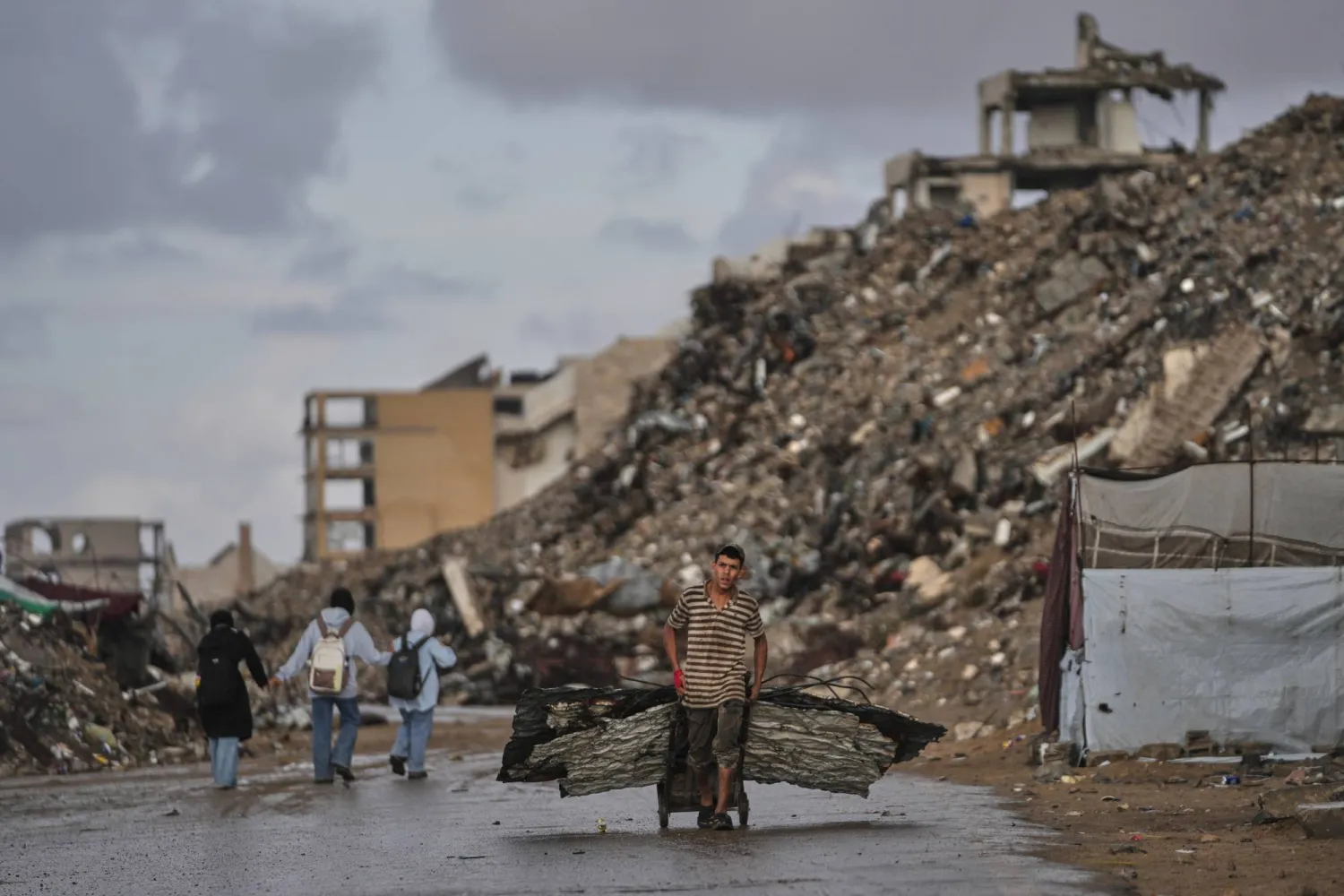
A Palestinian boy makes his way across rubble near a displacement camp in Nuseirat, in the central Gaza Strip, on Sunday. Credit: AFP/EYAD BABA
TT

Gazans Turn to Clay, Rubble to Build New Homes

A Palestinian boy makes his way across rubble near a displacement camp in Nuseirat, in the central Gaza Strip, on Sunday. Credit: AFP/EYAD BABA

While Gaza’s housing crisis remains catastrophic with cement and steel blocked by Israel from entering the Strip, some Palestinians are turning to improvised methods and other workarounds in a bid to make their shelters safer or more habitable.

Among those Palestinians is Jaafar Atallah, a potter in Gaza, who decided to build a home from the earth. It was to be like the bread ovens his family had been making for generations, but big enough for his parents to live in, according to the Financial Times.

Atallah gathered clay from an area of Gaza a few kilometers from his tent and — with the help of about 15 people, including his father, also a potter — he set about making mud bricks.

For months, they learned as they built. Finally, they completed a domed hut, “so solid you could stand on top of it”, said Atallah, whose project was backed by pottery groups around the world after he shared videos online.

The clay structure was a relief after the flimsy protection of the tent: “You can keep your food in this room. In a tent, tomatoes and cucumbers won’t last a day and will rot. Life in the tents is so hard. There is such heat in the summer, it is torture,” Atallah said.

Atallah’s experience reflects the reality of thousands of families looking for alternatives after almost all buildings in Gaza have been destroyed by two years of bombardment amid Israel’s ban on concrete and steel imports.

Several Gazans are reusing steel reinforcing bars and concrete from the debris of buildings, scavenging for cement lying underwater in the port and resorting to mud to make bricks and mortar.

“We already have clay in our land, we don’t have to manufacture it, we don’t need things that we have to get from the crossing [with Israel], which is at the whim of the occupation,” said Atallah, who even designed a waterproof glaze for the bricks. “The occupation does not control this. It’s from our land, our soil.”

According to the UN, 1.9 million Gazans are displaced or live in tents, which lack sanitation or other utilities.

Reconstruction of Gaza remains a distant dream for its people. Israel bans building materials from entering Gaza on the grounds that the materials may be used for military purposes such as tunnel construction.

In May, teenage sisters Tala, 17, and Farah Moussa, 15, won a youth-focused award from the Swiss-based Earth Foundation for recycling cement debris into bricks.

Displaced with their family five times since the start of the war, they now live in a tent in Nuseirat in the center of the Gaza Strip. “We got the idea when our house was bombed,” said Tala. “We thought we had to do something and find a solution that comes from the problem itself, so we are using the rubble.”

Tala said, “We made five or six prototypes before we got it right. We researched on the internet and in books. Now we want to use the [$12,500] prize money to set up workshops to teach others how to make bricks.”

Using mud and stones, Gaza residents rebuild homes destroyed in months of conflict, as lack of access to construction material leaves families with few options.

Their efforts reflect the ability to adapt to the most extreme conditions to restore a normal life, even within walls built from the earth and the debris of buildings.


Yemen Seeks Resumption of US Investments in Energy Sector

Al-Alimi during his meeting with the delegation from Hunt Oil Company (Saba)
TT

Yemen Seeks Resumption of US Investments in Energy Sector

Al-Alimi during his meeting with the delegation from Hunt Oil Company (Saba)

The head of Yemen’s Presidential Leadership Council (PLC), Rashad Al-Alimi, has met with a delegation from the American Hunt Oil Company, headed by the company’s Chief Executive Officer, Hunter Hunt.

The meeting on Sunday reviewed opportunities for partnership between the Yemeni government and Hunt Oil in the exploration, production, and export of oil and gas. It also discussed prospects for the company to resume its investments in Yemen in support of the country’s economic recovery and energy security.

Al-Alimi was briefed by the delegation on the company’s current operations, future plans, and promising investment opportunities in Yemen’s oil sector, building on its long-standing partnership with the Yemeni government.

The PLC President praised Hunt Oil’s pioneering role in establishing Yemen’s petroleum sector, including the discovery of the country’s first commercially viable oil reserves, its contributions to developing oil infrastructure, training national personnel, and its role as a key partner in the Yemen LNG project.

He said these contributions would remain a source of appreciation for both the government and the Yemeni people.

Al-Alimi also outlined the economic, financial, and administrative reforms being implemented by the government, particularly in the oil and gas sector.

He highlighted efforts to improve the investment climate, strengthen transparency and governance, and provide the necessary guarantees for the return of foreign companies across various sectors.

He commended Saudi support to Yemen’s economy, describing it as a key pillar for enhancing stability, advancing economic reform, and restoring investor confidence.

The PLC President reaffirmed the state’s commitment to providing all necessary support and facilities for investors. He said the government would work with regional and international partners to secure vital infrastructure and create conditions for the resumption of production activities.

He added that improving living standards and security across the country remains a top priority for the Yemeni government.