


Hamas Blames Mladenov for Israeli Escalation as Mediators Continue Gaza Contacts

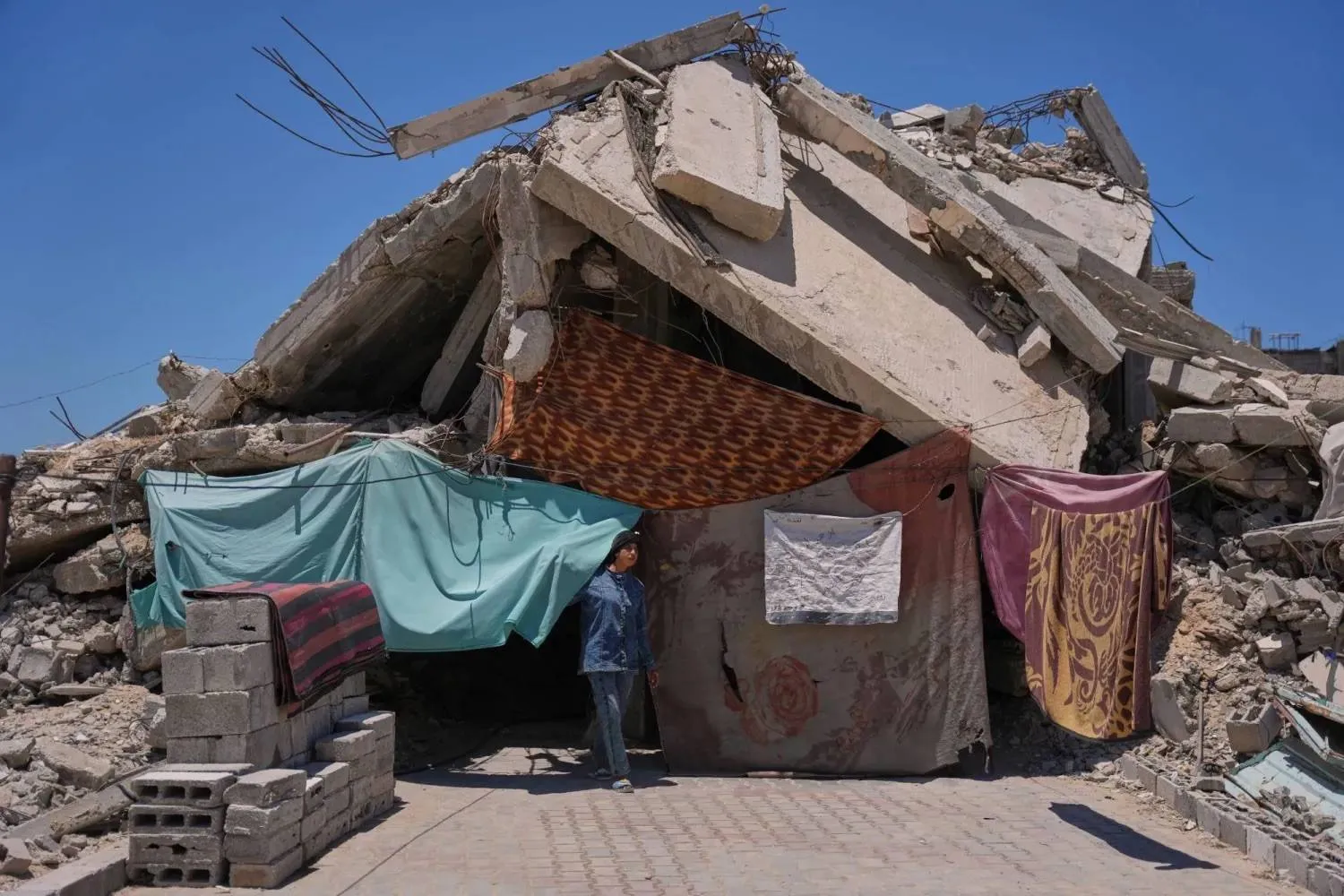
A Palestinian stands in front of the rubble of her family’s home, which was destroyed by the Israeli army in Khan Younis in southern Gaza, May 29, 2026. (AP)
TT

Hamas Blames Mladenov for Israeli Escalation as Mediators Continue Gaza Contacts

A Palestinian stands in front of the rubble of her family’s home, which was destroyed by the Israeli army in Khan Younis in southern Gaza, May 29, 2026. (AP)

Hamas has held Nikolay Mladenov, the senior Gaza representative at the Board of Peace, responsible for the latest Israeli escalation in Gaza, while confirming that intense talks with mediators and regional parties remain ongoing in an effort to halt the violence.

Sources within Hamas in Gaza said a delegation from the movement is preparing to travel to Cairo for discussions on the implementation phases of the Gaza ceasefire agreement that has theoretically been in place since October.

The talks come despite continued Israeli assassinations of gunmen from Gaza factions and airstrikes that have destroyed homes and killed civilians, including children, across the enclave.

More than 930 Palestinians have been killed in Gaza since the ceasefire was announced, bringing the overall death toll since October 2023 to nearly 73,000, according to figures cited by the movement.

Hamas spokesman Hazem Qassem said Sunday that the group was pursuing efforts “in all directions” to ensure implementation of the ceasefire and compel Israel to fulfill the commitments of the first phase of the agreement.

Qassem blamed both the Board of Peace and Mladenov for the Israeli escalation, deepening an already growing dispute between the two sides.

Indirect negotiations between Israel and Hamas remain deadlocked. Hamas insists that Israel implement the first phase of the agreement, including withdrawal from occupied areas in Gaza and the unrestricted entry of aid and commercial goods. Israel, meanwhile, is pressing for the disarmament of Palestinian factions as the central condition of the agreement’s second phase.

On Saturday, Hamas accused Israel of violating the agreement after Israeli Prime Minister Benjamin Netanyahu ordered Thursday the army to seize control of over 70 percent of Gaza’s territory.

Netanyahu acknowledged that Israeli forces currently occupy 60 percent of Gaza.

Egypt is expected to host the Hamas delegation as part of mediation efforts aimed at narrowing differences between the group and Israel, particularly regarding weapons issues and implementation of the ceasefire’s initial phase through a step-by-step approach.

The diplomatic activity comes amid intensified Israeli operations in Gaza, including strikes targeting members of Hamas’ armed wing, the Qassam Brigades, and Palestinian Islamic Jihad. Among those targeted in recent days were operatives allegedly involved in the Oct. 7, 2023, attack, as well as figures tied to weapons manufacturing.

Former Egyptian Deputy Foreign Minister Rakha Ahmed Hassan noted that the US-Israel war on Iran had negatively affected the Gaza file and enabled Israel to intensify military operations.

Rather than a gradual withdrawal, he argued, Israel has pursued “a gradual occupation,” reflecting what he described as an Israeli plan rather than an American peace initiative.

Hassan said mediators are now exploring new formulas regarding Hamas weapons, including storage or third-party custody arrangements.

Palestinian political analyst Nizar Nazzal said mediators may propose temporary measures to prevent further deterioration, but warned such efforts would likely face Israeli resistance and insufficient international pressure on Tel Aviv.



'Basis for Understanding' Brings Iraqi Kurdistan Closer to New Government

A Kurdish voter prepares his ballot during parliamentary elections at a polling station in Sulaimaniyah in Iraq's autonomous Kurdistan region on October 20, 2024. (Photo by Ahmad Al-rubaye / AFP)
TT

'Basis for Understanding' Brings Iraqi Kurdistan Closer to New Government

A Kurdish voter prepares his ballot during parliamentary elections at a polling station in Sulaimaniyah in Iraq's autonomous Kurdistan region on October 20, 2024. (Photo by Ahmad Al-rubaye / AFP)

Positive signs have emerged in Erbil and Sulaymaniyah indicating that an agreement leading to the formation of a new government in the Kurdistan Region of Iraq may be nearing, after the process was delayed for nearly two years by disputes between the region’s two historic political rivals, the Kurdistan Democratic Party (KDP) and the Patriotic Union of Kurdistan (PUK).

A PUK leader told Asharq Al-Awsat, speaking on condition of anonymity, that “talks are underway these days with the KDP and have begun on a clear basis between the two sides,” noting that “some details still require further consultation.”

The latest understanding between the two parties is based on “maintaining the presidency of the Kurdistan Region and the premiership for the KDP, with their deputies going to the PUK, along with the speakership of parliament,” according to the PUK leader. He added that his party “requires, in order to preserve the historic distribution of posts, that the two deputy positions be granted new powers that expand the partnership in governing the region.”

Regarding the allocation of key portfolios in the new cabinet, the leader said that “the PUK will receive the finance and Peshmerga portfolios, while the oil and interior ministries will go to the KDP.”

In the parliamentary elections held in October 2024, the KDP came first with 39 seats in the Kurdistan Region Parliament, followed by the PUK with 23 seats. The PUK subsequently allied with the New Generation Movement, which won 15 seats, in an effort to balance the scales in negotiations over forming a government with its historic rival.

Elected lawmakers were required to choose the new parliament speaker, deputy speaker, and secretary in a single session held on December 2, 2024. The session was limited to the swearing-in ceremony. Since then, parliament has remained inactive because of disputes between the two main parties.

‘Basis for Understanding’

An atmosphere of optimism is emerging from within the KDP camp. KDP leader Dlawar Faiq told Asharq Al-Awsat that reports of an emerging basis for understanding were “close to being accurate, but no agreement has been reached yet,” particularly because “neither party has made any official announcement about it.” KDP leader Abdul Salam Barwari also told Asharq Al-Awsat that “dialogue between the two parties is continuing, with a serious willingness this time to form the government.”

Last Saturday, Kurdistan Region President Nechirvan Barzani said that “efforts are underway aimed at enabling the Kurdish political parties to reach positive results,” noting that “the two parties are continuing to hold meetings, and we hope these efforts will culminate in understandings that serve the interests of Kurdistan and all its components.”

Since the Kurdistan Region’s parliamentary elections in October 2024, efforts to form a new government have stalled amid disputes between two camps of competing parties seeking greater influence over the anticipated cabinet.

Demands and Conditions

This time, emerging parties such as the New Generation Movement have entered the political competition and become part of the alliance landscape. However, the KDP and PUK continue to dominate the political process in the region.

The PUK-New Generation alliance, which holds 38 of the 100 seats in the Kurdistan Region Parliament, is demanding half of the cabinet, a proposal rejected by the KDP. The KDP argues that the seats held by other parties will give it the advantage, while nevertheless saying it does not object to its historic rival participating in government formation on a fair and balanced basis.

Members of the KDP have floated the possibility of holding new elections unless the PUK agrees to its demands, while some PUK members have raised the possibility of “near-independent rule for Sulaymaniyah from Erbil.”

PUK spokesperson Karwan Gaznayi said at a news conference in Sulaymaniyah on Sunday that his party “remains committed to its demands regarding government formation, but its doors remain open to reaching an understanding.”

Gaznayi added that a meeting between Kurdistan Region Prime Minister Masrour Barzani and his deputy, Qubad Talabani, had been “positive,” but had not produced an agreement on forming the new government. The distribution of posts was also not discussed at the meeting, he said, stressing that the PUK’s alliance with the New Generation Movement remains in place.

‘Balanced Government’

PUK leader Ahmed Al-Harki told Asharq Al-Awsat that a meeting of the party’s Political Bureau last Saturday and another meeting of its Leadership Council the following day reaffirmed the need to continue consultations and seek an understanding over the formation of the new government. He stressed that the government should be balanced and that no side should monopolize power.

PUK leader Soran Al-Daoudi told Asharq Al-Awsat that “the past few days have seen rapprochement with the KDP, as both sides have demonstrated their desire to reach an understanding and then agree on a balanced cabinet.”

“Nevertheless, forming the government requires further effort and pressure to achieve this as soon as possible,” Al-Daoudi added.


Taiz Battles and Bab al-Mandab Curb Houthi Push Eastward

A Yemeni fighter on the front line on one of the Taiz fronts during battles against the Houthis (Military Media)
TT

Taiz Battles and Bab al-Mandab Curb Houthi Push Eastward

A Yemeni fighter on the front line on one of the Taiz fronts during battles against the Houthis (Military Media)

Yemeni government forces intensified airstrikes on Houthi positions, fortifications, and reinforcements in Taiz Governorate in southwestern Yemen on Tuesday, as fighting continued on several fronts. The forces said they had retaken positions in the south and west of the governorate, shot down two drones, and captured several members of the group near Bab al-Mandab.

The Taiz Military Axis, affiliated with the Yemeni armed forces, said warplanes carried out five airstrikes on Houthi positions, gatherings, and vehicles on the Al-Ahkoum front in Hayfan District, southeast of the governorate. It said military sources indicated that the strikes targeted reinforcements heading toward the Hayfan and Al-Subaiha fronts.

In western Taiz, fighting continued in the areas of Al-Anin, Bani Bakari, Jurdad, and Al-Kadaha amid Houthi attempts to infiltrate and launch attacks. The Taiz Military Axis announced that two drones had been shot down, one over Mount Jurdad in the southwest of the governorate and the other on the Al-Kadaha front. It said the latter was carrying a mortar shell before reaching its target.

Field sources reported that government forces had retaken positions and hilltops on the southern and western fronts in Taiz, including positions around Kahboub near Bab al-Mandab, following heavy clashes with the Houthis.

The sources said the Giants Brigades and Nation’s Shield Forces had retaken several key strategic hilltops in Kahboub after the group had seized them in recent days. Government forces also announced that they had captured seven Houthi fighters on the Al-Saqiya coast, south of Bab al-Mandab, and seized a military vehicle belonging to the group.

On the western Jurdad Bani Omar front, located between the districts of Al-Wazi'iyah and Al-Shamayatain, sources said government forces had repelled a Houthi attack and forced the attackers to withdraw.

Al-Wazi'iyah also came under airstrikes targeting Houthi positions in the areas of Al-Dharifa and Al-Mashjab, as clashes continued in several contact zones. Military sources said the strikes inflicted losses on the group and thwarted attempts to reinforce its positions and advance along the front.

On the Kahboub front overlooking Bab al-Mandab, the Southern Giants Brigades announced the capture of a Houthi commander and one of his escorts. It also said it had carried out strikes that destroyed vehicles and targeted Houthi gatherings in Kahboub and Al-Wazi'iyah.

Casualties

The battlefield developments came amid reports of heavy casualties over the past two days. Agence France-Presse, citing military sources from both sides, reported that at least 154 people had been killed in fighting across several Yemeni governorates.

Houthi-affiliated military sources said 118 people had been killed in airstrikes, clashes, and artillery shelling in Taiz, Al-Jawf, Marib, and Saada, most of them in Taiz. Government military sources, meanwhile, reported that 36 military personnel had been killed during two days of fighting, most of them on the southern and western fronts in Taiz.

Field sources also reported the death of Houthi commander Mohammed Abdullah Saad Jallafa Al-Aweer, known as Abu Malik Al-Aweer, along with several of his escorts, during clashes around Mount Jurdad in Al-Wazi'iyah District.

Fighting Spreads

The clashes are not confined to Taiz and the area around Bab al-Mandab. Shelling and fighting continued on several other fronts. In Marib, clashes continued in Harib, Al-Jubah, Al-Kassarah, and Al-Mashjah, with no change in the balance of territorial control.

In Al-Jawf, government forces announced airstrikes on Houthi positions in Rahoub and Salbah in Barat Al-Anan District, as well as positions in Al-Marashi and Al-Dhahir. Government forces also announced that they had targeted Houthi fighters and equipment in Al-Bayda and shot down a drone in Shabwa.

In a separate development, Yemen's Ministry of Human Rights condemned a missile attack on a popular market in Al-Hajf in Al-Mudharabah wa Ras Al-Arah District of Lahj Governorate, saying the attack wounded several civilians and damaged property and vehicles.

The ministry said the market was hit Monday by two ballistic missiles that landed about an hour apart. It said preliminary information regarding the timing and trajectory indicated that, according to its assessment, the missiles were launched from areas under Houthi control in Al-Sabrah District of Ibb Governorate. The ministry said it was continuing to collect information and verify the extent of the casualties and damage.

In Al-Subaiha, Chief of Staff and Acting Commander of the Nation's Shield Forces Major General Abdul Rahman Saleh Al-Lahji said the forces remained firmly positioned on the front, stressing that the area would not become a route for the Houthis to return to Aden. He called for continued fighting and steadfastness in confronting the group.

The latest developments follow clashes in recent days across the highlands between western Taiz and northern Lahj. Fighting has focused on mountainous positions in Al-Shamayatain, Jabal Habashi, Al-Wazi'iyah, and Kahboub, amid reciprocal attempts to consolidate positions and control the high ground overlooking the coastal routes and Bab al-Mandab. Government forces had previously announced that they had retaken positions and thwarted Houthi attacks and infiltration attempts on several of these fronts.


Iraq’s Kurdistan Region Officially Unifies Peshmerga Forces

Kurdistan Region President Nechirvan Barzani speaks during a ceremony marking the unification of the Peshmerga forces. (Kurdistan Region Presidency)
TT

Iraq’s Kurdistan Region Officially Unifies Peshmerga Forces

Kurdistan Region President Nechirvan Barzani speaks during a ceremony marking the unification of the Peshmerga forces. (Kurdistan Region Presidency)

Iraq’s Kurdistan Region formally announced Monday the unification of its Peshmerga forces, ending a division into two forces that had lasted more than three decades, in a step aimed at unifying Kurdish ranks that have long been divided politically and on security matters.

The ceremony at the Kurdistan Region Presidency in Erbil was overseen by President Nechirvan Barzani, commander-in-chief of the Peshmerga, and attended by Prime Minister Masrour Barzani, the deputy prime minister and minister of Peshmerga affairs, Kurdish officials, representatives of the international coalition and diplomatic missions.

Abdul-Amir al-Shammari, director of the Office of the Commander-in-Chief of the Iraqi Armed Forces, also attended.

The Peshmerga split in the mid-1990s during the Kurdish civil war between the Kurdistan Democratic Party, led by Masoud Barzani, and the Patriotic Union of Kurdistan, then led by the late Jalal Talabani.

The forces were divided between the KDP-affiliated Unit 80, based in the party’s areas of influence in Erbil and Duhok provinces, and the PUK-affiliated Unit 70, concentrated in Sulaymaniyah province and the Halabja area.

Kurdish sources said the ceremony culminated a lengthy reform process aimed at unifying and reorganizing the Peshmerga under an institutional military structure overseen by the Ministry of Peshmerga Affairs.

Under a new decree, no Peshmerga force will remain outside the ministry as of Sept. 21, according to the regional presidency.

The integration process began years ago with support and pressure from the international coalition, particularly the United States, Britain and Germany, as well as other European countries. Integration was among the conditions for continued military and logistical assistance.

Although the Peshmerga are not explicitly named in Iraq’s constitution, Article 121 allows regional authorities to establish and organize internal security forces, including police, security forces and regional guards. Kurdish authorities consider the Peshmerga part of the regional guard.

Nechirvan Barzani said no force remained outside the Peshmerga umbrella and that the force must rise above partisan interests.

“The Peshmerga are the force of the people of Kurdistan,” he stated, adding that their mission was to protect all the region’s communities, including Kurds, Turkmen, Christians, Yazidis and Arabs.

He described the Peshmerga as part of Iraq’s defense system, saying stronger capabilities and greater coordination with federal forces would strengthen Iraq as a whole.

Barzani noted that unification must extend to training, duties, rights, promotions and military doctrine, stressing that the military should not become an arena for settling political or partisan scores.

He thanked the United States, the international coalition and countries that supported Iraq and the Kurdistan Region in the war against ISIS, including Britain, Germany, the Netherlands, Italy and France, and praised their role in Peshmerga reform, training and restructuring.

Washington, with Baghdad’s approval, delivered 24 M119 105mm howitzers to the Peshmerga in early August to bolster their capabilities against ISIS remnants, a move that drew objections from some Sunni and Shiite factions and figures in Baghdad.

Despite the unification, serious doubts remain over Kurdish political unity after nearly two years of failure to complete the regional government lineup following parliamentary elections.

PUK official Soran Dawoodi told Asharq Al-Awsat that Peshmerga unification could pave the way for political rapprochement between the KDP and PUK, adding that it would strengthen Kurdish public confidence in the force and advance the institutional framework sought by Kurdish citizens.