
Lebanon Prioritizes Genuine Ceasefire, Ready to Consider a Security Agreement

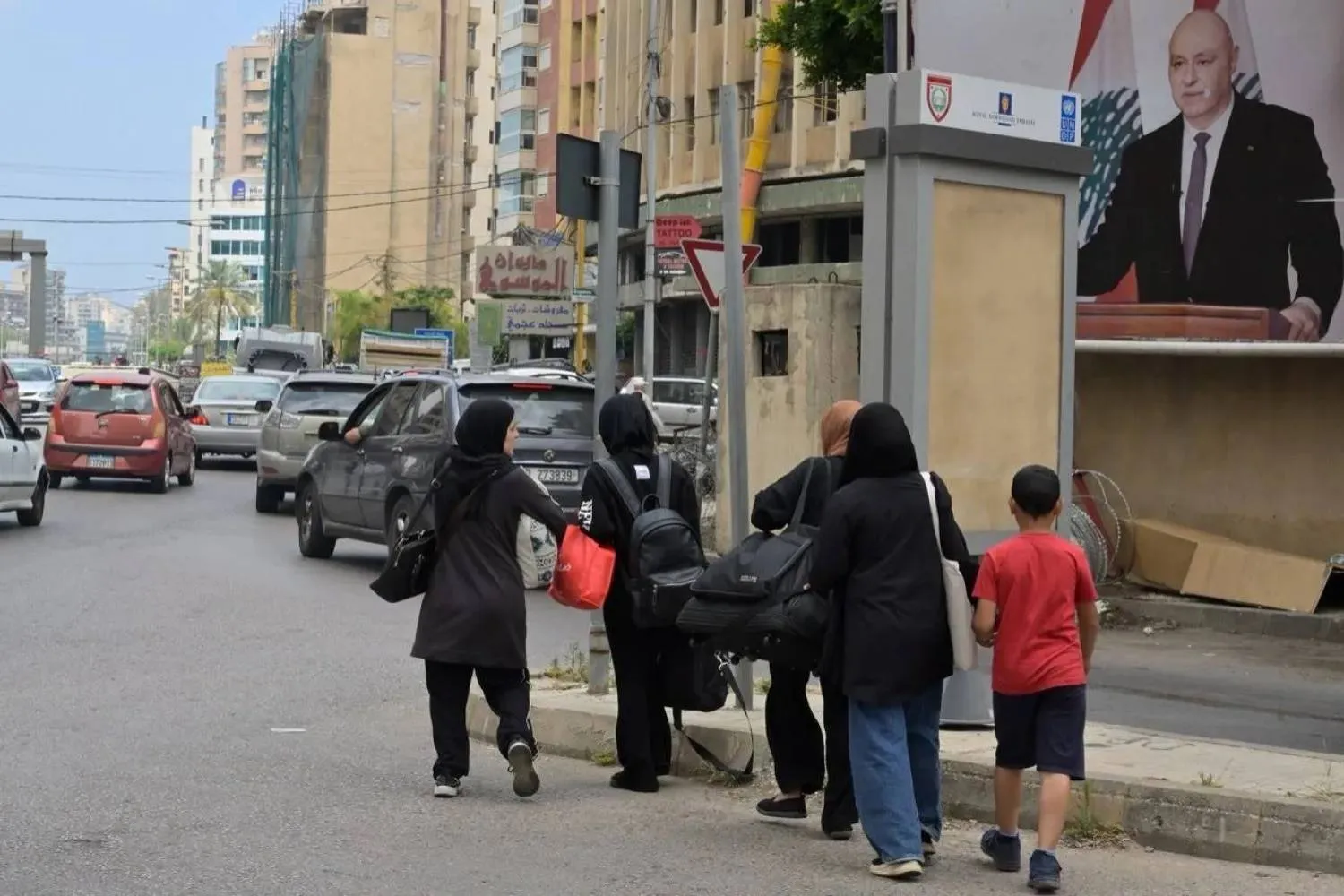
Families leave Beirut’s southern suburbs after Netanyahu ordered strikes on the area in Lebanon (Asharq Al-Awsat) 
TT

Lebanon Prioritizes Genuine Ceasefire, Ready to Consider a Security Agreement

Families leave Beirut’s southern suburbs after Netanyahu ordered strikes on the area in Lebanon (Asharq Al-Awsat) 

For the second time, Lebanon’s negotiators are heading to Washington with one primary demand at the top of the agenda: a ceasefire with Israel.

The second round of talks, scheduled for June 2–3, comes with little expectation of a breakthrough amid escalating tensions between Israel and Hezbollah.

The deadlock had already undermined an American attempt to secure a ceasefire initiative led by Secretary of State Marco Rubio, before US President Donald Trump announced Monday that he had held separate phone calls with both sides and that they had agreed to stop the fighting, raising cautious hopes that negotiations could gain new momentum.

Lebanese President Joseph Aoun nonetheless defended the decision to pursue negotiations, calling it “the right choice” imposed by the realities of war. He stressed that negotiations remain the least costly path toward ending the military confrontation and alleviating the suffering of the Lebanese people.

Lebanese Assessment: Tehran and Netanyahu Converge

A senior Lebanese source familiar with the negotiations told Asharq Al-Awsat that Aoun is working intensively with the United States to secure a “real ceasefire.” But the source said Lebanese officials increasingly believe that Iran’s Revolutionary Guard Corps and Israeli Prime Minister Benjamin Netanyahu share a common interest in obstructing such efforts.

According to the source, Netanyahu’s calculations are driven by personal and electoral considerations, while Tehran seeks to keep Lebanon as a bargaining card to be used by Hezbollah in Iran’s negotiations with Washington.

The source added that Aoun remains convinced ceasefire efforts will eventually succeed despite current obstacles, describing them as “the inevitable outcome of the current trajectory.” The American proposal, the source said, also included an Israeli withdrawal within the framework of reciprocal understandings.

Lebanon’s delegation is expected to enter the talks with a single demand — a ceasefire — after technical discussions reinforced the belief that ending the fighting is ultimately a political decision rather than a security matter.

At the same time, Lebanese officials say the country is open to all options that could follow such a ceasefire, including a security agreement similar to arrangements currently being discussed with Syria, a formal agreement ending the state of war, or a permanent cessation of hostilities. Anything beyond that — namely peace with Israel — would remain tied to the broader Arab position led by Saudi Arabia.

Revolutionary Guard Escalation, Israeli Threats

The American initiative called for Hezbollah to halt fire first for 48 hours, after which Israel would stop targeting Beirut and its southern suburbs before gradually reducing military operations.

Asharq Al-Awsat reported that American officials informed Lebanese leaders on Sunday that Israel had threatened to strike targets in Beirut and the southern suburbs after providing Washington with intelligence alleging that Iran’s Revolutionary Guard had instructed Hezbollah to intensify and expand rocket attacks deeper into northern Israel.

Sources said Rubio spoke with Netanyahu in an effort to push for a ceasefire. At nearly the same time, Hezbollah launched its largest rocket barrage so far, including precision-guided missiles targeting Kiryat Shmona and Nahariya.

Washington also conveyed an Israeli message stating that if Hezbollah agreed to stop firing toward Israel, Beirut could avoid further strikes. Such a move, the message said, could then become part of a broader arrangement leading to a gradual reduction in hostilities and eventually a complete halt. If Hezbollah refused, Israel would intensify strikes on Beirut, particularly in the southern suburbs.

Berri: Obstruction or Legitimate Demand?

An American official told Axios that Aoun backed the initiative and asked Lebanese Parliament Speaker Nabih Berri to pressure Hezbollah into halting attacks on Israel.

The official described Berri’s response as evasive and disappointing, saying he insisted that Israel should cease fire first.

But sources close to Berri defended his position, saying it was fully aligned with Lebanon’s broader national stance. They told Asharq Al-Awsat that Berri responded to the American proposal by demanding a comprehensive ceasefire by land, sea, and air, along with an end to Israeli destruction, in order to resume negotiations under calmer conditions both in Lebanon and Israeli settlements near the border.

The sources added that Berri later sent a second message to US Ambassador to Lebanon Michel Issa, stating that Hezbollah was prepared to comply and that he personally guaranteed such a commitment. “If this is considered obstruction,” the sources asked, “then what constitutes facilitation?”

Who Stops Firing First?

AFP quoted a US official as saying Rubio had held contacts with both Aoun and Netanyahu to advance the negotiations. The official added that Hezbollah must stop firing first, while Lebanon continues to insist on a complete halt to Israeli attacks and full implementation of the ceasefire.

Meanwhile, former minister Wadih El-Khazen quoted Berri as saying that what southern Lebanon is experiencing constitutes “a direct challenge to Lebanese sovereignty,” stressing that continued Israeli attacks and repeated violations require serious international action.

Berri also insisted that any negotiations must produce “tangible results that preserve Lebanon’s rights” rather than remain merely a formal framework incapable of ending ongoing attacks.

Aoun: Negotiations Are Safer Than War

Aoun reiterated that Lebanon adopted negotiations because of the war itself.

“Negotiation is safer than war,” he stated. “It is neither surrender nor concession. It will not solve the problem overnight, but it is a process that takes time and remains the only way to stop the war with the least possible damage.”

He continued: “We will not retreat from this choice. All of us in Lebanon, as officials, are doing the impossible. Negotiations may stumble or take longer to achieve the goal we seek, but they are moving forward. Every issue is ultimately resolved through negotiations, however long it takes. War will not produce results for any side.”

Regarding Hezbollah’s weapons, Aoun clarified that the Lebanese Army has not declared southern Lebanon free of arms but has established operational control over the area. He said completing the mission requires time because of the region’s geography, while accusing Israel of violating the ceasefire agreement by continuing to occupy five positions and carrying out military operations.

Hezbollah Renews Rejection of Direct Talks

For its part, Hezbollah continues to reject direct negotiations with Israel.

Hezbollah MP Hussein Hajj Hassan said Lebanon “cannot be governed by the principle of majority and minority,” arguing that no national consensus exists in support of direct negotiations, even if some Lebanese factions favor the idea.

“From the beginning, we announced our categorical rejection of direct negotiations with the Zionist enemy under American sponsorship,” he said.

Hajj Hassan accused Lebanese authorities of “pleading with the Americans” for a ceasefire while arguing that Washington refuses to pressure Israel because it supports the continuation of Israeli military operations and violations.

He said the proper alternative lies in restoring national unity and understanding among Lebanese factions, including Berri, Hezbollah, and their allies. He also maintained that Lebanon and any ceasefire arrangement there would form “an essential part” of any future US-Iran agreement.


Egypt Banks on Domestic Defense Manufacturing to Curb Military Spending

A military vehicle manufactured in Egypt. (Egyptian Ministry of Military Production)
TT

Egypt Banks on Domestic Defense Manufacturing to Curb Military Spending

A military vehicle manufactured in Egypt. (Egyptian Ministry of Military Production)

Egypt is increasingly relying on domestic defense manufacturing to curb military spending, expanding local production of armored vehicles, drones and air defense systems while continuing to diversify its foreign arms suppliers and pursue joint-production partnerships with other countries.

The strategy comes as the country posted the lowest military spending among Arab states last year, with defense expenditure accounting for 0.61% of gross domestic product, according to figures released by the Stockholm International Peace Research Institute (SIPRI).

Military experts told Asharq Al-Awsat that local arms production helps ease pressure on foreign-currency reserves required for imports while ensuring a more secure supply chain. They explained that modern warfare is characterized by the heavy consumption of weapons and ammunition, making uninterrupted access to military supplies a strategic necessity.

Egypt’s armed forces have pursued a comprehensive modernization program in recent years, including diversifying sources of weaponry and forging partnerships with major defense-producing countries, according to Egypt’s State Information Service.

The government is also pushing to expand reliance on locally manufactured defense products.

Minister of State for Military Production Salah Mostafa Gomblat said the current phase focuses on localizing advanced industrial technologies to improve production efficiency and enhance the competitiveness of Egyptian-made products.

He added that the strategy includes forging new partnerships with the private sector to reduce import costs and support the national economy.

According to SIPRI, Egypt recorded the lowest military spending among Arab countries in 2025 even as global military expenditure rose 2.9% from the previous year to $2.887 trillion. Algeria recorded the highest military-spending among Arab countries, at 8.83% of GDP.

Egypt has recently showcased a range of domestically produced defense systems, including armored vehicles, drones and air defense platforms displayed at the EDEX 2025 defense exhibition held in Cairo last December.

Among the systems highlighted were the Raad 300, a multiple-caliber guided rocket launcher capable of striking targets at ranges of up to 300 kilometers, and the Jabbar 150 unmanned aerial vehicle, which Egyptian officials describe as possessing advanced offensive capabilities.

The unveiling of the Jabbar 150 attracted attention in Israel. In a report published on June 8, Israeli website Natziv.net said Israeli security agencies were monitoring advances in Egyptian military technology and assessing their strategic implications.

Major General Nasr Salem, a military analyst, noted that Egypt’s drive to deepen domestic weapons production is intended both to secure military supply lines and reduce the cost of importing arms.

“Part of Egypt’s strategy to diversify its sources of armaments is based on localizing military industries,” Salem told Asharq Al-Awsat.

He stressed that the prolonged nature of modern conflicts requires armies to maintain a continuous flow of weapons and ammunition, adding that some military estimates suggest the cost of a single day of combat can equal a year’s defense procurement budget for some armed forces.

“For that reason, the best option for countries is to manufacture their own weapons,” he said.

Salem cautioned, however, that building a domestic defense industry is itself costly and requires access to advanced technologies capable of competing with foreign systems.

He added that local production offers another advantage: the ability to design weapons tailored to a country’s operational environment and the needs of its armed forces.

Major General Samir Ragab said expanding local defense production also helps reduce pressure on foreign-currency resources.

“No country in the world can achieve complete self-sufficiency in armaments,” Ragab told Asharq Al-Awsat, noting that certain categories of advanced weapons will continue to be imported from countries with more sophisticated defense-industrial capabilities.

Nevertheless, he said, a strong domestic defense-industrial base enhances the Egyptian military’s capabilities and provides Cairo with greater flexibility to develop weapons systems suited to its own requirements.


Lebanon Reports Israeli Strikes in South after Evacuation Warning

 Smoke billows from southern Lebanon following an Israeli strike, as seen from Marjeyoun, Lebanon, June 12, 2026. (Reuters)
Smoke billows from southern Lebanon following an Israeli strike, as seen from Marjeyoun, Lebanon, June 12, 2026. (Reuters)
TT

Lebanon Reports Israeli Strikes in South after Evacuation Warning

 Smoke billows from southern Lebanon following an Israeli strike, as seen from Marjeyoun, Lebanon, June 12, 2026. (Reuters)
Smoke billows from southern Lebanon following an Israeli strike, as seen from Marjeyoun, Lebanon, June 12, 2026. (Reuters)

Lebanon reported Israeli strikes on the country's south on Saturday shortly after the Israeli army issued an evacuation warning for 20 locations including the city of Nabatieh ahead of raids there, said AFP.

The state-run National News Agency (NNA) said Israeli airstrikes hit several areas covered by the warning, including the villages of Rihan and Sujud, located not far from Nabatieh. 

The Israeli army warning urged residents to "evacuate your homes immediately and move to the north of the Zahrani River", around 45 kilometers (28 miles) from the southern border with Israel. 

The Israeli army last month declared all areas south of the river "combat zones", and has since been striking the area. 

The NNA late Friday reported explosions and artillery shelling near the Ali Taher hills overlooking Nabatieh. 

On Friday Hezbollah, which has kept up attacks on Israeli troops who have invaded south Lebanon, said its fighters had confronted Israeli forces advancing towards the town of Majdal Zoun. 

Israel and Hezbollah have been at war since early March when the Iran-backed group drew Lebanon into the Middle East conflict with rocket fire at Israel to avenge the killing of Iran's supreme leader in US-Israeli strikes. 

Israel launched a massive campaign of airstrikes and a ground invasion, killing more than 3,700 people in Lebanon, authorities say. 

Neither Israel nor Hezbollah have respected an April ceasefire, and a conditional truce deal announced this month after the fourth round of direct Lebanese-Israeli negotiations in Washington has also failed to halt the fighting. 

Hezbollah has rejected the direct talks and the conditional agreement, which requires it to cease attacks but makes no mention of Israel doing so or withdrawing troops from Lebanon. 

Iran insists that Lebanon must be part of any agreement to end the wider Middle East war, and a senior US official said Friday that a peace deal with Iran "includes Lebanon". 

But Lebanon's leaders have accused Tehran of treating Lebanon as a "bargaining chip". 

Hezbollah lawmaker Ali Fayyad on Saturday urged Lebanon to take advantage of any deal to end the Iran war that includes the country. 

"We want the Lebanese state to negotiate for itself, and nobody is suggesting forfeiting this role," Fayyad said, "however, the state must abandon the policy of being crushed in the face of the Israelis and submission to the Americans." 

Lebanese President Joseph Aoun said in a statement on X on Saturday that Lebanon faces "a fateful test". 

"Either its people unite around a sovereign state that monopolizes weapons, upholds the law and protects citizens irrespective of their affiliation or position, or it remains hostage to the logic of militias," the statement said. 


Sharaa: Syria Seeks to Stop Lebanon War, Not Join It

Syrian President Ahmed al-Sharaa (SANA)
TT

Sharaa: Syria Seeks to Stop Lebanon War, Not Join It

Syrian President Ahmed al-Sharaa (SANA)

Syrian President Ahmed al-Sharaa has moved to quell renewed speculation that Syria could become involved in the war in Lebanon, saying reports that Damascus intends to intervene militarily are “mere rumors.”

Sharaa said Syria’s position at this stage was based on “seeking to stop the war in Lebanon, not becoming involved in it.”

His remarks came during a meeting with a delegation from the Damascus countryside. He said demarcating the Syrian-Lebanese border was “not currently a priority” given more urgent files, foremost among them the case of about 1.4 million displaced Syrians in Lebanon and efforts to find a suitable mechanism to ensure their return.

US President Donald Trump had recently reaffirmed Washington’s goal of delivering a strong blow to Hezbollah. According to him, Israel has done what is necessary in the south, but there is still much left to eliminate Hezbollah. He then hinted at possibly having to ask Syria’s involvement.

Trump’s remarks prompted a wave of interpretations, amid reports of a possible visit by Sharaa to Washington. The Syrian presidency denied those reports.

Sources in Damascus told Asharq Al-Awsat that the US remarks were “a form of reshuffling the cards” and fell within “the framework of negotiating statements and sending messages to Iran.”

The sources said, “So far, there has been no official US request to Damascus related to any form of Syrian military intervention in Lebanon.” They said Tom Barrack, Trump’s envoy to Syria and Iraq and Washington’s ambassador in Ankara, had previously asked Damascus “to take a clear, explicit and serious position against Hezbollah.”

The sources said Damascus believes it already has such a position, reflected in border control, cutting smuggling routes and high-level coordination with the Lebanese government.

They added that “entering the quagmire of war and sending military forces unilaterally is completely ruled out,” and that it was “very, very early” to discuss the possibility of Syrian forces entering Lebanon in support of the Lebanese army.

Brigadier General Hassan Abdul Ghani, commander of the Border Guard Forces in the Syrian Arab Army, met last Thursday with a Lebanese army delegation headed by liaison official Brigadier General Michel Boutros, in the presence of several officers.

The talks focused on issues of mutual concern, mainly “enhancing cooperation and coordination between the two sides in border control and combating smuggling activities, in a way that contributes to strengthening border security between the two countries.”

At the same time, Syria’s Interior Ministry said “Lebanon is a sovereign state and not a backyard, as the former regime viewed it,” stressing that “coordination with Lebanon is the basic pillar for any assistance Syria provides to Lebanon.”

Sharaa had expressed Syria’s readiness to provide Lebanon with whatever support and assistance it can, within available capabilities and circumstances, when he received former Lebanese Prime Minister Najib Mikati in Damascus on the ninth of this month.

Media reports said Sharaa told Mikati that “Lebanon’s stability and security constitute a direct Syrian interest,” and that Damascus was keen to build the best relations with the Lebanese state on the basis of mutual respect, good neighborliness and non-interference in internal affairs.

The meeting between Sharaa and Mikati, which lasted for hours, discussed the state of bilateral relations between Damascus and Beirut and prospects for developing them in the next stage, along with several economic and investment files of mutual interest, in light of the transformations taking place in the region.