




Iraq is stepping up its measures to impose state monopoly over weapons with some Shiite armed factions declaring that they were dismantling their military wings that have for years operated outside the control of the armed forces even though they are part of the official Popular Mobilization Forces (PMF).
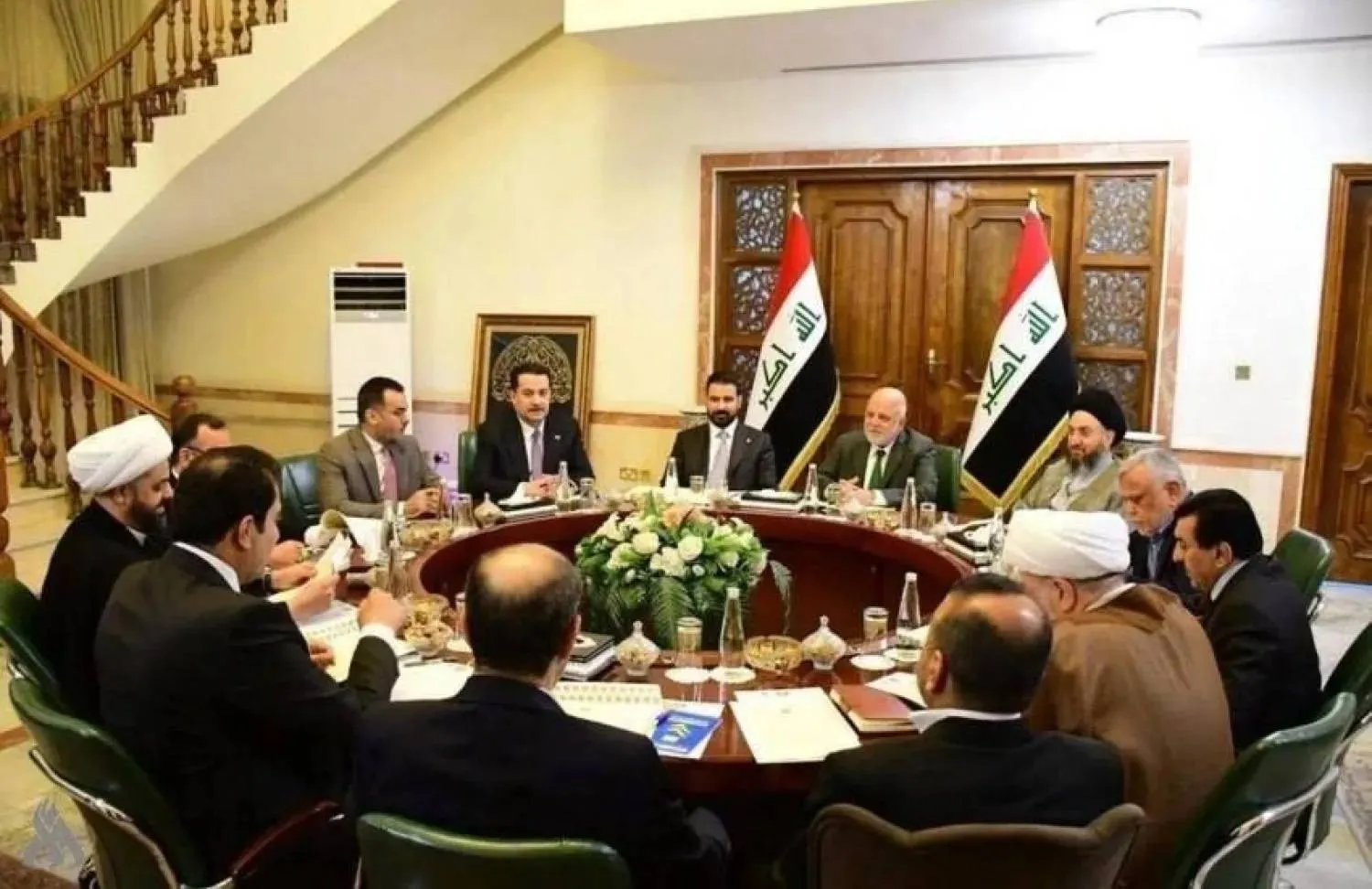
On Monday, the ruling Shiite Coordination Framework tasked Prime Minister and Commander-in-Chief of the Armed Forces Ali al-Zaidi with taking the necessary measures and decisions to “preserve the country’s supreme interests”.
It backed efforts to “impose state monopoly over arms and disengage the PMF from political, partisan and societal frameworks.”
The Coordination Framework is a coalition of Shiite parties and armed factions with varying ties to Iran.
Zaidi attended Monday’s meeting that also said that the decision of war and peace “is a sovereign one that is exclusively controlled by the people of Iraq through their constitutional institutions represented by the government and elected parliament.”
The statement was an implicit rejection of some factions’ involvement in the US-Israeli war on Iran, on Tehran’s side, after they carried out attacks without first referring to the government. It slammed such attacks as “illegal and unconstitutional.”
Moreover, the statement said the PMF is an “official security institution that is bound to the constitution and laws and orders of the commander-in-chief of the armed forces.”
US Embassy Chargé d'Affaires Joshua Harris welcomed the Framework’s statement, saying it was a step forward in consolidating independence and sovereignty for a promising future for Iraq.
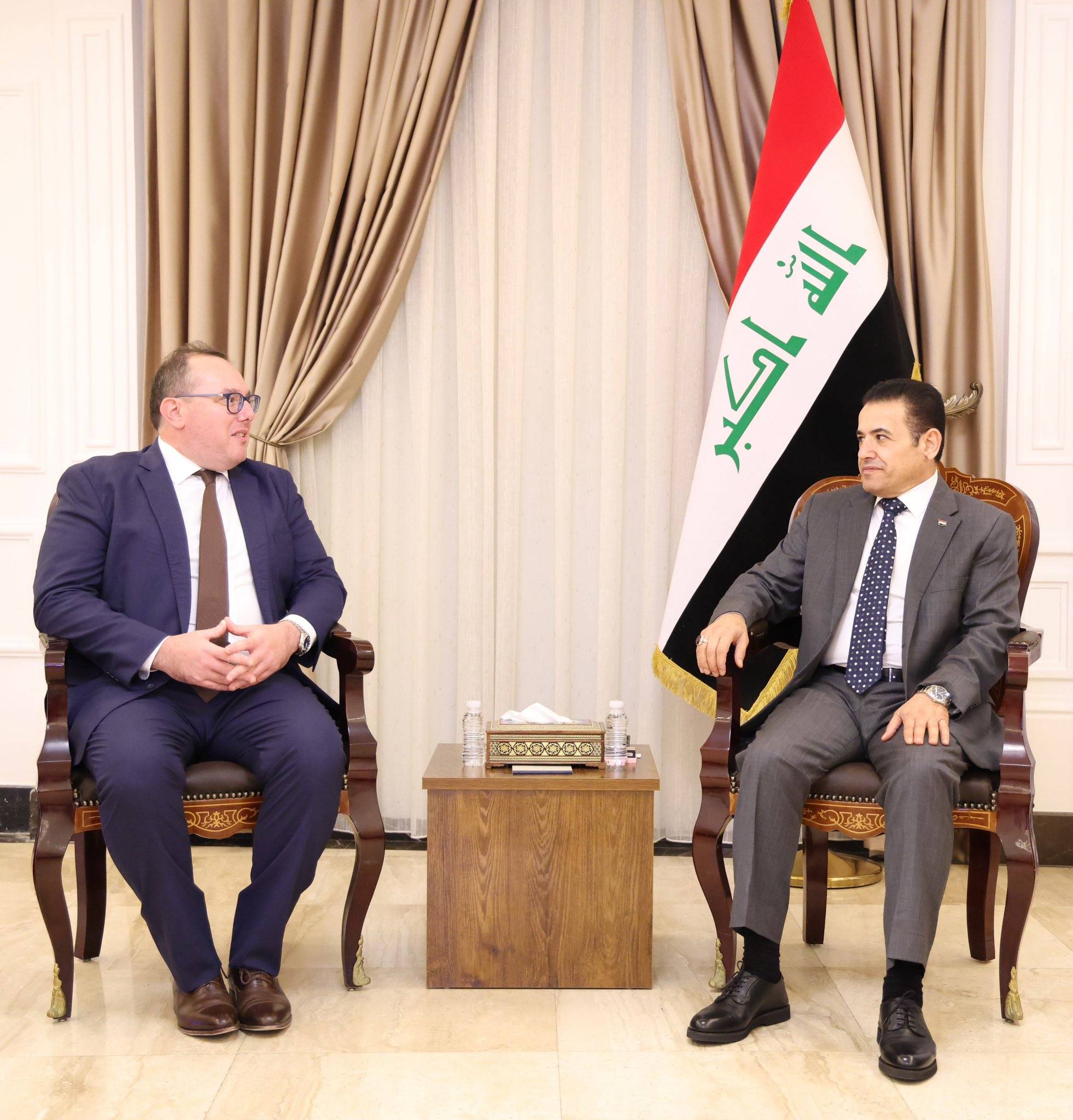
Iraq’s National Security Advisor Qassim al-Araji met with Harris on Tuesday, saying: “We underscored the importance of supporting the government’s efforts to ensure that arms remain exclusively under state authority.”
“We also welcomed the Coordination Framework’s position on this issue and its contribution to strengthening stability, reinforcing state authority, and upholding the rule of law,” he added in a post on X.
“We reaffirmed Iraq’s steadfast commitment to peaceful approaches in addressing crises and conflicts, in accordance with international law and diplomatic norms, in a manner that promotes regional and international peace and stability,” he stressed.
An official source in the Framework told Asharq Al-Awsat that disengaging the PMF from political and social frameworks aims to the steer it away from the “control of political leaderships and therefore, prevent it from being dismantled or restructured.”
It explained that American demands for the disarmament of factions also target the PMF seeing as most of the armed groups operate within it. So, the Framework’s statement on Tuesday may have been a preemptive step against demands for the PMF’s restructuring.
Two factions to disarm
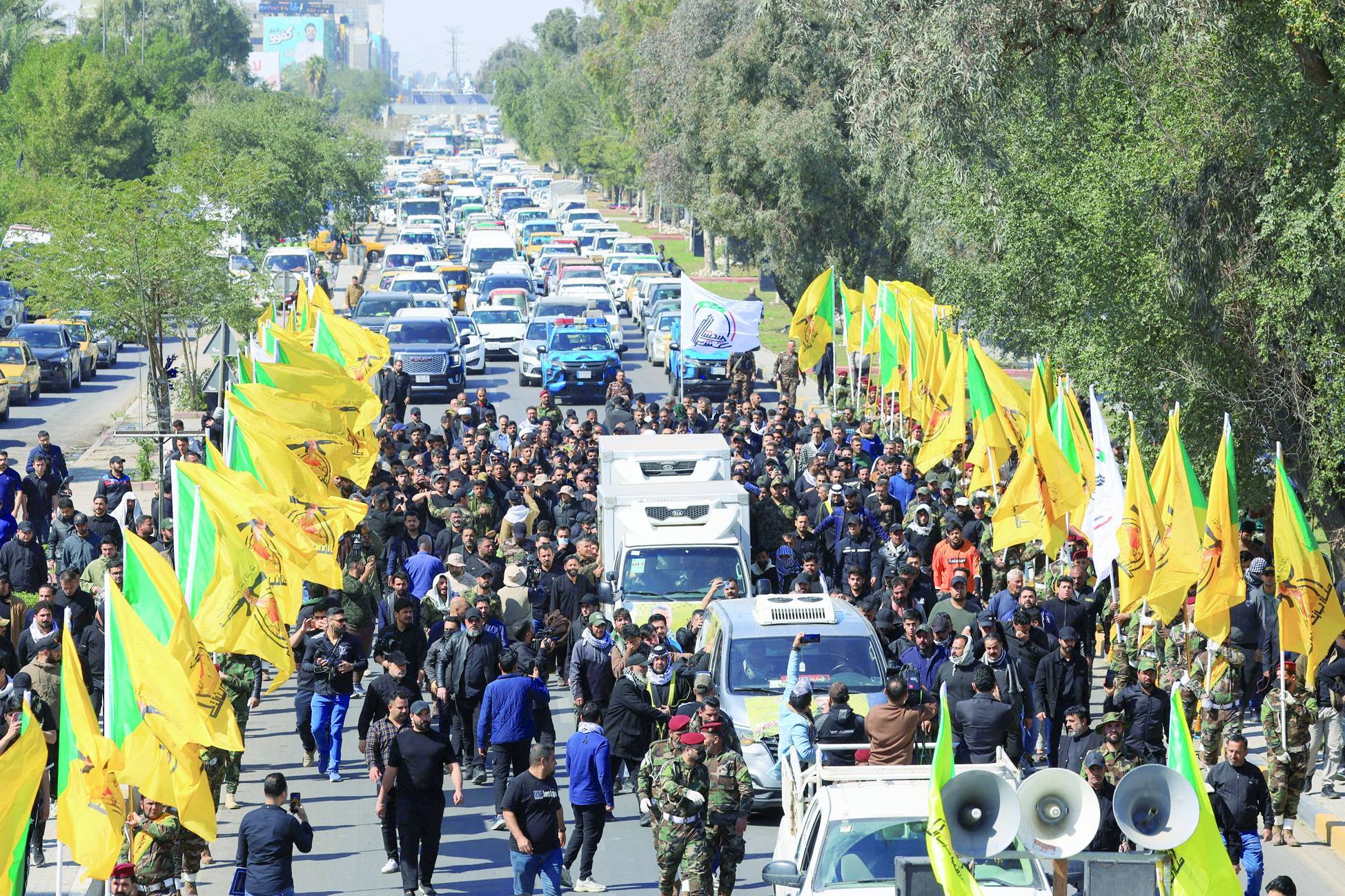
In a related development, the Asaib Ahl al-Haq, one of Iraq’s most powerful Iran-backed armed groups, announced on Tuesday that it would begin putting its weapons under government control.
Asaib Ahl al-Haq said it had formed a committee to oversee the move, including an inventory of its fighters, weapons and equipment, and to coordinate with the commander-in-chief of the armed forces. The group cast the decision as a response to calls by Iraq’s top Shiite religious authority and the Framework.
The Kataib Imam Ali faction also said on Tuesday that it was disengaging from the PMF and taking steps to limit weapons to the state.
In a statement, it said the move complies with the demand of the Framework and stems from its “national responsibility” and aims to “bolster national unity.”
In contrast, the Ashab al-Kahf group, which is part of the so-called “Islamic Resistance”, rejected on Tuesday calls for the disarmament of factions.
“Claims that the higher religious authority backs these efforts are baseless,” it charged.
The Kataib Hezbollah and Nujaba movement continue to reject calls to lay down their weapons.
Meanwhile, leader of the Hikma Movement Ammar al-Hakim said the factions are waiting until September to take a “decisive” step on disarmament.
September is the deadline for anti-ISIS international forces to withdraw from Iraq in line with an agreement reached with former PM Mohammed Shia al-Sudani last year.
Observers have said that the disarmament process still lacks clarity, explaining that the leaders of these groups are taking the decisions while the official authorities are not playing a clear role in overseeing that they are being implemented.
Questions also remain about the size of their arsenal and whether they will indeed turn them over to the government authorities.
Different views
Expert on Shiite groups Ibrahim al-Abadi said it was unlikely that the armed groups will comply with the Framework’s demand to disarm.
In remarks to Asharq Al-Awsat, he said the factions that possess weapons are divided over the state monopoly over weapons.
One group believes that it has no interest in keeping the weapons as the cost has become too high given the US sanctions and the ensuing economic, financial and political losses it will incur, he explained.
This group believes that it has succeeded in “employing the ideology of weapons to achieve its financial and political ambitions. Its goals now do not sustain the ability to maintain the weapons, which are seen as an obstacle to reaching higher positions in power.”
“So, it believes that it is in its best interest to lay down some of the weapons and turn its partisan members into employees that can run their financial empire. This group now tries to curry favor with the Americans, sending them messages and seeking to end the enmity with the US,” he revealed.
“The second group is fearful of the future and wants to keep the weapons as a bargaining chip to keep positions and gains reaped throughout the years they used these weapons to acquire these gains,” he continued.
“So, this group refuses to lay down its arms. However, it will not be able to withstand internal and foreign pressure, and it is weighing the high risks of such a confrontation,” al-Abadi said.
“The third group openly declares its allegiance to the Iranian project and doesn’t even discuss disarmament. It believes that the American project is targeting the resistance forces in the region,” he remarked.
“It is using religious, political and ideological excuses to justify its defiance of the state’s decision to impose monopoly over arms,” he added.


