
Iraq on Verge of Restructuring Popular Mobilization Forces

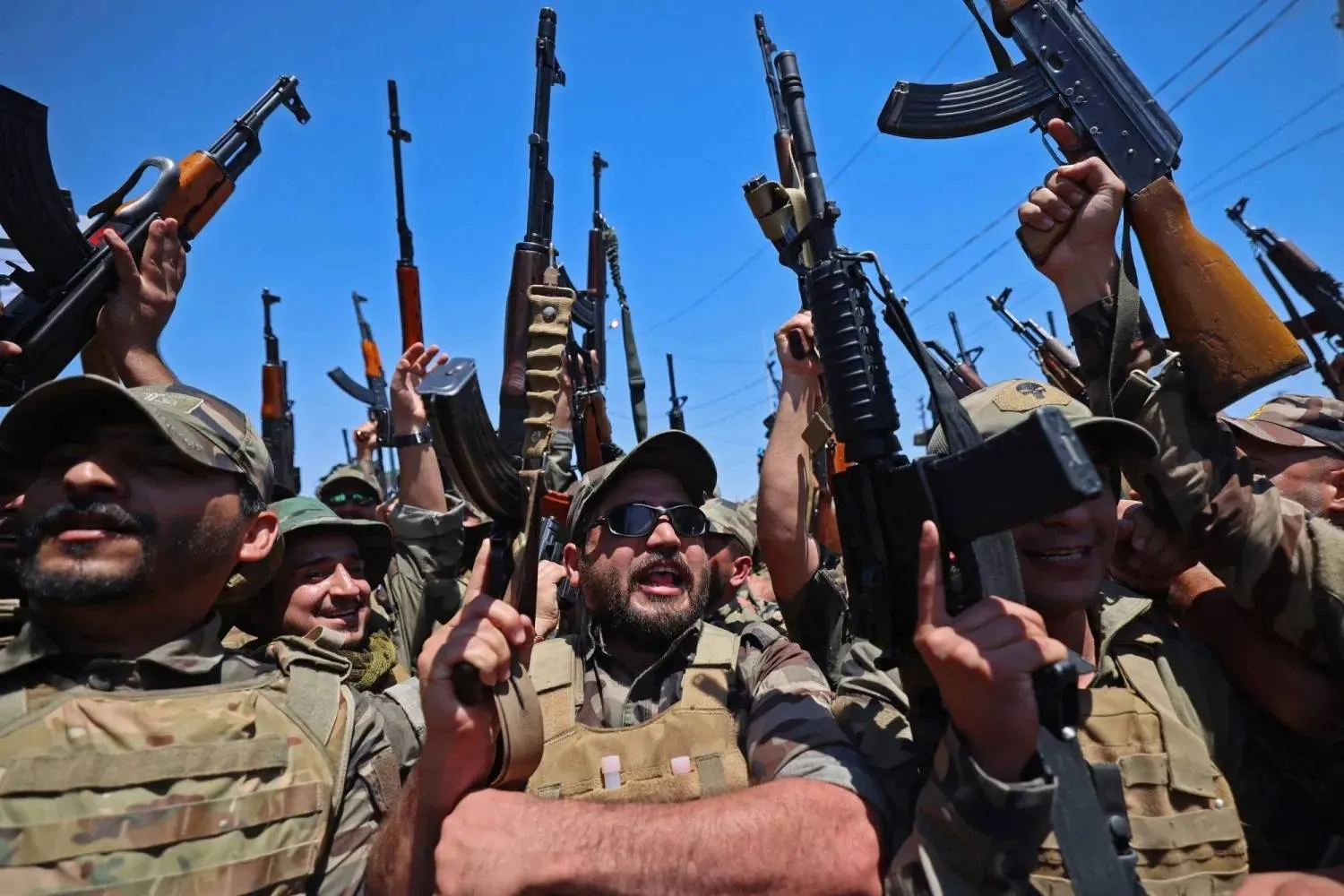
Members of Saraya al-Salam attend a ceremony in Samarra on June 4, 2026, marking their integration into Iraq’s security forces. (AFP)
TT

Iraq on Verge of Restructuring Popular Mobilization Forces

Members of Saraya al-Salam attend a ceremony in Samarra on June 4, 2026, marking their integration into Iraq’s security forces. (AFP)

The military wing loyal to Sadrist movement leader Moqtada al-Sadr handed over responsibility for security in Samarra to the Iraqi army on Thursday, in a symbolic ceremony that included lowering the faction’s flag at its operations headquarters.

The move, seen by observers as a “qualitative shift,” coincided with an announcement by the spokesman for Iraq’s armed forces that work had begun to restructure formations of the Popular Mobilization Forces and guarantee the rights of their members.

Saad Maan, head of the Security Media Cell, said all Saraya al-Salam fighters affiliated with Sadr were now under the command of the prime minister, the commander-in-chief of the armed forces.

Footage aired by state television showed Saraya al-Salam members lowering their faction’s flag outside the operations headquarters, in the presence of a military committee sent by Prime Minister Ali al-Zaydi.

Saraya al-Salam is part of the Popular Mobilization Forces through brigades 313, 314, and 315. It carries out security duties in several areas, most notably Samarra.

Sadr announced on May 27 that he was merging his military wing, Saraya al-Salam, into the state, and called on Popular Mobilization Forces factions to hand over their weapons.

Within a week, Asaib Ahl al-Haq and Kataib al-Imam Ali also announced their separation from the Popular Mobilization Forces. Kataib Hezbollah and Harakat al-Nujaba, however, have continued to reject demands to disarm and dismantle the factions.

Saraya under the commander’s authority

After the handover ceremony, Deputy Commander of Joint Operations Qais al-Mohammedawi said at a news conference that merging Saraya al-Salam meant placing it under the commander-in-chief of the armed forces.

He said, “A committee had been formed by government order to relink and redistribute armed formations so they move away from any other political title or formation.”

Saraya al-Salam brigades have been stationed in Samarra since the bombing of the Imam al-Askari shrine in June 2007. It remains unclear whether its members will leave the city for the first time in 19 years. But a military source told Asharq Al-Awsat the faction had handed over all its headquarters to the army, while its fighters now answer to the commander in chief of the armed forces.

Still, observers say the details of dismantling and disarmament remain unclear. Questions persist about the types and quantities of weapons held by the factions, whether they will hand them over to government authorities, and whether they will give them up entirely.

An Iraqi security official said the mechanism for placing all weapons under state control “remains unclear,” according to AFP. Local media, however, circulated claims that the Coordination Framework had put forward an initiative for discussion.

The proposal reportedly includes “securing tens of thousands of government jobs in official security institutions for individuals whose armed factions agreed to disengage.”

Restructuring the Popular Mobilization Forces

In a notable development, Sabah al-Numan, the spokesman for the commander in chief of the armed forces, said the committee formed at the commander in chief's direction had begun work to place all weapons under state control.

He said disengagement from the Popular Mobilization Forces included restructuring its formations and guaranteeing the rights of its members.

It is the first official reference to “restructuring the formations of the Popular Mobilization Forces” since the force was established in 2014 to fight ISIS.

Numan said the term “disengagement” involved administrative frameworks and restructuring these formations within the security services, while guaranteeing fighters’ rights and integrating them into military formations.

“The committee has been formed and has begun its work,” he said. “It will set the mechanisms for merging and incorporating the relevant formations, and for handing over weapons, equipment and camps to the Iraqi security authorities.”

Numan said “all weapons and all equipment” would be handed over to the central committee and Iraqi security authorities. A full inventory, he added, would be submitted within two days to the central committee, which is under the direct supervision, direction and follow-up of the commander in chief of the armed forces.

The committee includes several bodies, including the Defense Ministry, the Interior Ministry, the Joint Operations Command and the Popular Mobilization Forces Commission.

The Coordination Framework authorized Prime Minister and Commander in Chief Ali al-Zaydi to take the decisions and measures needed to protect the country’s higher interests.

It also backed “restricting weapons to the state and disengaging the Popular Mobilization Forces Commission from political, partisan and social frameworks.”

What comes next?

Asaib Ahl al-Haq, led by Qais al-Khazali, is expected to take a step similar to that of the Sadrist movement after agreeing with the prime minister to form a committee to separate from the Popular Mobilization Forces.

Khazali is under US sanctions and is one of the leaders of the Coordination Framework, which holds the largest parliamentary bloc. His political influence grew after his group won 27 seats in the latest parliamentary elections.

A source close to Asaib said the group “currently considers political work and presence in government more important than fighting. Therefore, it wants to give assurances to the United States.”

Kataib al-Imam Ali also said it would form a committee to “follow up the inventory, handover and transfer process under Zaydi’s supervision,” and another to “follow up the affairs of individuals and members and reintegrate them into state institutions.”

In practice, that means “all decisions related to their brigades within the Popular Mobilization Forces” will come under Zaydi’s authority “administratively,” according to a source close to the factions.

US special envoy to Syria and Iraq Tom Barrack welcomed a step that “will contribute to building order” and praised the initiative of Prime Minister Ali al-Zaydi, who, after taking office last month, pledged to restrict weapons to the state.

The move comes as Washington gains political and economic ground in Iraq, while Tehran’s regional influence has declined since the outbreak of the war in Gaza between Israel and Hamas, which is backed by Tehran, in 2023, followed by Israel’s first war against Iran in 2025, and then the second war launched by the United States and Israel in February, whose repercussions reached Iraq.

Disarmament plan

Asharq Al-Awsat revealed on May 9, 2026, that an Iraqi committee, including Prime Minister-designate Ali al-Zaydi, was working to complete an “executive project” to disarm armed factions before presenting it to Washington, amid mounting US pressure to keep militias away from the new government and key state institutions.

The committee had presented militia leaders with “ideas on how to disarm,” but some meetings “did not pass calmly,” according to informed sources.

The plan includes removing heavy and medium weapons and restructuring the Popular Mobilization Forces, alongside expected changes in sensitive security agencies, possibly including the intelligence service.

Political sources, however, questioned the government’s ability to implement the project, saying it may be aimed at “buying time.”


In the West Bank, Israeli Settlers Take Over Palestinian’s Dream Home

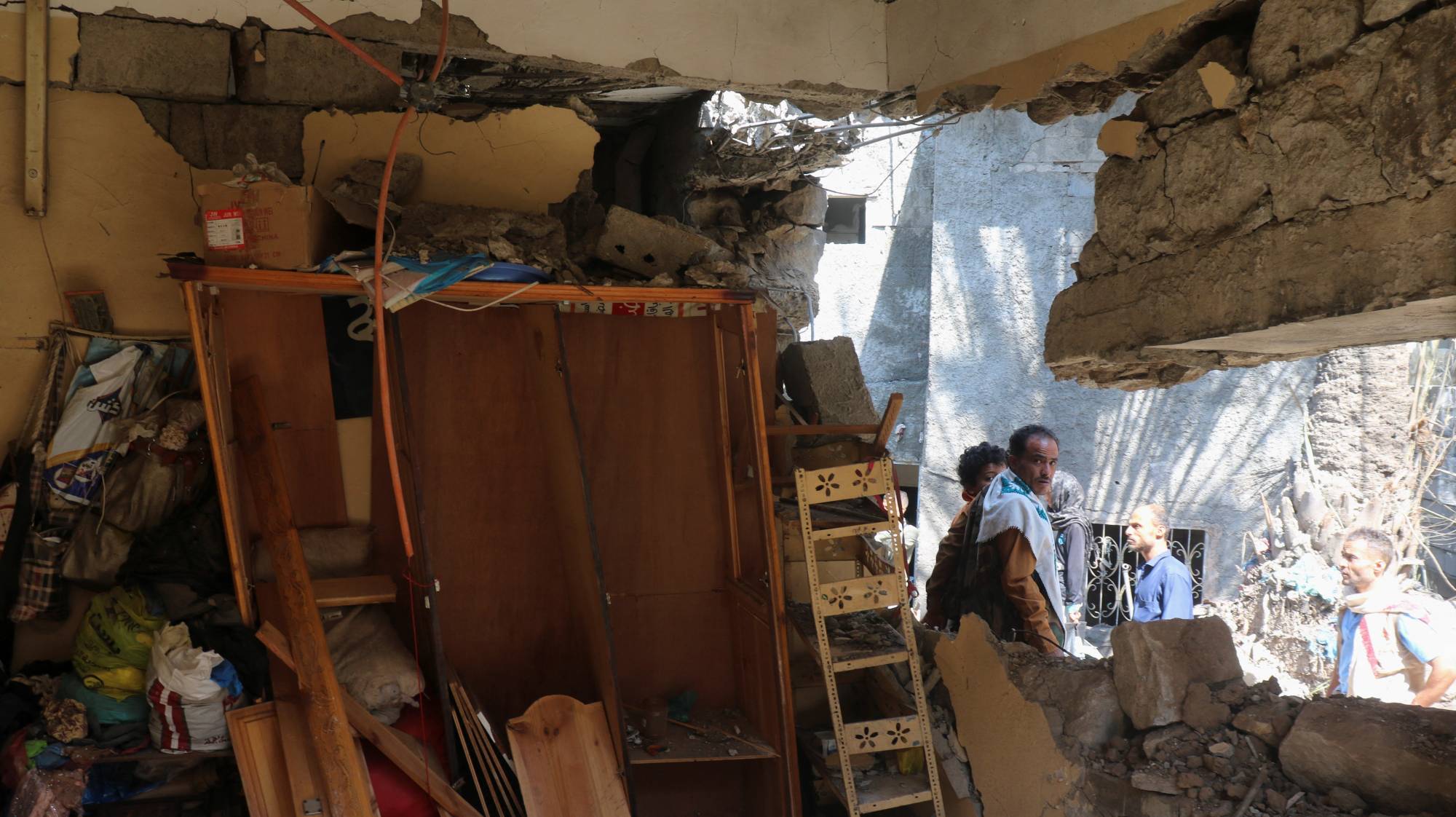
 An Israeli settler sits on the roof of the Palestinian Salameh family house, which was taken over by Israeli settlers in the village of Jalud in the Israeli-occupied West Bank July 2, 2026. (Reuters)
An Israeli settler sits on the roof of the Palestinian Salameh family house, which was taken over by Israeli settlers in the village of Jalud in the Israeli-occupied West Bank July 2, 2026. (Reuters)
TT

In the West Bank, Israeli Settlers Take Over Palestinian’s Dream Home

 An Israeli settler sits on the roof of the Palestinian Salameh family house, which was taken over by Israeli settlers in the village of Jalud in the Israeli-occupied West Bank July 2, 2026. (Reuters)
An Israeli settler sits on the roof of the Palestinian Salameh family house, which was taken over by Israeli settlers in the village of Jalud in the Israeli-occupied West Bank July 2, 2026. (Reuters)

Palestinian Mohammad Salameh was building a home for his family in the Israeli-occupied West Bank, where his recently engaged son was meant to start married life. Instead, before construction was complete, a group of Israeli settlers seized the property.

Video filmed earlier in the week and verified by Reuters showed at least six settlers moving around on the roof of the two-storey house, which sits below a nearby hill.

Salameh said appeals to the Israeli military and police brought no help.

Now he fears his home, which like many others in the Palestinian territory is surrounded by Israeli settlements and smaller outposts, is lost forever.

Other houses in the area could suffer the same fate, ‌he said.

"Only God ‌knows, if there is law and order then they will leave," Salameh ‌said. "If ⁠they succeeded with ⁠taking one, then the rest will follow."

Reuters was unable to reach the settlers for comment. One of them could be seen walking on the house's roof on Thursday.

The Israeli military said it was checking Reuters' request for comment, but had not responded by Friday. The Israeli police did not immediately respond to a request for comment.

Jewish settlement of Shilo in the Israeli-occupied West Bank as seen from the Palestinian village of Jalud July 2, 2026. (Reuters)

SETTLEMENTS, SETTLER ATTACKS WIDEN UNDER NETANYAHU GOVERNMENT

The seizure of Palestinian land by settlers is a longstanding feature of life in the West Bank, where about 500,000 ⁠Israelis live among roughly 3 million Palestinians.

Palestinians have for years reported damage ‌to farmland, vandalism and attacks linked to settlement expansion.

A ‌UN inquiry reported last month that Israeli settler attacks on Palestinian villages and agricultural land had surged since 2023, ‌rising by 130%.

Residents of Jalud, Salameh's village, say this week's incident marks another troubling escalation ‌because the settlers seized a house that was still under construction.

"They have now moved down to within no more than 100 meters from the last house in Jalud, which is also a house under construction belonging to a resident," said Raed al-Haj Mohammad, head of the village council.

Jalud has faced five major settler ‌attacks, he said, including the burning of homes, damage to vehicles and the uprooting of trees.

Most countries and the United Nations regard Israeli ⁠settlements in the West Bank ⁠as illegal under international law, citing the Fourth Geneva Convention's prohibition on transferring a civilian population into occupied territory.

Israel rejects that position, saying the West Bank is disputed territory where there has been a Jewish presence for thousands of years.

Palestinians consider the West Bank, together with Gaza and East Jerusalem, as part of a Palestinian state.

Settlement building and settler violence have long been among the biggest obstacles to peace efforts between Israel and the Palestinians.

Even Israel's staunchest allies, including the United States, have condemned settler actions.

Nevertheless, settlement expansion has accelerated under Prime Minister Benjamin Netanyahu's government, which relies on hardline pro-settlement parties to maintain its parliamentary majority.

For Salameh, the dispute is painfully personal.

Construction on the house stalled after the Gaza war erupted in 2023, when his son could not find work and the family's finances came under strain.

"The neighbor close by has built a two-story house, which they will probably take too, if we lose this house (his) they will lose theirs," he said.


Drone-Making Equipment Bound for Houthis Seized in Bab el-Mandeb

The boat was transporting equipment used to manufacture drones and explosive-laden boats (Giants Forces) 
TT

Drone-Making Equipment Bound for Houthis Seized in Bab el-Mandeb

The boat was transporting equipment used to manufacture drones and explosive-laden boats (Giants Forces) 

Yemen’s Southern Giants Brigades announced they had intercepted a boat carrying equipment allegedly intended for manufacturing Houthi drones and explosive-laden boats as it attempted to reach the Red Sea coast of Hodeidah province, home to ports controlled by the Iran-backed group.

According to the forces, the seized cargo included equipment used in the production and operation of drones and suicide boats, including a hydraulic drilling machine, servers, electronic control chips, GPS devices for target guidance, engines, and other specialized components.

The interception took place Monday evening following an intelligence-led surveillance operation. Three sailors allegedly affiliated with the Houthis were arrested aboard the vessel, which was reportedly transporting equipment intended for manufacturing drones used in the group’s attacks.

Col. Adel al-Mahwali, head of operations for the 17th Giants Brigade, said the operation reflected the forces’ “high level of vigilance.” He added that all seized materials had been secured and that legal procedures were underway.

Al-Mahwali revealed that the operation was part of the Giants Forces’ broader efforts to secure Yemen’s coastline and vital shipping lanes, in line with directives from Presidential Leadership Council member and Southern Armed Forces commander Abdul Rahman Al-Mahrami, widely known as Abu Zaraa, who has made combating smuggling a priority.

Al-Mahrami, for his part, praised the operation and called for intensified efforts to combat smuggling, tighten oversight of Houthi supply routes, and prevent the trafficking of weapons and equipment that, he said, threaten Yemen’s security and regional stability.

Information Minister Muammar al-Eryani also welcomed what he described as a significant security success, saying the interception demonstrated a high level of professionalism, readiness, and vigilance in protecting Yemen’s coastline and maritime corridors, according to the official Saba News Agency.

Al-Eryani said the seizure provided fresh evidence that Iran continues to supply the Houthis with advanced weapons and military components in violation of UN Security Council resolutions and the arms embargo imposed on the group. He stressed that the interception underscored Tehran’s continued use of the Houthis to advance its regional agenda and threaten Yemen’s security, regional stability, and international shipping.


What Is Behind Claims of RSF Training Camps in Libya?

Military vehicles belonging to the Libyan “National Army” in the south last March. (General Staff)
TT

What Is Behind Claims of RSF Training Camps in Libya?

Military vehicles belonging to the Libyan “National Army” in the south last March. (General Staff)

Talk of ties between Libya's "National Army," led by Field Marshal Khalifa Haftar, and Sudan's Rapid Support Forces (RSF) has resurfaced following fresh allegations that RSF fighters are being trained at camps inside Libya.

The army's General Command rejected the allegations, describing them as "part of a campaign aimed at tarnishing its image."

A senior Libyan military source on Thursday also denied foreign media reports of RSF training camps in Libya, telling Asharq Al-Awsat that the claims were "baseless."

The source, who requested anonymity because of the sensitivity of his position, said the report was “an attempt to cloud the security stability achieved in eastern and southern Libya ... This is false propaganda the General Command has faced for years, especially since the outbreak of the war in Sudan.”

Libyan lawmaker Ali al-Soul, a member of parliament’s National Security Committee, echoed the denial, saying reports of RSF camps on Libyan territory were “nothing more than media lies unsupported by any facts on the ground.”

Al-Soul told Asharq Al-Awsat that “Libya does not interfere in the internal affairs of neighboring countries, and has not and will not fuel any conflicts there.”

“There are no foreign forces from neighboring countries witnessing conflicts, especially Sudan, inside Libyan territory,” adding that Libya acts only through “good offices to calm tensions and protect its national security,” he said.

The Libyan lawmaker said the “National Army” was “doing its duty to protect the country’s sovereignty, borders and resources, fighting smuggling gangs with the available means, and respecting the sovereignty of other states by not backing one side against another.”

Recent reports said southern and eastern Libya host a logistical hub for training RSF fighters, identifying four training camps in areas under the control of the “National Army.”

They include “Camp 17” near Benghazi, where fighters are trained to operate drones and heavy weapons, according to analysis of satellite images and open-source videos.

The reports drew on an investigation by the Dutch organization Lighthouse Reports, in cooperation with Sudan War Monitor and Evident Media, a group specializing in visual investigations.

People close to the “National Army” see the accusations through a different lens, linking them to Libya’s political situation and active international efforts to resolve the crisis, as the country remains divided politically and militarily more than a decade on.

Libyan political analyst Ayoub al-Awjali said the timing of the accusations was “not innocent.”

He told Asharq Al-Awsat they “coincide with the US initiative led by US presidential adviser Massad Boulos on the Libya file,” suggesting they may be part of attempts to “shuffle the political cards and influence the course of ongoing understandings.”

Libya’s political scene is currently focused on an initiative attributed to Boulos that would see Saddam Haftar, deputy commander of the “National Army,” take over the Presidential Council, while the interim Government of National Unity's Prime Minister, Abdulhamid Dbeibah, would remain in a senior role at the head of a unified government.

Al-Awjali did not rule out “efforts by some international parties involved in the Libyan crisis to use such accusations to achieve political gains or reshape the scene in ways that serve their interests, given the advanced steps made by the Boulos initiative.”

He expected “new accusations and attempts” to use various crisis cards in the next phase.

The “National Army” maintains that it has no involvement in Sudan’s conflict, saying its mission is limited to protecting the southern border and preventing threats to Libyan security.

Chief of the General Staff Lieutenant General Khaled Haftar previously made the same point in a televised interview, saying: “The conflict in Sudan is an internal matter in which we do not interfere. Our role is limited to securing Libya’s borders with neighboring countries.”

The parliament-appointed government and Libya’s House of Representatives have also said the same.

Sudan’s representative to the UN Security Council, Al-Harith Idris, had accused Libya’s “National Army” of providing logistical support to the RSF.

In a briefing to the Security Council last month, he said the Subul al-Salam Battalion, based in Kufra, was transferring ammunition and mortar rounds from the warehouses of the 106th Brigade to the RSF.

In December, Reuters reported that an airstrip at Kufra airport in southeastern Libya had been used as a logistical platform to support military operations linked to El Fasher, an allegation the “National Army” denied.