Iraq Reopens Airspace after Iran Ends Operation against Israel

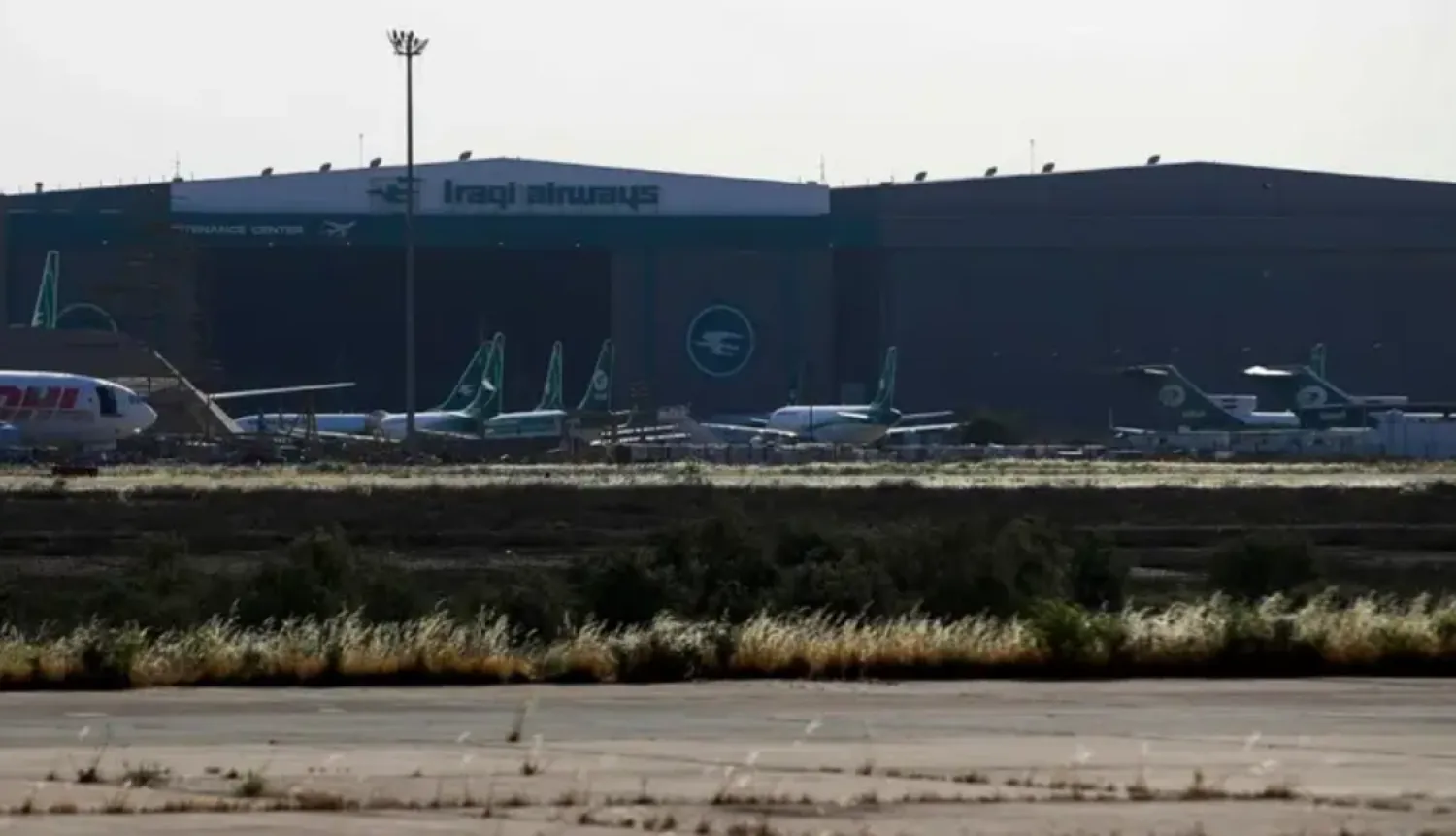
A picture shows Iraq Airlines planes parked at the Baghdad International Airport on April 24, 2024 - AFP
TT

Iraq Reopens Airspace after Iran Ends Operation against Israel

A picture shows Iraq Airlines planes parked at the Baghdad International Airport on April 24, 2024 - AFP

Iraq reopened its airspace on Monday, the country's civil aviation body said, following Iran's announcement that it was halting its military operation against Israel, AFP reported.

The Civil Aviation Authority was reopening "Iraqi airspace to flights to and from all airports" and will continue to "monitor and assess the regional situation", it said in a statement.

It had announced a 72-hour closure of its airspace on Sunday evening after Iranian missile strikes on Israel, the first since a ceasefire in the Middle East war began on April 8.


Lebanon Says Israeli Army Set off Large Explosion in South

 Smoke rises in al-Mansouri following Israeli explosions reported by Lebanon’s state news agency NNA as seen from Hinniyeh, southern Lebanon, September 28, 2026. (Reuters)
Smoke rises in al-Mansouri following Israeli explosions reported by Lebanon’s state news agency NNA as seen from Hinniyeh, southern Lebanon, September 28, 2026. (Reuters)
TT

Lebanon Says Israeli Army Set off Large Explosion in South

 Smoke rises in al-Mansouri following Israeli explosions reported by Lebanon’s state news agency NNA as seen from Hinniyeh, southern Lebanon, September 28, 2026. (Reuters)
Smoke rises in al-Mansouri following Israeli explosions reported by Lebanon’s state news agency NNA as seen from Hinniyeh, southern Lebanon, September 28, 2026. (Reuters)

The Israeli military set off a significant explosion in the southern Lebanese village of al-Mansouri on Monday, Lebanese state media and AFP correspondents said as Israel said it had completed an operation in the area.

"A massive explosion rocked the town of al-Mansouri in the Tyre district a short while ago. The explosion was carried out by Israeli occupation forces," Lebanon's state-run National News Agency reported.

"The sound of the explosions was heard in the city of Tyre and several surrounding villages," the NNA added.

AFP correspondents saw large clouds of smoke emerge from the largely destroyed town after the loud explosion was heard.

The Israeli military said in a statement that it had completed an operation in al-Mansouri where it dismantled "more than 600 terrorist infrastructure sites" and "eight underground routes".

Lebanese authorities accuse Israel of systematically destroying villages in the south, including homes, schools, places of worship and water and electricity infrastructure.

The town of al-Mansouri, located around nine kilometers (six miles) south of Tyre and 10 kilometers north of Israel, and its surroundings were subjected to several Israeli strikes and to artillery shelling in recent weeks despite a ceasefire that took hold in June.

During the truce, al-Mansouri's municipality had told residents they could return home but that they should avoid the parts that came under Israel's self-proclaimed occupied "security zone".

But last month, the Israeli military had ordered al-Mansouri's residents to evacuate the town before fully occupying it.

It has since regularly carried out demolitions and detonations in the town, which residents in the Tyre region can clearly see, according to correspondents.

Tehran-backed Hezbollah drew Lebanon into the Middle East war in March this year by attacking Israel to avenge the killing of Iran's supreme leader in US-Israeli strikes.

Israel responded with massive airstrikes and a ground invasion that Lebanon says have killed more than 4,300 people.

Violence has decreased since a fragile ceasefire announced in June after a US-Iran understanding on the broader war, while Lebanon and Israel reached a framework agreement later that month.

But Israel has kept up attacks and maintains troops in the occupied "security zone" running around 10 kilometers (six miles) inside south Lebanon, where it has carried out widespread demolitions in villages it occupies.


Lebanon PM Pushes for Further Implementation of Israel Deal in Rubio Meeting

Lebanese Prime Minister Nawaf Salam (L) shakes hands with US Secretary of State Marco Rubio as they pose for photos before a meeting at the US State Department on September 28, 2026, in Washington, DC. (Getty Images/AFP)
TT

Lebanon PM Pushes for Further Implementation of Israel Deal in Rubio Meeting

Lebanese Prime Minister Nawaf Salam (L) shakes hands with US Secretary of State Marco Rubio as they pose for photos before a meeting at the US State Department on September 28, 2026, in Washington, DC. (Getty Images/AFP)

Lebanese Prime Minister Nawaf Salam on Monday called for the further implementation of a framework agreement with Israel in his meeting with US Secretary of State Marco Rubio in Washington.

Tehran-backed Hezbollah drew Lebanon into the broader Middle East war in March this year by attacking Israel, which responded with massive airstrikes and a ground invasion that Lebanon says has killed more than 4,300 people.

Lebanon and Israel concluded a framework agreement in June under US auspices, providing for the gradual withdrawal of Israeli forces and the disarmament of Hezbollah, but its implementation has stalled.

In a statement, Salam's office said that in his meeting with Rubio, he "stressed the need to move to the stage of implementation of the tripartite framework and translation of the principles of reciprocity and phased implementation into practical steps and tangible results on the ground, leading to the restoration of Lebanon's full sovereignty, the achievement of a complete Israeli withdrawal from Lebanese territory, and the confinement of weapons to the state throughout its territory."

In a post on X, Rubio said he reaffirmed "strong US support as Lebanon implements the Trilateral Framework - the only path to a durable peace with Israel."

"The United States stands with a sovereign Lebanon, free from Hezbollah and Iranian influence," he added.

The agreement also involves the deployment of the Lebanese army to the south, starting in test areas known as "pilot zones."

Earlier this month, US Ambassador to Lebanon Michel Issa visited one of the "pilot zones" that recently came under Lebanese military control "to assess conditions on the ground and see firsthand the progress and challenges" there.

Salam "called for the establishment of a credible verification mechanism to monitor implementation and ensure compliance with the commitments" and stressed the importance of continued US support to the Lebanese military, tasked with the difficult mission of disarming Hezbollah.

The group refuses to lay down its weapons, and Israel still carries out strikes on Lebanon and occupies a swath of its south despite the agreement.

On Monday, Lebanon reported a large explosion set off by the Israeli army in the southern town of Mansouri, with the military saying it had completed an operation there and dismantled "terrorist" infrastructure.


Hamas Members Struggle to Spend Cash Salaries

A Palestinian gives a child a sip of water from a bag bought for one shekel amid extreme heat in Gaza City in August 2025 (AP) 
TT

Hamas Members Struggle to Spend Cash Salaries

A Palestinian gives a child a sip of water from a bag bought for one shekel amid extreme heat in Gaza City in August 2025 (AP) 

Until three weeks ago, merchants in the Gaza Strip were still accepting cash from residents, even though much of it consisted of worn-out banknotes. But they began gradually refusing cash more than 10 days ago, hardening their stance over the past four days and turning instead to banking apps and electronic wallets.

The shift has coincided with intensified Israeli targeting and killing of Hamas financial officials in recent weeks, including some involved in delivering salaries to the group’s members.

Hamas employees told Asharq Al-Awsat that most government workers and members of its military wing, the Al-Qassam Brigades, receive their salaries in cash.

Several Hamas sources said government employees receive part of their salaries roughly every 100 days, amounting to only about 1,000 shekels ($328), often in worn banknotes. Al-Qassam members, meanwhile, are paid every 40 to 50 days, receiving up to around 60 percent of their salaries and no less than approximately 1,200 shekels, generally in banknotes in good condition.

People dealing with Gaza’s markets told Asharq Al-Awsat that some merchants had recently begun accepting cash from individuals and transferring the equivalent electronically through apps and e-wallets in exchange for commissions of up to 10 percent.

The crisis marks a reversal from the peak years of the war that began in October 2023, when Gazans struggled to convert money held in electronic wallets into cash. Commissions started at 10 percent and at times reached 60 percent before electronic transactions became more widespread.

In August, an Israeli military spokeswoman warned Palestinians in Gaza against using a category of old shekel banknotes marked with the letter “B,” in a move aimed at economically squeezing Hamas.

What Do We Do With Worn Banknotes?

Ahmed al-Najjar, 39, an employee of the Hamas-run government in Gaza, angrily questioned what employees were supposed to do with the worn banknotes they received.

“How long will things remain this way?” he told Asharq Al-Awsat. “We are the ones paying the price with our lives, and we find no one standing with us — neither officials nor merchants — while others fight us in different ways to make huge profits and gains.”

Israel has barred cash from entering Gaza since Oct. 7, 2023, while banks suffered major thefts during the war. Israeli security authorities also sought to impose conditions on Gaza merchants after periodically allowing goods into the enclave, requiring payments through electronic applications in a move aimed at restricting Hamas.

Under the new circumstances, Hamas appears to be facing a serious cash shortage affecting its members and employees, coinciding with repeated Israeli killings of funding sources, money changers and prominent figures in its financial apparatus.

Hamas Warns Merchants

The Hamas-run police in Gaza issued a general directive warning shopkeepers and others against refusing cash. It stressed that they must accept different types of banknotes, old and new, provided they are not damaged, and threatened violators with strict legal measures.

A Hamas police official told Asharq Al-Awsat that the issue did not affect only government employees or Hamas members, but also families of orphans, war victims, wounded Palestinians and prisoners who receive financial assistance from various relief organizations but cannot find merchants willing to accept their cash.

Hamas-affiliated media in Gaza have also launched a campaign against banks operating under the Palestinian Monetary Authority in Ramallah, accusing them of encouraging merchants to switch exclusively to electronic payments and of closing hundreds of residents’ bank accounts. Some banks have repeatedly denied the allegations, reiterating days ago that no decisions had been made to close accounts.

The dispute has fueled an unprecedented social media campaign warning people against giving up cash in favor of banking apps and other electronic wallets. The campaign has included warnings that a new war between Iran and the United States could soon engulf the entire region again, potentially causing people to lose money held electronically.

An official banking source rejected those claims, telling Asharq Al-Awsat that funds held in banks would remain secure and that a shift toward electronic transactions was underway.

The source said banks were routinely updating customer information and identifying account holders’ activities amid concerns that some funds could be linked to money laundering. Banks, the source added, had instructions to facilitate Palestinians’ access to accounts as part of financial inclusion efforts taking place in both Gaza and the West Bank.

Israel recently killed Jabr Moqbel, the owner of a currency-exchange shop and a prominent Al-Qassam Brigades member in Gaza City, in a strike on a vehicle in Deir al-Balah. Mohammed Abu Alwan, a Hamas financial official, was killed in a strike in Khan Younis. A Palestinian Islamic Jihad financial official was seriously wounded Sunday in an attempted assassination west of Gaza City.

The Israeli military said in a recent statement that throughout the war it had killed 16 prominent financial operatives involved in transferring funds and financing Hamas’ military activities. It said the operatives had managed transfers worth more than $1 billion through a network of dozens of money changers in Türkiye and Gaza.

The military said it and the Shin Bet were focusing their efforts on damaging Hamas’ financing capabilities and preventing the rebuilding of its infrastructure and military capabilities.