


Sources to Asharq Al-Awsat: Egypt Approves Yahya Diab as Acting Head of Syria’s Mission

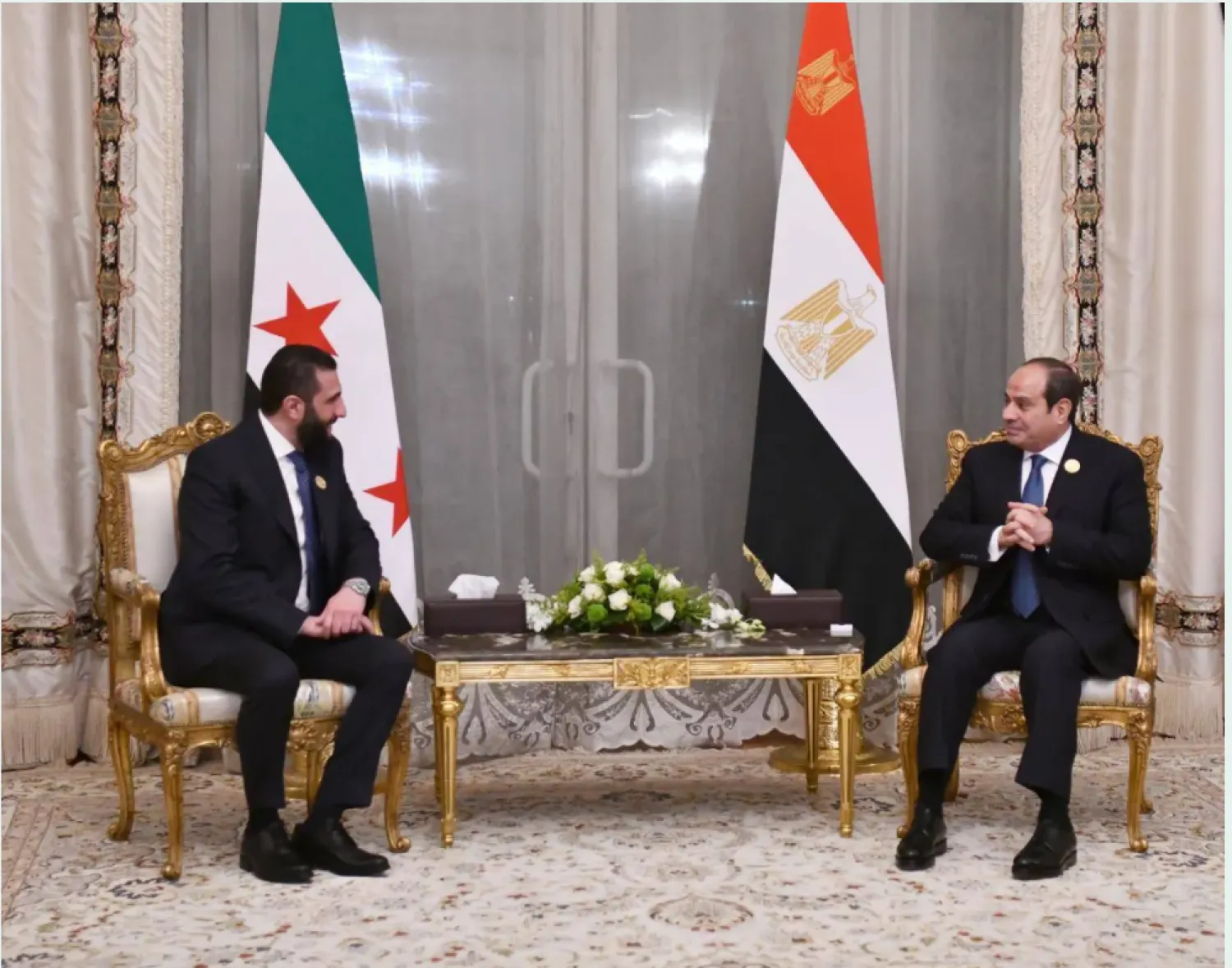
**Egyptian President Abdel Fattah al-Sisi during a meeting with his Syrian counterpart Ahmed al-Sharaa on the sidelines of the Arab Summit in Cairo in March 2025 (Egyptian Presidency)**
TT

Sources to Asharq Al-Awsat: Egypt Approves Yahya Diab as Acting Head of Syria’s Mission

**Egyptian President Abdel Fattah al-Sisi during a meeting with his Syrian counterpart Ahmed al-Sharaa on the sidelines of the Arab Summit in Cairo in March 2025 (Egyptian Presidency)**

Two Syrian sources, one of them at the Foreign Ministry, told Asharq Al-Awsat that Egypt has informed Syria of its approval of Ambassador Yahya Diab to head the Syrian diplomatic mission in Cairo, following its reservations over the previous nominee.

A Syrian source familiar with the matter said Diab had already been informed that Cairo had approved his nomination and that he is currently working to conclude his commitments outside Syria before returning to Damascus to take the necessary steps to assume his duties in Egypt.

However, the source noted that Diab had not been informed whether he had been nominated as ambassador or as chargé d’affaires.

“If he is nominated as ambassador, the decision will be issued through a presidential decree addressed to Egypt. A chargé d’affaires, however, is appointed by a decision of the foreign minister,” the source said.

Another source at the Syrian Foreign Ministry revealed that Diab would be appointed as “chargé d’affaires of the Syrian ambassador to Egypt,” adding that he is also likely to serve as Syria’s permanent representative to the League of Arab States, unless another candidate is nominated for that position, which does not require approval from the Egyptian authorities.

He added: “Arrangements are currently underway to obtain the necessary accreditation from Cairo so that the new Syrian mission can begin its work as soon as possible.”

Asharq Al-Awsat was unable to reach Egypt’s Foreign Ministry for confirmation.
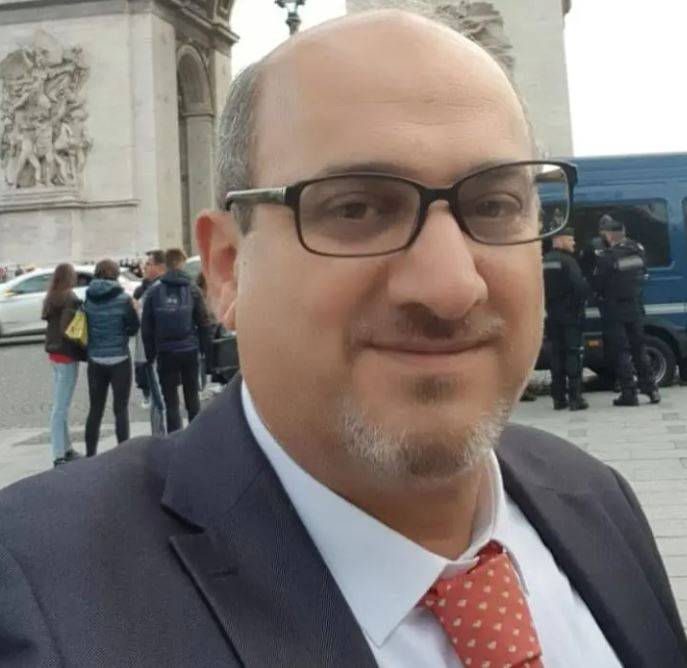
Yahya Diab (Syrian Memory Platform)

‘In Response to the Egyptian Side’

About a week ago, a Syrian Foreign Ministry source told Asharq Al-Awsat the name of the new ambassador nominated to represent Syria in Egypt, replacing Mohammad Taha Al-Ahmad, whose nomination Cairo had objected to.

At the time, the source said the new nominee was Yahya Diab and that his nomination “came in response to the Egyptian side and out of a desire to advance relations between the two countries toward deeper and broader horizons.”

At the time, an Egyptian official source told Asharq Al-Awsat that the Syrian government had submitted another candidate to head its diplomatic mission in Cairo, noting that matters were “moving toward the approval of the new nominee by the Egyptian authorities.”

The source added that “matters are proceeding normally and positively with the Syrian side.”

Diab is a member of the executive office and the office for foreign relations and diplomats at the Free National Gathering of Employees in Syrian State Institutions. Before the Syrian revolution, he served in several diplomatic postings in Rome, Abu Dhabi, Kuwait and Belgrade. He also headed the trade union committee at the Syrian Foreign Ministry and holds a law degree from Damascus University.

A report published by Asharq Al-Awsat on June 1 cited a source familiar with the matter as saying that Cairo had objected to the nomination of Taha Al-Ahmad as Syria’s ambassador to Egypt and that “Egyptian reservations” were hindering the reception of a number of members of the Syrian diplomatic mission.

Prospects for Cooperation

Since the fall of Bashar al-Assad, Egyptian-Syrian relations have moved cautiously toward bilateral engagement due to Cairo’s concerns regarding the issue of armed groups, before gradually shifting toward economic cooperation.

In late April, Egyptian President Abdel Fattah al-Sisi met his counterpart Ahmed al-Sharaa on the sidelines of the Arab-European Consultative Summit held in Cyprus. Media outlets in Cairo and Damascus reported at the time that the two leaders held a “friendly discussion” on regional developments and ways to enhance cooperation.

In January, Damascus hosted the first Egyptian-Syrian Economic and Investment Forum, with the participation of a number of Egyptian business, finance and chamber of commerce leaders. The event aimed to build effective partnerships between the two countries and explore opportunities for cooperation in trade, industry, services, infrastructure and reconstruction.

Last Saturday, Mohamed Omar Abdel Aziz El-Feki, chargé d’affaires of the Egyptian embassy in Damascus, said Egypt is looking to expand cooperation with Syria across various sectors, particularly in reconstruction.

He made the remarks to reporters following a tour of the Buildex International Construction Exhibition in Damascus, according to the Syrian Arab News Agency (SANA).

At the same event, Haitham Hussein, chairman of Egypt Industrial Complex, announced plans to establish a large industrial zone in Syria during the coming phase to support production and create employment opportunities.

Hussein said the proposed project would focus on food-processing, textile and agricultural industries, as well as sectors linked to reconstruction. He also stressed the importance of establishing integrated industrial cities capable of meeting the requirements of the next stage.



Israeli Strike on Lebanon Kills One

 31 August 2026, Lebanon, Arnoun: Smoke billows after an Israeli detonation on Arnoun, not far from the strategic Ali al-Taher Ridge. (dpa)
31 August 2026, Lebanon, Arnoun: Smoke billows after an Israeli detonation on Arnoun, not far from the strategic Ali al-Taher Ridge. (dpa)
TT

Israeli Strike on Lebanon Kills One

 31 August 2026, Lebanon, Arnoun: Smoke billows after an Israeli detonation on Arnoun, not far from the strategic Ali al-Taher Ridge. (dpa)
31 August 2026, Lebanon, Arnoun: Smoke billows after an Israeli detonation on Arnoun, not far from the strategic Ali al-Taher Ridge. (dpa)

An Israeli strike on south Lebanon killed one person on Wednesday, Lebanese official media said, while Israel said it targeted Hezbollah in retaliation for an attack targeting its soldiers in the south.

"One person was killed and another wounded in a strike launched by an enemy drone" in the city of Nabatieh, Lebanon's state-run National News Agency (NNA) said, also reporting other Israeli strikes on the area.

Israel's army said the Iran-backed Hezbollah group overnight "launched two explosive drones" towards Israeli soldiers in Ali al-Taher Ridge area, reporting no troop casualties.

In response, the Israeli military said it struck Hezbollah infrastructure in the Nabatieh area.

Israel has recently increased its attacks on south Lebanon, particularly in the Nabatieh area where the strategic Ali al-Taher Ridge is located.

Israel has previously said Hezbollah fighters are holed up in "underground terror infrastructure" there.

Hezbollah has not claimed any attacks on Israeli targets for weeks.

Last week, Israeli airstrikes killed a woman as Israel's military said it struck Hezbollah targets.

On August 15, Israeli strikes killed 11 people including several children. Israel's military said it killed two Hezbollah commanders in raids also launched in retaliation for an attack by the group.

Hezbollah drew Lebanon into the Middle East war in March by attacking Israel in support of its backer Iran, triggering massive Israeli airstrikes and a ground invasion that Lebanese authorities say have killed more than 4,300 people.

Israeli forces are operating inside a self-declared "security zone", which runs around 10 kilometers (six miles) deep inside Lebanese territory along the border.

Violence has dropped since a US-Iran memorandum of understanding on the broader conflict in June and a framework agreement between Israel and Lebanon later that month.

But Lebanon still reports Israeli strikes, artillery shelling and broad demolitions of civilian buildings in southern villages and towns.

Lebanon's health ministry says Israeli attacks have killed at least 8,920 people since hostilities initially erupted in October 2023, after Hezbollah launched rockets at Israel in support of its Palestinian ally Hamas over the Gaza conflict.


Xi Tells Egypt’s Sisi ‘External Interference’ in Middle East Should Be Opposed

 In this photo released by Xinhua News Agency, Chinese President Xi Jinping, second left, and his wife Peng Liyuan, left, are welcomed by Egyptian President Abdel Fattah al-Sisi, right, and his wife Entissar Amerupon on their arrival at Cairo International Airport in Cairo, Tuesday, Sept. 1, 2026. (Yin Bogu/Xinhua via AP)
In this photo released by Xinhua News Agency, Chinese President Xi Jinping, second left, and his wife Peng Liyuan, left, are welcomed by Egyptian President Abdel Fattah al-Sisi, right, and his wife Entissar Amerupon on their arrival at Cairo International Airport in Cairo, Tuesday, Sept. 1, 2026. (Yin Bogu/Xinhua via AP)
TT

Xi Tells Egypt’s Sisi ‘External Interference’ in Middle East Should Be Opposed

 In this photo released by Xinhua News Agency, Chinese President Xi Jinping, second left, and his wife Peng Liyuan, left, are welcomed by Egyptian President Abdel Fattah al-Sisi, right, and his wife Entissar Amerupon on their arrival at Cairo International Airport in Cairo, Tuesday, Sept. 1, 2026. (Yin Bogu/Xinhua via AP)
In this photo released by Xinhua News Agency, Chinese President Xi Jinping, second left, and his wife Peng Liyuan, left, are welcomed by Egyptian President Abdel Fattah al-Sisi, right, and his wife Entissar Amerupon on their arrival at Cairo International Airport in Cairo, Tuesday, Sept. 1, 2026. (Yin Bogu/Xinhua via AP)

Chinese President Xi Jinping told his Egyptian counterpart on Wednesday that "external interference" in the Middle East should be opposed, Beijing's state media reported, following talks in Cairo between the two leaders. 

"We must uphold the principle that the people of the Middle East are the masters of their own affairs, oppose external interference (and) support regional countries in strengthening dialogue on peace and security," Xi told Egyptian President Abdel Fattah al-Sisi, according to Chinese state news agency Xinhua. 

Xi is on his first visit to Egypt in a decade as Beijing seeks a greater foothold in the region against the backdrop of the US-Iran war. 

Washington vowed last month to isolate Iran economically, threatening expanded sanctions that could also hit Chinese banks, among others. 

China, a major buyer of Iranian oil, has vowed to safeguard its interests. 

Xi also said during talks with Sisi that Beijing was willing to help protect maritime shipping from the energy-rich region, upended since US-Israeli strikes on Iran in late February triggered the war. 

"China stands ready to work with countries in the region to safeguard the security of international shipping lanes, advance development cooperation... and eliminate the breeding grounds for conflict," Xi said, according to Xinhua. 


Damascus Begins Establishing its Authority in Hasakeh after SDF Dissolution

A Syrian Defense Ministry delegation in Hasakeh on Monday. (Hasakeh governorate media)
TT

Damascus Begins Establishing its Authority in Hasakeh after SDF Dissolution

A Syrian Defense Ministry delegation in Hasakeh on Monday. (Hasakeh governorate media)

The Special Task Forces of the Ministry of Interior took over a regiment on Tuesday from the disbanded Syrian Democratic Forces (SDF) in Hasakeh city as part of a plan to deploy Syrian security forces in the Hasakeh governorate in northeastern Syria.

The move is part of completing integration procedures and taking control of all security and military positions in the governorate, and hours after the arrival of a Ministry of Defense delegation to Hasakeh to discuss measures for completing the integration process.

Internal Security and Special Task forces are expected to deploy gradually across all areas of Hasakeh to extend state control, maintain security, and boost stability.

New appointments within the Syrian security apparatus are expected as part of an integration process.

Forces are also preparing to deploy to Hasakeh city center, Qamishli, Rumeilan, Al-Malikiyah, and border regions in the coming days.

A delegation from the Ministry of Defense arrived in Hasakeh on Monday and held a meeting at the governorate headquarters with local officials, including Governor Nour al-Din Ahmed, Military Security chief Thaer Obaid al-Bilal, and Military Police chief Imad Fawaz al-Ayesh.

The meeting addressed the procedures and steps required to finalize the integration of military and security institutions within the region, said a statement.

The meeting also addressed coordination mechanisms and the strengthening of cooperation between the relevant entities to unify efforts and ensure the smooth implementation of procedures related to the integration.

The executive bureau of the Hasakeh governorate also held its first meeting on Tuesday, chaired by the governor and attended by bureau members, to discuss mechanisms for boosting coordination across various sectors.

In a related development, displaced Arab families from Haskaeh city returned to their homes in the Al-Aziziyeh neighborhood after more than 10 years of displacement. A celebration was held in their honor attended by Internal Security Commander Marwan Al-Ali and Hasakeh Deputy Governor Ahmed Al-Hilali.