Lebanese President Discusses Israel Truce with Senior US, Qatari Officials

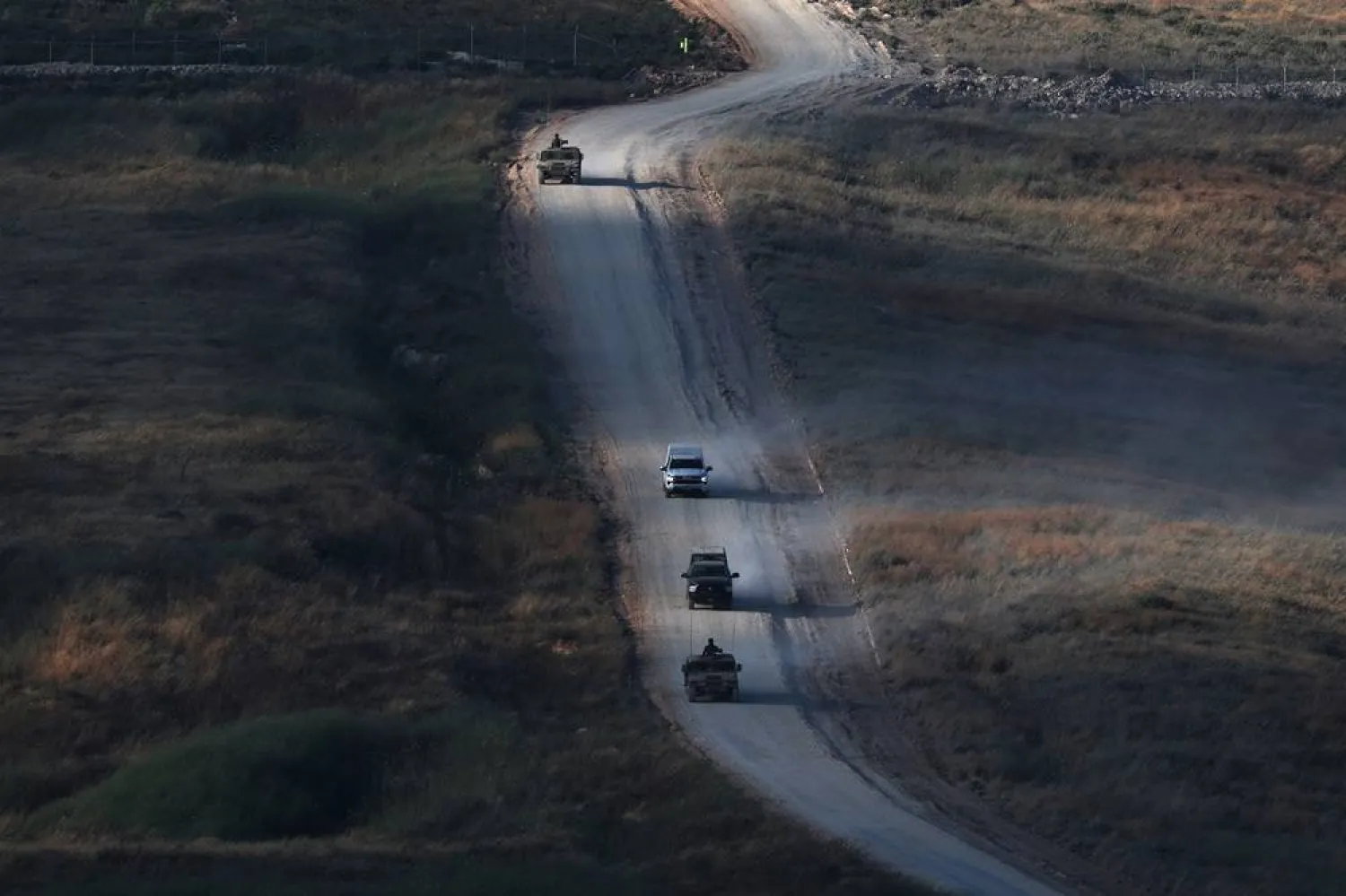
Israeli military vehicles maneuver on the Lebanese side of the Israel-Lebanon border, as seen from the Upper Galilee, in northern Israel, 21 June 2026. (EPA)
TT

Lebanese President Discusses Israel Truce with Senior US, Qatari Officials

Israeli military vehicles maneuver on the Lebanese side of the Israel-Lebanon border, as seen from the Upper Galilee, in northern Israel, 21 June 2026. (EPA)

Lebanese President Joseph Aoun and US Vice President JD Vance discussed a de-confliction mechanism for Lebanon on Monday, Aoun's office said, as Vance said the move aimed to prevent spiraling Israel-Hezbollah violence. 

After a first round of US-Iran talks in Switzerland on ending the Middle East war, mediators Pakistan and Qatar said on Monday that Tehran and Washington had agreed to set up a "de-confliction cell" with Lebanon "to ensure the adherence of the termination of military operations" there. 

Fighting between Israel and Hezbollah, which drew Lebanon into the Middle East war on March 2 with rocket fire at Israel in support of its backer Iran, has repeatedly threatened to derail regional peace efforts. 

Aoun received a telephone call from Vance, US senior adviser Jared Kushner and Qatari Prime Minister Sheikh Mohammed bin Abdulrahman Al Thani, a statement from the Lebanese presidency said. 

They discussed "the issue of consolidating the ceasefire in Lebanon, stopping the Israeli military escalation and steps that should be taken in this regard, including the possibility of forming a cell for this purpose," the statement added. 

Vance later told a press conference in Switzerland that the "de-confliction mechanism" was being set up to ensure "that when things happen, they don't spiral into a broader escalation". 

"We do believe... that we can get to a place where Lebanon's territorial integrity and sovereignty is protected, Israel's security is protected," he said. 

"That's going to require some coordination with the Lebanese armed forces, and also it's going to require the Iranians to rein in Hezbollah," Vance added. 

- 'We negotiate for ourselves' - 

After the talks in Switzerland, Iran's Foreign Minister Abbas Araghchi wrote on X: "1st real test: Lebanon de-confliction cell." 

The negotiations came after Washington and Tehran last week signed a memorandum of understanding to end the broader Middle East war that includes Lebanon. 

Israeli strikes and clashes with Hezbollah late last week threatened to derail the deal, but fighting in Lebanon has been paused since Saturday evening, after Iran said it had closed the strategic Strait of Hormuz again in response to Israel's attacks. 

Prime Minister Benjamin Netanyahu said on Sunday that Israeli forces would remain in southern Lebanon "as long as necessary", while Hezbollah chief Naim Qassem rejected any Israeli "security zone" inside Lebanon. 

Israel nonetheless said all war-related restrictions in its northern border areas were lifted from Monday morning. 

Under US pressure, Lebanese officials began direct talks with Israel in April in Washington, and a fifth round of negotiations is scheduled to begin on Tuesday. 

Lebanese authorities are seeking the withdrawal of Israeli troops from the country and to separate the negotiations from the US-Iran deal. 

"We negotiate for ourselves, and we do not accept any other party doing so for us," Aoun said later Monday. 

"We welcome any assistance that comes from any country to end the war, particularly as the situation in the region is interconnected," he added. 

"But there is a big difference between trying to help us and interfering in our internal affairs," he said, alluding to Iran, which through Hezbollah has long wielded significant political influence in Lebanon. 


EU Urges ‘Immediate, Unimpeded’ Flood Aid to Gaza

 Displaced Palestinians walk through a rain-soaked tent camp following heavy rainfall in Deir al-Balah, central Gaza Strip, Saturday, Nov. 7, 2026. (AP)
Displaced Palestinians walk through a rain-soaked tent camp following heavy rainfall in Deir al-Balah, central Gaza Strip, Saturday, Nov. 7, 2026. (AP)
TT

EU Urges ‘Immediate, Unimpeded’ Flood Aid to Gaza

 Displaced Palestinians walk through a rain-soaked tent camp following heavy rainfall in Deir al-Balah, central Gaza Strip, Saturday, Nov. 7, 2026. (AP)
Displaced Palestinians walk through a rain-soaked tent camp following heavy rainfall in Deir al-Balah, central Gaza Strip, Saturday, Nov. 7, 2026. (AP)

The European Union on Saturday demanded Israel grant urgent access for aid groups to Gaza to help the victims of devastating floods there.

"We urge Israel to allow immediate, unimpeded access and sustained distribution of humanitarian assistance and early recovery support at scale, and to reopen all Gaza border crossings," it said in a statement.


Israeli Drone Strike Kills 2 Palestinians in Gaza

 Palestinians walk through a tent camp housing displaced people amid buildings destroyed by Israeli strikes during the Israel-Hamas war in Gaza City, Sunday, Nov. 8, 2026. (AP)
Palestinians walk through a tent camp housing displaced people amid buildings destroyed by Israeli strikes during the Israel-Hamas war in Gaza City, Sunday, Nov. 8, 2026. (AP)
TT

Israeli Drone Strike Kills 2 Palestinians in Gaza

 Palestinians walk through a tent camp housing displaced people amid buildings destroyed by Israeli strikes during the Israel-Hamas war in Gaza City, Sunday, Nov. 8, 2026. (AP)
Palestinians walk through a tent camp housing displaced people amid buildings destroyed by Israeli strikes during the Israel-Hamas war in Gaza City, Sunday, Nov. 8, 2026. (AP)

An Israeli drone strike killed two Palestinians in the Gaza Strip on Saturday, hospital officials said.

The drone struck two Palestinians walking down a street in Jabaliya, on the northern edge of Gaza City, said Mohamed Abu Selmiya, director of Shifa Hospital in Gaza City, where the casualties were taken.

The American field hospital said several other people were wounded but did not provide a number.

Asked about the attack, the Israeli military said it had struck two Hamas fighters in the area.

Near-daily Israeli fire and airstrikes have continued in Gaza more than a year after Israel and Hamas reached a ceasefire deal.

At least 1,600 Palestinians have been killed since the ceasefire, according to Gaza’s Health Ministry. The ministry, part of the Hamas-run government, maintains detailed records and is seen as generally reliable by UN agencies and independent experts. It does not distinguish between civilians and combatants in its toll but says women and children make up around half the dead.


Thousands Mourn al-Alwani as Lebanese Probe Awaited

Relatives receive former MP Ahmed al-Alwani's coffin upon its arrival at Baghdad airport on Saturday. (X)
TT

Thousands Mourn al-Alwani as Lebanese Probe Awaited

Relatives receive former MP Ahmed al-Alwani's coffin upon its arrival at Baghdad airport on Saturday. (X)

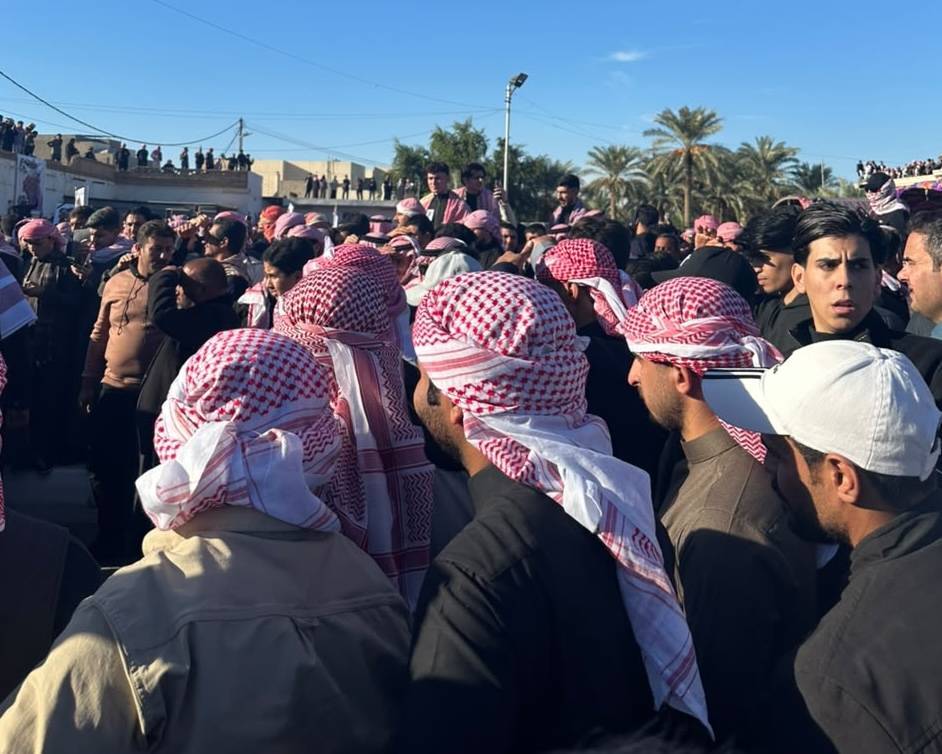
Thousands of Iraqis on Saturday escorted the body of former MP Ahmed al-Alwani from Baghdad Airport to Ramadi in Anbar Governorate, where tribespeople and residents from across the province awaited his arrival amid scenes of grief and anger.

Meanwhile, the circumstances surrounding his killing in Beirut remain under investigation, even as Lebanese authorities have made progress in identifying two suspects.

A private jet carrying al-Alwani's body from the Lebanese capital landed at Baghdad Airport in the morning, with large crowds of mourners gathering at the airport.

Local media reported that Iraqi politician Khamis al-Khanjar, head of the Sovereignty Alliance, covered the cost of transporting the body aboard the private aircraft.

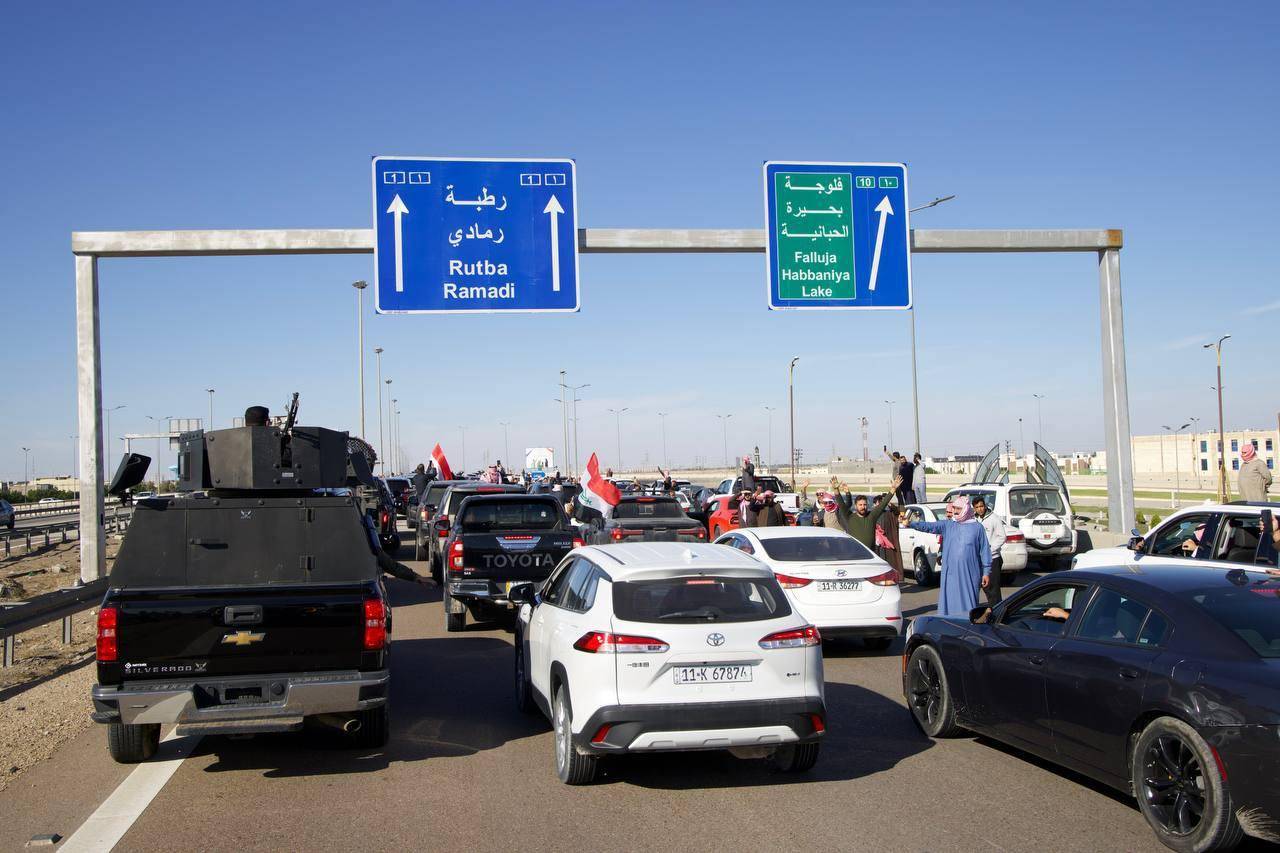
The funeral procession traveled toward Ramadi, located 110 kilometers from Baghdad, under heavy security and accompanied by military vehicles.

Mourners are seen at al-Alwani's funeral on Saturday. (Asharq Al-Awsat)

The Security Media Cell had urged the public to await the investigation's findings and refrain from reading broader motives into the case before it concludes, noting the ongoing coordination between the Iraqi Embassy in Beirut, Lebanese judicial and security authorities, and the Iraqi National Intelligence Service.

Al-Alwani's killing has sparked uproar across Iraq, particularly in his home province of Anbar. Discussion of the case has been accompanied by political debates and sectarian commentary on social media, amid demands to identify those responsible for his death.

Kamel al-Dulaimi, former head of the Iraqi Presidential Diwan, told Asharq Al-Awsat that the circumstances and motives behind the crime still require clear and transparent disclosure to the public, underscoring the Iraqi state's responsibility to uncover the truth.

The funeral procession traveled toward Ramadi, located 110 kilometers from Baghdad, under heavy security and accompanied by military vehicles. (Asharq Al-Awsat)

He added that the case requires security and judicial cooperation among Iraq, Lebanon, and Syria to track down the perpetrators and those behind them, particularly if the investigation calls for cross-border coordination.

He warned that the sectarian rhetoric surrounding the incident reflects a persistent tendency to view national issues through a narrow lens, emphasizing that the matter concerns the sanctity of Iraqi blood and must not be reduced to the affiliation of an individual or a governorate.

Legal researcher Saif al-Saadi, who hails from Anbar, said al-Alwani was not merely a former lawmaker, but a prominent tribal, social, and political figure in the province, adding that the funeral reflects the depth of grief and anger across Anbar's cities.

Al-Alwani, who rose to prominence during the late 2013 Anbar protests, was arrested in December of that year and sentenced to death in 2014 after being convicted of killing two soldiers during clashes accompanying his arrest.

He was released in April 2025 after spending more than 11 years in prison, following the withdrawal of a complaint by one of the victims' families and his inclusion under the General Amnesty Law.