
Aoun Optimistic on ‘Best Possible’ Deal for Lebanon, Banks on US Role

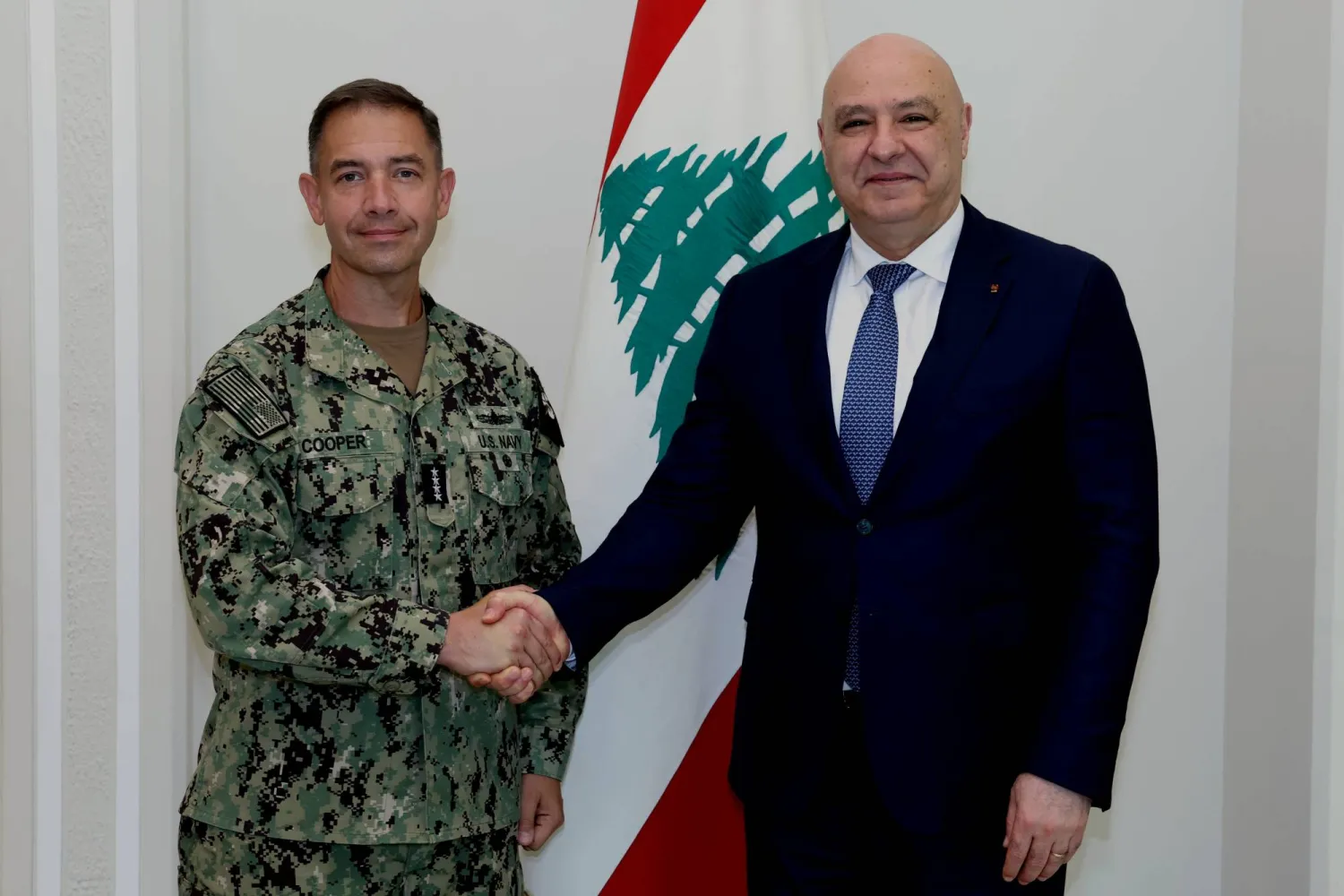
In this photo, released by the Lebanese Presidency press office, Lebanese President Joseph Aoun, right, shakes hands with Adm. Brad Cooper, the top US military commander in the Middle East, at the presidential place in Baabda, east of Beirut, Lebanon, Monday, June 29, 2026. (Lebanese Presidency press office via AP)
TT

Aoun Optimistic on ‘Best Possible’ Deal for Lebanon, Banks on US Role

In this photo, released by the Lebanese Presidency press office, Lebanese President Joseph Aoun, right, shakes hands with Adm. Brad Cooper, the top US military commander in the Middle East, at the presidential place in Baabda, east of Beirut, Lebanon, Monday, June 29, 2026. (Lebanese Presidency press office via AP)

In one phrase, Lebanese President Joseph Aoun answers critics of the framework agreement Lebanon and Israel signed late last week, an agreement he admits is “not ideal”, “Give me the alternative.”

For more than three years, Lebanon has been reeling from the fallout of Hezbollah’s successive “support” wars, first for Gaza in late 2023 and then for Iran on March 2 in wake of the war with the United States and Israel. Still, visitors to Aoun come away with a clear impression that the president is optimistic about the path opened by the agreement.

A senior Lebanese source said the reality created by those wars has added to Lebanon’s burden. Beirut had been negotiating over Israel’s withdrawal from five hills it occupied in the first round.

It then found itself negotiating under fire and occupation, as Israel’s presence expanded to the outskirts of Nabatieh in the east and Tyre on the coast, seizing Bint Jbeil in between.

The source placed direct responsibility for the war on Hezbollah. “Had it not been for its six rockets, which it fired last March, we would not be in this position today,” the source said.

The agreement is the result of facts imposed by the battlefield and by Lebanon’s condition as it buckles under rising human and material losses, with no clear path to a solution, it added.

A framework, not yet an agreement

Still, the source insisted the agreement “is not bad. More precisely, it has not become an agreement yet. It is a framework agreement that sets broad guidelines, pending the fine details that will be negotiated gradually.”

Lebanon is betting on the new US momentum to press Israel into making concessions on those details, it continued.

The clearest sign that the agreement is not bad, according to the source, “was Israel’s fierce rejection of it at first. That rejection would not have turned into approval without the major US pressure applied in the final hours before signing.”

The second sign was how quickly Israeli leaders moved to craft their own version of the agreement, “which has nothing to do with the truth,” the source said.

“Ninety percent of what Israeli Prime Minister Benjamin Netanyahu said is not true,” it stressed.
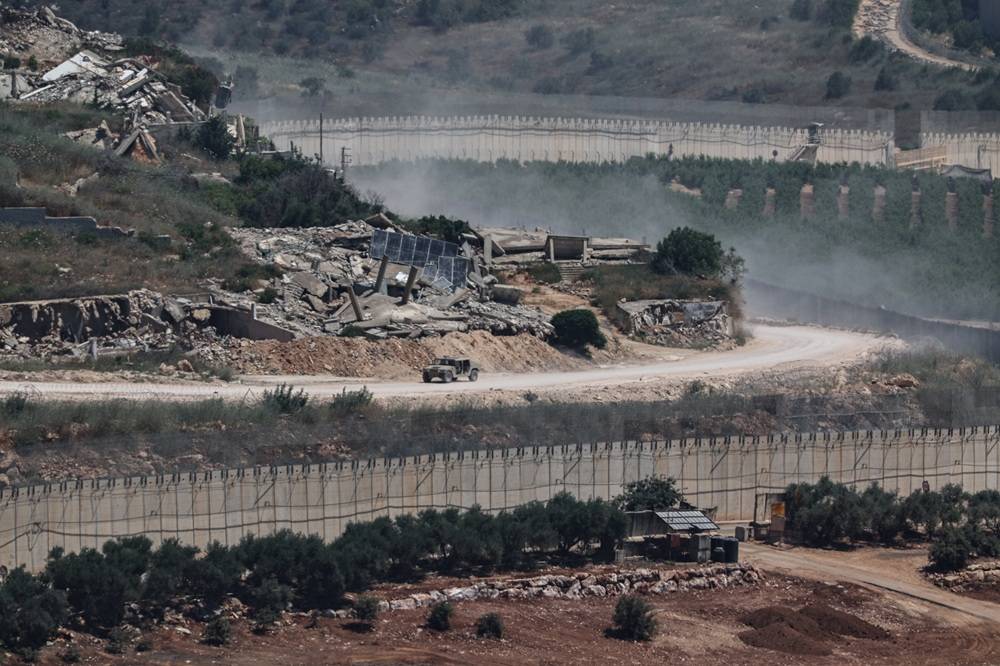
An Israeli military vehicle maneuvers on the Lebanese side of the Israel-Lebanon border, as seen from the Upper Galilee, 28 June 2026, amid an Israel-Lebanon ceasefire. (EPA)

US support

Lebanon sees clear US support as its best weapon against Israel’s lack of interest in a solution and its tilt toward constant escalation.

The strongest proof, Lebanese officials believe, is that US President Donald Trump has called Aoun twice so far. Both calls were highly positive, as were calls from other US officials who contacted Aoun more than once, including Vice President JD Vance and Secretary of State Marco Rubio, who remained in continuous contact with him.

The source asked: Can Lebanon afford to risk losing US support when everyone knows the Americans are the only party able to exert real pressure on Israel?

The source said Trump, in his latest call with Aoun, was very clear in adopting Lebanon’s demands for a full Israeli withdrawal “despite the disruptions.”

Trump also expressed readiness to help revive Lebanon and put it back on track. That track includes the return of displaced people, reconstruction, and extending state authority through its own forces across all Lebanese territory, a Lebanese demand above anyone else’s.

The Doha cell and a Hezbollah representative

The Americans are closely tracking developments in Lebanon.

Although Washington is separating what is being agreed on in the Pakistan with Iran track from the Lebanese-Israeli track, it is working in parallel on the Lebanese file. That includes setting up the cell provided for in the US-Iranian understanding to monitor the ceasefire in Lebanon.

The source said the committee would operate from a liaison point in the Qatari capital, Doha. It would include representatives of the United States, Lebanon, Qatar and Iran, as well as Hezbollah, likely the group’s representative in Tehran.
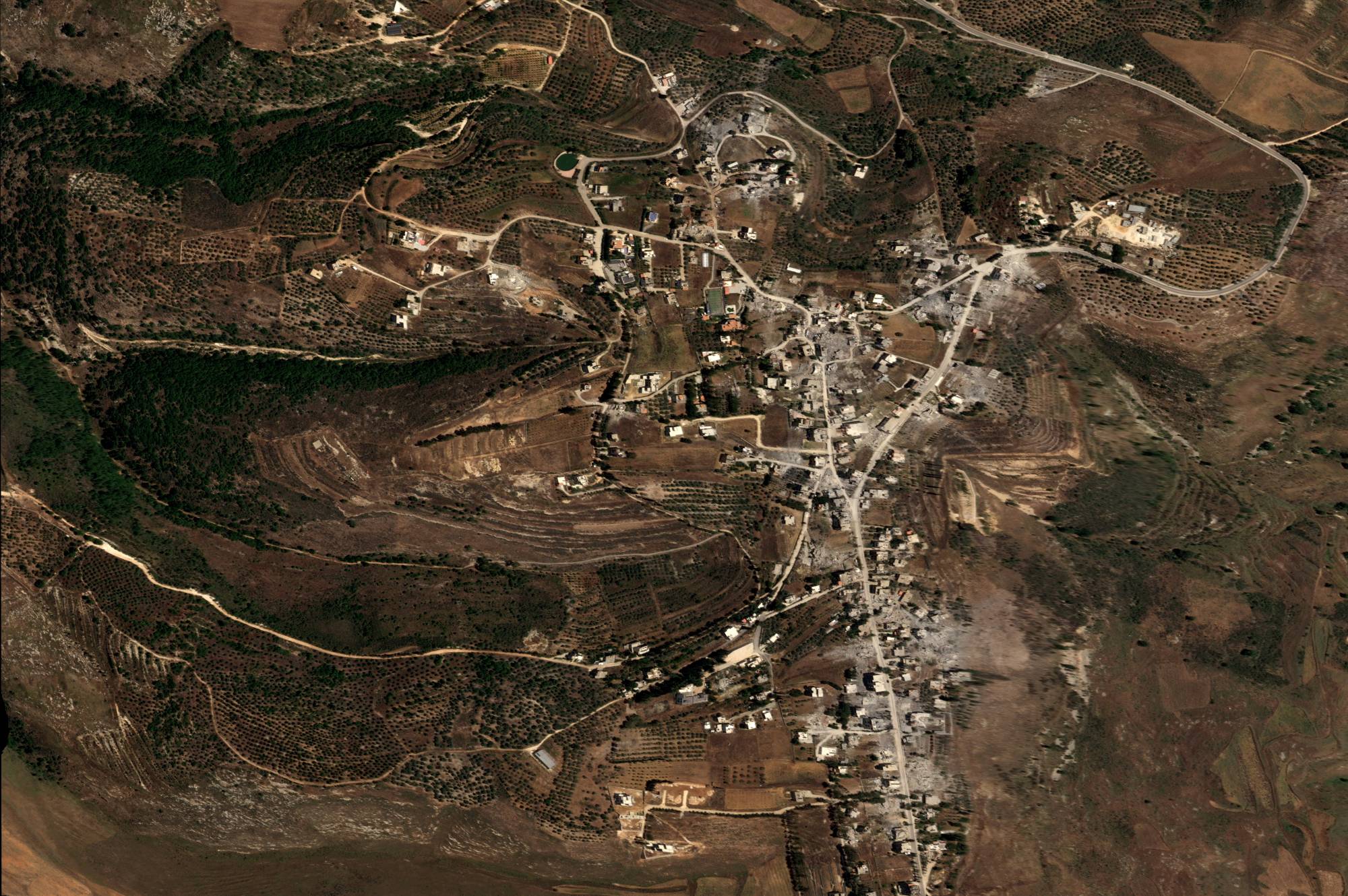
A satellite image shows the village of Froun in Lebanon, June 24, 2026. (Pléiades Neo © Airbus DS 2026/Handout via Reuters)

Ali al-Taher

When practical negotiations over the withdrawal began, Aoun proposed starting with an Israeli pullback from Kfar Tibnit and the historic Beaufort Castle, the last point reached by Israeli forces in their advance. The aim was to push Israeli forces away from Nabatieh after they had reached the city’s outskirts.

But the proposal collided with Israel’s determination to reach the Ali al-Taher heights, believed to contain a massive underground Hezbollah military facility.

Aoun called Rubio and proposed that the Lebanese army enter the area, while the Israeli army would withdraw beyond the Litani River. Rubio contacted the Israelis. Aoun, through intermediaries, contacted Hezbollah.

Israel approved the proposal. Hezbollah gave two contradictory answers. The first allowed the army to deploy without entering the facility. The second rejected the idea completely.

Later, Hezbollah settled on one answer: the matter was absolutely unacceptable. The proposal collapsed.

The area’s importance goes beyond Hezbollah’s facility. If Israeli forces position themselves there, they would directly overlook Nabatieh. From the other side, the heights overlook Israeli settlements, especially Metula, just a few kilometers from Nabatieh.

The idea of a withdrawal from that area was shelved. Instead, the focus shifted to another pullback from Zawtar al-Gharbieh and to the launch of a “pilot zone” there and the towns of Froun and Ghandourieh in the central sector.

That was the middle-ground solution. A withdrawal from the coastal line falls under the same equation because of its proximity to the southern border and, therefore, its high sensitivity for Israel.


Sisi Stresses Egypt’s Support for Iraq’s Security, Stability

Egyptian President Abdel Fattah al-Sisi holds talks with the head of Iraq’s Hikma Movement in Cairo on Thursday. (Egyptian Presidency)
TT

Sisi Stresses Egypt’s Support for Iraq’s Security, Stability

Egyptian President Abdel Fattah al-Sisi holds talks with the head of Iraq’s Hikma Movement in Cairo on Thursday. (Egyptian Presidency)

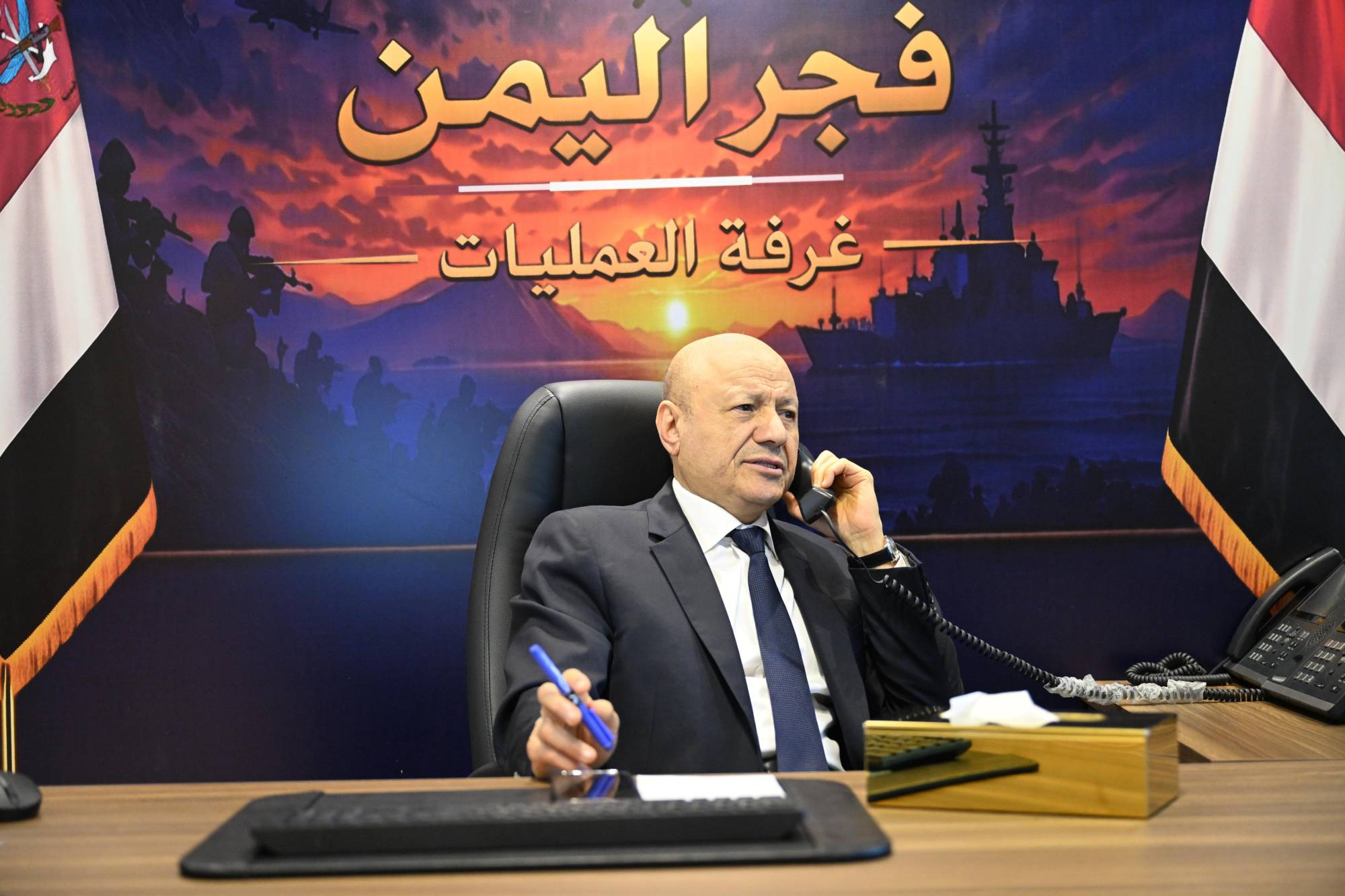
Egyptian President Abdel Fattah al-Sisi met Ammar al-Hakim, head of Iraq’s Hikma Movement, in Cairo on Thursday and pledged continued support for Iraq’s security and stability.

Sisi said Egypt backed measures taken by the Iraqi state to protect its sovereignty, unity and territorial integrity. The talks also covered Baghdad’s efforts to fight corruption and bring weapons under state control.

Hikma Movement deputy head Mohsen al-Hakim, adviser Ahmed al-Hakim, Egyptian intelligence chief Hassan Rashad and Iraqi Ambassador Qahtan Taha al-Janabi attended the meeting.

Sisi visited Baghdad in June 2021, becoming the first Egyptian president to travel to Iraq in decades. The visit was part of a trilateral initiative with Iraq and Jordan to deepen political, economic and security coordination.

Egyptian presidential spokesperson Mohamed al-Shennawy said Sisi stressed the countries’ historic ties and Egypt’s commitment to engaging with Iraqi state institutions and political groups.

Sisi praised Iraq’s fight against terrorism and extremist ideology. He also commended al-Hakim’s efforts to strengthen stability, narrow political differences and put Iraq’s national interests first.

Al-Hakim said Egypt played a central role in regional security and stability, including by supporting Iraq’s efforts to regain its leading place in the Arab world and the wider region.

He said he wanted Sisi’s views on how to ease current regional tensions and shield Iraq from their effects.

Security and stability

Salah Halima, a member of the Egyptian Council for Foreign Affairs and a former assistant foreign minister, said some elements in Iraq were at odds with efforts to secure the country.

Action was needed to prevent activities beyond the control of Iraq’s governing authorities, he said.

“The situation may require a very high degree of cooperation between Egypt and Iraq,” Halima told Asharq Al-Awsat.

“Iraq’s national security is an integral part of Arab national security and closely linked to security and stability in the Red Sea and the Gulf.”

Halima said al-Hakim’s visit underscored the need for agreement on removing threats in Iraq and preventing any escalation that could destabilize the country. It could also spur broader cooperation between Cairo and Baghdad, he said.

The Egyptian presidency said the two leaders discussed the regional situation and its impact, particularly on Egypt and Iraq. Sisi outlined Egypt’s call for peaceful solutions to crises and conflicts, support for legitimate institutions and an inclusive nation-state.

He also described Egyptian efforts to lower tensions and avert another round of escalation. Iraq should continue playing a constructive role in strengthening collective Arab security and safeguarding the region’s resources, he said.

Visits gather pace

Contacts between Cairo and Baghdad have intensified. Sisi received former Iraqi Prime Minister Mohammed Shia al-Sudani on Aug. 27, 2024, for talks on energy, trade, investment and reconstruction. The two countries’ foreign ministers have also discussed ways to ease regional tensions.

In late August, Iraqi Prime Minister Ali al-Zaidi met Egypt’s intelligence chief, who delivered a message from Sisi.

According to the Iraqi cabinet, Sisi praised the countries’ strategic ties and expressed his readiness to support efforts to meet the aspirations of their peoples.

A senior delegation from Iraq’s Ministry of Water Resources visited Egypt early this month to strengthen technical cooperation and exchange expertise.

The Palestinian issue also featured in Thursday’s meeting. Sisi described Egypt’s efforts to implement the second phase of the Sharm el-Sheikh agreement and the US peace plan, deliver aid and expand humanitarian relief in Gaza.

He reiterated Egypt’s position that a Palestinian state with East Jerusalem as its capital must be established in accordance with international resolutions, calling it the only comprehensive and just solution to the Palestinian issue.


'A Challenge and Blank Ballots': What Is Happening in Hamas’s Leadership Election in Gaza?

This handout picture released by the office of Iran's Supreme Leader Ayatollah Ali Khamenei on February 8, 2025, shows (L to R) member of the Hamas political bureau Nizar Awadallah, deputy chairman of the Hamas political bureau Khalil al-Hayya and the head of the political council of Hamas Mohammad Ismail Darwish, meeting with him in Tehran. (Photo by KHAMENEI.IR / AFP)
TT

'A Challenge and Blank Ballots': What Is Happening in Hamas’s Leadership Election in Gaza?

This handout picture released by the office of Iran's Supreme Leader Ayatollah Ali Khamenei on February 8, 2025, shows (L to R) member of the Hamas political bureau Nizar Awadallah, deputy chairman of the Hamas political bureau Khalil al-Hayya and the head of the political council of Hamas Mohammad Ismail Darwish, meeting with him in Tehran. (Photo by KHAMENEI.IR / AFP)

Four Hamas sources inside and outside the Gaza Strip told Asharq Al-Awsat in separate accounts that the runoff election to choose the head of the movement’s political bureau in Gaza had been suspended after the first round, held three weeks ago, failed to produce a result.

The sources agreed that the first round failed to produce a decisive result because eligible voters cast blank ballots, repeating a phenomenon that had occurred during the election to choose the overall head of the political bureau last May. That election went to a second round, which Khalil Al-Hayya won over Khaled Meshaal.

Three sources from inside and outside the Gaza Strip also said that the suspension of the runoff for the leadership of Hamas’s Gaza political bureau came after Nizar Awadallah, who is based outside Gaza and is running against Ali Al-Amoudi, who is based inside the Strip, challenged some of the procedures followed during the runoff. Both are members of the political bureau.

The fourth source, who is outside Gaza, said that “other disagreements” had also contributed to the temporary suspension of the election, which is expected to resume soon after “some arrangements” are made, without providing further details. The source described these as “normal disagreements, within the framework of the laws and regulations governing any electoral process within the movement.”

Some sources attributed part of the delay in reaching a decision to “the security situation and the circumstances facing the Strip, as well as the challenges of conducting elections in the aftermath of the Gaza war.” Another source said the election was being held while Israel was tracking substantial intelligence aimed at trying to locate participants in the election and others. These factors, the source said, had contributed to legal gaps that led to the current situation.

Why Have Blank Ballots Returned?

Regarding the renewed use of blank ballots, two sources inside the Gaza Strip said this was a normal outcome stemming from differences over the competing figures and the approach they might pursue, which some viewed as unsuitable for the current phase, as had also occurred in the general election.

None of the sources specified whether the head of Hamas’s political bureau, Khalil Al-Hayya, supports either of the two candidates, Ali Al-Amoudi or Nizar Awadallah.

Hamas is going through an exceptionally complex period, unlike any it has experienced since its establishment in 1987, following the October 7, 2023 attack it launched against Israeli sites and towns adjacent to the Gaza Strip, which prompted Israel to wage a prolonged war.

What Do We Know About Ali Al-Amoudi?

Sources told Asharq Al-Awsat in December that Al-Amoudi, a former prisoner and member of the political bureau who was responsible for the movement’s media division before the war, had become responsible for running the political bureau’s affairs in the Gaza Strip. He was appointed, along with a number of associates of the late Hamas leader Yahya Sinwar, to manage the movement in the Strip. Most of them are based in Khan Younis in southern Gaza.

Al-Amoudi, who was released in 2011 as part of the prisoner exchange deal involving Israeli soldier Gilad Shalit, has emerged over the past year as a central figure in the administration of the Gaza Strip. He was among Sinwar’s closest associates during their imprisonment in Israeli prisons and after their release. He frequently accompanied Sinwar at meetings, events and other engagements. He was appointed through an endorsement and consultation process to manage the Strip, while some sources at the time said the move had circumvented the movement’s internal regulations. This may help explain the holding of the internal election in Gaza.

In recent months, considerable controversy has arisen over Al-Amoudi’s decisions in Gaza, including changes he made and the dismissal of officials from their positions. This reportedly caused anger among local leaders in the Strip and prompted some members of the political bureau outside Gaza to intervene in an attempt to resolve the resulting disputes.

What Do We Know About Nizar Awadallah?

Nizar Awadallah is considered one of Hamas’s founding generation. He secretly led the movement’s political bureau during the period from late 2004 to early 2007. He also played a prominent role in several important stages in the movement’s modern history, including leading the negotiations over the Shalit prisoner exchange deal and taking an active and important part in negotiations during the most recent war. He also played a significant role in Palestinian reconciliation talks held in several capitals following Hamas’s takeover of the Gaza Strip in 2007.

Awadallah was very close to Sheikh Ahmed Yassin, the founder of Hamas, as well as Abdel Aziz Al-Rantisi and other early and historic leaders of the movement, of whom he was one.

Awadallah, a 68-year-old architect, rose to prominence. He lives in the Sheikh Radwan neighborhood of Gaza City, and his home has been struck several times during previous wars.

During the last internal elections, held in 2021, Awadallah competed against Yahya Sinwar for leadership of Hamas’s political bureau in the Gaza Strip. He lost to Sinwar after a second runoff was held.

Clarify the opening election sequenceFix Awadallah’s biography paragraph


Palestinian President, again Denied a Visa to Speak at UN, Addresses Leaders on Prerecorded Video

Palestinian President Mahmoud Abbas delivers a video address to the UN General Assembly in September 2025 (EPA)
TT

Palestinian President, again Denied a Visa to Speak at UN, Addresses Leaders on Prerecorded Video

Palestinian President Mahmoud Abbas delivers a video address to the UN General Assembly in September 2025 (EPA)

Palestinian President Mahmoud Abbas addressed the UN General Assembly on Thursday, delivering prerecorded remarks from his office in Ramallah after the United States denied him and other top Palestinian officials visas to attend the gathering for the second year in a row.

Israeli Prime Minister Benjamin Netanyahu was scheduled to speak in person early in the afternoon.

Since 2005, the now-90-year-old Abbas has led the Palestinian Authority, which is the internationally recognized representative of the Palestinian people. But his support among Palestinians has withered during years of corruption and the sometimes violent advance of Israeli settlers in the occupied West Bank, according to The AP news.

Under Abbas, Palestine has been recognized as a country by a majority of UN member states. But on the ground in the West Bank, the mostly symbolic moves have not affected Israel’s decades long military occupation. Throughout the war in Gaza, Abbas and the authority have been largely sidelined from negotiations over its future in favor of a transition process shepherded by President Donald Trump’s Board of Peace.

The Palestinian Authority was created under a series of peace agreements with Israel in the 1990s and administers semiautonomous areas of the West Bank, while relying heavily on foreign aid. It is the internationally recognized representative of the Palestinian people.

It was ousted from Gaza after Hamas won parliamentary elections in 2006 and violently seized control. Abbas was elected to what was supposed to be a four-year term in 2005. The authority has not held presidential or legislative elections since 2006.

Israel captured the West Bank and east Jerusalem in the 1967 war, and the Palestinians want both as part of their future state. The Palestinians and much of the international community view the settlements as illegal and as an obstacle to creating a viable, contiguous Palestinian state.

Abbas recorded the video on Wednesday.