

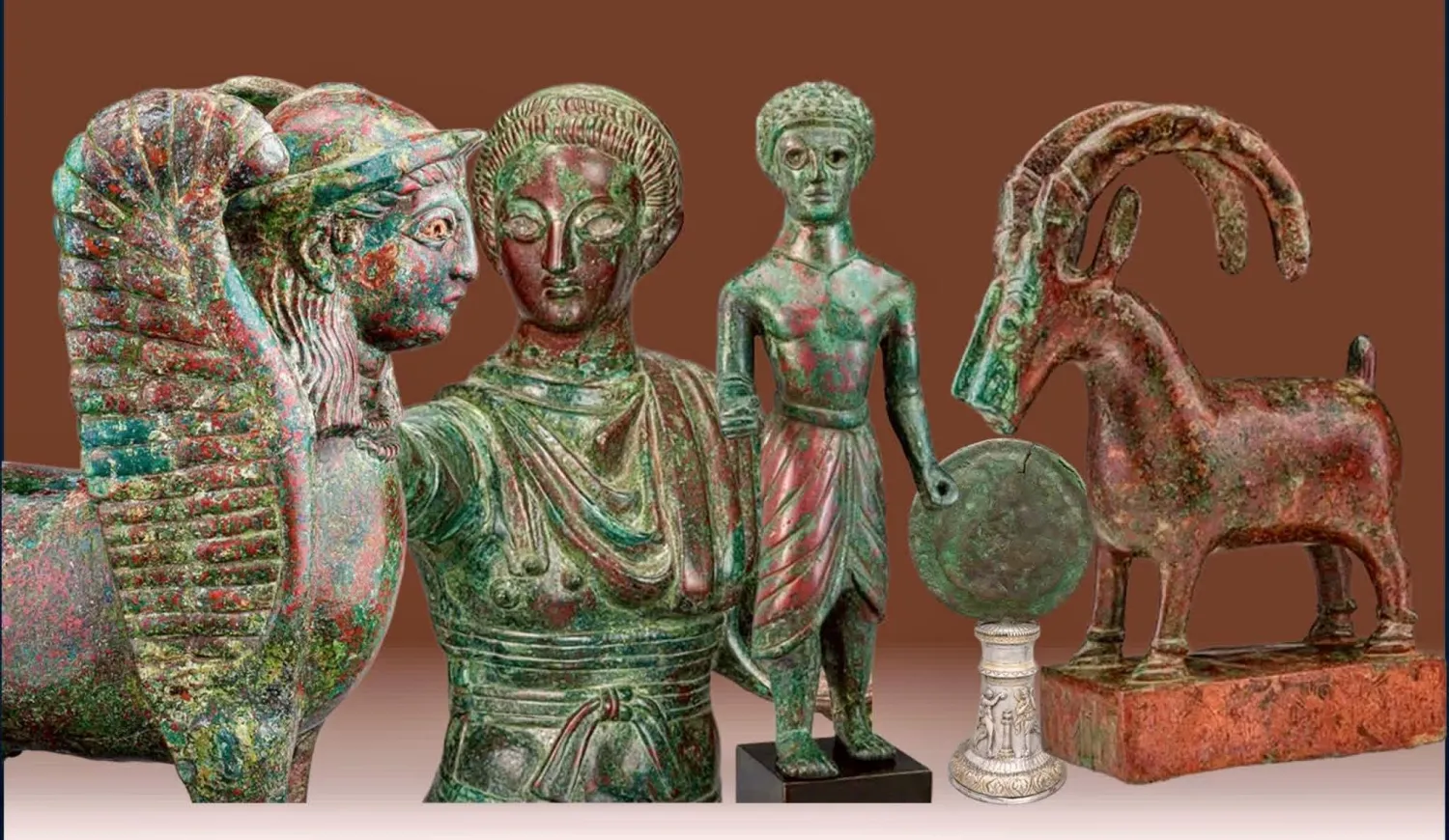

Looting of Yemen’s Antiquities Surges in Houthi-Controlled Areas

Smuggled Yemeni antiquities offered for sale abroad (local media)
TT

Looting of Yemen’s Antiquities Surges in Houthi-Controlled Areas

Smuggled Yemeni antiquities offered for sale abroad (local media)

The looting of Yemen’s antiquities is surging in areas under Houthi control, as illegal excavations increasingly target historic sites rich in archaeological treasures. Experts accuse influential figures of shielding organized trafficking networks that loot and smuggle artifacts abroad, placing a significant part of Yemen’s cultural heritage at risk.

Experts say the provinces of Ibb and Dhamar, south of Sanaa, home to some of Yemen’s most important ancient cities and the capitals of early Yemeni kingdoms, have become hotspots for unauthorized excavations in recent months. Ancient cemeteries and archaeological sites are being systematically dug up in search of rare artifacts, while Yemeni antiquities are increasingly surfacing on illicit markets in the country and overseas.

Yemeni antiquities expert Abdullah Mohsen revealed that a collection of rare artifacts was recently offered for sale in the city of Yarim, in Ibb, just days after illegal excavations were carried out at several ancient cemeteries in the historic city of Zafar, the former capital of the Himyarite Kingdom.

The collection includes gold jewelry and valuable bronze artifacts, among them a rare gold dagger hilt dating to the first century AD. According to experts, it is only the third known example of its kind from the Himyarite era.
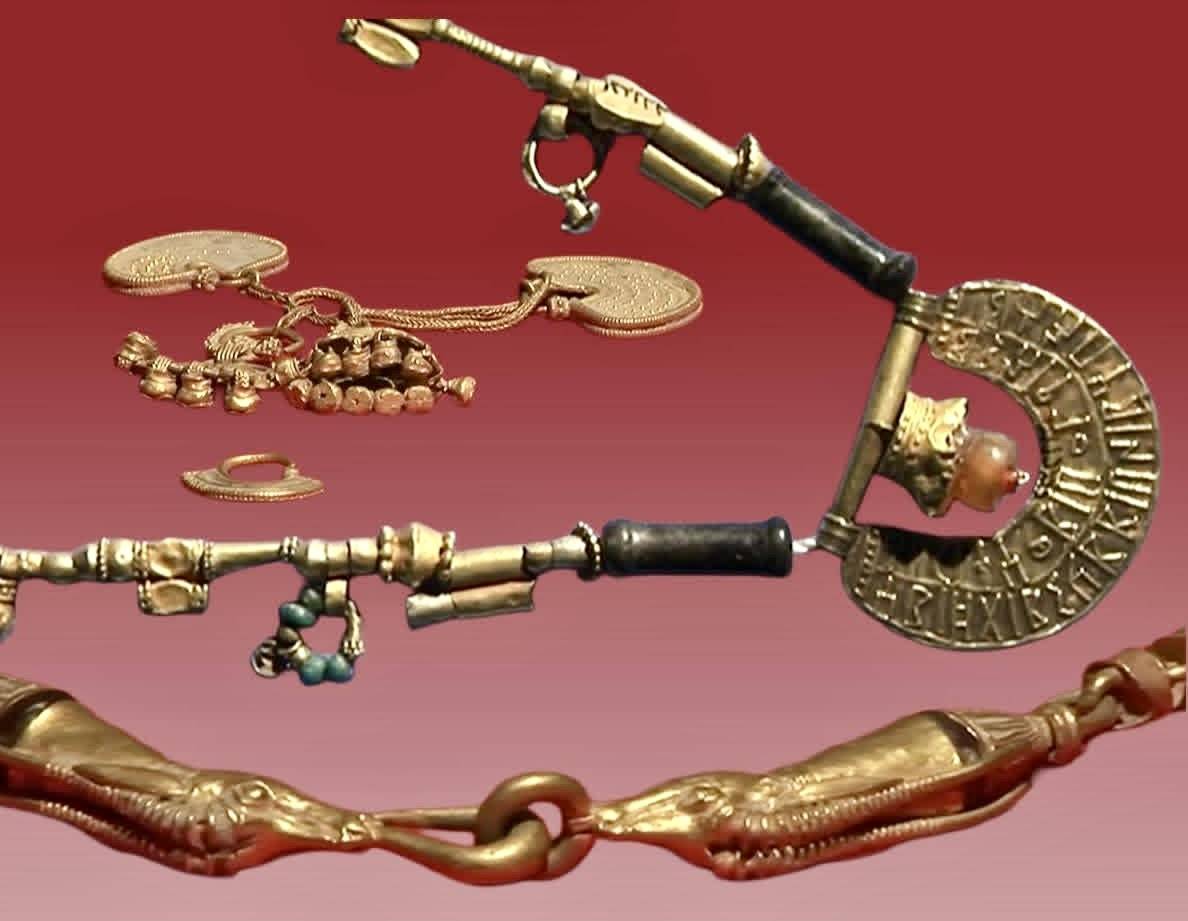
Illegal excavations have become increasingly frequent (local media)

Mohsen said he received photographs of the artifacts from a Yemeni heritage enthusiast who requested anonymity for security reasons.

He added that the objects display unmistakable archaeological characteristics confirming their authenticity and scholarly value, and strongly suggest they originated from the recently looted burial sites.

Heritage experts say the close timing between the illegal excavations and the appearance of the artifacts on the black market are a clear sign that organized networks are systematically extracting and rapidly trafficking antiquities, exploiting weak oversight and the absence of effective protection for archaeological sites.
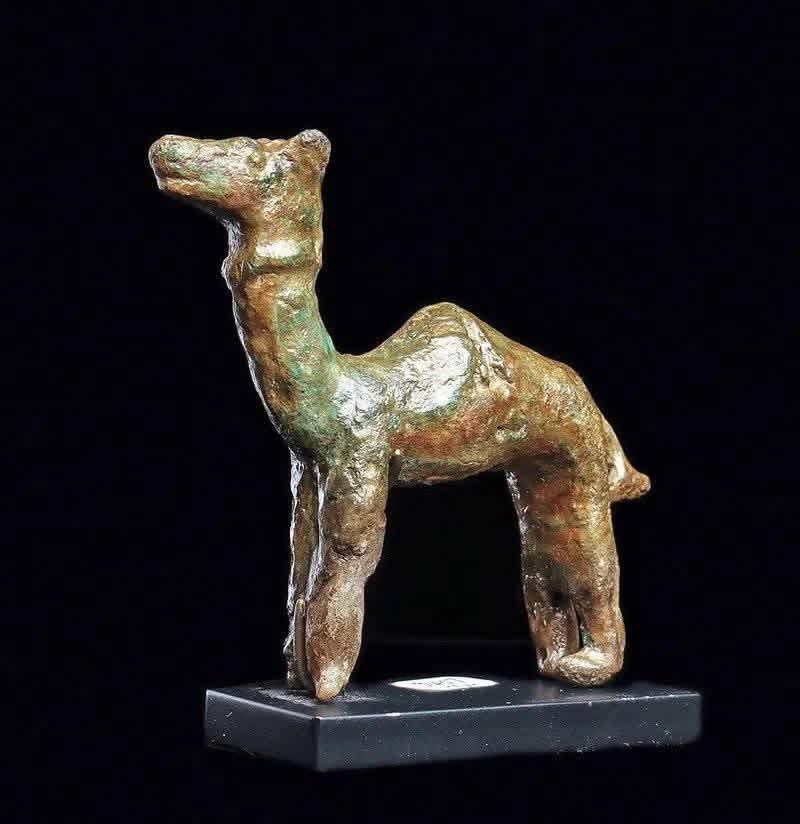
Yemeni artifact for sale in the United States (local media)

Rare discoveries

Archaeology professor Layla Aqil identified the gold object shown in the photographs as the hilt of a sword or dagger, crafted with intricate gold wirework and decorated with the Heracles knot, a motif widely used during the Hellenistic period between the first and third centuries AD as a symbol of strength and authority.

She said the hilt is only the third known example of its type, resembling two previously discovered daggers - one housed in the Museum of Islamic Art collection and the other unearthed at the Al-Asibiyah archaeological site.

Both feature delicate floral motifs inlaid with colored enamel, a further sign that the newly surfaced piece dates from the same period.

Aqil also noted that the twisted gold bracelets found in the collection represent a classic form of jewelry in ancient Yemen. Comparable examples have been excavated at Al-Asibiyah, Qaryat Al-Faw, and the Al-Hasmah site in Shaqrah, Abyan province, and are believed to date from between the first and third centuries AD.

Experts stress that the importance of these artifacts extends well beyond their monetary value. They provide critical evidence about the history of Yemen’s ancient kingdoms and the evolution of their craftsmanship, technology, and artistic traditions, making their loss an irreplaceable scientific and cultural setback.
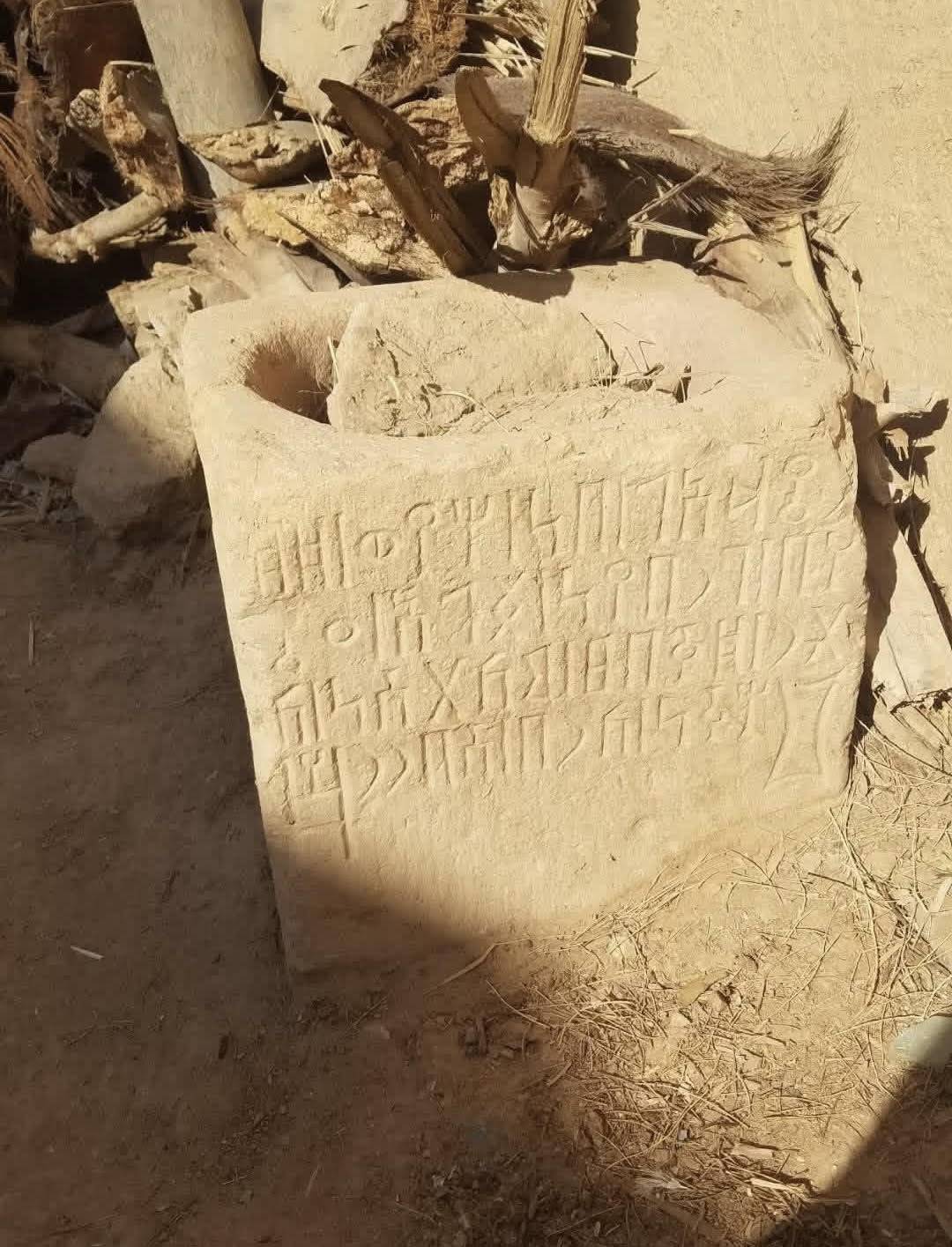
Archaeological inscription found near homes in Houthi-controlled areas (local media)

Organized smuggling

Archaeologists have also warned of expanding antiquities trafficking networks operating in Ibb and Dhamar, saying illegal excavations have become increasingly frequent over recent months as institutions responsible for safeguarding cultural heritage have weakened and archaeological sites remain largely unprotected.

They said they possess information indicating that the rare artifacts are now in the hands of an influential network specializing in looting historic sites and trading antiquities.

According to their accounts, the group enjoys the backing and protection of influential figures in Houthi-controlled areas, enabling illegal excavations to continue and facilitating the organized smuggling of artifacts out of Yemen.

The experts warned that the destruction of archaeological sites results not only in the loss of historic objects but also in the irreversible destruction of archaeological layers and their scientific context, depriving researchers of historical evidence that can never be recovered and inflicting lasting damage on Yemen’s cultural legacy.

They called on the relevant authorities and international organizations responsible for protecting cultural heritage to act urgently by dismantling trafficking networks, recovering stolen collections, halting illegal excavations, and strengthening protection for archaeological sites.



China's Xi Holds Talks with Sisi in First Egypt Visit in a Decade

 In this photo released by Xinhua News Agency, Chinese President Xi Jinping, second left, and his wife Peng Liyuan, left, are welcomed by Egyptian President Abdel Fattah al-Sisi, right, and his wife Entissar Amerupon on their arrival at Cairo International Airport in Cairo, Tuesday, Sept. 1, 2026. (Yin Bogu/Xinhua via AP)
In this photo released by Xinhua News Agency, Chinese President Xi Jinping, second left, and his wife Peng Liyuan, left, are welcomed by Egyptian President Abdel Fattah al-Sisi, right, and his wife Entissar Amerupon on their arrival at Cairo International Airport in Cairo, Tuesday, Sept. 1, 2026. (Yin Bogu/Xinhua via AP)
TT

China's Xi Holds Talks with Sisi in First Egypt Visit in a Decade

 In this photo released by Xinhua News Agency, Chinese President Xi Jinping, second left, and his wife Peng Liyuan, left, are welcomed by Egyptian President Abdel Fattah al-Sisi, right, and his wife Entissar Amerupon on their arrival at Cairo International Airport in Cairo, Tuesday, Sept. 1, 2026. (Yin Bogu/Xinhua via AP)
In this photo released by Xinhua News Agency, Chinese President Xi Jinping, second left, and his wife Peng Liyuan, left, are welcomed by Egyptian President Abdel Fattah al-Sisi, right, and his wife Entissar Amerupon on their arrival at Cairo International Airport in Cairo, Tuesday, Sept. 1, 2026. (Yin Bogu/Xinhua via AP)

Egypt's President Abdel Fattah al-Sisi on Wednesday received his Chinese counterpart Xi Jinping on his first visit to Cairo in a decade, as Beijing seeks a greater foothold in the region against the backdrop of the US-Iran war.

The 21-gun salute at Cairo's Ittihadiya Palace marked the start of a day of talks expected to cover the Middle East war and its fallout, including on maritime trade security, as well as boosting Chinese investment in the Arab world's most populous country.

The two BRICS members are expected to sign a slate of economic agreements, including on artificial intelligence, transport and manufacturing.

Egypt currently estimates Chinese investments at around $10 billion. Beijing has key stakes in the Suez Canal Economic Zone, which are only expected to grow as the US-Iran war threatens global maritime trade.

Beijing has also played a key role in Sisi's megaprojects, the crowning jewel of which is the New Administrative Capital 50 kilometers (30 miles) east of Cairo, large swathes of which have been bankrolled by Chinese investment.

China is a major exporter to Egypt, with its trade surplus reaching $12 billion in the first seven months of 2026, according to Chinese customs data.

Across Cairo, a megalopolis home to over 26 million people, major streets have been lined with Chinese and Egyptian flags, as well as billboards showing Sisi and Xi.

Street signs boast of "generations of Egyptian-Chinese friendship flowing like the Nile River", while residents have been warned to plan for substantial traffic delays on their commutes.

Xi is expected to traverse the entire capital during his visit Wednesday, including a stop at the Grand Egyptian Museum overlooking the Giza Pyramids.

- 'Independent foreign policy' -

According to analysts, Cairo will use the summit to underscore its strategic autonomy, showing it can leverage its close ties with both Washington and Beijing.

Sisi, in an op-ed published in Egyptian media on Tuesday, highlighted Cairo's "independent foreign policy".

He wrote that Egypt and China were partners in "strengthening the role of the global south" in an increasingly polarized world.

Washington vowed last month to isolate Iran economically, threatening expanded sanctions that could also hit Chinese banks, among others.

China, a major buyer of Iranian oil, has vowed to safeguard its interests.

In the lead-up to an expected meeting between Xi and US President Donald Trump this month, it has also sought to shore up ties with US-friendly regional nations.

Egypt is one of the largest recipients of US military aid, and historically a key Middle East mediator.

Last week, the US Treasury announced sanctions on the Emirati branch of Egypt's Banque Misr for alleged support to Iran.

Egypt hosted major joint air combat exercises with the Chinese military in August, featuring Beijing's powerful J-16 fighter jet.


Damascus Begins Establishing its Authority in Hasakeh after SDF Dissolution

A Syrian Defense Ministry delegation in Hasakeh on Monday. (Hasakeh governorate media)
TT

Damascus Begins Establishing its Authority in Hasakeh after SDF Dissolution

A Syrian Defense Ministry delegation in Hasakeh on Monday. (Hasakeh governorate media)

The Special Task Forces of the Ministry of Interior took over a regiment on Tuesday from the disbanded Syrian Democratic Forces (SDF) in Hasakeh city as part of a plan to deploy Syrian security forces in the Hasakeh governorate in northeastern Syria.

The move is part of completing integration procedures and taking control of all security and military positions in the governorate, and hours after the arrival of a Ministry of Defense delegation to Hasakeh to discuss measures for completing the integration process.

Internal Security and Special Task forces are expected to deploy gradually across all areas of Hasakeh to extend state control, maintain security, and boost stability.

New appointments within the Syrian security apparatus are expected as part of an integration process.

Forces are also preparing to deploy to Hasakeh city center, Qamishli, Rumeilan, Al-Malikiyah, and border regions in the coming days.

A delegation from the Ministry of Defense arrived in Hasakeh on Monday and held a meeting at the governorate headquarters with local officials, including Governor Nour al-Din Ahmed, Military Security chief Thaer Obaid al-Bilal, and Military Police chief Imad Fawaz al-Ayesh.

The meeting addressed the procedures and steps required to finalize the integration of military and security institutions within the region, said a statement.

The meeting also addressed coordination mechanisms and the strengthening of cooperation between the relevant entities to unify efforts and ensure the smooth implementation of procedures related to the integration.

The executive bureau of the Hasakeh governorate also held its first meeting on Tuesday, chaired by the governor and attended by bureau members, to discuss mechanisms for boosting coordination across various sectors.

In a related development, displaced Arab families from Haskaeh city returned to their homes in the Al-Aziziyeh neighborhood after more than 10 years of displacement. A celebration was held in their honor attended by Internal Security Commander Marwan Al-Ali and Hasakeh Deputy Governor Ahmed Al-Hilali.


16 Dead in Bus Crash in Egypt's Sinai

Ambulance vehicles in Egypt (Egyptian Ambulance Authority)
TT

16 Dead in Bus Crash in Egypt's Sinai

Ambulance vehicles in Egypt (Egyptian Ambulance Authority)

A bus crash in Egypt's eastern Sinai Peninsula on Wednesday killed 16 people and injured 28 others, the health ministry reported.

Twenty ambulances rushed to the scene of the accident, which occurred on the road between the popular tourist towns of Dahab and Nuweiba on South Sinai's eastern coast, the ministry said.

Authorities said the injured were receiving medical care but did not say what caused the crash, according to AFP.

The area is a popular tourist destination, known for its marine biodiversity, natural beauty and mountain hiking trails.

Car crashes are common in Egypt, and often blamed on reckless driving, poor maintenance and uneven law enforcement.

Last year, nearly 6,000 people died in road accidents across the country, according to Egypt's state statistics agency.