


Egypt Calls for Urgent Humanitarian Truce in Sudan

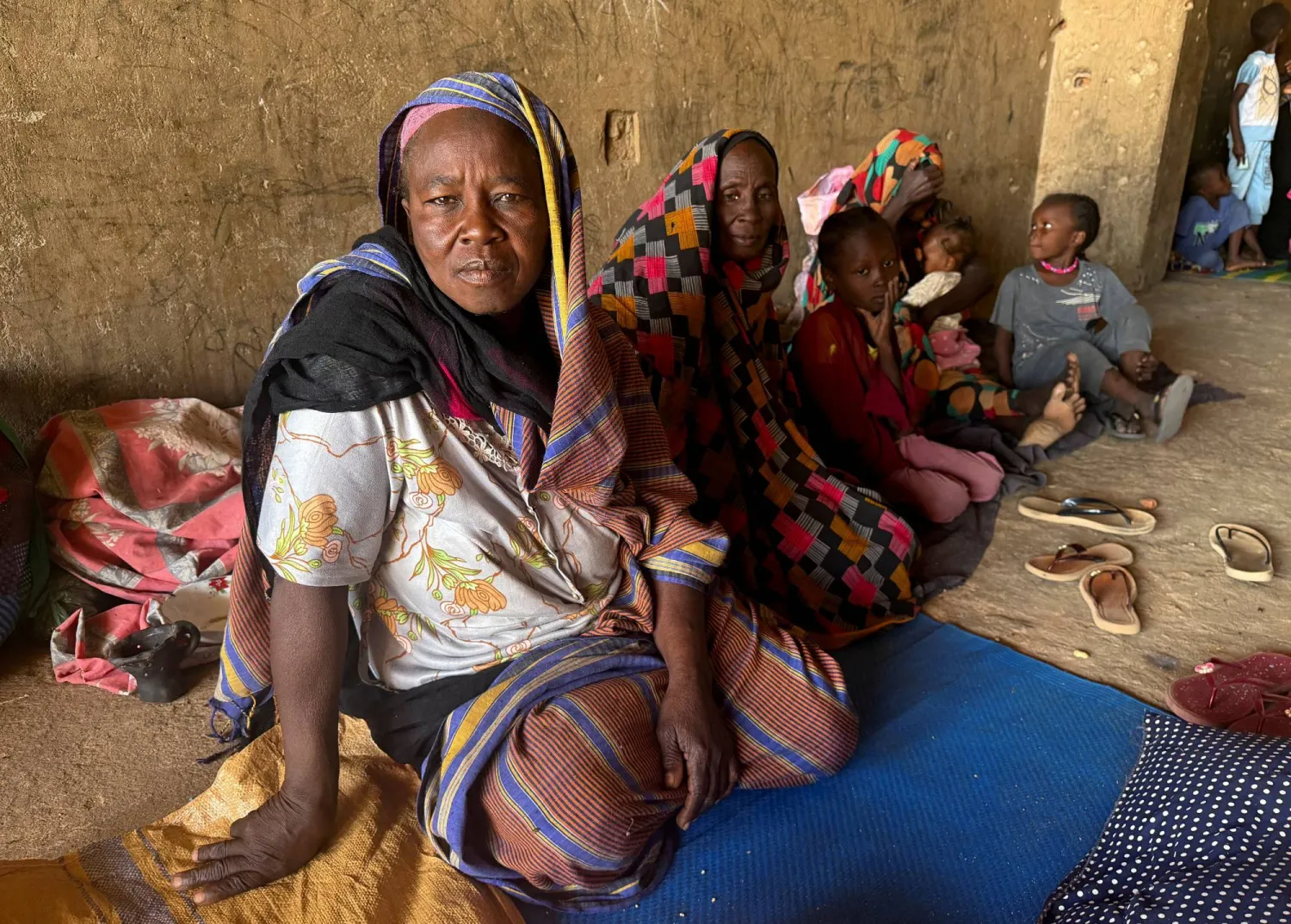
FILE PHOTO: Displaced women from South Kordofan sit on the ground in El Obeid, North Kordofan State, Sudan, January 15, 2026. REUTERS/El Tayeb Siddig/File Photo
TT

Egypt Calls for Urgent Humanitarian Truce in Sudan

FILE PHOTO: Displaced women from South Kordofan sit on the ground in El Obeid, North Kordofan State, Sudan, January 15, 2026. REUTERS/El Tayeb Siddig/File Photo

Egypt renewed its call for “an urgent and immediate humanitarian truce in Sudan” and stressed the need for “a comprehensive and complete ceasefire across all Sudanese territory.”

Egypt’s permanent representative to the UN Human Rights Council in Geneva, Ambassador Amr Ramadan, said on Friday that the situation in Sudan requires a responsible position that supports mechanisms trusted by the Sudanese people.

He also called for “strengthening national institutions as an essential and indispensable pillar for achieving justice and protecting human rights.”

The appeals come as fighting escalates in Sudan, particularly in El Obeid, the capital of North Kordofan state, where drones have been used by the Sudanese army and the Rapid Support Forces (RSF).

The scene recalls El Fasher, the capital of North Darfur state, which fell to the RSF last year after months of siege and the deaths of hundreds of people.

At the UN Human Rights Council meeting, Ramadan said: “The highest and most urgent priority today is to reach a real humanitarian truce that would pave the way for a comprehensive halt to military operations.”

He renewed Egypt’s call for “a comprehensive and complete ceasefire across all Sudanese territory” and urged “the launch of a purely Sudanese political process, without any external dictates or interference.”

UN High Commissioner for Human Rights Volker Türk also called on Friday for greater light to be shed on how resources such as gold are being exploited to fuel the conflict.

Ambassador Salah Halima, a member of the Egyptian Council for Foreign Affairs, said: “There is difficulty in advancing solutions to the Sudanese crisis.”

“We are still going in circles, between tracks calling for a humanitarian truce, a ceasefire, and the launch of political dialogue, without any of them being implemented,” he said.

Halima said the crisis requires understandings that the international quartet could adopt, describing it as the most capable and influential mechanism for reaching a settlement to the humanitarian crisis.

The quartet mechanism, which includes Saudi Arabia, Egypt, the United Arab Emirates and the United States, is working to secure a ceasefire in Sudan.

It held a ministerial-level meeting in Washington last September and announced: “a roadmap that includes a timeline to end the crisis in Sudan, beginning with the implementation of a humanitarian truce as soon as possible.”

Halima said the tracks for resolving the Sudanese crisis “must be implemented in parallel,” covering the security, military, humanitarian and political dimensions, as well as reconstruction.

He told Asharq Al-Awsat that “the start could be the launch of a political dialogue among Sudanese parties, which would issue a decision on a ceasefire,” saying this “could create pressure on the parties to the war.”

Makki al-Maghribi, director of the International Relations Unit at the Sudanese Center for Thought and Strategic Studies, said: “A humanitarian truce in Sudan remains difficult.”

He said any “real cessation of hostilities requires a commitment from the Rapid Support Forces militia in the areas it controls, which has not happened since the start of the war.”

Maghribi told Asharq Al-Awsat that “there is a new formulation of international mediation on Sudan ... through a quartet meeting held in Cairo that included Saudi Arabia, Egypt, Türkiye and the United States.”

“The position of most countries in the new mediation is always read in the context of preserving Sudan’s unity,” he said.
Demolitions in South Lebanon as Israel Redraws Border Strip

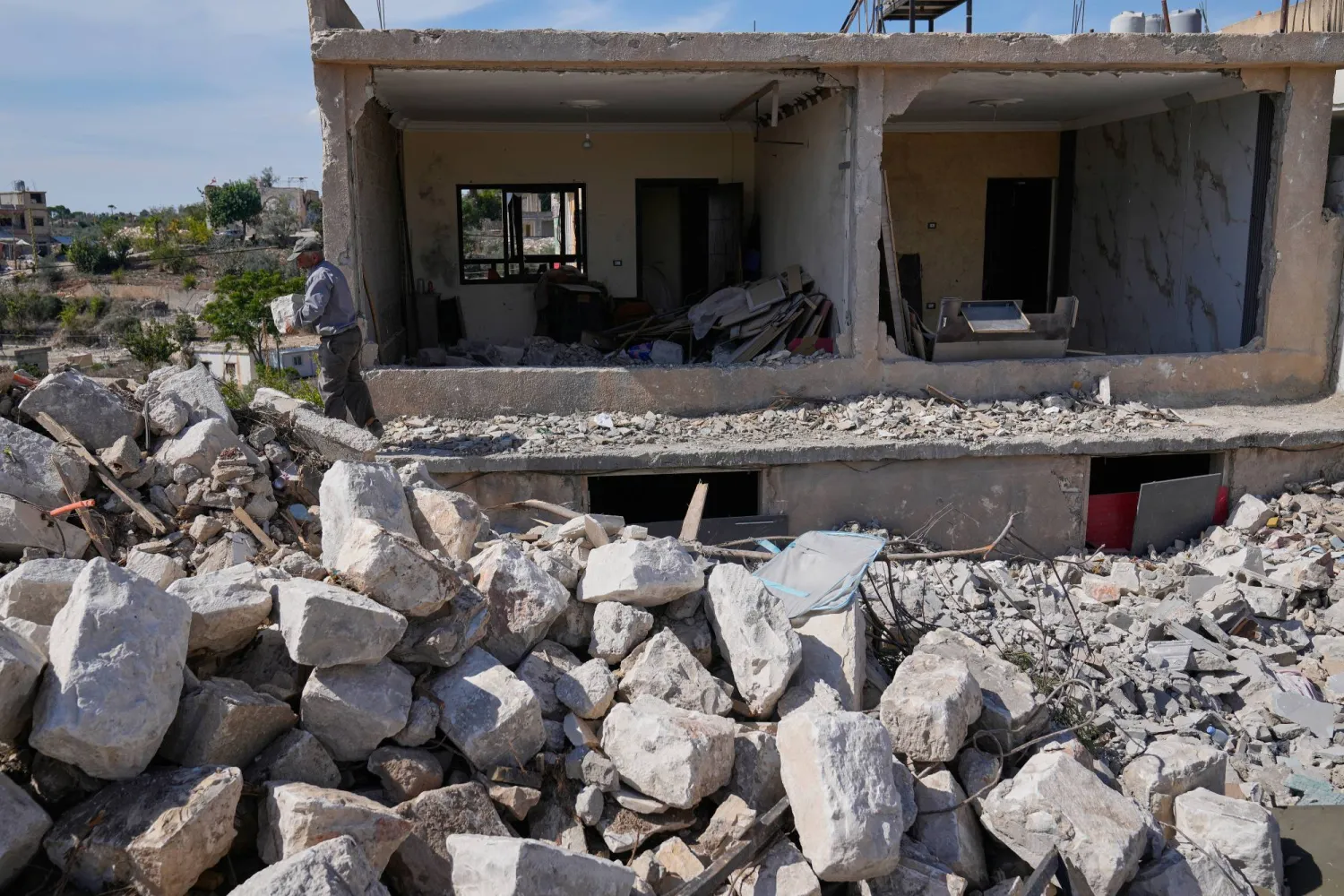
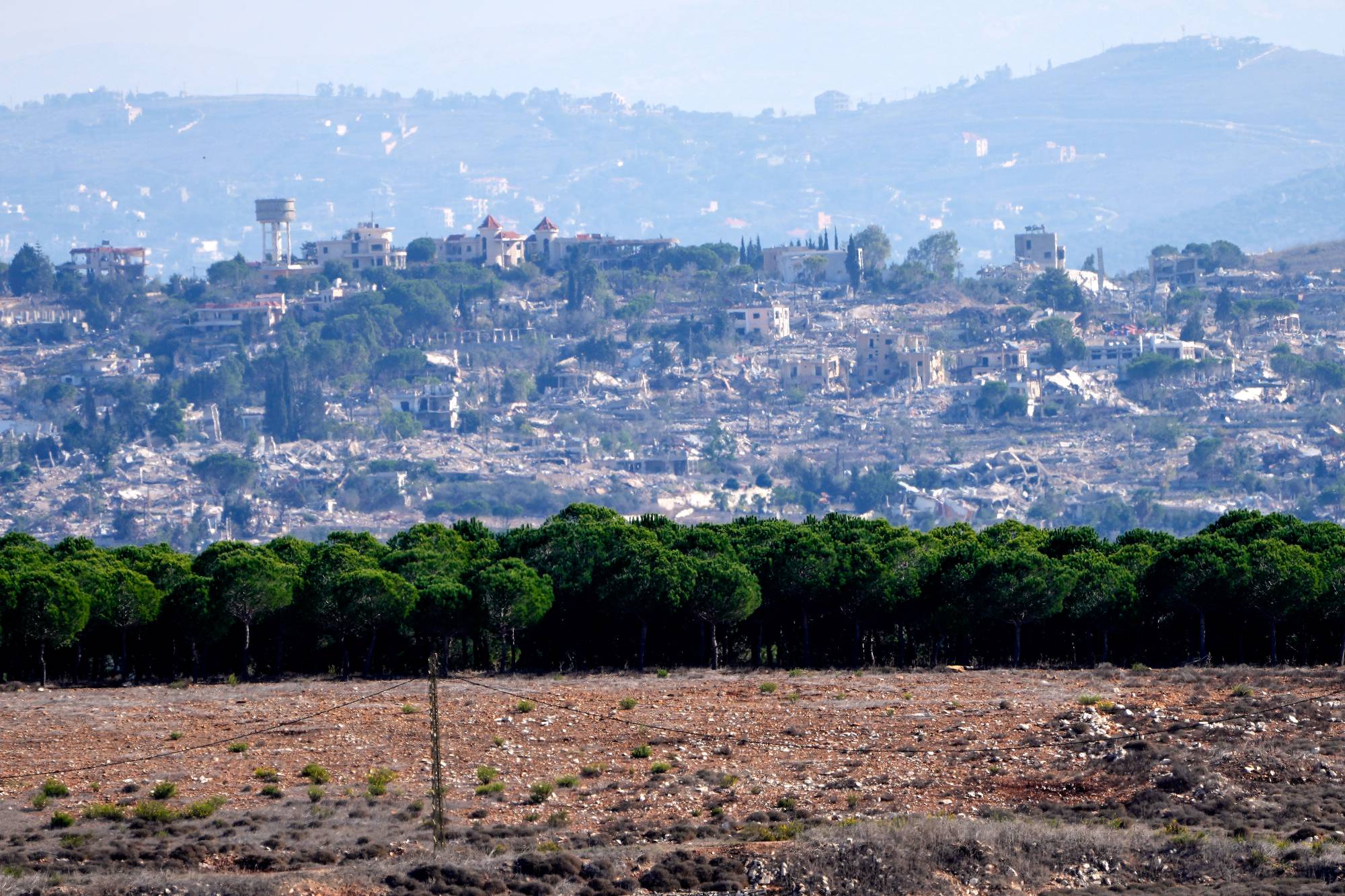
This picture shows the destruction in the southern Lebanese village of Froun on June 30, 2026. (Photo by Kawnat HAJU / AFP)
TT

Demolitions in South Lebanon as Israel Redraws Border Strip

This picture shows the destruction in the southern Lebanese village of Froun on June 30, 2026. (Photo by Kawnat HAJU / AFP)

Israel has revived its policy of wide-scale demolitions in southern Lebanon, with the Israeli army blowing up sites on Thursday and Friday in the towns of Hadatha, Beit Yahoun, Kounine, al-Tiri and Kfar Tibnit.

The operations coincided with air strikes, artillery fire, heavy warplane and drone flights, and attacks around Arnoun-al-Shaqif, Nabatieh al-Fawqa and Yater.

An Israeli drone also struck a vehicle in Siddiqin, in Tyre district, in two consecutive attacks, wounding two people. Israeli drones dropped stun grenades in Safad al-Battikh and al-Mansouri, with no casualties reported.

The Israeli army said it killed a Hezbollah member in the Ali al-Taher heights, saying he was detected as he emerged from an underground facility and was hit in an air strike.

It also said the Givati Brigade had ended its mission in southern Lebanon after eight months of operations, saying it had destroyed hundreds of Hezbollah infrastructure sites.

As the escalation unfolded, Israeli military spokesperson Ella Waweya said the air force struck about 10 sites it described as Hezbollah infrastructure in Bint Jbeil, Beit Yahoun, Kounine and Baraachit.

She said forces from the 91st Division also targeted a truck overnight near the security zone, saying it was carrying weapons for Hezbollah and that secondary explosions after the strike pointed to ammunition inside.

The operations come as Lebanon awaits the implementation of the first phase of the “framework agreement,” which is meant to open the way for gradual Israeli withdrawals.

But no practical steps have been taken, while Israel’s military presence, bulldozing and demolition work continue, raising questions over whether the operations are preparing for withdrawal or redrawing the security reality in the south.

Facts on the ground suggest the campaign goes beyond targeting Hezbollah sites or tunnels. It points to a re-engineering of the border area by removing anything that could be used militarily and turning border villages into devastated zones where life would be difficult to restore.

Removing anything that can be used militarily

Retired Brig. Gen. Saeed Qozah told Asharq Al-Awsat that the large-scale demolitions carried out by the Israeli army in Hadatha, Beit Yahoun, al-Tiri and around Kounine did not appear to be isolated operations.

“Rather, they fall within a military plan aimed at clearing the areas Israel now controls of any military infrastructure that could pose a future threat, especially tunnels, ammunition depots and facilities that could be reused,” he said.

Qozah said the towns fall within what Israel now regards as a security zone. The Israeli army, he said, is combing through them “inch by inch,” so that if it is forced to withdraw at any stage, it does not leave behind tunnels, weapons depots or facilities that armed groups could later use.

“The Israelis have announced in recent days that they discovered tunnels in several areas. They had also previously blown up a large tunnel in Majdal Zoun, causing a powerful tremor.

So it is natural that they continue to blow up any tunnel or military facility they find inside the areas they control, because their goal is to remove anything that could pose a future threat to them,” he said.

He told Asharq Al-Awsat that the Israeli army seizes the equipment and weapons it finds, while destroying facilities, tunnels and depots to prevent them from being used again. The pace of demolitions, he added, is “likely to continue as long as surveying and military engineering operations last inside these areas.”

Qozah said developments in the battlefield, together with the installation of military gates and repeated Israeli statements about not withdrawing from the areas it has occupied, show that Israel is moving to entrench a new security belt in southern Lebanon.

“The installation of gates, the continued demolition operations and the insistence of Israeli officials, foremost among them Benjamin Netanyahu and Israel Katz, on remaining in what they call the security zone are all signs that Israel is working to create a security belt that closely resembles the belt that existed between 1982 and 2000,” he said.

The main difference between the previous security belt and what is happening today is that villages inside this zone have suffered sweeping destruction, making it easier for the Israeli army to impose control and reducing the chances of resistance operations against its positions, he added.

From removing tunnels to preventing life from returning

Retired Brig. Gen. Bassam Yassin told Asharq Al-Awsat that the Israeli army’s return to wide-scale demolitions in southern Lebanese towns, especially Hadatha, Beit Yahoun, Kounine and al-Tiri, “does not fall only within the framework of targeting Hezbollah’s military infrastructure, but reflects Israel’s move into a new phase of cementing facts on the ground in the areas it controls.”

Yassin said Israel is working to turn the strip it occupies into a buffer zone stripped of the basic conditions for life.

“The goal is not only to remove military sites or facilities, but to prevent any sign of life from remaining inside this area, because rebuilding it will take many years, making the return of residents more difficult,” he said.

He added that the widespread destruction also serves a direct military purpose: securing full freedom of movement for Israeli forces inside the occupied area.

Removing buildings and urban infrastructure exposes the terrain to the Israeli army and limits any future ability to use it for military operations or fortified positions, ensuring Israeli forces retain freedom of maneuver.


Wave of Apologies Prompts Reappraisal of Kadhimi's Government in Iraq

Former Iraqi Prime Minister Mustafa al-Kadhimi (AP)
TT

Wave of Apologies Prompts Reappraisal of Kadhimi's Government in Iraq

Former Iraqi Prime Minister Mustafa al-Kadhimi (AP)

After years of facing political and media accusations of corruption, former Iraqi Prime Minister Mustafa al-Kadhimi is witnessing an unusual development in Iraq’s political scene: a wave of public apologies from media and political figures who had accused him and his government of corruption or helped promote those allegations.

The apologies came after a "legal battle" that ended with court rulings in Kadhimi’s favor in several lawsuits he filed against his accusers, after the judiciary concluded that no evidence had been presented to substantiate the allegations against him. The rulings have reopened debate over his government’s record, coinciding with a broad anti-corruption campaign led by Iraq’s current government.

In the years following his departure from office, Kadhimi faced a widespread campaign accusing his government of involvement in corruption and mismanagement. The campaign included political figures, media personalities and social media activists.

Those close to Kadhimi, however, argued that much of the campaign was an extension of the political struggle that accompanied the transfer of power rather than being based on fully substantiated judicial cases.

“Legal battle”

Kadhimi’s lawyer, Amir al-Daami, said the defense team turned to the courts after what he described as a surge in direct accusations linking Kadhimi and his government to corruption without evidence.

He said the “fair legal battle,” as he called it, “ended with justice for the former prime minister,” adding that “the judiciary treated those cases as direct criminal accusations, not merely political opinions or expressions of positions.”

“All those who were sued were unable to prove what they attributed to Kadhimi, leading to court rulings in his favor,” Daami told Asharq Al-Awsat. He said the judiciary “drew a line between the right to political criticism and making corruption accusations without legal basis.”

The issue did not stop at court rulings. It also led some of Kadhimi’s most prominent critics to publicly reassess their positions.

Journalists, politicians and former lawmakers have apologized to the former prime minister, saying they “were wrong to treat circulated accusations as facts without possessing conclusive evidence,” according to recent statements.

Journalist Iyad al-Samawi, once one of Kadhimi’s fiercest opponents, said: “The facts that emerged prompted him to review his position, and fairness requires admitting error when facts change.”

He said, “Political disagreement should not lead to adopting accusations without proof.”

Observers say the apologies, whether they grow or remain limited, point to a shift in how Kadhimi’s time in office is being judged, especially after a legal process ended without specific accusations being proven in court. Others described the apologies as “a wave of changes and a new political mood in the country.”

A source close to the former prime minister told Asharq Al-Awsat that “more than 14 Iraqi figures” have so far reviewed their positions on Kadhimi and apologized to him.

Kadhimi took office at one of the most difficult moments in Iraq’s modern history. He came to power amid mass protests, an economic crisis, the broad influence of armed factions and the pressure of the COVID-19 pandemic.

During his term, his home was targeted in a drone assassination attempt. The Green Zone also saw demonstrations by armed factions that reached the perimeter of the government palace, reflecting the intensity of political polarization in the country at the time.

Supporters of Kadhimi’s government say it managed a sensitive transitional phase. They also say the state benefited from the Emergency Support for Food Security and Development Law, which provided major financial resources to cover spending when passing the general budget was not possible.

Some observers say those resources gave the following government financial room to maneuver. Kadhimi’s critics, however, say any assessment of that period should remain tied to a broader review of the economic and administrative policies his government pursued at the time.

Al-Zaidi and the corruption campaign

The debate comes as Iraqi Prime Minister Ali al-Zaidi leads a broad anti-corruption campaign, during which he has repeatedly said he is prepared to pay with his life to continue on this path.

The campaign has reached senior officials and opened files described as among the most sensitive in years, amid public calls for investigations to continue without political or partisan considerations.

Al-Zaidi’s government is facing mounting political pressure as the investigations widen.

A drone spotted near the government palace in Baghdad has drawn wide attention. Security authorities said they handled the incident without incurring losses.

But an informed political source told Asharq Al-Awsat that some circles interpreted it as a warning from parties harmed by the anti-corruption campaign. There has been no official confirmation of that interpretation.

Sadrist movement leader Moqtada al-Sadr on Friday affirmed “the firmness of his position on reform and fighting corruption,” declaring full support for the government’s reform campaign while warning against targeting “reformers,” in a reference to al-Zaidi.

Al-Zaidi has appeared among citizens in a Baghdad shopping center in recent days, a move observers saw as an attempt to underscore his reliance on public support.

He has also repeatedly said he does not intend to establish a political party or run in the next elections, reinforcing the image of his campaign as a government project rather than an electoral one.

Ihsan al-Shammari, head of the Political Thinking Center, told Asharq Al-Awsat that any future settlements in corruption cases should remain within legal frameworks and differ from the political deals seen in previous stages.

He said recovering funds and holding those involved accountable should take place under the law and after all those responsible are exposed, not through political understandings.


Israeli Army Measures in South Lebanon Restrict UNIFIL Movement

 A UNIFIL patrol in Mansouri, southern Lebanon (AFP)
A UNIFIL patrol in Mansouri, southern Lebanon (AFP)
TT

Israeli Army Measures in South Lebanon Restrict UNIFIL Movement

 A UNIFIL patrol in Mansouri, southern Lebanon (AFP)
A UNIFIL patrol in Mansouri, southern Lebanon (AFP)

Restrictions are tightening on the movement of UNIFIL peacekeepers still deployed in southern Lebanon, as their mandate is set to end at the close of this year.

Israeli military measures inside a security zone set up along the Lebanese border, stretching more than 10 km into Lebanese territory, have sharply reduced the force’s movement and left residents of three Christian villages trapped inside.

Multiple sources said Israeli forces last Wednesday moved gates that had stood at the border fence into Lebanese territory, placing them at forward points inside the security zone. It was the first practical step of its kind since 2000.

At that time, after withdrawing from southern Lebanon, the Israeli army moved the gates to the border fence and reinforced them in 2018 with concrete walls along large sections of the frontier.

The gates were later opened when Israeli forces began pushing into Lebanese territory in October 2024 during the expanded war with Hezbollah.

Restrictions squeeze UNIFIL movement

UNIFIL’s area of operations covers southern Lebanon, specifically the zone between the Litani River in the north and the Blue Line in the south along the Lebanese-Israeli border.

Dany Ghafari, UNIFIL’s spokesperson in Lebanon, said that “since March 2, 2026, the date the latest round of fighting broke out between Israel and Hezbollah, UNIFIL soldiers have often faced restrictions on their movement across large parts of their area of operations because of road closures, checkpoints and other measures, forcing some patrols to be suspended or delayed.”

“Despite these challenges, peacekeepers continue their work on the ground, monitoring the situation and reporting observed violations in line with Resolution 1701,” he said. “They also help facilitate the delivery of humanitarian aid to residents who need it most.”

Speaking to Asharq Al-Awsat, Ghafari said all parties must be reminded that they are required to “respect the freedom of movement of all UNIFIL patrols, logistical convoys and operational activities, because any restrictions imposed on them are a violation of UN Security Council Resolution 1701.”

He said the parties must also “meet their obligations to ensure the safety of these forces and UN property.”

No withdrawal from positions

Ghafari said UNIFIL remains at all its positions inside its area of operations and along the Blue Line.

He said the force is “doing what it can under the current conditions, monitoring developments on the ground, reporting them to the Security Council with full impartiality, securing access for humanitarian aid convoys and facilitating the work of humanitarian organizations.”

UNIFIL currently has about 7,500 troops from 47 countries.

Ghafari said coordination with the Lebanese army is “close, continuous and round-the-clock.”

“We carry out joint activities on land and at sea. The army is our strategic partner in implementing Resolution 1701,” he said.

“Through the liaison and coordination mechanism, UNIFIL communicates with Lebanon and Israel to contain tensions, prevent misunderstandings, and exchange information.”

In early June, a Serbian UNIFIL soldier was killed after shells landed on his position near Marjayoun in southeastern Lebanon, making him the seventh member of the international force to die since March.

A replacement coalition

The force is preparing to leave Lebanon after a presence dating back to the 1970s, following a UN Security Council decision adopted on Aug. 28, 2025.

The decision called for “reducing UNIFIL’s strength and withdrawing it in an orderly and safe manner starting on that date and within one year.”

Washington and Tel Aviv pushed for the decision, arguing that the force had proved ineffective. It had not prevented renewed fighting between Israel and Hezbollah, nor had it guaranteed that the border area would become free of weapons and armed groups.

French President Emmanuel Macron and Italian Prime Minister Giorgia Meloni recently announced during a summit in Antibes that France and Italy intend to form a multinational “coalition” after UNIFIL’s mandate ends, with the aim of strengthening “Lebanon’s sovereignty.”

France’s Foreign Ministry told Al Hadath television that the multinational force would deploy in southern Lebanon with US support and the participation of several European countries.

It said the deployment would come at the request of the Lebanese authorities and would aim to support the Lebanese army in carrying out its duties and strengthening stability.

A force outside the United Nations

Sami Nader, director of the Mashreq Center for Strategic Affairs, said there is “a European will not to leave southern Lebanon without international forces.

But at the same time, a new experience similar to UNIFIL would not be viable, because it failed to stop the war and acted more like a cover for Hezbollah to expand and build its capabilities. It also failed to deter Israeli attacks.”

Speaking to Asharq Al-Awsat, Nader said that “any international force must have new and different tasks. For that reason, we rule out it being under the UN umbrella.”

He said he expected the formation of “an international force to support the army in implementing government decisions and the framework agreement, especially since its fourth clause paved the way for that by noting Lebanon’s request for support from the international community.”
