
Is a New Showdown Looming Between al-Sadr and the Coordination Framework in Iraq?

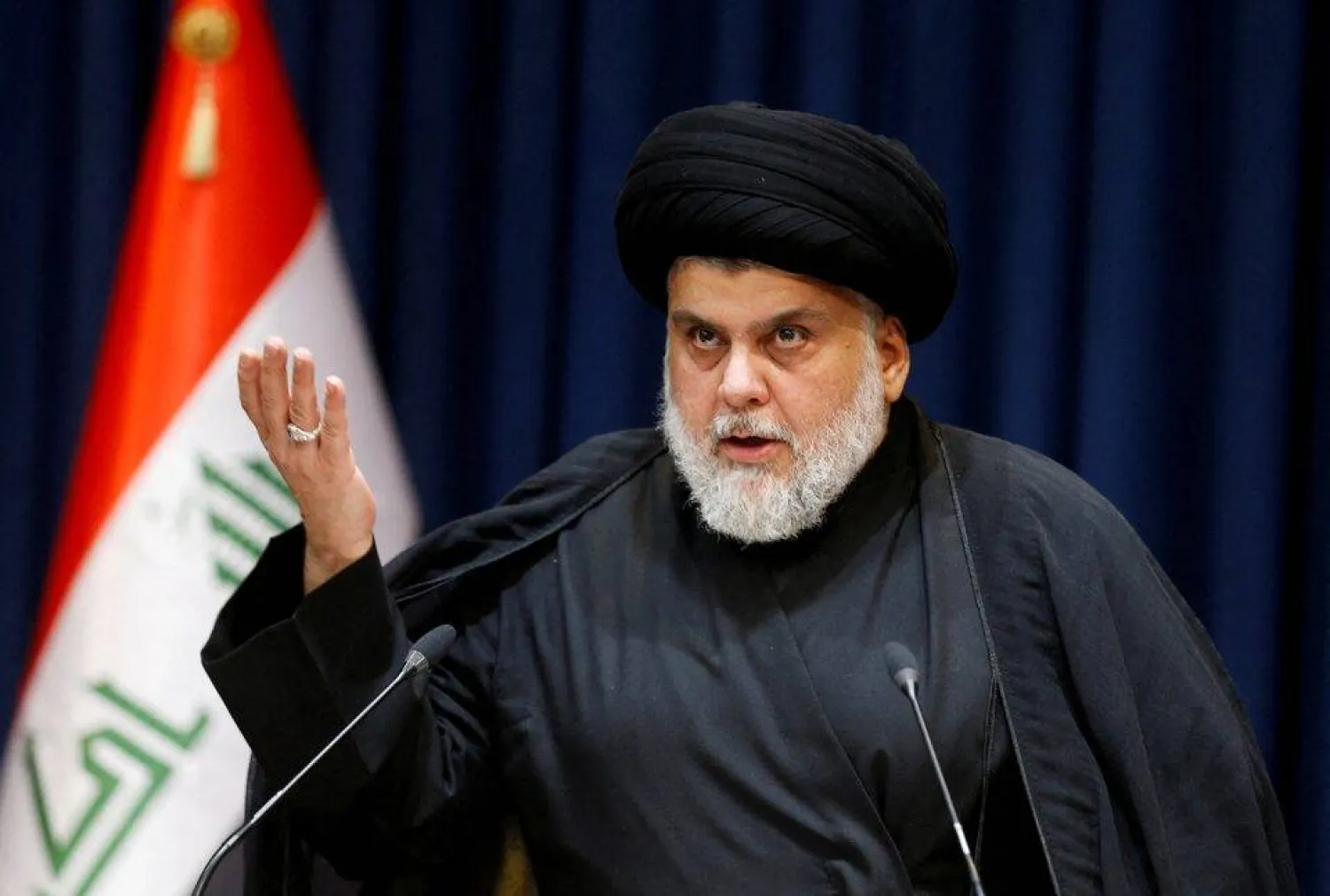
Sadrist Movement leader Moqtada al-Sadr. (Reuters file)
TT

Is a New Showdown Looming Between al-Sadr and the Coordination Framework in Iraq?

Sadrist Movement leader Moqtada al-Sadr. (Reuters file)

The decision by influential cleric Moqtada al-Sadr, leader of the Sadrist Movement, to break his prolonged silence and publicly back Prime Minister Ali al-Zaidi’s anti-corruption campaign appears to mark a turning point in Iraq’s political landscape.

It raises the prospect of a direct confrontation with the ruling Coordination Framework, after years in which rivalry between the two sides was largely confined to electoral politics and political maneuvering rather than open confrontation.

The first notable response came from former Prime Minister Nouri al-Maliki, leader of the State of Law Coalition, who defended the Framework as a political project that had “proven its success.” His remarks were widely interpreted as an attempt to contain mounting pressure on the ruling Shiite alliance that has varying ties to Iran.

The developments come amid signs of growing divisions within the Framework, which emerged after the 2021 elections as an alternative to the Shiite alliances that had dominated Iraqi politics since 2005.

Al-Sadr’s silence

After the 2021 elections, al-Sadr sought to form a “national majority government” with the Kurdistan Democratic Party, led by Masoud Barzani, and a Sunni alliance headed by former Parliament Speaker Mohammed al-Halbousi.

The effort collapsed because of the so-called “blocking third,” which prevented the election of a president by the constitutionally required majority and prolonged Iraq’s political deadlock.

In the summer of 2022, al-Sadr withdrew his lawmakers from parliament and announced his departure from political life, declaring that he refused to “participate with the corrupt in any form.”

He also said he would not take part in elections “while the corrupt remain,” urging his supporters to preserve their political and grassroots organization in preparation for a future stage should circumstances change.

Since then, al-Sadr has boycotted every subsequent election, including the most recent one, despite repeated calls — including from rivals within the Framework — to return to politics.

Anti-corruption campaign reshapes the landscape

The political equation shifted with al-Zaidi’s recent anti-corruption campaign, which reached its peak with the arrest of 21 political and parliamentary figures in the operation dubbed “Dawn Strike.”

The campaign gained further momentum after investigating judge Diaa Jaafar revealed that part of the embezzled funds had been used to finance election campaigns, raising broader questions about the integrity of the most recent elections and the influence of political money on their outcome.

Observers said these developments have given al-Sadr political ground that aligns with the position he adopted after leaving parliament: refusing to participate in what he considers a political system tainted by corruption.

Settlement or political realignment?

Al-Zaidi became prime minister after the Coordination Framework failed to agree on a candidate from within its own ranks.

After former Prime Minister Mohammed Shia al-Sudani was effectively ruled out for a second term and al-Maliki’s candidacy faltered amid domestic and international objections, specifically from the US, political factions turned to a figure from outside Iraq’s traditional political class.

A businessman in his 40s, al-Zaidi is widely seen as an acceptable choice for Washington, while Iran has reacted with unusual caution, reflecting what many observers see as a decline in its influence in Iraq compared with previous years.

His early decisions attracted attention, including his announcement not to attend the funeral of Iran’s late Supreme Leader Ali Khamenei, which was attended by several Coordination Framework leaders and an official Iraqi delegation headed by President Nizar Amidi.

He has also pledged to strengthen ties with the United States and is expected to visit Washington in July.

Domestically, al-Zaidi has vowed to press ahead with mostly pro-Iran disarming armed factions, giving them until September to surrender their weapons, an issue successive Iraqi governments have failed to resolve because of its political and security complexities.

Al-Sadr breaks his silence

The turning point came when al-Sadr fully endorsed the anti-corruption campaign, describing al-Zaidi as a “soldier of reform.” The move went beyond political support, giving the government broad popular backing.

Pro-government demonstrations followed, while Sadrist leaders began openly supporting the campaign after months of silence awaiting al-Sadr’s instructions.

Observers viewed this as the first broad political and popular alignment against Iraq’s ruling establishment since 2003, particularly because the anti-corruption campaign has targeted figures associated with influential factions within the Coordination Framework.

The political stakes are heightened by the fact that al-Zaidi’s priorities — combating corruption and bringing all weapons under state control — overlap with those of US President Donald Trump’s administration toward Iraq.

Analysts said this creates a convergence of interests between Washington and the Sadrist Movement, despite their fundamental differences on other issues.

Pressure mounts on the Coordination Framework

The convergence does not amount to a direct political alliance between al-Sadr and the US administration. However, it gives al-Zaidi’s government support from two actors traditionally viewed as standing on opposite sides of Iraq’s political divide, thereby increasing pressure on the Coordination Framework.

In response, al-Maliki defended the alliance in a post on X, saying it had served as “the incubator of the national political process” and that its success was reflected in its role in forming three successive governments.

“There is no reason to abandon a project that has proven successful,” he wrote, adding that the Coordination Framework “will remain as it was founded, preserving its principles, identity and founders,” while arguing that any reform should be limited to improving its mechanisms and performance, without altering the essence of the project.


Israel Opens Criminal Probes Over Killings of Hind Rajab and Gaza Rescue Workers, Military Says

Hind Rajab. (Family handout/AFP/Getty Images)
TT

Israel Opens Criminal Probes Over Killings of Hind Rajab and Gaza Rescue Workers, Military Says

Hind Rajab. (Family handout/AFP/Getty Images)

Israel's military will open internal investigations over its troops' killings in Gaza of Palestinian girl Hind Rajab in January 2024 and 15 emergency and aid workers in March 2025, it said on Wednesday, although rights groups said such probes rarely lead to convictions.

The military said the investigation decisions followed probes by its Fact-Finding and Assessment Mechanism. It released decisions regarding five incidents involving the deaths of Palestinians. They included an examination ‌of the killings ‌of seven aid workers with the World ‌Central ⁠Kitchen charity in ⁠April 2024. On that incident, the military said there was "no reasonable suspicion of criminal misconduct that would justify the opening of a criminal investigation."

"For more than a thousand days, the Israeli army has been conducting intensive combat across numerous fronts, carrying out a wide range of military missions ⁠in an exceptionally complex operational reality," the Israeli ‌military said.

"As part of the military's ‌obligations under international law and Israeli domestic law, the army ‌examines exceptional incidents that occurred during combat," the military said.

Israeli ‌rights groups say that criminal misconduct investigations into Israeli troops over the killing of Palestinians rarely lead to convictions.

"Nearly zero indictments are served relative to the number of complaints of soldiers and ‌commanders who commit offenses. In rare cases when commanders or soldiers are convicted, they receive ridiculously ⁠lenient ⁠sentences compared with the severity of the offense," a spokesperson for the Israeli rights organization Yesh Din said.

During Israel's offensive in response to an October 7, 2023, Hamas attack, Hind Rajab was pinned down in a car for hours, begging Palestinian medics over a mobile phone to send help, while her aunt, uncle and three cousins already lay dead.

When an ambulance finally arrived, contact with the girl and the rescuers themselves was lost. Twelve days later, the bodies of the girl, her relatives and two ambulance workers were recovered from the area.


Syria Arrests Assad-era Officer who Fled Austria after Conviction

A man walks past heavily-damaged and destroyed buildings in the Jobar suburb northeast of Damascus on August 12, 2026. (Photo by LOUAI BESHARA / AFP)
TT

Syria Arrests Assad-era Officer who Fled Austria after Conviction

A man walks past heavily-damaged and destroyed buildings in the Jobar suburb northeast of Damascus on August 12, 2026. (Photo by LOUAI BESHARA / AFP)

Syrian security forces have arrested a former Assad-era security officer who fled Austria after being sentenced to eight years in prison for abusing detainees and returned to his hometown in southern Syria, state news agency SANA said on Tuesday night.

Lieutenant Colonel Musab Abu Rukba was arrested in the city of Nawa in Daraa province by internal security forces in coordination ⁠with the counter-terrorism ⁠department, SANA said, citing the security forces.

Abu Rukba had been convicted by a Vienna court last month of bodily harm, aggravated coercion and sexual assault against detained opponents of former President Bashar al-Assad while he headed the police’s criminal investigations department in the northern city of Raqqa more than a ⁠decade ago.

He had pleaded not guilty.

Reuters reported on Friday that Abu Rukba had left Austria while challenging his eight-year sentence on appeal and arrived in Nawa in early August, where his family held a reception to celebrate his return.

SANA said on Tuesday that Abu Rukba had entered Syria illegally after fleeing Austria and that authorities had tracked him down in Nawa. He had been referred to the relevant authorities to complete legal procedures ahead of prosecution, it said.

It was ⁠not immediately ⁠clear what charges Abu Rukba could face in Syria or whether Austria had requested his arrest or extradition.

A spokesperson for the Austrian court that convicted him told Reuters at the time that Abu Rukba had not been considered a flight risk before his trial because he had lived in Austria since 2014 and was seeking asylum there with his family.

He was not held in custody during the trial or subjected to other restrictions, and his departure from Austria did not breach Austrian laws or court orders while the appeals process remained underway, the spokesperson said.


Israel Says It Recovered Remains of Soldier Killed in Lebanon in 1982

Destruction is pictured in the village of Arnoun as seen from nearby Marjeyoun in southern Lebanon on August 11, 2026. (AFP)
TT

Israel Says It Recovered Remains of Soldier Killed in Lebanon in 1982

Destruction is pictured in the village of Arnoun as seen from nearby Marjeyoun in southern Lebanon on August 11, 2026. (AFP)

The Israeli military said on Tuesday it had repatriated the remains of Sgt First Class Yehuda Katz, a soldier killed in Lebanon 44 years ago, in a joint operation with the Mossad intelligence agency.

Katz was the last Israeli soldier declared missing in the Sultan Yacoub battle against Syrian forces in eastern Lebanon in 1982.

"His return to Israel was made possible through efforts based on accurate intelligence... that lasted more than four decades," the military said in a statement.

It is not clear where his body was found.

Israeli Prime Minister Benjamin Netanyahu commended the security forces and said that "for many years, I approved numerous clandestine operations to locate the missing soldiers of Sultan Yacoub. I promised their families that we would never stop working to bring them home."

In a separate statement, President Isaac Herzog said that "the circle that remained an open and bleeding wound from the Battle of Sultan Yacoub is finally closed," and that he had kept a photograph of Yehuda Katz hanging in his office as "a daily reminder of our sacred duty to bring our sons home and leave no one behind".

Katz's remains were brought to Israel and identified at an institute for the identification of fallen soldiers under the military rabbinate, the military said.

Three Israeli soldiers had been missing for decades after the Sultan Yacoub battle. In 2019, the military announced the repatriation of the remains of Sgt First Class Zachariah Baumel, while in May 2025 it said it had recovered the body of Sgt First Class Tzvika Feldman "in the heart of Syria".