


US Proposes 90-Day Sudan Truce Followed by talks

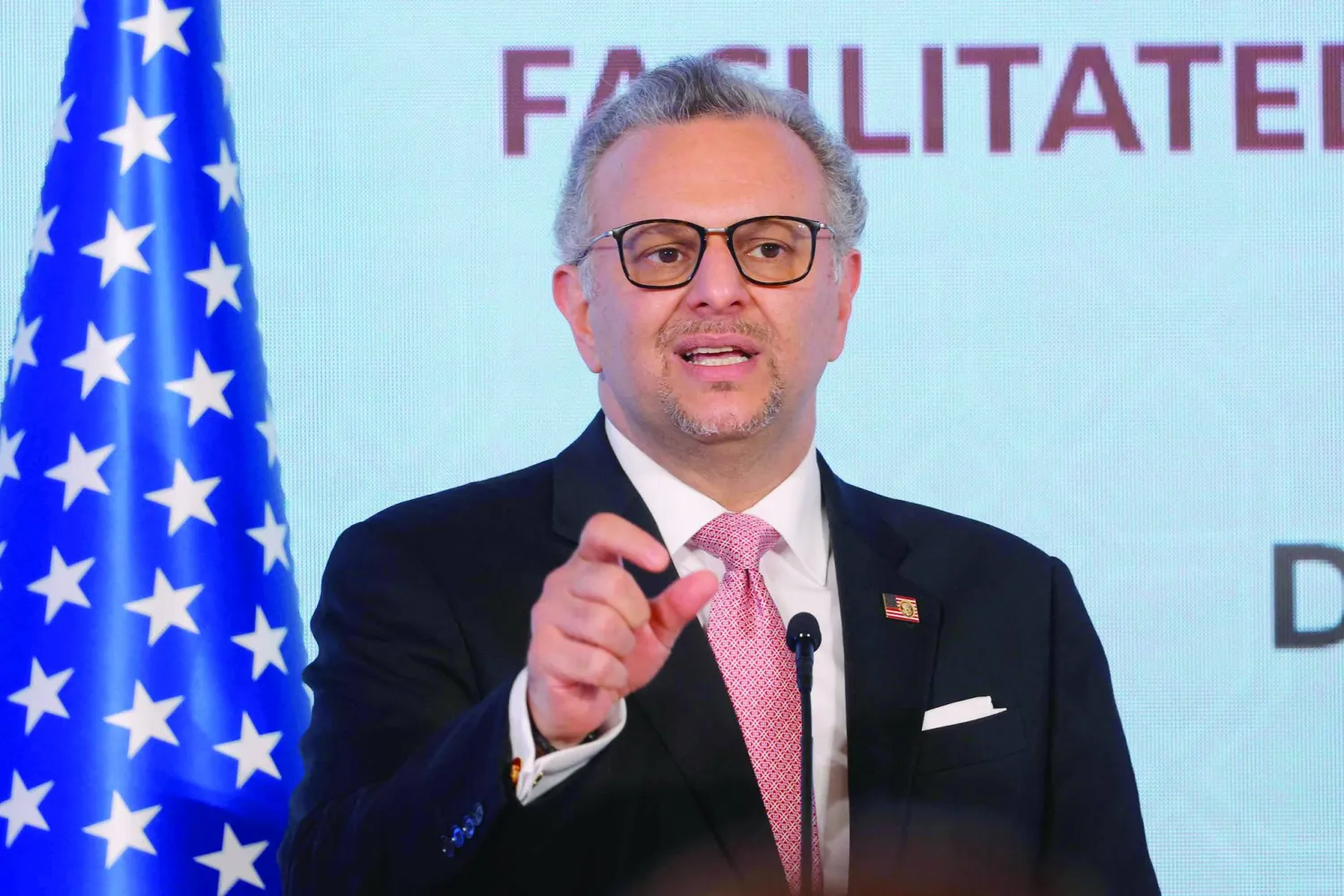
Massad Boulos expresses concern over conditions in El Obeid (File photo: AFP)
TT

US Proposes 90-Day Sudan Truce Followed by talks

Massad Boulos expresses concern over conditions in El Obeid (File photo: AFP)

The leak of documents exchanged between the US administration and Sudan’s government has revived hopes of a humanitarian truce while raising questions over whether the country is closer to ending the war or facing another failed peace initiative.

Reuters quoted senior Sudanese officials as confirming the contents of the leaked documents, which showed broad agreement on the proposal’s general principles but a fundamental dispute over the future of the Rapid Support Forces deployed in cities.

The Sudanese government conditionally accepted the idea of a truce, while US statements initially suggested Khartoum had rejected the proposal before later describing it as having accepted it. A final agreement, however, remains out of reach.

According to Reuters, the United States proposed an immediate 90-day humanitarian truce to allow aid deliveries, strengthen civilian protection and pave the way for negotiations on a permanent ceasefire, followed by a civilian-led political transition and elections.

The army-led Sudanese government made its approval conditional on the RSF’s withdrawal from all cities it has controlled since May 11, 2023, rather than carrying out the limited withdrawals stipulated in the US proposal.

A document attributed to the Sudanese government and dated June 25 showed agreement with several key principles, including recognition that there was no military solution to the conflict, a nationwide truce and the formation of a US-led coordination committee including the United Nations, the African Union and the Arab League.

It also proposed a UN mechanism to oversee and monitor implementation, guarantee humanitarian access and protect civilians.

The Sudanese response, however, demanded that the RSF withdraw from all cities under its control. Subsequent security arrangements would include the withdrawal, demobilization, disarmament and reintegration of RSF personnel under UN supervision.

The Sudanese Armed Forces would remain the country’s unified national army, with other military formations incorporated into it.

The dispute may appear limited to one provision, but it goes to the core of the initiative.

The US proposal calls for an immediate ceasefire followed by limited withdrawals and troop redeployments to facilitate aid access, particularly in North Darfur and North Kordofan. Broader military arrangements would be negotiated later as part of a permanent ceasefire.

The Sudanese response instead makes a complete RSF withdrawal from cities and a change in the military control map a precondition for the truce.

The two sides also differ over the future army. The US initiative calls for a unified national military accountable to an independent, elected civilian government, while the Sudanese response links the armed forces to the Sudanese government.

Reuters also said the US proposal called for excluding the Muslim Brotherhood and militia members accused of serious abuses. The Sudanese document used the broader term “violent extremist groups” without naming specific organizations.

At a UN Security Council meeting on June 26, Massad Boulos, senior adviser to the US president on Arab and African affairs, said Sudan’s Sovereignty Council had rejected the latest version of the proposal.

After Sudan’s representative said Sovereignty Council Chairman Lieutenant General Abdel Fattah al-Burhan had submitted a response including a withdrawal timetable and a peace plan, Boulos welcomed what he described as Burhan’s acceptance of the initiative.

“I am pleased to hear that Burhan has apparently accepted the latest peace proposal rather than rejected it,” Boulos said.

He added that the initiative had been prepared in consultation with Sudan’s foreign minister and members of the Sovereignty Council, coordinated with Egypt and welcomed by Saudi Arabia.

The difference appears to reflect conflicting interpretations of acceptance rather than an outright rejection.

Khartoum regards its approval of the general framework, subject to an RSF withdrawal, as conditional acceptance. Washington views that condition as altering the substance of its proposal, which is based on an immediate ceasefire without preconditions.

The two sides, therefore, remain far from agreeing on a final formula.

In a public appearance in Omdurman on Friday, Burhan did not say whether he accepted or rejected the initiative and did not disclose the substance of his government’s response.

Addressing worshippers, he said the armed forces would not accept arrangements imposed upon them or any arrangement that failed to achieve security and peace for the Sudanese people. He said military operations would continue until those he described as “aggressors and rebels” were defeated.

The leak coincided with controversy over an undisclosed meeting reportedly held in Cairo between Sovereignty Council member Shams al-Din Kabbashi and Boulos.

One account said Kabbashi met Boulos without Burhan’s knowledge and did not brief him on the discussions. Al Arabiya cited sources close to Kabbashi as saying the meeting took place at Boulos’ request, with Burhan’s knowledge, and that Burhan was informed of what was discussed.

Neither the Sudanese nor the US side has officially confirmed either account.

Khalid Omar Youssef, a senior figure in the Civil Democratic Alliance of Revolutionary Forces, known as Somoud, told Asharq Al-Awsat that the quartet’s roadmap was “the most important, comprehensive and well-structured initiative.”

He ruled out an imminent breakthrough unless pressure increased on the party obstructing the truce.

RSF position

The RSF has not issued an official statement on the US initiative or the response attributed to the army.

A senior RSF official, who requested anonymity, told Reuters that the force had received the proposal, welcomed it and submitted a written response, without disclosing its contents or its position on withdrawal.

Another senior RSF source told Asharq Al-Awsat that withdrawal from cities under the force’s control was “not open for discussion.”

Any truce should freeze both sides’ positions, the source said, while redeployment and disarmament should be addressed in negotiations on a permanent ceasefire.

Political analyst Mohammed Latif said US and regional pressure, the worsening humanitarian crisis, growing doubts among the sides’ regional backers over the possibility of a military victory, rising civilian demands and fears of Sudan’s division and institutional collapse could improve the prospects for a truce.

He warned, however, that fighting in strategically important areas, disputes over monitoring and concerns that a truce could be used for recruitment, rearmament or military repositioning could undermine the initiative.

Latif also said the widespread deployment of forces made it difficult for both leaderships to control all fighting formations, meaning that a limited violation by a small group could bring an agreement down.

Domestic and foreign actors benefiting from the war could also derail a truce that conflicted with their interests, he said.

The available information suggests Sudan has entered a more substantive negotiating phase involving written proposals, official responses, continuing contacts and growing international pressure.

But an end to the war does not appear imminent.

The army insists that an RSF withdrawal from cities must be a condition for a truce, while the RSF has not formally stated its position, although unofficial indications suggest it rejects the demand.

Sudan, therefore, appears closer to a more serious round of negotiations than to a final ceasefire agreement.

Success will depend on whether mediators can reach a phased formula for withdrawals, establish enforceable monitoring mechanisms and persuade both sides to accept a truce that gives neither an advanced military or political advantage.



Palestinian Authorities Say Israeli Army Kills Teen in West Bank

Mourners carry the body of Palestinian Islam Ajouri, 14, at Rafidia Hospital in Nablus in the Israeli-occupied West Bank, on August 23, 2026. (Photo by JAAFAR ASHTIYEH / AFP)
TT

Palestinian Authorities Say Israeli Army Kills Teen in West Bank

Mourners carry the body of Palestinian Islam Ajouri, 14, at Rafidia Hospital in Nablus in the Israeli-occupied West Bank, on August 23, 2026. (Photo by JAAFAR ASHTIYEH / AFP)

Israel's military killed a Palestinian teenager in the occupied West Bank on Sunday, Palestinian health authorities said, while an Israeli and a Palestinian were wounded in separate incidents.

Israeli gunfire killed Islam Ahmad Maher Ajouri, 14, in the Askar refugee camp where he lived, outside Nablus in the north of the West Bank, the Palestinian health ministry announced.

Mohammed Abu Kashk, head of the Askar camp services committee, told AFP that the teenager was killed by Israeli forces during a raid on the camp.

"There were no clashes or confrontations that would justify shooting a child and killing him," he said.

According to a source from the Palestinian Red Crescent, Ajouri was hit in the chest by live ammunition. He was pronounced dead at Nablus National Hospital.

At his funeral, his uncle Ahmed Mohamed Zamzoum told AFP that the boy went outside during the army raid. "Every time the Israeli forces enter, one or more martyrs are killed," he said.

The Israeli army told AFP it was verifying the information.

In a separate incident, the army said it apprehended a man suspected of stabbing an Israeli earlier on Sunday in Al-Auja, in the central West Bank.

Israeli rescue service Magen David Adom said the 24-year-old victim had "a penetrating wound".

The man was evacuated to a hospital in Jerusalem, and his condition was described as "moderate".

According to the initial findings of the investigation, the victim parked near a shopping center and was "attacked from behind and stabbed in the shoulder", Israeli police said in a statement.

Hani Najum, the head of the Al-Auja village council, told AFP that "the Israeli army raided the village, deployed in its streets" and imposed a curfew.

In a third incident, the army reported that a "terrorist" attempted "to steal a weapon from an IDF soldier" near the Palestinian town of Taybeh, northeast of Ramallah, and that forces opened fire at the man, saying he was "neutralized".

Palestinian sources told AFP that the man, Aws Akram Maatan, from the village of Burqa east of Ramallah, suffered an injury to his foot and was taken to a Jerusalem hospital for treatment.

The head of the Burqa village council, Sayel Kanaan, said in a statement that Maatan had been shot "without justification".

Violence has surged in the West Bank, which Israel has occupied since 1967, since the start of the war in Gaza sparked by Hamas's October 2023 attack on Israel.

Israeli soldiers or settlers have killed at least 1,100 Palestinians since then, according to an AFP tally based on data from the Palestinian health ministry.

Over the same period, at least 48 Israelis have been killed in Palestinian attacks or during Israeli military operations, according to Israeli figures.


Tunisia Says Recovered 11 Migrants' Drowned Bodies

African migrants rescued by the Tunisian coast guard in October (AFP)
TT

Tunisia Says Recovered 11 Migrants' Drowned Bodies

African migrants rescued by the Tunisian coast guard in October (AFP)

The Tunisian national guard said Sunday it recovered 11 bodies from the sea after a boat carrying migrants sank off the country's southeastern coast, with three people still missing.

The boat was carrying 15 people, only one of whom was rescued after it sank some 14 nautical miles off the shore of Zarzis on Friday night.

"Search operations resulted in the recovery of three bodies yesterday and eight bodies today, bringing the total to 11," the national guard said in a statement.

Searches for the three remaining missing passengers were ongoing, it added.

On Saturday night, residents in Ben Guerdane -- the marginalized city near the Libyan border where 14 of the migrants were from -- staged protests, blocking roads and setting tires on fire over the shipwreck.

Tunisia, whose coast is some 145 kilometers (90 miles) from the Italian island of Lampedusa, is a key departure point for migrants seeking to make the perilous journey across the Mediterranean in search of better lives in Europe.

The central Mediterranean crossing is the deadliest migration route in the world, according to the International Organization for Migration (IOM).

The IOM said earlier this month that the number of migrant deaths on the central Mediterranean route had more than doubled in the first four months of 2026 compared to the same period last year.

At least 914 migrants have died or gone missing along the route this year, according to the IOM.

In 2023, Tunisia signed a 255-million-euro ($290 million) deal with the European Union, nearly half of which was earmarked for tackling irregular migration.

The deal, strongly supported by Italy's hard-right government, aimed to bolster Tunisia's capacity to prevent boats leaving its shore.


The 'Ali al-Taher' Battle: A Test of Hezbollah’s Capabilities

A protester shouts slogans while holding a portrait of the late Hezbollah leader Hassan Nasrallah during a protest against the backdrop of Lebanon-Israel talks and the normalization of relations, in Beirut, Lebanon, Friday, Aug. 7, 2026. (AP Photo/Hussein Malla)
TT

The 'Ali al-Taher' Battle: A Test of Hezbollah’s Capabilities

A protester shouts slogans while holding a portrait of the late Hezbollah leader Hassan Nasrallah during a protest against the backdrop of Lebanon-Israel talks and the normalization of relations, in Beirut, Lebanon, Friday, Aug. 7, 2026. (AP Photo/Hussein Malla)

The battle for the “Ali al-Taher” heights is placing Hezbollah before a difficult test that goes beyond its ability to defend the hill and prevent its fall. It also tests the effectiveness of the military strategies it has recently developed after conventional strategies failed over the past two years to counter Israel’s military and technological superiority.

Can Israel, through firepower, air power and surveillance, suffocate the force deployed in the area and undermine the conditions needed for its survival? Or can the underground fortifications, tunnels, storage facilities and combat capabilities prepared by Hezbollah give it room to continue wearing down Israeli forces and prolong the confrontation?

Ability to Maneuver

Retired Brigadier General Bahaa Hallal says that, regarding Hezbollah’s military position, “the land still has strategic value for it, but its defensive value automatically declines if it shifts from a controlled area to an exposed area under surveillance.” He explains: “The party’s core strength is not simply holding the hilltop, but its ability to operate in depth and particularly in the surrounding area, while Israel seeks to turn its air and intelligence superiority into permanent ground superiority.”

Hallal told Asharq Al-Awsat that “the main challenge facing Hezbollah is maintaining its ability to maneuver. If Israel manages to establish a presence, impose a buffer zone around the hill and prevent the party from moving, the balance of power will gradually begin to shift in its favor.”

In this context, underground fortifications are among the most important tools available to the defender. They can reduce the impact of air superiority, preserve a degree of continuity and survivability, and prevent the battle from being decided simply by control of the ground surface. Hallal cautions, however, that fortifications that provide protection from bombardment can become a burden if the area around them becomes besieged or isolated.

Isolated Pockets?

According to Hallal, this raises the central question in the “Ali al-Taher” battle: “Do the underground facilities still constitute an integrated network for maneuvering and communication, or have they become isolated pockets?”

Hallal says the ability to make decisions, communicate and implement them, while maintaining communication channels under pressure, will be among the main challenges facing Hezbollah. However, Hezbollah’s model, historically based on a degree of decentralization and flexibility, may mean that targeting a local position or commander would not necessarily be enough to bring down the entire system.

Hallal says the party’s strengths include geographical knowledge, organizational depth, the ability to exploit the mountainous terrain, and the capacity to continue operating despite losing positions. By contrast, he identifies Israel’s superiority in surveillance and air power, as well as the risk of isolation, as its main weaknesses.

He says that if Israel succeeds in separating “Ali al-Taher” from Hezbollah’s broader operational theater, the force there will face a more difficult defensive situation. He also considers the destruction of villages, roads and homes to be a major strategic pressure because it strikes part of the social and geographical environment in which any local force operates.

A Network of Tunnels

Retired Brigadier General George Nader describes the “Ali al-Taher” hill as being of major tactical importance because it overlooks a wide area north of the Litani River and large parts of the area south of it. He also points to its historical significance, as it was previously under Israeli occupation.

Nader told Asharq Al-Awsat that, according to the information on which he relies, the hill is an important position for the command of the Radwan Forces. It contains underground facilities and a network of tunnels linked to ammunition, logistics, missiles, drones, fighters and operations rooms.

A Bargaining Chip in Negotiations

Nader believes that Israeli control of the hill would give Israel greater leverage and a greater ability to impose its terms in future rounds of negotiations, particularly if it manages to turn military control into an established reality on the ground.

He believes Israel’s destructive and technological capabilities make the targeting of these facilities and tunnels a possibility, warning that the presence of large quantities of ammunition and missiles in the area could mean that any large-scale destruction operation would have major repercussions.

Major Israeli Attack

Based on this, Nader expects a major Israeli attack to seize the hill, considering that the objective could have political implications for Israeli Prime Minister Benjamin Netanyahu, who seeks to use control of the site to demonstrate that he has succeeded in striking Hezbollah’s command center in the south, thereby enhancing the security of the northern settlements on the eve of Israeli electoral events.

As for Hezbollah’s options in response, Nader believes they appear limited given the difficulty of movement south of the Litani River. This, in his assessment, makes it difficult to divert Israeli forces or force them to disperse their efforts by opening other fronts of movement in the area.