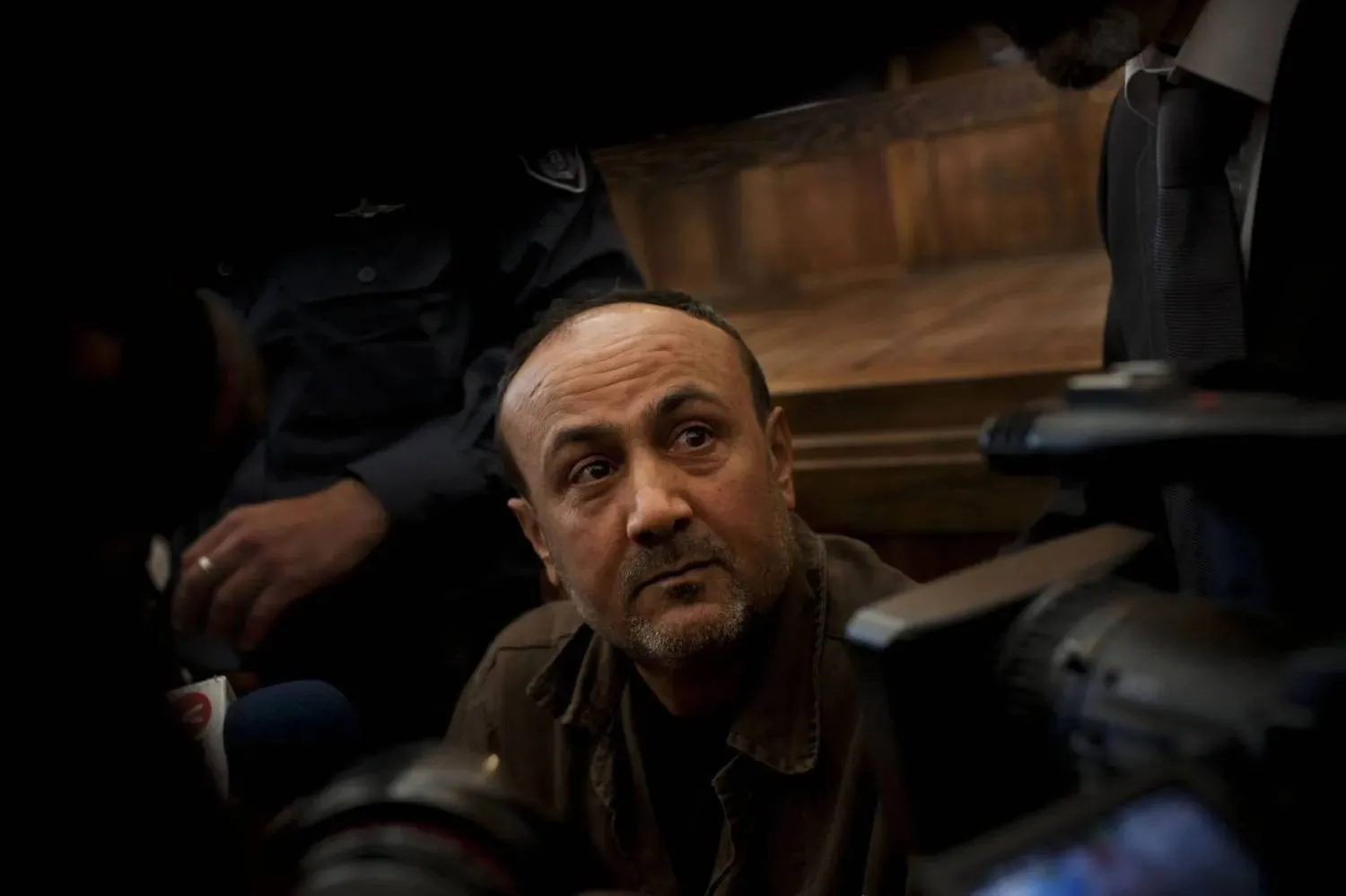
Barghouti’s Son to Asharq Al-Awsat: Father Shot, Denied Treatment as Incitement Continues

Prominent Palestinian leader Marwan Barghouti appears in court in Jerusalem. (AP file)
TT

Barghouti’s Son to Asharq Al-Awsat: Father Shot, Denied Treatment as Incitement Continues

Prominent Palestinian leader Marwan Barghouti appears in court in Jerusalem. (AP file)

Arab Barghouti, the son of detained prominent Palestinian leader Marwan Barghouti, 67, said an Israeli prison guard fired a rubber bullet at his father last week at Ganot Prison in the Negev desert in southern Israel and that he received no treatment for the injury.

“The guard shot my father in the foot,” he told Asharq Al-Awsat, adding that the family learned of the incident through Barghouti’s lawyer, prominent Israeli civil rights attorney Avigdor Feldman.

The Israel Prison Service told AFP that the allegation was “false and baseless”, saying its staff operated “in accordance with the law and under continuous judicial oversight”.

Barghouti remains a prominent figure in Palestinian politics despite having been imprisoned for nearly a quarter of a century. He won the highest number of votes among those elected to Fatah’s Central Committee in an internal vote held two months ago.

His son described the shooting as “a new attempt to undermine him amid continued Israeli incitement”, which he said had intensified in recent weeks as an international campaign for his father’s release expanded.

He said the scale of the targeting reflected Marwan Barghouti’s stature, influence and symbolic importance, and expressed confidence that he would ultimately regain his freedom.

Many Palestinians regard Barghouti as a potential savior because of his broad popularity within Fatah and other factions, including Hamas, which has repeatedly sought his release through prisoner-exchange deals. Israel has refused.

The latest Israeli campaign against him was led by the Israel Prison Service, which sought to compare him to Hamas leader Yahya Sinwar, whom Israel killed during the war in Gaza.

The reported incident was not the first assault alleged against Barghouti.

A lawyer who visited him on April 12 said he had been attacked three times, on March 24, March 25 and April 8, leaving him bleeding from several parts of his body without adequate medical treatment.

Israeli lawyer Ben Marmarelli said Barghouti had been severely beaten and, on one occasion, left bleeding for more than two hours. The Israel Prison Service said it was unaware of the incident.
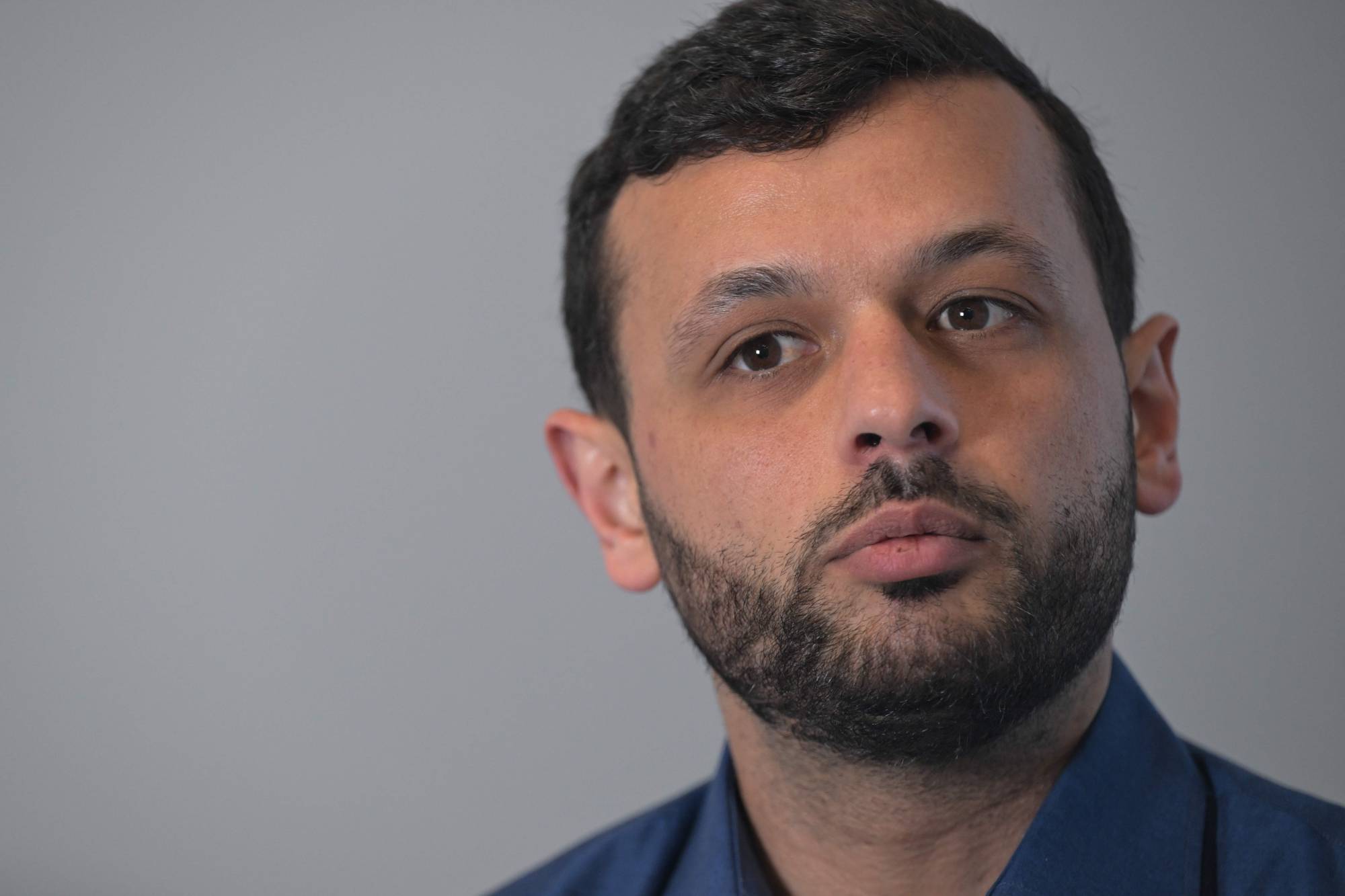
Marwan Barghoutyi's son, Arab. (AFP file)

Call for international investigation

The Arab League called on Sunday for an international committee to investigate the “repeated assaults” against Barghouti and for the perpetrators to be brought before an international court.

Barghouti is believed to have been held in solitary confinement for two and a half years.

Last year, Israel’s far-right National Security Minister Itamar Ben-Gvir posted a short video showing him confronting Barghouti inside his cell and speaking to him in a condescending and threatening manner.

The confrontation brought Barghouti further into the spotlight, and US President Donald Trump later said he was considering his case and whether he should be released.

Trump said last October that he might call on Israel to free Barghouti and had discussed the possibility with White House aides.

His remarks increased Barghouti’s political importance among Palestinians, many of whom describe him as the “Palestinian Mandela”.

Informed Palestinian sources told Asharq Al-Awsat after Trump’s comments that Barghouti would certainly run in the next presidential election.

“He will most likely be Fatah’s candidate,” the sources said. “But even if that does not happen for any reason, he will run because he is Marwan.”

An election process canceled at the last moment five years ago indicated the path Barghouti intended to take.

He formed a list with Nasser al-Qudwa, then an expelled member of Fatah’s Central Committee, to challenge the movement’s official list. Barghouti’s name was not included because he planned to run for president.

The reported shooting came as the Israel Prison Service issued an unusually harsh report against him.

The service said Barghouti had not fundamentally changed but had changed his image, replacing weapons with words and the image of a convicted terrorist with that of Nelson Mandela, while continuing to direct matters from his isolation cell.

The report, published on Friday in the “Seven Days” supplement of Yedioth Ahronoth, said Barghouti no longer fired weapons but that his ideology and ideas had become “a form of intellectual terrorism”.

It accused him of trying to influence Israel’s Arab community and its voting patterns before the next election.

The report said he had built “relationships with Arab members of the Knesset to interfere in Israeli politics, influence elections in Israel and affect voter turnout among Arab citizens of Israel”.

“He is like Yahya Sinwar, only more cunning,” an Israeli officer was quoted as saying. “A wolf in sheep’s clothing. He will mobilize an extremist force and, as soon as he has the opportunity, he will attack us. He is far more dangerous.”

Israeli journalist Raviv Drucker rejected the report, writing in Haaretz that it was so disgraceful that he wondered whether it was Barghouti’s way of mocking Israel.

Drucker accused Israeli intelligence of acting as a tool for Ben-Gvir.
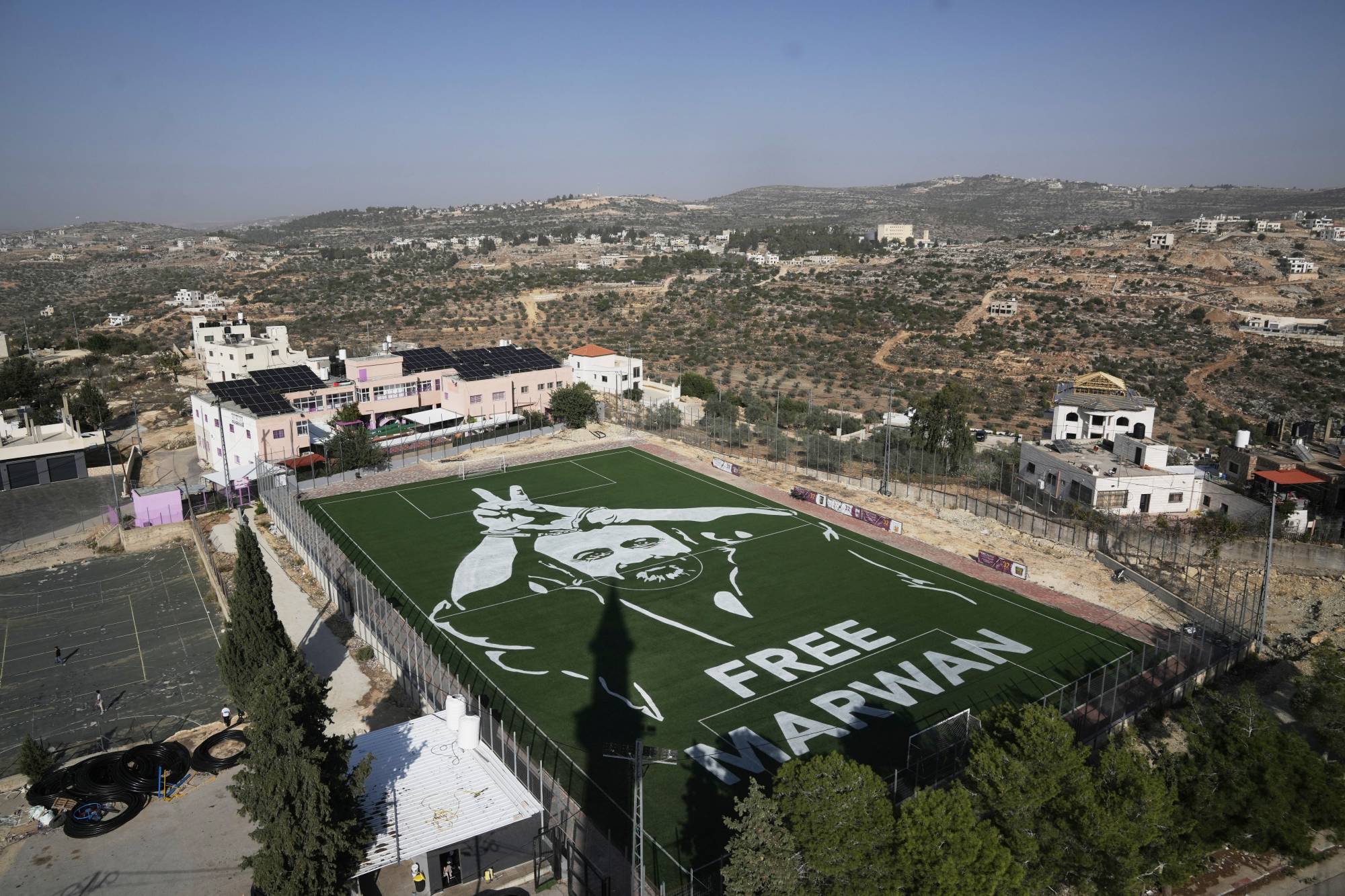
A view of an art installation of Marwan Barghouti in his birthplace, the West Bank village of Kobar, north of Ramallah, November 27, 2025. (AP)

He said Barghouti could play an important role in building a new Palestinian leadership and expressed hope that someone in the security establishment would know how to deal with him more wisely than Israeli intelligence.

Israel’s right-wing Channel 14, which is close to Prime Minister Benjamin Netanyahu, responded that Drucker had not yet understood the new reality and was supporting a political role for “a terrorist convicted of five murders”.

Channel 14 presenter Lital Shemesh rejected the idea that a Palestinian leadership seeking peace could emerge.

“Barghouti must remain in prison until the last day of his life,” she said. “Without hope, without glory and without a single moment of freedom.”

International campaign for his release

Barghouti’s wife, lawyer Fadwa Barghouti, issued a statement on Monday in response to the latest Israeli campaign against her husband.

She said the Israel Prison Service report coincided with the expansion of the international “Freedom for Marwan, Freedom for Palestine” campaign, the participation of international figures and leaders, and growing official and public support around the world.

“What the occupation has failed to understand throughout the past quarter of a century, and still fails to understand today, is that Marwan has never abandoned his conviction that freedom is a right and that the occupation will come to an end,” she said.

“Incitement and assault will not change this truth. They will not remove Marwan from the consciousness of his people or from the conscience of free people around the world, nor will they take from Marwan his love for his homeland, his love for the people and his commitment to them.”

“We will meet again soon, Marwan,” she added. “And our people have an appointment with life, freedom and dignity.”

End of UNIFIL Mission Impacts Hundreds of Jobs in South Lebanon

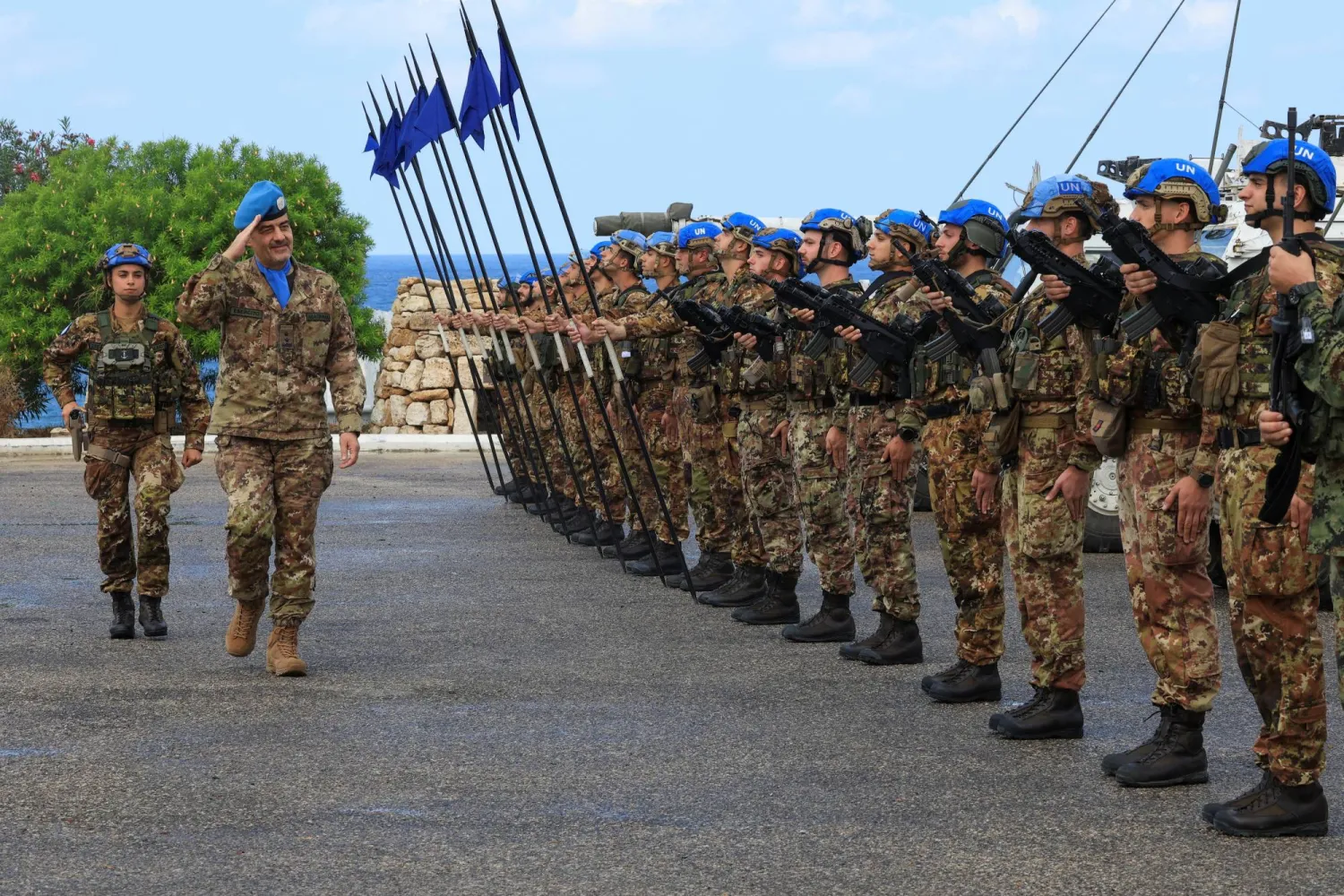
Head of Mission and Force Commander of the United Nations Interim Force in Lebanon (UNIFIL) Major General Diodato Abagnara of the Italian Army reviews the troops at the UNIFIL base, near Mansouri, Southern Lebanon, September 19, 2026. REUTERS/Mohamed Azakir
TT

End of UNIFIL Mission Impacts Hundreds of Jobs in South Lebanon

Head of Mission and Force Commander of the United Nations Interim Force in Lebanon (UNIFIL) Major General Diodato Abagnara of the Italian Army reviews the troops at the UNIFIL base, near Mansouri, Southern Lebanon, September 19, 2026. REUTERS/Mohamed Azakir

As UNIFIL’s mandate in Lebanon draws to a close, the implications of its withdrawal extend beyond military and security operations to the labor market in southern Lebanon, where the mission’s decades-long presence has sustained hundreds of jobs and supported local businesses that depend on its demand for goods and services.

As job cuts begin ahead of the withdrawal process, which is set to gather pace at the end of this year, concerns are mounting over the economic and social impact on employees and their families, as well as on small and medium-sized businesses that depend on spending generated by the international force’s presence.

400 Local Employees Work for UNIFIL

According to UNIFIL spokesperson Candice Ardell, the mission currently employs around 400 local staff, most of whom are based in southern Lebanon, while some positions are based in Beirut.

In comments to Asharq Al-Awsat, Ardell said local employees perform a wide range of duties, from the technical work required to support the mission to security, translation, media, political and civil affairs, among other functions.

Most of these positions are based in the south. Many employees live in the area, while others commute to work from elsewhere, she added.

Ardell denied that job cuts had begun as part of UNIFIL’s force reduction and withdrawal process, explaining that the process was expected to start after Dec. 31, 2026.

Families Depend on UNIFIL Salaries

In the border town of Rmeish, 85 families still have members employed directly by UNIFIL on a permanent basis, earning monthly salaries on which they and their families depend for their livelihoods.

Milad Alam, a former Rmeish mayor, told Asharq Al-Awsat in an earlier interview that around 250 other families also have members working for companies contracted by UNIFIL, adding that they, too, stand to lose their monthly sources of income.

Researcher Mohammad Shamseddine said the number of people employed by or contracted to UNIFIL had fallen significantly, noting that the current workforce was well below the roughly 1,200 employees it had previously numbered.

Annual Losses Estimated at $45 Million to $55 Million

Economist Jassem Ajaka warned that UNIFIL’s withdrawal from southern Lebanon would have economic and financial repercussions extending well beyond the south, affecting the Lebanese economy as a whole. The fallout would include reduced foreign currency inflows, job losses and weaker trade and investment, while placing additional pressure on the state treasury.

In comments to Asharq Al-Awsat, Ajaka said UNIFIL’s annual budget stood at about $553 million, estimating that the withdrawal would result in a direct loss of $45 million to $55 million a year in foreign currency inflows, as international forces cease spending locally on contracts with domestic suppliers, restaurants, shops and supply chains.

Ajaka estimated that UNIFIL’s withdrawal would eliminate $15 million to $22 million in annual wages for Lebanese staff, whose average net annual compensation ranges from $15,000 to $25,000.

He estimated that UNIFIL’s withdrawal would add $25 million to $40 million in annual costs for the Lebanese treasury, as the Lebanese army takes over expenses previously covered through cooperation with the international force, putting further pressure on public finances and potentially widening the primary budget deficit.

The economist concluded saying that the real estate sector would be among the hardest hit, particularly in Naqoura, Tyre, Marjayoun and Bint Jbeil. The termination of hundreds of rental contracts held by UNIFIL’s civilian and military personnel could result in annual losses of $10 million to $18 million. He also warned that commercial and residential property values in affected areas could fall by 25% to 45%.


Libya Approves Contentious Türkiye Deal Over Mediterranean Waters

The Libyan parliament meets on Tuesday. (Parliamentary spokesman Abdullah Bliheg)
TT

Libya Approves Contentious Türkiye Deal Over Mediterranean Waters

The Libyan parliament meets on Tuesday. (Parliamentary spokesman Abdullah Bliheg)

Libya’s east-based parliament unanimously approved a contested eastern Mediterranean maritime agreement with Türkiye on Tuesday as Turkish chief of intelligence Ibrahim Kalin visited the capital Tripoli.

The House of Representatives voted to adopt the memorandum of understanding signed in 2019 by Türkiye and Libya’s then-government in Tripoli, the Government of National Accord, which was rejected by Egypt, Greece and Cyprus.

Greece’s Foreign Ministry rejected the vote, saying in a statement that it “does not alter the illegal, invalid and groundless nature of the memorandum.”

The ministry said Türkiye and Libya do not have opposite or adjacent coasts that could provide a legal basis for delimiting maritime zones. It said the agreement disregards the rights of Greek islands, which lie between the Turkish and Libyan coasts.

“Geography and the international Law of the Sea cannot be changed by unilateral, legally unfounded parliamentary decisions,” the ministry said. It added that Greece had informed its partners and allies and “will take all appropriate measures to safeguard its sovereign rights.”

Cyprus also condemned the vote, calling the memorandum “illegal, null, and void.”

The Libyan-Türkiye agreement defines maritime jurisdiction areas between the two countries in the Mediterranean, where major natural gas discoveries in recent years have fueled competing claims to offshore waters.

Lawmakers also repealed two resolutions passed in 2020, parliamentary spokesman Abdullah Bliheg said. One rejected agreements with Türkiye, while the other cut political ties with Ankara. Parliament had opposed the accords at a time when Türkiye was backing the Tripoli government against Libyan National Army Khalifa Haftar’s forces.

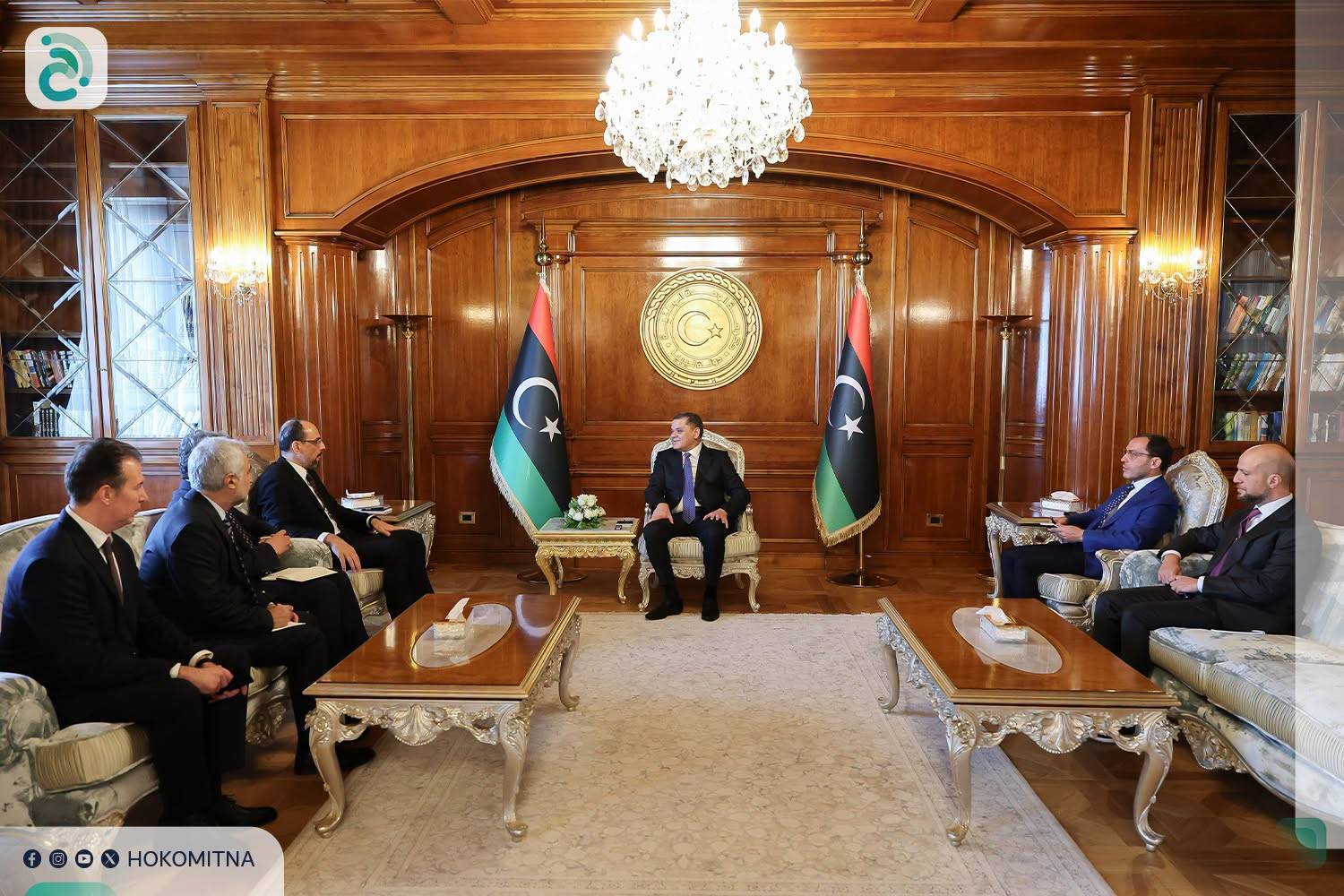
Head of the Government of National Unity Abdul Hamid al-Dbeibah meets with Turkish chief of intelligence Ibrahim Kalin in Tripoli. (HOKOMITNA platform)

Officials in both camps welcomed Tuesday’s vote. Saddam Haftar, Khalifa Haftar’s son, said in a statement that the decisions reflected “a move toward overcoming disputes of the past.”

He called the maritime agreement a tool to protect Libya’s economic interests in the Mediterranean and described Türkiye as “a significant regional power.”

The Foreign Ministry of the Tripoli-based Government of National Unity, led by Abdul Hamid al-Dbeibah, called the vote “a positive development” for relations with Türkiye.

It said cooperation would proceed “in accordance with the relevant rules and principles of international law.”

Dbeibah also met Tuesday in Tripoli with Kalin. A government statement said they discussed security, regional developments, and migration.

The European Union has said the agreement violates the rights of third countries. Türkiye is not a party to the UN Convention on the Law of the Sea.

Egypt also rejected the accord. In August 2020, Cairo and Athens signed their own maritime agreement in response. Greek officials have said it effectively nullifies the Turkish-Libyan deal.

Egyptian Foreign Minister Badr Abdelatty said he discussed the situation in Libya and the eastern Mediterranean in a phone call with his Greek counterpart on Tuesday, without directly mentioning the vote.


Kfara Facility Raises New Questions Over Military Site Verification in Southern Lebanon

Vehicles pass damaged buildings near a Lebanese army checkpoint in the southern Lebanese town of Kafra on June 15, 2026 (AFP)
TT

Kfara Facility Raises New Questions Over Military Site Verification in Southern Lebanon

Vehicles pass damaged buildings near a Lebanese army checkpoint in the southern Lebanese town of Kafra on June 15, 2026 (AFP)

Israel's claim that Hezbollah has resumed military activity at a facility in southern Lebanon previously entered by the Lebanese army has renewed questions over how military sites south of the Litani River are secured and whether measures are in place to prevent their reuse.

The allegation, involving a facility in the town of Kafra, came as US-sponsored military talks were set to take place in Tampa, Florida, on Tuesday and Wednesday, focusing on security provisions of the "framework agreement" between Lebanon and Israel.

Israeli allegations raise questions over verification

Israeli military spokesperson Ella Waweya said the Lebanese army was asked through a US monitoring mechanism in December 2025 to address a facility in Kafra allegedly used by Hezbollah to store weapons.

The Lebanese army said it had taken the necessary measures, but Hezbollah continued using the site and moving equipment out, according to Waweya.

She released footage purportedly showing Hezbollah members loading weapons onto a truck later targeted by Israeli forces.

The Israeli statement also accused individuals within the Lebanese army of coordinating with Hezbollah, enabling the group to remove military equipment before security measures could be carried out.

Neither the allegations nor the date of the footage could be independently verified. There was no immediate Lebanese response.

Israeli claims aim to pressure army, reset negotiations: Expert

Retired Brigadier General Dr. Khalil Helou said the timing of Israel's announcement, just hours before the Tampa talks, was calculated to pressure the Lebanese army, undermine confidence in its capabilities and force additional conditions that could send negotiations back to square one.

"Israel uses such announcements at carefully chosen political and military moments, regardless of the nature or scale of the reported activity," Helou told Asharq Al-Awsat.

He said Israeli claims about Hezbollah movements often coincide with negotiations or Lebanese army deployments, portraying the military as incapable of fulfilling its responsibilities.

"The Israelis know perfectly well that this is not true," he said, accusing Israel itself of obstructing the army's effective deployment in the south.

Helou pointed to the town of Zawtar, where he said the Lebanese army was deployed in the western sector while Israeli forces operated in the east.

"Israeli forces are carrying out explosions and demolitions, and whenever the Lebanese army moves, it comes under attack or shelling near its positions," he said.

He argued that Israel continued to behave as though the war had not ended, linking that stance to Israeli elections and calls by some ministers to annex Lebanese territory.

Helou also cited tunnels dug by Hezbollah between 2014 and 2018, saying Israel had known about them before publicly revealing their existence.

"The timing of Israeli statements and announcements carries political and military significance. No announcement can be viewed in isolation from the circumstances surrounding it," he said.

Footage could become leverage for tougher withdrawal terms

Retired Brigadier General Khaled Hamadeh also questioned the timing of the Israeli announcement, saying it was intended to put pressure on Lebanon's negotiating delegation.

He said Israel could use the footage to demand stricter verification measures to ensure southern areas are free of Hezbollah's military presence, while making its withdrawal conditional on security guarantees that could prolong the occupation.

For Hamadeh, the crucial question is not simply what the images show, but when they were taken and whether they reflect current conditions.

"Are these recent images or do they date back to an earlier period? Were they taken today or during the previous war? We cannot say for certain without verifying their timing and content," he told Asharq Al-Awsat.

He said the Lebanese army might be unable to definitively confirm or refute Israel's account, particularly if it had no presence in the area or could not gain access to verify conditions on the ground.

"If the Lebanese army has declared control over the area south of the Litani, and Israel then says Hezbollah is still operating militarily from a facility in Kafra, Israel will use that to challenge the effectiveness of Lebanese measures," Hamadeh said.

"It will argue that the declared control has failed to prevent Hezbollah from continuing its military activity."

Hamadeh doubted Hezbollah was preparing to launch another war from the area, but warned that Israel could exploit the allegations, regardless of their accuracy, to reopen negotiations over verification procedures and demand further guarantees before withdrawing.

"I do not believe Hezbollah intends to launch a new war from this area. The problem is how Israel uses this information, regardless of whether it is accurate, to reopen the debate over verification measures and demand additional guarantees before withdrawing," he said.

The absence of a trusted, mutually agreed verification body, he argued, gives Israel considerable room to maneuver.

Israel could cite continuing Hezbollah military activity to justify refusing to withdraw, while Lebanon lacks sufficient leverage to compel it to honor its commitments.

Hamadeh warned that tying withdrawal to further security demands could revive proposals for a drawn-out timetable.

"The agreement reached is supposed to lead to an Israeli withdrawal from Lebanese territory," he said.

"But giving Israel additional pretexts could reopen the door to a prolonged, phased withdrawal, potentially stretching over five years, on the grounds that the Lebanese state needs enough time to dismantle Hezbollah's military infrastructure and confiscate its weapons."