
Khalil al-Hayya takes the helm of Hamas at one of the most dangerous and complex moments in the Palestinian group’s history, as it confronts Israel in an unprecedented war it triggered by the Oct. 7, 2023, attack.
His election as head of Hamas’s political bureau places him in charge of a movement under immense military and political pressure nearly four decades after its founding in 1987.
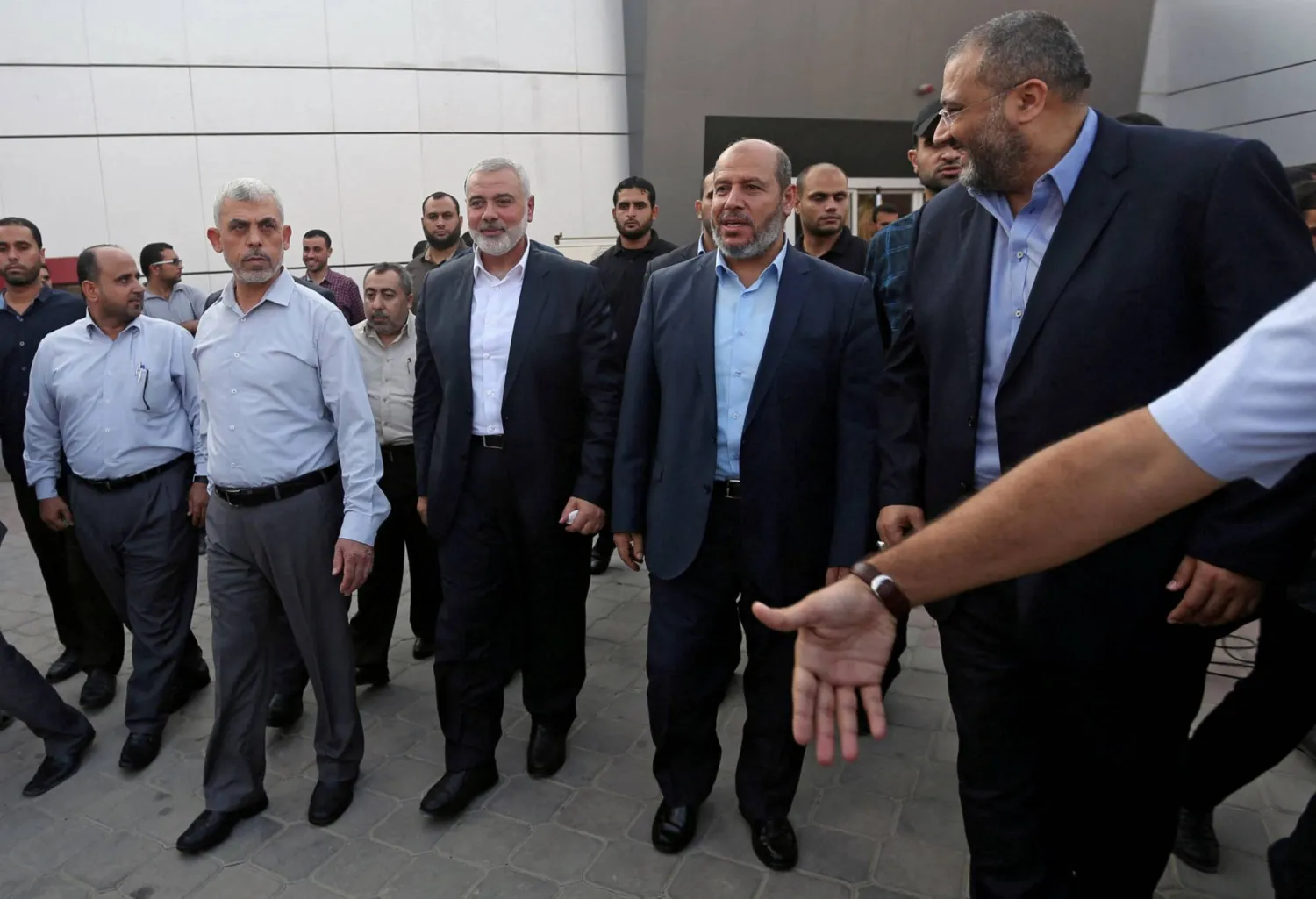
Many inside and outside Hamas see al-Hayya as a leading figure in the faction most committed to close ties with Iran. That current was led by Yahya al-Sinwar, the former Hamas chief who directed the Oct. 7 attack. Al-Hayya was Sinwar’s deputy in the leadership of Hamas’s Gaza bureau.
Three Hamas sources, speaking separately to Asharq Al-Awsat, said those they described as “Sinwar’s friends” pushed al-Hayya’s candidacy from inside and outside the Palestinian territories.
One source said their backing thrust him into a fierce contest with former Hamas leader Khaled Meshaal, who represents a wing seen as more cautious in its relationship with Iran.
Meshaal congratulated al-Hayya in a statement, saying he had assured members of the Shura Council that he respected the election result and would work with the new leader.
A Hamas source outside Gaza said the statement underscored the intensity of the contest.
“It reflects how fierce the competition was between Meshaal and al-Hayya,” the source said. “The first round ended without either man securing the leadership.”
Ties with Iran
Observers of Hamas and Palestinian affairs expect al-Hayya to support a broader and deeper relationship with Iran.
Esmail Qaani, commander of the Quds Force of Iran’s Revolutionary Guard Corps, said in a congratulatory message that al-Hayya’s election showed he was a symbol of “resistance and martyrdom” and reaffirmed Hamas’s commitment to the “path of Islamic resistance.”
Four Hamas sources — two abroad and two in Gaza — rejected suggestions that the movement’s leadership was split into camps for and against Iran.
One source based abroad said closer ties with Tehran could become a defining feature of al-Hayya’s leadership.
“Greater openness toward Iran may be one of al-Hayya’s most distinguishing traits,” the source said, noting that he had built close ties with senior Iranian figures since becoming Sinwar’s deputy.
The two Gaza-based sources said Hamas’s political and military leadership in the enclave favored preserving the relationship because “no party offers Hamas more support than Iran.”
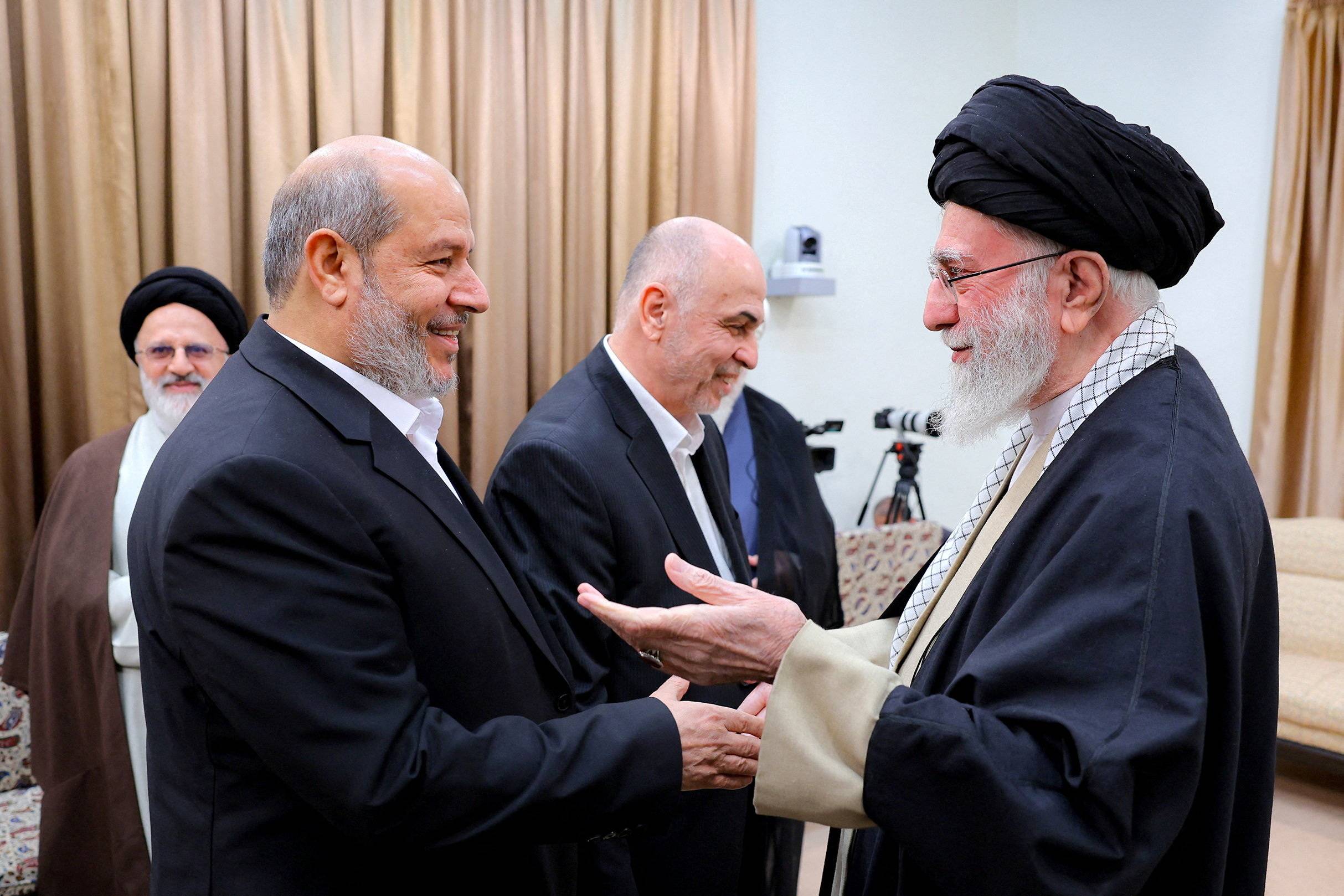
A fourth source, a senior Hamas official abroad, said any decision to expand ties with Iran or another country would require consensus within the movement.
“Hamas prefers openness toward all parties without rigidly favoring one over another,” he said, dismissing repeated media reports of rival pro- and anti-Iran camps as “far removed from reality.”
Foreign ties and ending the war
A senior Hamas source outside Gaza said al-Hayya would have to manage relations with host countries such as Qatar and Türkiye, as well as with Egypt, Iran, Syria’s new authorities and other states.
“But the conditions in the region impose a complex reality,” the source said.
The two Gaza-based sources said al-Hayya was likely to push for closer ties with Iran while preserving a more open relationship with Qatar and Türkiye.
One said that would not prevent continued contact with foreign governments, noting that al-Hayya had previously met and negotiated with US officials during Gaza ceasefire talks.
His most urgent challenge, however, will be securing a permanent end to the war in Gaza.
Al-Hayya led Hamas’s ceasefire negotiating team, but two Hamas sources said all major decisions in the talks had so far been made through full internal consultation.
A source inside Gaza said al-Hayya had won the full support of the movement’s political and military leadership in the enclave.
Gaza, the source said, had become Hamas’s center of gravity and remained at the heart of its most important files.
The weapons question
The future of Hamas’s weapons, already a central issue in ceasefire talks, may be the most dangerous challenge al-Hayya faces during his transitional term, the sources said.
Some factions, particularly inside Gaza, reject surrendering the weapons. Instead, they favor a long-term truce of at least 15 years, according to two sources in the enclave.
The sources said the issue remained deeply contentious. There was firm opposition to handing over the weapons, though some were open to restricting them.
Most favored storing the weapons under the supervision of mediators and refraining from using them, they said.
How al-Hayya will handle the issue remains unclear.