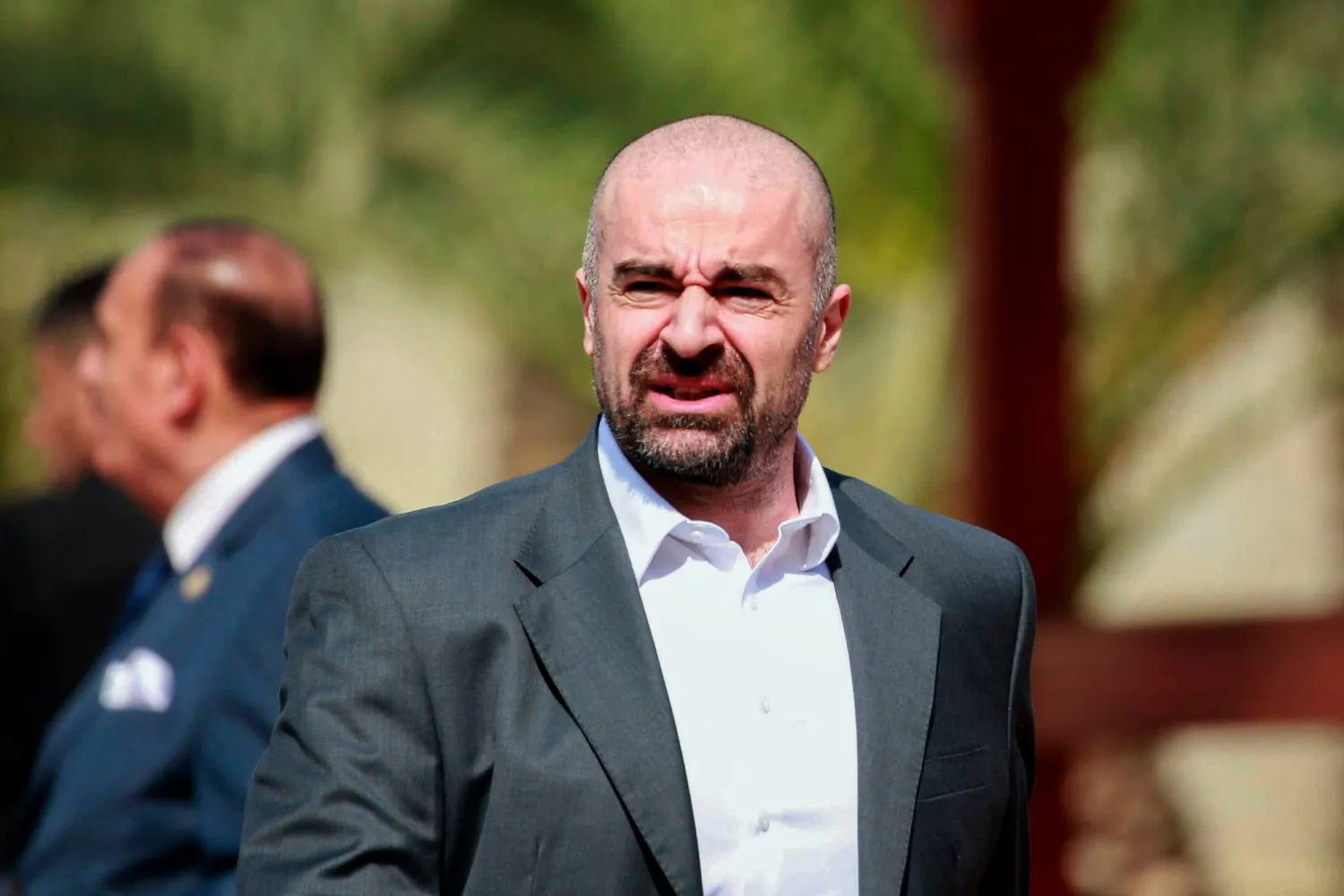
Patriotic Union of Kurdistan (PUK) leader Bafel Talabani deepened his criticism of the Kurdistan Democratic Party (KDP), two days after KDP President Masoud Barzani called on Kurdish forces to engage in dialogue to resolve disputes between the two main parties, amid growing signs of political and administrative division between Erbil and Sulaymaniyah.
Speaking at the Sulaymaniyah Strategic Forum on Thursday, Talabani described the KDP’s actions in the Kurdistan Region parliament as a "political collapse in the history of Kurdistan," saying that shuttering the parliament prompted the PUK to no longer recognize the current legislature.
He added that the region is experiencing the reality of two governments and two administrations, accusing a minority within the KDP of rejecting any settlement that fails to meet its demands - even going so far as to block a meeting solely intended for a photo opportunity.
For his part, PUK senior official Mahmoud Khoshnaw told Asharq Al-Awsat that tensions between the two main parties "have begun to intensify day by day."
He added that hopes pinned on restoring ties following the regional parliament's November 4 session have dissipated, pushing both sides gradually toward a rift.
Khoshnaw said that Talabani’s positions, voiced on multiple occasions, are "conditional" and reflect, in his words, a commitment to safeguarding the region's entity, its constitutional rights, and the gains of the Kurdish experience.
He stressed that the current parliamentary makeup does not represent the entirety of Kurdish forces, but rather reflects the KDP's presence at a time when major Kurdish factions remain outside the legislature.
Nevertheless, he said the path to a settlement "is still not completely closed."
Criticism of US role
Among the issues raised by Talabani was his criticism of US envoy Tom Barrack's “intervention” in Kurdish disputes, stating that he disagrees with him and that the Kurdistan Region requires a fundamental resolution to its problems.
Talabani called on the US administration to understand the nature of the situation in the region, or to step back and leave the political forces in Kurdistan and Iraq to resolve their differences on their own.
He also rejected accusations that he is "under Iranian control," stating, "I am not in anyone's pocket, and I never will be," while adding that he is well-received whenever he visits the US.
Talabani praised Iraqi Prime Minister Ali al-Zaidi, describing him as a young man with a businessman's mindset who is seeking to correct Iraq's course.
Settlement still possible
Political science professor at Mustansiriyah University Essam al-Faili told Asharq Al-Awsat that the crisis remains manageable, pointing out that Talabani favored a peaceful resolution while Barzani called for dialogue between the two sides.
He noted that Baghdad does not want the fragmentation of the region's administration.
The US is also engaged in the crisis, he remarked, saying that these factors keep the prospects for a settlement alive despite the sharp rhetoric between the two sides.
He explained that a core aspect of the dispute revolves around the distribution of sovereign posts within the region's institutions and presidencies, noting that both parties hold leverage over this file, which makes it amenable to a compromise between them.
On talk of the possibility of forming a separate Kurdish region comprising the Sulaymaniyah and Halabja governorates, constitutional and legal expert Dr. Saif al-Saadi told Asharq Al-Awsat that such a scenario is constitutionally unfeasible.
Journalist Montadhar Nasser told Asharq Al-Awsat that the internal dispute is deeply entrenched in the Kurdish political landscape, exposing a failure of institutional governance in the region as decades of efforts to unify the two administrations have fallen short.
He added that talk of establishing two separate regions may be premature, although he argued that such an outcome would better reflect reality on the ground and could resolve the ongoing debate over the nature of relations between the two parties.
Nasser suggested that this scenario could prove advantageous for Baghdad, as it would allow the federal government to deal with two regions separately, while giving both parties greater leeway to forge alliances with other political forces in the capital without being bound by conditions or restrictions imposed by one upon the other.