


Assad Loyalists, Syrian Hezbollah Members Eye Return as Lebanon Grows Unsafe

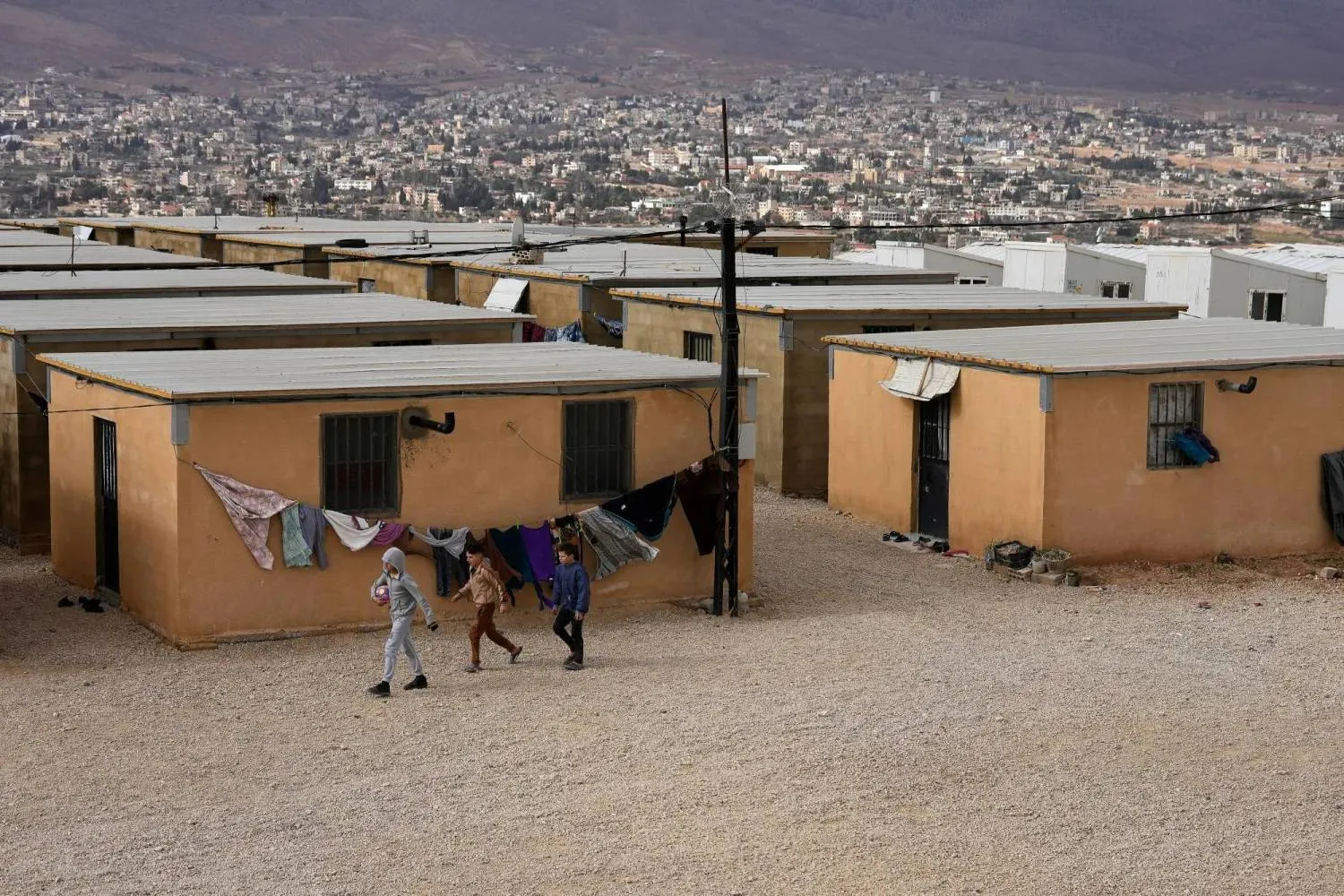
Syrian boys walk at the Imam Ali Housing Compound, where hundreds of mostly Lebanese and Syrian Shiite Muslims displaced from Syria reside, in Hermel, northeast Lebanon, Friday, Jan. 30, 2026. (AP Photo/Hussein Malla)
TT

Assad Loyalists, Syrian Hezbollah Members Eye Return as Lebanon Grows Unsafe

Syrian boys walk at the Imam Ali Housing Compound, where hundreds of mostly Lebanese and Syrian Shiite Muslims displaced from Syria reside, in Hermel, northeast Lebanon, Friday, Jan. 30, 2026. (AP Photo/Hussein Malla)

Fearful of political and battlefield developments, former Assad-era officers, personnel and Syrian Hezbollah members who fled to Lebanon after the regime’s fall are searching for safer, more stable options. For some, returning to Syria is becoming “a viable choice.”

“We go to sleep hearing talk of a Syrian military intervention and wake up to the possibility of rapprochement between (Hezbollah) and the Syrian state. Either way, we lose,” said Hadi, a former Hezbollah security operative from the northern Homs countryside.

His words capture the anxiety gripping Syrians linked to Hezbollah in Lebanon.

Warmer rhetoric between Damascus and Beirut, combined with uncertainty over the positions of Syria’s new authorities and Hezbollah’s leadership, has fueled fears of a rapprochement that could come at their expense. Speculation is growing that Hezbollah could withdraw its protection and restrict their security activities.

Syrians under the group’s protection, especially the poorest, fear becoming a “bargaining chip” in talks with Damascus.

As support fades and living conditions worsen, many are looking for safe ways back to Syria or seeking refuge elsewhere.

Hadi is among them.

“Most Syrians can feel the hostile tone toward the new Syrian state easing,” he said. “What was once a red line — approving of any position taken by the ‘Jolani government’ — is now considered normal, as long as it does not affect the sect.”

He has asked relatives in Syria to check whether he faces arrest warrants or legal complaints that could lead to his detention if he returns. Hadi worked with Hezbollah from 2013 until Bashar Assad’s government fell.

Fears deepened after Hezbollah leader Naim Qassem recently praised “the Syrian leadership’s decision not to join a pincer movement with Israel by intervening militarily in Lebanon.”

His comments came after Syrian President Ahmed al-Sharaa renewed his opposition to military action against Hezbollah and backed dialogue.

Foreign Minister Asaad al-Shaibani later said during a visit to Beirut in early July that talks with Hezbollah were possible “if the interest requires it.”

Abdel Razzaq, who joined Hezbollah’s security division in the Sayyida Zeinab area outside Damascus, has already sent his family back to Syria.

He did so when the Israeli war in Lebanon began. He remains in Lebanon, uncertain whether to follow them or leave for another country.

He is “waiting for the green light.”

For anyone with a clean record, he said, “returning to Syria today is far better than living in poverty and constant fear that we will be handed over to the Lebanese state because we are here illegally.”

That, he said, would mean deportation and prosecution in Syria.

“Many people have completed settlement procedures and returned to normal life,” he added.

Whatever happens, Abdel Razzaq believes people like him will pay the price.

“Whether there is an agreement, or war and Syrian forces enter Lebanon as people keep saying, we will be the scapegoats,” he said. “Most of us live here without official papers from any UN agency or government body.”

Home feels safer

Zeinab, from the town of al-Zahraa in the Aleppo countryside, refused to wait for assurances.

As soon as the Israeli war in Lebanon began, she pressed her husband to return to Syria because of the hardship they faced in Beirut’s southern suburbs.

She said Aleppo was calm and there had been no acts of revenge.

Her husband had served as a military engineering officer clearing remnants of war and “had nothing to do with combat or military operations,” she said.

“After it was established that he had not fought with Bashar’s army, he completed a settlement in Aleppo and was not mistreated.”

Zeinab told Asharq Al-Awsat that she had repeatedly checked the security status of relatives and acquaintances still in Lebanon.

Among them was her father, who had worked as a cleaner at a Hezbollah facility in Sayyida Zeinab. He fled after the regime’s fall, fearing retaliation.

No collective revenge

Sources at Syria’s Interior Ministry told Asharq Al-Awsat that the state rejected collective retaliation.

“The consequences of the war cannot be addressed by making women and children bear responsibility for crimes committed by adults,” the sources said.

But former members of the regime’s military and security structures must regularize their status as soon as they enter Syria.

Anyone found to have harmed others, taken part in actions that injured civilians or faced a personal complaint — including over property seizure, theft or similar offenses — would be detained, the sources said.

They stressed that completing a settlement did not shield anyone from later personal claims or evidence of involvement in crimes against civilians.

Assad’s legacy

Diaa, a former officer in the Political Security Directorate, does not believe Hezbollah will hand him or other former regime personnel over to the Syrian government.

But he expects pressure to grow.

Hezbollah, he said, is facing rising frustration in its support base, where large numbers of Syrians have settled.

The group could respond by tightening restrictions.

“That is already happening,” Diaa said, citing reduced food aid, closer monitoring of former officers who were never Hezbollah members and the possible withdrawal of protection.

Such steps, he said, could leave them exposed to security raids.

Some former regime loyalists still “dream of returning to power” and remain active along the Syrian border, Diaa said.

They continue to receive protection because they are useful to Hezbollah, he added.

Most of those who fled, particularly family breadwinners, were shocked by the reality of life in Lebanon.

Many are now searching for a safe route home or a way out to another country.

Diaa is waiting for a visa to an Arab state. Others are seeking help from UN agencies to move to Europe, Australia or New Zealand, which they see as safer and more stable.

Security expert Brigadier General Imad Shahoud said Hezbollah had never fully trusted Assad-era forces, even when it operated inside Syria.

“Hezbollah did not consider Bashar Assad’s army and militias friendly forces,” he said. “Its military and security methods made that clear.”

Still, Shahoud said the group was unlikely to abandon its Syrian fighters.

He described them as a long-term source of leverage against Syria’s new government and a reserve force of more than 10,000 fighters living in special camps, including Khamenei Camp.

Most oppose the new Syrian authorities for doctrinal and ideological reasons, he said.

That, he added, could make them Hezbollah’s first line of defense and a force capable of fueling unrest and destabilizing Damascus.



Netanyahu Orders Evacuation of Some West Bank Settler Outposts

FILE PHOTO: Israeli Prime Minister Benjamin Netanyahu, votes in Likud party primary elections ahead of Israel’s general election in October, in Jerusalem, Monday, August. 17, 2026.   Ohad Zwigenberg/Pool via REUTERS/File Photo
FILE PHOTO: Israeli Prime Minister Benjamin Netanyahu, votes in Likud party primary elections ahead of Israel’s general election in October, in Jerusalem, Monday, August. 17, 2026. Ohad Zwigenberg/Pool via REUTERS/File Photo
TT

Netanyahu Orders Evacuation of Some West Bank Settler Outposts

FILE PHOTO: Israeli Prime Minister Benjamin Netanyahu, votes in Likud party primary elections ahead of Israel’s general election in October, in Jerusalem, Monday, August. 17, 2026.   Ohad Zwigenberg/Pool via REUTERS/File Photo
FILE PHOTO: Israeli Prime Minister Benjamin Netanyahu, votes in Likud party primary elections ahead of Israel’s general election in October, in Jerusalem, Monday, August. 17, 2026. Ohad Zwigenberg/Pool via REUTERS/File Photo

Prime Minister Benjamin Netanyahu has ordered the evacuation of some West Bank settlements deemed illegal under Israeli law, Finance Minister Bezalel Smotrich said Sunday.

"To my knowledge, Netanyahu has given the instruction to evacuate" certain settlements, AFP quoted Smotrich as saying.

He added that he did not approve of the measure.

While all Israeli settlements in the West Bank are considered illegal under international law, some established without government approval -- often consisting of just a few prefabricated homes -- are also considered illegal by Israel.

It was not immediately clear when the operation would begin.

UN bodies and most governments deem all Israeli settlements illegal under international law ⁠and consider the West ⁠Bank to be occupied territory under military control. Israel argues the territory is disputed, not occupied.

US Ambassador to Israel Mike Huckabee on Saturday denounced violent settlers as terrorists and called for them to face severe consequences following a meeting with several Palestinian Americans in a West ⁠Bank Palestinian town.

Israeli website Ynet earlier reported the orders targeted around 100 outposts across the occupied territory.


Israeli Strike Kills Two People in Gaza

Palestinians inspect the site of an Israeli air strike on a vehicle, in Gaza City, September 6, 2026. REUTERS/Dawoud Abu Alkas
TT

Israeli Strike Kills Two People in Gaza

Palestinians inspect the site of an Israeli air strike on a vehicle, in Gaza City, September 6, 2026. REUTERS/Dawoud Abu Alkas

An Israeli strike killed at least two Palestinians, including a child, in the Gaza Strip on Sunday, health officials said.

Mohamed Abu Selmia, head of the enclave's largest Al Shifa Hospital, said the Israeli airstrike struck a vehicle in western Gaza City killing two people, including a girl, ⁠and wounding six others, Reuters reported.

An October 2025 US-backed ceasefire halted major fighting in the territory, but it failed to end ⁠strikes by the Israeli military, which it said aimed to thwart attacks by Hamas and other Gaza militants.

Hamas accuses Israel of violating the ceasefire and undermining efforts to implement US President Donald Trump's broader plan to end the Gaza conflict, which also includes Israeli withdrawals ⁠and ⁠Hamas disarmament.

More than 1,300 Palestinians, mostly civilians, have been killed in Gaza since the ceasefire took effect last October, according to the territory's health officials, while the Israeli military says four Israeli soldiers have been killed.


Iraq: Fuel Crisis Exacerbates the Country’s Problems, Citizens’ Burdens

A scene of congestion at a gas station in Baghdad (Iraqi News Agency)
TT

Iraq: Fuel Crisis Exacerbates the Country’s Problems, Citizens’ Burdens

A scene of congestion at a gas station in Baghdad (Iraqi News Agency)

Many Iraqi provinces, including the capital Baghdad, are facing a severe fuel shortage, forcing motorists in some cases to wait for hours to get gasoline. This is placing additional burdens on citizens who are already dealing with deteriorating public services, fewer hours of available electricity, and delays in the payment of pensions and salaries for public-sector employees.

Despite repeated government promises to overcome the fuel crisis, long lines of vehicles can frequently be seen at gas stations across Baghdad, Kirkuk, Babil, Basra, and most provinces of the Kurdistan Region. This is further deepening public distrust in government statements.

According to observers, the current fuel crisis "is one of the consequences of the war and the ongoing state of tension between Washington and Tehran, and its negative repercussions for Iraq since the war began on February 28."

At the same time, successive Iraqi governments face intense public criticism for failing to build enough oil refineries to meet domestic demand in a country that sits on vast oil reserves.

"Deliberate Manipulation"?

While many experts link the fuel crisis to the negative effects of the US-Iran war, particularly following the closure of the Strait of Hormuz and the disruption of most of Iraq's oil exports and foreign imports, sources close to Prime Minister Ali al-Zaidi's government do not rule out "deliberate manipulation" within the Oil Ministry that is worsening the crisis.

They link this alleged manipulation to groups that were recently affected by arrests targeting senior ministry officials on charges of stealing billions of dinars and dollars. Those arrested include former Deputy Oil Minister for Refining Affairs Adnan al-Jumaili, Deputy Oil Minister for Distribution Affairs Ali Maaraj al-Bahadli, Director General of the Oil Products Distribution Company Hussein Talib Abboud, and other figures.

In contrast, the Oil Ministry attributes the current fuel crisis to several factors, including increased demand and higher daily domestic gasoline consumption, technical failures that forced some production units at local refineries to shut down, and delays in the arrival of imported fuel shipments because of security tensions at ports and along regional transportation routes.

Despite the lines of cars at filling stations in more than one province, Oil Minister Basim Mohammed al-Abadi insists that petroleum products are available. During a meeting attended by senior ministry officials, he said that "the temporary shortage of gasoline is being addressed" and that additional gasoline shipments would arrive soon, helping to stabilize supplies and meet citizens' needs.

He added that "gasoline consumption averages around 33 million liters per day and rises to around 38 million liters when citizens become concerned."

He said his ministry "continues to closely monitor supply and distribution flows and is taking the necessary measures to secure petroleum products and strengthen stability in the domestic market."

Regarding the country's current oil exports following the near-total disruption caused by the US-Israeli-Iranian war, Minister al-Abadi said that "crude oil exports were around 250,000 barrels per day when the government took office, while current crude oil production has exceeded 3 million barrels per day."

In a subsequent statement, the Oil Ministry explained that "the congestion at fuel stations is caused by a negative gap between production and consumption." It said the ministry had relied on imported shipments delivered through maritime entry points to make up the shortfall, but regional events and the ongoing conflict have created logistical difficulties for tanker movements, delaying their arrival or docking at Iraqi ports.

No Plans to Export

The Iraqi Oil Ministry on Saturday denied reports circulated by some media outlets and news agencies that it planned to export gasoline, stressing that its immediate priority is to achieve self-sufficiency.

The ministry said in a statement that "the future shift toward exporting certain petroleum products depends on completing expansion work at other refineries," which it is pursuing as part of its strategic plans to transform Iraq from an importer into an exporter.

The statement noted that Iraq currently exports fuel oil and naphtha, in addition to previous shipments of jet fuel and sulfur.