



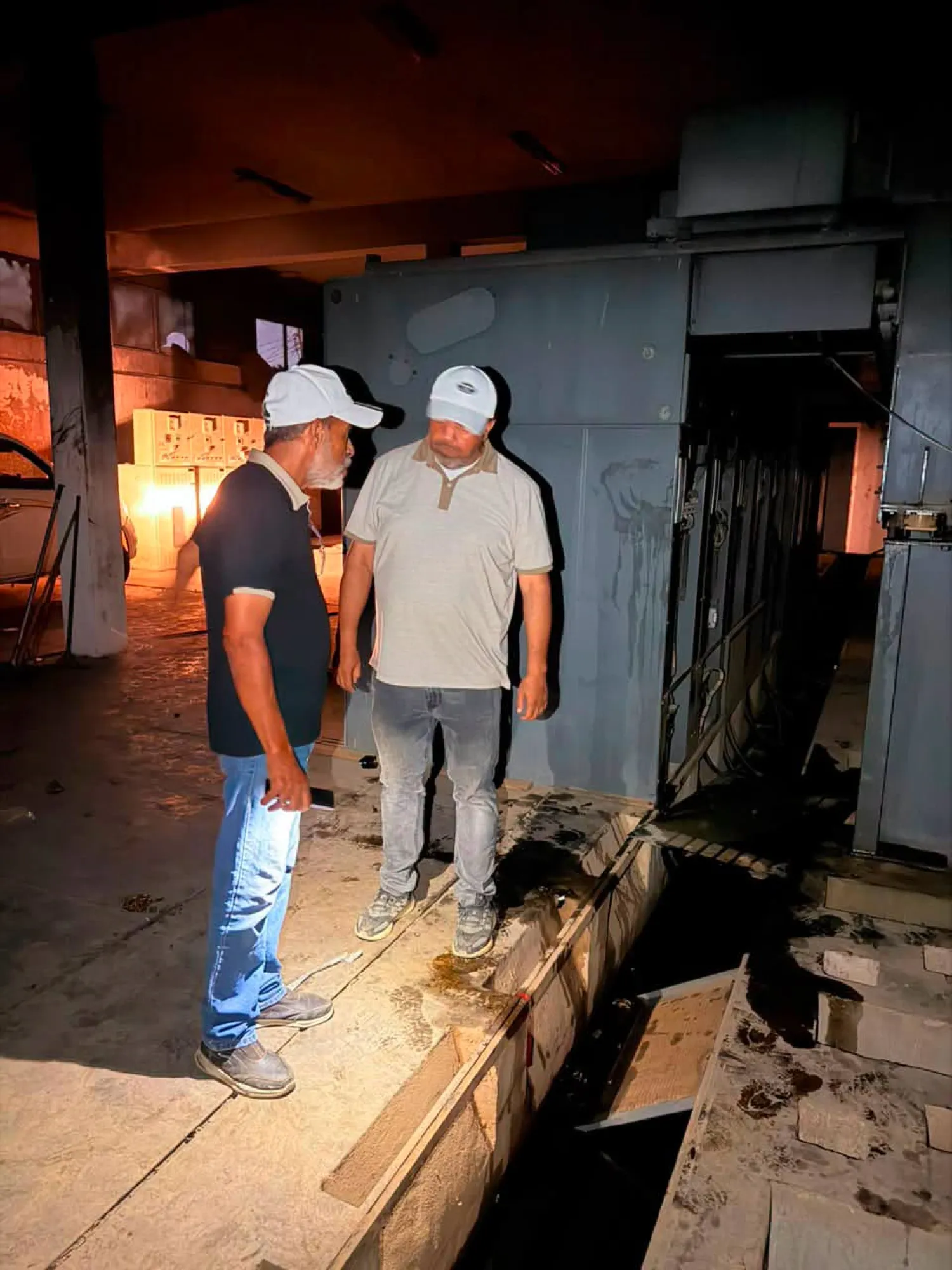

Libyans in the country’s east and west continue to endure hours-long daily power outages, but many say their greatest frustration is what they describe as unequal load shedding between cities.
The blackouts have disrupted daily life across the oil-rich country and affected dozens of wells feeding the Great Man-Made River, Libya’s main water supply network.
Public anger has mounted in several western cities, where residents have taken to the streets, burned tires, and blocked roads to protest what they called “double standards” in the distribution of power cuts.
In the coastal city of Tajoura, 21 kilometers east of Tripoli, demonstrators gathered Wednesday evening and threatened to block all access to the city over recurring outages and what they described as unfair load shedding.
Protesters said the constant loss of electricity had turned their lives into “hell” as temperatures climbed above 45°C in areas including Al-Jumayl, south of Zuwara.
The Tripoli Municipality suspended work across all municipal departments on Thursday because of the extreme heat and continuing power cuts. Similar protests were held in the Abu Salim district of the capital, while social media users reported that demonstrators in Souq al-Jumaa blocked the eastern entrance to Tripoli after enduring prolonged outages for more than a week.
The electricity crisis has also hit the Great Man-Made River project. Its management announced Thursday that 143 wells had gone out of service after the first generating unit at the Sarir gas-fired power plant shut down.
Aguila Saleh, speaker of Libya’s House of Representatives, discussed the crisis with Belqasim Haftar, head of the Libya Development and Reconstruction Fund, according to Saleh’s office. The two stressed the need for urgent measures to stabilize electricity supplies, ease the burden on citizens, safeguard essential services, accelerate priority projects, and strengthen the country’s power infrastructure.
Libya’s electricity grid recently suffered a near-total collapse after several generating plants and major transmission lines went offline, reducing generating capacity by about 1,350 megawatts.
Egypt has intervened by resuming electricity exports to Libya at an initial capacity of 70 megawatts, after Libya paid about $100 million in overdue electricity bills accumulated since 2023.
Asharq Bloomberg, citing an Egyptian Electricity Ministry official, reported that the two sides also agreed on a timetable to repay the remaining $41 million before the end of 2026, out of a total debt of $141 million, ensuring continued electricity flows and allowing exports to increase gradually.
Earlier, Prime Minister Abdul Hamid Dbeibah, head of the Government of National Unity, instructed officials to examine the power crisis affecting several cities and develop solutions to end residents’ suffering.
As summer began, power cuts lasting up to seven hours a day became commonplace across parts of Libya amid load shedding and soaring temperatures, particularly in the country’s southern cities.
The General Electricity Company of Libya attributed last Saturday’s nationwide blackout to a combination of technical and security factors, as well as declining gas and fuel supplies.
Meanwhile, Libyan bloggers and activists circulated what they described as leaked documents claiming that recent clashes in Zawiya had cut generating capacity by 1,700 megawatts, while shortages of gas and fuel had resulted in the loss of another 1,000 megawatts.


