
Israel Launches Military Operation After Deadly Clash Near Palestinian Village

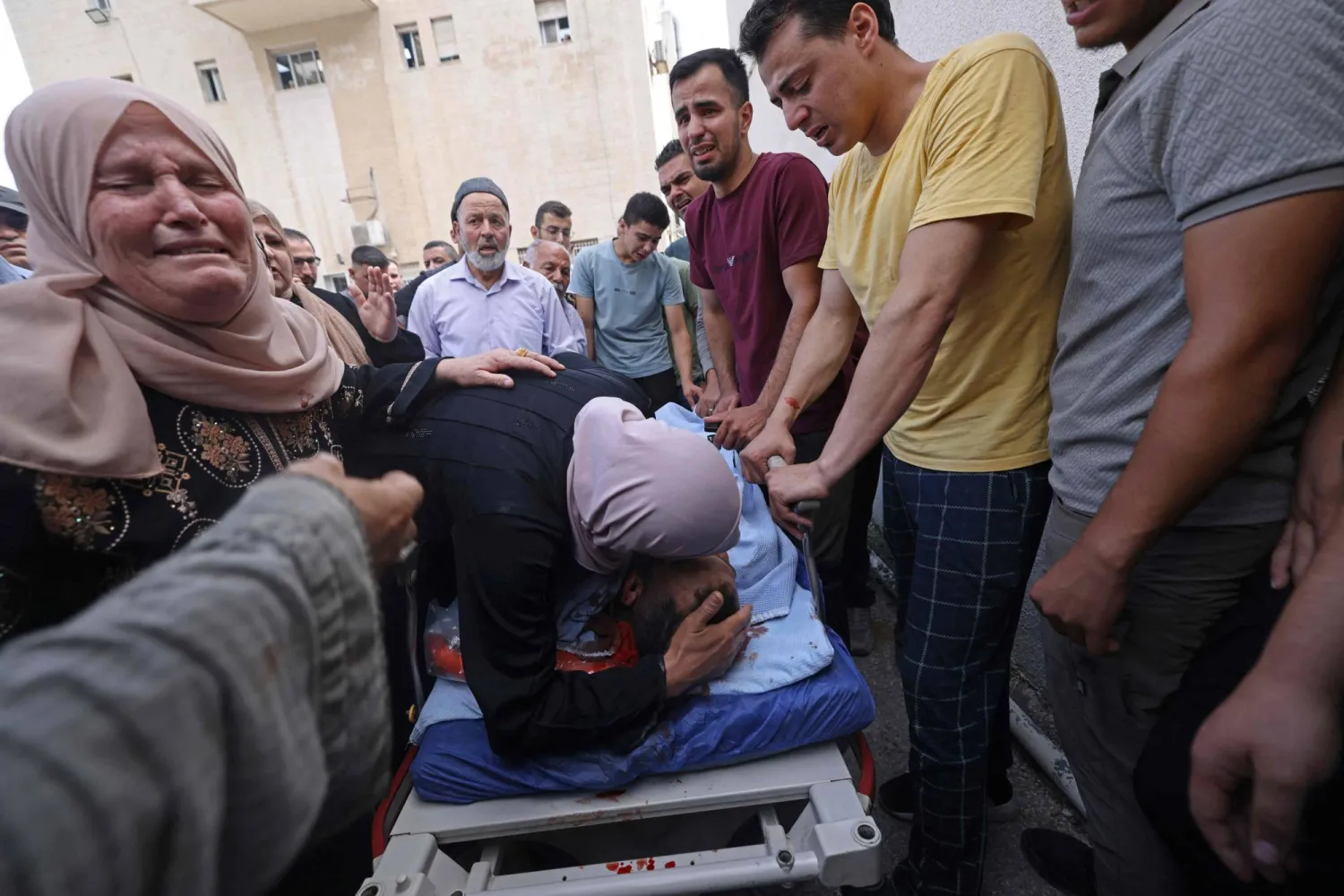
Mourners weep over the body of a Palestinian man who was killed in an attack, at a hospital in Nablus, in the occupied West Bank on July 24, 2026. (Photo by JAAFAR ASHTIYEH / AFP)
TT

Israel Launches Military Operation After Deadly Clash Near Palestinian Village

Mourners weep over the body of a Palestinian man who was killed in an attack, at a hospital in Nablus, in the occupied West Bank on July 24, 2026. (Photo by JAAFAR ASHTIYEH / AFP)

Four Palestinians and two Israeli soldiers were killed near a Palestinian village on Friday in a confrontation that added to a growing toll over recent weeks as Israeli settler violence has intensified against Palestinians in the occupied West Bank. 

The incident near the village of Tal, southwest of the city of Nablus, followed a sharp increase in settler attacks on Palestinian villages since the start of the year, according to figures from the United Nations. 

Israel's military said it had received reports that Israeli civilians hiking in the area had been attacked near the village, in the so-called Area A of the West Bank. The area is under Palestinian Authority civil and security control and Israelis are officially prohibited from entering. 

The military said a Palestinian man took a weapon from Israeli security personnel from the nearby settlement ‌of Havat Gilad and ‌opened fire, wounding several Israelis before being killed. It said four Palestinians were killed ‌in ⁠the incident. 

Local Palestinian ⁠officials said a large group of Israeli settlers had tried to break into two houses and were then confronted by villagers. 

ISRAELI MILITARY PREPARES FOR MAJOR OPERATION 

Israeli troops set up roadblocks in the area around Tal and Nablus and said they were pursuing individuals involved in the incident.  

The military said it was preparing for "extensive counterterrorism operational activity in the sector" and had cancelled leave. 

"Following the recent events, and especially this morning's attack, there is concern about escalation throughout Judea and Samaria. We are carrying out counterterrorism operations to prevent the area from spiraling into further violence," Major General Avi Bluth, head of the Israeli military's central command said in ⁠a statement. 

The Israeli military said it had apprehended two men in a hospital in ‌Nablus where they had been taken after being injured while carrying out the ‌attack. 

It said: "They were apprehended by the soldiers and transferred to the security forces for further processing." 

Palestinian officials said the Israeli military ‌had raided the hospital and assaulted medical staff in the emergency department. 

Hardline Israeli Finance Minister Bezalel Smotrich said Palestinian villages near ‌Tal should be cleared of their inhabitants and new settlements built to establish security. 

"This is our appropriate Zionist answer to terrorists and terrorism, and to the desire to harm our grip on the areas of our country," he said in a statement. 

Israeli Prime Minister Benjamin Netanyahu said he had conducted a security assessment into the incident, along with the defense minister and the military's chief of staff. 

Three ‌months before Israelis go to the polls, Netanyahu's pro-settler government has stepped up preparations to expand settlements in the West Bank, which Israel has occupied since the 1967 Middle ⁠East war. Palestinians view it ⁠as part of their state along with Gaza, with East Jerusalem as its capital. 

SEPARATE ATTACK 

In a separate incident, the Palestinian Authority foreign ministry said settlers had attacked a village near the West Bank city of Qalqilya, wounding two people and setting fire to trees and cars.  

The official Palestinian news agency Wafa also reported a number of other settler attacks in various parts of the West Bank. 

The Israeli military was not immediately available for comment. 

According to figures from the Palestinian Authority, 87 Palestinians have been killed in the West Bank this year, including 21 killed by Israeli settlers. United Nations figures indicate some 850 Palestinians have been wounded in the context of attacks by Israeli settlers since the start of the year. 

Essam Saifi, a local leader in the Palestinian Fatah party from Tal, told Reuters by phone that about 25 to 30 settlers initially attacked the eastern area of Tal and tried to break into two houses there. 

When residents came out to confront them, he said the settlers opened fire before leaving. 

Half an hour later, he said they returned and attacked the western part of the town, leading to a chaotic shootout that also involved the Israeli military. 


Iraqi Factions Threaten to ‘Bring Down Government’ Over Iran Flight Ban

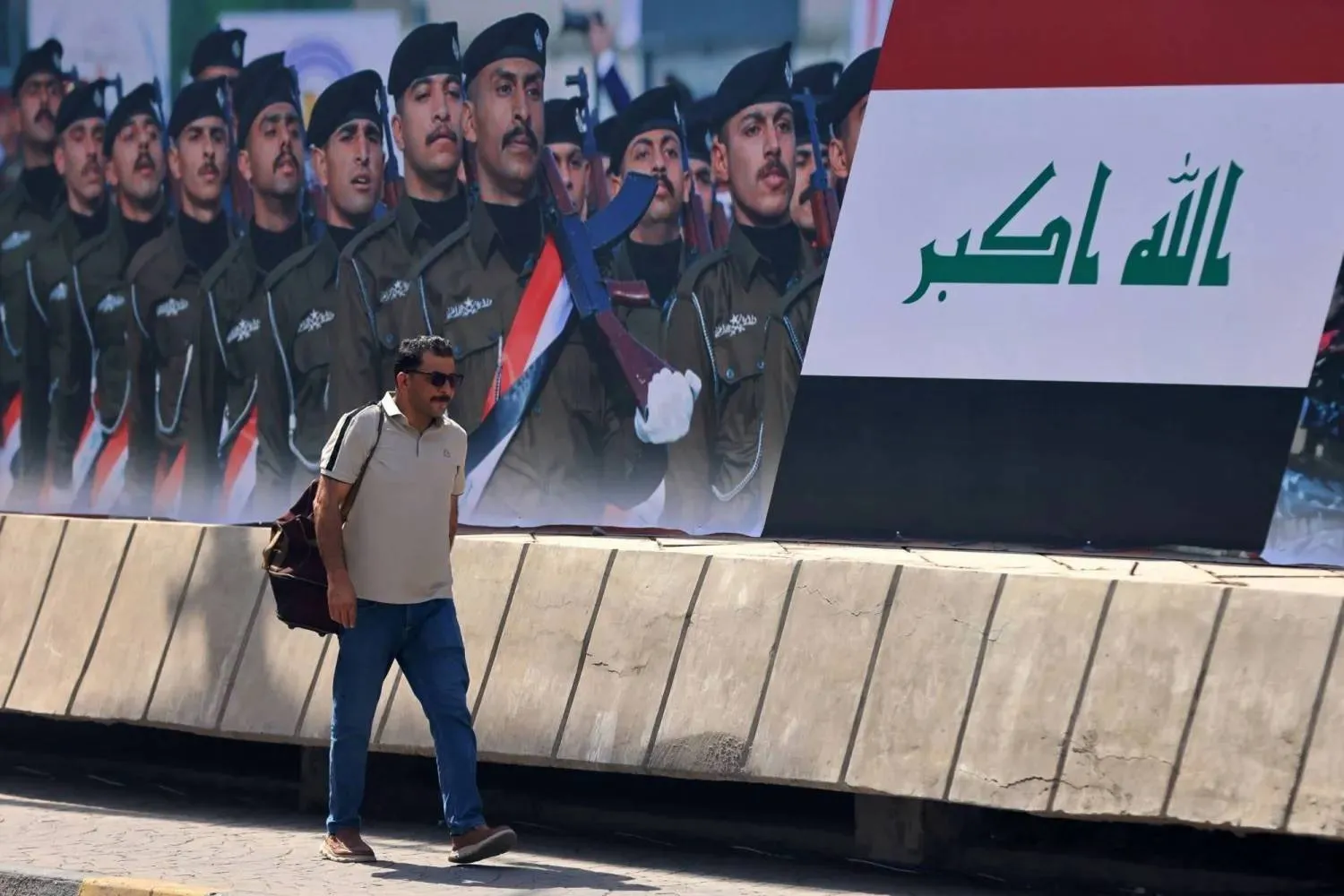
An Iraqi man walks past a sign posted along a street in Baghdad on Sept. 29, 2026, as the international coalition’s mission against ISIS comes to an end. (AFP) 
TT

Iraqi Factions Threaten to ‘Bring Down Government’ Over Iran Flight Ban

An Iraqi man walks past a sign posted along a street in Baghdad on Sept. 29, 2026, as the international coalition’s mission against ISIS comes to an end. (AFP) 

Baghdad has so far maintained its position of barring Iranian airlines from landing at Iraqi airports in compliance with US Treasury sanctions, but Tehran-allied groups are pushing to bring down the government and close Iraq’s land crossings with neighboring countries.

The Iraqi government has also revived the issue of Tehran’s refusal to grant Iraq an exemption allowing its oil exports to pass through the Strait of Hormuz, seeking to counter escalating campaigns and threats by Iran-aligned militias against Prime Minister Ali Falih al-Zaidi and their continued pressure to allow Iranian aircraft to land at Iraqi airports, according to sources.

US authorities have issued limited exemptions for Iraqi Airways flights between Iran and Najaf airport only, while the Transport Ministry announced that flights would operate from the Iraqi side.

Ban and International Companies

Although the government has attributed the ban on Iranian flights to international regulations and systems, a former Transport Ministry official told Asharq Al-Awsat that the government could adapt those regulations to allow Iranian aircraft to land because Iraq has sovereignty over its airspace.

“The government is relying on international aviation regulations to put forward its position of complying with the US sanctions decision,” the official said.

Government spokesman Haider al-Aboudi stressed that “the government did not decide to ban Iranian aviation,” noting that airports operate within an international system similar to the oil sector and are bound by global requirements.

He explained that the international system includes companies providing services such as ground handling, monitoring and insurance, as well as ensuring the safety of airspace and passengers.

Companies operating at Baghdad and Basra airports have a presence at no fewer than 200 airports worldwide, maintain financial accounts and conduct transactions in dollars, prompting them to stop providing services to Iranian companies to avoid US sanctions, al-Aboudi added.

Kataib Hezbollah Threats

Despite the official explanations, armed factions have continued threatening the government since Iranian flights to Iraqi airports were suspended.

Hundreds of faction supporters demonstrated outside Najaf airport on Monday, denouncing the ban and demanding that it be lifted.

Kataib Hezbollah has emerged as one of the most hard-line factions on the issue. Its security official, Abu Mujahid al-Assaf, threatened to bring down Zaidi’s government unless the restrictions on Iranian flights were lifted.

“Zaidi and those behind him should know that a government that does not work in the interests of the people will be brought down by all means,” al-Assaf said in a statement.

He warned that if the air restrictions on Iran remained in place after Oct. 1, Iraqis could take a position “that may extend to closing the border crossings of countries participating in the blockade of the Iranian people.”

Firas Elias, a political science professor at the University of Mosul, said the pressure was “not only about aviation and restricting weapons to state control, but about preserving Tehran’s influence and its Iraqi cards at a sensitive moment in negotiations with Washington.”

US Treasury Exemption

Amid escalating Iranian pressure on Baghdad, the US Treasury Department on Tuesday issued a special license allowing Iraqi Airways to conduct transactions normally required to operate passenger services between Iraq and Iran through Najaf airport, subject to specific conditions and restrictions.

The license expires upon completion of the authorized transactions or on Oct. 28, 2026, while the Treasury Department retains the right to revoke or modify it at any time.

Its scope is narrow: flights must depart exclusively from Najaf International Airport and return there, and may carry only Iranian passengers traveling for religious tourism.

It also prohibits bulk cash transfers, shipments intended for Iranian intelligence, military or law enforcement agencies, and sanctioned individuals, including Iranian government officials and members of Iran-aligned militias.

Government-linked sources had previously indicated that Zaidi’s government asked Washington for an exemption to resume some flights between Iraq and Iran, particularly those carrying patients, students and religious pilgrims.

Following the US exemption, Iraq’s Transport Ministry announced that Iraqi Airways had secured authorization to operate flights to Iran, paving the way for their resumption in October. Flights will operate from the Iraqi side and through Najaf only, while the ban on Iranian airlines remains in place.


Gen-Gvir Threatens to Burn Sinwar’s Body, Blames Netanyahu for Oct. 7 Attack

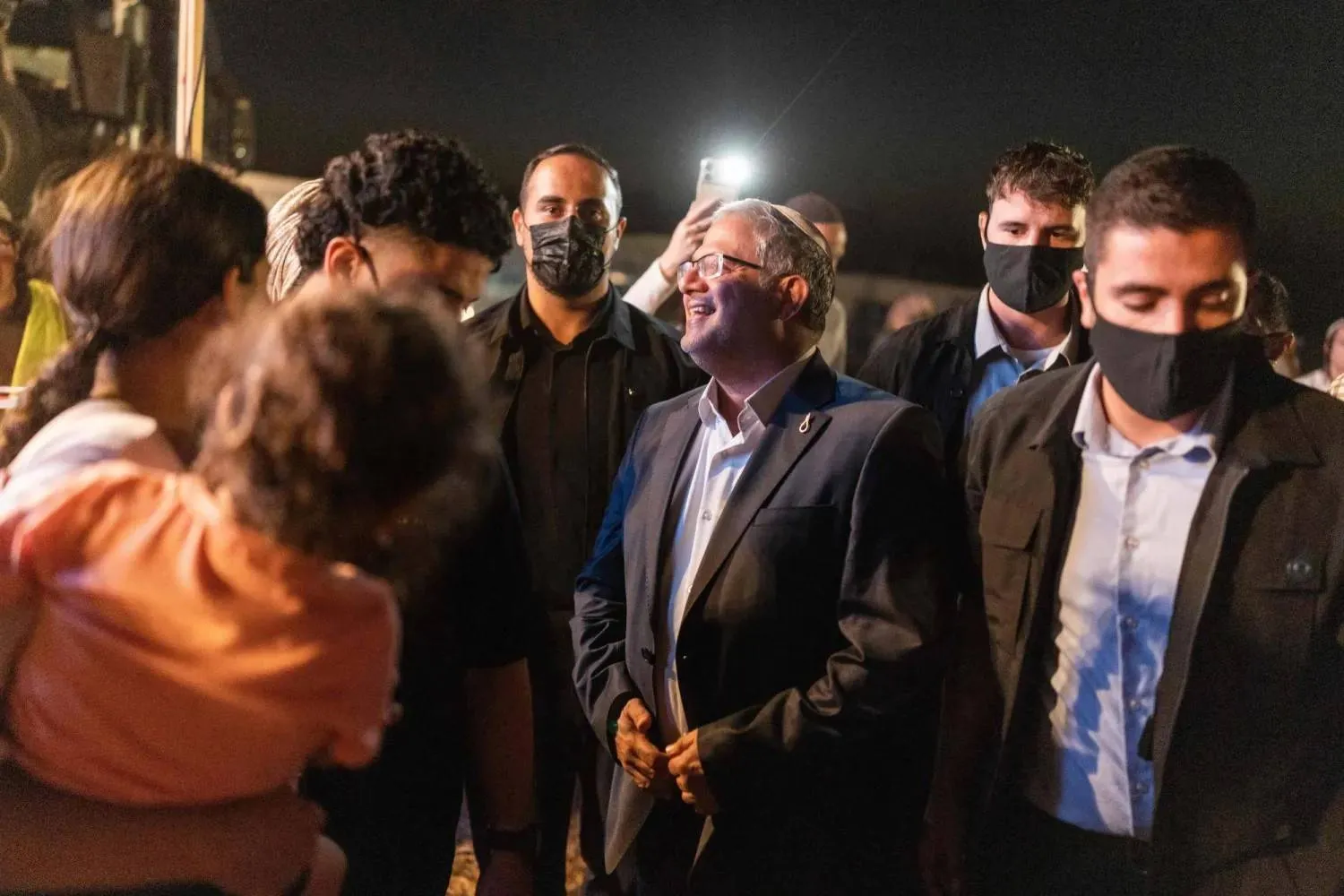
Israeli National Security Minister Itamar Ben-Gvir attend a Sukkot gathering and political rally held outside Kibbutz Nir Am, near the separation fence with the Gaza Strip (AFP) 
TT

Gen-Gvir Threatens to Burn Sinwar’s Body, Blames Netanyahu for Oct. 7 Attack

Israeli National Security Minister Itamar Ben-Gvir attend a Sukkot gathering and political rally held outside Kibbutz Nir Am, near the separation fence with the Gaza Strip (AFP) 

Israeli National Security Minister Itamar Ben-Gvir on Tuesday blamed Israeli Prime Minister Benjamin Netanyahu for the failure of the October 7, 2023 attack, also accusing former Israeli Chief of Staff Herzi Halevi and former Shin Bet chief Ronen Bar of misleading the PM and failing to provide him with sufficient intelligence regarding Hamas’ intentions.

In an interview with Israel’s public radio, Ben-Gvir reiterated his demand to receive the defense portfolio following Israel’s upcoming election.

“After I get the defense portfolio, I will make sure to burn Sinwar’s body and the bodies of the October 7th terrorists. As Defense Minister, I will lead a significant change in approach,” he said.

Ben-Gvir said of Netanyahu: “I also have criticisms of him, which is why I am in the Jewish Power party and not Likud.”

He said, “Before October, I presented a different vision for Gaza, but it was met with contempt by senior officials. They belittled me as national security minister, while Netanyahu also dismissed me, saying that security professionals believed nothing would happen from Gaza. That was just one week before October 7.”

Ben-Gvir also responded to accusations that Netanyahu had facilitated the transfer of millions of dollars to the Gaza Strip, saying the decision had not been made within the government or the security cabinet.

Had he been in office at the time, he said, he would have “turned the table” and rejected such a decision.

The minister noted that he previously resigned from the government after objecting to some of its decisions. “In the end, it turned out I was right about everything I said. No one believed me, and no one listened to me.”

On September 22, Ben-Gvir said he will seek the post of defense minister in the next government, as the country prepares for next month's elections.

“The reason I am putting myself forward is that the time has come to change the mindset within the army,” Ben Gvir said, at a press conference in Jerusalem.

The minister put forward a “security plan” that includes the “encouragement of voluntary emigration” of Palestinians from both Gaza and the occupied West Bank.

On Tuesday, Ben-Gvir threatened to make sure the body of former Hamas leader Yahya Sinwar, who was killed by Israeli forces in October 2024, would be burned.

Sinwar, who headed Hamas in Gaza during the Hamas-led October 7, 2023 attack and later became chairman of the group’s political bureau, was killed by Israeli forces in Rafah in October 2024.


Yemen: Houthi Losses Near 3,000 in Four Days

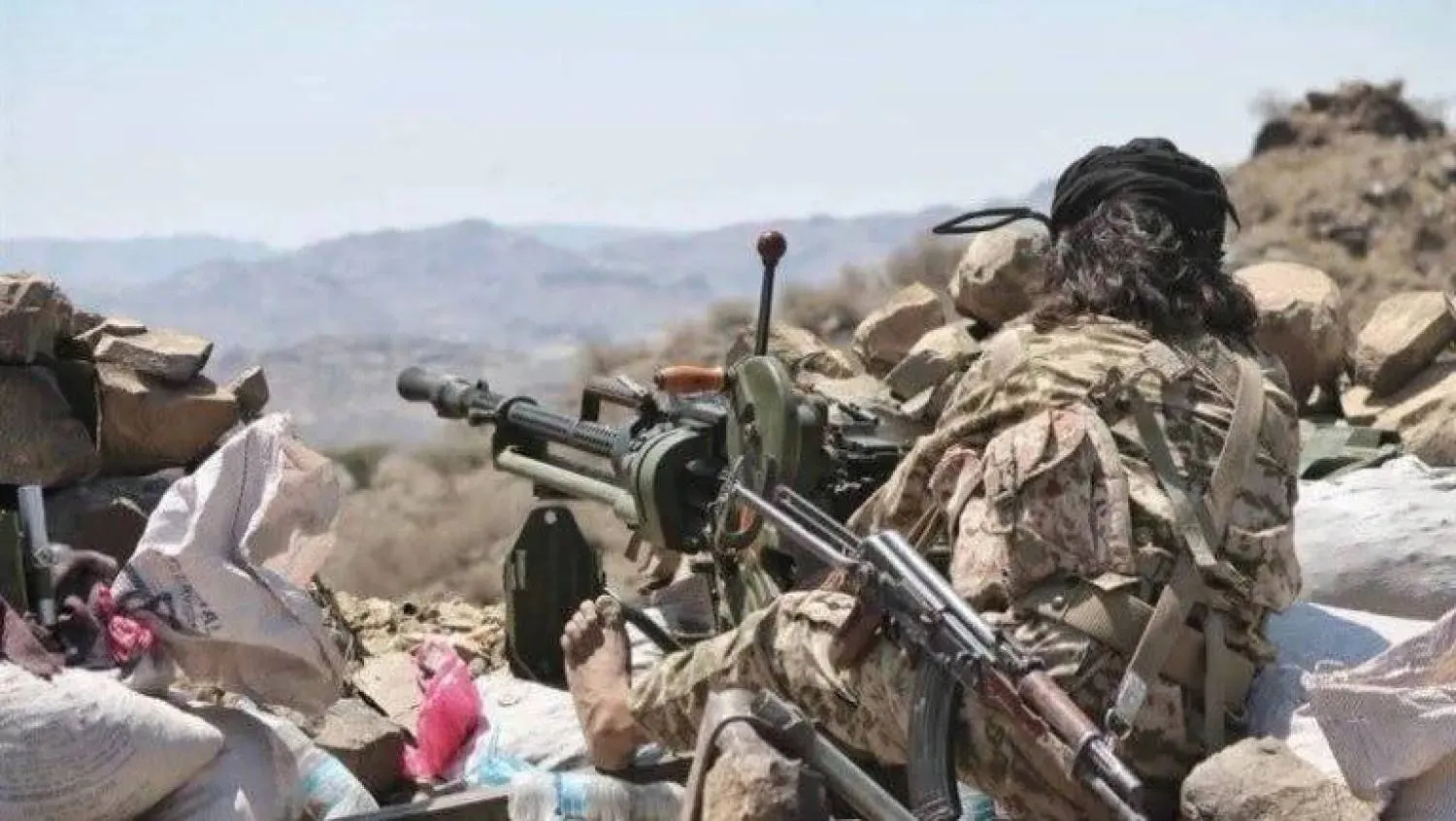
Fierce Houthi attacks on the Taiz and Lahj fronts are countered by Yemeni government forces (Military Media) 
TT

Yemen: Houthi Losses Near 3,000 in Four Days

Fierce Houthi attacks on the Taiz and Lahj fronts are countered by Yemeni government forces (Military Media) 

Losses inflicted on the Iran-aligned Houthis have risen to nearly 3,000 killed and wounded over four days, according to figures announced by Yemen’s armed forces, as fighting continues on several fronts and attacks, infiltration attempts and flanking maneuvers intensify, particularly in Taiz, Lahj and Bab al-Mandab.

The latest toll came after the Yemeni armed forces announced 356 strikes over 24 hours, which they estimated had killed or wounded 476 Houthi fighters and destroyed command-and-control centers, weapons and artillery depots and dozens of military vehicles.

Armed forces spokesman Col. Majed Al-Nuzaili said Sunday evening that 2,316 Houthis had been killed or wounded over 72 hours in 756 strikes on fronts in Kitaf, Al-Buqa, the Alab axis, Al-Jawf, Marib, Al-Bayda, Lahj and Taiz.

The figures brought the announced four-day toll to more than 2,792 killed and wounded, before accounting for additional losses reported by other field sources during the same period.

Much of the latest fighting was concentrated in western Taiz and areas linking the province with Lahj and Bab al-Mandab. Government forces battled Houthis in Al-Wazi’iyah, thwarted an infiltration attempt north of Taiz with artillery fire and repelled a flanking maneuver on the Kahbub front.

In Jabal Habashi, government forces said they repelled a Houthi attack on the Bani Bakari front, while clashes and exchanges of fire were reported on the Rasin and Al-Alaqma fronts south of Taiz.

Military sources said government forces carried out air and artillery strikes on Houthi positions and reinforcements in Al-Rubaie, Al-Ja’sha, Al-Zaybiyah and Al-Bahabah, while a Houthi drone was downed over Al-Kadahah.

The Taiz Military Axis Media Center reported 12 Houthis killed and 13 wounded across the axis’s fronts, as well as an armored vehicle and a military vehicle set ablaze in Al-Kadahah and a tank destroyed in Al-Rubaie.

Warplanes also targeted a ballistic missile launch platform on Jabal Oman east of Taiz, while government forces said they eliminated a Houthi group attempting to infiltrate the Air Defense front northwest of the city. Airstrikes also hit the Jalilah camp near Taiz airport in Al-Hawban.

Fighting extended to the Al-Subaiha fronts in Lahj, where Houthis launched simultaneous attacks on the Al-Muhawala and Al-Aghbarah fronts. Field sources said government forces, backed by tribesmen, repelled the advances and captured two Houthi fighters.

The Houthis continued sending reinforcements toward the front lines, particularly around Mawiyah Junction, Rasin and Al-Alaqma, from Sanaa, Amran, Dhamar and Ibb.

Government forces, meanwhile, intensified air and artillery strikes on supply lines and assembly points in an effort to contain Houthi attacks and prevent limited breaches from being consolidated into fixed positions.