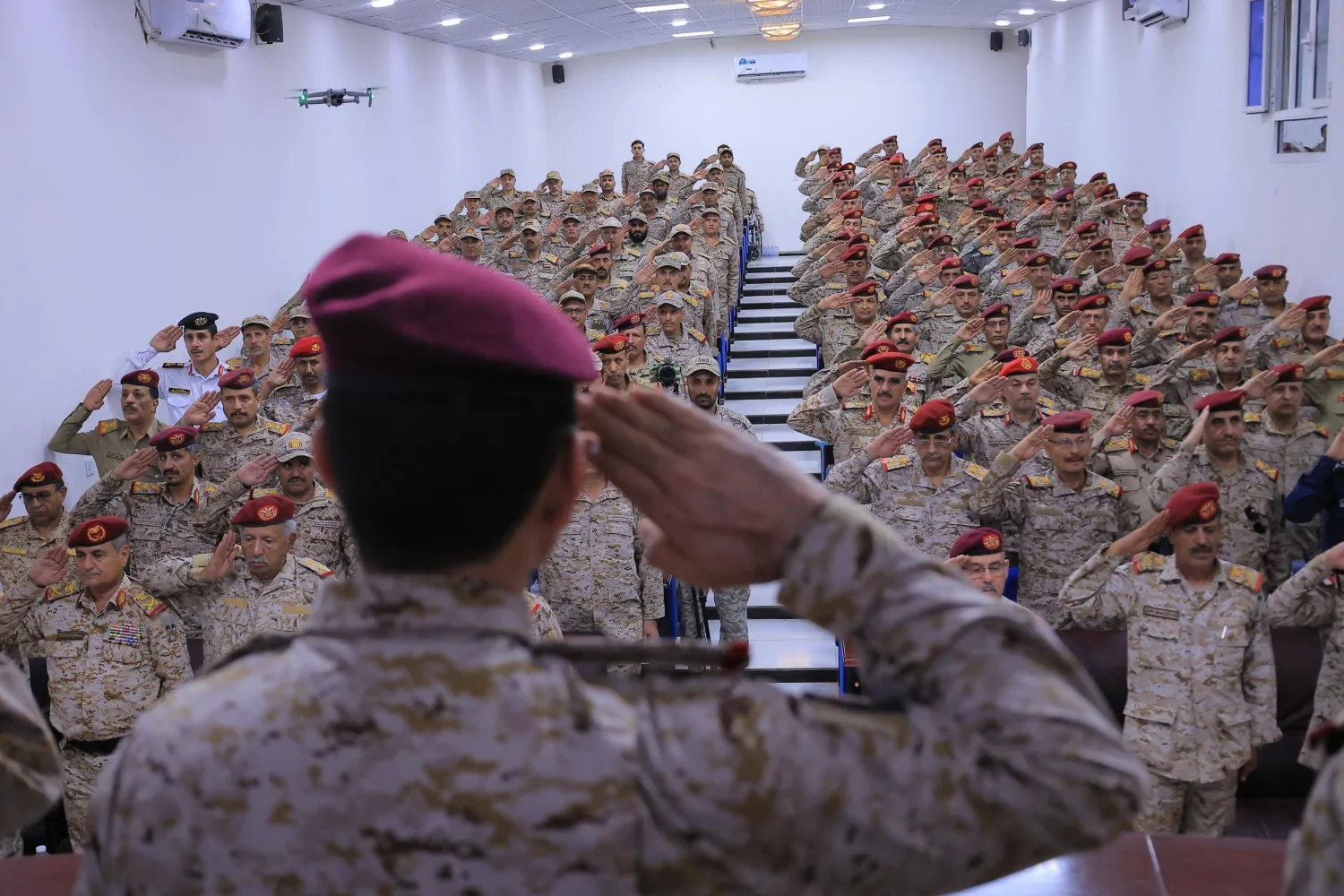

As the Houthi group continues its military escalation, the Yemeni Armed Forces said they remain on the highest level of operational readiness and fully prepared to reinforce security and stability and restore state authority across the country's entire territory.
In exclusive remarks to Asharq Al-Awsat, Brig. Gen. Abdo Majali, the official spokesman for the Yemeni Armed Forces, warned against the continued targeting of commercial vessels by what he described as the "Houthi terrorist militias" and their threats to Red Sea security and freedom of international navigation.
He said the attacks reflected "the militias' connection to the Iranian project aimed at undermining Yemeni and regional national security and threatening international interests."
Majali said that, under the direction of Yemen's political leadership, the armed forces continue to coordinate with the Coalition to Restore Legitimacy in Yemen to deter Houthi threats, secure maritime routes, protect international shipping, and combat Houthi terrorism. He described these efforts as both a national responsibility and a firm commitment to safeguarding the security of Yemen and the region while preserving international peace and security.
Restoring State Authority
Majali said the Yemeni Armed Forces are at the highest level of readiness, possess full combat capability, and maintain the operational capacity and high morale necessary to carry out a wide range of military missions and defend the security and sovereignty of the Republic of Yemen.
He added that, with the support of the Yemeni people, the armed forces will continue fulfilling their national duty until state institutions are restored, security and stability are reinforced, and government authority is reestablished throughout the country's entire territory.
Coalition Operations
Majali said the military operations carried out by the Saudi-led Coalition to Restore Legitimacy were launched in response to Houthi attacks targeting Saudi vessels in the Red Sea. He said the operations were conducted in accordance with international humanitarian law while taking care to preserve Yemen's national resources.
The Houthis had previously been subjected to what the coalition described as "decisive and painful" strikes against sites linked to threats facing vessels in the Red Sea.
Coalition spokesman Maj. Gen. Turki Al-Maliki said the operations focused exclusively on legitimate military targets, stressing that protecting the assets of the Yemeni people remained one of the coalition's highest priorities.
Saudi Ambassador to Yemen Mohammed Al Jaber also said the Houthi militia had turned Yemen into a bargaining chip for external actors seeking to advance their own interests at the expense of the country's security, stability, and the suffering of its people. He said peace would not be achieved through slogans or political maneuvering, but through genuine political will that places the interests of Yemen and its people above all else.
All Yemeni Ports Remain Open
Majali said all Yemeni ports remain open to maritime traffic and continue receiving commercial vessels carrying food, fuel, and other goods.
According to official figures, more than 300 commercial ships entered the ports of Hodeidah, Salif, and Ras Issa during the first half of 2026.
Rejection of Peace Initiatives
Majali said the continued rejection of peace initiatives by Iran and the Houthi movement, along with their ongoing military escalation and threats to regional security and maritime navigation, particularly the security of Saudi Arabia, demonstrated their determination to undermine regional stability while diverting attention from what he described as the crimes and violations committed by the Houthis against the Yemeni people.
Protecting International Shipping
Majali stressed that safeguarding freedom of international navigation and securing maritime routes requires continued international support for efforts to protect global trade lanes, strengthen regional security and stability, and preserve the economic interests of countries around the world.
He said Yemen's political leadership has handled recent developments with a strong sense of national responsibility, adopting carefully considered measures aimed at protecting civilians and their property, shielding the Yemeni people from the consequences of Houthi escalation, and preventing attempts to drag Yemen into conflicts serving the Iranian agenda.
Majali also urged residents in Houthi-controlled areas not to allow their children to be recruited into the fighting or used as "fuel for a losing war," adding that the group's actions would only strengthen the Yemeni people's determination to restore the state and end the coup.
Saudi Arabia's Continued Support
Majali praised what he described as Saudi Arabia's steadfast fraternal support and its ongoing efforts to assist the Yemeni people, ease their suffering, and strengthen security and stability in Yemen and across the region.
Two days earlier, Saudi Ambassador Mohammed Al Jaber said Saudi Arabia would continue supporting the Yemeni people and back all initiatives aimed at reopening Sanaa International Airport to commercial flights, allowing Yemenis to travel after, he said, the Houthis had prevented commercial operations through the airport under "unfounded pretexts."
Al Jaber also said Saudi Arabia would continue supporting the arrival of ships at the ports of Hodeidah to meet the needs of the Yemeni people, while the Houthi militia continued attacking civilian commercial vessels in the Red Sea, threatening freedom of international navigation and regional security.