
Fringe Israeli Settler Group Is Sneaking into Syria to Try to Claim Land for a Jewish Outpost

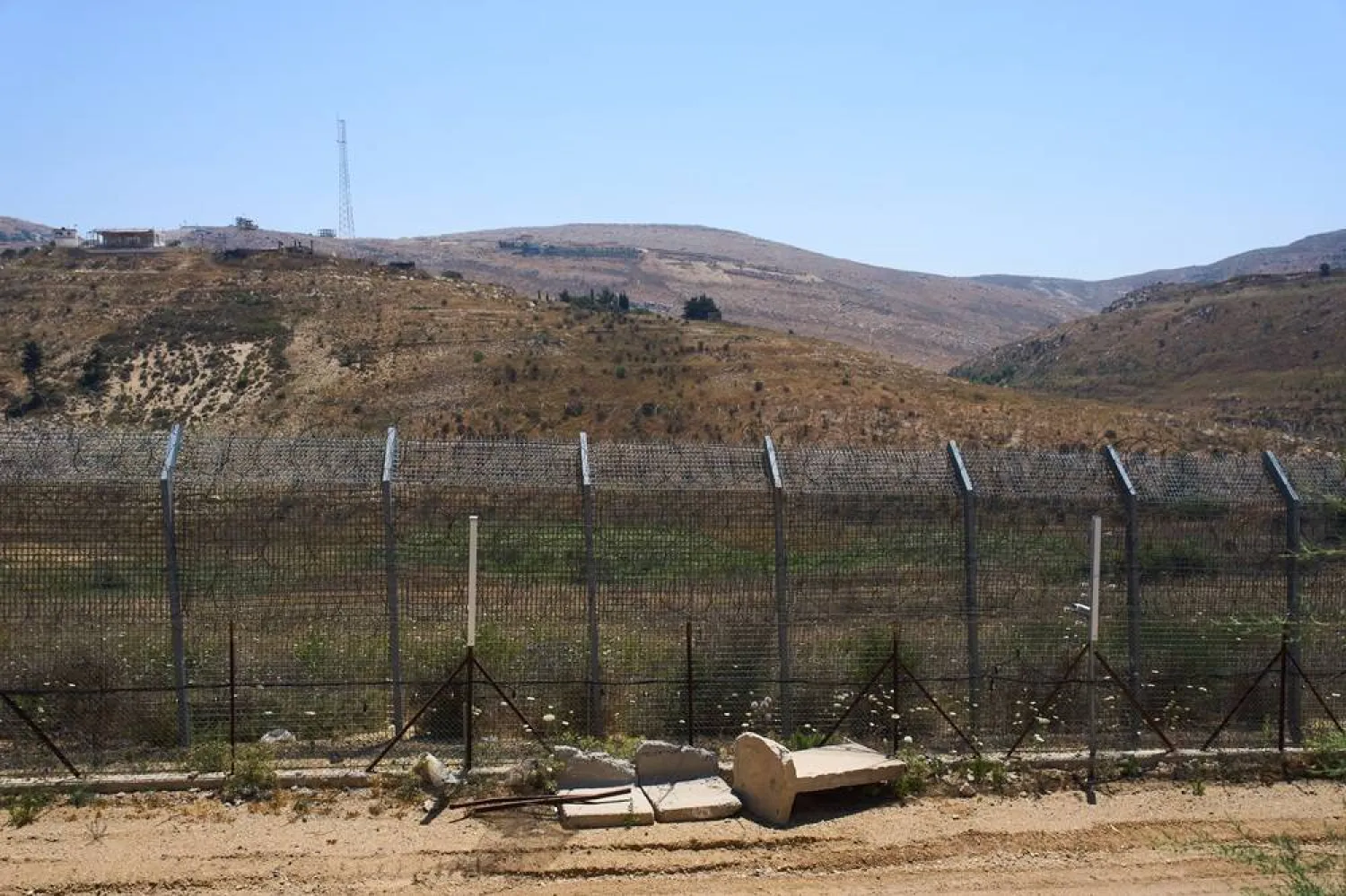
The border between Syria and the Israeli-controlled Golan Heights town of Majdal Shams is seen Tuesday, July 21, 2026. (AP)
TT

Fringe Israeli Settler Group Is Sneaking into Syria to Try to Claim Land for a Jewish Outpost

The border between Syria and the Israeli-controlled Golan Heights town of Majdal Shams is seen Tuesday, July 21, 2026. (AP)

The Israeli military was about to launch a nighttime strike on a group of men in southern Syria when the soldiers noticed the long curls dangling from the temples of their targets. The troops held their fire.

These were not Syrian militants attempting to breach Israel's border but religious Jews who had slipped into Syria and were on their way back.

The episode, first reported last week by Israel's public broadcaster and confirmed to The Associated Press by the Israeli military, has helped raise the profile of a fringe group of Israeli settlers that has staged numerous incursions into Syria, where they hope to establish Jewish settlements.

Israel's military has occupied the area in southern Syria for more than a year, but the forays by civilian settler groups into the region only became a regular occurrence recently.

The groups, with members numbering in the dozens, have attempted to cross from Israel to Syria every few days in recent weeks. The military is tasked with reining them in and, while most Israelis regard them as fringe, the wider settlement movement in Israel has strong backers in the country's far-right government.

The most prominent of the groups behind the incursions in Syria is known as “Pioneers of Bashan.”

Formed early last year, the Pioneers of Bashan are a group of right-wing Israeli activists aiming to establish Jewish settlements inside Syria. They are named after the biblical region of Bashan, which includes part of modern-day Syria and neighboring Jordan.

They have their sights set on an area of southwestern Syria that includes the provinces of Quneitra, Daraa and Sweida.

Part of this area, including the summit of Mt. Hermon, is a “buffer zone” Israel declared in December 2024, soon after the ouster of former Syrian President Bashar al-Assad in an opposition offensive.

The region was known in Scripture for its fertile land and came to be associated with strength and divine providence. In the Bible, the Israelites under Moses conquered the Bashan from the mythical King Og and it was then handed to some of the Israelite tribes.

Members of the group claim a historical right to these lands and argue that their presence there will help Israel defend the Golan Heights, which Israel captured from Syria during the 1967 Mideast war and later annexed — a move not recognized by most of the international community.

Amos Azaria, a Pioneers of Bashan leader, said the group aims to establish a “humanitarian corridor” from Israel to the Druze enclave of Sweida.

“The entire Daraa district ... must be cleared of the enemies seeking our destruction and instead be filled with Jewish settlement,” said Azaria, a computer science professor at Ariel University in the Israeli-occupied West Bank.

The group aims to establish a Jewish outpost inside Syria

The group seeks first to establish a Jewish outpost in southern Syria next to the Israeli-controlled Golan Heights. Outpost, which means “young settlement" in Hebrew, is a term used by settlers to describe rustic footholds in territory they desire.

Settlers normally establish outposts in the hope that one day Israel's government will legalize them. That's how many Jewish settlements in the Israeli-occupied West Bank, which rights groups say are major drivers of settler violence and displacement of Palestinians, got their start.

So far, their incursions into Syria have been brief. The military has removed the activists before they have been able to build anything.

Videos on the group's X account from July 5 show a group of religious teens seated on the ground with their arms linked together, as soldiers try to pry them apart.

A second video shows soldiers shoving several of the activists and zip tying their hands behind their backs.

A video posted by the group in April shows several dozen activists waving Israeli flags and chanting on the roof of a house said to be on the outskirts of the Syrian village of Hader, in Quneitra, as Israeli soldiers look on.

Israeli military says the group compromises its operations

Israel's military says it takes a firm hand with the border-crossers. It has repeatedly condemned the group for diverting troops' attention from military operations and compromising their security.

It says it detains civilians caught crossing the border and hands them over to police, saying it "expects law enforcement authorities to bring those involved to justice.”

Israel’s Channel 12 reported last week that no indictments have been filed so far.

The border-crossers say they have cozy relationships with members of Prime Minister Benjamin Netanyahu’s government. Several government ministers have expressed support for their cause, and the group’s social media platforms document meetings it has held with at least two cabinet ministers, Amihai Eliyahu and Shlomo Karhi.

“We have support from friends in the government and many members of the Knesset," Azaria said.

Syrian officials have not commented publicly on the attempts by Israeli settler groups to enter Syria.

The Syrian government has condemned Israel’s occupation of southern Syria and frequently calls for Israeli forces to withdraw and for the international community to intervene.

Israeli troops have carried out incursions and raids in areas of Syria outside the buffer zone, sometimes clashing with local residents, who have increasingly attempted to block roads to keep them out.

The Lebanese government has also paid little attention to a fringe Israeli settler group — “Uri Tzafon,” or “Awaken, O North" — that has staged incursions into southern Lebanon. Like Syrian officials, the Lebanese government has focused on calling for withdrawal of the Israeli army from southern Lebanon.

Still, some have warned against entirely discounting the settler groups.

Lebanese Deputy Prime Minister Tarek Mitri wrote on X of the attempts by the Uri Tzafon group to enter the country, “It is true that they are a small and fringe group and they withdrew under orders from the Israeli army."

But he pointed out that the movement to settle the West Bank began with an embattled band of right-wing religious activists, known as Gush Emunim, “which in its early days was a small group that faced some obstacles and difficulties.”


Houthi Expansion in Western Yemen Brings Arrests and Crackdowns

Trees became a refuge for those fleeing Houthi reprisals (local media)
TT

Houthi Expansion in Western Yemen Brings Arrests and Crackdowns

Trees became a refuge for those fleeing Houthi reprisals (local media)

With little time to think, thousands of civilians in western Taiz province and southern Hodeidah found themselves facing a choice between staying or leaving after the Houthis carried out raids and arrests in the villages and population centers they entered, amid fears of reprisals and looting targeting residents and their property.

Residents recorded distressing scenes of thousands of families fleeing villages and areas in western Taiz and southern Hodeidah. Some fled on foot, while others traveled in cars and on motorcycles, with some taking whatever livestock and belongings they could save.

Residents told Asharq Al-Awsat that for many families, displacement was not a planned decision but an urgent escape from fear, leaving behind their homes, land, and livelihoods.

Those unable to leave found themselves trapped in a state of panic and anxiety as raids and arrests continued, alongside reports of residents' property being looted and stolen.

According to accounts from local residents, areas including Al-Wazi'iyah, Hays, Al-Khokha, Al-Zuhari, Al-Haymah, Yakhtul, and Mokha, as well as the areas stretching along the coast between Al-Haymah and Mokha, have been experiencing turmoil and displacement since the Houthis entered them.

The accounts said Houthi fighters carried out raids and arrested a number of residents, while property was also looted and stolen. Other accounts reported that families were being held hostage and pressured to force relatives who were fighters to return and surrender themselves and their weapons.

According to the sources, the Houthis have carried out reprisals against residents in Mokha district in Taiz province and the city of Al-Khokha in Hodeidah province, accusing them of supporting the internationally recognized government. Others were targeted based on allegations made by Houthi operatives seeking to settle old scores with some of those targeted in the campaign.

The sources said Abdullah Al-Fadhli and Alaa Al-Omaisi, two Houthi security and intelligence officials in the area, are leading part of these campaigns.

Fleeing into the Unknown

In Al-Wazi'iyah district, residents said thousands of people were displaced as the Houthis entered the district, fleeing what they described as the group's brutality and arrests in difficult humanitarian conditions. Displacement from the district and other areas is still continuing.

Abdul Jabbar Ali Hadi, a resident of the area, said the events unfolded suddenly, leaving residents with little time to absorb what was happening.

"No one understood what had happened. Within moments, it was as if the whole district had erupted, and everyone wanted to leave," he told Asharq Al-Awsat.

Abdul Jabbar described a scene in which fear and chaos became intertwined. While some residents tried to save their children, others attempted to take their livestock with them. Women were crying as everyone searched for a way out. He added that those who could not find a vehicle had to leave on foot, wearing nothing but the clothes they had on.

Abdul Jabbar was among those who left the area in search of a safe place, but he was initially unable to take his family with him. He said he reached safety in the clothes he was wearing after his mother insisted on not leaving without her sheep.

His mother was forced to walk on foot with her sheep until evening, when she reached the Al-Sabriyah area, where she spent the night. At 10 p.m., Abdul Jabbar took a motorcycle to look for her. After finding her, he returned to his location, and the family continued their journey the following morning.

The man described those moments as filled with sorrow, saying the departure left behind "pain, memories, a life, land whose soil we loved, homes, belongings, love and loyalty."

Along the way, he saw vehicles carrying displaced families moving without pause, motorcycles, and hundreds of displaced people walking on foot, alongside sheep, cows, camels, and donkeys, in a scene reflecting the scale of the chaos and suffering accompanying the flight.

Lost Children and Displaced People Without Shelter

After Abdul Jabbar contacted his family, he was told that fuel had become scarce in Al-Wazi'iyah, raising fears about their ability to continue the journey. He was forced to rent a motorcycle from a distant area and send a fuel container to his family. Once it arrived, the family was able to set out on a journey lasting several hours along rough roads before reaching a safe place.

The risks accompanying the displacement went beyond the loss of property. Abdul Jabbar recalled that a girl no older than five became separated from her family during the journey. After her disappearance was reported through social media groups, her family spent hours anxiously searching for her before she was reunited with them the following day.

The girl's story was one of many manifestations of the fear experienced by families, at a time when keeping family members together and getting them to safety had become a priority above everything else.

Abdul Jabbar summed up the experience of displacement in words reflecting the scale of what displaced families lost within a matter of hours. He said they left without money, provisions, or extra clothes, carrying nothing but what he described as "a person's determination, resilience, patience, and dignity."

He added that they were prepared to endure anything, even if they had to live under trees. But what hurt him most, he said, was seeing the tears of the elderly and "the humiliation of men."

The displacement journey is not simply a move from one place to another. For families forced to leave, it is a sudden uprooting from an entire way of life, including homes, memories, livelihoods, and possessions, and replacing it with an unknown road marked by fear and hardship.

Urgent Need

As displacement continues, families who have fled their areas remain in urgent need of safety, shelter, food, water, and fuel, as well as protection and the reunification of families separated during their flight, particularly children and elderly people.

Against the backdrop of this suffering, the harshest reality is that many civilians did not leave in search of a better life. They left because staying was no longer a safe option.

In a related development, local authorities in the interim capital Aden and the provinces of Abyan and Lahj issued a joint statement saying that the armed forces had overcome the state of shock and confusion, regained their balance, and were fully prepared to confront any challenges, amid what they described as popular support and social momentum to confront the Houthis and thwart the ambitions of "Iran's project in the region."

The statement said authorities would continue to monitor security and public services, ensure state institutions continued to perform their duties, confront terrorist threats, protect citizens and property, and maintain security and stability in coordination with the relevant government, security, and military authorities.

The authorities called on residents to remain calm and vigilant, ignore rumors, obtain information from official sources, cooperate with the relevant authorities, and report any suspicious movements or activities.

They pledged to make the security and stability of citizens their highest priority, affirming that they would continue to fulfill their duties and responsibilities to safeguard security in Aden, Abyan, and Lahj and ensure that state institutions continued to carry out their functions.


How Israel Abducted a Senior Hamas Security Official from the Heart of Gaza

 Locals gather at the site of an Israeli airstrike in Gaza City, 01 September 2026. According to the Ministry of Health in Gaza, at least four Palestinians were killed in Israeli air strikes on 01 September.  EPA/MOHAMMED SABER
Locals gather at the site of an Israeli airstrike in Gaza City, 01 September 2026. According to the Ministry of Health in Gaza, at least four Palestinians were killed in Israeli air strikes on 01 September. EPA/MOHAMMED SABER
TT

How Israel Abducted a Senior Hamas Security Official from the Heart of Gaza

 Locals gather at the site of an Israeli airstrike in Gaza City, 01 September 2026. According to the Ministry of Health in Gaza, at least four Palestinians were killed in Israeli air strikes on 01 September.  EPA/MOHAMMED SABER
Locals gather at the site of an Israeli airstrike in Gaza City, 01 September 2026. According to the Ministry of Health in Gaza, at least four Palestinians were killed in Israeli air strikes on 01 September. EPA/MOHAMMED SABER

On September 1, an Israeli special forces unit abducted Moeen Al-Arabid, a senior security official with Hamas and its security apparatus, from the heart of an area controlled by the group in western Gaza City. The operation caused shock and disbelief within Hamas and among other Palestinian factions.

The area turned into a battlefield at the time of the operation, which was carried out in the morning. Israel used various types of aircraft, including warplanes, helicopters, and drones with different missions, to provide cover for the special forces unit affiliated with the Israeli General Security Service, known as the Shin Bet, ensure the operation's success, and facilitate the unit's withdrawal.

How the Operation Began

Sources familiar with the ongoing investigation into the operation told Asharq Al-Awsat that Israeli forces carried out intensive intelligence and military movements for more than a week before the attack. These movements were clearly visible, but the prevailing belief was that they were part of efforts to locate leaders or operatives from Palestinian factions in order to assassinate them, or part of military movements intended to demonstrate the forces' control inside the Gaza Strip.

The sources said that on several separate days over a period of roughly 10 days, military operations were carried out around what is known as the new road at the Netzarim Junction, which separates the northern, central, and southern parts of the Gaza Strip. Israel occupied the area during the war and constructed the road there.

Israeli military vehicles made incursions into the area almost daily during that period. Their movements, accompanied by gunfire, resulted in the complete closure of Salah Al-Din Road, the main thoroughfare, while Israeli forces maintained fire control over the area and its surroundings to prevent any movement by Palestinians.

The investigation shows that the Israeli special forces unit that carried out the operation entered and exited the Gaza Strip via this road under heavy protection from military vehicles conducting incursions in the area. The unit repeated the entry and exit scenario several times to monitor and reconnoiter the target site in western Gaza City, roughly no more than 4 kilometers away.

The special forces unit used the advancing military vehicles as cover to infiltrate through the new road near the Netzarim Corridor. This occurred on the morning before the operation, allowing the unit at times to reach the western side via the central coastal Al-Rashid Road, or through side streets leading to Street 10 and from there into the heart of Gaza City.

Intelligence Cover

The sources revealed that the operation was not limited to military movements on the ground. Israeli forces also intensified their intelligence cover by flying a large number of drones over wide areas. At least eight drones a day were operating for more than a week over the Katibah area where the attack took place, as well as the coastal road and its surroundings.

The sources said that the movement and density of the drones were continuously monitored. Those conducting the surveillance, whether members of the "resistance" or government security agencies, would send urgent reports about them. However, all assessments pointed to the possibility of an airstrike assassination, as had usually been the case.

No unusual movement by any armed party, such as special forces, armed gangs, or others, was detected on the ground. In the Katibah area, the situation appeared to be completely secure.

A Vital Location

One of the most significant findings to emerge recently came after security cameras, as well as cameras belonging to homes, commercial shops, and other locations installed along some streets and in certain areas, were tracked.

The Israeli special forces unit was identified through its use of a small bus. By tracking footage showing the vehicle, investigators determined that the unit had been present at a vital and strategically important location inside Gaza City on the day before the attack.

According to the findings, as revealed by Asharq Al-Awsat sources, the unit spent the night inside Gaza City before moving in the morning to carry out its security mission. It emerged that other members of the force were also present at the site, posing as vegetable vendors and others around the house where the senior Hamas security official was staying. He had been preparing for his son's wedding ceremony.

The investigation shows that the Israeli special forces unit used more than one vehicle during its infiltration, including on the day of the operation and when it withdrew. Those inside the bus were the ones who abducted Al-Arabid.

It also emerged that they had been moving around the area alongside other members of the force, indicating that the unit consisted of a large number of personnel, no fewer than 30. They withdrew in vehicles and on motorcycles under heavy aerial fire. Aircraft struck one of the vehicles belonging to the force, which was carrying a Palestinian license plate, while military vehicles moved into the area and closed Salah Al-Din Road toward the new road at the Netzarim Corridor to secure their safe passage and transport them into an Israeli-controlled position.

Earlier Details

Sources told Asharq Al-Awsat days earlier that the security operation had begun roughly two months ago, when Shin Bet officers assumed the identity of an international relief organization that would provide assistance to Palestinians by establishing small businesses, including stalls selling vegetables, drinks, and other goods in the area where the operation took place.

According to the sources at the time, Shin Bet used Palestinian operatives, including women, to carry out the project and supply them with vegetables every day, presenting them as aid from the organization. The proceeds from the sales were supposedly to benefit those taking part in the project. The operatives later asked them to monitor certain homes and the movements of specific individuals in the area, including Al-Arabid.

The sources said at the time that those running the project were later found, following the operation, to have been collaborators working for the Israeli Shin Bet. On the day of the operation specifically, new individuals appeared at some of the stalls, while others had been there since the previous day selling vegetables. They were later found to be Shin Bet operatives who had arrived in the area and concealed their weapons inside the stalls. When the time came to launch the attack, they took part in the operation before disappearing and withdrawing from the area.

Following the attack, Hamas security agencies succeeded in arresting collaborators and people who had benefited from the project run by the fictitious relief organization for questioning.

This is not the first time Israel has used the guise of international organizations to conduct operations inside the Gaza Strip. One such case occurred when an Israeli special forces unit infiltrated the Al-Shifa Medical Complex in March 2024, before military reinforcements arrived at the site. The operation subsequently continued for two weeks, during which Hamas operatives and members of its various security apparatuses were killed or captured, including commanders from the Al-Qassam Brigades.


Aoun from Nabatieh: No New Negotiations with Israel at Present

Smoke rises in Mansouri following Israeli strikes as seen from Naqoura, Lebanon, September 11, 2026. REUTERS/Raghed Waked
TT

Aoun from Nabatieh: No New Negotiations with Israel at Present

Smoke rises in Mansouri following Israeli strikes as seen from Naqoura, Lebanon, September 11, 2026. REUTERS/Raghed Waked

Lebanese President Joseph Aoun visited the country's south on Saturday, in a surprise trip to Nabatieh, a city close to the strategic Ali al-Taher ridge captured from Hezbollah and blown up by Israel.

Official Lebanese media said he arrived in Nabatieh unannounced and accompanied by security officials.

The National News Agency (NNA) quoted Aoun as saying that there would be no new negotiations with Israel at present, stressing that the withdrawal of Israeli forces, the return of prisoners and displaced people, and reconstruction remain national principles that Lebanon is committed to upholding.

Aoun expressed solidarity with locals who greeted him, according to footage broadcast by Lebanese media.

He praised staff at Nabatieh Governmental Hospital, saying they were risking their lives to provide medical services in the area, which most people have fled.

He spoke a day after a senior US diplomatic official said a new round of US-brokered talks between Israel and Lebanon, initially scheduled for next week, had been pushed back to October.

Fighting between Israel and Hezbollah had eased off between late June and last week, thanks to a US-sponsored framework agreement between the two countries as well as a memorandum of understanding between the United States and Iran in the wider Middle East war.

But the Israeli army has in recent days stepped up attacks again, particularly in the Nabatieh region.

On Thursday it blew up underground fortifications on Ali al-Taher ridge after seizing the site, which lies a few kilometers from Nabatieh city.

The explosion was large enough to trigger a tremor detected by seismic monitoring agencies.

Israeli strikes in the area have killed at least 29 people in the last few days, including 12 members of the same family.

The Lebanese army, which has deployed in Nabatieh city, warned on Wednesday that Israel's actions threatened the implementation of the framework agreement.

The agreement involves the disarmament of Hezbollah, a gradual withdrawal of Israeli forces from Lebanon's south and the deployment of the Lebanese army to the region, starting in test areas known as "pilot zones.”