Iraqi Forces Enter Jurf al-Sakhar After 12 Years of Kataib Hezbollah Control

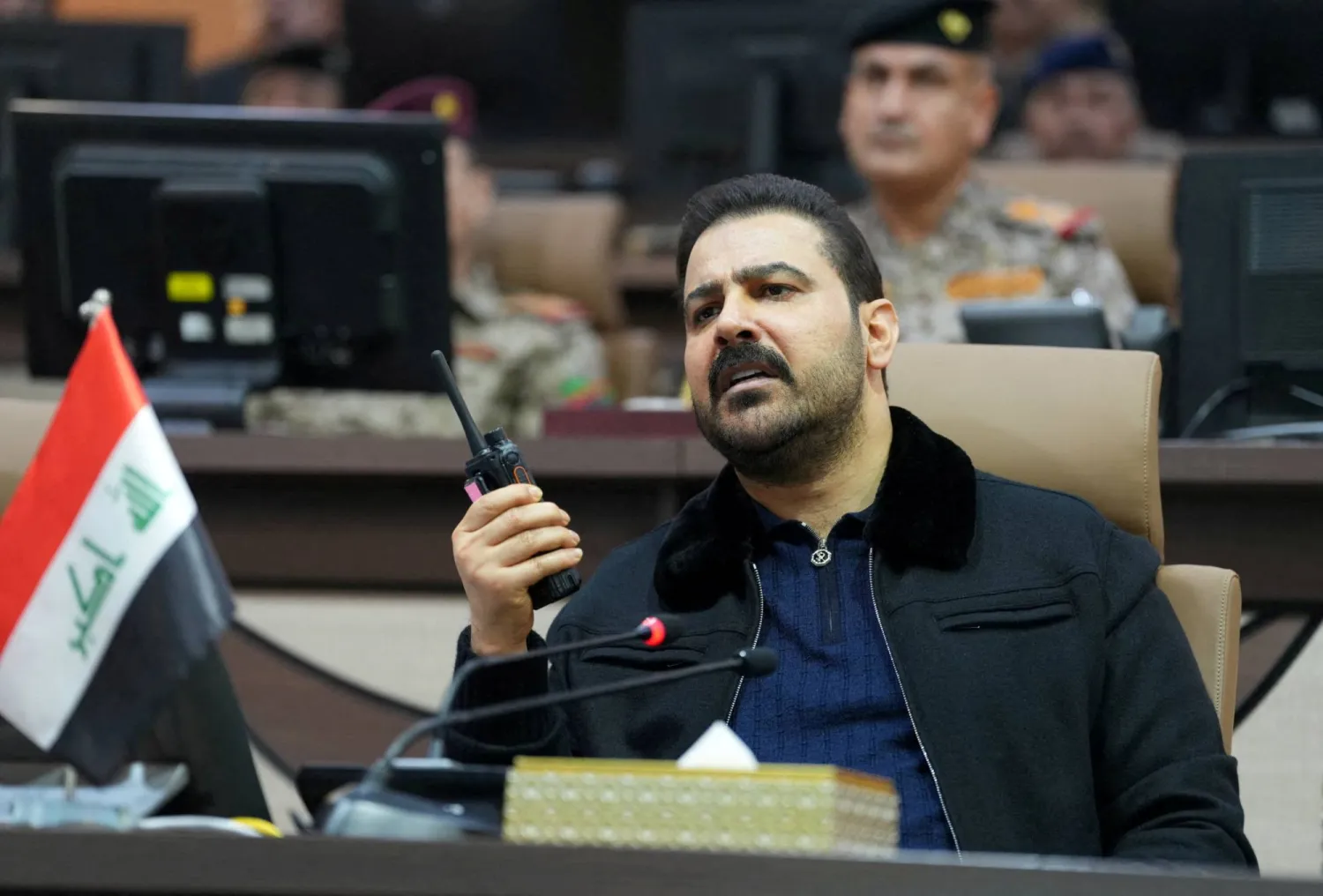
Iraqi Prime Minister Ali al-Zaidi speaks by radio from Baghdad to Iraqi security forces deployed in Jurf al-Sakhar, Iraq, November 20,2026. (Iraqi Prime Minister Media Office/Handout via Reuters)
TT

Iraqi Forces Enter Jurf al-Sakhar After 12 Years of Kataib Hezbollah Control

Iraqi Prime Minister Ali al-Zaidi speaks by radio from Baghdad to Iraqi security forces deployed in Jurf al-Sakhar, Iraq, November 20,2026. (Iraqi Prime Minister Media Office/Handout via Reuters)

Iraqi security forces began deploying in Jurf al-Sakhar, south of Baghdad, on Friday after nearly 12 years of control by the Iran-backed Kataib Hezbollah armed faction, under government arrangements to reorganize security responsibilities and place the area under a military command reporting to the commander-in-chief of the armed forces.

Prime Minister Ali al-Zaidi, who is also commander-in-chief of the armed forces, told troops stationed in the area that the drive to assert state authority across Iraq had begun there, stressing that the government's position was firm: "No weapons outside state authority, no weapons but Iraq's, and no flag above its own."

Al-Zaidi's office said in a statement that he had monitored operations and troop movements to replace military units in Jurf al-Nasr, in the Babil province, from the headquarters of the commander-in-chief's office.

Kataib Hezbollah denies withdrawal

While the government announced the deployment of security forces to assert state authority, Kataib Hezbollah denied withdrawing from the area.

A political source in Baghdad said the conflicting accounts reflected how each side was presenting developments to its supporters. The more likely scenario, the source said, was that Kataib Hezbollah would retain a limited presence at sites it considered important, while the new military command assumed overall responsibility for the area.
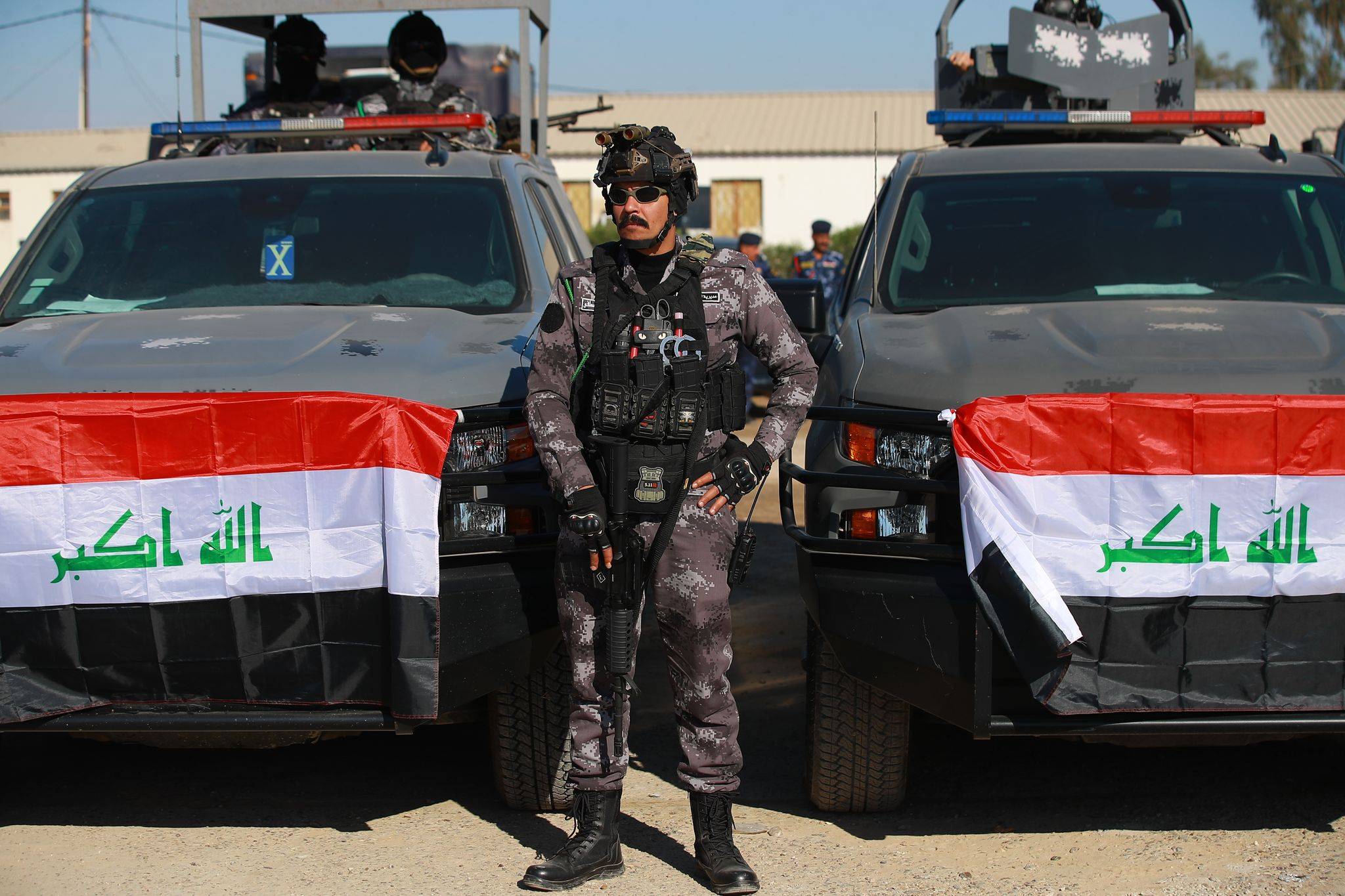
20 November 2026, Iraq, Jurf al-Sakhar: Iraqi security forces take up positions in Jurf al-Sakhar, in the Babil province, south of Baghdad, during the establishment of a new military command center in the area. (dpa)

Security and military sources, however, said three Kataib Hezbollah brigades had left their positions in Jurf al-Sakhar for locations south and west of Baghdad.

A senior Iraqi security and political official told Asharq Al-Awsat the developments marked a shift in the balance of control.

"The equation has changed in this area, and numerous measures will follow to establish state authority throughout Iraq," the official said.

The official said understandings reached between state institutions and Kataib Hezbollah through domestic and regional mediation provided for a phased withdrawal of the group's fighters, with two battalions leaving each day beginning Friday, when government forces first entered the area.

The process would continue for a month to allow the entire area to be secured, the official said.

The details of the understandings and the timetable for their implementation could not be independently verified.

Security forces began deploying on Friday morning as a new military command headquarters opened to oversee security and military operations.

Reviewing residents' records

An Iraqi security source told Asharq Al-Awsat the new command would also oversee logistical arrangements and public services, verify information about people currently in the area and review records of displaced residents to distinguish those wanted by the judiciary from civilians forced from their homes.

The government's plan includes preparing for the return of displaced residents by ensuring homes are habitable and providing water and electricity, the source said. The measures would take time, however, and no completion date had been set.

A long history of displacement

The latest developments have renewed attention on Jurf al-Sakhar, a predominantly Sunni area that came under the control of armed factions following military operations against ISIS in 2014.

A Sunni Iraqi politician, who previously served in the security establishment, said the government's measures appeared to signal a serious effort to address the armed factions' control of the area.

Beyond the mass displacement of residents, the politician said, the area had undergone shifts in the nature of the factions' security and military influence, including their acquisition of weapons, missiles and drones.

The issue should have been addressed through security vetting and the prosecution of those involved in terrorism, rather than holding residents responsible for what had happened in the area, the politician added.

Security arrangements extend to al-Oweisat

In a parallel development, Anbar police units began deploying in al-Oweisat, a village in Amiriyah Fallujah near Jurf al-Sakhar that had also been under Kataib Hezbollah's influence since late 2014.

The village falls administratively within Anbar province, whose police command is responsible for its security.

A local resident told Asharq Al-Awsat that several facilities were located nearby, including sites linked to military manufacturing and a helicopter landing pad built by US forces during operations against armed groups.

The resident said the area had witnessed fighting against al Qaeda and later ISIS before falling under ISIS control in early 2014, when it became a launchpad for attacks on neighboring areas.

It remains unclear whether the new security arrangements in al-Oweisat will follow the same model being implemented in Jurf al-Sakhar.
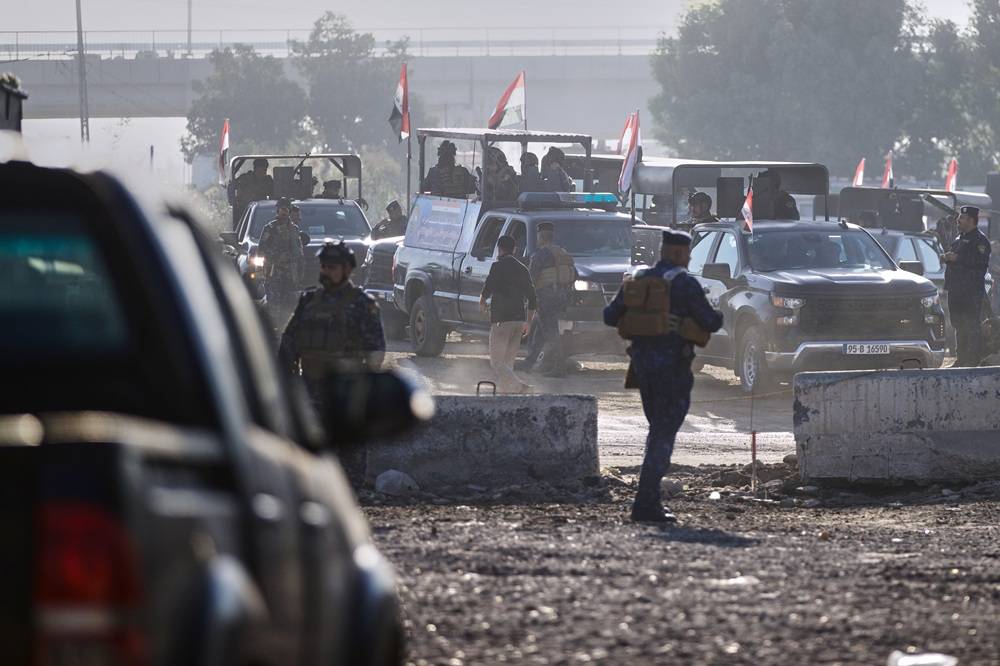
Iraqi security forces deploy as they establish a new command headquarters in Jurf al-Sakhar, a longtime stronghold of the Iran-backed Kataib Hezbollah in Iraq's Babil province, south of Baghdad, Friday, Nov. 20, 2026. (AP)

Political visits restricted

As part of efforts to manage the transition, an Iraqi source said al-Zaidi had temporarily barred politicians from entering Jurf al-Sakhar to allow security agencies to complete deployments, vetting and administrative and logistical procedures without political or media interference.

Information obtained by Asharq Al-Awsat indicates that the government intends to examine additional issues as part of its efforts to reorganize the situation in Jurf al-Sakhar.

These include reviewing funding sources and economic activities linked to armed factions, as well as investigating the use of oil resources and revenues from transporting crude within Iraq and abroad.

Other matters under consideration include previous reports that electricity supplies in the area were used to operate cryptocurrency mining farms. The outcome of investigations into those allegations remains unclear.

The information also points to plans to investigate abuses committed during successive periods of control by al-Qaeda, ISIS and armed factions, as well as the fate of people who went missing during those years, including protesters who took part in demonstrations in 2016 and 2019.

The potential investigations also cover workshops developing short- and medium-range missiles and facilities manufacturing drones.


Iraqi Forces Enter Jurf al-Sakhar After 12 Years of Kataib Hezbollah Control

Iraqi Prime Minister Ali al-Zaidi speaks by radio from Baghdad to Iraqi security forces deployed in Jurf al-Sakhar, Iraq, November 20,2026. (Iraqi Prime Minister Media Office/Handout via Reuters)
TT

Iraqi Forces Enter Jurf al-Sakhar After 12 Years of Kataib Hezbollah Control

Iraqi Prime Minister Ali al-Zaidi speaks by radio from Baghdad to Iraqi security forces deployed in Jurf al-Sakhar, Iraq, November 20,2026. (Iraqi Prime Minister Media Office/Handout via Reuters)

Iraqi security forces began deploying in Jurf al-Sakhar, south of Baghdad, on Friday after nearly 12 years of control by the Iran-backed Kataib Hezbollah armed faction, under government arrangements to reorganize security responsibilities and place the area under a military command reporting to the commander-in-chief of the armed forces.

Prime Minister Ali al-Zaidi, who is also commander-in-chief of the armed forces, told troops stationed in the area that the drive to assert state authority across Iraq had begun there, stressing that the government's position was firm: "No weapons outside state authority, no weapons but Iraq's, and no flag above its own."

Al-Zaidi's office said in a statement that he had monitored operations and troop movements to replace military units in Jurf al-Nasr, in the Babil province, from the headquarters of the commander-in-chief's office.

Kataib Hezbollah denies withdrawal

While the government announced the deployment of security forces to assert state authority, Kataib Hezbollah denied withdrawing from the area.

A political source in Baghdad said the conflicting accounts reflected how each side was presenting developments to its supporters. The more likely scenario, the source said, was that Kataib Hezbollah would retain a limited presence at sites it considered important, while the new military command assumed overall responsibility for the area.

20 November 2026, Iraq, Jurf al-Sakhar: Iraqi security forces take up positions in Jurf al-Sakhar, in the Babil province, south of Baghdad, during the establishment of a new military command center in the area. (dpa)

Security and military sources, however, said three Kataib Hezbollah brigades had left their positions in Jurf al-Sakhar for locations south and west of Baghdad.

A senior Iraqi security and political official told Asharq Al-Awsat the developments marked a shift in the balance of control.

"The equation has changed in this area, and numerous measures will follow to establish state authority throughout Iraq," the official said.

The official said understandings reached between state institutions and Kataib Hezbollah through domestic and regional mediation provided for a phased withdrawal of the group's fighters, with two battalions leaving each day beginning Friday, when government forces first entered the area.

The process would continue for a month to allow the entire area to be secured, the official said.

The details of the understandings and the timetable for their implementation could not be independently verified.

Security forces began deploying on Friday morning as a new military command headquarters opened to oversee security and military operations.

Reviewing residents' records

An Iraqi security source told Asharq Al-Awsat the new command would also oversee logistical arrangements and public services, verify information about people currently in the area and review records of displaced residents to distinguish those wanted by the judiciary from civilians forced from their homes.

The government's plan includes preparing for the return of displaced residents by ensuring homes are habitable and providing water and electricity, the source said. The measures would take time, however, and no completion date had been set.

A long history of displacement

The latest developments have renewed attention on Jurf al-Sakhar, a predominantly Sunni area that came under the control of armed factions following military operations against ISIS in 2014.

A Sunni Iraqi politician, who previously served in the security establishment, said the government's measures appeared to signal a serious effort to address the armed factions' control of the area.

Beyond the mass displacement of residents, the politician said, the area had undergone shifts in the nature of the factions' security and military influence, including their acquisition of weapons, missiles and drones.

The issue should have been addressed through security vetting and the prosecution of those involved in terrorism, rather than holding residents responsible for what had happened in the area, the politician added.

Security arrangements extend to al-Oweisat

In a parallel development, Anbar police units began deploying in al-Oweisat, a village in Amiriyah Fallujah near Jurf al-Sakhar that had also been under Kataib Hezbollah's influence since late 2014.

The village falls administratively within Anbar province, whose police command is responsible for its security.

A local resident told Asharq Al-Awsat that several facilities were located nearby, including sites linked to military manufacturing and a helicopter landing pad built by US forces during operations against armed groups.

The resident said the area had witnessed fighting against al Qaeda and later ISIS before falling under ISIS control in early 2014, when it became a launchpad for attacks on neighboring areas.

It remains unclear whether the new security arrangements in al-Oweisat will follow the same model being implemented in Jurf al-Sakhar.

Iraqi security forces deploy as they establish a new command headquarters in Jurf al-Sakhar, a longtime stronghold of the Iran-backed Kataib Hezbollah in Iraq's Babil province, south of Baghdad, Friday, Nov. 20, 2026. (AP)

Political visits restricted

As part of efforts to manage the transition, an Iraqi source said al-Zaidi had temporarily barred politicians from entering Jurf al-Sakhar to allow security agencies to complete deployments, vetting and administrative and logistical procedures without political or media interference.

Information obtained by Asharq Al-Awsat indicates that the government intends to examine additional issues as part of its efforts to reorganize the situation in Jurf al-Sakhar.

These include reviewing funding sources and economic activities linked to armed factions, as well as investigating the use of oil resources and revenues from transporting crude within Iraq and abroad.

Other matters under consideration include previous reports that electricity supplies in the area were used to operate cryptocurrency mining farms. The outcome of investigations into those allegations remains unclear.

The information also points to plans to investigate abuses committed during successive periods of control by al-Qaeda, ISIS and armed factions, as well as the fate of people who went missing during those years, including protesters who took part in demonstrations in 2016 and 2019.

The potential investigations also cover workshops developing short- and medium-range missiles and facilities manufacturing drones.


Cairo: Saudi Arabia’s Security Is an Integral Part of Egyptian and Arab National Security

An aerial view of a road and Nile River surrounded by buildings and houses is pictured through a plane window, in Cairo, Egypt, November 6, 2024. (Reuters)
TT

Cairo: Saudi Arabia’s Security Is an Integral Part of Egyptian and Arab National Security

An aerial view of a road and Nile River surrounded by buildings and houses is pictured through a plane window, in Cairo, Egypt, November 6, 2024. (Reuters)

Egypt strongly condemned on Friday the ongoing attacks targeting Saudi Arabia, the latest of which were strikes on civilian and economic facilities in the capital, Riyadh, which caused material damage to the King Abdullah Financial District.

Cairo said that "this constitutes a flagrant violation of the rules of international law and international humanitarian law, an unacceptable assault on the sovereignty of the sisterly Kingdom of Saudi Arabia, and a threat to its security, stability, and the safety of its citizens."

In a Foreign Ministry statement issued Friday, Egypt underscored "the need for an immediate halt to these irresponsible acts that undermine regional security and stability," underlining "its categorical rejection of continued attacks targeting the Kingdom's territory."

Cairo renewed its full solidarity and steadfast support for the Kingdom in all measures it takes to protect its security, sovereignty, and the safety of its citizens and residents, adding that "Saudi Arabia’s security is an integral part of Egyptian and Arab national security."


Abdelatty: We Are Working to Hold Hamas to Its Commitments on Confining Weapons

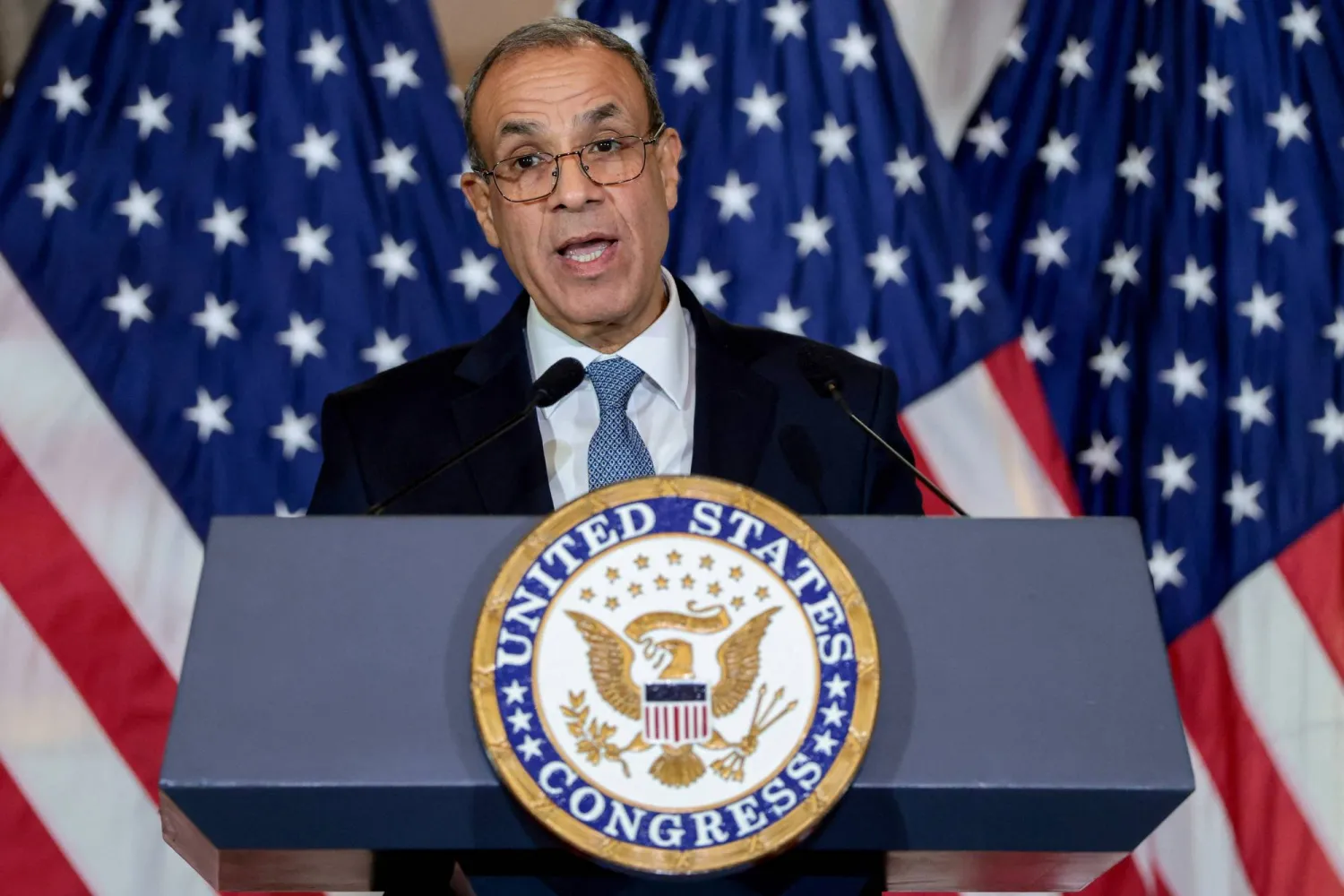
 Egyptian Minister of Foreign Affairs, Dr. Badr Abdelatty speaks at a Congressional Gold Medal in honor of Anwar Sadat, former President of Egypt, at the US Capitol in Washington, US, DC, November 18, 2026. (Reuters)
Egyptian Minister of Foreign Affairs, Dr. Badr Abdelatty speaks at a Congressional Gold Medal in honor of Anwar Sadat, former President of Egypt, at the US Capitol in Washington, US, DC, November 18, 2026. (Reuters)
TT

Abdelatty: We Are Working to Hold Hamas to Its Commitments on Confining Weapons

 Egyptian Minister of Foreign Affairs, Dr. Badr Abdelatty speaks at a Congressional Gold Medal in honor of Anwar Sadat, former President of Egypt, at the US Capitol in Washington, US, DC, November 18, 2026. (Reuters)
Egyptian Minister of Foreign Affairs, Dr. Badr Abdelatty speaks at a Congressional Gold Medal in honor of Anwar Sadat, former President of Egypt, at the US Capitol in Washington, US, DC, November 18, 2026. (Reuters)

Egyptian Foreign Minister Dr. Badr Abdelatty stressed, in exclusive statements to Asharq Al-Awsat, that Cairo is pressing ahead with efforts to push Palestinian factions, foremost among them Hamas, toward implementing understandings on confining and handing over weapons.

He stressed that transitioning to the second phase of US President Donald Trump's plan to end the war in Gaza requires all parties to honor their commitments, primarily completing the Israeli withdrawal and ensuring the flow of humanitarian aid.

Speaking on the sidelines of his visit to Washington and meetings with senior US lawmakers, Abdelatty said: "The Egyptian side has put forward numerous ideas, and significant efforts are underway regarding the implementation of Palestinian factions' commitments, including Hamas, to confine and surrender weapons."

He added that this step represents vital progress in resolving one of the most complex issues in the arrangements for the next phase of Trump's Gaza plan.

He dismissed suggestions of any maneuvering by Palestinian factions regarding their pledge to hand over weapons.

"We are focusing on what was previously agreed upon in the Cairo meetings, and Hamas leaders have stated they favor confining and handing over weapons," he said, hoping for a "positive response from the Israeli government."

Abdelatty’s remarks underscore Egypt's stance and its push to translate broad political understandings into actionable commitments, particularly on the weapons file, which remains one of the thorniest obstacles to post-war governance and security arrangements in Gaza.

Moving forward requires a clear timeline for handing over the arms and an agreed-upon mechanism to oversee the process, while Israel’s position remains a decisive factor in determining whether these pledges become concrete steps on the ground.

Displacement is a ‘red line’

Abdelatty stressed that Egyptian efforts to implement Trump's plan do not signal any shift in Cairo's core principles regarding the Palestinian cause.

Egypt remains steadfast in supporting the Palestinians' right to self-determination and an independent state with East Jerusalem as its capital, rejecting any attempts to force them off their land, he added.

"Egypt’s positions are well-known and unwavering: full support for the Palestinian people until they secure all their legitimate rights, including self-determination and the establishment of an independent state with East Jerusalem as its capital," he told Asharq Al-Awsat.

"This is our stance and we will not deviate from it. Palestinians have the right to remain on their land; we will not accept displacement, as this is a red line for Egyptian foreign policy."

These assurances reflect Cairo's determination to separate security arrangements concerning factional weapons from the broader political track, which it insists must culminate in an independent Palestinian state.

Egypt is also working to ensure that talks over security arrangements do not become a substitute for addressing political and humanitarian priorities, chiefly future governance in Gaza, reconstruction, and the residents' right to stay on their land.

Outreach in Congress

Abdelatty’s remarks came during a visit to the US capital featuring a series of meetings with Republican and Democratic congressional leaders, aimed at strengthening Cairo's partnership with Washington and rallying support for implementing the second phase of Trump's Gaza plan. Discussions also tackled regional crises spanning Iran, Sudan, and the Red Sea.

During a meeting with US House Speaker Mike Johnson, he underscored the importance of strategic ties between Cairo and Washington and Congress's role in backing bilateral cooperation.

He stressed the need to complete the Israeli withdrawal from Gaza and ensure humanitarian aid delivery, while also supporting diplomatic efforts to resolve the crisis with Iran and safeguarding freedom of navigation in the Red Sea and the Bab al-Mandeb Strait.

Abdelatty also met with Republican Senator Jim Risch, Chairman of the Senate Foreign Relations Committee, reviewing Egyptian efforts to de-escalate regional tensions, developments in Gaza and the West Bank, and the Iranian crisis, as well as avenues to boost bilateral economic, trade, and investment cooperation.

In a post-meeting statement, Risch affirmed the importance of the partnership with Egypt in addressing regional crises, pointing specifically to the ongoing conflict in Sudan, working toward lasting peace in the Middle East, and strengthening bilateral ties.

Abdelatty held talks with Rep. Gregory Meeks, the ranking Democrat on the House Foreign Affairs Committee, Democratic Senator Jeff Merkley, and Democratic Rep. Brad Schneider. Their discussions centered on developments in the Middle East and the Horn of Africa, boosting political and economic cooperation, and preventing regional confrontations from widening.

Coordination regarding the Muslim Brotherhood

Separately, Abdelatty revealed to Asharq Al-Awsat that Egypt is coordinating with the US and European countries on designating the Muslim Brotherhood as a terrorist organization, stressing that Cairo's position rests on national judicial rulings that it is moving forward to enforce.

"This is a principled stance; rulings have been issued by the Egyptian judiciary - known for its independence and integrity - and these rulings designating the group as terrorist will be enforced," he said.

"These are decisions made at the national level, and there is certainly coordination between Egypt and countries worldwide, particularly Europe and the United States, to reinforce this designation."

Abdelatty’s comments carry weight given shifts in US policy toward the Muslim Brotherhood over the past year and moves within the Trump administration to expand legal and financial measures against the group's branches and affiliated networks.

The FM did not disclose details regarding the coordination mechanisms or the specific European countries involved, nor did he clarify whether consultations focus on intelligence sharing, tracking funding networks, or pushing for further legal designations.