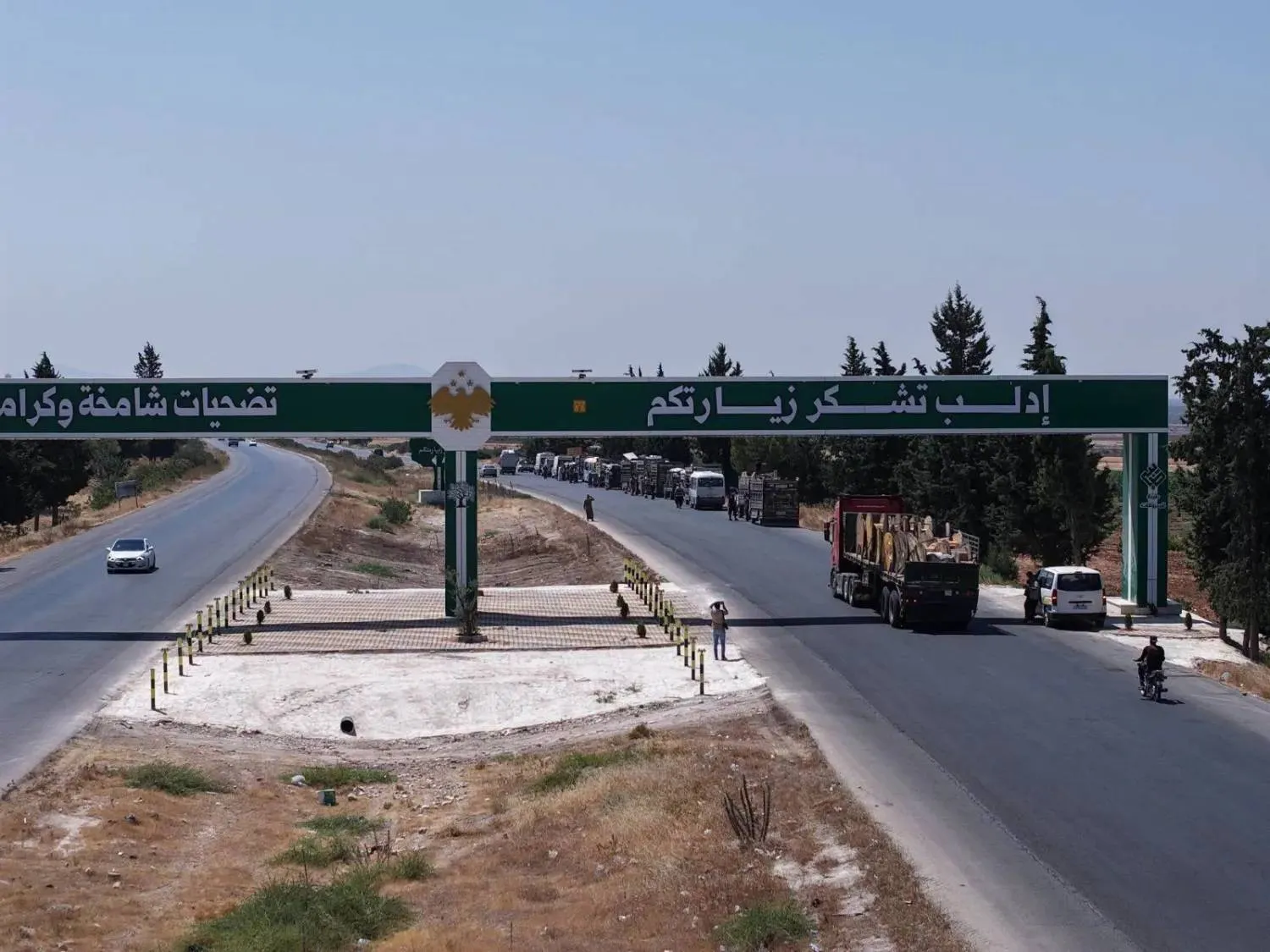

A new voluntary return convoy departed from displacement camps in northwestern Syria on Sunday, carrying about 106 families bound for the town of Kafr Zita in northern Hama province. Meanwhile, demining operations began along the Zarkan–Tal Tamr road in northeastern Syria to pave way for the return of displaced residents to the Ras al-Ain countryside in Hasakah province.
The moves are part of the “Syria Without Camps” initiative, overseen and implemented by the Ministry of Emergency and Disaster Management in coordination with the Social Affairs Directorates in Idlib and Hama, the UN Refugee Agency (UNHCR), and humanitarian organizations.
The initiative seeks to support displaced Syrians returning to their hometowns, strengthen stability in local communities, and ultimately end internal displacement through the implementation of Decree No. 59, which provides for the rehabilitation of war-damaged areas and the creation of conditions conducive to safe returns.
Speaking to the state-run SANA news agency, Manaf Hammam, UNHCR’s camp coordination and management officer, explained that the convoy was part of the agency’s voluntary return program carried out in coordination with local authorities. Families are being transported with their belongings and provided with non-food relief items to ensure a safe and dignified return, he added, stressing the importance of meeting basic needs to help returnees resettle.
Mohammed Bakir, director of the Northern Social Affairs and Labor Department, said the directorate will continue facilitating the return of about 700 families to the Hama and Idlib countryside beginning early next week, at a rate of roughly 100 families a day until all convoys have been completed.
One returnee, Mohammed Abdullah Qasim, described his joy at returning to his hometown after 14 years of forced displacement, a period he said was marked by hardship, suffering, and oppression. Five members of his family were killed during those years, and he credited the availability of aid and support with helping him decide to come home.
Several voluntary return convoys departed northern Syria last month. On July 29, about 98 families returned to Kafr Nabudah in northern Hama. On July 21, another convoy carrying more than 300 families left camps in Idlib for towns and villages in the Idlib and Hama countryside, while a convoy of 77 families departed on July 16.
Elsewhere in Syria, specialized teams have begun clearing landmines and unexploded ordnance along the Zarkan–Tal Tamr axis in the Ras al-Ain countryside. According to local sources cited by the Hasakah Observatory, the work includes surveying former front-line areas and removing explosive remnants of war to secure roads and farmland.
The sources noted that the operation is intended to facilitate the return of thousands of displaced people who fled the Ras al-Ain countryside during years of fighting, particularly from villages between Zarkan and Tal Tamr. Residents hope it will accelerate returns while paving the way for the restoration of basic services and war-damaged infrastructure.
Separately, Ahmad al-Hilali, deputy governor of Hasakah, previously announced that a new convoy of about 1,000 families from Afrin would depart from Qamishli on July 16 under the supervision of the Presidential Team and Internal Security Forces. The convoy was described as the last group of Afrin residents still living in Hasakah province.
In May, Nathalie Fustier, the UN Resident and Humanitarian Coordinator in Syria, announced the organization’s readiness to support the “Zero Tents” vision and assist displaced families with reconstruction and their return home, according to a post by the UN mission in Syria on X following her meeting with Aleppo Governor Azzam al-Gharib.