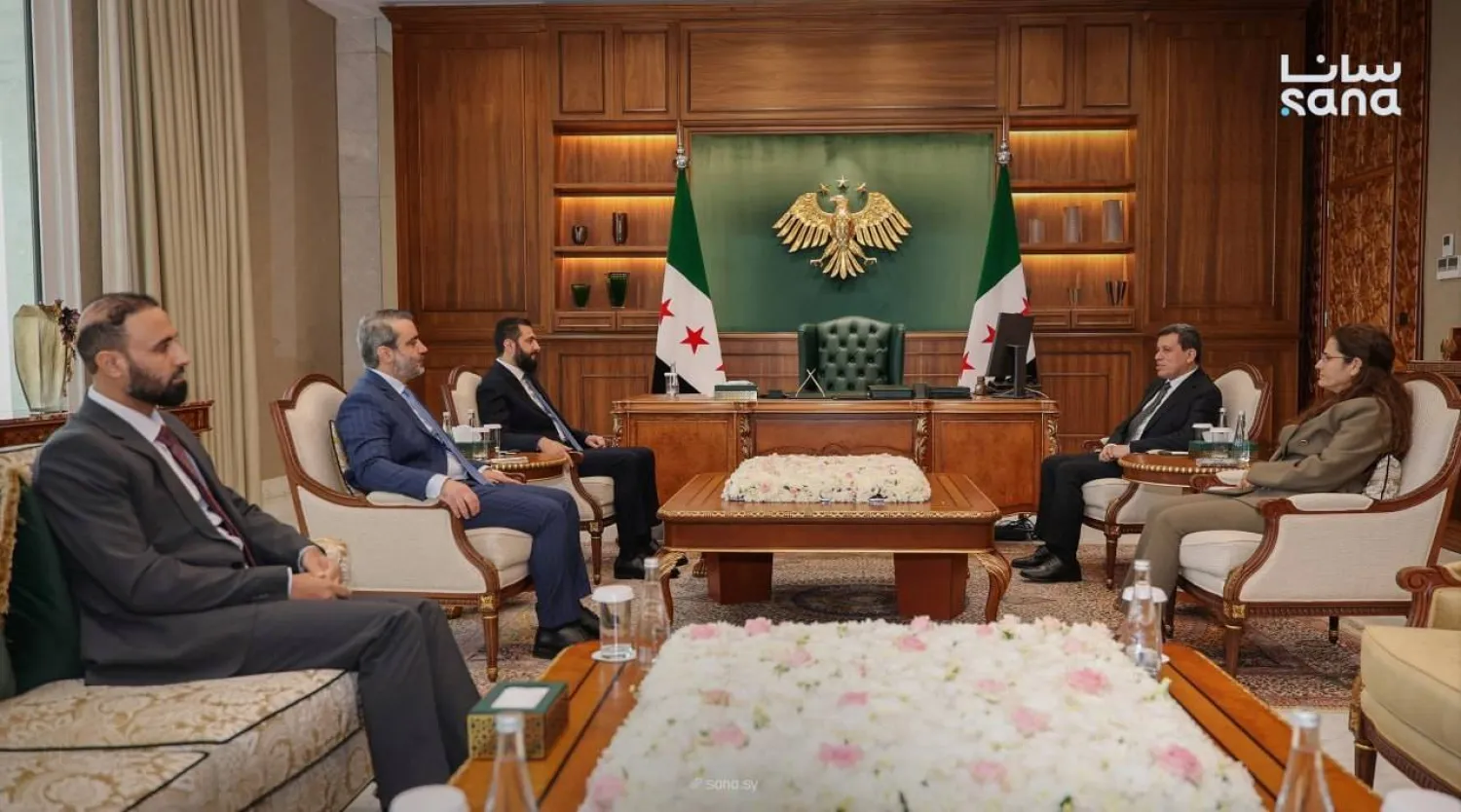

Syrian President Ahmed al-Sharaa and head of the Kurdish Syrian Democratic Forces (SDF) Mazloum Abdi held talks on Tuesday on merging the SDF with the Syrian armed forces and returning displaced Kurds back to their homes.
The meeting in Damascus was attended by Foreign Minister Asaad al-Shaibani and head of foreign relations for the “Autonomous Administration of North and East Syria” Ilham Ahmed. It took place a day after Iraqi Kurdistan Region President Nechirvan Barzani met with Sharaa in Damascus.
Kurdish sources close to the SDF expressed to Asharq Al-Awsat their optimism over the latest talks, hoping they will bridge divides over the remaining challenges related to the merger of Kurdish forces in line with the January 2026 agreement between the Syrian government and SDF.
Tuesday’s discussion focused on the hurdles impeding the political and military merger, said Abdel-Karim Omar, the Kurdish authorities’ representative in Damascus.
“Negotiations are underway to reach a national framework that secures Syria’s unity and stability and preserves the rights of all Syrians,” he told local media.
The Kurdish sources said that Barzani’s visit to Damascus created a positive environment ahead of Tuesday’s talks, hoping that it will help overcome the remaining hurdles.
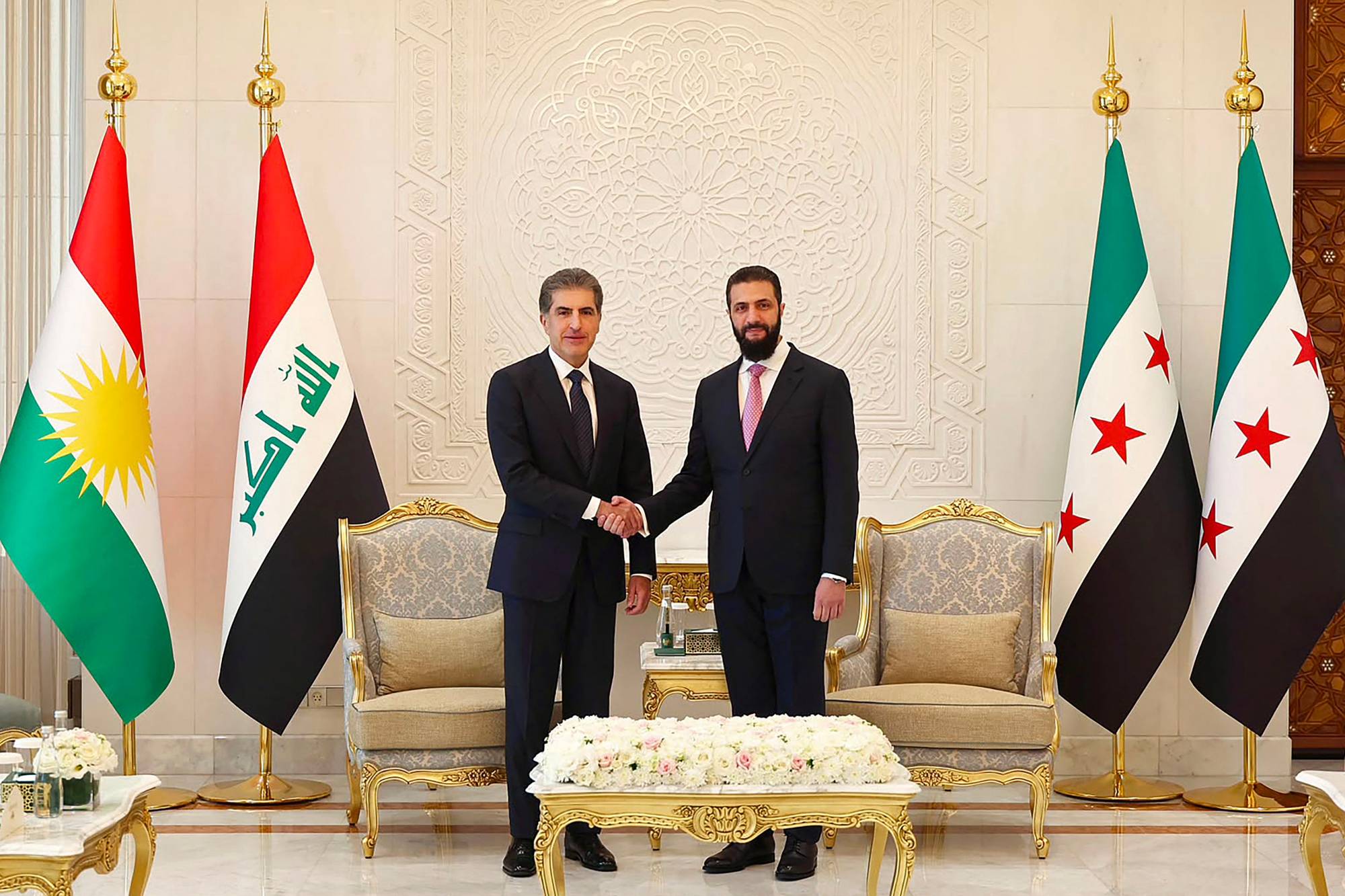
In a post on the X platform after his visit, Barzani said: “I underscored our support for a stable and united Syria where the rights of all ethnic and religious groups are protected.”
Abdi had described Barzani’s visit as “historic”, saying on X that he “trusted that it will positively impact stability in Syria and a solution to the Kurdish issue in the region.”
Despite the progress in merging the Kurdish forces with Syria’s armed forces, hurdles remain over the Women's Protection Units.
Spokesperson for the units Roken Jamal said proposals include joining the units as an independent counter-terrorism force in the Syrian Interior Ministry.
More talks will be held in Damascus to further discuss the issue, reported Kurdish media.
Other pending files include teaching in the Kurdish language in Kurdish regions and the return of the displaced, as well as services, administrative and humanitarian issues.