



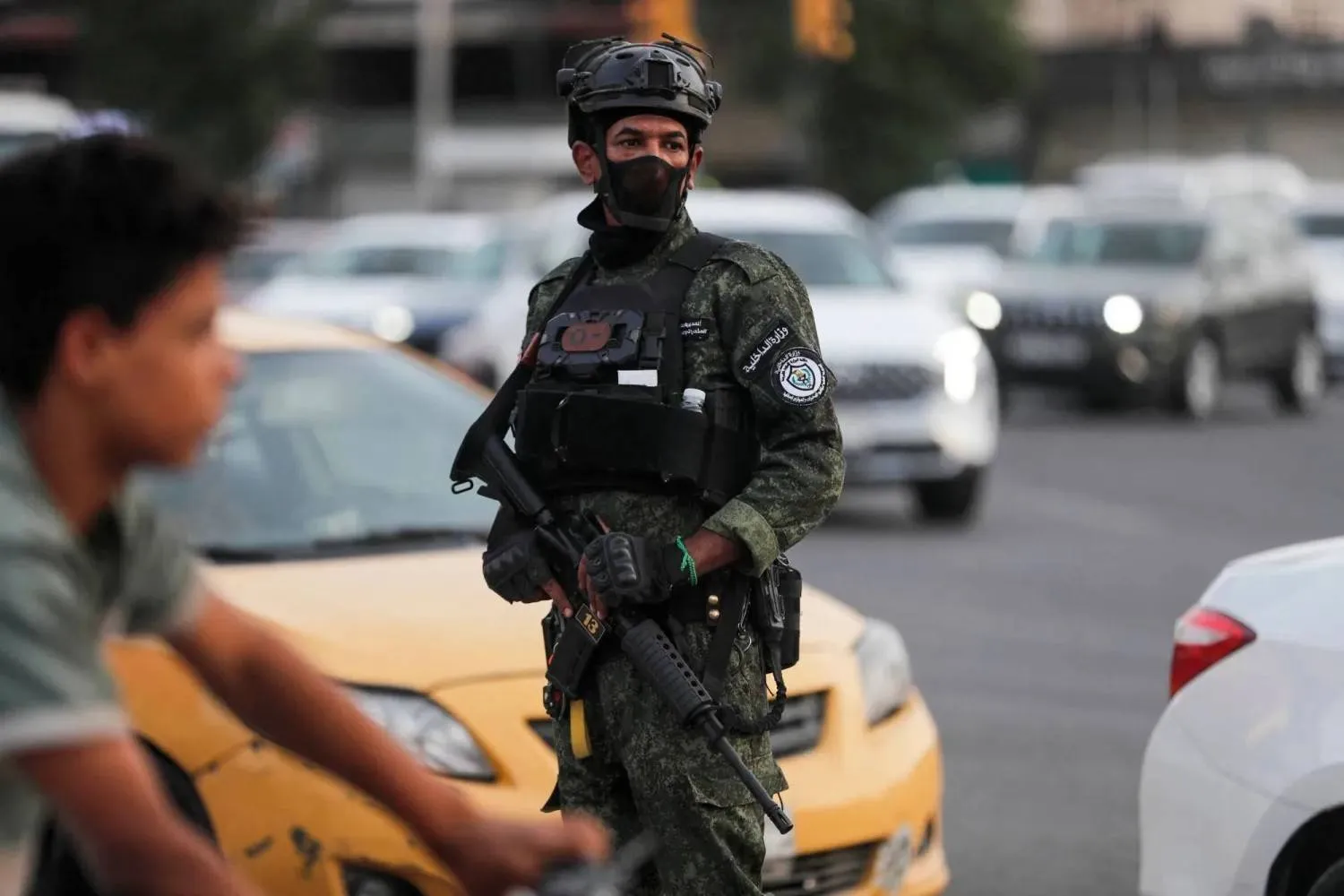

An Iraqi military spokesman said security forces were ready to stop attacks on neighboring countries from Iraqi territory, as Baghdad presses ahead with a plan to bring all weapons under state control by September 30, which is also the deadline for ending the mission of the US-led international coalition.
The comments came amid reports that Iraqi forces had deployed to unoccupied areas near the country’s borders to prevent them from being used as launch points for attacks.
Sabah al-Numan, spokesman for the commander-in-chief of the armed forces, said in televised remarks that after September 30 there would be no weapons outside state control and no military decisions beyond government authority.
“Iraq’s borders with neighboring countries are fully secured,” al-Numan said, adding that Prime Minister Ali al-Zaidi rejected the politicization of security issues or political interference in the work of security institutions.
Al-Numan also said Iraq currently had no partnership with Iranian advisers.
Iran had said through state media that officers from the Iranian Revolutionary Guard Corps were killed in airstrikes by the United States and Saudi Arabia against Iran-aligned militias on Iraqi territory.
Saudi Defense Ministry spokesman Major General Turki al-Malki said the strikes were in response to drone attacks intercepted and destroyed on July 27 and 28 before they could target oil facilities in the Eastern Region and Riyadh region.
Al-Numan said any threat launched from Iraqi territory against neighboring countries would be considered an illegal act and those responsible would face firm legal action.
He said the decision to go to war was a sovereign one held by PM al-Zaidi in his capacity as also Commander-in-Chief. He added that no party would be allowed to dictate decisions to the government.
Security gaps
Meanwhile, security forces went on alert in several parts of Baghdad, with field and political sources saying the deployments were prompted by information about possible activity by armed factions.
Reports in Baghdad on Thursday evening said al-Zaidi had ordered the Counter-Terrorism Service to redeploy, while all security forces were instructed to raise their combat readiness.
The moves came hours after Supreme Judicial Council President Faiq Zidan held separate meetings with Lieutenant General Abdul Amir al-Shammari, director of the Office of the Commander-in-Chief of the Armed Forces, and Lieutenant General Zaid Houshi, head of the Counter-Terrorism Service. No details of the meetings were announced.
Security sources said the deployments were intended to close security gaps, with forces focusing on desert areas along Iraq’s borders with neighboring countries.
By early Friday, field sources said security forces had returned to their normal positions after receiving information that armed factions had either backed down or postponed their plans.
Government stance
Politically, people close to PM al-Zaidi said he was increasingly seeking to strengthen the authority of Iraq’s security and military institutions through appointments within the Office of the Commander-in-Chief of the Armed Forces.
The office appears to be taking on a broader role in place of the Joint Operations Command as part of an effort to tighten control and unify security decision-making.
Political sources said al-Zaidi was seeking to retain control of the defense and interior ministries, which he currently oversees in an acting capacity, for as long as possible, particularly as political forces remain divided over vacant cabinet posts.
The drive to bring weapons under state control, however, still faces political and security challenges, leading experts to anticipate sharply different outcomes once the September deadline passes.
Public debate in Iraq has increasingly centered on the fate of the plan, which is openly opposed by Iran-aligned factions including Kataib Hezbollah, Harakat al-Nujaba and Kataib Sayyid al-Shuhada.
Experts say that opposition raises the possibility of military friction between the factions and security forces.
Hussein Allawi, a security affairs expert, told Asharq Al-Awsat that the Iraqi government would continue political dialogue with the factions even after the deadline, with support from allied political forces.
But he said the authorities would also use “all tools of law enforcement,” describing such measures as normal for any state seeking to preserve stability and civil peace and confront internal or external threats.
“It is too early to speak of a confrontation between the government and the armed factions because of shifts in the regional conflict and the domestic balance of power,” Allawi said.
“But what happens after September 30 will depend on the behavior of the armed factions.”
Ghaleb al-Daami, a media professor at Mustansiriyah University, told Asharq Al-Awsat that a confrontation could not be ruled out, but said that if one took place, it was unlikely to be intense or prolonged because the factions’ ability to use their traditional tools had diminished.
Al-Daami pointed to the ruling State Administration Coalition’s latest stance, describing it as the “final blow to the factions and uncontrolled weapons” after the coalition said anyone carrying arms would be dealt with under the counter-terrorism law.
Al-Zaidi chaired the coalition meeting on Wednesday. Present were the president of Iraq, president of the Kurdistan Region of Iraq, parliament speaker and president of the Supreme Judicial Council.


