


How Will Hamas Handle the Requirements of the Legislative Elections?

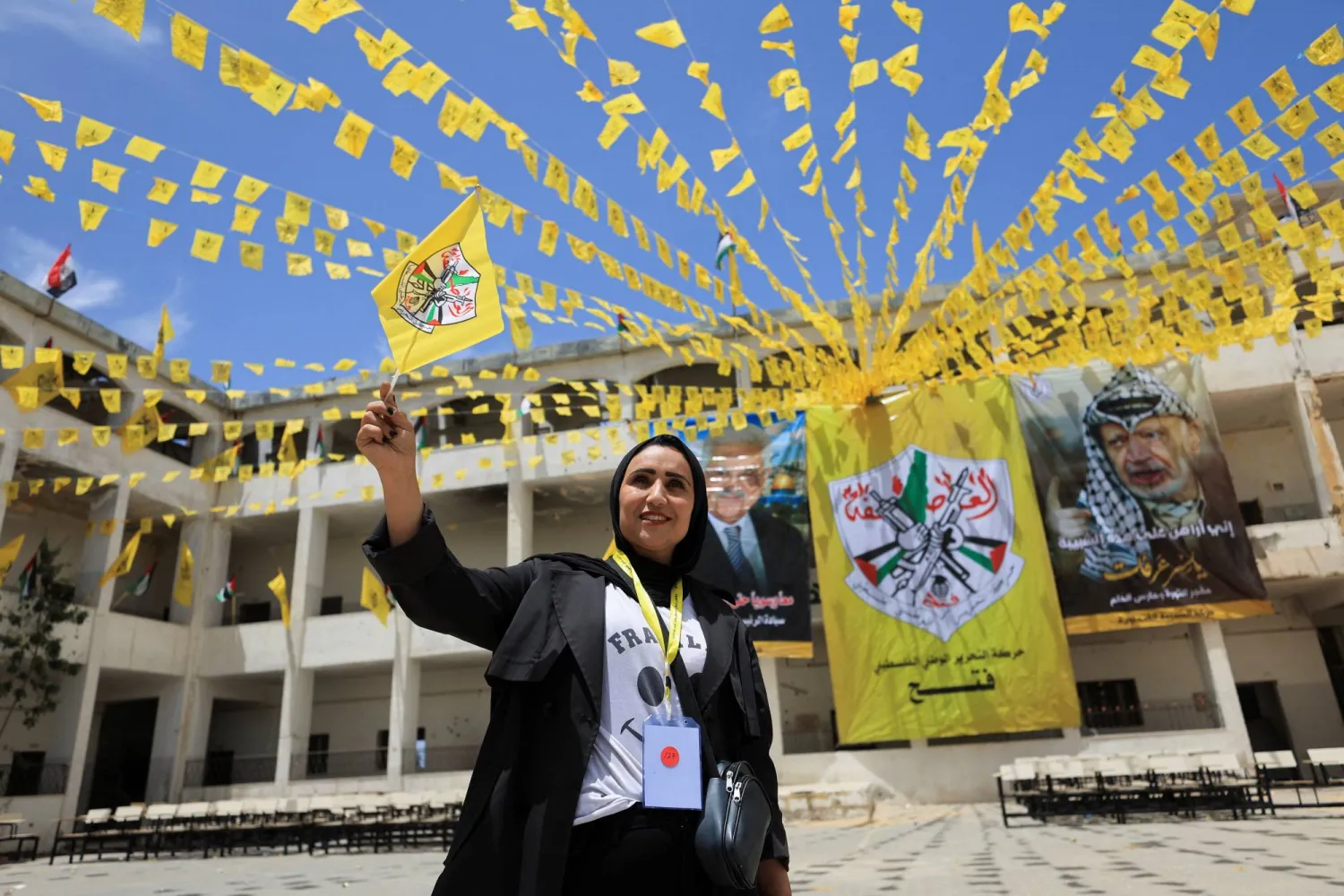
A member of the Fatah movement attends the 8th General Conference of Fatah, at Al-Azhar University in Gaza City, May 14, 2026. REUTERS/Dawoud Abu Alkas
TT

How Will Hamas Handle the Requirements of the Legislative Elections?

A member of the Fatah movement attends the 8th General Conference of Fatah, at Al-Azhar University in Gaza City, May 14, 2026. REUTERS/Dawoud Abu Alkas

With Hamas announcing its intention to contest the legislative elections, scheduled for November 28, as stipulated in a Palestinian presidential decree, the movement faces a host of questions over its ability to navigate the political requirements of the post-war phase in the Gaza Strip.

This will be Hamas's second participation in legislative elections following the last vote in 2006. The war has fundamentally altered the reality of Palestinians and triggered further conflicts in several countries across the region.

Perhaps the most pressing question in recent days is how Hamas will deal with the amendments introduced by Palestinian President Mahmoud Abbas to the election law, particularly the requirement that electoral lists commit to the political program of the Palestine Liberation Organization (PLO), which is recognized as the sole legitimate representative of the Palestinian people.

That program includes recognition of relevant international legitimacy resolutions, including recognition of Israel and the renunciation of violence, along with other conditions the movement had previously rejected.

A Hamas political source told Asharq Al-Awsat that the movement is in contact with all factions to reach a comprehensive consensus on the elections and ensure the participation of all parties without imposing unilateral policies in determining the political objectives of the national framework.

Asked about Hamas's plans for overcoming the dispute over the PLO's political program, the source said there are legal and political options, alongside national dialogue, for reaching agreement on a course of action that could circumvent such a requirement. The source added that Hamas is committed to reforming the PLO and the Palestinian National Council before joining them, so that their programs are brought into line with national requirements under the current circumstances.

He noted that messages are being exchanged with Fatah, both directly and indirectly, on a range of national issues, expressing hope that an understanding can be reached that brings Palestinians closer together and steers them toward safety.

The source stressed that the developments in Gaza had increased the popularity of Hamas and the armed factions that share its approach of "resisting the occupation." As a result, the movement is not afraid of electoral competition, even if it loses or remains in opposition. He stressed that Hamas has no intention of returning to power, but wants to be part of the Palestinian political system and put an end to unilateral decision-making on issues of national consequence.

Hossam Badran, a member of Hamas's political bureau, told Asharq Al-Awsat that the principle of imposing political conditions on electoral participation is unacceptable regardless of the wording or substance, because it contradicts the very essence of elections, which is competition among different political programs.

Badran said Hamas is holding consultations and dialogue with various factions as well as emerging electoral lists to agree on a collective mechanism for addressing the issue. He said some parties had already begun, in coordination with Hamas, sending messages to the Palestinian Central Elections Commission, while others are considering turning to the Palestinian judiciary.

"We will follow the matter and reach what is appropriate, but on the basis of participating in the elections," he said.

Fatah in Gaza

A senior Fatah source in the Gaza Strip told Asharq Al-Awsat that President Abbas's decisions regarding the latest amendments would not be reversed, and that they enjoy full support as part of the reform plan adopted by the Palestinian Authority with full Arab and international backing.

According to the source, who requested anonymity, Hamas and any Palestinian faction or entity participating in the forthcoming elections, in which the Gaza Strip will take part under arrangements established by the Central Elections Commission, must comply with the amended laws. He said the decisions were not intended to restrict the participation of any faction, whether affiliated with the PLO or outside it. Rather, their primary objective was to ensure that every future parliamentary force has a clear political program.

Abdel Fattah Doleh, the Fatah spokesman in Ramallah, said any party has the right to participate in the forthcoming elections, a right guaranteed by Palestinian law, which must be observed by every party taking part in the electoral process.

In remarks to Asharq Al-Awsat, Doleh said there have been no genuine direct contacts with Hamas regarding the elections. He noted that Hamas had previously participated in elections and became part of the political system before turning against it and monopolizing power.

He added that Fatah had repeatedly sought, during previous rounds of dialogue, to integrate Hamas into the PLO, but that the movement had raised objections each time.

Doleh stressed that the political system has room for everyone, but said it is essential that anyone participating in it adhere to the PLO's political program, given its status as the sole legitimate representative of the Palestinians. He emphasized that Hamas must align itself with that framework.



US Wants Netanyahu to Condemn Settler Siege in Palestinian Village

Soldiers evacuate Israeli settlers before dismantling their tent in front of one of the three homes belonging to Palestinian families besieged by settlers for six days in Qusra (AP)
TT

US Wants Netanyahu to Condemn Settler Siege in Palestinian Village

Soldiers evacuate Israeli settlers before dismantling their tent in front of one of the three homes belonging to Palestinian families besieged by settlers for six days in Qusra (AP)

The United States wants Israeli Prime Minister Benjamin Netanyahu to publicly condemn a siege imposed by Jewish settlers in a Palestinian village, US and Israeli officials said on Friday, as settlers pressured residents by pitching a new tent before Israeli soldiers arrived and it was taken down.

Settlers have been besieging homes in Qusra in the occupied West Bank for almost a week, trapping Palestinians in an area where rights groups say settlers are mounting a concerted effort to seize more land, further eating into territory where Palestinians aim to establish a state.

The siege has drawn public US criticism: the US Ambassador to Israel, Mike Huckabee — a strong supporter of Jewish settlement in the West Bank — on Thursday condemned settlers besieging a Palestinian home as "Israeli terrorists".

A US official and an Israeli official said on Friday White House officials are pressing Netanyahu to publicly condemn the siege.

Washington began to protest after learning that the home of a Palestinian-American was among those under siege, said the two officials, who spoke on condition of anonymity to describe sensitive discussions, of which they had knowledge.

Netanyahu has not commented on the siege in Qusra. Neither his office nor the White House immediately responded to requests for comment.

Settler violence in the West Bank has risen during the three years since the Hamas-led October 7 attacks on Israel.

Condemning settlers could be politically risky for Netanyahu some two months before an election, potentially upsetting settler voters upon whom parts of his right-wing coalition rely. Opinion polls show Netanyahu could lose power, his security credentials still shaken by the 2023 Hamas attacks.

"We are very afraid," said Aysha Hassan, a Palestinian woman who lives in one of three besieged homes in the village, speaking to Reuters by phone.

"There is nothing new. It's been like this for six days...the settlers are still here."

Hassan said she had seen settlers below the house in the early hours of the morning and shared videos with Reuters showing groups of settlers wandering underneath her home that she said she had taken from her window.

The United Nations has said some 15 Palestinians, including two children, were trapped inside their homes with no water or electricity.

Footage shot by a Palestinian resident trapped in another of the besieged homes and obtained by Reuters showed seven settlers outside, standing near a blue tent. One is seen throwing stones toward the nearby village, as another arrives with chairs.

Israeli army vehicles and soldiers later arrive and the tent is seen collapsed on the ground.

"Israeli civilians erected a tent in the Qusra area, and army soldiers operated to remove it while protecting the local residents," the Israeli military said in a statement, a day after dozens of troops were sent into Qusra and occupied several village homes.

Netanyahu's government, the most right-wing in Israeli history, has spearheaded a rapid expansion of settlements in the West Bank, territory captured by Israel in a 1967 war. Israel has established dozens of new settlements and settler outposts in the area.

Rights groups say that settlers have been trying to seize properties on the outskirts of Qusra and neighbouring Jalud as part of a strategy to seize the land between them and join it up with settler outposts to the south and larger settlements to the west.


Jared Kushner to Visit Israel and Egypt Next Week with Board of Peace Officials to Talk Gaza

Trump envoy Jared Kushner at the Lake Lucerne Summit at the Buergenstock resort in Obbuergen, near Lucerne, Switzerland, Sunday, June 21, 2026. (Urs Flueeler, Pool Photo via AP)
TT

Jared Kushner to Visit Israel and Egypt Next Week with Board of Peace Officials to Talk Gaza

Trump envoy Jared Kushner at the Lake Lucerne Summit at the Buergenstock resort in Obbuergen, near Lucerne, Switzerland, Sunday, June 21, 2026. (Urs Flueeler, Pool Photo via AP)

President Donald Trump’s son-in-law and negotiator Jared Kushner will travel to the Middle East next week to try to advance plans for an end to the conflict in Gaza after a deal recently announced by the Trump administration ran into Israeli opposition.

An official with the Board of Peace, the body Trump established to oversee the fragile ceasefire in the Israel-Hamas war, said Kushner, board high representative Nickolay Mladenov, and executive board member and former British Prime Minister Tony Blair would arrive in Israel on Sunday.

The group will then travel to Cairo, where meetings of a Palestinian technocratic group set to assume control of Gaza under a US-brokered ceasefire deal have been taking place for the past several months, the official said. The trip was reported earlier by Axios.

The official, who spoke on condition of anonymity because planning for details of the trip has not yet been finalized, said the meetings would demonstrate the determination of Trump and the Board of Peace to “see peace, prosperity and sustainable security emerge” in a demilitarized Gaza where Hamas has ceded control to allow reconstruction of the devastated territory.

But Israel has dismissed a recent deal announced by Trump for Hamas to disarm and Israel to withdraw its forces from the Palestinian territory, marking a rare public display of friction with the Trump administration. Though Hamas accepted the plan to decommission its weapons, Prime Minister Benjamin Netanyahu said in recent days that Israel would not withdraw until Hamas has completely disarmed.

The deal had been seen as a potential breakthrough for ending the war in Gaza. The agreement was based on an October ceasefire that ended major military operations and brought about the release of the remaining hostages held in Gaza, but it has stalled on other fronts.


Israeli Settlers Divert Palestinian Water to Fill West Bank Pool

Armed Israeli settlers holding an Israeli flag look on as Palestinian and Israeli activists accompany Palestinian landowners in their property, which is threatened with confiscation by Israeli settlers, in Beit Sahour in the Israeli-occupied West Bank August 14, 2026. REUTERS/Mussa Qawasma
TT

Israeli Settlers Divert Palestinian Water to Fill West Bank Pool

Armed Israeli settlers holding an Israeli flag look on as Palestinian and Israeli activists accompany Palestinian landowners in their property, which is threatened with confiscation by Israeli settlers, in Beit Sahour in the Israeli-occupied West Bank August 14, 2026. REUTERS/Mussa Qawasma

On a searing summer day, Israeli settlers splashed in a West Bank pool created by siphoning off water that had irrigated Palestinian crops, one of many seizures of water resources across the occupied territory.

The spring served as a lifeline for the nearby village of Fasayil in the fertile Jordan Valley, where Palestinians have relied on it for generations for food, employment and to supplement irregular Israeli supplies to their domestic taps, reported Reuters.

"Our water supply remains cut off to this day, depriving us of the water we depend on for our homes, our livelihoods, and our agricultural land," said Saad Nemer, who farms the land.

Israeli settlers seized his irrigation pipeline in June, channeling the water to an ancient pool in an archaeological site. Soon after, settlers advertised it as an Israeli tourist attraction and Israel's far-right finance minister pledged financial support.

"They are now in the process of developing a recreational park around the pool," Nemer said.

SETTLERS STOP PALESTINIAN VILLAGERS APPROACHING

The seizure of the spring at Fasayil is part of a pattern that Palestinians say is designed to make their lives in the West Bank untenable. Israeli settlers have attacked at least 160 water and sanitation sites across the Palestinian territory ‌this year, United Nations data ‌shows.

Nemer's greenhouses and fields would normally be full of eggplant, zucchini and watermelons, but without water he ‌has not been ⁠able to plant ⁠in the scorched land.

"The settlers cutting off our water has caused us losses and has meant that many families will lose their work and their livelihoods," he said.

Nemer said that an employee had been beaten up by settlers and he himself had faced threats for attempting to approach the spring as far back as two years ago.

Yishai Shreiber, 21, an Israeli settler who had come to swim in the pool near Fasayil on an August afternoon, said Palestinians would not now dare approach.

"Now that they see this entire mass of people, all these large groups of Jews coming here to bathe, they are afraid to come here," said Shreiber.

Shreiber said the West Bank belonged to the Jewish people, and that if Palestinians don't want to accept Jewish authority, they should leave.

Nemer showed Reuters a 2025 land ownership document from COGAT, the Israeli military ⁠agency which enforces civilian policy in the occupied territories. He also presented a map drawn for the pre-occupation 1957 registration ‌of his title deeds showing that his land included both the spring and the pool. COGAT and ‌Finance Minister Bezalel Smotrich did not respond to requests for comment.

'WATER WAR' IS PART OF ISRAELI WEST BANK TAKEOVER, PALESTINIANS SAY

Israel's far-right coalition government has overseen massive settlement construction that ‌Smotrich says is aimed at burying the idea of a Palestinian state, which has been recognized by more than 150 of 193 UN member states as ‌encompassing the Gaza Strip and West Bank, including East Jerusalem.

The United Nations and most governments consider the settlements to be illegal under international law related to military occupation. Israel seized the West Bank in the 1967 war, but argues the territory is disputed rather than occupied.

Palestinians have experienced a sharp rise in settler violence, and Palestinian field researcher Fares Foqahaa estimated that settlers had now seized control of 95% of springs in the northern Jordan Valley, displacing communities.

In another West Bank village, Qusra, settlers still besieging three homes on Thursday had ‌also cut off their water and electricity.

Adel Yassin, an official with the Palestinian Authority's water authority, said that settlers target water resources as part of a systematic campaign to force Palestinians off their land.

"I see this as a ⁠water war. It is the silent ⁠bullet that kills Palestinians without a sound," he said, referring to the process of making their livelihoods unsustainable.

ISRAELI ARCHAEOLOGIST SAYS SETTLERS ARE DAMAGING THE SITE

In early June, Eliav Libi, a settler leader targeted with sanctions by Canada and other countries, posted a video showing the pool beginning to fill with water.

He and other settlers say the pool belonged to the biblical-era Jewish king Herod. An archaeologist with the Israeli rights group Emek Shaveh, Alon Arad, said the pool's provenance is unclear.

"We see in many cases the use of archaeology ... to create this feeling that the West Bank is exclusively Jewish," Arad said, adding that the settlers were damaging an archaeological site by filling it with water.

Outside the pool, a billboard advertised a 3 million shekel ($1 million) investment from Smotrich, an architect of settler expansion, who said in a Telegram post the money was for the restoration and development of "Herod's Pools".

The pool and the nearby spring were packed with Israeli families swimming and wading in the water. No Palestinians were present.

One of the few natural springs still available to Palestinians is near the city of Nablus at Wadi al-Badhan. In July, families sat at plastic tables placed in shallow streams picnicking with their feet in the running water.

The springs are located close to Nablus' urban center and had until this year rarely faced incursions from settlers.

Hundreds of settlers descended into the springs earlier this summer, sitting at the plastic tables and walking through the pools, five Palestinians said.

Nizam Fares, the owner of a natural spring park in al-Badhan, said people could no longer enjoy visiting the area.

"People have become scared and jumpy. They come and ask if the settlers are coming or not?" he said.