


Iraq Steps Up Anti-Corruption Campaign, Detains Electricity Ministry Official

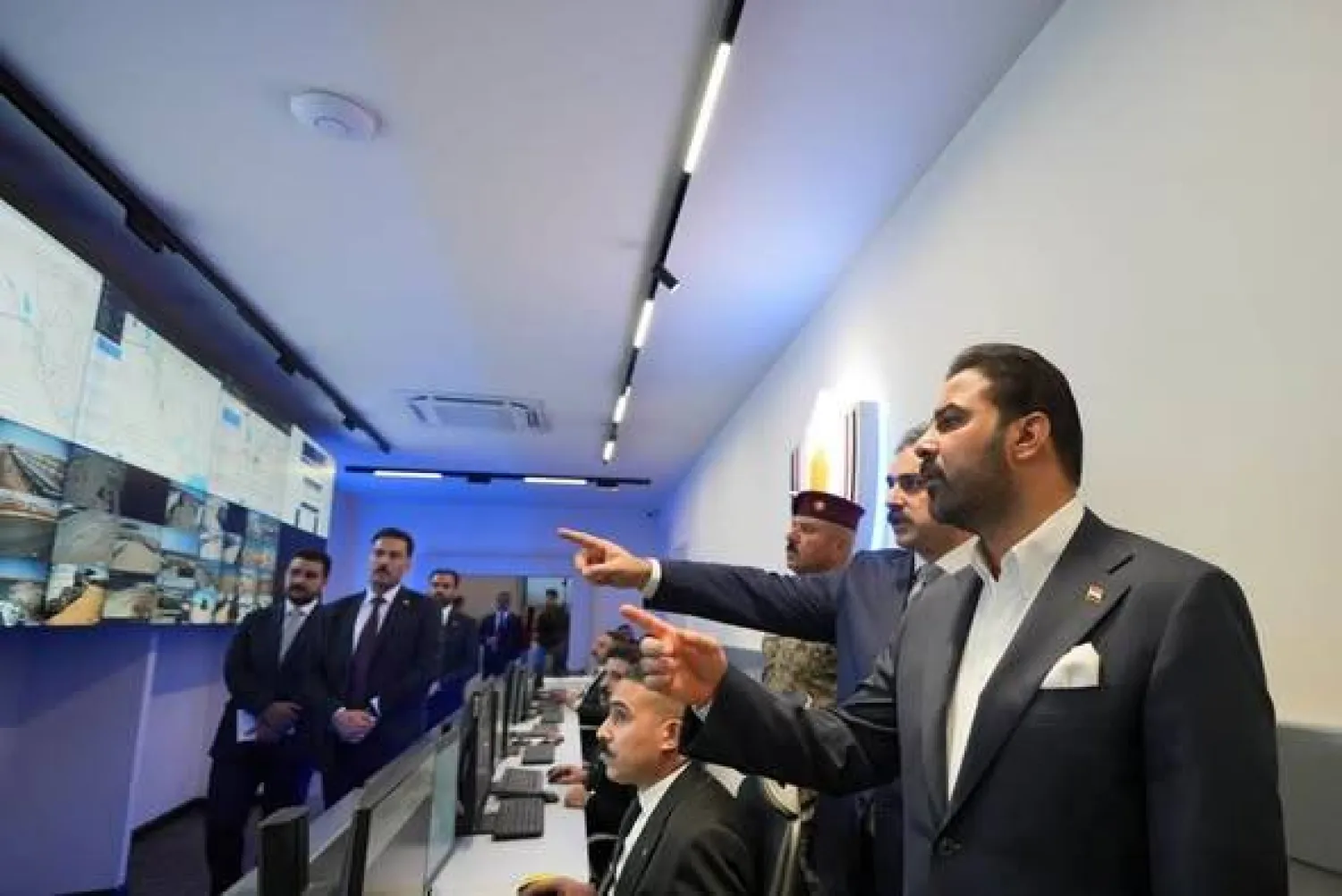
PM Ali al-Zaidi Visits the Border Ports Authority. Photo: Iraqi Prime Minister Media Office
TT

Iraq Steps Up Anti-Corruption Campaign, Detains Electricity Ministry Official

PM Ali al-Zaidi Visits the Border Ports Authority. Photo: Iraqi Prime Minister Media Office

An Iraqi Commission of Integrity (COI) force arrested on Friday a deputy minister at the Ministry of Electricity on suspicion of involvement in financial violations, as Prime Minister Ali al-Zaidi ordered tighter oversight of border crossings and stronger efforts to combat corruption and smuggling.

The official Iraqi News Agency reported on Friday, citing a security source in Salahuddin province, that a COI force arrested Khalid Ghazai Attiya, Deputy Minister of Electricity for Transmission and Distribution Affairs, over alleged violations that are currently under investigation.

The source did not disclose the nature of the violations or details of the case, saying legal procedures against the detained official are being conducted in line with the law.

Neither the Commission nor the Ministry of Electricity issued an official statement regarding the arrest or the charges against Attiya.

The arrest comes as the Iraqi government continues its anti-corruption drive and efforts to recover public funds. The first phase of the campaign, launched on June 28 under the name "Operation Dawn Strike," targeted politicians, members of parliament, and business figures.

Government sources had previously stated that legal procedures for the campaign's second phase had been completed. The new phase is expected to focus on corruption cases in the health, oil, and electricity ministries, while also tracking funds and properties inside and outside Iraq and compiling new lists of suspects.

Border Crossings

In a related development, al-Zaidi instructed the Border Ports Authority during a visit to its headquarters in Baghdad on Friday to operate under a self-financing system through tax and customs revenues, with fees deducted before transfers are processed.

He also directed that all border crossings be linked to a unified electronic system, that daily reports on operations and revenues be submitted, and that the automation project for border crossings be accelerated to reduce fraud, corruption, and manipulation.

Al-Zaidi said that fighting corruption at Iraq’s border crossings will be a top priority, with the government planning tougher measures.

Drug and medicine smuggling, attempts to evade regulatory authorities, and other forms of trafficking pose serious threats to Iraqi society, he said, warning that those involved would face government action.

The government is also reviewing a draft law aimed at scrutinizing the sources of wealth of public officials.

Meanwhile, COI said that arrest warrants are being executed under judicial supervision as part of efforts to pursue those involved in corruption and recover public funds.



US Engaged in Shuttle Diplomacy between Lebanon, Israel to Salvage the Negotiations

Lebanese Parliament Speaker Nabih Berri receives Issa and Clearfield (National News Agency)
TT

US Engaged in Shuttle Diplomacy between Lebanon, Israel to Salvage the Negotiations

Lebanese Parliament Speaker Nabih Berri receives Issa and Clearfield (National News Agency)

Head of the Military Coordination Group for Lebanon (MCG4L) US General Joseph Clearfield met on Friday with top officials in Beirut as part of follow up efforts with Lebanon and Israel on the military aspect of the framework agreement signed between the two countries in June.

The United States has been trying to broker an end to fighting between Israel and Hezbollah, which has raged since March in parallel with the wider US-Israeli war against Iran.

The June agreement says the Lebanese army will gradually restore control over all of Lebanon, disarming Hezbollah.

The first phase ⁠began in two pilot zones. The talks did not, however, produce an agreement on the next area from which Israeli troops would withdraw so that Lebanese troops could take control.

Clearfield, US Ambassador to Lebanon Michel Issa and the accompanying military delegation, visited on Friday Speaker Nabih Berri in Ain el-Tineh.

The discussions, which were attended by Berri’s Media Advisor Ali Hamdan, touched on the situation in southern Lebanon, as well as the Group’s work in light of the start of identifying the pilot areas and establishing a mechanism to verify the Israeli withdrawal and the deployment of the Lebanese Army.

Berri stressed that "Israel has not ceased its violations and attacks against Lebanon and the south since November 2024,'' adding that the attacks have continued systematically, involving the destruction of villages, bulldozing of fields and agricultural areas, and the burning of forested areas, "not to mention targeting heritage sites and cultural heritage."

Berri said that "the key to stability remains compelling Israel to halt its war and withdraw to the international borders."

Asked about the talks between Lebanon and Israel and the date of the next round, Ambasssador Issa said: "The negotiations will continue, but no date has been set yet."

The US delegation also visited Prime Minister Nawaf Salam at the Grand Serail to discuss the military aspect of the negotiation framework and developments in southern Lebanon.

Salam stressed the need for Israel to halt its destruction operations, expand the scope of the pilot zones, and establish a clear timetable for Israeli withdrawal from Lebanese territory.

Lebanese Prime Minister Nawaf Salam receives Issa and Clearfield (National News Agency)

Previous rounds of talks had focused on the sequence of the Israeli withdrawal, the deployment of the Lebanese Army, and the verification mechanism, without reaching a decision on moving to a new area. Issa reiterated this point on Friday, stating that defining the status of the current areas must precede discussions about other areas.

Shuttle Diplomacy Between Beirut and Tel Aviv

Friday's meetings were part of a shuttle diplomacy conducted by Clearfield between Beirut and Tel Aviv to follow up on the implementation of military arrangements.

Clearfield arrived in Beirut on Wednesday from Tel Aviv, where he had held talks with Israeli officials.

In the Lebanese capital, he met with President Joseph Aoun and Army Commander General Rodolphe Haykal before departing again for Tel Aviv later that afternoon. He returned to Beirut on Friday.

During that stop in Beirut, Clearfield discussed measures related to implementing the framework agreement and developments in southern Lebanon, at a time when the implementation process continues to face issues related to the Israeli withdrawal, the deployment of the Lebanese Army, the verification mechanism, and the transition to additional pilot areas.


Assad-era Officer Convicted in Austria Reportedly Returns to Syria a Free Man

A man cycles past heavily-damaged and destroyed buildings in the Jobar suburb northeast of Damascus on August 12, 2026. (Photo by LOUAI BESHARA / AFP)
TT

Assad-era Officer Convicted in Austria Reportedly Returns to Syria a Free Man

A man cycles past heavily-damaged and destroyed buildings in the Jobar suburb northeast of Damascus on August 12, 2026. (Photo by LOUAI BESHARA / AFP)

A former Syrian security officer sentenced to prison in Austria for abusing detainees during Bashar al-Assad’s rule left the country while appealing against his sentence and returned to Syria earlier this month, according to four sources and messages reviewed by Reuters.

Lieutenant Colonel Musab Abu Rukba was handed an eight-year prison sentence last month by a Vienna court that found him guilty of bodily harm, aggravated coercion and sexual assault against detained opponents of Assad while he headed the police's criminal investigations department in the city of Raqqa more than a decade ago.

The Syria Justice and Accountability ⁠Center, a Syrian ⁠human rights organisation, said the case exposed shortcomings in the Austrian judicial system after authorities allowed Abu Rukba to remain at liberty throughout proceedings and while challenging his prison sentence on appeal.

Abu Rukba had pleaded not guilty. In early August, he arrived in his hometown of Nawa in southern Daraa province, where his family held a reception to celebrate his return, the four sources familiar with the case said.

The invitation ⁠said he had been granted "release from prison," according to a message sent to local dignitaries and seen by Reuters.

A spokesperson for the Austrian court that convicted him told Reuters on Friday that ahead of the trial, he was found not to pose a flight risk because he had been living in Austria since 2014 and was seeking asylum there along with his family.

He was not remanded in custody during the trial and was also not subject to other restrictions. Until the appeals process is included, his departure from Austria does not constitute a breach of any ⁠Austrian laws or ⁠rulings, the spokesperson said.

“The escape of a lieutenant colonel accused of torture, sexual coercion and serious bodily harm demonstrates a failure by the Austrian authorities to assess the danger posed by this defendant and their failure to place him in pre-trial detention,” Mohammad al-Abdallah, executive director of the Syria Justice and Accountability Center.

Syria’s new authorities have pledged to hold former Assad officials accountable for abuses committed during his rule. A Syrian court on Tuesday sentenced Assad to death in absentia for killings, torture, arbitrary arrest and crimes against humanity. The ousted leader fled to Russia in December 2024.


How Will Hamas Handle the Requirements of the Legislative Elections?

A member of the Fatah movement attends the 8th General Conference of Fatah, at Al-Azhar University in Gaza City, May 14, 2026. REUTERS/Dawoud Abu Alkas
TT

How Will Hamas Handle the Requirements of the Legislative Elections?

A member of the Fatah movement attends the 8th General Conference of Fatah, at Al-Azhar University in Gaza City, May 14, 2026. REUTERS/Dawoud Abu Alkas

With Hamas announcing its intention to contest the legislative elections, scheduled for November 28, as stipulated in a Palestinian presidential decree, the movement faces a host of questions over its ability to navigate the political requirements of the post-war phase in the Gaza Strip.

This will be Hamas's second participation in legislative elections following the last vote in 2006. The war has fundamentally altered the reality of Palestinians and triggered further conflicts in several countries across the region.

Perhaps the most pressing question in recent days is how Hamas will deal with the amendments introduced by Palestinian President Mahmoud Abbas to the election law, particularly the requirement that electoral lists commit to the political program of the Palestine Liberation Organization (PLO), which is recognized as the sole legitimate representative of the Palestinian people.

That program includes recognition of relevant international legitimacy resolutions, including recognition of Israel and the renunciation of violence, along with other conditions the movement had previously rejected.

A Hamas political source told Asharq Al-Awsat that the movement is in contact with all factions to reach a comprehensive consensus on the elections and ensure the participation of all parties without imposing unilateral policies in determining the political objectives of the national framework.

Asked about Hamas's plans for overcoming the dispute over the PLO's political program, the source said there are legal and political options, alongside national dialogue, for reaching agreement on a course of action that could circumvent such a requirement. The source added that Hamas is committed to reforming the PLO and the Palestinian National Council before joining them, so that their programs are brought into line with national requirements under the current circumstances.

He noted that messages are being exchanged with Fatah, both directly and indirectly, on a range of national issues, expressing hope that an understanding can be reached that brings Palestinians closer together and steers them toward safety.

The source stressed that the developments in Gaza had increased the popularity of Hamas and the armed factions that share its approach of "resisting the occupation." As a result, the movement is not afraid of electoral competition, even if it loses or remains in opposition. He stressed that Hamas has no intention of returning to power, but wants to be part of the Palestinian political system and put an end to unilateral decision-making on issues of national consequence.

Hossam Badran, a member of Hamas's political bureau, told Asharq Al-Awsat that the principle of imposing political conditions on electoral participation is unacceptable regardless of the wording or substance, because it contradicts the very essence of elections, which is competition among different political programs.

Badran said Hamas is holding consultations and dialogue with various factions as well as emerging electoral lists to agree on a collective mechanism for addressing the issue. He said some parties had already begun, in coordination with Hamas, sending messages to the Palestinian Central Elections Commission, while others are considering turning to the Palestinian judiciary.

"We will follow the matter and reach what is appropriate, but on the basis of participating in the elections," he said.

Fatah in Gaza

A senior Fatah source in the Gaza Strip told Asharq Al-Awsat that President Abbas's decisions regarding the latest amendments would not be reversed, and that they enjoy full support as part of the reform plan adopted by the Palestinian Authority with full Arab and international backing.

According to the source, who requested anonymity, Hamas and any Palestinian faction or entity participating in the forthcoming elections, in which the Gaza Strip will take part under arrangements established by the Central Elections Commission, must comply with the amended laws. He said the decisions were not intended to restrict the participation of any faction, whether affiliated with the PLO or outside it. Rather, their primary objective was to ensure that every future parliamentary force has a clear political program.

Abdel Fattah Doleh, the Fatah spokesman in Ramallah, said any party has the right to participate in the forthcoming elections, a right guaranteed by Palestinian law, which must be observed by every party taking part in the electoral process.

In remarks to Asharq Al-Awsat, Doleh said there have been no genuine direct contacts with Hamas regarding the elections. He noted that Hamas had previously participated in elections and became part of the political system before turning against it and monopolizing power.

He added that Fatah had repeatedly sought, during previous rounds of dialogue, to integrate Hamas into the PLO, but that the movement had raised objections each time.

Doleh stressed that the political system has room for everyone, but said it is essential that anyone participating in it adhere to the PLO's political program, given its status as the sole legitimate representative of the Palestinians. He emphasized that Hamas must align itself with that framework.