


Israel Sends Message to Lebanon and Hezbollah through Strikes

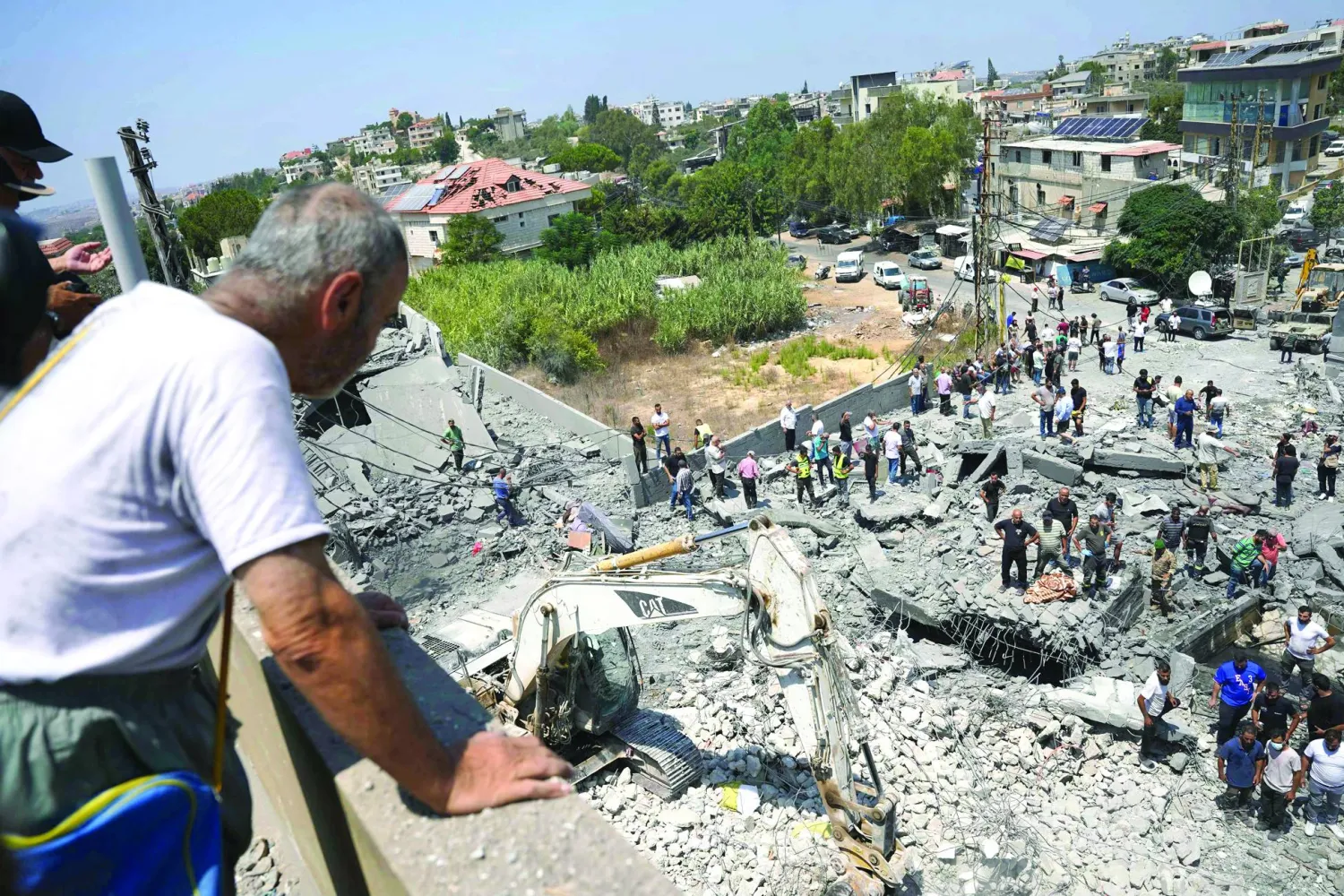
A man watches as heavy machinery, first aid responders and residents search the site of an Israeli airstrike that targeted a neighborhood in the southern Lebanese village of Deir al-Zahrani on August 15, 2026. (Photo by Abbas FAKIH / AFP)
TT

Israel Sends Message to Lebanon and Hezbollah through Strikes

A man watches as heavy machinery, first aid responders and residents search the site of an Israeli airstrike that targeted a neighborhood in the southern Lebanese village of Deir al-Zahrani on August 15, 2026. (Photo by Abbas FAKIH / AFP)

Israel sent political and security messages on Saturday to the Lebanese state and Hezbollah through a sudden escalation of strikes in southern Lebanon.

Israeli airstrikes on two towns killed 11 people, including an entire family, in what the Israeli military said was a response to a military operation carried out by Hezbollah against its forces operating in southern Lebanon. The military said it had targeted a Hezbollah command center, killing a senior commander in the group’s Radwan Force.

The escalation comes on the eve of the Monday expiration of the 60-day deadline stipulated in the memorandum of understanding between the United States and Iran. It also coincides with US mediation efforts between Lebanon and Israel to consolidate the ceasefire and expand the designated pilot areas in southern Lebanon.

In a statement, President Joseph Aoun said the escalation is a “message to the negotiation path and the US efforts aiming to consolidate the Framework Agreement”.

Prime Minister Nawaf Salam also said the escalation was “extremely dangerous and undermines efforts to consolidate stability in the south”, stressing that “dealing with any military infrastructure, if present on Lebanese territory, is the exclusive responsibility of the state, and its presence does not give Israel the right to violate Lebanese territory or put civilians at risk.”

While Hezbollah has not claimed responsibility for any military operation, Tel Aviv is seeking to establish new rules of engagement linked to Israeli preparations to seize control of the Ali al-Taher Heights.

According to sources who spoke on condition of anonymity, Israel is trying to send Hezbollah a message that “any attempt to halt the advance toward Ali al-Taher heights will be met with an expansion of the bombing deeper into Lebanese territory.”


China, Jordan Call for Maintaining US-Iran Ceasefire

China's President Xi Jinping, right, and King Abdullah II of Jordan shake hands after a signing ceremony at the Great Hall of the People in Beijing, Monday, Aug. 24, 2026. (Andres Martinez Casares/Pool Photo via AP)
TT

China, Jordan Call for Maintaining US-Iran Ceasefire

China's President Xi Jinping, right, and King Abdullah II of Jordan shake hands after a signing ceremony at the Great Hall of the People in Beijing, Monday, Aug. 24, 2026. (Andres Martinez Casares/Pool Photo via AP)

China and Jordan on Monday said the ceasefire between the US and Iran should be maintained, and that the normal passage through the Strait of ⁠Hormuz should be restored, ⁠the two countries said in a jointed statement, according to China's Xinhua ⁠news agency.

Chinese President Xi Jinping met with Jordan's King Abdullah in Beijing on Monday.

China and Jordan said "a comprehensive solution capable of eliminating the root causes" of regional tensions should be reached through dialogue and negotiations.

The two ⁠also expressed "deep ⁠concern over Israel's dangerous escalatory actions in the West Bank and East Jerusalem."

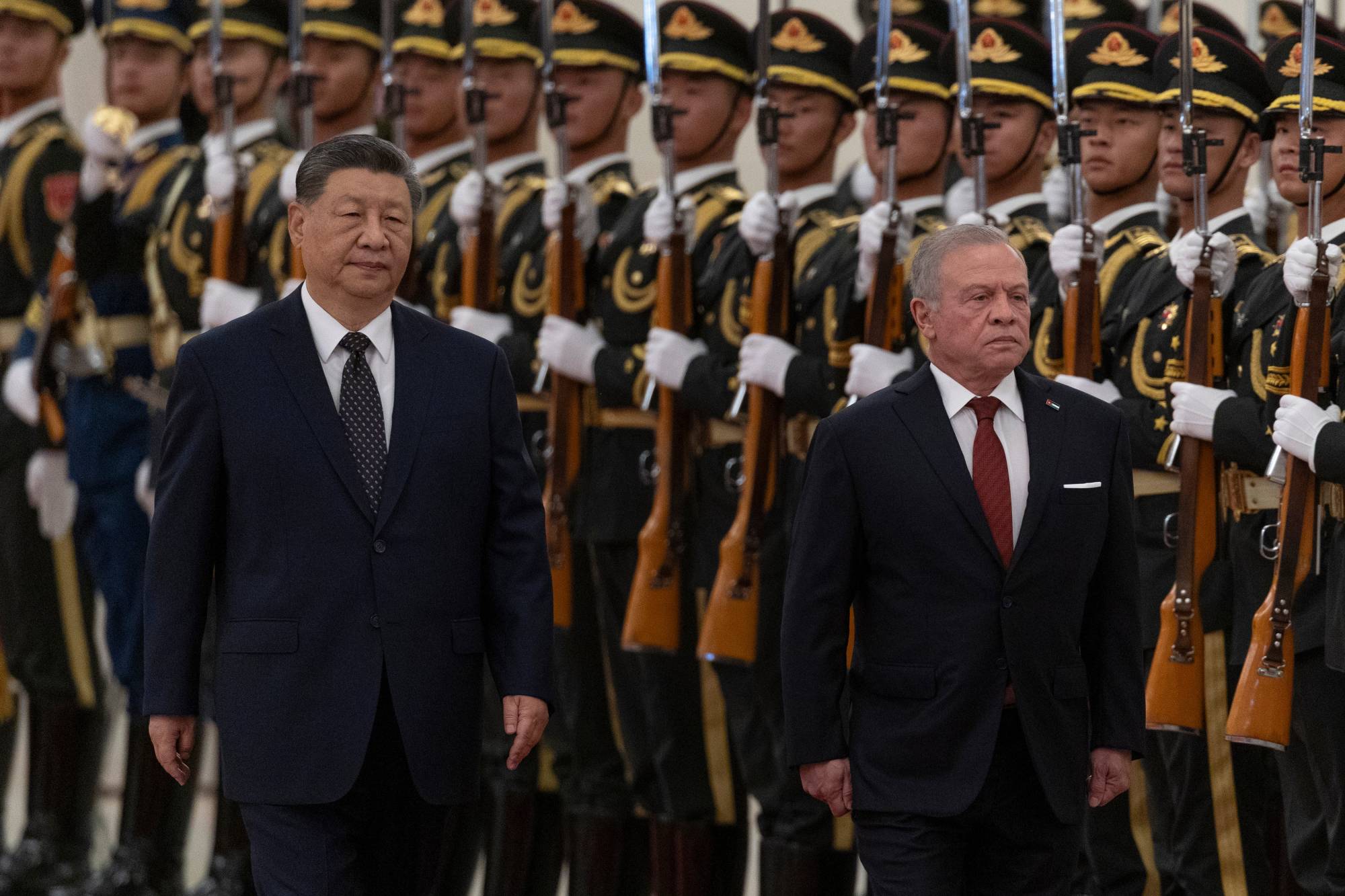
China's President Xi Jinping, left, and King Abdullah II of Jordan review the honor guard during a welcoming ceremony at the Great Hall of the People in Beijing, Monday, Aug. 24, 2026. (Andres Martinez Casares/Pool Photo via AP)

Xi told King Abdullah that China values Jordan's "unique and important role in the region,” which was thrown into crisis after the United States and Israel launched strikes against Iran on February 28.

"China has always advocated for a comprehensive ceasefire (and) resolving disputes through political and diplomatic means," Xi said, according to a Chinese foreign ministry statement.

"(China) believes the sovereignty and security of regional countries including Jordan should be respected," Xi said.

The Chinese president also urged on Monday a "comprehensive, just and lasting solution to the Palestinian issue,” the foreign ministry statement said.

China supports "promoting the resumption of Israeli-Palestinian peace talks anchored on the correct direction of the 'two-state solution'," Xi said.

The two sides also signed several agreements on diplomacy, trade and supply chains, China's foreign ministry said.


Iraq Pushes Back Deadline for Factions to Disarm

This handout photograph taken and released by the Iraq's Prime Minister Media Office on August 19, 2026 shows Iran's Parliament Speaker Mohammad Bagher Ghalibaf (R) shaking hands with Iraq's Prime Minister Ali al-Zaidi before their meeting in Baghdad. (Iraq's Prime Minister Media Office / AFP)
TT

Iraq Pushes Back Deadline for Factions to Disarm

This handout photograph taken and released by the Iraq's Prime Minister Media Office on August 19, 2026 shows Iran's Parliament Speaker Mohammad Bagher Ghalibaf (R) shaking hands with Iraq's Prime Minister Ali al-Zaidi before their meeting in Baghdad. (Iraq's Prime Minister Media Office / AFP)

A senior Iraqi official pushed back a September 30 deadline for pro-Iran factions to hand over their weapons, without offering an explanation for the move or providing a new date.

Iraq has come under pressure from the United States to rein in armed factions, particularly those close to Iran.

The US and Iran have been at war since February 28, drawing in other countries in the region as well as non-state groups backed by the Islamic republic.

For several months, Iraq's government has stood by its deadline, but on Sunday, the security adviser to the prime minister, Qasim al-Araji, told state media the process would only begin at the end of next month.

"September 30 is the date for the international coalition to depart, not the deadline to hand over weapons," Araji told the Al Iraqiya broadcaster, referring to the coalition of US-led forces.

Government spokesman Haider al-Aboudi had made a similar announcement to local media on Friday, despite announcing in June that factions had until the end of September to disarm.

September 30, he said, was "the date for the international coalition to end its presence, not the deadline for armed factions... Perhaps people are confusing the two."

Since taking office in May, Prime Minister Ali al-Zaidi has pledged to ensure the armed factions that emerged in the years that followed the US-led invasion hand over their weapons to the state.

While some factions have in recent weeks said they would join state institutions, others, in particular those closer to Iran, are refusing.

"The situation is extremely complicated," a government official told AFP, requesting anonymity because he was not authorized to speak on the matter.

"The government is insisting on closing the weapons file; but faction leaders are determined to hold onto their weapons because they believe disarming would serve Israel and the United States."

The most powerful armed factions in Iraq include Kataib Hezbollah, a part of Iran's so-called "Axis of Resistance" against the US and Israel.

Another Iraqi source told AFP that Iran views its proxies in the region, "especially in Iraq, as a source of strength it refuses to give up".


Syria Sentences Assad-Era Top Muslim Cleric to Life Imprisonment

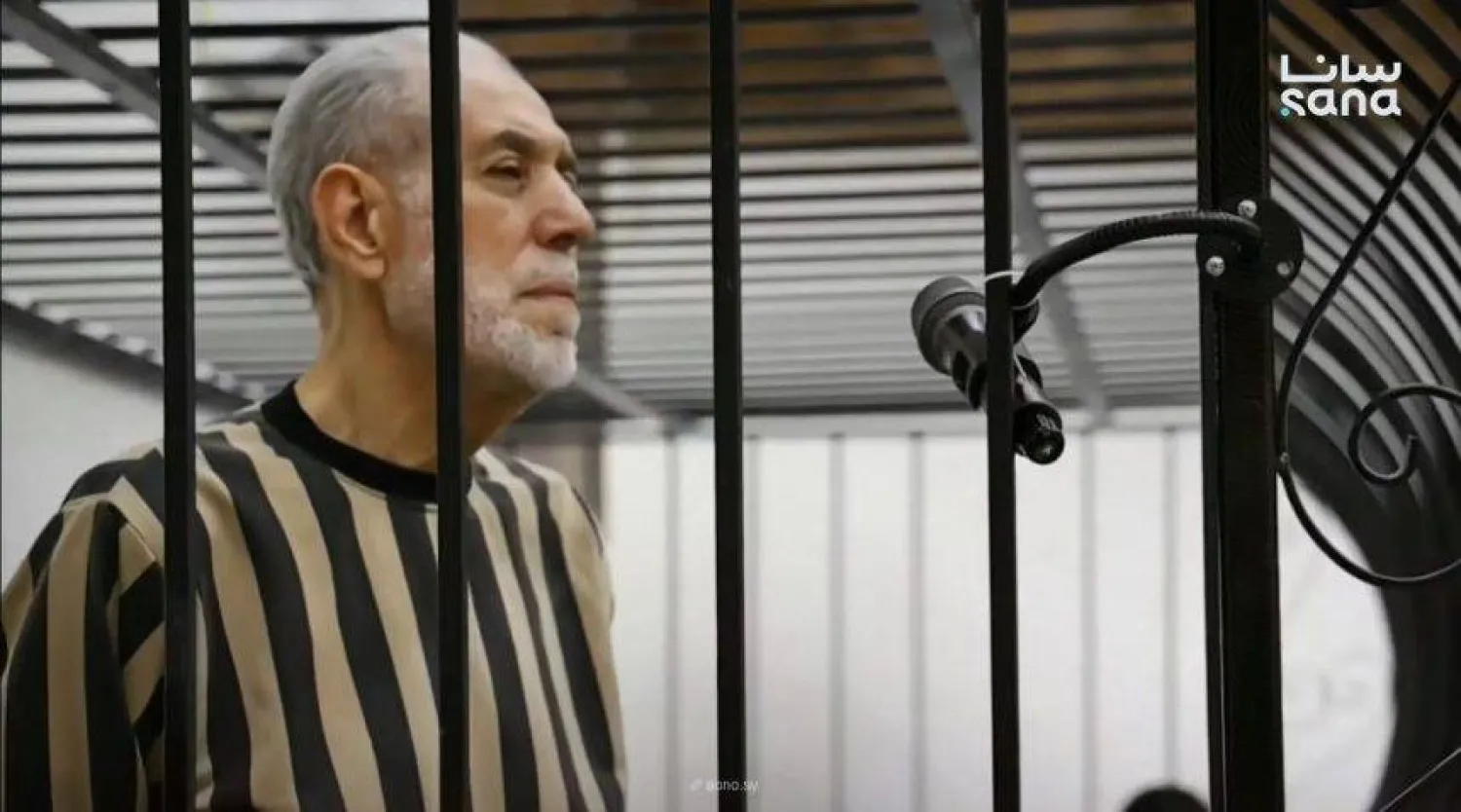
Ahmed Hassoun during proceedings before the Fourth Criminal Court in Damascus. (SANA file photo)
TT

Syria Sentences Assad-Era Top Muslim Cleric to Life Imprisonment

Ahmed Hassoun during proceedings before the Fourth Criminal Court in Damascus. (SANA file photo)

A Syrian court on Monday handed a life sentence to Ahmed Hassoun, the country's former grand mufti under ousted leader Bashar al-Assad, convicting him of crimes including inciting sectarian strife and exploiting his position. 

Hassoun, the 10th Assad-era figure to be sentenced under the new authorities, was Syria's top Muslim cleric for 16 years. 

He was known for his close ties to the former president and frequent appearances alongside him on religious occasions. 

Judge Fakhr al-Din al-Aryan said Hassoun, 77, was guilty of a raft of charges including "inciting civil war and sectarian strife", for which he was jailed for life. 

The cleric was also convicted of "incitement to intentional homicide", "principal complicity in intentional homicide", and "inciting sectarian and racial strife", for which he was handed additional terms ranging from three to 20 years. 

The court also decided to confiscate Hassoun's assets and hand them to the public treasury. 

His sentencing is the first against a religious figure since Syrian authorities began trying Assad-era officials in April. 

On August 11, Syria sentenced Bashar al-Assad, his brother Maher and five other security officials to death in absentia for atrocities committed during Syria's civil war, the first such ruling under the new authorities. 

The former president fled Syria as his government fell in December 2024 and is believed to be in Russia. 

Authorities have also handed death sentences to Atif Najib and Wassim al-Assad, cousins of the former ruler who were tried in person. 

Hassoun, a native of Aleppo whose late father was also an important religious figure, was arrested at Damascus airport in March last year as he tried to flee the country. 

Though he held the post of grand mufti for more than a decade, Hassoun lost the title in 2021 when Syria abolished the position. 

Syria began legal proceedings in April against Bashar al-Assad and other officials accused of atrocities during the civil war, which erupted in 2011 with brutal repression of pro-democracy protesters. 

More than half a million people were killed and millions displaced during the conflict, while tens of thousands disappeared.
