
The Iraqi government on Friday showed signs of backpedaling on the previously scheduled September 30 deadline to restrict weapons to the state.
In statements to local media, government spokesperson Haider al-Aboudi said: "September 30 is the date for the withdrawal of US forces from Iraq, not the final deadline for factions to surrender their weapons."
Speaking on the sidelines of the Baghdad Dialogue Conference, which was attended by Prime Minister Ali al-Zaidi, al-Aboudi stressed that "dialogue with the factions is proceeding regularly and has made significant progress because it stems from the fundamentals of state sovereignty and the interests of the Iraqi people, two pillars that are not disputed."
Al-Aboudi acknowledged "anxiety and disagreement over the mechanisms," though he noted that "this file is subject to dialogue that is moving in the right direction."
Al-Zaidi spoke about these "disagreements" without revealing their details during a panel discussion at the Baghdad Dialogue.
"All political forces completely agree on moving forward with restricting weapons to the state, and work is underway on the mechanisms for handing over weapons and ending this situation entirely," the PM said.
"There is an ongoing dialogue, directly with opposing factions and indirectly with others," he added, pointing out that "most concerned parties have become convinced of the need to hand over weapons, but the dispute is over the mechanism."
"There is no problem with this (dispute) as long as the goal is ultimately achieved," he stressed.
Al-Zaidi said the "weapons restriction mechanism" begins with a faction declaring its cessation of military activity, followed by surrendering its arms to the government, and concluding with disengagement.
When asked what he meant by disengagement, al-Zaidi replied: "The faction will no longer be able to mobilize or direct its fighters; instead, the federal government will do so through the Popular Mobilization Forces (PMF)."
He stressed that authorities had no intention of becoming embroiled in a military confrontation with any party.
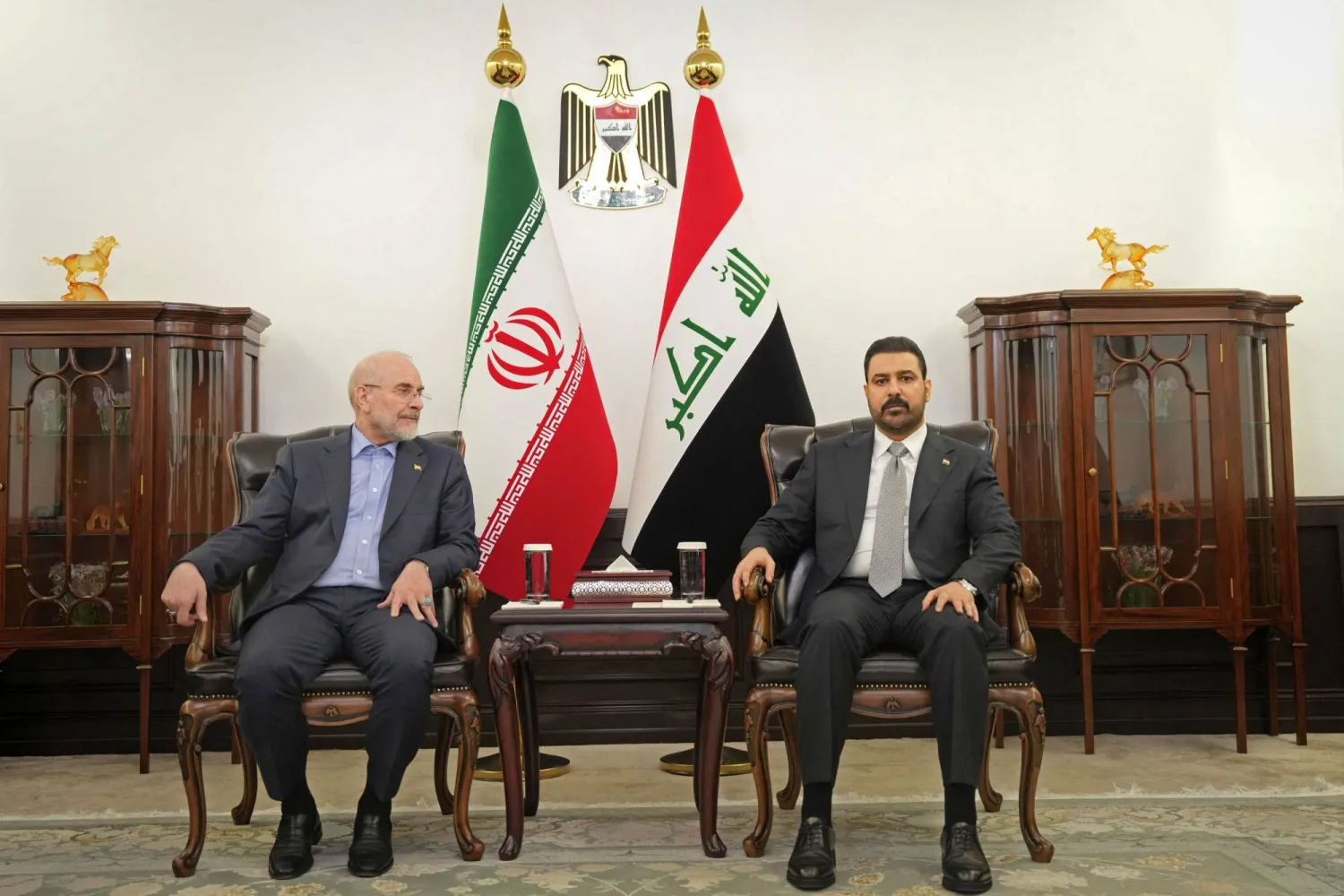
The implicit backpedaling from the September 30 deadline took place amid significant political pressure by factions and leaders within the ruling Shiite Coordination Framework and coincided with Iranian Parliament Speaker Mohammad Bagher Qalibaf’s visit to Iraq.
Upon his arrival in Baghdad on Wednesday, Qalibaf declared that "the resistance in Iraq has become an essential element of global power," noting that relations between Baghdad and Tehran are moving toward establishing a "new order" free from foreign interference.
Sources said late last week that Qalibaf carried Iranian proposals to avoid a direct confrontation between the Iraqi government and Tehran-aligned factions, including ideas related to "freezing" or concealing heavy weaponry until a political settlement about the future of the factions' arms is reached.
The details of the proposals could not be independently verified, and no official announcement about them has been made by either Tehran or the Iraqi government.