


How Yemen Has Developed Rules of Engagement That Are Disrupting the Houthis

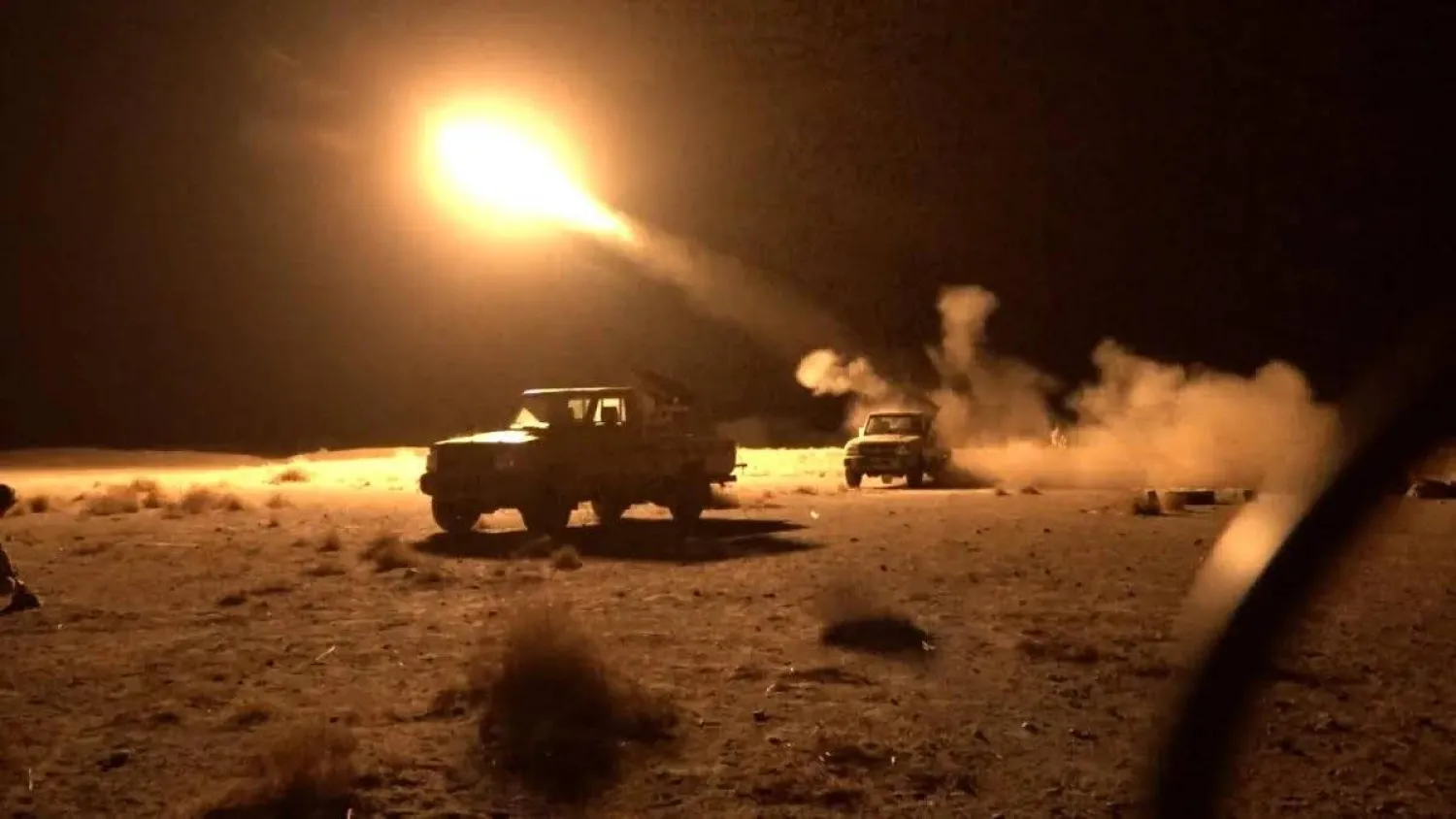
The Houthi group suffered heavy losses as a result of government deterrence operations (military media).
TT

How Yemen Has Developed Rules of Engagement That Are Disrupting the Houthis

The Houthi group suffered heavy losses as a result of government deterrence operations (military media).

The confrontation between Yemen's internationally recognized government and the Iran-backed Houthi group is no longer unfolding according to the military equation that had prevailed along the front lines since 2022. The latest escalation, initiated by the group, has revealed a notable shift in the performance of government forces, which have begun developing new rules of engagement that have unsettled the militias. They are moving from a position of defense and containment toward a phase of preemptive strikes, making use of drones and improved precision-targeting capabilities.

The pace of attacks over the past six weeks reveals an escalating trajectory, with the strikes coinciding with Houthi use of ballistic missiles and drones to target military positions, facilities, and maritime routes.

According to information from military sources and monitoring centers, the Houthis carried out more than 75 attacks during this period using ballistic missiles and explosive-laden drones. These included missile barrages against the port of Mokha and the city of Al Khawkhah, as well as attacks on military camps in Marib and Al Abr, and others targeting commercial vessels that killed at least four sailors.

On the other side, field reports indicate that the Yemeni armed forces, the National Resistance formations, and the Giants Brigades carried out more than 500 combat, defensive, and offensive operations, focused on Houthi concentrations and command-and-control centers along the fronts in Hodeidah, Marib, Taiz, Al Dhale, and Al Bayda.

The significance of the current development lies not only in the scale of the strikes, but also in the nature of the means the government forces have begun using. The introduction of drones into offensive operations opens a new avenue for anti-Houthi forces to strike high-value targets without having to conduct large-scale ground operations.

Informed Yemeni sources indicate that two specialized drone aviation brigades have been formed within the Yemeni armed forces, marking a shift in the role of these aircraft from reconnaissance and surveillance to direct combat use.

In recent days, drones have been used to strike Houthi barracks, concentrations, supply vehicles, and trenches. These operations have been documented by drone cameras across various fronts, particularly in Marib, Al Jawf, Al Bayda, the western coast, and Al Dhale, as well as in areas of Hajjah governorate in the northwest of the country that have been retaken.

This shift is particularly significant along the western coast, where the ground confrontation intersects with the maritime threat. The downing of Houthi reconnaissance drones that, according to the available information, were preparing the way for maritime attacks using explosive-laden boats reflects an attempt by the government to deprive the group of one of its most important tools for monitoring the waters and preparing attacks on maritime traffic.

Here, drones are moving beyond their traditional military function to become part of a broader deterrence system aimed at preventing the Houthis from creating a new reality along Yemen's coasts and the Bab al-Mandab Strait.

Testing the Unification of Forces

But possessing more advanced military tools does not necessarily mean possessing the ability to wage an all-out war. The most complex challenge facing the Yemeni government remains the existence of multiple centers of military power and disparities in command-and-control structures.

Over the past two years, Yemen's Presidential Leadership Council has worked to address part of this fragmentation, with signs emerging of a more interconnected military structure, although it remains composed of multiple elements.

This structure includes the regular forces commanded by Lieutenant General Sagheer bin Aziz; the forces deployed along the western coast and in Mokha, commanded by Presidential Leadership Council member Tareq Saleh; the Emergency Forces and Nation's Shield formations, which are directly commanded by Presidential Leadership Council Chairman Rashad Al Alimi; the forces operating along the Taiz fronts under the Fourth Military Region, headquartered in Aden; as well as the Giants Brigades and other southern formations deployed along the fronts in Lahj, Al Dhale, and Shabwa, commanded by Presidential Leadership Council member Abdul Rahman Al Mahrami.

According to military assessments, these formations give the Yemeni government the ability to distribute military pressure across more than one front. At the same time, however, they place the joint operations room before a difficult test: Can it turn these multiple capabilities into a unified battle plan if the limited confrontation develops into an open war?

This question becomes increasingly important as the level of Houthi escalation rises, because moving from localized strikes to large-scale ground operations requires a higher level of coordination and political and military decision-making, as well as substantial logistical and economic capacity.

The Priority of Calculated Deterrence

In the current calculations of Yemen's legitimate government, a full-scale ground war appears less likely than continued calibrated escalation. The government does not appear willing to be drawn into the battle that the Houthis may be seeking to impose.

This is where the scenario of measured escalation repeatedly referenced by Al Alimi comes into focus. It is based on targeting sources of threat with missiles, artillery, and drones, ensuring that Houthi attacks do not go unanswered while avoiding large-scale ground operations to seize new territory.

This strategy allows the Yemeni government to raise the cost of Houthi attacks without opening a front that could later prove difficult to contain. It also gives the government room to maneuver between military retaliation and political and diplomatic options.

But continued Houthi attacks on maritime traffic and vital facilities could change the calculations. If maritime pressure develops into a sustained threat to shipping in the southern Red Sea, and attacks on ports and facilities continue, the western coast, particularly Hodeidah, could become the focus of a larger battle. This is what was understood from Tareq Saleh's recent statements.

The government could then find itself facing the option of launching a military operation aimed at ending the group's ability to use the coast as a platform for maritime threats, a choice that would carry significant military, humanitarian, and economic consequences.

The recent attacks on the port of Mokha reveal the scale of the economic risks associated with this course. According to the available information, the shelling brought the port's strategic activity to a halt and caused extensive damage to its infrastructure, with preliminary estimates putting the losses at billions of Yemeni riyals.

The consequences do not stop at civilian facilities. Yemen, which is facing a deep humanitarian and economic crisis, has little room to maneuver, given that the United Nations humanitarian response plan continues to face a funding gap of more than 80 percent, while the limited escalation of recent weeks has led to new waves of displacement in Marib and along the western coast.

If a full-scale confrontation erupts, the closure of vital roads and corridors and damage to ports and commercial facilities could multiply the cost of the war for the population and place additional pressure on the fragile economy of the governorates held by the government.

Between Houthi escalation and the government's calibrated deterrence, the coming days and weeks will determine whether the drones and precision strikes used by Yemeni government forces succeed in establishing a new balance with the Houthis, or whether they prove to be the prelude to the broadest military round since the 2022 truce and the fragile de-escalation that followed.



Yemeni Forces Repel Fierce Houthi Attacks on Taiz Fronts

Yemeni government forces repel intensified Houthi attacks on the Taiz fronts (Military Media)
TT

Yemeni Forces Repel Fierce Houthi Attacks on Taiz Fronts

Yemeni government forces repel intensified Houthi attacks on the Taiz fronts (Military Media)

Yemeni government forces and Popular Resistance fighters battled intensified Houthi attacks across Taiz province on Tuesday as Operation Dawn of Yemen entered its ninth day, with airstrikes targeting the group’s positions and reinforcements.

Fighting also extended to Marib and Al-Jawf, while the Southern Giants Brigades deployed reinforcements to the Al-Mudaraba front in Lahj province to counter Houthi movements threatening Al-Subaiha tribal areas.

The deployment came amid concerns that the Houthis were attempting to open an alternative route toward the western coast and break the encirclement of their fighters near the strategic Bab al-Mandab strait.

Yemen’s armed forces announced 1,879 military targeting operations in recent hours, claiming that preliminary assessments showed around 950 Houthi fighters had been neutralized and 380 military vehicles and pieces of equipment destroyed or disabled.

Armed forces spokesman Col. Majed al-Nuzaili said the operations involved warplanes, drones, artillery, rocket launchers and sniper units.

Targets included fortifications, defensive positions, command-and-control centers, artillery and rocket-launcher emplacements, observation posts, troop concentrations, weapons depots and supply vehicles.

Nuzaili added that airstrikes in Taiz had hit Houthi reinforcements and convoys, dispersing fighters and disrupting efforts to reinforce positions and regroup.

Fierce fighting around Taiz

Clashes were concentrated on the Al-Dhabab front west of Taiz city and the al-Aqroudh and al-Shaqab fronts in the province’s south.

Government forces reported repelling Houthi attacks in Al-Dhabab and al-Aqroudh, forcing the attackers to retreat after suffering casualties and losing military vehicles.

Warplanes also struck Houthi positions and concentrations across the province, including Al-Dhabab and al-Misrakh.

The Taiz Military Axis Command reported additional strikes on positions in Milat, Tabbat al-Khalwa, al-Tabba al-Sawda and Tabbat al-Karba, west of the city. Government military statements said the strikes damaged vehicles and weapons, including a tank and artillery pieces, and killed or wounded Houthi fighters.

Clashes continued in Al-Dhabab, where government troops carried out ambushes targeting Houthi fighters, vehicles and military equipment.

The simultaneous attacks on the western and southern fronts underscored mounting pressure on government forces, which, backed by Popular Resistance fighters and air support, sought to prevent Houthi breakthroughs and the establishment of new positions.

Reinforcements sent to Al-Subaiha

On the western coastal front, the Southern Giants Brigades reinforced their deployment in Al-Mudaraba district of Lahj province, which borders al-Wazi’iyah district in western Taiz.

The reinforcements were intended to counter possible Houthi advances toward Al-Subaiha tribal areas.

Airstrikes targeted Houthi positions, troop concentrations and vehicles in al-Wazi’iyah and Al-Mudaraba as fighting intensified following a Houthi attack on government positions Monday evening, according to military sources. The front is strategically important because it connects Lahj with areas along the western coast.

Houthi movements there are viewed as a possible attempt to establish an alternative route toward the coast and relieve pressure on fighters surrounded near Bab al-Mandab. Government reinforcements aim to block advances through Al-Subaiha territory and secure routes linking the coastal fronts.

Operations expand to Marib and Al-Jawf

In Marib, government forces targeted Houthi positions and troop concentrations with artillery and drones, while airstrikes hit reinforcements and fortifications on several fronts.

Military statements said troops from the Third Military Region attacked Houthi positions on the southern fronts, inflicting casualties.

Fighting also continued in areas under the Seventh Military Region’s command in northern Marib.

Warplanes struck Houthi reinforcements and defensive positions on Marib’s southern and northwestern fronts.

Further airstrikes targeted Houthi positions and troop concentrations east of Al-Hazm district in Al-Jawf province, extending the campaign across multiple fronts.

Alongside the fighting, the armed forces said military engineering units were continuing to clear recaptured positions and areas of landmines and explosive devices to secure them for troops and prepare for the return of civilians.


Australia, Canada, France and United Kingdom Regret Postponement of Palestinian Elections

Palestinian President Mahmoud Abbas (Reuters)
TT

Australia, Canada, France and United Kingdom Regret Postponement of Palestinian Elections

Palestinian President Mahmoud Abbas (Reuters)

The foreign ministers of Australia, Canada, France and the United Kingdom on Tuesday expressed deep “regret” over the Palestinian President's decision to postpone the Palestinian Legislative Council elections and the Presidential elections to September 2027.

“Nearly two decades have passed since the last Palestinian Legislative Council elections and five years since the planned 2021 elections were postponed,” the ministers said in a joint statement.

“An entire generation of Palestinians has reached adulthood without the opportunity to choose their elected representatives,” they said, adding that this delay will be deeply disappointing and once again deprive Palestinians of the opportunity to vote and will further erode public confidence in democratic institutions.

“We acknowledge that significant challenges and impediments have affected the ability to conduct elections in a manner fully consistent with international standards and with the participation of all eligible Palestinians,” the ministers said.

They commended the important work of the Central Elections Commission in advancing practical preparations to address these challenges and facilitate voter participation.

The votes were set to happen next month. On Saturday, Palestinian President Mahmoud Abbas issued a decree calling for simultaneous presidential and legislative elections on Sept. 11, 2027, canceling a legislative vote scheduled for Nov. 28, 2026, after his Fatah movement and other Palestinian factions agreed to postpone it.

The widely anticipated decision sets a new date for Palestinians to elect both their president and lawmakers amid concerns over Israeli restrictions and the security situation in Gaza and the West Bank.

In their statement, the foreign ministers said credible elections are an important element of the commitment that Abbas and the Palestinian Authority made to reform, including democratic renewal and accountable governance, and are in line with the July 2025 New York Declaration.

They also noted that strengthening Palestinian governance is essential to continue building the institutional foundations of a viable two-state solution, which is the only path to lasting peace and security for both Israel and Palestine.

The ministers then called on the Palestinian Authority to reconsider the decision to postpone elections and to take the necessary steps to hold legislative and presidential elections, without further delay.

“We will continue to support efforts to deliver on these elections. We reiterate our call on Israel to refrain from actions that could impede the conduct of elections, including the practical arrangements necessary for all Palestinians to participate,” they said.

The four ministers also reiterated their longstanding position that Hamas can have no role in the future governance of Palestine.


Watchdog Chief Says Urgent to Find Remaining Assad-Era Chemical Weapons

Syrian Foreign Minister Asaad al-Shaibani (R) and OPCW Director General Dallafior (L) attend a joint press conference at the Tishreen Palace in Damascus, Syria, 13 October 2026. (EPA)
TT

Watchdog Chief Says Urgent to Find Remaining Assad-Era Chemical Weapons

Syrian Foreign Minister Asaad al-Shaibani (R) and OPCW Director General Dallafior (L) attend a joint press conference at the Tishreen Palace in Damascus, Syria, 13 October 2026. (EPA)

The head of the world's chemical weapons watchdog on a visit Tuesday to Syrian capital Damascus said the remaining chemical weapons from the era of ousted president Bashar al-Assad must be urgently identified and destroyed.

Assad was repeatedly accused of using chemical weapons during Syria's 13-year civil war, and there has been widespread concern about the fate of Syria's stocks since his 2024 ousting.

Sabrina Dallafior, the head of the Organization for the Prohibition of Chemical Weapons (OPCW), hailed cooperation with the new authorities over chemical weapons which Assad allegedly used in mass attacks against his own citizens during the war.

"The most urgent priority now is to assess those sites of most concern from a proliferation perspective," Dallafior said during a joint press conference with Syria's foreign minister.

"That means identifying and securing any remnants of the Assad-era chemical weapons program," she said.

She said that "the OPCW verified the destruction by Syria of 42 chemical aerial bombs for the first time. Verified destruction in cooperation with the new government. This is a milestone."

Syrian Foreign Minister Asaad al-Shaibani meanwhile said that eliminating chemical weapons was "a responsibility towards the victims and a commitment to ensuring that future generations never experience such atrocities again".

He said he had discussed with Dallafior "a roadmap to build on the progress made and move towards the final closure of the file".

The top diplomat said Syria had handed over more than 100,000 official documents to the OPCW and granted the watchdog access to records and witnesses.

Izumi Nakamitsu, head of the UN disarmament office, said an OPCW team in August "verified the irreversible destruction of 42 aerial bombs" by Syrian authorities.

"This significant development means that, for the first time since 2014, the OPCW has verified the destruction of chemical munitions from the Syrian Arab Republic," she said.

The OPCW reinstated Syria in July, following an unprecedented move in 2021 of stripping Syria of its voting rights after finding its air force had used nerve agent sarin and chlorine gas on its own people.

In 2013, Syria agreed to join the OPCW and disclose and hand over its toxic stockpile under Russian and US pressure, and to avert the threat of air strikes by Washington and its allies.

This came after a suspected chemical attack on the Eastern Ghouta suburb of Damascus that killed more than 1,000 people, according to US intelligence, and was attributed to the Syrian government, which denied involvement and blamed opposition forces.