Arsenal of Iraqi Armed Factions ‘Remaining Until 2028’

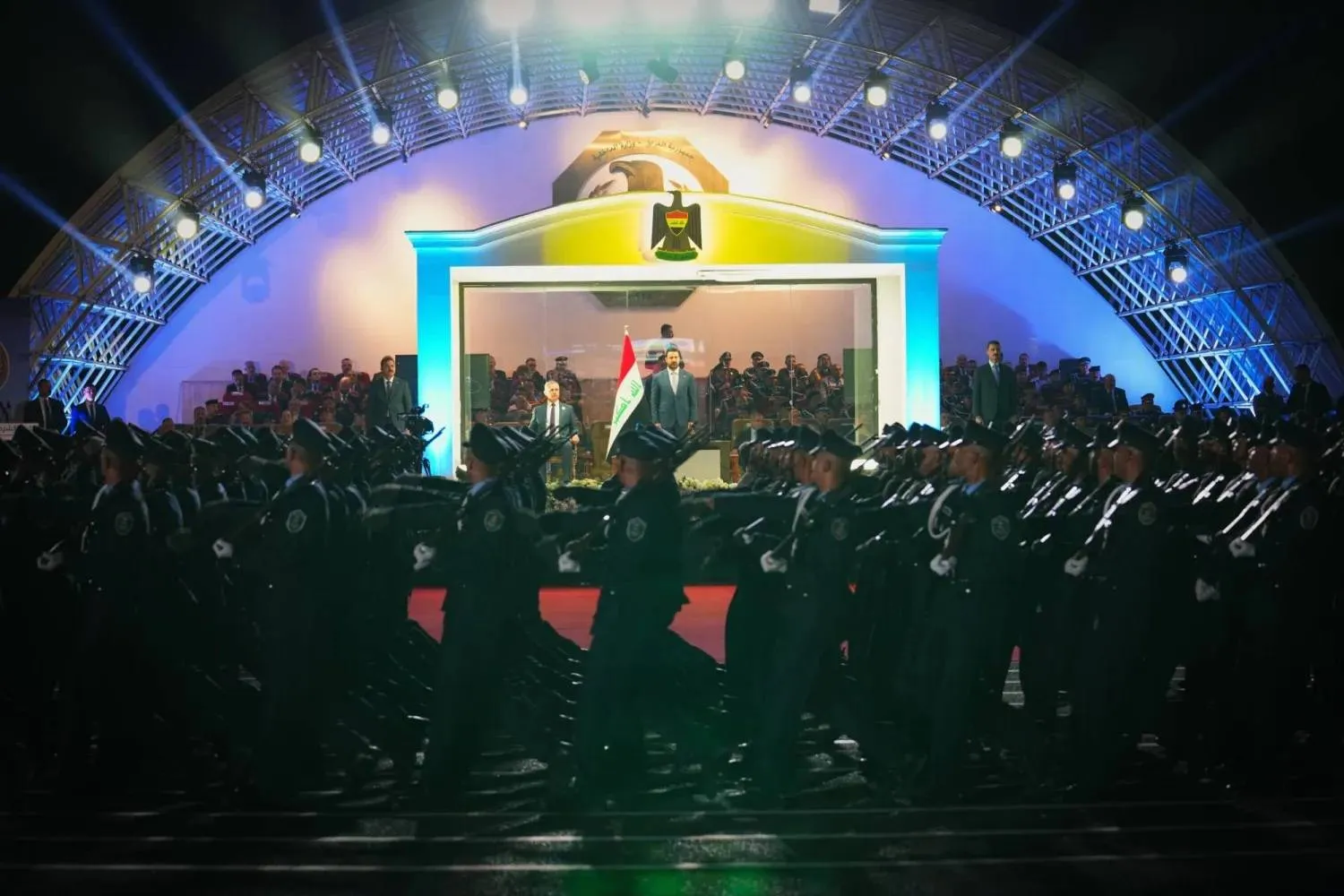
Police academy graduates at a ceremony attended by PM Ali al-Zaidi in Baghdad on September 13. (Government media)
TT

Arsenal of Iraqi Armed Factions ‘Remaining Until 2028’

Police academy graduates at a ceremony attended by PM Ali al-Zaidi in Baghdad on September 13. (Government media)

Following lengthy meetings in Baghdad, leaders within Iraq's ruling coalition believed they were capable of finalizing a settlement with representatives of pro-Iranian factions regarding post-US troop withdrawal arrangements, particularly the fate of weapons outside state control.

However, following attacks launched last Thursday from southern Iraq, near the border with Iran, against oil facilities in Saudi Arabia, these leaders likely found themselves functioning as "politicians searching for roles in a theater they do not control."

Private sources and officials speaking to Asharq Al-Awsat revealed that, prior to the recent attacks and with Iranian assistance, the factions succeeded in "hollowing out the weapons-containment plan after politically cornering Prime Minister Ali al-Zaidi and stripping him of his leverage and enforcement tools."

Indeed, despair is gripping officials across various authorities in Baghdad. During a meeting with an American official who recently visited Iraq, a senior Kurdish official addressed him saying: "The political system now resembles an old bus speeding down a slope without brakes."

‘Time bomb’

Over the past few weeks, members of the committee negotiating the containment of weapons - former PM Nouri al-Maliki, former PM Mohammed Shia al-Sudani, and Hadi al-Amiri, head of the Badr Organization - spent hours across at least four meetings negotiating a settlement based on the "non-use of weapons" on the condition that they are "not surrendered," according to sources.

Representatives of the factions planted - without objection from the senior negotiators - a "time bomb" within the settlement, which stipulates that "any agreement on the non-use of weapons shall be deemed void under specific circumstances."

Meanwhile, both sides reached a timeline extending until early 2028 for the factions to ultimately agree on laying down their arms.

Many believe that the timeline, initial details of which were obtained by Asharq Al-Awsat, reflects the vision of Iranian Parliament Speaker Mohammad Bagher Qalibaf, who requested that Iraqi factions "buy time" with the United States.

Against this backdrop, leaders within the Coordination Framework leapt back into the arena after months of losing political influence. This shift follows Iranian pressure spearheaded by Qalibaf and other Iranian officials who visited Baghdad last month to prevent the US from securing gains that had begun with its unprecedented support for the government of PM Ali al-Zaidi.

Following the formation of al-Zaidi's government, hopes were revived in Iraq and the region that it would be able to address one of the most complex issues within the Iraqi political system. However, over time, it became apparent that the factions possess "experience in taming successive governments in Baghdad."

The balance of power in Baghdad has shifted. September 30 has become "a date for a factional victory," as described by individuals from Shiite factions and parties, instead of a deadline for achieving state monopoly over arms.

Meanwhile, US forces are accelerating their departure without leaving air defense equipment, even with their closest Kurdish allies in Erbil, in the Kurdistan Region.
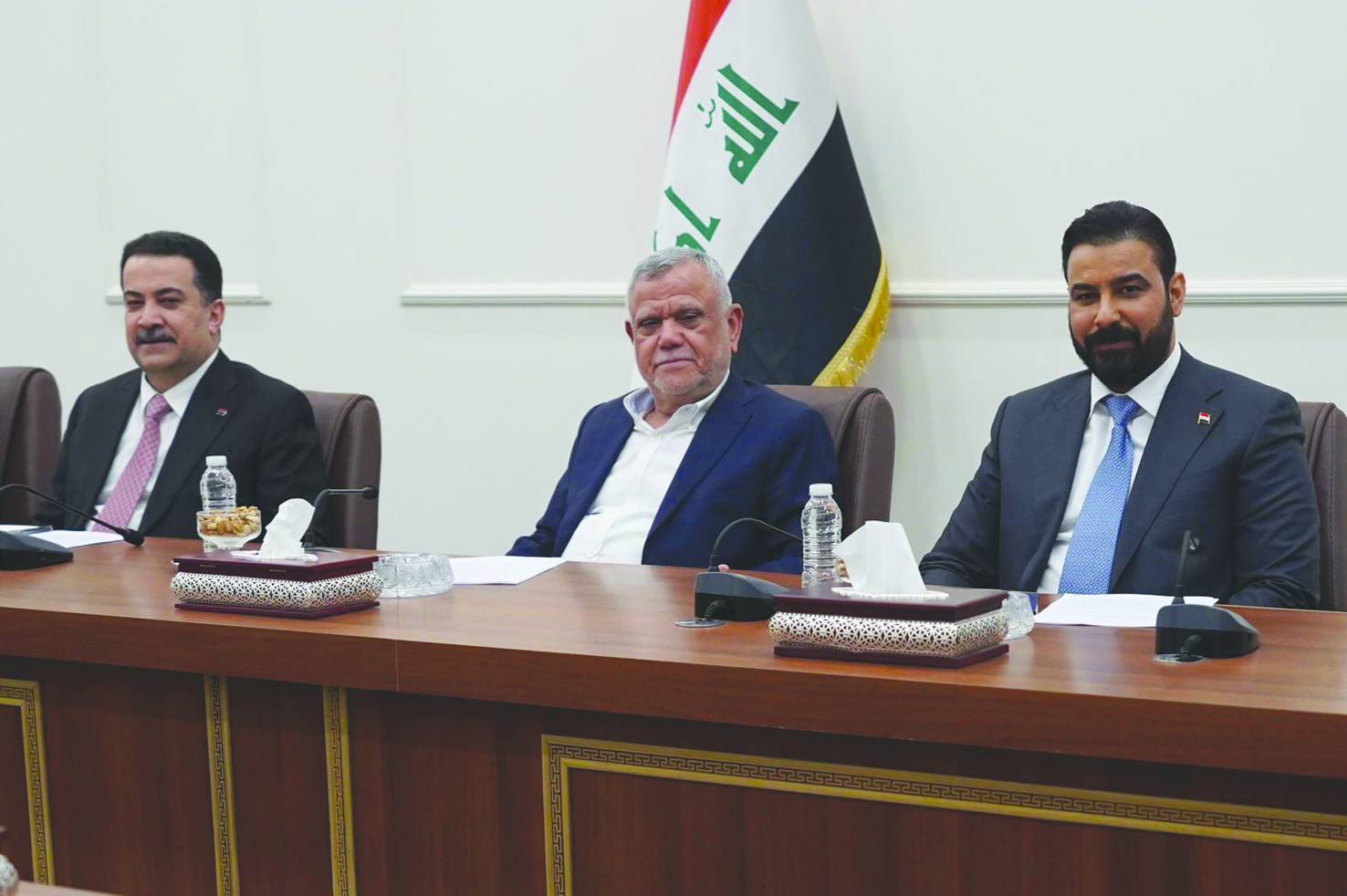
PM Ali al-Zaidi, Coordination Framework member Hadi al-Ameri and former PM Mohammed Shia al-Sudani. (Coordination Framework)

Deadline without guarantees

About a week before the attack on the East-West pipeline in Saudi Arabia, negotiators from the Coordination Framework, along with representatives of the factions, reached a timeline extending to the end of 2027.

This agreement has no guarantees, except that the Iraqi factions pledge - according to the draft reviewed by Asharq Al-Awsat - to integrate their fighters as brigades within the Popular Mobilization Forces without surrendering their weapons, in a process beginning September 30 and continuing until December 31, 2026.

The second phase of the agreement begins in early 2027 with scheduling the withdrawal of Turkish forces from Iraq, to be completed by July 1 of next year.

The third phase begins with the formation of a four-party committee comprising the PMF, Coordination Framework, factions, and government to monitor the implementation of the integration and the Turkish withdrawal until early 2028.

However, representatives of the factions approved the plan on the condition that it "be considered immediately void by one party" in the event that war against Iran resumes during any stage of implementation, or if "any party within the Coordination Framework or the factions faces an existential threat," according to two individuals briefed on the meeting.

One of them told Asharq Al-Awsat that "in return, the factions commit to not targeting foreign companies or other entities during the phases of the agreement."

Over the past months, Iraqi officials had been informing diplomatic and intelligence circles in the US that Baghdad had exited the "unity of the fronts" established by Iran across four regional capitals, but that they required "special treatment to resolve the issue of weapons outside state control."

In view of the recent draft agreement, the factions continue to tightly link the two tracks: regional war and restricting weapons to state control.
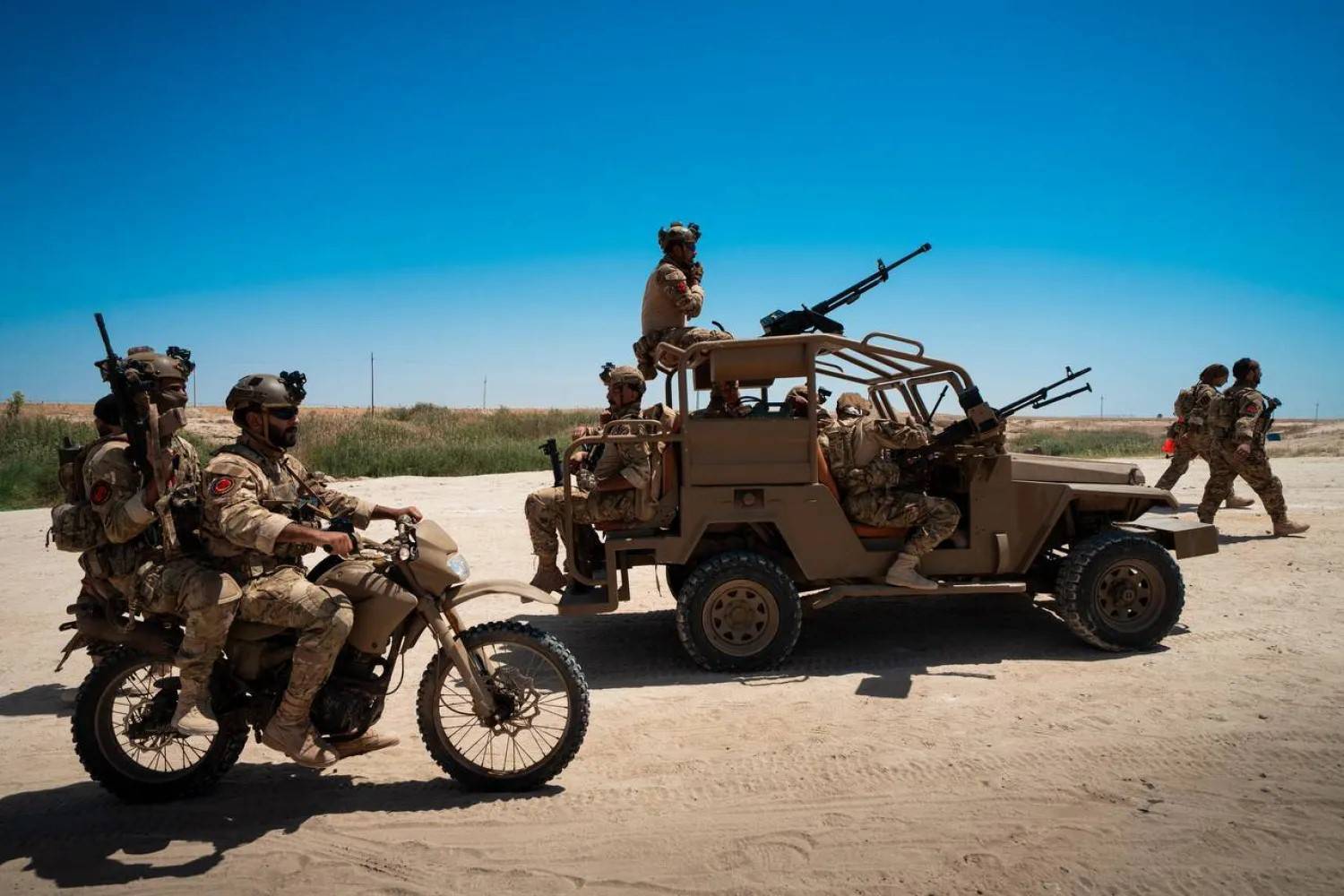
PMF fighters on patrol. (PMF)

‘Framework’ protects resistance fighters

A consensus was reached among the four leaders within the Framework and representatives of the factions on the necessity of "protecting the resistance fighters." During the final meeting, they drafted the agreement that outlines the post-September 30 phase "from the factions' perspective," according to a leader who was present at the meeting.

The leader, speaking on the condition of anonymity, stated that "the agreement may be announced early next October, depending on circumstances (...) as nothing is guaranteed."

In that meeting, held earlier this September, Haidar al-Gharawi, head of the Ansar Allah al-Awfiya faction, and Abu Alaa al-Walae, head of the Kataib Sayyid al-Shuhada, were in attendance. They were joined by a representative of Abu Hussein al-Humaidawi, head of Kataib Hezbollah, and another representing Akram al-Kaabi, head of the Harakat al-Nujaba. All of these factions are close to Iran and are also linked to shadow factions such as Awliya al-Dam and Ahl al-Kahf.

According to two individuals briefed on what transpired during the meeting, the representatives of the factions outlined "priorities" that entail "not surrendering weapons and avoiding any process that portrays the matter as a surrender to the US, while refraining from heading toward an escalation that would prompt the Americans to halt the support to al-Zaidi's government."

A senior political advisor within the ruling coalition believes that "the new approach, which tips the balance in favor of the factions over the government, received a strong boost after it leaked into the corridors of Shiite parties that the Americans would also not object to a proforma containment of weapons, on the condition that they are not used."

There is a growing impression regarding the futility of negotiating with the factions, and that a minimal agreement ensuring the freezing or regulation of weapons would be enough.

The advisor told Asharq Al-Awsat that "despair has begun creeping into the Americans and Iraqi officials tasked with weapons containment; in fact, some have stopped exerting pressure altogether to make the plan succeed and have abandoned the file out of sheer exhaustion from the factions," as he put it.

However, an Iraqi official speaking to Asharq Al-Awsat on the condition of anonymity, warned against "assuming a lenient American stance, as messages have recently arrived with the appointment of Steven Fagin as the new Chargé d'Affaires of the US Embassy."

The official stated: "It is being rumored in private meetings that Washington considers the factions' weapons to be the arsenal of a hostile state that Baghdad cannot keep, but must destroy."
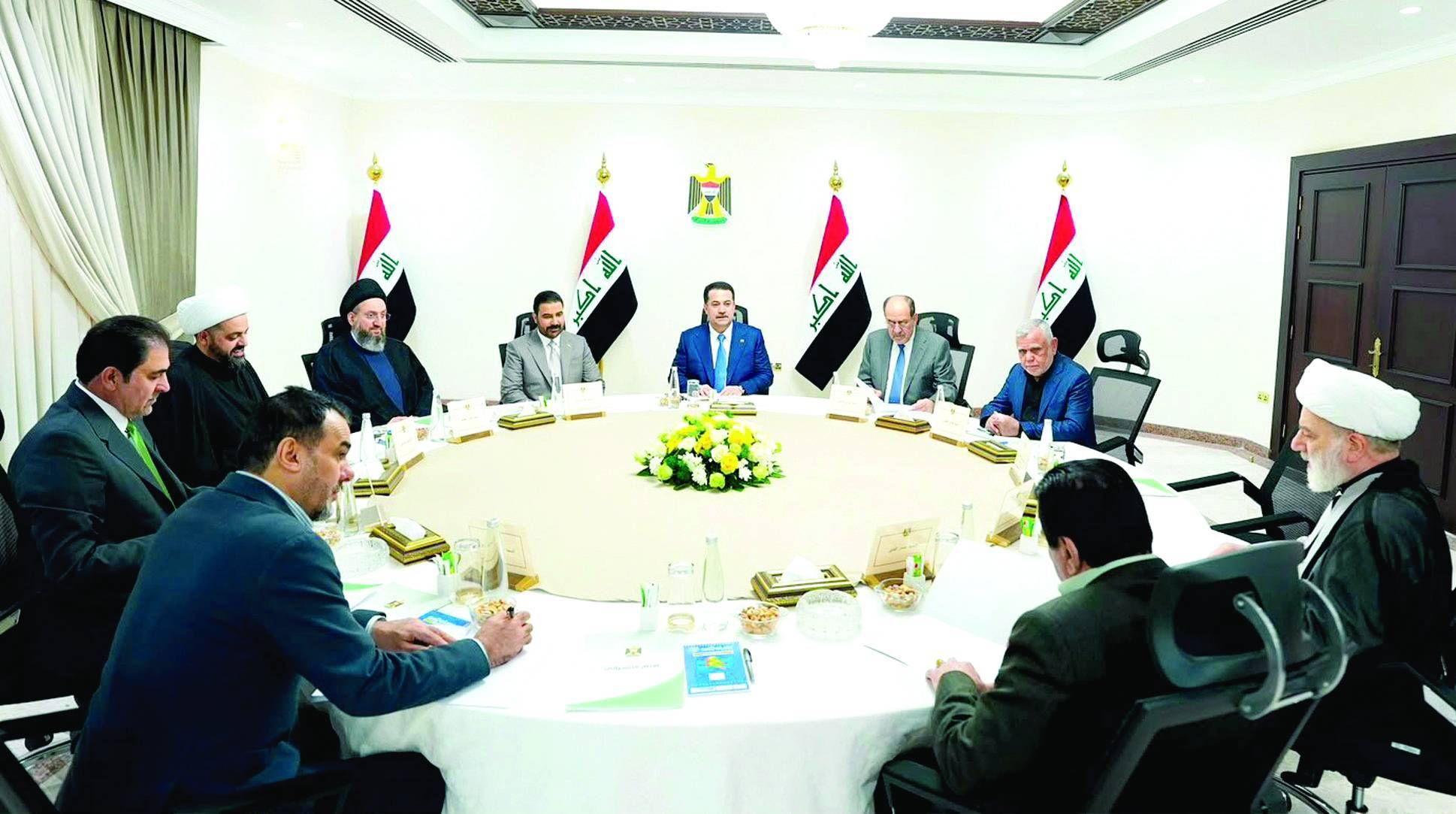
PM Ali al-Zaidi attends a Coordination Framework meeting in Baghdad. (INA)

No neutral party

Al-Zaidi was less involved in the Coordination Framework negotiations with the factions, perhaps because he "does not feel that the negotiating party is sufficiently neutral," according to an advisor within the ruling coalition.

During a recent Framework meeting held in Baghdad, al-Zaidi told the leaders of Shiite parties: "I will be frank with you, the committee negotiating with the factions is biased... I do not feel that trusting it is a wise decision."

However, the PM himself slowed down the weapons containment process. Those close to him said that he "realized how much the momentum he began with following his meeting with US President Donald Trump (mid-last July) was far from reality."

Nevertheless, a prominent leader responded to him by saying: "The committee includes veteran and experienced figures who are undertaking a complex mission that they have not been, and will not be, able to accomplish."

According to a person close to the government palace in Baghdad "al-Zaidi decided to step back slightly, but in a calculated manner, without abandoning the project."

A senior official also quoted al-Zaidi during one of the meetings as saying: "There is no solution to the dilemma except by imposing state authority over weapons."

In parallel with the four meetings held between the factions and leaders of the Framework, al-Zaidi engaged in bilateral dialogues with Harakat al-Nujaba and Kataib Sayyid al-Shuhada, offering them what reliable sources described as "civilian privileges" in exchange for a reasonable formula for disarmament.
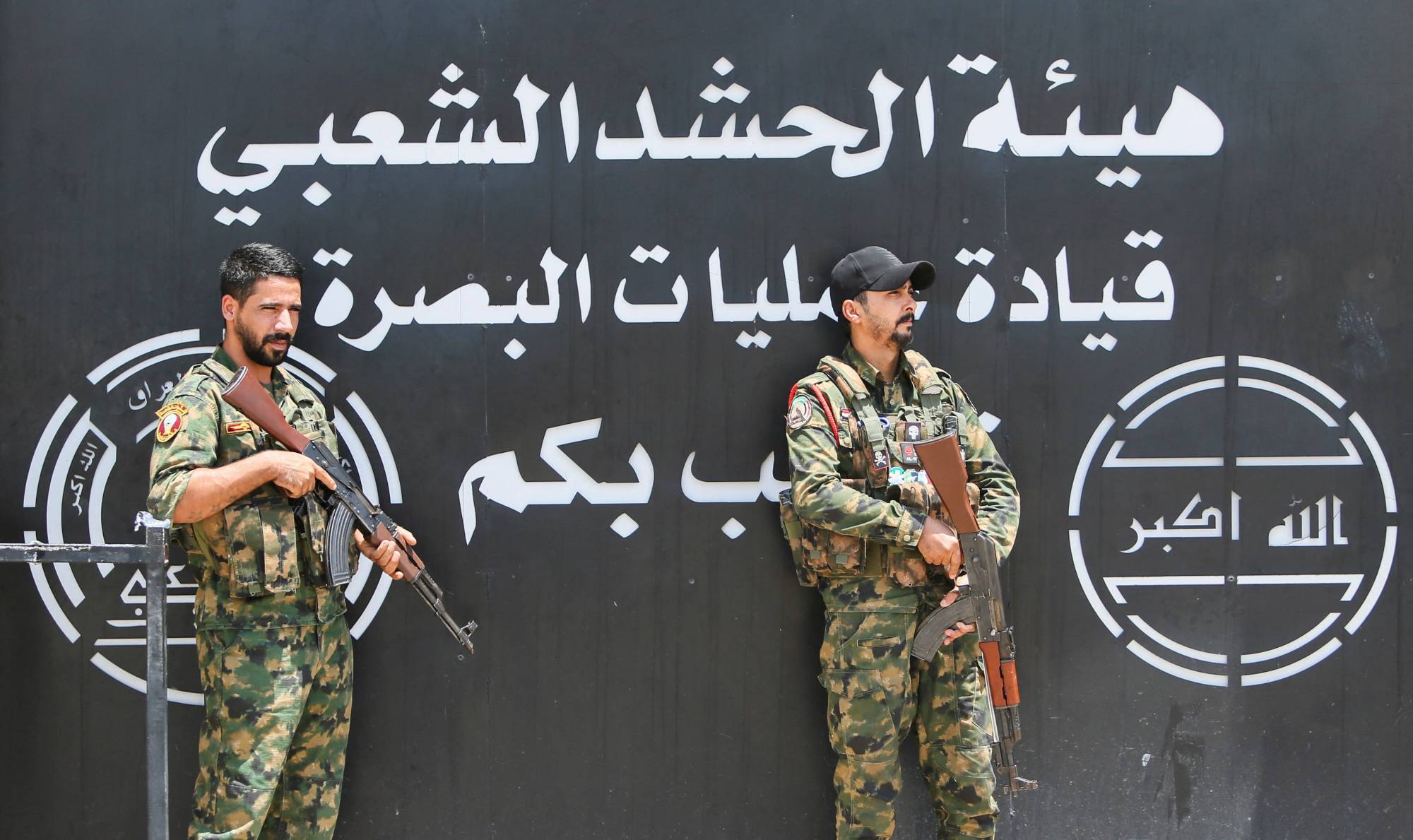
PMF members guard a PMF command base in Basra on July 29, 2026. (Reuters)

Factions want more

However, the factions are demanding more than that. A person close to the leader of one of the factions said they are "seeking guarantees against legal prosecution and a waiver on background checks for their members and leaderships."

He added: "Everyone knows that no one can grant these guarantees, but making them a condition is part of the process of buying time."

A person close to Al-Nujaba revealed that "the factions view civilian privileges (meaning positions within government institutions) as a natural entitlement resulting from their role in fighting ISIS."

They noted that Kataib Hezbollah was not part of the bilateral talks with the government due to "a deep crisis of trust that forces them to impose harsher conditions."

At most, the government's attempts to lure the factions into a settlement have failed. The American official told Asharq Al-Awsat that "the Iraqis he met feel that al-Zaidi stands alone without friends or allies," and that "the entire process (of weapons containment) has reached a dead end, and they do not know the way out of all this."

The official added that he heard a similar tone of despair from the Kurdish official in Erbil, saying: "The sound of a massive crash will echo from the dilapidated bus in Baghdad (...) the brothers in Baghdad cannot apply the brakes on the factions."


UN: Sudan’s Warring Parties Show No Serious Commitment to a Settlement

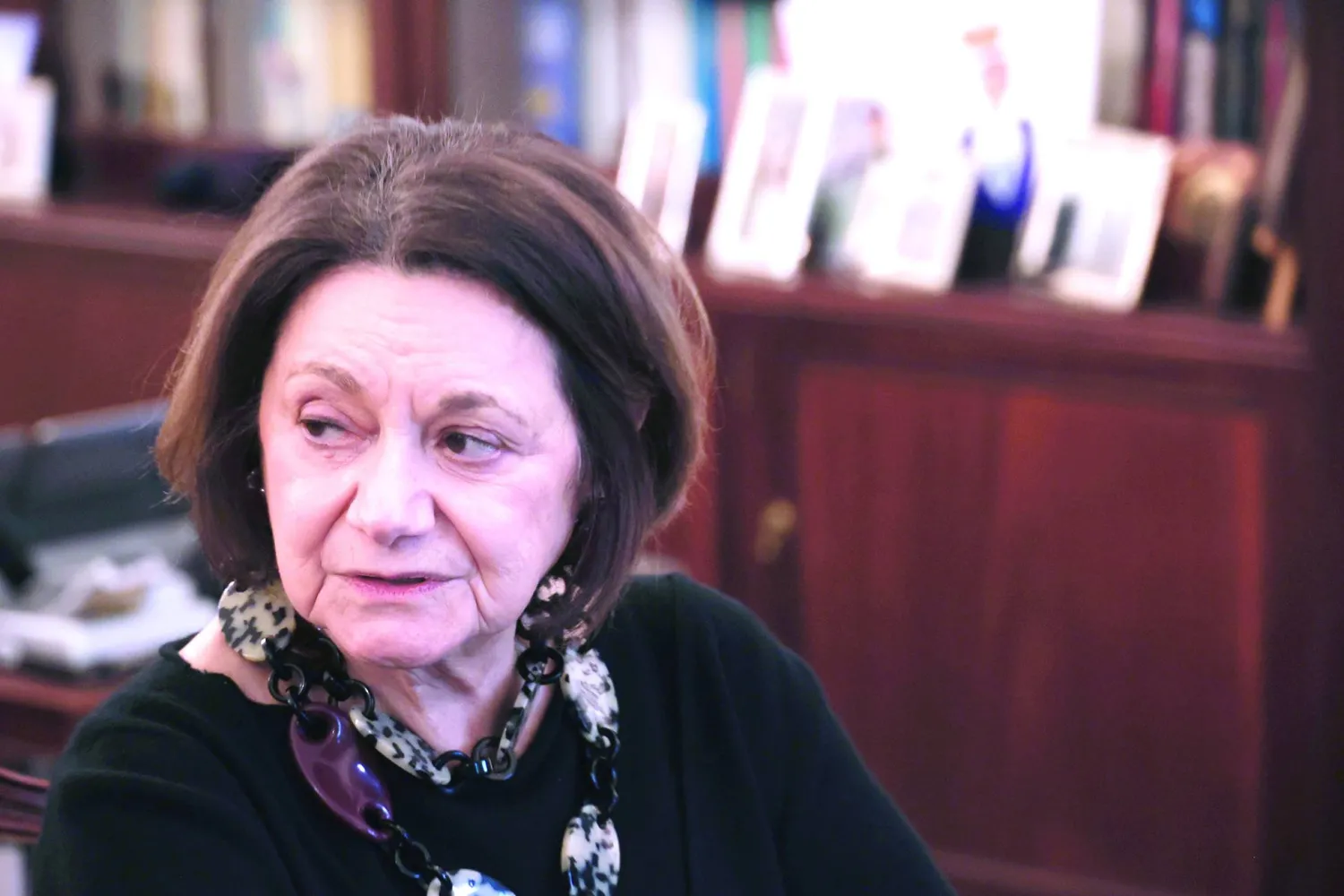
Rosemary DiCarlo, UN Under-Secretary-General for Political and Peacebuilding Affairs (AP)
TT

UN: Sudan’s Warring Parties Show No Serious Commitment to a Settlement

Rosemary DiCarlo, UN Under-Secretary-General for Political and Peacebuilding Affairs (AP)

Rosemary DiCarlo, UN Under-Secretary-General for Political and Peacebuilding Affairs, said Friday that Sudan’s warring parties showed no serious commitment to a negotiated settlement despite neither side being capable of securing a military victory, raising fears of further escalation in the coming months.

Briefing the Security Council, the UN under-secretary-general for political and peacebuilding affairs painted a bleak picture of a conflict fueled by continued arms supplies, recruitment and foreign support.

Her assessment came a day after Sudanese army chief Gen. Abdel Fattah al-Burhan disclosed that he had sent a message to US President Donald Trump expressing Sudan’s commitment to Washington-backed peace efforts.

Washington has not publicly responded to Burhan’s remarks. The army chief met Trump’s senior adviser for Arab and African affairs, Massad Boulos, in Egypt earlier this month.

Civilian toll mounts

DiCarlo told the council that conditions in Sudan continued to deteriorate, with little prospect of a breakthrough and no significant improvement in recent months.

Fighting had been particularly fierce in North Kordofan, South Kordofan and Blue Nile states, but violence was spreading well beyond those front lines.

Drone strikes and air raids had killed civilians at a displacement camp in Blue Nile, an artisanal gold mine in Red Sea state and several locations in North Kordofan, including schools, a courthouse, university accommodation and a shelter for displaced families.

She condemned a drone strike on two clearly marked World Food Program (WFP) trucks carrying food aid through an area subjected to repeated attacks by the Rapid Support Forces (RSF) and the Sudan People’s Liberation Movement-North (SPLM-N).

One driver was killed in the attack.

DiCarlo identified drone strikes as the leading cause of civilian casualties this year, calling for an immediate halt to such attacks and tighter restrictions on drone use.

She expressed concern that weapons continued to flow into Sudan while both sides recruited fighters, increasing the likelihood of further escalation.

Rather than seeking dialogue, military leaders appeared convinced they could make greater gains on the battlefield and achieve their objectives through force, provided foreign backing continued.

She urged the warring parties to abandon that calculation and called on outside powers to use their influence to end the conflict rather than fuel it.

DiCarlo also drew attention to growing insecurity along Sudan’s borders, particularly given the fragility of several neighboring countries.

Preventing the war from developing into a broader regional crisis must remain a collective priority, she stressed.

Diplomatic efforts continue

Despite the deadlock, DiCarlo reported continued UN coordination with the Quad, which is seeking to secure a humanitarian truce.

The United Nations stood ready to help implement any agreement, she stressed, emphasizing that further delays were unacceptable.

She also pointed to modest progress through the efforts of the UN secretary-general’s personal envoy for Sudan, Pekka Haavisto.

Both warring parties had established committees to consider the unilateral release of detainees and had negotiated prisoner exchanges.

Haavisto was also working with UNICEF to ensure that Sudanese students could take a unified, nationally recognized 12th-grade examination, while talks continued with Chad over arrangements for Sudanese refugee students.

Partners from the Quintet visited Khartoum in early September to consult Sudanese stakeholders, who consistently called for an end to the war and the restoration of civilian rule.

DiCarlo welcomed growing international engagement, citing the first joint meeting between the Quintet and the Quad during the UN General Assembly’s high-level week in September.

A Sudan Consultative Group meeting scheduled for Geneva next week would bring together both diplomatic groupings and other mediators.

Referring to the anniversary of the fall of El Fasher, DiCarlo called for much greater pressure on the warring parties and their supporters to end the fighting.

She emphasized that accountability was essential after the immense suffering endured by Sudanese civilians, who deserved peace and a genuine prospect of a better future.

US urges humanitarian truce

US Deputy Representative Jeff Bartos called for a humanitarian truce and an end to weapons flows into Sudan, pledging continued efforts to expand sanctions.

He described the Quintet’s work as the most credible path toward a peaceful political transition under civilian leadership.


Qatar Offers Comprehensive Plan to Ease Lebanon’s Electricity Crisis

Lebanese President Joseph Aoun welcomes Qatari Prime Minister and Foreign Minister Sheikh Mohammed bin Abdulrahman bin Jassim Al Thani in Beirut (AFP/Lebanese Presidency). 
TT

Qatar Offers Comprehensive Plan to Ease Lebanon’s Electricity Crisis

Lebanese President Joseph Aoun welcomes Qatari Prime Minister and Foreign Minister Sheikh Mohammed bin Abdulrahman bin Jassim Al Thani in Beirut (AFP/Lebanese Presidency). 

Lebanon and Qatar are close to reaching an agreement to overhaul Lebanon’s electricity sector, with Doha set to finance, develop and operate the project without requiring any upfront investment from the Lebanese treasury, Prime Minister Nawaf Salam announced Friday.

The announcement came during a visit to Beirut by Qatari Prime Minister and Foreign Minister Sheikh Mohammed bin Abdulrahman Al Thani, who unveiled plans for a major energy investment and broader cooperation, including energy interconnection projects linking Lebanon with Syria and Iraq.

Energy dominated the talks, alongside Israeli attacks in South Lebanon and Qatar’s continued support for the Lebanese Army.

Aoun calls for pressure on Israel

Al Thani began his visit at Baabda Palace, where President Joseph Aoun praised Qatar’s Emir Sheikh Tamim bin Hamad Al Thani and the Qatari leadership for their efforts to ease regional tensions and restore stability.

Aoun urged Doha to work with Arab and friendly countries to press Israel to halt its attacks in South Lebanon and implement the framework agreement reached through US-sponsored negotiations with Lebanon.

He described the mounting toll of Israeli operations, including casualties and widespread destruction in southern villages, and called for intensified diplomatic efforts to secure an Israeli withdrawal.

Aoun also reiterated Lebanon’s condemnation of attacks on Gulf countries, most recently Saudi Arabia, and reaffirmed solidarity with Gulf states.

Welcoming stronger bilateral ties, he highlighted Qatar’s willingness to help address Lebanon’s longstanding electricity crisis.

For his part, Al Thani reaffirmed Doha’s support for the Lebanese government’s efforts and called for Israel to withdraw from occupied Lebanese territory and hand over those areas to the Lebanese Army.

Qatar to finance and operate electricity project

At a joint news conference at the Grand Serail, Salam announced that the two governments were nearing an agreement to rehabilitate, develop and modernize Lebanon’s electricity generation infrastructure.

The proposed project would cover various sources of power generation and the infrastructure needed to support them, with the aim of providing a more reliable electricity supply at a lower cost.

Salam explained that the initiative would follow a build-operate-transfer (BOT) model, under which Qatar would finance, implement and operate the project before ownership is transferred.

Crucially, Lebanon would not have to provide any upfront capital investment, helping overcome the financial obstacles that have long hindered improvements to electricity supply.

Salam outlined the government’s priorities as increasing production, reducing costs and improving management, stressing that reliable electricity at affordable prices would encourage investment and help revive the economy.

The discussions also covered securing gas supplies and preparing an intergovernmental agreement to pave the way for a comprehensive solution to the electricity crisis.

Broader energy partnership

Al Thani confirmed that both countries had agreed on a comprehensive framework for energy cooperation, including a major investment project intended to benefit Lebanon’s economy and participating Qatari companies and institutions.

He reaffirmed Qatar’s commitment to standing alongside the Lebanese people during a difficult period for the region and expressed hope for closer cooperation across other sectors.

Turning to regional security, the Qatari prime minister urged all parties to implement UN Security Council Resolution 1701, called for Israel’s withdrawal from all occupied positions and stressed the importance of respecting existing agreements.

He also revealed that Doha was coordinating with Washington on reconstruction efforts in South Lebanon to enable displaced residents to return to their homes.

Qatar would continue supporting the Lebanese Army as a national institution responsible for safeguarding the country’s security and stability, he added.

Berri stresses support for army

Al Thani also met Parliament Speaker Nabih Berri to discuss political and security developments in Lebanon and the region, continued Israeli attacks and bilateral relations.

Berri expressed appreciation for Qatar’s longstanding support, particularly for South Lebanon, and its commitment to Lebanese sovereignty, the withdrawal of Israeli forces and the return of displaced residents.

He welcomed Doha’s willingness to contribute to economic recovery and reconstruction.

Both leaders agreed on the importance of strengthening national unity and supporting state institutions, particularly the Lebanese Army and security forces, as guarantors of stability and sovereignty.


Morocco Retains Key Ministers in New Government, Names Seven Women

Morocco’s King Mohammed VI presides over the appointment ceremony for members of the new government at the Royal Palace in Rabat on Friday (MAP). 
TT

Morocco Retains Key Ministers in New Government, Names Seven Women

Morocco’s King Mohammed VI presides over the appointment ceremony for members of the new government at the Royal Palace in Rabat on Friday (MAP). 

Morocco’s King Mohammed VI appointed a new government on Friday, retaining several key ministers while naming the country’s first female head of government and giving women seven positions in the cabinet.

The 32-member government, headed by Fatima Ezzahra El Mansouri, was sworn in at the Royal Palace in Rabat following parliamentary elections held on September 23.

The new administration combines experienced ministers with newcomers from political parties and technocratic backgrounds, reflecting an effort to balance continuity with fresh leadership as it seeks to accelerate reforms and improve public services.

Among the most prominent appointments was Fouzi Lekjaa, who was named minister of economy, finance and public sector performance after serving for years as minister delegate in charge of the budget.

His promotion, widely anticipated by political observers, reflects continued confidence in his ability to manage public finances and oversee major economic reforms.

In his previous role, Lekjaa gained extensive experience preparing annual budgets, monitoring their implementation and managing fiscal reforms.

He now faces the challenge of mobilizing resources, encouraging investment and financing social programs while maintaining macroeconomic stability.

His responsibilities will also include shaping the government’s fiscal policies and ensuring that development priorities remain compatible with sustainable public finances.

Key ministers retain portfolios

Nine ministers retained their positions in the new government, according to the Royal Cabinet’s announcement.

They include Interior Minister Abdelouafi Laftit, Foreign Minister Nasser Bourita, Justice Minister Abdellatif Ouahbi and Minister of Endowments and Islamic Affairs Ahmed Toufiq.

Nizar Baraka also remains minister of equipment and water, with forests added to his portfolio after previously falling under the Agriculture Ministry.

The appointments signal a preference for continuity in key government departments, even as other portfolios have been assigned to new figures.

Seven women in new cabinet

The government includes seven women, among them El Mansouri, who becomes the first woman to lead Morocco’s government.

The other six hold ministerial or minister delegate positions, giving women responsibilities across economic, social and administrative sectors.

Charafat Afailal was appointed minister of energy, mines and sustainable development, while Najwa Koukouss takes charge of family affairs, social development and equality.

Kouloub Faitah was named minister delegate to the head of government in charge of relations with parliament and civil society.

Madiha Khayr becomes minister delegate for vocational training and qualification, working under the minister of national education, preschool education, vocational training and qualification.

Fatima Saadi was appointed minister delegate for housing and urban policy under the minister responsible for national territorial planning, urban development, housing and urban policy.

Aicha Kelaa takes charge of administrative reform as minister delegate under the minister of artificial intelligence, digital transformation and administrative reform.

The appointments place women in positions spanning energy, social policy, parliamentary affairs, vocational training, housing and public administration.

El Mansouri’s historic appointment, alongside the broader female representation in the cabinet, has renewed debate over women’s participation in political leadership and government decision-making in Morocco.