Analysts: Bab al-Mandab Tests Limits of Saudi-Iranian Reconciliation

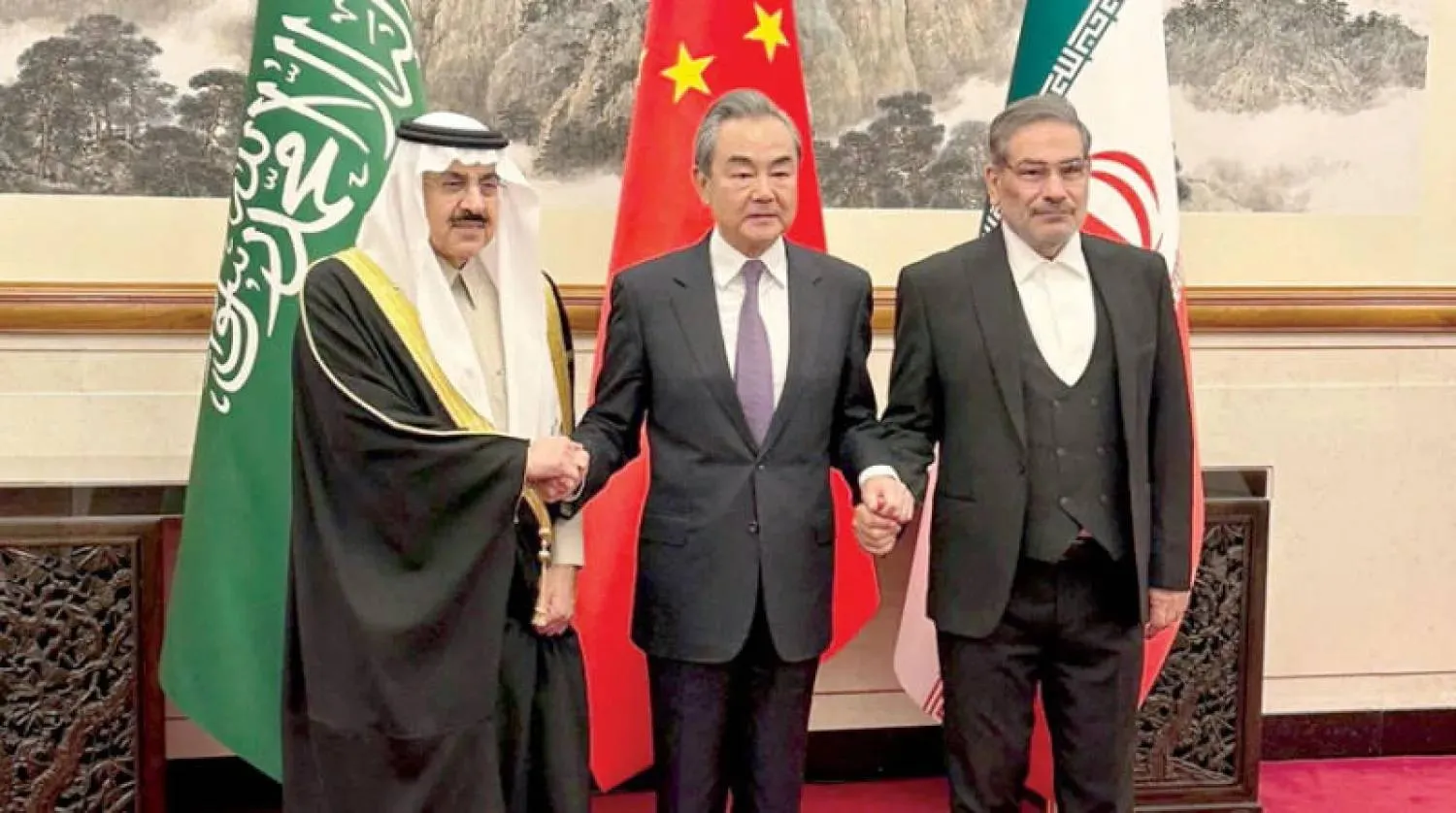
Beijing faces a difficult challenge in ensuring Tehran fulfills its commitments under the agreement with Saudi Arabia, according to analysts. (SPA)
TT

Analysts: Bab al-Mandab Tests Limits of Saudi-Iranian Reconciliation

Beijing faces a difficult challenge in ensuring Tehran fulfills its commitments under the agreement with Saudi Arabia, according to analysts. (SPA)

More than three years after Saudi Arabia and Iran signed their agreement in Beijing, brokered by China, the reconciliation between Riyadh and Tehran is facing one of its most difficult tests, amid accusations that Iran is supporting armed groups in Yemen and Iraq that have targeted Saudi Arabia, and as the Houthis move toward the Bab al-Mandab Strait, raising concerns over the Kingdom's security and navigation in the Red Sea.

AFP reported, citing two Houthi military sources, that experts from Iran's Revolutionary Guard Corps had visited the Bab al-Mandab area, the port and airport of Mokha, and the Jabal al-Nar camp east of the city. The sources said the experts had supervised the digging of tunnels in the mountains overlooking Mokha and the Bab al-Mandab Strait and had discussed installing radars near Mokha and on Zuqar Island in the southern Red Sea.

Analysts who spoke to Asharq Al-Awsat said the latest developments not only test Tehran's commitment to its pledges, but also put China's role under scrutiny. The issue is no longer limited to maintaining diplomatic relations between Saudi Arabia and Iran, but also concerns the agreement's ability to curb sources of indirect threats and prevent armed groups from being used to pressure countries in the region.

Riyadh and Tehran signed an agreement in Beijing under Chinese sponsorship to resume diplomatic relations after a break of nearly seven years.

Bab al-Mandab: A Serious Test for the Agreement

Dr. Abdulaziz bin Sager, Chairman of the Gulf Research Center, said the Beijing Agreement, signed in March 2023, was based on three main components: restoring diplomatic relations after seven years of estrangement, reactivating bilateral cooperation agreements, and respecting the sovereignty of states and noninterference in their internal affairs. He described the third component as "the most important and most sensitive."

In an interview with Asharq Al-Awsat, bin Sager said Iran's actions through the Houthis near the Bab al-Mandab Strait "represent a serious test of the Saudi-Iranian agreement" because they violate both its provisions and its spirit, which was based on building trust. He added that the commitments should not be limited to Iran's direct actions, but should also cover the conduct of groups linked to the Iranian Revolutionary Guard Corps.

"There is no meaning to any agreement with Iran that does not cover the actions of its regional proxies that threaten regional and international security," he said, considering support for the Houthis or incitement to threaten the Kingdom's security a "blatant violation" of the commitment to respect sovereignty and refrain from interference.

Abdulaziz Al-Shaibani, a researcher and adviser on Chinese and Asian affairs, takes a different view. He said Iranian actions near the Bab al-Mandab Strait test the Beijing Agreement but do not mean that it has collapsed. The agreement was designed primarily to restore relations and open channels for dialogue, not to end the rivalry between Riyadh and Tehran or establish a strategic partnership between them.

The Proxy Policy

Saudi political analyst Dr. Khalid Al-Habbas said the militia policy is one of Tehran's most important tools for expanding its regional influence. He said the Iran Revolutionary Guard Corps supports, trains, and organizes these groups, enabling them to play roles that serve Iranian objectives when needed.

Al-Habbas places the latest Houthi moves, as well as the earlier activities of Iran-aligned factions in Iraq, within the context of growing military and economic pressure on Tehran and its efforts to open alternative fronts of pressure. He said moves toward the Bab al-Mandab Strait could threaten maritime navigation, drive up energy prices, and disrupt supply chains.

Dr. Khalid cautioned against relying on Houthi pledges not to target ships, saying that the experience of the Red Sea since late 2023 has demonstrated otherwise. He stressed that protecting maritime navigation "is an international responsibility, not one that falls on the Kingdom alone," given the global importance of the waterway.

According to Al-Habbas, Saudi Arabia, while remaining committed to resolving disputes peacefully and keeping the door to diplomacy open, has the right to defend itself under Article 51 of the United Nations Charter. It also has the right to "demand that Iran comply with the terms of the agreement and review it in light of the extent to which Tehran has honored its commitments."

Has the Testing Period Ended?

Dr. Samir Salha, a professor of international law and international relations at Istanbul University, takes a more forceful position. "We have moved beyond the question of testing the understandings. It is clear that the Iranian side has departed from their spirit and begun pursuing a regional policy different from what it had pledged," he said.

He added that the central question is no longer simply whether Tehran is complying, but who is arming the Houthis, training them, and directing their operations.

"The threats appear Houthi on the surface, but at their core they are Iranian," he said, arguing that the mobilization of Iran-aligned groups in Yemen, Iraq, and Lebanon reflects an Iranian priority that has not changed despite the restoration of relations with Riyadh.

In Salha's assessment, Saudi Arabia will not base its options solely on waiting for China to act. Instead, it will continue exploring strategic alternatives to ensure its security while keeping the diplomatic track open, a process he said has already begun in recent months.

Beijing: Opening the Way Is Not Enough

The analysts agree that China has significant tools for influencing Iran, given the depth of their economic, political, and military ties. But they say Beijing is being called upon to move from its symbolic role as sponsor of the agreement to a more decisive role in monitoring its implementation.

Bin Sager said Beijing "is capable of verifying Iranian conduct that violates the agreement," but tends to favor ambiguity and avoids taking decisive positions when crises do not directly affect its national security. What is needed now, he said, is a clear mechanism for verifying Tehran's compliance and restraining its proxies.

Salha, meanwhile, said China faces a difficult choice between simply protecting its relationship with Iran and defending its broader interests with the Gulf states and the trade routes that pass through the Red Sea. "This is primarily a test for Iran, but secondarily a test for Beijing," he said.

"Beijing faces a difficult, sensitive, and delicate situation. There have been positive indications in its positions and political messages toward Iran recently, but betting that Tehran will accept and heed what Beijing says is difficult," he added.

Dr. Samir noted that "Beijing succeeded in opening the way for a new test in Saudi-Iranian relations, but it now needs to go further if it wants to protect its interests and relations with the Gulf states."

Al-Shaibani, for his part, said Beijing tends to favor diplomacy and avoid direct intervention, and is not expected to decisively side with either party. He concluded that the future of the agreement will depend on China's ability to keep dialogue open and contain crises, while Saudi Arabia retains the right to protect its security and interests through its own capabilities and regional partnerships.


Kfara Facility Raises New Questions Over Military Site Verification in Southern Lebanon

Vehicles pass damaged buildings near a Lebanese army checkpoint in the southern Lebanese town of Kafra on June 15, 2026 (AFP)
TT

Kfara Facility Raises New Questions Over Military Site Verification in Southern Lebanon

Vehicles pass damaged buildings near a Lebanese army checkpoint in the southern Lebanese town of Kafra on June 15, 2026 (AFP)

Israel's claim that Hezbollah has resumed military activity at a facility in southern Lebanon previously entered by the Lebanese army has renewed questions over how military sites south of the Litani River are secured and whether measures are in place to prevent their reuse.

The allegation, involving a facility in the town of Kafra, came as US-sponsored military talks were set to take place in Tampa, Florida, on Tuesday and Wednesday, focusing on security provisions of the "framework agreement" between Lebanon and Israel.

Israeli allegations raise questions over verification

Israeli military spokesperson Ella Waweya said the Lebanese army was asked through a US monitoring mechanism in December 2025 to address a facility in Kafra allegedly used by Hezbollah to store weapons.

The Lebanese army said it had taken the necessary measures, but Hezbollah continued using the site and moving equipment out, according to Waweya.

She released footage purportedly showing Hezbollah members loading weapons onto a truck later targeted by Israeli forces.

The Israeli statement also accused individuals within the Lebanese army of coordinating with Hezbollah, enabling the group to remove military equipment before security measures could be carried out.

Neither the allegations nor the date of the footage could be independently verified. There was no immediate Lebanese response.

Israeli claims aim to pressure army, reset negotiations: Expert

Retired Brigadier General Dr. Khalil Helou said the timing of Israel's announcement, just hours before the Tampa talks, was calculated to pressure the Lebanese army, undermine confidence in its capabilities and force additional conditions that could send negotiations back to square one.

"Israel uses such announcements at carefully chosen political and military moments, regardless of the nature or scale of the reported activity," Helou told Asharq Al-Awsat.

He said Israeli claims about Hezbollah movements often coincide with negotiations or Lebanese army deployments, portraying the military as incapable of fulfilling its responsibilities.

"The Israelis know perfectly well that this is not true," he said, accusing Israel itself of obstructing the army's effective deployment in the south.

Helou pointed to the town of Zawtar, where he said the Lebanese army was deployed in the western sector while Israeli forces operated in the east.

"Israeli forces are carrying out explosions and demolitions, and whenever the Lebanese army moves, it comes under attack or shelling near its positions," he said.

He argued that Israel continued to behave as though the war had not ended, linking that stance to Israeli elections and calls by some ministers to annex Lebanese territory.

Helou also cited tunnels dug by Hezbollah between 2014 and 2018, saying Israel had known about them before publicly revealing their existence.

"The timing of Israeli statements and announcements carries political and military significance. No announcement can be viewed in isolation from the circumstances surrounding it," he said.

Footage could become leverage for tougher withdrawal terms

Retired Brigadier General Khaled Hamadeh also questioned the timing of the Israeli announcement, saying it was intended to put pressure on Lebanon's negotiating delegation.

He said Israel could use the footage to demand stricter verification measures to ensure southern areas are free of Hezbollah's military presence, while making its withdrawal conditional on security guarantees that could prolong the occupation.

For Hamadeh, the crucial question is not simply what the images show, but when they were taken and whether they reflect current conditions.

"Are these recent images or do they date back to an earlier period? Were they taken today or during the previous war? We cannot say for certain without verifying their timing and content," he told Asharq Al-Awsat.

He said the Lebanese army might be unable to definitively confirm or refute Israel's account, particularly if it had no presence in the area or could not gain access to verify conditions on the ground.

"If the Lebanese army has declared control over the area south of the Litani, and Israel then says Hezbollah is still operating militarily from a facility in Kafra, Israel will use that to challenge the effectiveness of Lebanese measures," Hamadeh said.

"It will argue that the declared control has failed to prevent Hezbollah from continuing its military activity."

Hamadeh doubted Hezbollah was preparing to launch another war from the area, but warned that Israel could exploit the allegations, regardless of their accuracy, to reopen negotiations over verification procedures and demand further guarantees before withdrawing.

"I do not believe Hezbollah intends to launch a new war from this area. The problem is how Israel uses this information, regardless of whether it is accurate, to reopen the debate over verification measures and demand additional guarantees before withdrawing," he said.

The absence of a trusted, mutually agreed verification body, he argued, gives Israel considerable room to maneuver.

Israel could cite continuing Hezbollah military activity to justify refusing to withdraw, while Lebanon lacks sufficient leverage to compel it to honor its commitments.

Hamadeh warned that tying withdrawal to further security demands could revive proposals for a drawn-out timetable.

"The agreement reached is supposed to lead to an Israeli withdrawal from Lebanese territory," he said.

"But giving Israel additional pretexts could reopen the door to a prolonged, phased withdrawal, potentially stretching over five years, on the grounds that the Lebanese state needs enough time to dismantle Hezbollah's military infrastructure and confiscate its weapons."


Iraq Threatens Crackdown on Opponents of Disarmament Plan

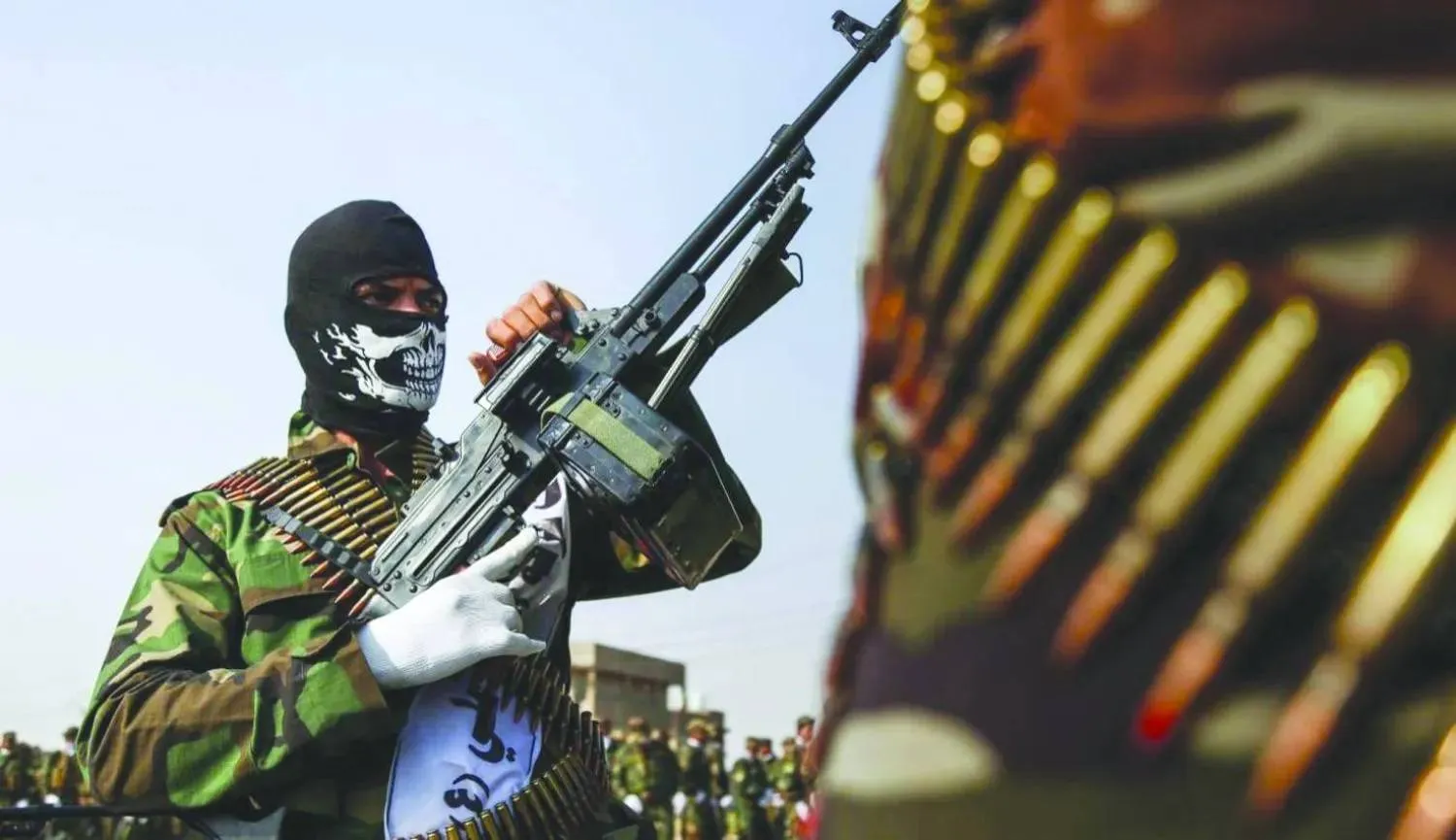
 Iraqi armed factions set conditions for bringing weapons under state control (X)
Iraqi armed factions set conditions for bringing weapons under state control (X)
TT

Iraq Threatens Crackdown on Opponents of Disarmament Plan

 Iraqi armed factions set conditions for bringing weapons under state control (X)
Iraqi armed factions set conditions for bringing weapons under state control (X)

Iraq's government and parliament have threatened legal action against opponents of a plan to bring all weapons under state control, even as Türkiye ruled out withdrawing its troops from Iraq until regional and border security conditions are met.

Baghdad says the disarmament plan will take effect after the withdrawal of international coalition forces.

The ruling Coordination Framework alliance reaffirmed its commitment to resolving the issue of weapons outside state control by June 30, 2027, authorizing the government to "take steps to ensure compliance," according to a statement issued Monday evening.

The renewed push comes just days after a new cabinet was formed, with several political groups that maintain armed factions securing ministerial posts.

Among them is Asaib Ahl al-Haq, which landed the deputy prime minister's post, potentially reinforcing reports that Washington had given such groups a "green light" to join the government in exchange for laying down their arms.

Sources close to the armed factions said most now acknowledge the need for disarmament after securing influential positions in government and parliament. Kataib Hezbollah, however, remains opposed.

Criminal charges threatened

The government has ordered state institutions to enforce the law and pursue criminal complaints against anyone who incites opposition through the media or seeks to obstruct decisions to place weapons exclusively under state control.

In a statement, the prime minister's media office said freedom of expression and media activity, while guaranteed by the constitution and law, must operate within legal boundaries and respect public order and citizens' rights.

Such freedoms, it warned, cannot be used to incite violence or internal conflict, support weapons outside state control or back outlawed groups.

The warning appeared directed at armed faction spokespeople and supporters who have repeatedly mocked or rejected government disarmament announcements on television, in public statements and through online posts.

Activists close to Kataib Hezbollah have openly opposed disarmament, as has Kazem al-Fartousi, spokesman for Kataib Sayyid al-Shuhada. Their objections have frequently been accompanied by sharp criticism of Prime Minister Ali al-Zaidi.

The government said it had instructed all institutions to pursue criminal complaints against anyone involved in media incitement or efforts to derail state decisions on weapons control.

It cited Iraq's constitution and Articles 2 and 4 of Anti-Terrorism Law No. 13 of 2005 as the legal basis for the measures.

The statement also pointed to a Supreme Judicial Council position that using, supporting or threatening to use weapons outside state authority falls under the anti-terrorism law.

Parliament backs crackdown

Parliament Speaker Haibat al-Halbousi threw his support behind the government's legal measures, saying they were necessary to preserve civil peace, enforce the law and bring all weapons under state control.

Halbousi stressed that constitutionally protected freedoms of expression and media activity must be balanced against legal and professional obligations.

Those freedoms, he said, must not become a cover for inciting violence, fueling internal conflict or supporting weapons beyond state authority.

He backed holding accountable anyone proven to have incited violence or threatened public security and national stability, while emphasizing that enforcement must respect constitutional rights, legal safeguards and the principle of equal treatment under the law.

Security agencies step up scrutiny

Iraq's security agencies have identified cases of incitement and calls to obstruct disarmament decisions, according to Saad Maan, head of the country's Security Media Cell.

Speaking to the official Iraqi News Agency, Maan said specialized units within the office of the commander-in-chief of the armed forces, the Iraqi National Intelligence Service, the National Security Service and the Interior Ministry were monitoring and analyzing such activity.

He stressed that no action would be taken without judicial authorization.

Maan said directives from the commander-in-chief called for pursuing those who incite violence or support weapons outside state control, describing the measures as essential to maintaining long-term security amid regional and global turmoil.

Freedom of expression and media activity remain constitutionally protected, he said, but those protections do not extend to stirring chaos, tensions or unrest.

Asked where authorities draw the line between free expression and punishable media incitement, Maan said criminal liability depends on the applicable law and whether the elements of an offense are established.

Any prosecution, he added, must remain under judicial authority.

Türkiye stands firm on troop presence

Meanwhile, Turkish Defense Minister Yasar Guler said Ankara would keep its forces in Iraq and Syria until it was satisfied that security along its borders with both countries was fully guaranteed.

Türkiye "maintains its military presence in Iraq and Syria," Agence France-Presse quoted Guler as saying.

"Once we are certain that the necessary conditions regarding regional and border security have been met, the status of our deployments and presence in the region will be reviewed," he added.

The statement highlights a key obstacle to Iraq's disarmament plan: Iraqi armed factions had made the withdrawal of Turkish troops one of their conditions for agreeing to the initiative during negotiations with the Coordination Framework.

On October 14, Sabah al-Numan, spokesman for the commander-in-chief of Iraq's armed forces, suggested the issue of Turkish troops in northern Iraq could be resolved within three months.

Turkish forces are stationed at the Zilkan base in the mountainous Bashiqa district, about 30 kilometers (19 miles) northeast of Mosul, and at numerous other positions near the shared border.

Local reports put the number of Turkish checkpoints inside Iraqi territory and along the border at around 130.

In September, Iraqi Prime Minister Ali al-Zaidi met Turkish President Recep Tayyip Erdogan on the sidelines of the United Nations General Assembly in New York.

The talks produced an agreement for a "gradual evacuation" of Turkish forces from the Zilkan base, scheduled to begin officially on October 1, with control to pass to Baghdad under an agreed timetable and mechanism.

But Ankara has long tied any withdrawal to Baghdad's progress in securing Sinjar district in northern Nineveh province.

Türkiye demands that Iraqi authorities establish control over the district and expel armed groups, particularly wings of the Kurdistan Workers' Party (PKK) that have not complied with the decision to dissolve the party and surrender weapons, announced by its leader Abdullah Ocalan in late February 2025.


15 Years After Gaddafi's Death, Supporters Struggle to Find Political ‘Heir’

Late Libyan leader Muammar al-Gaddafi. (Reuters)
TT

15 Years After Gaddafi's Death, Supporters Struggle to Find Political ‘Heir’

Late Libyan leader Muammar al-Gaddafi. (Reuters)

Fifteen years after the killing of Libyan leader Muammar al-Gaddafi, his supporters are still searching for a political heir, with the assassination of his son Saif al-Islam last February extinguishing hopes of a comeback that had grown since his ill-fated presidential bid in 2021.

Gaddafi was captured by opposition fighters in the city of Misrata on Oct. 20, 2011, before being killed as his rule of more than four decades came to an end. His downfall left a political vacuum among loyalists who later rallied around Saif al-Islam as the most prominent face of the former regime.

Hopes of a political revival gained momentum when Saif al-Islam announced his presidential candidacy in November 2021. But the elections never took place, and his assassination in Zintan in February reopened the question of succession, leaving the movement without a figure capable of uniting its supporters.

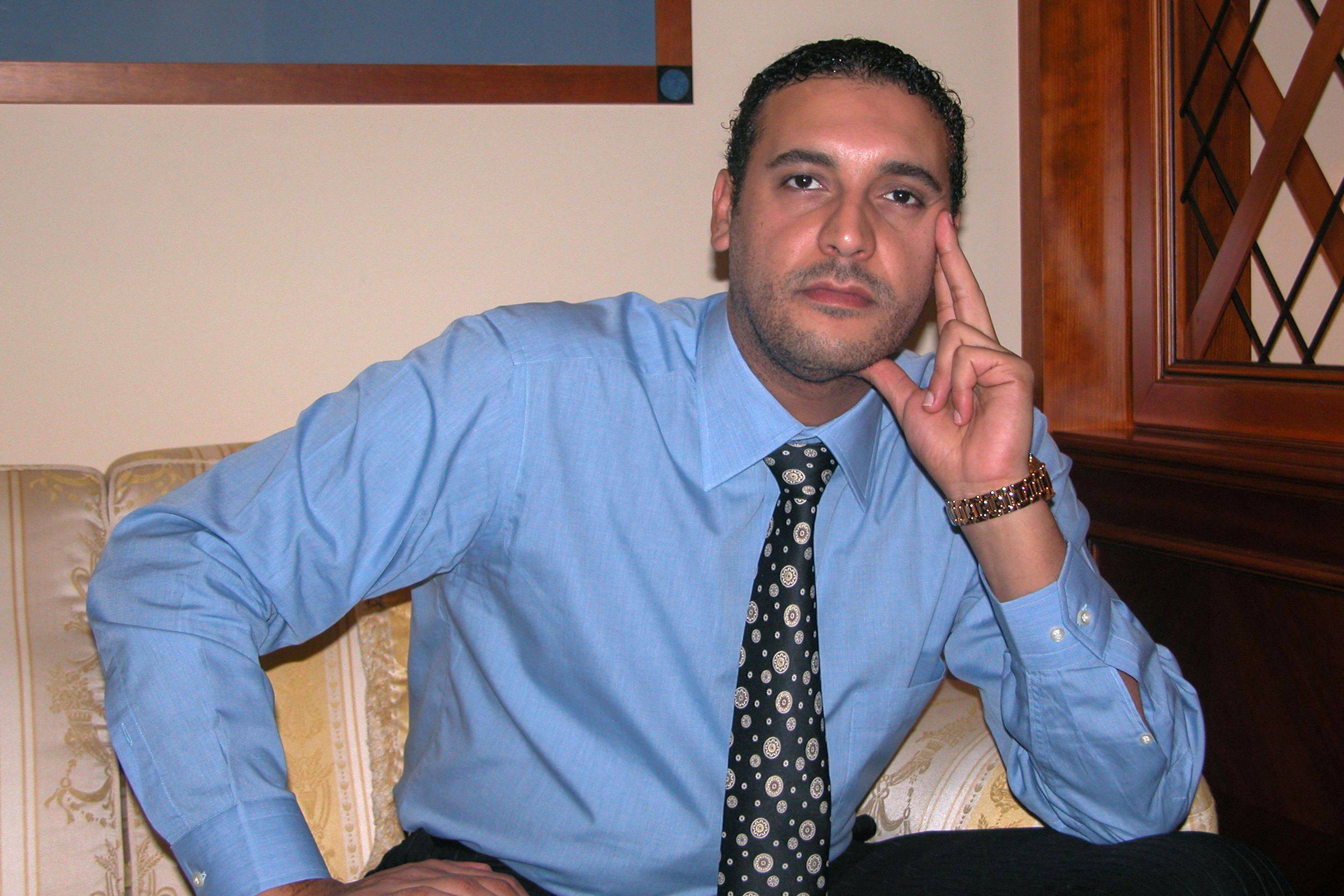
Political analyst Hossam Fenaish told Asharq Al-Awsat that Gaddafi loyalists were searching for a successor, with attention turning to his surviving children Aisha, Al-Saadi and Mohammed. Hannibal, he said, appeared to have the weakest prospects. Two other sons, Khamis and Saif al-Arab, were killed during the 2011 uprising.

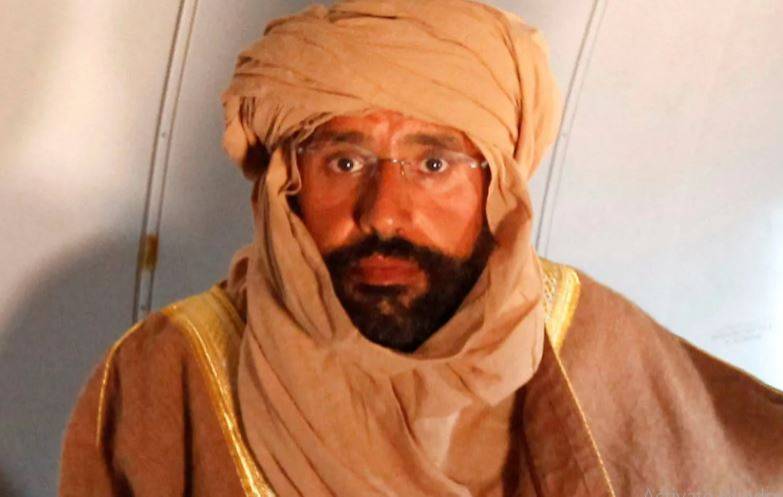
Saif al-Islam Gaddafi in November 2011. (Reuters)

The most notable shift came in September, when supporters of the former regime began promoting Aisha Gaddafi on social media as a possible contender.

Their campaign drew on an open online poll that reportedly put her more than 30,000 votes ahead of her nearest rival. But there was no verified information on the number of participants or whether the results reflected wider public opinion.

Aqila Dalhoum, head of the media and human rights team at the National Truth Committee investigating Saif al-Islam's killing, backed the idea. He said the poll reflected both the Gaddafi family's enduring symbolic appeal among some Libyans and frustration over the country's political, economic and living crises.

Aisha, however, has largely stayed out of public politics. She lives in Oman with her brother Mohammed and has turned to visual art, exhibiting works depicting her father and brother Mutassim at Moscow's State Museum of Oriental Art in 2024, followed by an exhibition in Muscat this year.

Yet enthusiasm for her possible candidacy is far from unanimous.

Two prominent former regime figures declined to comment on calls for her to run. One questioned whether such discussions were premature.

"Where are the presidential elections at this point, given the stalled political process in Libya?" he told Asharq Al-Awsat.

A former Libyan army spokesman also played down the campaign, saying it reflected individual initiatives rather than a collective decision by Gaddafi loyalists.

No candidate had secured a consensus, he told Asharq Al-Awsat.

"Aisha is a Libyan citizen who has the right to run for office like anyone else," he said. "Choosing a representative of the former regime's supporters begins with a family decision, followed by consultations within the movement. The final say then rests with voters."

Hannibal Gaddafi. (Reuters file)

Aisha is not the only Gaddafi family member whose name has surfaced.

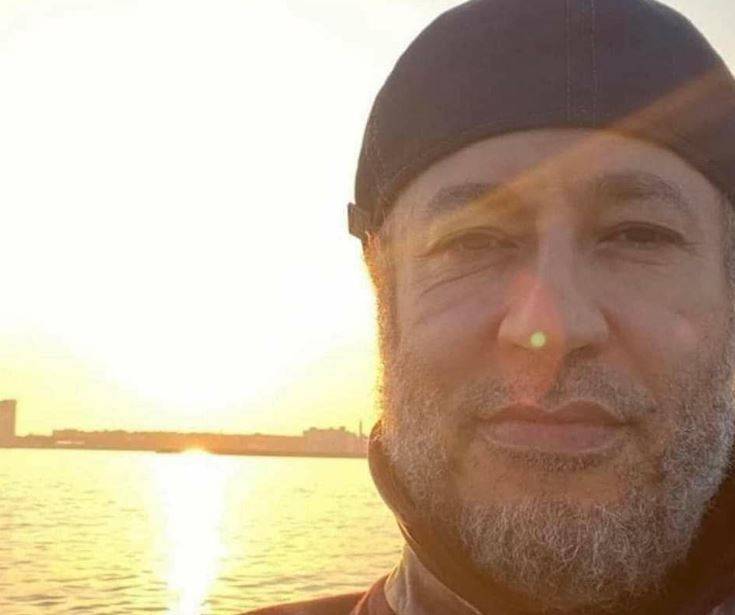
Supporters have also floated Al-Saadi Gaddafi, who lives in Türkiye, as a possible contender. But he publicly ruled out a political role in June, saying in a post on X that he had no intention of entering politics, contesting elections or backing any faction.

Instead, he said he wanted to live an ordinary life devoted to learning and wished success to whoever Libyans chose to lead the country.

Al-Saadi was freed from a Tripoli prison in 2021 after spending years in detention following his extradition from Niger in March 2014 over allegations linked to the crackdown on the 2011 uprising.

Attention has also turned to Mohammed Gaddafi, the former leader's eldest son from his first wife, Fathia Nuri Khalid.

Mohammed resurfaced on social media after Saif al-Islam's assassination, pressing for the findings of the murder investigation to be made public.

Last month, he raised questions about a suspected sabotage cell apprehended in Tripoli and its possible links to the assassination, urging relevant international organizations to investigate and uncover the circumstances of the killing.

Pages aligned with the former regime have since touted Mohammed as another potential successor.

One page, "Gaddafi Speaks," portrayed him as a man suited to a time when Libyans are seeking a strong, independent state. Blogger Ahmed Faraj also voiced support for him as a future candidate.

But activist Rania Gaddafi dismissed suggestions that Mohammed was preparing to enter politics as rumors.

Al-Saadi Gaddafi. (Al-Saadi Gaddafi on Facebook)

She said he had no interest in running for election or holding office, and was concerned only with seeing Libya regain security, stability and national unity.

Born in 1970, Mohammed previously headed the Libyan Olympic Committee and chaired the board of the General Posts and Telecommunications Company.

Hannibal Gaddafi, meanwhile, remains entangled in one of the family's most complicated chapters, far from Libya's political stage.

He spent about a decade in detention in Lebanon in connection with the 1978 disappearance of Lebanese cleric and politician Musa al-Sadr and his two companions before his release.

Feneish said Hannibal appeared to be out f the running for now.

But beyond the competing names, some Gaddafi loyalists reject the idea that his political legacy belongs to any single family member. They argue that the former leader left behind not a conventional political inheritance but a set of national and pan-Arab values and principles.

Libyan writer and researcher Mustafa al-Fetouri, a supporter of the former regime, told Asharq Al-Awsat that the question of succession went beyond the Gaddafi family.

"Anyone who believes in those principles can be his heir, beyond his family and children," he said.