Thousands of Syrians Face Legal Fallout From Assad-Era Cases

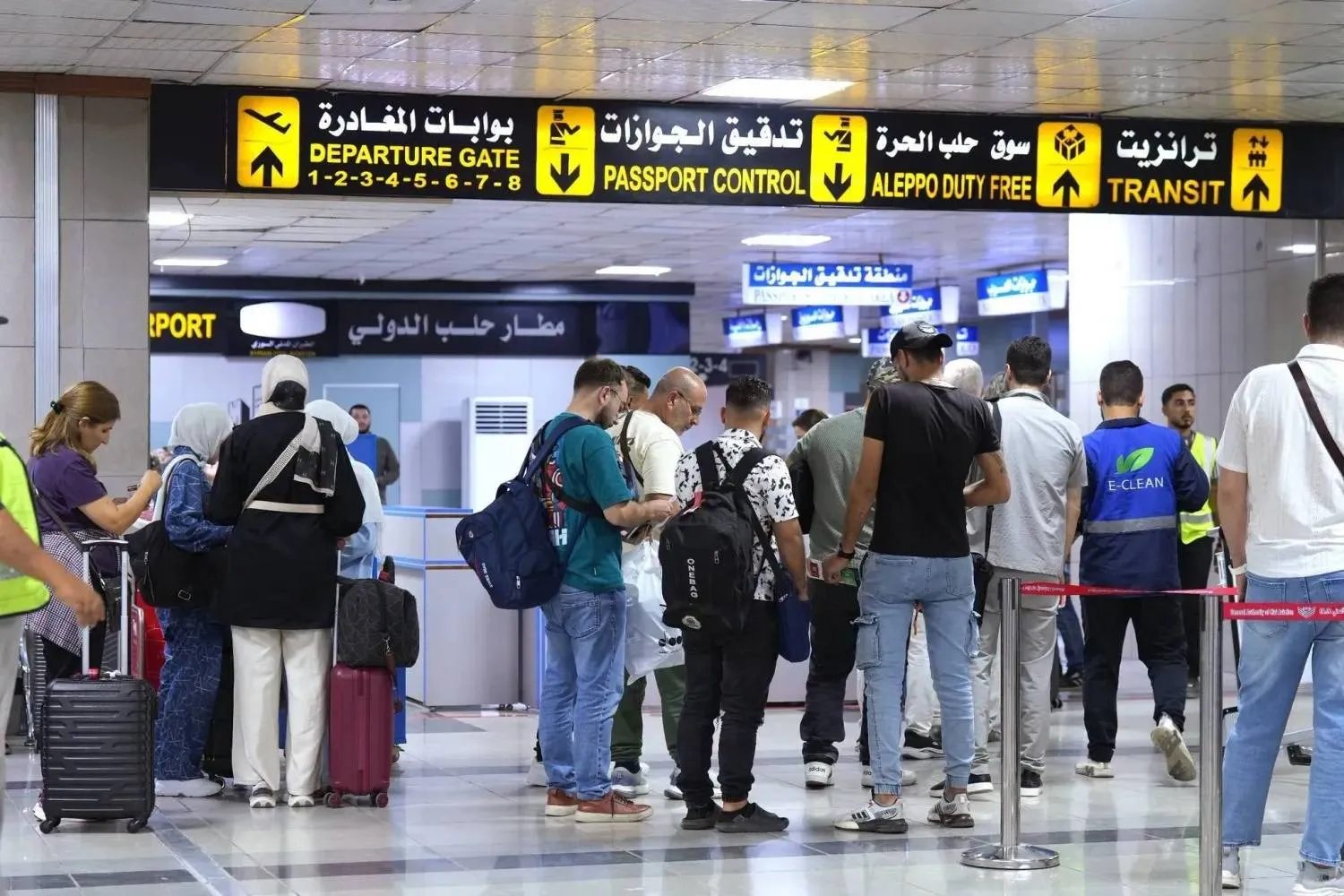
Syrians queue at Aleppo International Airport. (Civil Aviation Authority)
TT

Thousands of Syrians Face Legal Fallout From Assad-Era Cases

Syrians queue at Aleppo International Airport. (Civil Aviation Authority)

For many Syrians, the fall of Bashar al-Assad’s government did not end the cases against them. Activists and politicians are still discovering convictions issued in their absence and criminal wanted notices that remain in force, despite government measures to end security prosecutions of opponents.

Syria’s People’s Assembly has taken a leading role in transitional justice, repealing exceptional laws, including the law establishing the terrorism court.

But criminal cases brought during the conflict remain unresolved. Some Syrians returning by land or air discover the problem only when they reach the border.

Successive decisions and decrees have sought to dismantle the former government’s legacy. Yet thousands still face legal complications. Rights advocates say implementation has lagged behind legislative change, leaving people caught between promises of justice and institutional bureaucracy.

In March 2025, the Interior Ministry canceled travel-ban notices covering requests for arrest, notification or reporting, as well as failure to perform compulsory or reserve military service.

It said more than eight million people, roughly a third of Syrians, had been wanted by the former government’s intelligence and security agencies.

Last December, Justice Minister Mazhar al-Wais announced the abolition of exceptional courts and their rulings, in line with the repeal of Law No. 22 of 2012, which established the Court of Terrorism Cases. The judges who ran the court were removed.

The measure covered political cases, cases involving expressions of opinion and malicious charges. It excluded serious felonies involving personal rights, such as causing a person’s death, and organized crimes such as drug trafficking.

Those cases were referred to the regular military judiciary for consideration under fair legal procedures, leaving criminal prosecutions in place.

Repeal does not erase charges

People’s Assembly member Aqil Hussein says the assembly must legislate to repeal the terrorism and military courts and the “exceptional” security decisions and decrees issued against Syrians during the uprising. That must include canceling all resulting decisions and rulings, he said.

The measure does not cover criminal convictions, which the relevant institutions must resolve, Hussein said. But it could speed up that work and end the suffering of those affected. Agencies are working together on a mechanism to process cases faster and respond directly, he added.

Security sources told Asharq Al-Awsat that the former government used criminal charges, among other means, to pressure Syrians. It focused on terrorism allegations because of their international sensitivity, they said.

A large share of those allegations has been resolved, the sources said. Criminal charges and cases involving personal claims are harder to untangle because of technical complications and the number of agencies involved.

The sources acknowledged delays caused by the volume of cases and their links to complex civil matters. Claims brought by individuals can create further difficulties.

They said people affected by exceptional problems, such as a wanted notice that remains active after a case has been closed, or a lost case file, can approach the relevant offices in Damascus.

Records that outlast the cases

For many people still listed as wanted, settling their legal status means navigating a long bureaucratic process that restricts their freedom and civil rights.

Some said they learned that individuals had filed criminal complaints against them while they were abroad. Others said they could find no complainant.

Some returnees discovered arrest orders on criminal charges, only to learn from judicial offices that their case documents had been lost or damaged while the proceedings remained active.

People caught in this process cited poor links between databases and limited experience among new staff. Some said judicial offices and criminal investigation branches in Damascus had removed their records, but arrest warrants sent to border crossings were still in force.

Rights sources said political and security decisions had not been fully reconciled with prosecutors’ and courts’ records. Criminal entries are not removed automatically.

Canceling a wanted notice or overturning a conviction issued in a person’s absence requires a lengthy legal process, starting with a request to withdraw the notice and a visit to the judicial authority that issued it.

A proposed solution

“The new authorities have taken important steps in this direction, but they are still insufficient. The continued suffering of those affected shows the problem has not been resolved,” lawyer and rights activist Michel Shammas told Asharq Al-Awsat.

Issuing a general decision is one thing; carrying it through to every database, agency and case file is another, Shammas said. The former government created the files, but the new state inherited its institutions and records and must review and correct them.

Repealing the terrorism court and ending the exceptional laws used against opponents are necessary steps, he said. Neither automatically erases the effects of thousands of rulings, warrants and records issued by the court or other agencies.

Shammas proposed an independent judicial committee and a unified database to separate genuine criminal cases from political and security cases.

Political entries could then be removed collectively, he said, while an official service would let people check their legal status without an intermediary.


Did Hamas Threaten Israel with Another October 7 Attack?

Palestinians fill plastic bottles with water at a tent camp in Deir al-Balah, Gaza Strip, Thursday, Oct. 22, 2026. (AP Photo/Abdel Kareem Hana)
TT

Did Hamas Threaten Israel with Another October 7 Attack?

Palestinians fill plastic bottles with water at a tent camp in Deir al-Balah, Gaza Strip, Thursday, Oct. 22, 2026. (AP Photo/Abdel Kareem Hana)

Israeli newspapers have repeatedly reported a similar account claiming that Hamas warned Israel it would carry out another attack on the scale of October 7, 2023, and that the warning was conveyed through UN Middle East envoy Ramiz Alakbarov during his visit to the Gaza Strip last week, when he allegedly met senior Hamas leaders.

The Israeli newspapers, particularly Yedioth Ahronoth, based their reports on information circulated by Israel's Coordinator of Government Activities in the Territories (COGAT), which reportedly sent an urgent warning to the country's political and military leadership.

The alleged threat was linked to Israeli military operations in Gaza, where the army continues to occupy more than half the territory a year after the ceasefire was announced.

Hamas spokesperson Hazem Qassem denied in a brief statement distributed to journalists in Gaza that the movement had threatened to carry out another attack similar to October 7.

He reaffirmed Hamas's commitment to the ceasefire agreement and called on mediators to intervene to stop Israeli violations against Palestinians and ensure the agreement's implementation.

Qassem also warned against accepting Israeli allegations and exploiting them for electoral purposes.

He did not address reports that the UN official had met Hamas leaders.

Asharq Al-Awsat sought further comment from the Hamas spokesperson, but he did not respond to the correspondent's questions.

Late Thursday evening, Hamas issued an official statement denying that it had threatened any attacks, without confirming or denying whether a meeting with the UN official had taken place.

The published itinerary for Alakbarov's two-day visit to the Gaza Strip on October 11 and 12 made no reference to meetings with Hamas officials.

According to the schedule posted on the United Nations website, his visit focused on assessing humanitarian conditions at several locations, including displacement centers, affected families, winter preparedness efforts and female-headed households.

The itinerary also listed a meeting with humanitarian partners at a UNRWA facility in Gaza City to discuss humanitarian responses and gaps in assistance.

An official from Alakbarov's office told Asharq Al-Awsat that the UN envoy had not met any Hamas officials during his latest visit.

However, Asharq Al-Awsat learned from a local UN employee that Alakbarov visited Al-Shifa Medical Complex on Sunday, October 11, and met hospital and health officials to assess conditions at medical facilities.

That visit was not mentioned in the published itinerary, and Alakbarov's office neither confirmed nor denied it.

The local official also said the UN delegation came under Israeli shellfire while visiting the Zarqa area northeast of Gaza City, near the Yellow Line.

No injuries were reported, and the delegation quickly left the area.

Asharq Al-Awsat attempted to contact Mohammed Abu Salmiya, director of Al-Shifa Medical Complex, but he did not answer the calls. Officials from Gaza's Government Media Office were also unreachable.

UN officials routinely visit hospitals, displacement centers and other facilities to assess humanitarian conditions. Many have made such visits without meeting Hamas officials, particularly amid the precarious security situation and continuing pursuit and assassination of Hamas members in Gaza.

Observers believe the Israeli account is primarily motivated by electoral considerations, particularly amid repeated statements by Israeli officials, including Prime Minister Benjamin Netanyahu and Defense Minister Israel Katz, about alleged Hamas plans to carry out attacks similar to October 7.

Both officials have emphasized that Israel would respond forcefully to any such attack, in statements seen as attempts to influence the elections. Similar warnings have also been made concerning Iran and Hezbollah.

However, Israeli security sources told Haaretz that, contrary to claims made by Netanyahu and Katz in recent days, security agencies had not detected intensive efforts by any party to launch attacks against Israel with the aim of influencing the elections.

Israeli military Chief of Staff Eyal Zamir, meanwhile, limited his remarks to affirming that the armed forces were prepared to deal with any attempts at external interference in the elections.

He said the military would undertake defensive and offensive operations should any such scenario materialize.


Far-right Israeli Minister Orders Buildings Demolished in West Bank after Attack

File: Far-right Israeli Finance Minister Bezalel Smotrich reviews the 'E1' settlement map in the West Bank (Archival - AFP)
TT

Far-right Israeli Minister Orders Buildings Demolished in West Bank after Attack

File: Far-right Israeli Finance Minister Bezalel Smotrich reviews the 'E1' settlement map in the West Bank (Archival - AFP)

Far-right Israeli Finance Minister Bezalel Smotrich said he had ordered the demolition of buildings near a shooting attack in the occupied West Bank that wounded at least five people on Friday.

"Following the attack, I have ordered the immediate demolition of a wide row of illegal Arab structures adjacent to the attack site," he said. "The order will be carried out within the next hour and will take place throughout the afternoon hours."


International Meeting Rules Out Military Solution to Sudan War

A view of the consultative meeting on coordinating peace initiatives and efforts in Sudan on October 21, 2026 (Saudi Foreign Ministry). 
TT

International Meeting Rules Out Military Solution to Sudan War

A view of the consultative meeting on coordinating peace initiatives and efforts in Sudan on October 21, 2026 (Saudi Foreign Ministry). 

International representatives meeting in Geneva have declared that there is no military solution to Sudan’s war, calling for an urgent humanitarian truce, an end to foreign interference and renewed efforts toward a political settlement.

The appeal came at the close of UN-organized Sixth Consultative Meeting on Enhancing Coordination of Peace Initiatives and Efforts in Sudan where the army and the paramilitary Rapid Support Forces (RSF) have been fighting since April 2023.

In a final statement, participants warned that civilians were paying a devastating price for the warring parties’ pursuit of battlefield gains. They urged both sides to de-escalate and engage seriously in negotiations that could lead to a permanent ceasefire.

The sixth consultative meeting, which concluded Wednesday evening, was co-chaired by Swiss State Secretary for Foreign Affairs Alexandre Fasel and UN Secretary-General’s Personal Envoy for Sudan Pekka Haavisto.

Representatives of 22 countries attended, including the United States, Saudi Arabia, the United Arab Emirates, Egypt, Britain, France, China, Russia and Sudan’s neighbors, alongside regional and international organizations such as the African Union, European Union and Intergovernmental Authority on Development (IGAD).

Confidence-building measures

Haavisto outlined UN efforts to introduce confidence-building measures that both warring parties might accept, including exchanges of prisoners of war and detainees, both military and civilian, and arrangements to allow students to sit examinations.

“We think that there are issues that should unite actually both parties of the conflict,” he said, describing such initiatives as modest first steps compared with the devastation caused by the war.

The meeting stressed that a humanitarian truce must pave the way for a lasting ceasefire, with de-escalation efforts bringing tangible improvements on the ground.

After three and a half years of fighting, participants dismissed the pursuit of military gains as a solution, warning that civilians were bearing the devastating cost of continued hostilities.

They called for full compliance with international humanitarian law and the protection of civilian facilities, particularly infrastructure essential to basic services.

States and other actors were urged to stop fueling the conflict by supplying mercenaries, military equipment, drones or financing.

Such support, the statement warned, would cause further casualties and increase the risk of Sudan’s fragmentation. It did not identify any countries or organizations responsible for providing assistance to the warring parties.

Participants reaffirmed their commitment to Sudan’s sovereignty, unity and territorial integrity, as well as the preservation of state institutions.

They rejected the creation of parallel governments, institutions or governing structures and called for concrete measures to prevent any steps that could undermine the country’s unity.

Push for an inclusive political settlement

The Geneva talks emphasized that lasting peace would require a credible, inclusive Sudanese political process reflecting the aspirations of the population.

Such negotiations should allow meaningful participation by political and civilian groups, including women and young people, and lead to an agreed transition toward sustainable peace and democratic governance.

Participants backed mediation efforts by the Quad — the United States, Saudi Arabia, the UAE and Egypt — and the Quintet, comprising the African Union, European Union, IGAD, Arab League and United Nations.

They stressed that any political process must be transparent, credible, and free from coercion.

The meeting also expressed grave concern over continuing hostilities, reports of atrocities and the increasing use of drones.

Millions of Sudanese face severe food shortages, while restrictions on humanitarian access and adverse weather conditions have heightened the threat of famine.

The conflict’s humanitarian, social and economic repercussions are also being felt across neighboring countries, raising fears of violence spreading beyond Sudan’s borders with potentially catastrophic consequences.

Regional and international coordination

The Geneva consultations follow earlier meetings in Cairo, Djibouti, Nouakchott and Brussels, the most recent held in the Egyptian capital on January 14.

The initiative seeks to bring regional and international diplomatic efforts into closer alignment as Sudan’s humanitarian catastrophe deepens.

Aid organizations estimate that more than 200,000 people have been killed and over 13 million displaced since the war began, leaving the country at the center of the world’s largest hunger and displacement crisis.

Participants also reaffirmed their commitment to the principles adopted at the ministerial conference on Sudan in Berlin last April and the spirit of the May 2023 Jeddah Declaration, under which the army and RSF pledged to protect civilians and facilitate humanitarian access.