Ground Fighting Eases in Sudan as Drone Warfare Intensifies

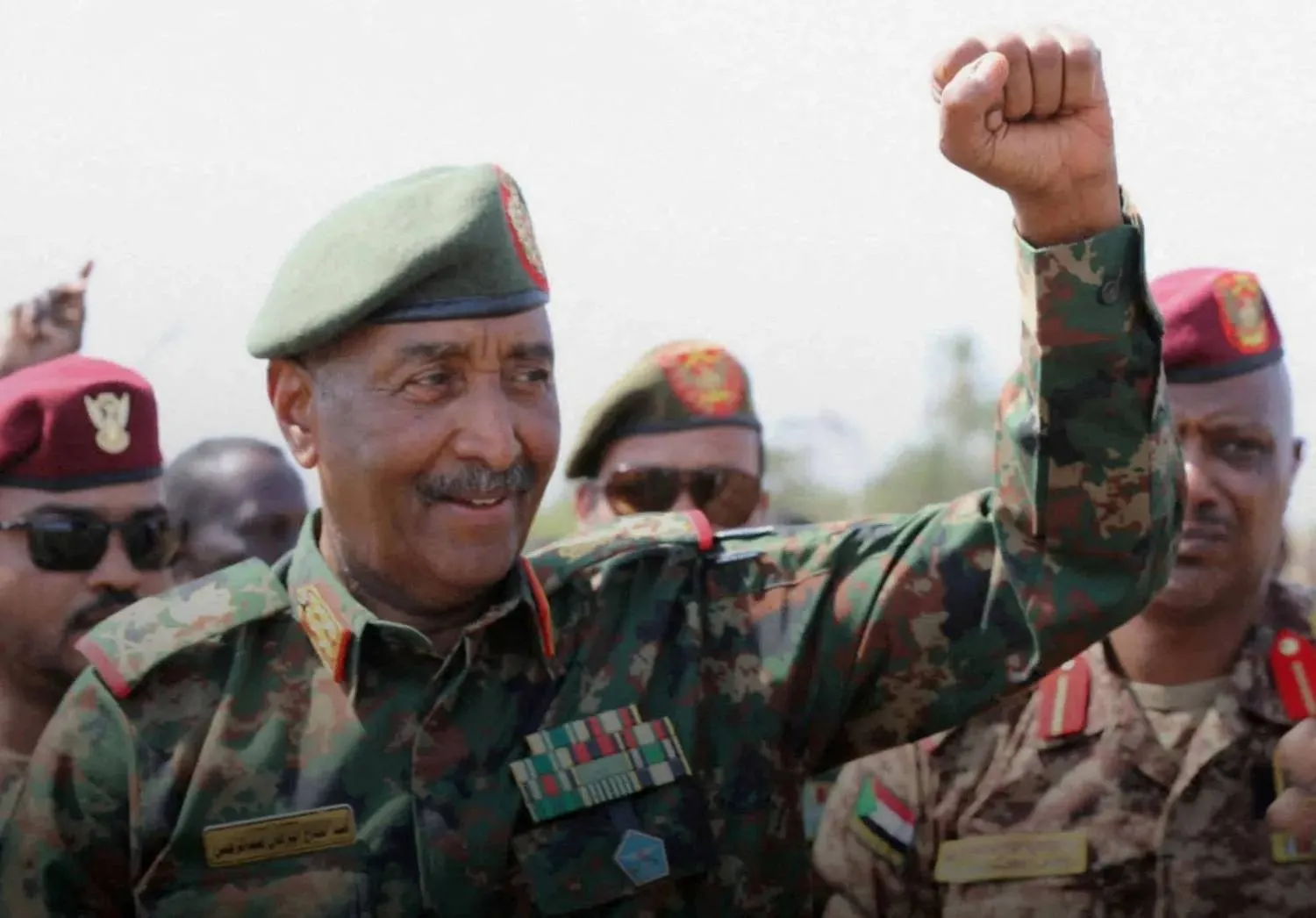
Sudanese army chief Abdel Fattah al-Burhan inside the presidential palace on March 26, 2025. (Reuters)
TT

Ground Fighting Eases in Sudan as Drone Warfare Intensifies

Sudanese army chief Abdel Fattah al-Burhan inside the presidential palace on March 26, 2025. (Reuters)

Ground fighting has eased on Sudan’s main fronts after army advances and a retreat by the Rapid Support Forces (RSF) in North Kordofan in recent days. Drone attacks have increased, while limited skirmishes continue on several fronts.

Witnesses and field sources said the lull followed heavy fighting that significantly changed the areas held by each side in North Kordofan.

The army captured several towns, strengthened its hold on Bara and the surrounding area, and secured the export road. It also opened a supply route from Omdurman through White Nile and North Kordofan states to El Obeid.

The RSF withdrew to the north and northwest.

The sources said the army’s advance west of El Obeid stopped abruptly when its forces reached Umm Sumaymah. A counterattack forced them back toward the outskirts of El Obeid. No further major attempt to advance has been reported on that front.

Activists said the army also pulled back from around Sodari and Mazrub after extending its defensive lines through several nearby towns. The RSF returned to the strategic town of Mazrub, which it had left during the army’s wider offensive.

In Blue Nile state, the army held its positions. Pro-army sources said its forces repelled RSF attacks and inflicted casualties and equipment losses, preventing the RSF from making further gains. The RSF and its allies still control Kurmuk and Geissan.

Direct ground fighting there has also eased in recent days, though both sides have continued attacks with drones and artillery.

Drone warfare

The army said on Thursday that its air defenses had shot down a long-range FH-95 drone it described as hostile. The announcement came days after intensive drone attacks on military sites in El Obeid.

North Kordofan residents said the RSF had stepped up drone attacks on government-held cities in the state, disrupting daily life and deepening their sense of insecurity.

Reuters recorded footage of the aftermath of major attacks this month on two cities along the front line. Residents described them as part of a new wave of strikes, following weeks in which the RSF appeared to have reduced its drone use under international pressure.

Drone use has increased sharply during Sudan’s three-and-a-half-year war. Both the army and the RSF use technology that has become central to other conflicts, including the war in Ukraine.

The United Nations says drone attacks by both sides killed more than 1,000 civilians in the first half of this year. The toll highlights the growing cost to civilians as such attacks spread beyond traditional front lines.

On September 8, a drone struck a crowded courtroom in the government-held city of Umm Rawaba. The city is in North Kordofan, a central Sudanese state that has become one of the war’s main fronts.

Emergency Lawyers, which describes itself as an independent volunteer professional group defending rights, said about 10 people were killed and dozens wounded. The courthouse was extensively damaged, with columns from its facade and debris from one of the city’s prominent buildings strewn around the site.

A day later, a drone struck the College of Development and Technological Sciences in El Obeid, the capital of North Kordofan. The strike destroyed its roof and extensively damaged its buildings.

Standing amid the wreckage as workers cleared debris, the college’s dean, Abdelaziz al-Sheikh, said a security guard had been killed and eight lecture halls badly damaged.

“We lost the college guard. Eight halls were targeted and completely destroyed,” he said. Other parts of the college had also sustained extensive damage, he added.

Omnia Abulgasim, a student who had taken an exam at the college the day before the attack, stood beside the rubble. “The whole college was destroyed. We feel our dreams and our future have been destroyed,” she said.

At a hospital in Umm Rawaba, Salah Bakhit said his arm had been crushed and his body struck by shrapnel in the courthouse attack. He had fled El Obeid for safety after months of drone attacks on the city earlier this year, as the RSF sought to increase pressure on it.

As ground fighting eases on several fronts, drones are playing a growing role in attacks on military positions, as well as on cities and civilian facilities relatively far from the fighting. Residents and vital infrastructure are bearing an increasing share of the war’s cost.


Houthis Suspected of Recruiting Children, Young Men Amid Surge in Disappearances in Sanaa

Human rights reports accuse the Houthis of recruiting more children. (Local media)
TT

Houthis Suspected of Recruiting Children, Young Men Amid Surge in Disappearances in Sanaa

Human rights reports accuse the Houthis of recruiting more children. (Local media)

Disappearances of children and young men have surged in Yemen's Houthi-held capital Sanaa and its outskirts in recent weeks, fueling accusations that the Houthis are luring them into military camps, training them for combat and sending them to battlefronts without their families' knowledge or consent.

The cases have also raised fears among families of possible extortion, as authorities face accusations of failing to investigate the disappearances or disclose the fate of those missing.

Local human rights sources told Asharq Al-Awsat that the unexplained disappearances have left residents increasingly alarmed, with children and young men vanishing from schools, streets and residential neighborhoods, sometimes without a trace.

Families have been left to search for their missing relatives on their own, turning to social media to appeal for information as Houthi-controlled security authorities ignore their reports, the sources said.

About 13 children and young men have disappeared from different parts of Sanaa since the start of October, the sources said. Most were aged between 15 and 23, and some were later found at Houthi military camps or on battlefronts after being lured into combat training without their families' knowledge or approval.

Hundreds of disappearances involving children and young men have been reported in Sanaa and other Houthi-controlled cities since the beginning of the year, the sources said. Some families remain in the dark about their missing relatives' whereabouts.

The sources accused Houthi security authorities of ignoring families' reports and appeals, compounding their distress and leaving those missing vulnerable to exploitation and recruitment.

The latest cases, reported over the past two days, involve Amjad Noman al-Sarouhi, 16, who vanished from the al-Ansi neighborhood in central Sanaa's Maeen district, and Mukhtar Abdullah Hassan al-Rifai, 22, who went missing near the Haziz market on the capital's outskirts.

Lured into military camps

Families' accounts have deepened fears that disappearances are being used to funnel children and young men into Houthi military camps, amid accusations that Houthi supervisors and recruitment brokers are exploiting their social and economic hardships to draw them into combat.

In one case, a family spent five days searching neighborhoods and hospitals for a minor who disappeared from Sanaa two months ago, only to learn from a Houthi supervisor that he was at a military camp north of the city.

A relative told Asharq Al-Awsat that the supervisor confirmed Houthi members had lured the boy into the camp and put him through combat training without his family's knowledge.

The relative described five days of fear and anguish as the family searched for the boy, worried he might have been harmed, before discovering he had been taken to a Houthi camp and subjected to military training without their consent.

For Mujeeb, a Sanaa resident and father of four, the disappearances have turned even routine outings into a source of fear.

"We live in constant fear for our children. We no longer feel at ease even when one of them steps out to run a simple errand," he said.

"We fear a Houthi member or supervisor could lure them away or exploit their needs and difficult living conditions, leaving us facing a situation we are powerless to change."

Mujeeb said families wanted their children kept safe and allowed to pursue their education and lead normal lives, free from recruitment and being sent to battlefronts.


Houthis Expand Taiz Offensive Southward into Lahj

A fighter loyal to Yemen's legitimate government fires a turret from the back of a pickup truck at a position along the frontlines against the Houthis around Mount al-Midan in Yemen's western Taiz province on October 26, 2026. (AFP)
TT

Houthis Expand Taiz Offensive Southward into Lahj

A fighter loyal to Yemen's legitimate government fires a turret from the back of a pickup truck at a position along the frontlines against the Houthis around Mount al-Midan in Yemen's western Taiz province on October 26, 2026. (AFP)

Yemen's Iran-backed Houthis launched a three-pronged offensive in northern Lahj province on Friday, seeking to push toward the Tur Al-Bahah district and gain fire control over strategic routes linking Lahj and Taiz.

The escalation came as Yemen's armed forces held their ground on the southern and western fronts around Taiz city and stepped up air and ground strikes against Houthi positions there, along the western coast and in the eastern provinces of Al-Jawf and Marib.

Government forces also raised concerns over reports that the Houthis had fired shells suspected of containing toxic substances, causing choking and fainting among civilians and fighters.

The armed forces said they had carried out 1,087 successful strikes under Operation Dawn of Yemen, deploying fighter jets, drones, artillery and rocket launchers. The military said the strikes had neutralized about 336 Houthi commanders and fighters and destroyed or disabled 112 military vehicles, pieces of equipment, supply assets and heavy weapons.

Local sources reported fierce fighting in Lahj's Al-Maqatirah district after the Houthis attacked from three directions in a bid to seize the district and open a route toward Tur Al-Bahah.

Al-Maqatirah's strategic importance lies in its commanding position over key roads and areas stretching across southern Taiz and northern Lahj.

The assault coincided with sporadic clashes along the Taiz-Lahj administrative boundary, particularly on the Al-Mudaribah front, amid reports of fresh Houthi reinforcements. Field sources said the group had also deployed additional forces to Al-Shamayatayn district in southern Taiz.

In Taiz, government troops clashed with Houthi fighters in Al-Shaqab, southeast of the city, as government drones struck Houthi positions and troop concentrations. Sporadic clashes also erupted on the city's western fronts before dawn.

Further west, government artillery struck a Houthi gathering at the Khalid bin Al-Walid area in Al-Dhabab. Field reports indicated casualties among fighters stationed there.

On the western coast, airstrikes hit Al-Amoud Al-Sughra in Mokha district before dawn, targeting Houthi positions and military movements along the coastline.

The air campaign also reached Al-Jawf and Marib, with two strikes targeting Huwayshan in Al-Jawf and another hitting Mahliyah district in Marib.

Toxic shells raise alarm

Yemen's armed forces said they were treating with utmost seriousness reports that Houthi fighters had used shells suspected of containing toxic substances on the Taiz fronts, amid accounts of civilians and Popular Resistance fighters suffering choking and fainting.

Colonel Majed Al-Nuzaili, the armed forces' official spokesperson, called for an urgent investigation to identify the suspected substances, document their effects and trace their origins and suppliers.

In a statement, Al-Nuzaili said the incidents formed part of a continuing Houthi escalation against Taiz residents, including sniper attacks, indiscriminate shelling of residential areas, a siege, road closures and restrictions on access to water, food, medicine and life-saving supplies.

The armed forces warned the Houthis against further attacks on civilians or the use of prohibited means of warfare.

They said protecting civilians and breaking the siege of Taiz remained core responsibilities of the state and its armed forces, pledging to take necessary measures in line with constitutional obligations and international humanitarian law.

The statement urged the United Nations and relevant international bodies to help deter violations, support an urgent investigation into the suspected toxic shells and press for roads to reopen to allow humanitarian aid and essential supplies to reach civilians unhindered.

The military also vowed that those behind attacks on civilians, including the commanders responsible, would face accountability and punishment.


Lebanese Military Court Judge Charges 13 People Over Hezbollah Explosives Truck

The charges marked the latest sign of a dramatic shift in relations between Hezbollah and Lebanon after two wars between the Iran-backed group and Israel in the past three years. (AFP/Getty Images)
TT

Lebanese Military Court Judge Charges 13 People Over Hezbollah Explosives Truck

The charges marked the latest sign of a dramatic shift in relations between Hezbollah and Lebanon after two wars between the Iran-backed group and Israel in the past three years. (AFP/Getty Images)

A Lebanese military court has charged 13 people in connection with a seized truck carrying explosives belonging to Hezbollah, state media reported on Friday.

The charges marked the latest sign of a dramatic shift in relations between Hezbollah and Lebanon after two wars between the Iran-backed group and Israel in the past three years.

For decades, Hezbollah moved weapons freely in parts of Lebanon. That changed in March, when the government declared the group’s military activities illegal following the outbreak of the latest war.

Two defendants were arrested when authorities seized the shipment earlier this month and remain in custody. The other 11 remain at large and were charged in absentia. Five were identified only by nicknames because their real names remain unknown.

The cases were referred to the military court’s investigative judge, Claude Ghanem.

The charges include crimes against internal state security, possession of weapons and explosives, and forming illegal associations aimed at undermining state authority, the state-run National News Agency said.

Hezbollah did not immediately comment.

The truck was stopped at a checkpoint on the main highway linking Beirut to the eastern Bekaa Valley earlier this month. It carried 780 kilograms (1,720 pounds) of explosives, including 250 kilograms (550 pounds) of TNT and 250 kilograms (550 pounds) of C-4 plastic explosives, according to judicial officials.

The seizure sparked heated public debate, with many accusing Hezbollah of planning to assassinate domestic opponents as it faces mounting pressure to disarm.

Hezbollah later acknowledged owning the explosives, saying they were intended for use against Israeli forces in southern Lebanon. It said it had asked Lebanese authorities to return the shipment and release the two detainees.

The government outlawed Hezbollah’s military activities hours after the group fired rockets into northern Israel, triggering a war that has killed nearly 4,000 people in Lebanon and left Israeli forces occupying a large swath of the country’s south. Hezbollah fired the rockets two days after Israel and the United States launched a war on Iran, its main backer.

Hezbollah has refused to recognize the government’s decision.