


Power Cuts, Rubble: Millions Come Home to Find Sudan's Capital Unlivable

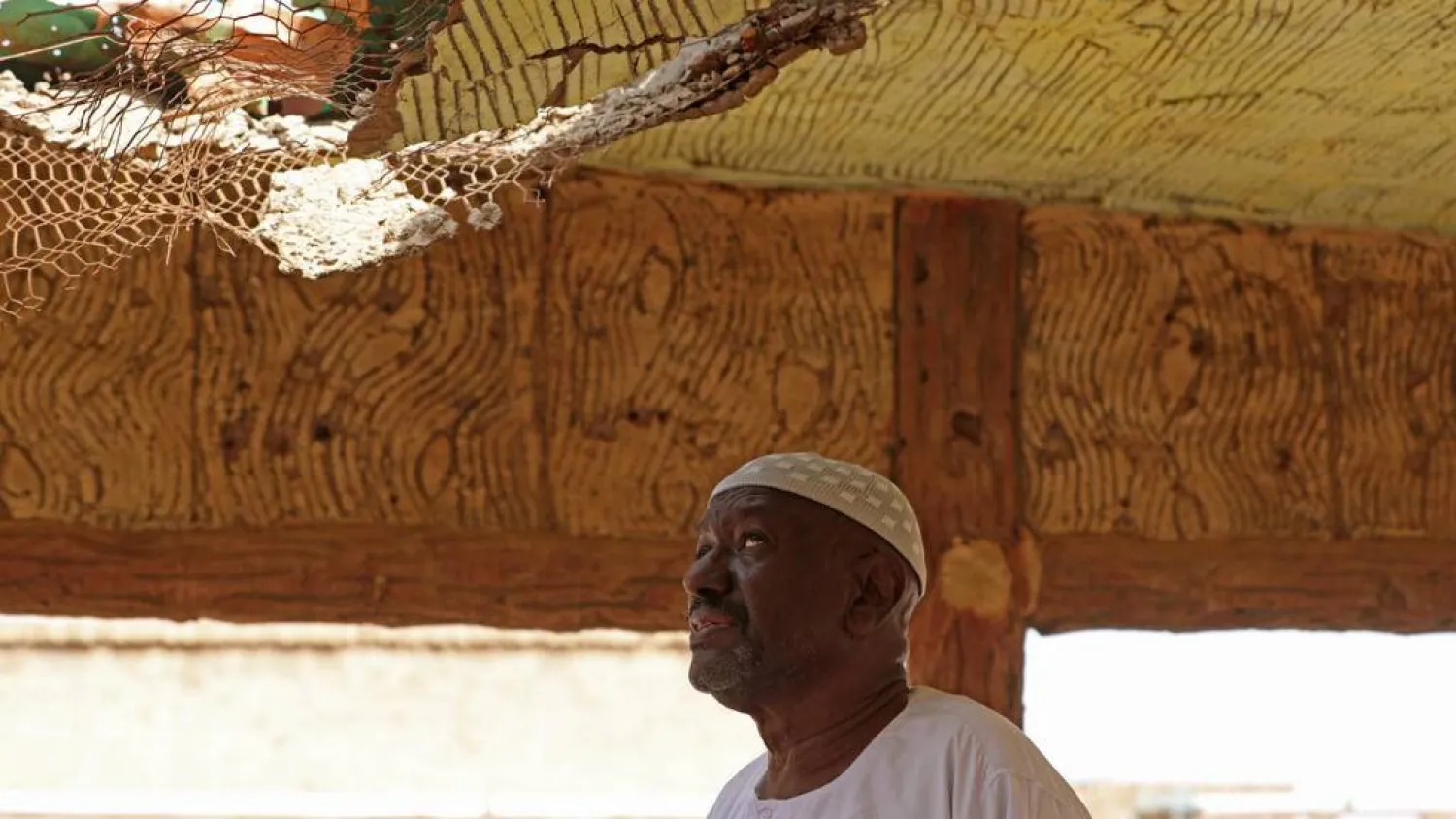
Millions have returned to Khartoum but the city is still reeling from Sudan's war. Ebrahim HAMID / AFP
TT

Power Cuts, Rubble: Millions Come Home to Find Sudan's Capital Unlivable

Millions have returned to Khartoum but the city is still reeling from Sudan's war. Ebrahim HAMID / AFP

They came home to a war-ruined city determined to rebuild their lives, but a chronic lack of power, water, jobs and medicine has left many residents of Sudan's capital wishing they had stayed away.

About four million people fled Khartoum after war broke out between the army and a paramilitary force in 2023, in fighting that reduced large parts of the city to rubble, said AFP.

But the estimated 2.7 million who have returned since the army recaptured Khartoum last year are caught between joy at being home and the harsh realities of living there.

Businessman Emad Khaled said he was sending his family back to Egypt, while he remains in Khartoum for his work.

"Bringing my family back was a mistake," the 43-year-old told AFP near the city center, which is filled with blackened, bombed-out buildings.

Multiple government officials, ordered back to Khartoum, told AFP they were also leaving their families outside the country.

Fighting between the armed forces and paramilitary Rapid Support Forces (RSF) is still raging elsewhere in Sudan, including in the Darfur, Kordofan and Blue Nile regions.

The army, strongly encouraging Khartoum's residents to return, rebuilt the airport and reopened it for domestic flights, and patched up infrastructure.

However, electricity and water still go out for days at a time. And while markets across the capital are open again, many people are unemployed and have little money to spend.

- 'Price goes up every day' -

By June, only one percent of Khartoum had been declared safe by the UN, with dozens of children killed and injured by booby-traps and unexploded shells lurking within walls and on street corners.

Nearly half a million people have returned from neighboring Egypt, where 1.5 million Sudanese sought shelter but faced soaring living costs, racial persecution, arrests and deportations.

Khartoum's working-class neighborhoods have seen the highest numbers of returnees, while most of those who can afford to stay away.

Consequently, upscale districts such as Khartoum 2 lie abandoned. Along tree-lined avenues, glass crackles underfoot and only birdsong fills the air between empty villas, entire corners of them blown out by missiles.

Thuraya Babiker, 86, thought she had returned for good. But three months later, "my husband, my youngest daughter and I are leaving for the United Arab Emirates", she told AFP.

"We don't want to leave," she said, explaining that the lack of medical care makes it impossible to stay.

As people started returning last year, Sudanese charities rushed to rebuild hospitals, some of which are now "better than before", health workers say.

But despite their best efforts, physician Haifa Omar says "some things just aren't available".

"We have to ask patients to buy some medicines on their own dime. I have a lump in my throat as I say it, we know how difficult people's situations are."

College professor Imam Babiker has to visit 10 pharmacies to find his father's blood pressure medication, "and every day it's a different price", he said.

The 34-year-old bought a refrigerator to store his diabetic mother's insulin, "but the electricity goes out for 12 hours a day, so it gets ruined," he told AFP.

Others like Souad Mohamed, 49, had her fridge stolen by looters and couldn't afford a replacement.

"So now I have to buy vegetables and meat every day, and the price goes up every day," she said.

- 'Things really aren't fine' -

Khartoum, once a major African capital home to more than eight million people, is a shell of its former self.

In the city center, a veteran UN official told AFP the level of destruction dwarfs every other crisis they had seen, including Ukraine.

Although occasional RSF drone strikes continue, Khartoum's university students have been told they must return, after authorities ended remote learning in July.

Khartoum University medical professors have threatened to resign en masse in protests, while students complain they are being forced back.

"The university's refusing to let me defend my thesis online, even though my supervisor is also in a different country and doesn't want to return," one master's student told AFP, requesting anonymity.

An undergraduate management student, who should be starting her senior year, said she missed in-person exams this summer and is now scrambling for scholarships in Egypt to restart college from scratch.

"They wouldn't listen to us, all they cared about was for people to return," she told AFP.

"To me it's political, they want people back to show that things are fine, when things really aren't fine."



Hamas Leader Says Israel to Use Gaza 'Blood' in Election

Head of Hamas's political bureau, Khalil al-Hayya (archive - AP)
TT

Hamas Leader Says Israel to Use Gaza 'Blood' in Election

Head of Hamas's political bureau, Khalil al-Hayya (archive - AP)

The leader of Hamas brushed aside the possibility of change from Israel's upcoming election in an interview on Saturday, saying he expected Israelis to campaign off Gaza's "blood".

"Whether this or that person comes to power, or this party or another -- our people have suffered at the hands of all Israeli parties," Khalil al-Hayya told the Qatari station Al-Araby.

"We absolutely refuse to allow the blood, suffering, and cause of the Palestinian people to serve as fuel for Israeli elections. What matters to us is that our people achieve their goals, aspirations, and legitimate rights."

Prime Minister Benjamin Netanyahu is locked in a tight contest as he seeks to stay in power in the October 27 elections.

The Israeli premier has vowed in the run-up to the vote not to withdraw troops from Gaza and rejected a US-led peace initiative in which Hamas said it would surrender weapons, a promise Israel views with skepticism.

The vote is the first since Hamas led the deadliest ever attack against Israel on October 7, 2023, with militants storming into southern Israel and killing 1,221 people and dragging 251 others as hostages to Gaza.

Israel's retaliatory offensive has displaced virtually the entire population of Gaza, damaged or destroyed the vast majority of buildings and killed more than 73,900 people, according to the Gaza health ministry, which operates under Hamas and whose figures are considered reliable by the United Nations.

Polls show Netanyahu's most formidable challenger to be Gadi Eisenkot, a former military chief who served in Netanyahu's war cabinet but has accused him of failing strategically.

- 'Ready to sit down' with Abbas -

The Palestinian Authority in turn has scheduled a legislative election for November 28, which would be the first in two decades, although there are widespread doubts about whether it will go ahead.

Hamas won the last election, held in 2006, defeating Palestinian president Mahmoud Abbas's Fatah. Abbas, 90, has since been ruling by decree, with the legislature not allowed to convene and Hamas seizing control of Gaza.

Abbas is based in the West Bank, where the Palestinian Authority wields limited autonomy.

"We are ready to sit down with President Abbas to lay the foundations for a national program and achieve genuine unity," Hayya said.

"If the Palestinian elections are postponed, that step must serve as an entry point for putting the Palestinian house in order."

Hamas has been working on an alliance with Mohammed Dahlan, a former Fatah figure born in Gaza who has been an interlocutor with the United States on its peace plan.

"In the event of a postponement, the alliance will remain intact and open to all, aiming to forge a unified national front," Hayya said.

It remains uncertain if Hamas could even run in the election as Abbas has required all candidates to accept the platform of the Palestine Liberation Organization, which has recognized Israel's right to exist since 1993 at the start of the Oslo peace accords.


Yemeni Government Rallies International Support to Confront Humanitarian Crisis

Yemeni displaced people who fled Houthi attacks on the western coast (AP) 
TT

Yemeni Government Rallies International Support to Confront Humanitarian Crisis

Yemeni displaced people who fled Houthi attacks on the western coast (AP) 

International warnings over the humanitarian impact of the latest Houthi escalation in Yemen intensified as the Yemeni government sought urgent international support in New York for the health, food and development sectors. Britain also pledged £10 million in response to the UN emergency humanitarian appeal for Yemen.

Yemeni Foreign Minister Afrah Al-Zouba held a series of meetings on the sidelines of the 81st UN General Assembly in New York to highlight the growing impact of the escalation on civilians, displaced people and essential services, warning that continued fighting was placing further strain on an already under-resourced health system.

At a high-level event organized by UNICEF, Al-Zouba said the government faced the dual challenge of maintaining essential health services and providing medicines and vaccines while responding to the growing needs of people displaced by the latest escalation.

She noted that thousands of civilians were forced from their homes, with some families displaced for a third or fourth time, adding pressure on limited resources and the state budget and hampering plans to improve health services.

Al-Zouba warned that Houthi practices were obstructing the delivery of vaccines to children in areas under the group’s control despite supplies being available for distribution. She added that the detention of health workers involved in childhood immunization campaigns threatened disease-prevention efforts.

The minister said the Health Ministry was preparing a national health strategy for 2026-2030 focused on primary care, maternal and child health, nutrition, immunization and building a health system capable of withstanding and responding to crises.

Food, displacement and detainees

In talks with World Food Program (WFP) acting executive director Carl Skau, Al-Zouba discussed food security and the growing needs of displaced and conflict-affected communities, stressing the importance of ensuring that food and humanitarian assistance reaches those in need safely, regularly and without obstruction.

According to the government, she outlined violations affecting civilians, displacement camps and humanitarian facilities, as well as the looting of food and medical supplies.

Al-Zouba called for additional funding for humanitarian programs and urged the release of UN and humanitarian workers detained by the Houthis.

Skau, for his part, reaffirmed the WFP’s continued support for the Yemeni people and coordination with the government and its partners to strengthen food security and meet humanitarian needs.

Al-Zouba also met International Committee of the Red Cross President Mirjana Spoljaric Egger to discuss humanitarian conditions and the consequences of the escalation.

She warned of continued Houthi pressure on international organizations and humanitarian workers and urged the ICRC to intensify efforts to gain access to detainees held by the group and assess their conditions.

From relief to recovery

On development, the minister discussed infrastructure, essential services and recovery projects with Jorge Moreira da Silva, executive director of the UN Office for Project Services.

Their talks covered the impact of recent developments in the Red Sea and Bab al-Mandeb on living and economic conditions as the government seeks to steer international assistance toward longer-term projects rather than limiting the response to humanitarian emergencies.

At a separate meeting on the Global Development Initiative, Al-Zouba urged international donors and development institutions to translate pledges into projects in infrastructure, health, education, water and energy, while supporting economic recovery and job creation.

Meanwhile, the UK announced £10 million in emergency assistance in response to the UN appeal for Yemen.

The British government said the funding would provide food and nutrition support, emergency health care and vaccines for people displaced or otherwise affected by the latest escalation.

UK Minister for the Middle East Stephen Doughty said the Houthi escalation had caused devastating consequences, undermined regional stability and killed civilians, adding that the new assistance was aimed at Yemenis most vulnerable to the latest developments.


Leadership Crisis in Hezbollah After Nasrallah's Assassination

A woman carries a picture of the late Hezbollah leader Nasrallah as supporters of Hezbollah protest outside the Lebanese Government Palace in Beirut, Lebanon, 18 August 2026, rallying against direct Lebanese-Israeli talks.  EPA/WAEL HAMZEH
A woman carries a picture of the late Hezbollah leader Nasrallah as supporters of Hezbollah protest outside the Lebanese Government Palace in Beirut, Lebanon, 18 August 2026, rallying against direct Lebanese-Israeli talks. EPA/WAEL HAMZEH
TT

Leadership Crisis in Hezbollah After Nasrallah's Assassination

A woman carries a picture of the late Hezbollah leader Nasrallah as supporters of Hezbollah protest outside the Lebanese Government Palace in Beirut, Lebanon, 18 August 2026, rallying against direct Lebanese-Israeli talks.  EPA/WAEL HAMZEH
A woman carries a picture of the late Hezbollah leader Nasrallah as supporters of Hezbollah protest outside the Lebanese Government Palace in Beirut, Lebanon, 18 August 2026, rallying against direct Lebanese-Israeli talks. EPA/WAEL HAMZEH

Two years after the assassination of former Hezbollah Secretary-General Hassan Nasrallah, the group has not fully overcome the absence of the man who led it for more than three decades and transformed the secretary-general's office into a center of political, organizational, military, and popular influence that is difficult to replace.

Hezbollah will mark the second anniversary of the assassinations of Nasrallah and his successor, Hashem Safieddine, on Sunday with a public rally at Nasrallah's shrine in Beirut's southern suburbs. Its new Secretary-General, Naim Qassem, will speak at the event. Security measures will include closing roads leading to the shrine from the direction of the old airport road and Ziad Rahbani Highway and diverting traffic to other routes.

According to people close to the group and its opponents, current Secretary-General Naim Qassem does not appear to have succeeded in filling the vacuum left by his predecessor. At the same time, there has been an increasing shift in the center of decision-making within the group, with the room for internal initiative narrowing in favor of decisions coming directly from Iran.

The group's opponents say the issue is not simply a matter of the difference in charisma and popular presence between the two men, but also the nature of the role Nasrallah played within Hezbollah. He combined political, organizational, and military leadership, and served as the principal link with the group's supporters and its Iranian ally. Hezbollah today, by contrast, appears to have a more collective and structured leadership, but with a more direct Iranian role in shaping its choices and decisions.

While people close to Hezbollah believe that, despite the blows it has suffered, the group has managed to reorganize its ranks and maintain its cohesion under Naim Qassem, its opponents argue that the period following Nasrallah has exposed a leadership crisis and a decline in its ability to mobilize supporters, as well as internal divisions resulting from Qassem's performance.

A New Approach to Confronting the Challenges

Political writer Dr. Qassem Qassir, who is closely familiar with Hezbollah's position, acknowledges that after Nasrallah, the group "faced many internal and external obstacles" following a long period of centralized leadership during which Nasrallah held the reins of the organization for about 33 years, from 1992 until 2024, before his assassination under extremely difficult circumstances.

He notes that despite losing both of its secretaries-general, Nasrallah and Hashem Safieddine, along with a number of its cadres and leaders, Hezbollah succeeded in reorganizing its ranks and putting its security and organizational affairs in order under Sheikh Naim Qassem.

In remarks to Asharq Al-Awsat, Qassir says Hezbollah now faces new challenges, which has prompted it to adopt a different approach at both the domestic and external levels. He adds that while Hezbollah was previously a major regional player, it is now focusing to a much greater degree on its internal situation, southern Lebanon, and confronting Israel.

He continues that while Hezbollah is no longer the strongest political player on the domestic scene as it once was, it remains a major political force, and domestic and external actors continue to treat it as a key party in the Lebanese equation.

Asked about the charisma Nasrallah possessed, which many believe Qassem lacks, Qassir says there is no doubt that Nasrallah's charisma was distinctive. However, he describes Sheikh Naim as a highly important organizational and administrative figure who succeeded in reorganizing the group's ranks and preserving its cohesion during an extremely difficult period, given that Hezbollah is entering a new phase that requires a new approach at the political, military, and militant levels.

A Missing Leadership

Jad Al-Akhawi, head of the Lebanese Democrats Coalition and a Shiite opponent of Hezbollah, takes a different view. He says it is difficult to argue that Naim Qassem has so far succeeded in filling the vacuum left by Hassan Nasrallah.

The issue, he says, is not solely about charisma, but about the nature of the leadership Nasrallah built over more than three decades and his ability to combine organizational, political, and military leadership while maintaining direct communication with the group's supporters. Qassem, by contrast, came from a more organizational and ideological background than a popular one and spent decades serving as deputy secretary-general rather than as the group's primary center of gravity.

In remarks to Asharq Al-Awsat, Al-Akhawi says what stands out about Qassem's appearances is their format. He appears on screen, but without the direct interaction with supporters that was an essential part of Nasrallah's public image. Some of Qassem's appearances, he adds, appear to be so tightly controlled and produced that they can at times give the visual impression of an image or persona generated by artificial intelligence rather than that of a political leader interacting directly with his supporters.

He adds that Nasrallah was not merely a secretary-general, but for Hezbollah's supporters he was part of the mechanism for mobilization, persuasion, and decision-making. Naim Qassem, by contrast, has not yet demonstrated that he can inherit all of these functions collectively.

The question, therefore, is no longer simply whether Qassem can fill the vacuum left by Nasrallah, but whether Hezbollah itself can produce a comparable leadership after the collapse of a significant part of its former leadership structure.

The Decision-Making in Iran

Political activist and Lebanese University psychology professor Dr. Mona Fayad, for her part, focuses on Hezbollah's ability to mobilize people. She considers that ability to have declined significantly under Qassem's leadership, pointing to internal divisions within the group between those who support Qassem and those who oppose him, which she says have affected the way decisions are made and the current phase is managed.

Fayad believes Qassem's current performance "serves Israel," making it not in Israel's interest to target him. She also believes that decisions within Hezbollah now come directly from Iran, with the scope for Lebanese decision-making reduced to a minimum.

In this context, Fayad speaks of an Iranian "determination" to keep the Iranian ambassador in Beirut, saying his role goes beyond diplomatic work to include security responsibilities. She describes him as an "intelligence operative" whom Tehran seeks to keep in place to complete his missions.