Trump Hails the US Military’s Exit from Iraq After Its 12-Year Mission

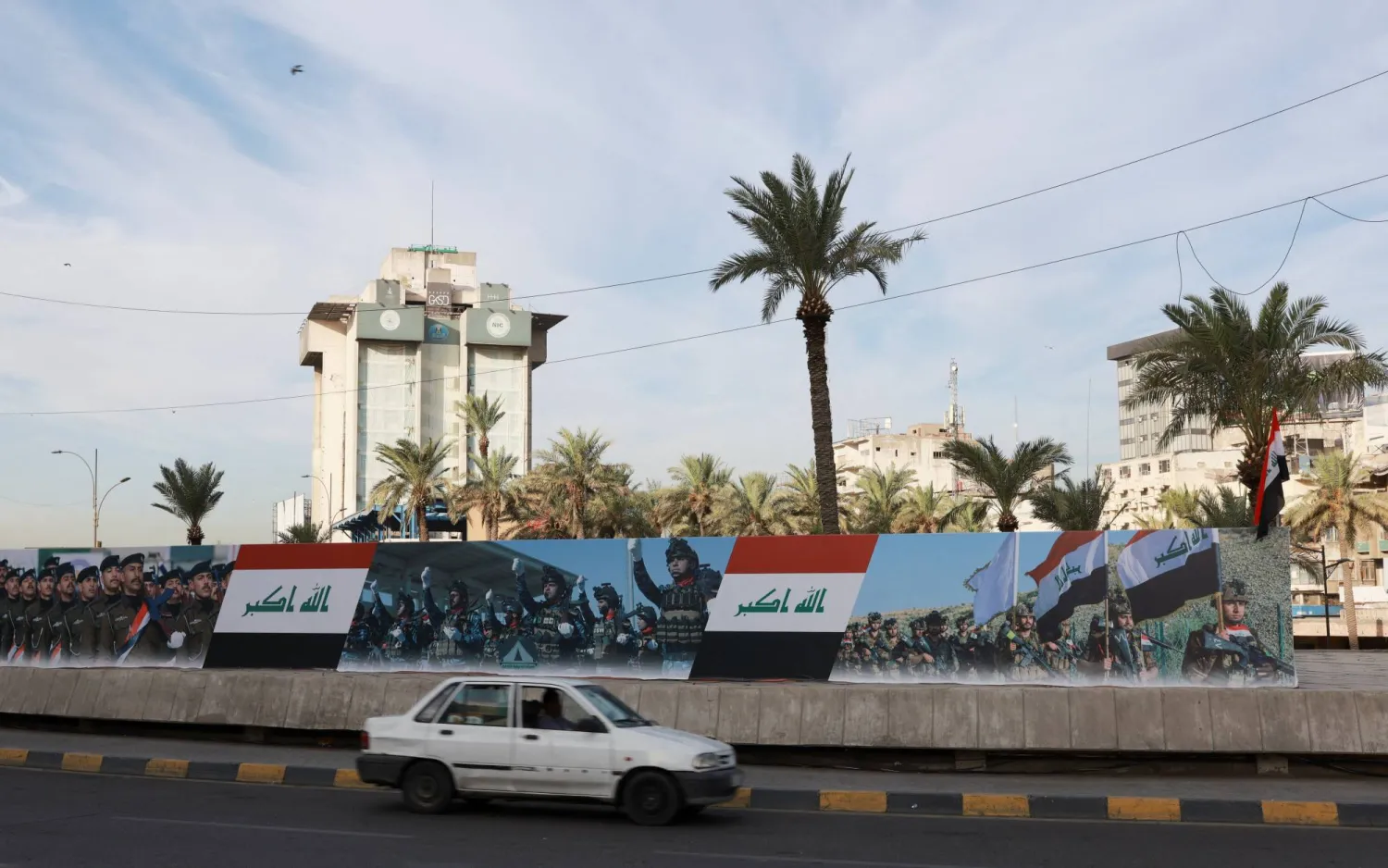
A car moves past a sign depicting Iraqi flags and images of Iraqi security forces on Sovereignty Day, marking the withdrawal of US-led coalition forces from Iraq, thereby ending more than two decades of military presence there, in Baghdad, Iraq, September 30, 2026. REUTERS/Ahmed Saad
TT

Trump Hails the US Military’s Exit from Iraq After Its 12-Year Mission

A car moves past a sign depicting Iraqi flags and images of Iraqi security forces on Sovereignty Day, marking the withdrawal of US-led coalition forces from Iraq, thereby ending more than two decades of military presence there, in Baghdad, Iraq, September 30, 2026. REUTERS/Ahmed Saad

The US military announced Wednesday that it completed the withdrawal of all American troops from Iraq, ending a 12-year mission to fight the ISIS group and prompting President Donald Trump to hail the conclusion of "a very expensive excursion into Hell.” 

The last US troops left an air base in northern Iraq under a deal between Baghdad and Washington. 

Trump, in a social media post, described the withdrawal by a Sept. 30 deadline as “orderly." Appearing soon after at a White House event celebrating Hispanics, he spoke at length about the withdrawal and said, “It’s been a long time with very bad decision making that got us involved in this quagmire in the first place. It was a quagmire. For many, many years it lasted. But soon that part of history will be over.” 

He said the shift was a victory for the US, Iraq and a sign of victory over the ISIS group. 

The withdrawal, agreed on two years ago, comes against the backdrop of the ongoing war between the United States and Iran that has also sometimes spilled over into Iraq, with Iran-backed factions firing on US troops and the US striking the groups' strongholds. 

Trump’s comments came as his own decision earlier this year to launch the war with Iran has been compared to the Iraq war for its undefined mission as it nears its seventh month. 

Appearing at the White House, Trump made that comparison, arguing both that his one-day military action in Venezuela earlier this year to capture now former President Nicolás Maduro and the Iran war compared favorably, taking far less time and with fewer deaths of US troops. 

In recent years, Washington has sought to shift its focus from the Middle East toward Asia, but that shift has been inconsistent, with the Pentagon alternating between reducing its Middle East presence and then finding itself engaging in new conflicts, including the ongoing war in Iran. 

Baghdad touted the end of the US mission as a sign of the country's increasing strength and sovereignty. 

The withdrawal was also celebrated by Iran-backed groups but raised concerns among some other Iraqis, particularly in the Kurdish region, where many fear a resurgence of the ISIS group, as well as more attacks by Iran-linked groups, possibly emboldened by the departure of US forces. 

Meanwhile, questions loom around the future of the Iraqi armed factions, which the Baghdad government has sought to disarm, with little success so far. 

A new phase in Iraq after decades of US involvement  

Pentagon spokesperson Sean Parnell said in a statement that US troops and equipment had completed an “orderly departure” from the air base in Irbil, in northern Iraq's semi-autonomous Kurdish region. 

“This milestone reflects the success of a 12-year campaign that defeated ISIS as an organized military threat in Iraq and across the region,” he said. “It also marks a transition from a wartime coalition mission to an Iraqi-led security effort supported by a more normal bilateral security relationship.” 

He added that the US military “will continue to provide targeted training and intelligence support to our Iraqi partners.” 

Iraqi Prime Minister Ali al-Zaidi presided over the handover ceremony and described the US withdrawal as the beginning of a “new phase, one defined by Iraq’s sovereignty, the strength of its institutions, the readiness of its forces, the unity of its decision-making, and balanced partnerships with its friends.” 

He said Iraqi security forces will continue the fight against ISIS and the government will ensure that non-state groups no longer hold weapons. 

Trump in his remarks on Wednesday lavished praise on al-Zaidi, calling him “outstanding,” a “fantastic guy, friend of mine,” and someone who “will hopefully be able to handle things very well.”  

He also appeared to try to take credit for al-Zaidi's leadership, saying that the Iraqi leader was “running for election” and “wasn’t given even a chance and I endorsed him and politicked for him a little bit, and he ended up winning in a virtual landslide.” 

Al-Zaidi was not on the ballot but was selected as prime minister when Iraq’s dominant parliamentary bloc nominated him after weeks of internal debate among its member parties and Trump publicly announcing his opposition to the coalition's previous choice. 

US troops invaded Iraq in 2003 to topple Saddam Hussein. They departed in 2011, but three years later, Iraqi authorities invited a smaller US-led mission to fight ISIS, which had rampaged across Iraq and Syria, seizing large swaths of territory. 

With the extremist group reduced to scattered sleeper cells, Washington and Baghdad agreed in 2024 to wind the mission down. 

US troops pulled out of bases in most areas of Iraq last year but maintained a small presence of hundreds of troops in the semi-autonomous northern Kurdish region. Bases there have regularly come under attack since the US and Israel launched their war against Iran on Feb. 28. Iran-backed Iraqi factions also have coordinated with Yemen’s Houthi militants to attack Saudi Arabia. 

The future of factions remains unclear  

The Iraqi government initially linked the Sept. 30 deadline for US withdrawal to the disarmament of non-state armed groups by that date. 

While a handful of less-influential factions have agreed to turn over their weapons, powerful groups close to Iran rejected the prospect or set conditions for disarming that the government would be unlikely to meet. 

Al-Zaidi has since walked back the deadline. He told The New York Times earlier this month that the deadline for faction disarmament has been pushed to June 2027. 

The effects of the US withdrawal may not be immediately visible, particularly since the US military presence had already been scaled down. But officials in Iraq's Kurdish region have expressed anxiety about the departure and particularly about the removal of US air defense systems. 

The Kurdish regional government's Peshmerga Ministry said the Kurdish region had faced more than 1,000 drone and ballistic-missile attacks during the recent US-Iran conflict. 

“The departure of the United States from the Kurdistan Region under these complex regional circumstances, without the provision of a defense system, is a matter of concern,” the statement said. 

Iran-allied groups in Iraq, meanwhile, have celebrated the US withdrawal. 

“The expulsion of the occupation forces, defeated, from the land of Iraq is the beginning of full sovereignty,” Abu Mujahid al-Assaf, a security official with the powerful Kataib Hezbollah, said in a statement. 

He added a warning to al-Zaidi and his government not to carry out American plans, threatening that “any government that does not work for the benefit of the people will be overthrown by all means.” 

Kataib Hezbollah leader Ahmad al-Hamidawi took a somewhat more conciliatory tone, calling on the group's fighters to halt their military activities “with the exception of targeting hostile aircraft violating the country’s airspace.” 

The Islamic Resistance in Iraq, an umbrella group of Iran-backed armed factions, said in a statement that negotiations with the government over the regulation of weapons have not resulted in an agreement and that it was “not bound by any timeline or agreement” announced by the government or political entity. The group said it is open to “any dialogue that guarantees Iraq’s sovereignty and dignity.” 


Yemen Govt: Houthis Fully Responsible for Turning Hodeidah Ports into Arms Smuggling Platforms

Traffic moves along a street in the southern port city of Aden, Yemen November 16, 2026. (Reuters)
TT

Yemen Govt: Houthis Fully Responsible for Turning Hodeidah Ports into Arms Smuggling Platforms

Traffic moves along a street in the southern port city of Aden, Yemen November 16, 2026. (Reuters)

The Yemeni government stressed on Friday that the strikes carried out by the Coalition to Restore Legitimacy against some facilities at the port of Hodeidah, conducted in accordance with international law, hit legitimate targets used by terrorist Houthi militia to receive smuggled Iranian weapons and turn the port into a launchpad threatening international peace and security.

The Coalition announced on Friday that it carried out an operation to neutralize sources of threat used by the Houthis to support their military efforts to attack civilians in Yemen and Saudi Arabia.

Official Coalition Spokesperson Major General Turki Al-Malki operational capabilities at the Yemeni port of Hodeidah, which facilitated the smuggling and transport of weapons and ballistic missiles, were targeted.

In a statement, the Yemeni government said that “turning ports and civilian infrastructure into arms smuggling routes and hubs for directing military operations is a crime against the interests of the Yemeni people and poses a threat to regional and international security and stability.”

“These actions expose the practices of the terrorist Houthi militia in exploiting vital state facilities to serve its military agenda linked to the Iranian regime, at the expense of citizens' lives, needs, and national interests,” it added.

“Protecting civilians remains an absolute priority, and that the advance evacuation warning reflects full commitment to the rules of international law,” it continued.

“The responsibility to protect civilian facilities is inseparable from the need to prevent their exploitation in military activities and arms smuggling operations that threaten the security of Yemen, the region, and international navigation in the Red Sea and Bab al-Mandeb,” it went on to say.

It added the government has previously revealed the presence of members from the Iranian General Staff in Hodeidah, operating out of certain port facilities and overseeing the smuggling of weapons and raw materials used in manufacturing missiles and drones.

“This is an extension of Iran's destructive role in arming the militia, developing its military capabilities, and expanding its threats to regional security and international maritime lanes,” it warned.

The government stressed that these activities and their networks “will not be immune from accountability and prosecution.”

Countering attempts to exploit these developments to mislead the public or fuel fears over living conditions, the government reassured citizens that the flow of basic commodities, humanitarian aid, and commercial activity will continue under approved arrangements.

It confirmed that ports and land, sea, and air crossings in liberated areas are operating regularly and at sufficient capacity to maintain the movement of commercial and humanitarian supplies and meet citizens' needs, underlining that safeguarding the interests and livelihoods of the Yemeni people remains at the forefront of the government's responsibilities.

The government, together with the Coalition to Restore Legitimacy, renewed its commitment to the principles of international humanitarian law, calling on the international community to shoulder its responsibilities regarding Houthi practices that exploit civilian facilities and vital infrastructure for military activities and arms smuggling.

The government held the Houthi militia “fully accountable for militarizing the port of Hodeidah, embroiling its civilian facilities in arms smuggling and military operations, and the resulting risks and repercussions.”

“Yemeni ports belong to the Yemeni people and exist to serve their interests, not as tools for a military agenda or launchpads threatening the security of Yemen and the wider region,” it said.


Yemen Urges UN Action to Confront Houthi Violations

A Yemeni woman displaced by the Houthis receives aid at a camp near Aden. (AP)
TT

Yemen Urges UN Action to Confront Houthi Violations

A Yemeni woman displaced by the Houthis receives aid at a camp near Aden. (AP)

The Yemeni government has stepped up diplomatic efforts to confront Houthi attacks on civilians, urging the United Nations Security Council to take concrete measures to halt the assaults and hold those responsible accountable. Meanwhile, a human rights report revealed that nearly 1,500 civilians had been detained or abducted on roads leading to the Taiz governorate.

The developments come amid warnings of a worsening humanitarian crisis as the siege of the city continues.

In a letter addressed to UN Secretary-General Antonio Guterres and Security Council President Ambassador Sanita Pavļuta-Deslandes, the Yemeni government warned of continued military escalation by the Iran-backed Houthi militia, including missile, shell and drone attacks targeting residential neighborhoods and civilian gatherings in the interim capital Aden and the governorates of Lahj and Taiz.

The letter said Aden came under missile attack on the evenings of Nov. 11 and 13, while shelling targeted the Kharaz refugee camp in Lahj province on Nov. 12, killing a Somali refugee woman.

The government said the attack threatened refugee safety and exposed vulnerable groups to serious risks.

Calls for accountability

The Yemeni government held the Houthis fully responsible for the attacks and the resulting casualties and damage, saying the latest incidents were not isolated but part of a series of assaults in recent weeks targeting Aden International Airport, healthcare facilities, public markets and residential neighborhoods.

The government also accused the group of targeting civilians and civilian infrastructure in Saudi Arabia, as well as international shipping lanes.

It said deliberate attacks on civilians and civilian infrastructure, along with indiscriminate strikes, constituted serious violations of international humanitarian law and amounted to war crimes, requiring those responsible to be held accountable and victims to receive justice and compensation.

The government urged the Security Council to explicitly condemn the attacks, pressure the Houthis to halt them immediately, comply with their obligations under international law and take measures to prevent further assaults.

It warned that continued attacks on residential areas and refugee camps demanded an international response that went beyond statements of concern and condemnation to concrete action to protect civilians, refugees and displaced people and end impunity.

The government also called for full implementation of relevant Security Council resolutions, especially provisions concerning the cessation of military escalation and arms embargoes.

It stressed the importance of strengthening cooperation between the Yemeni government and UN member states, including information-sharing, technical assistance and capacity-building, to prevent weapons, ballistic missiles, drones, their components and military technology from reaching the Houthis.

1,477 civilians abducted or detained

Separately, the Taiz Human Rights Center reported that 1,477 civilians had been subjected to arbitrary detention or abduction at Houthi-controlled checkpoints in southern and western Taiz between Nov. 14 and 18.

The center said in a report that 830 civilians were detained for hours, interrogated and subjected to searches of their mobile phones, while another 446 were forced to sign so-called "returnee forms."

A further 201 civilians were abducted and taken to undisclosed detention facilities, the report said.

The center held the Houthis fully responsible for the safety of those detained or abducted, demanding that the militia disclose their whereabouts and release them immediately.

It also called for an end to arbitrary detention, forced searches of mobile phones and the practice of compelling civilians to make statements or sign documents under duress.

The center urged the UN and international human rights organizations to intervene urgently to safeguard civilians' freedom of movement and hold those responsible for the violations accountable, as restrictions on travel along roads and access routes to the city intensify.

Taiz Governor Nabil Shamsan discussed the repercussions of the continuing Houthi siege with European Union Ambassador to Yemen Patrick Simonnet during a video call, highlighting rapidly deteriorating living conditions and shortages of essential supplies.

Shamsan outlined the challenges facing residents as a result of road closures and restrictions on the delivery of food, medicine and fuel supplies.

He warned of the consequences for the humanitarian situation as food and medicine stocks dwindle and the water crisis worsens.


Iraqi Forces Enter Jurf al-Sakhar After 12 Years of Kataib Hezbollah Control

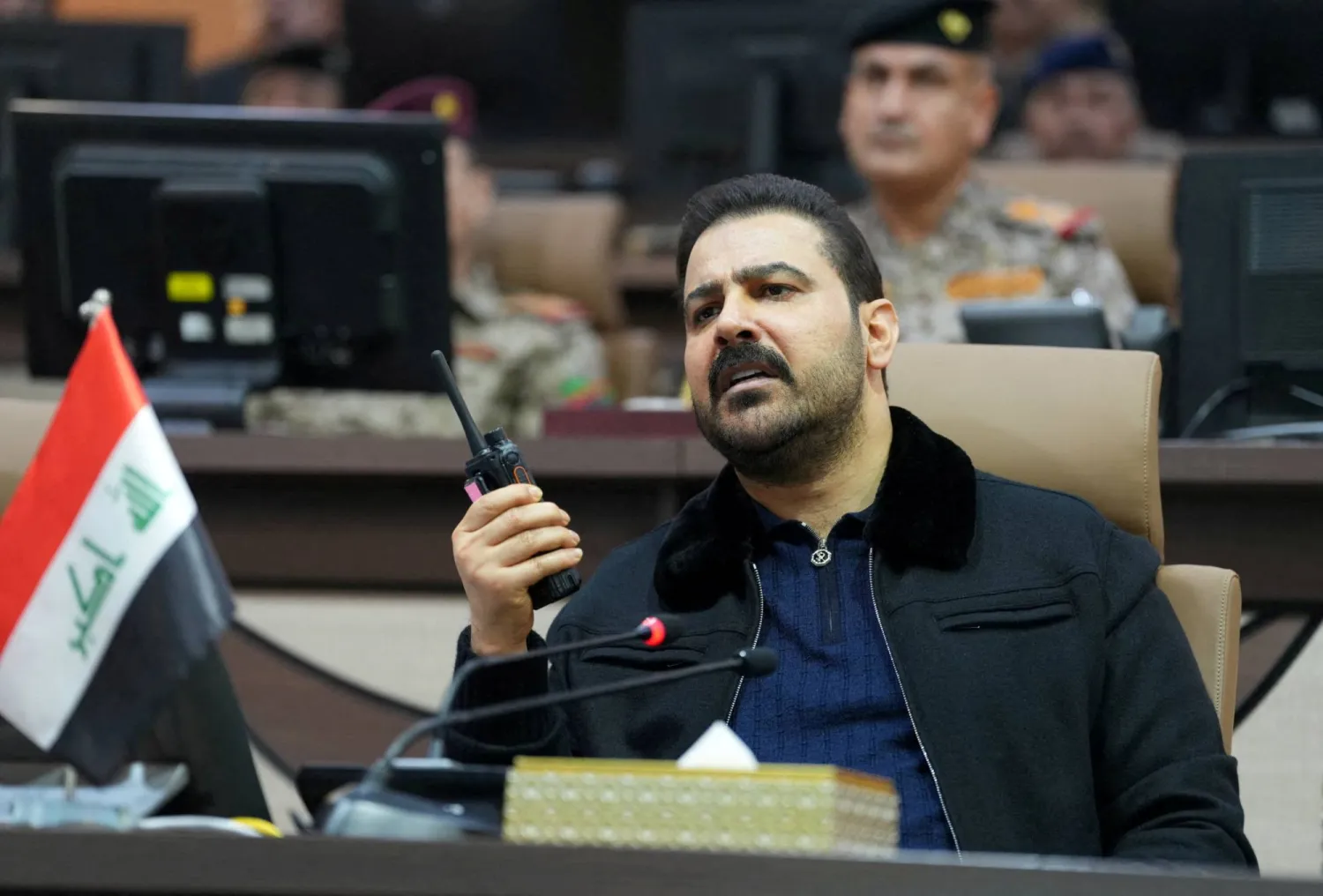
Iraqi Prime Minister Ali al-Zaidi speaks by radio from Baghdad to Iraqi security forces deployed in Jurf al-Sakhar, Iraq, November 20,2026. (Iraqi Prime Minister Media Office/Handout via Reuters)
TT

Iraqi Forces Enter Jurf al-Sakhar After 12 Years of Kataib Hezbollah Control

Iraqi Prime Minister Ali al-Zaidi speaks by radio from Baghdad to Iraqi security forces deployed in Jurf al-Sakhar, Iraq, November 20,2026. (Iraqi Prime Minister Media Office/Handout via Reuters)

Iraqi security forces began deploying in Jurf al-Sakhar, south of Baghdad, on Friday after nearly 12 years of control by the Iran-backed Kataib Hezbollah armed faction, under government arrangements to reorganize security responsibilities and place the area under a military command reporting to the commander-in-chief of the armed forces.

Prime Minister Ali al-Zaidi, who is also commander-in-chief of the armed forces, told troops stationed in the area that the drive to assert state authority across Iraq had begun there, stressing that the government's position was firm: "No weapons outside state authority, no weapons but Iraq's, and no flag above its own."

Al-Zaidi's office said in a statement that he had monitored operations and troop movements to replace military units in Jurf al-Nasr, in the Babil province, from the headquarters of the commander-in-chief's office.

Kataib Hezbollah denies withdrawal

While the government announced the deployment of security forces to assert state authority, Kataib Hezbollah denied withdrawing from the area.

A political source in Baghdad said the conflicting accounts reflected how each side was presenting developments to its supporters. The more likely scenario, the source said, was that Kataib Hezbollah would retain a limited presence at sites it considered important, while the new military command assumed overall responsibility for the area.

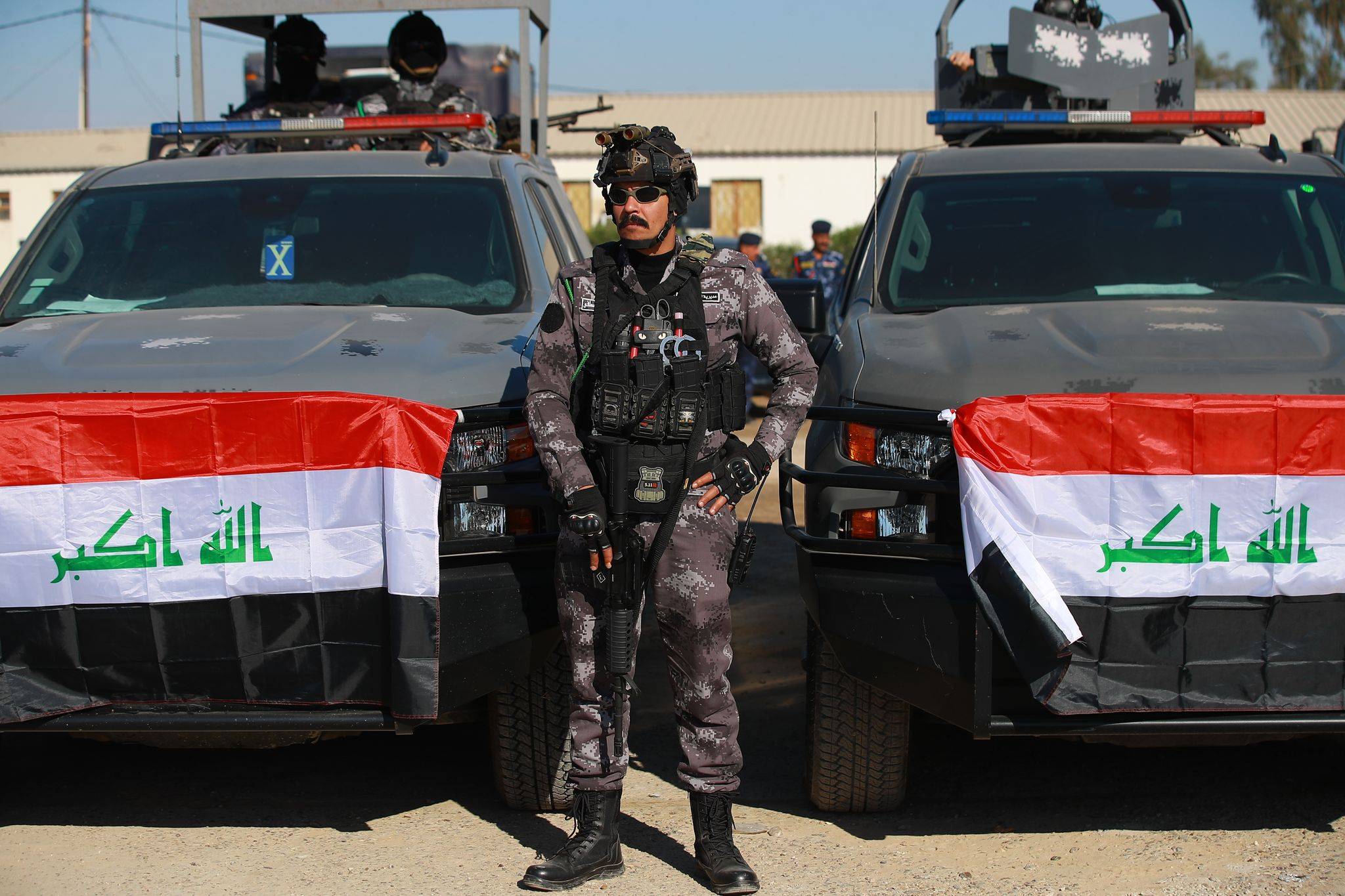
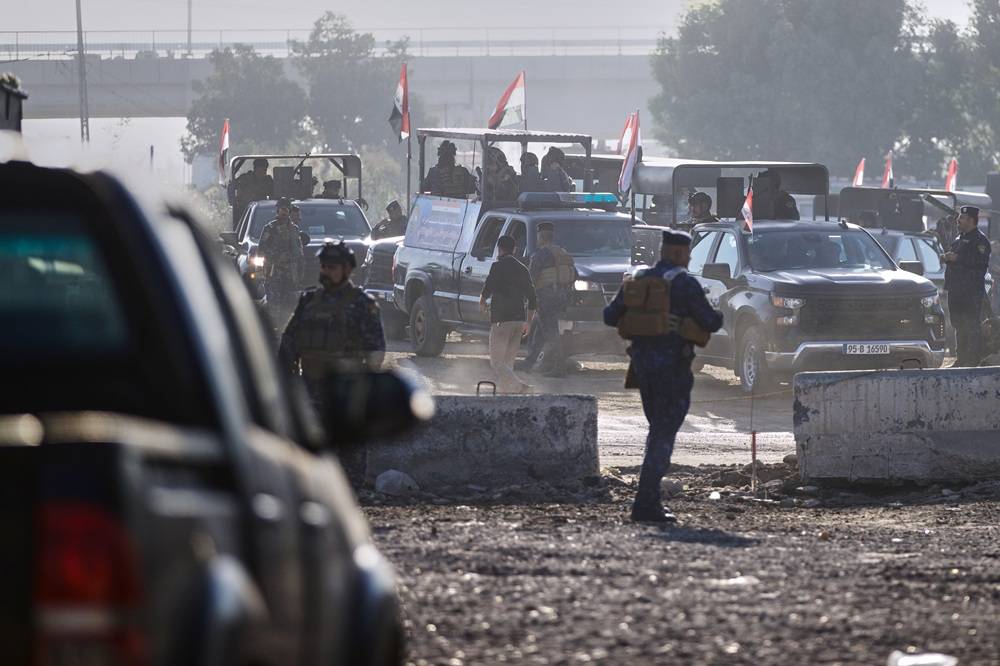
20 November 2026, Iraq, Jurf al-Sakhar: Iraqi security forces take up positions in Jurf al-Sakhar, in the Babil province, south of Baghdad, during the establishment of a new military command center in the area. (dpa)

Security and military sources, however, said three Kataib Hezbollah brigades had left their positions in Jurf al-Sakhar for locations south and west of Baghdad.

A senior Iraqi security and political official told Asharq Al-Awsat the developments marked a shift in the balance of control.

"The equation has changed in this area, and numerous measures will follow to establish state authority throughout Iraq," the official said.

The official said understandings reached between state institutions and Kataib Hezbollah through domestic and regional mediation provided for a phased withdrawal of the group's fighters, with two battalions leaving each day beginning Friday, when government forces first entered the area.

The process would continue for a month to allow the entire area to be secured, the official said.

The details of the understandings and the timetable for their implementation could not be independently verified.

Security forces began deploying on Friday morning as a new military command headquarters opened to oversee security and military operations.

Reviewing residents' records

An Iraqi security source told Asharq Al-Awsat the new command would also oversee logistical arrangements and public services, verify information about people currently in the area and review records of displaced residents to distinguish those wanted by the judiciary from civilians forced from their homes.

The government's plan includes preparing for the return of displaced residents by ensuring homes are habitable and providing water and electricity, the source said. The measures would take time, however, and no completion date had been set.

A long history of displacement

The latest developments have renewed attention on Jurf al-Sakhar, a predominantly Sunni area that came under the control of armed factions following military operations against ISIS in 2014.

A Sunni Iraqi politician, who previously served in the security establishment, said the government's measures appeared to signal a serious effort to address the armed factions' control of the area.

Beyond the mass displacement of residents, the politician said, the area had undergone shifts in the nature of the factions' security and military influence, including their acquisition of weapons, missiles and drones.

The issue should have been addressed through security vetting and the prosecution of those involved in terrorism, rather than holding residents responsible for what had happened in the area, the politician added.

Security arrangements extend to al-Oweisat

In a parallel development, Anbar police units began deploying in al-Oweisat, a village in Amiriyah Fallujah near Jurf al-Sakhar that had also been under Kataib Hezbollah's influence since late 2014.

The village falls administratively within Anbar province, whose police command is responsible for its security.

A local resident told Asharq Al-Awsat that several facilities were located nearby, including sites linked to military manufacturing and a helicopter landing pad built by US forces during operations against armed groups.

The resident said the area had witnessed fighting against al Qaeda and later ISIS before falling under ISIS control in early 2014, when it became a launchpad for attacks on neighboring areas.

It remains unclear whether the new security arrangements in al-Oweisat will follow the same model being implemented in Jurf al-Sakhar.

Iraqi security forces deploy as they establish a new command headquarters in Jurf al-Sakhar, a longtime stronghold of the Iran-backed Kataib Hezbollah in Iraq's Babil province, south of Baghdad, Friday, Nov. 20, 2026. (AP)

Political visits restricted

As part of efforts to manage the transition, an Iraqi source said al-Zaidi had temporarily barred politicians from entering Jurf al-Sakhar to allow security agencies to complete deployments, vetting and administrative and logistical procedures without political or media interference.

Information obtained by Asharq Al-Awsat indicates that the government intends to examine additional issues as part of its efforts to reorganize the situation in Jurf al-Sakhar.

These include reviewing funding sources and economic activities linked to armed factions, as well as investigating the use of oil resources and revenues from transporting crude within Iraq and abroad.

Other matters under consideration include previous reports that electricity supplies in the area were used to operate cryptocurrency mining farms. The outcome of investigations into those allegations remains unclear.

The information also points to plans to investigate abuses committed during successive periods of control by al-Qaeda, ISIS and armed factions, as well as the fate of people who went missing during those years, including protesters who took part in demonstrations in 2016 and 2019.

The potential investigations also cover workshops developing short- and medium-range missiles and facilities manufacturing drones.