



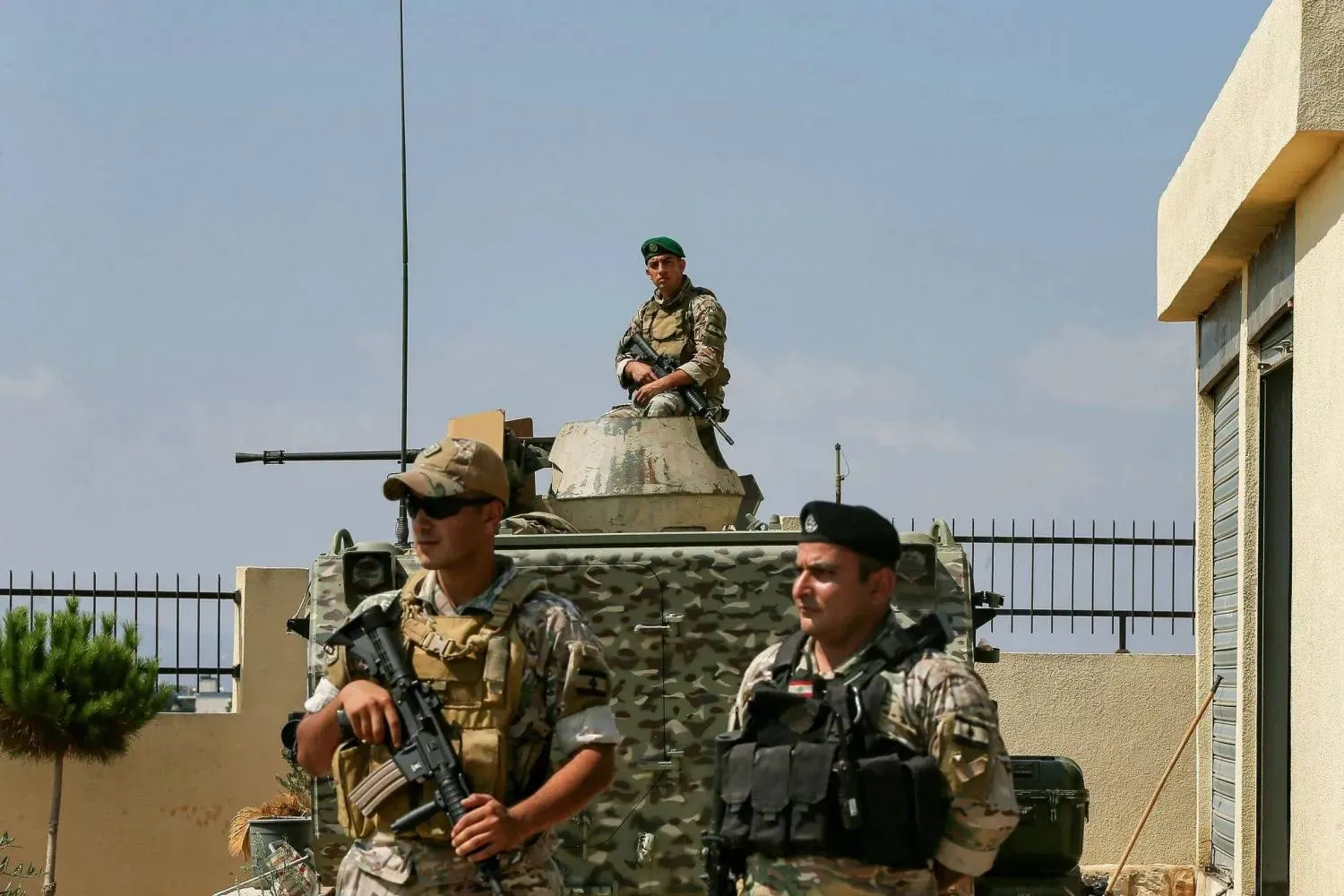

Dozens of Israeli attacks have targeted Lebanese army units deployed in the south over the past three years, with friction at times between the two armies.
This has continued despite coordination through the United States and, previously, through the ceasefire monitoring mechanism and the United Nations Interim Force in Lebanon (UNIFIL), pointing to tensions that have stopped short of confrontation.
The attacks and coordination arrangements will be discussed at a US-sponsored military negotiating session between representatives of the Lebanese and Israeli armies at US Central Command headquarters in Florida on Oct. 20.
Ministerial sources following the international talks said the session would address no civilian issues. Negotiators specializing in law or economics would not participate, and discussions would be limited to military representatives.
Ambassador Simon Karam, head of Lebanon’s negotiating delegation with Israel, would chair the session. Lebanon’s ambassador to Washington, Nada Hamadeh Moawad, would also attend.
The sources told Asharq Al-Awsat that the talks “will be limited to operational and military issues, such as the ceasefire, halting bulldozing operations, and the possibility of expanding the model zones or making progress on verification in those zones,” as well as the issue of prisoners.
Lebanon will not boycott negotiations
The eighth negotiating session in Rome has stalled and will be postponed until after the Israeli elections. Those talks usually bring together military and civilian delegations to discuss political, economic and operational issues.
Against that backdrop, “the US side considered it more appropriate to hold a session limited to military representatives to discuss matters on the ground.”
The session demonstrates that “negotiations have neither broken down nor been frozen,” despite fading hopes of progress, particularly on the model zones and prisoners.
The United States will set the agenda. The Lebanese delegation will discuss the core positions outlined by President Joseph Aoun at the Paris conference and Prime Minister Nawaf Salam at the United Nations General Assembly, the sources said.
Dozens of officers and soldiers killed since 2023
The Lebanese army’s role, along with coordination and communication arrangements, is among Lebanon’s priorities.
Since war erupted on Oct. 8, 2023, more than 70 Lebanese army officers and soldiers have been killed in the south during three years of war with Israel. Some died in direct attacks; others were killed by explosive remnants of war.
The toll includes 46 service members killed in 2023 and 2024, according to a tally by Information International.
Lebanese army statements have documented the deaths of 27 officers and service members since the latest war began, following Hezbollah’s launch of six rockets toward Israel on March 2 this year.
The latest incident occurred on Wednesday in Nabatieh al-Fawqa, where a soldier was seriously wounded when a suspicious object left over from the war exploded.
The army command said a soldier and three civilians were wounded in an explosion while troops were accompanying residents inspecting their properties in the area.
“Investigations and an inspection by military engineers established that the incident was caused by the explosion of a suspicious object,” the army said, adding that inquiries were continuing to establish the circumstances.
State institutions barred from the security zone
Repeated bombardment has emptied Nabatieh al-Fawqa of all residents and made it a dangerous area. The army is deployed on its outskirts and at its entrances.
Residents generally ask troops to accompany them into the town for reassurance, reflecting their trust in the army.
Israeli attacks on Lebanese troops have repeatedly occurred in areas the Israeli army has declared off-limits. An attack on a military vehicle killed two officers and a soldier in the Khardali area in June. Friction also occurred between the armies in Deir Mimas last week.
Although Lebanon does not view the incidents as an Israeli message aimed specifically at its army, security sources said Israel “is applying a security zone model that bars all Lebanese, regardless of whether they are civilians, army personnel or members of state institutions.”
The sources told Asharq Al-Awsat that last week’s friction in Deir Mimas, where Lebanese troops had deployed at residents’ request, “illustrates what Israel is trying to impose: isolating the security zone it has created from the rest of Lebanon and from state institutions.”
The Lebanese army recognizes only the international border and considers the Israeli presence on Lebanese territory an occupation.
Condemnation of attacks on the army
After each incident, the Lebanese army steps up contact with the US side through either the ceasefire monitoring mechanism or the Military Coordination Group for Lebanon (MCG4L) to prevent friction.
Lebanon’s political leadership and parliament support the army’s position. Its troops are deployed under a decision by the executive branch.
Lawmaker Mark Daou condemned what he described as crimes against the Lebanese army, which is carrying out government orders to establish stability and maintain security in the south.
He told Asharq Al-Awsat that communication arrangements between the Lebanese army command, UNIFIL and the ceasefire monitoring mechanism allow them to review attacks on service members.
They also coordinate efforts to prevent further violations against troops and maintain security.
He was referring to direct coordination between the Lebanese army command and the leadership of the mechanism, headed by US Lt. Gen. Joseph Clearfield.


