Sudanese Army Expands Control in North Kordofan

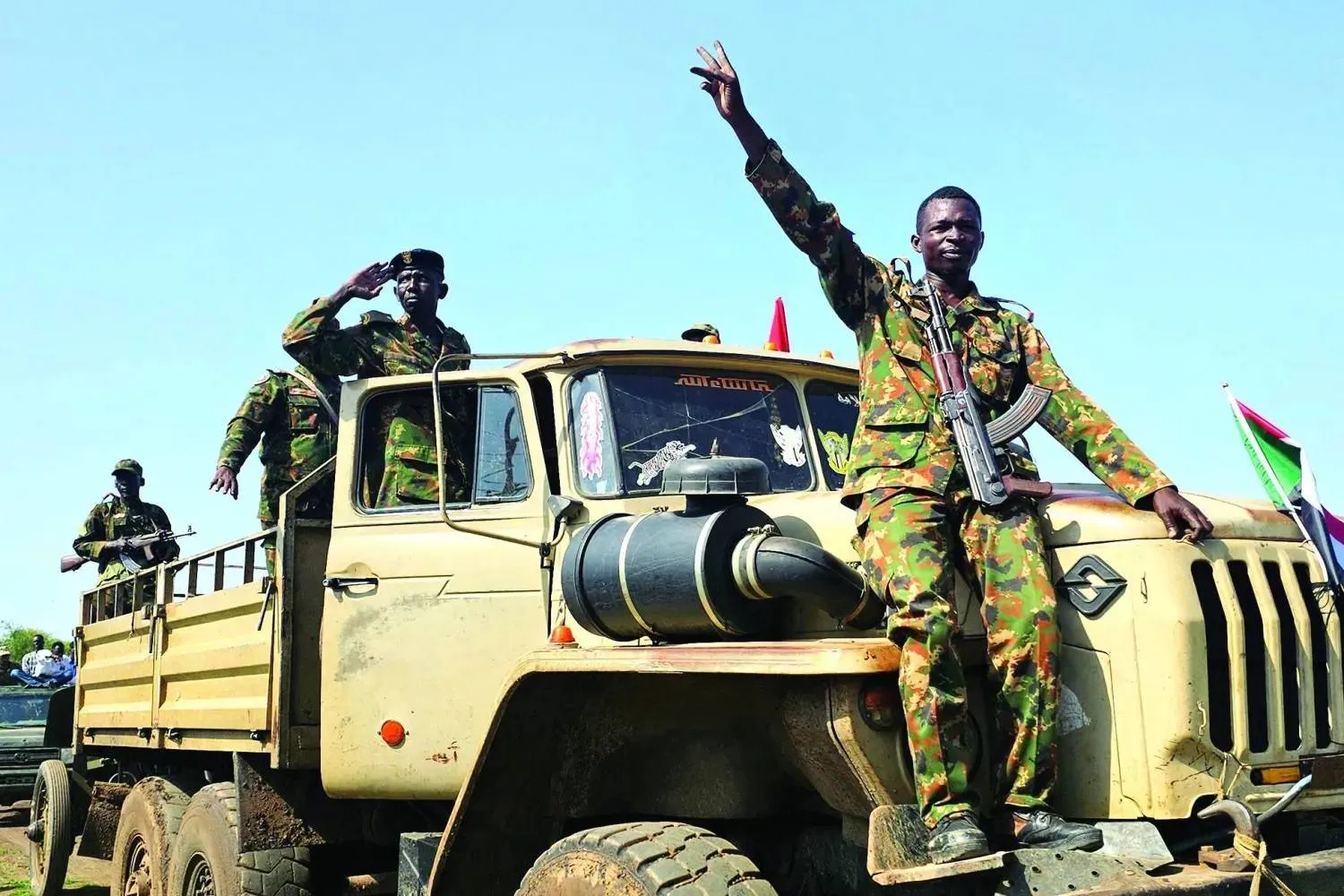
Sudanese army soldiers take part in a military parade in Gedaref on August 17 (AFP). 
TT

Sudanese Army Expands Control in North Kordofan

Sudanese army soldiers take part in a military parade in Gedaref on August 17 (AFP). 

The Sudanese army said Friday it had recaptured the strategic town of Al-Mazroub in North Kordofan, a week after retaking Sodari, as a deadly drone strike on student housing in the state capital, El-Obeid, highlighted the growing use of unmanned aircraft in the conflict.

The developments come as the UN Security Council prepares for fresh negotiations over a US proposal to extend the arms embargo on Darfur to all of Sudan.

In a statement, the army’s General Command said its troops and allied forces had retaken Al-Mazroub after “fierce battles,” inflicting heavy casualties and vehicle losses on the paramilitary Rapid Support Forces (RSF).

The army pledged to continue operations on all fronts, protect civilians and secure property, urging residents of recaptured areas to resume their normal lives.

Mohamed Deidan, spokesman for the Special Operations Forces in North Kordofan, announced on Facebook that army troops had entered Al-Mazroub at 9 a.m. Friday, a development corroborated by field sources.

Located about 130 kilometers northwest of El-Obeid, Al-Mazroub is an important livestock market that has also served as a military supply route during the war. It had long been under RSF control.

Witnesses reported that RSF fighters withdrew from the town in September but returned after the army captured Sodari, before retreating again as government forces advanced Friday morning.

Holding Al-Mazroub strengthens the army’s ability to monitor movements west of Bara and restrict the town’s use as a transit and supply hub. Consolidating the gain, however, depends on securing surrounding roads and rural areas.

The advance follows recent army gains in Sodari, Um Sharo, Bara, Jabra al-Sheikh and Um Sayala. Field reports indicated that RSF units had retreated toward Um Badr, Hamrat al-Sheikh and the state’s far west, although their current positions remain independently unverified.

Kordofan’s strategic importance stems from its location linking central Sudan to Darfur, making control of its towns and roads critical to troop movements and supply lines.

Meanwhile, the Sudan Doctors Network reported that five people were killed and 47 wounded in a drone strike on University of Kordofan student housing in El-Obeid.

The network blamed the RSF, describing the attack as an escalation in strikes against civilian and educational facilities.

The paramilitary group made no immediate comment, and responsibility for the strike could not be independently established.

El-Obeid has faced repeated drone attacks in recent weeks, reflecting the weapon’s growing use alongside ground operations.

Burhan addresses military recruits

In Khartoum, Sudan’s Sovereignty Council chairman and army chief Abdel Fattah al-Burhan told newly admitted military academy recruits that the armed forces must safeguard the country’s security and unity, with loyalty transcending political, tribal and regional affiliations.

He described the army as a national institution serving all Sudanese and urged recruits to develop their military and technical skills to keep pace with advances in weaponry and equipment.

The Security Council is expected to revisit Sudan sanctions before the current temporary extension expires on October 9.

In September, disagreements over a US proposal to expand the Darfur arms embargo nationwide forced the council to extend the existing measures by just one month.

Washington also seeks tighter restrictions on weapons, drones, related technology and foreign fighters, while Russia and China have expressed reservations about widening the embargo.

Sudan’s government opposes a nationwide ban, arguing it could undermine the army’s ability to defend the country. Instead, it wants tougher measures to prevent weapons and foreign support from reaching the RSF.

The latest escalation in Kordofan adds significance to the Security Council debate, as military operations and drone warfare have spread beyond Darfur, for which the embargo was established more than two decades ago.


International Meeting Rules Out Military Solution to Sudan War

A view of the consultative meeting on coordinating peace initiatives and efforts in Sudan on October 21, 2026 (Saudi Foreign Ministry). 
TT

International Meeting Rules Out Military Solution to Sudan War

A view of the consultative meeting on coordinating peace initiatives and efforts in Sudan on October 21, 2026 (Saudi Foreign Ministry). 

International representatives meeting in Geneva have declared that there is no military solution to Sudan’s war, calling for an urgent humanitarian truce, an end to foreign interference and renewed efforts toward a political settlement.

The appeal came at the close of UN-organized Sixth Consultative Meeting on Enhancing Coordination of Peace Initiatives and Efforts in Sudan where the army and the paramilitary Rapid Support Forces (RSF) have been fighting since April 2023.

In a final statement, participants warned that civilians were paying a devastating price for the warring parties’ pursuit of battlefield gains. They urged both sides to de-escalate and engage seriously in negotiations that could lead to a permanent ceasefire.

The sixth consultative meeting, which concluded Wednesday evening, was co-chaired by Swiss State Secretary for Foreign Affairs Alexandre Fasel and UN Secretary-General’s Personal Envoy for Sudan Pekka Haavisto.

Representatives of 22 countries attended, including the United States, Saudi Arabia, the United Arab Emirates, Egypt, Britain, France, China, Russia and Sudan’s neighbors, alongside regional and international organizations such as the African Union, European Union and Intergovernmental Authority on Development (IGAD).

Confidence-building measures

Haavisto outlined UN efforts to introduce confidence-building measures that both warring parties might accept, including exchanges of prisoners of war and detainees, both military and civilian, and arrangements to allow students to sit examinations.

“We think that there are issues that should unite actually both parties of the conflict,” he said, describing such initiatives as modest first steps compared with the devastation caused by the war.

The meeting stressed that a humanitarian truce must pave the way for a lasting ceasefire, with de-escalation efforts bringing tangible improvements on the ground.

After three and a half years of fighting, participants dismissed the pursuit of military gains as a solution, warning that civilians were bearing the devastating cost of continued hostilities.

They called for full compliance with international humanitarian law and the protection of civilian facilities, particularly infrastructure essential to basic services.

States and other actors were urged to stop fueling the conflict by supplying mercenaries, military equipment, drones or financing.

Such support, the statement warned, would cause further casualties and increase the risk of Sudan’s fragmentation. It did not identify any countries or organizations responsible for providing assistance to the warring parties.

Participants reaffirmed their commitment to Sudan’s sovereignty, unity and territorial integrity, as well as the preservation of state institutions.

They rejected the creation of parallel governments, institutions or governing structures and called for concrete measures to prevent any steps that could undermine the country’s unity.

Push for an inclusive political settlement

The Geneva talks emphasized that lasting peace would require a credible, inclusive Sudanese political process reflecting the aspirations of the population.

Such negotiations should allow meaningful participation by political and civilian groups, including women and young people, and lead to an agreed transition toward sustainable peace and democratic governance.

Participants backed mediation efforts by the Quad — the United States, Saudi Arabia, the UAE and Egypt — and the Quintet, comprising the African Union, European Union, IGAD, Arab League and United Nations.

They stressed that any political process must be transparent, credible, and free from coercion.

The meeting also expressed grave concern over continuing hostilities, reports of atrocities and the increasing use of drones.

Millions of Sudanese face severe food shortages, while restrictions on humanitarian access and adverse weather conditions have heightened the threat of famine.

The conflict’s humanitarian, social and economic repercussions are also being felt across neighboring countries, raising fears of violence spreading beyond Sudan’s borders with potentially catastrophic consequences.

Regional and international coordination

The Geneva consultations follow earlier meetings in Cairo, Djibouti, Nouakchott and Brussels, the most recent held in the Egyptian capital on January 14.

The initiative seeks to bring regional and international diplomatic efforts into closer alignment as Sudan’s humanitarian catastrophe deepens.

Aid organizations estimate that more than 200,000 people have been killed and over 13 million displaced since the war began, leaving the country at the center of the world’s largest hunger and displacement crisis.

Participants also reaffirmed their commitment to the principles adopted at the ministerial conference on Sudan in Berlin last April and the spirit of the May 2023 Jeddah Declaration, under which the army and RSF pledged to protect civilians and facilitate humanitarian access.


Escape Attempts, Assassination Plots Expose Rifts within Gaza’s Armed Gangs

Palestinians try to extinguish a fire in a vehicle destroyed by an Israeli airstrike south of Gaza City on Thursday. (EPA)
TT

Escape Attempts, Assassination Plots Expose Rifts within Gaza’s Armed Gangs

Palestinians try to extinguish a fire in a vehicle destroyed by an Israeli airstrike south of Gaza City on Thursday. (EPA)

Reports of attempted assassinations, defections and deadly escape attempts have exposed growing tensions within Israeli-backed armed gangs operating in areas of Gaza under Israeli control, according to Palestinian faction sources, Hamas security officials and statements issued by local families.

The groups operate east of the so-called Yellow Line, the boundary separating Israeli-held territory from areas controlled by Palestinian factions, primarily Hamas.

Since the October 2025 ceasefire agreement, Israeli forces have carried out near-daily strikes and targeted killings, expanded the territory under their control and, in many operations, relied on local armed groups backed by drone and artillery support.

Failed assassination attempt

Two field sources from Palestinian factions monitoring the gangs told Asharq Al-Awsat that two gunmen from Jabalia, northern Gaza, attempted to assassinate Shawqi Abu Nasira, who leads a group based north of Khan Younis and east of Deir al-Balah.

One of the men was a former member of Hamas’ armed wing, the Al-Qassam Brigades, who had defected.

The attack, carried out about two weeks ago, failed for reasons that remain unclear to the Palestinian side, according to one source. Both suspects were subsequently arrested and handed over to officers from Israel’s Shin Bet security agency for questioning.

The second source maintained that the pair had acted independently, although their motives were unknown.

It was unclear whether the attempt stemmed from disputes with Abu Nasira and his associates or reflected a desire to reverse their defections and leave the gangs.

The incident comes amid reports of members abandoning their positions and returning to their families in areas west of the Yellow Line.

Internal disputes and defections

A security official from Gaza’s Hamas-run administration, who monitors the armed groups, reported growing internal friction, with some disagreements escalating into exchanges of gunfire between members and commanders.

Some disputes involved drug trafficking, while others arose from gunmen seeking to break away and return home.

Several members had contacted their families in recent months, asking them to coordinate with security agencies and clan leaders to secure permission to return and guarantees of safety, the official told Asharq Al-Awsat.

Others offered to act as informants for security bodies affiliated with the Palestinian factions or carry out attacks against the gangs.

The official cited an incident two months earlier in which a gunman attempted to assassinate Hussam al-Astal, who heads an armed group in southern Khan Younis.

According to the same source, five attempts to flee gang-controlled areas toward territory held by Palestinian factions were documented over the past two weeks.

All five men were killed by bombs dropped from quadcopter drones, the official revealed.

A field source in Rafah, southern Gaza, provided further details, reporting that Israeli drones had killed two young men three days earlier as they tried to escape from the gang formerly led by Yasser Abu Shabab, who was killed in late 2025.

The group is now headed by Ghassan al-Dahini.

Three other men were killed in two separate incidents while attempting to flee from southern and eastern Khan Younis, according to the source.

Entire families flee

In recent weeks, families in central and southern Gaza, including the Abu Shamkha, al-Assar and al-Shaer families, have issued statements mourning relatives killed while trying to return home after deciding to sever ties with the armed gangs.

Meanwhile, Hamas security forces were taken by surprise several weeks ago when entire families fled areas controlled by a group led by former Palestinian security officer Ashraf al-Mansi in northern Gaza.

Hundreds reached Hamas-controlled territory, where security personnel questioned them and established a camp to accommodate them.

The displaced families were subsequently placed under what the authorities described as “remote surveillance.”


Fear of Another War Weighs on Lebanon amid Regional Tensions

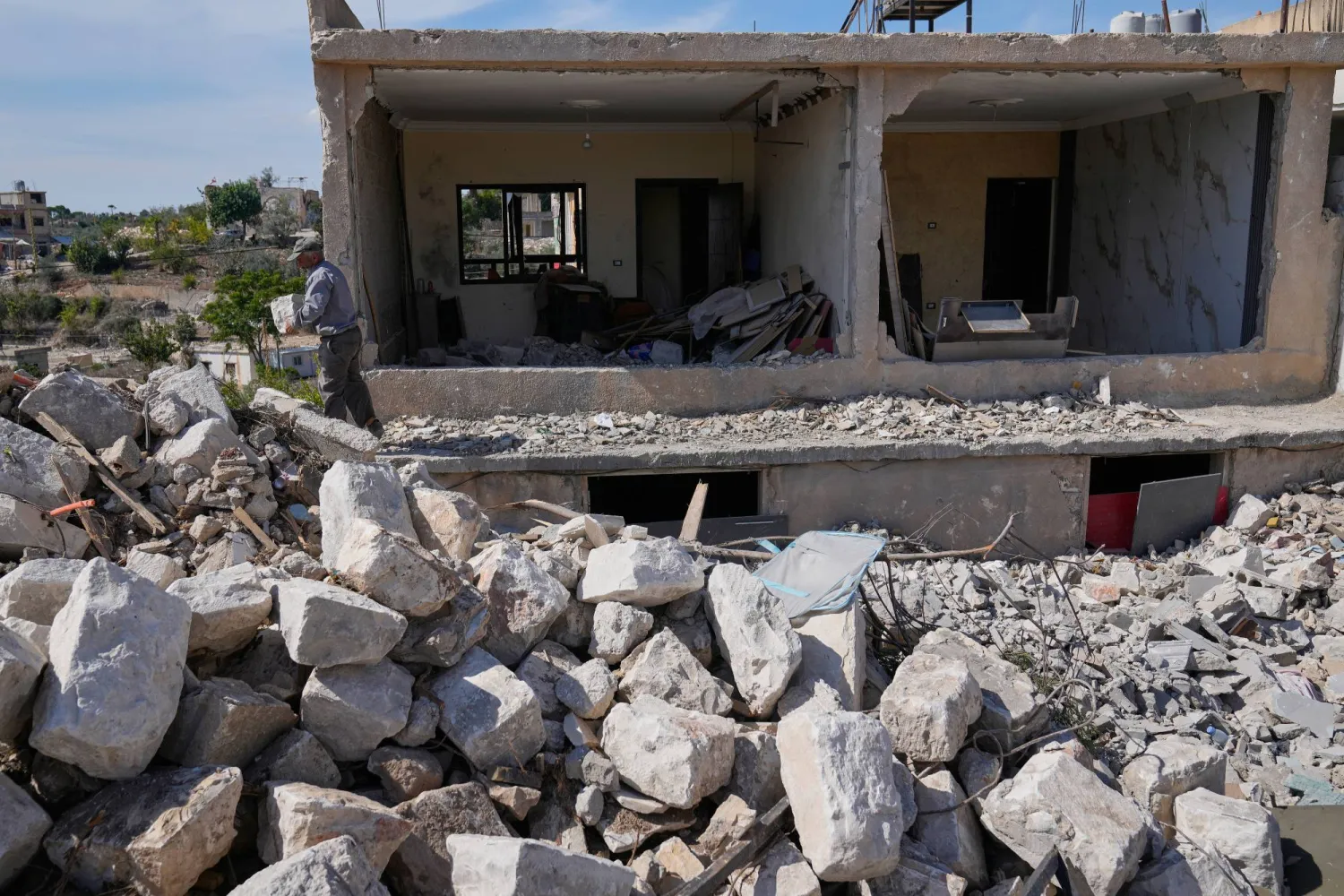
A man removes debris from his destroyed house, in Zawtar al-Gharbiyeh village, southern Lebanon, Tuesday, Oct. 20, 2026. (AP)
TT

Fear of Another War Weighs on Lebanon amid Regional Tensions

A man removes debris from his destroyed house, in Zawtar al-Gharbiyeh village, southern Lebanon, Tuesday, Oct. 20, 2026. (AP)

Lebanese people are once again confronting the possibility of war as mounting regional tensions raise fears that their country could be drawn into a wider conflict, either through Hezbollah’s involvement in a conflict involving Iran or renewed fighting with Israel.

The uncertainty is compounded by Washington’s unresolved decision on whether to resume military operations against Iran, Hezbollah’s silence over how it might respond and the Lebanese state’s inability to ensure the country remains outside the regional confrontation.

Deputy Prime Minister Tarek Mitri acknowledged “serious concerns” that a full-scale regional war could turn Lebanon into one of its battlegrounds, but cautioned that there was no concrete information pointing to such an outcome.

“We are still dealing with analysis and possibilities, not information,” he told Asharq Al-Awsat, noting that even those directly involved in mediation between Washington and Tehran lacked definitive answers.

Mitri denied that official delegations visiting Lebanon recently had advised authorities to prepare for war.

The decision to resume hostilities, he explained, would ultimately depend on US President Donald Trump, Iran’s response and Israel’s position.

“The war against Lebanon has not stopped in the first place. What we fear is that it will intensify again,” he said.

Asked about the government’s preparations for another round of fighting, Mitri pointed to its limited resources. “The state is doing everything it can on the relief front, but our capabilities are extremely limited.”

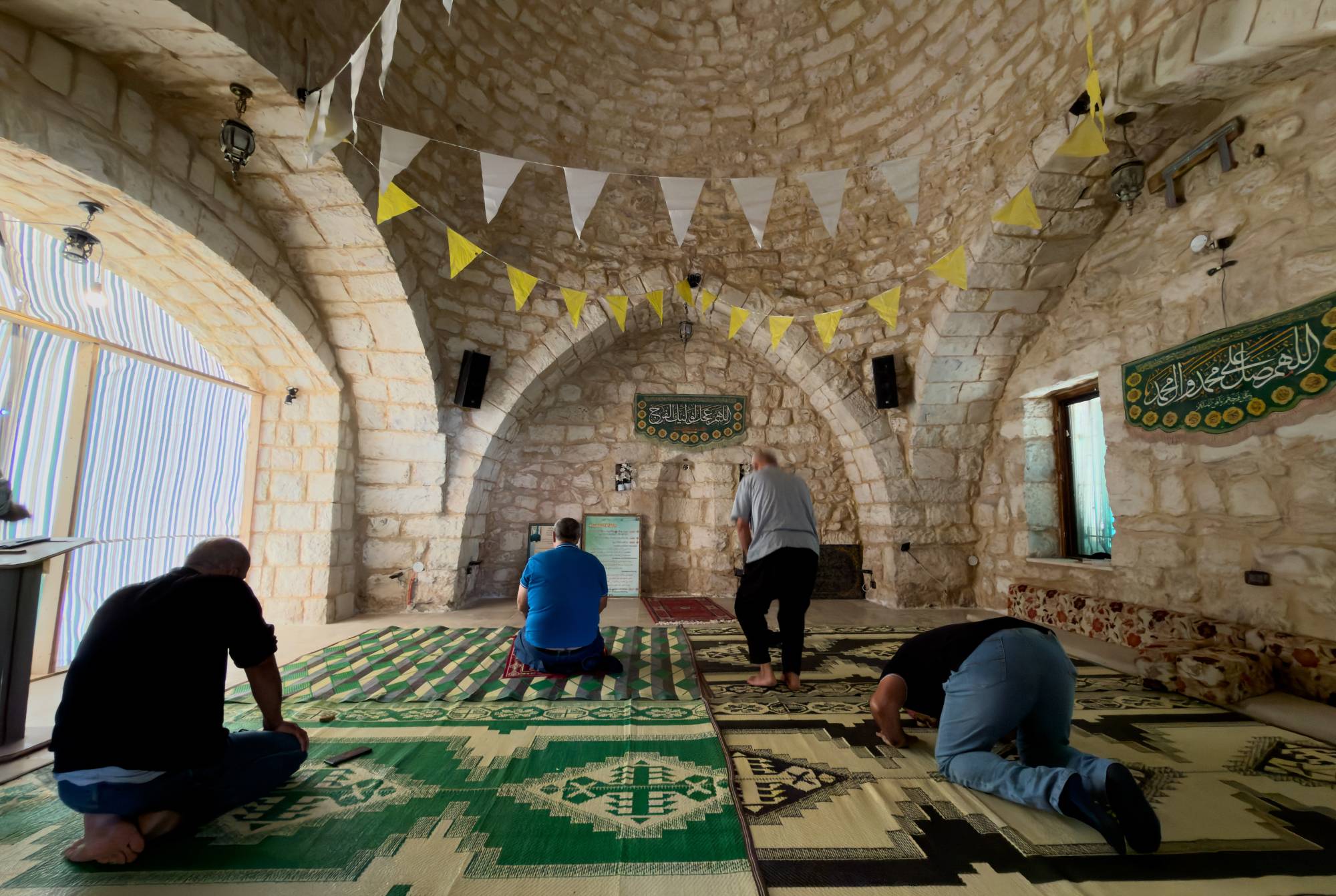
People pray inside a mosque in Zawtar al-Gharbiyeh village, southern Lebanon, Tuesday, Oct. 20, 2026. (AP)

Hezbollah remains silent

Iran-backed Hezbollah has given little indication of whether it would join a broader confrontation if Washington resumed its military campaign against Iran.

Reports suggest the group is making military and relief preparations in anticipation of renewed hostilities. Unconfirmed accounts have also said that Iran instructed Hezbollah to raise its military readiness.

Political analyst Qassem Kassir, who closely follows Hezbollah’s position, said the group had been preparing for the possibility of fresh Israeli attacks since the previous war ended.

“After every war, there is a review of what happened, lessons are drawn and preparations are made for any future confrontation,” he told Asharq Al-Awsat.

Such measures were only natural given Israel’s continuing attacks on Lebanon, he explained. But Kassir warned against drawing conclusions about Hezbollah’s intentions in the event of a US-Iranian confrontation, noting that even the likelihood of such a conflict remained uncertain.

“Even if war breaks out, many questions remain. What kind of war would it be? What would its repercussions be? How might it develop?” he wondered.

Hezbollah does not announce its decisions in advance, he explained. Its response would depend on the nature and scale of any fighting.

While preparations for different scenarios were to be expected, Kassir said there were no signs on the ground of an impending large-scale conflict.

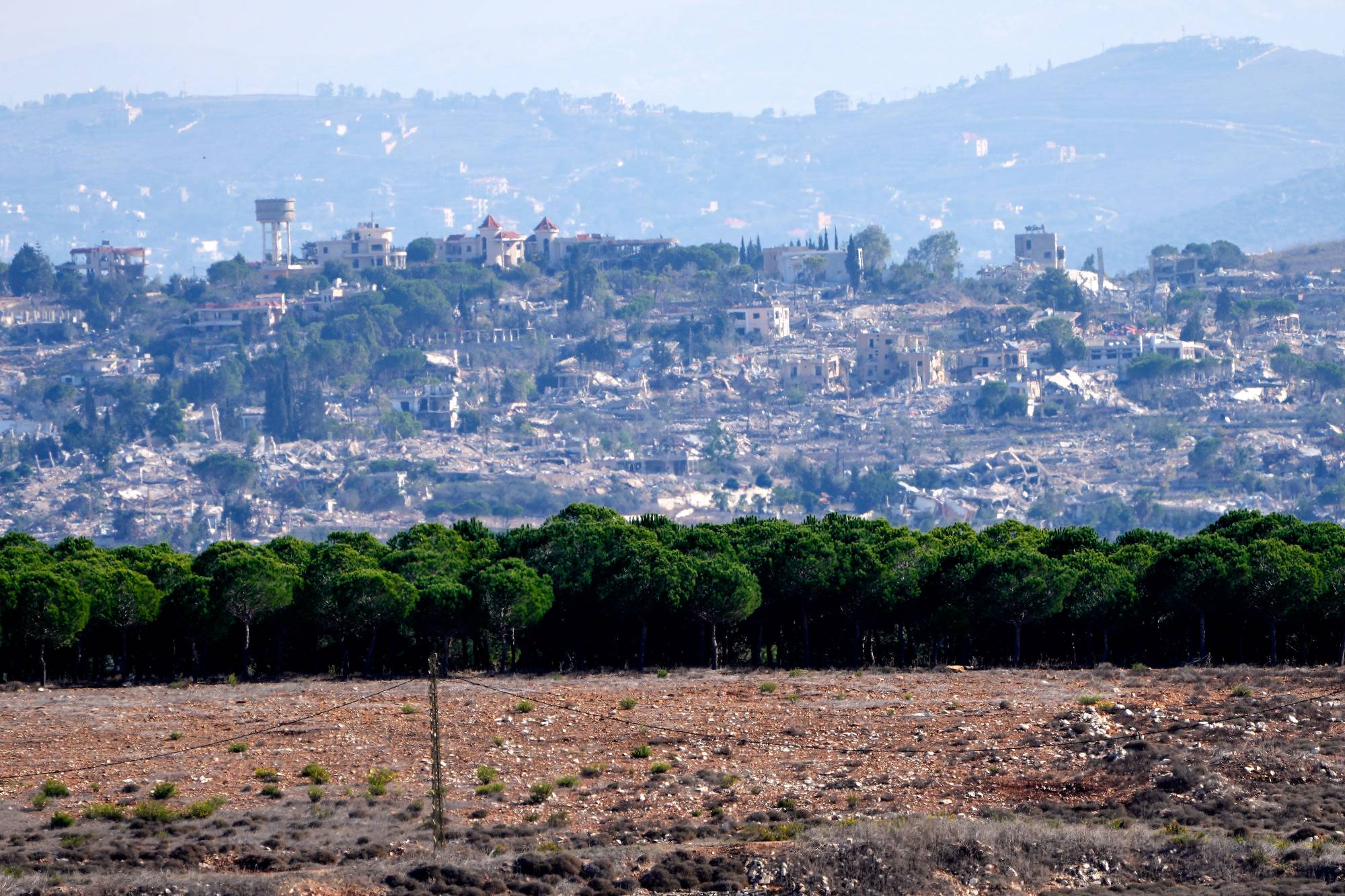
Demolished houses by Israeli forces in Kfar Tebnit village, are seen from Zawtar al-Gharbiyeh, southern Lebanon, Tuesday, Oct. 20, 2026. (AP)

Displacement fears

The anxiety is already shaping decisions among residents of South Lebanon and Beirut’s southern suburbs.

Those who can afford it continue to rent apartments in Mount Lebanon, the Iqlim al-Kharroub area and other locations considered safer when clashes between Hezbollah and Israel erupt.

For families who remain in vulnerable areas, the fear of returning to emergency shelters has become a constant concern.

Fatima M., 41, who works at a shopping center on the outskirts of Beirut’s southern suburbs, recalled taking refuge in Amchit, about 40 kilometers north of the capital, during earlier fighting.

“We are genuinely afraid of being displaced again,” she told Asharq Al-Awsat.

“I work in the southern suburbs, but the shelter where I stayed was in Amchit. We cannot endure any more tragedies or disasters. It is time for us to live in peace, like everyone else.”

Lebanon still has 63 shelters housing displaced people, including 44 educational institutions and 11 institutes and other facilities affiliated with the Education Ministry.

Ministry sources told Asharq Al-Awsat that buildings no longer used for teaching had been made available for emergency accommodation.