
Houthis Attack Aden’s International Airport

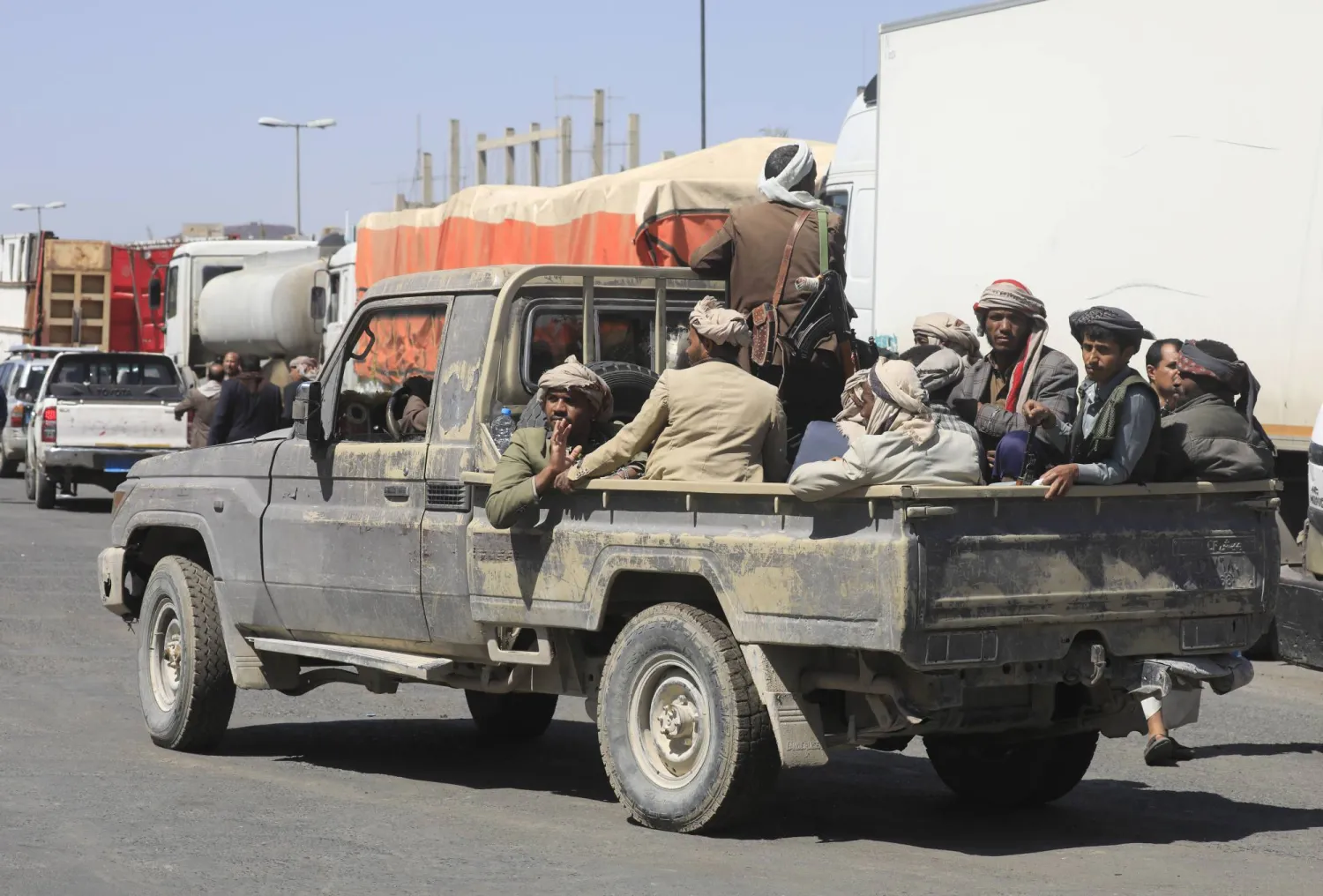
Houthi fighters ride in a pickup truck on a street, in Sanaa, Yemen, 07 October 2026. (EPA)
TT

Houthis Attack Aden’s International Airport

Houthi fighters ride in a pickup truck on a street, in Sanaa, Yemen, 07 October 2026. (EPA)

Yemen's terrorist Houthi militia attacked Aden's international airport with ballistic missiles and explosive-laden drones on Wednesday, the country's Transport Ministry said, as fighting between the Iran-aligned group and legitimate government forces intensified. 

One missile landed near the runway minutes before a flight from Cairo was due to land, the ministry said. The airport is the main international gateway for parts of Yemen outside Houthi control. 

The ministry said the attack happened while passengers were waiting for a 3:00 AM flight bound for Jeddah. At the time, two aircraft, one belonging to Yemenia Airways and the other to Aden Airways, were stationary on the tarmac, placing passengers, airport staff, and flight crews in immediate danger. 

The risks arising from the attack prompted authorities to cancel the landing of an incoming flight from Cairo and diverting it to Jeddah. The two stationary aircraft were moved away from the danger zone, while Houthi drones were detected in the airspace over Aden. 

The Ministry of Transport said that targeting the airport is a dangerous escalation and a violation of international laws and norms that provide protection for civil aviation, airports, and civilian facilities.  

It warned of the attack's repercussions on the safety of air navigation and the lives of passengers and workers. 

It called on the international community and organizations concerned with civil aviation, led by the International Civil Aviation Organization, to condemn the attack and assume their responsibilities in protecting airports, civilian facilities, and commercial aviation from military targeting. 

The Yemeni Ministry of Human Rights condemned the attack, considering the targeting of Aden airport a grave violation of the rules of international humanitarian law, and a threat to civilians' rights to life, security, and freedom of movement. 

It recalled the Houthi attack on Aden airport on December 30, 2020, which coincided with the arrival of the Yemeni government and resulted at the time in casualties, injuries, and damage to the airport and its facilities. 

In the city of Taiz, which is besieged by the Houthis, five civilians were injured following Houthi shelling that struck the Al-Shamasi and Al-Thawra areas in the city center, according to a medical source. 

Battles have focused in recent days on areas around the Bab al-Mandeb Strait, a shipping route that has become more crucial for energy exports since the conflict between the US and Iran restricted trade through the Strait of Hormuz. 

This week, Yemeni government forces with Saudi-led coalition air support launched a counteroffensive to recapture strategic territory near the strait and around the town of Mokha that the Houthis had captured in September. 

The fighting, a spillover from the wider US-Iran conflict, has revived a complex 12-year war ‌in Yemen that ‌led to one of the worst humanitarian crises globally and fragmented the Arab world's most impoverished country. The ‌number ⁠of people displaced since ⁠the latest round of fighting began has risen to more than 200,000, the International Organization for Migration said on Wednesday. 

"People are running for their lives and finding nowhere safe to go," said IOM Director General Amy Pope, who called for more funding amid rising needs for food and shelter. Both sides allege that hundreds of people have been killed in fighting, without providing details. The UN says three in four families are going hungry in parts of Yemen. 

The Houthis have repeatedly targeted infrastructure including airports, oil refineries and pipelines in Saudi Arabia. 

One person was killed and eight wounded in an attack on King Khalid International Airport in the Saudi capital Riyadh, and two were killed and 28 wounded in an attack on facilities at Abha airport, ⁠Saudi civil aviation authorities said in a statement on Wednesday. 

One of the attacks was on Wednesday ‌and the other on Tuesday, it said. 

On ‌Wednesday, the Saudi-led coalition said it had intercepted and destroyed a Houthi ballistic missile north of the Saudi capital Riyadh. It said it was tracking the ‌launch platform over Houthi-controlled Sanaa and would destroy it. 

Any Houthi stranglehold on the Strait could threaten shipping or global oil flows.  

Fighting on the western front remains concentrated in the Dhubab district overlooking Bab al-Mandeb, with pro-government forces attempting an advance in the strategic hills to the east of that coastal plain, Yemeni military and government sources said. 

On Monday the Yemeni government said it had reached Mokha, which sits at a junction with a supply route to the critical battleground of Taiz, but the claim had been premature, according to Yemeni military officials on the ground and analysts. 


Egypt, Iran FMs Discuss Regional Developments

Egypt's Foreign Minister Badr Abdelatty speaks during a plenary session of the International Institute for Strategic Studies (IISS) Manama Dialogue 2026 in Manama on October 31, 2026. (AFP)
TT

Egypt, Iran FMs Discuss Regional Developments

Egypt's Foreign Minister Badr Abdelatty speaks during a plenary session of the International Institute for Strategic Studies (IISS) Manama Dialogue 2026 in Manama on October 31, 2026. (AFP)

Egyptian Foreign Minister Badr Abdelatty held telephone talks on Thursday with his Iranian counterpart Abbas Araghchi on the latest regional developments and efforts to ease tensions, reported dpa.

An Egyptian Foreign Ministry spokesman said the ministers exchanged views on the latest developments and concerns over the possibility of renewed military conflict and its impact on regional and international security and stability.

Abdelatty underlined the importance of prioritizing diplomatic solutions and urged all parties to demonstrate the necessary openness to reach a political settlement to the crisis.

He stressed that exercising flexibility and arriving at compromises would serve the interests of all sides and prevent the region from sliding into a new wave of escalation, which could otherwise yield severe political, economic, and humanitarian repercussions for the region and the entire world.


Yemen Warns against Houthis Using Red Sea to Extort Int’l Community

The Yemeni and German delegations meet in Berlin. (Yemeni government media)
TT

Yemen Warns against Houthis Using Red Sea to Extort Int’l Community

The Yemeni and German delegations meet in Berlin. (Yemeni government media)

The Yemeni government warned of an expanding threat posed by the terrorist Houthi militia to regional security and international navigation, citing growing Iranian involvement in managing Houthi military operations and growing ties with terrorist organizations in the Horn of Africa. The warning coincided with continued Houthi attacks on civilians and the tightening of the siege on the city of Taiz.

Yemeni Foreign Minister Afrah Al-Zouba presented these concerns during a series of meetings in Berlin with German officials and experts at think tanks and research centers specialized in Yemeni affairs.

The discussions addressed the developments of the Houthi escalation since last June, as well as its military, humanitarian, and security repercussions on Yemen and the wider region.

Al-Zouba stated that the Houthis intensified their attacks following the landing of an aircraft belonging to Iran's Mahan Air, which is linked to the Iranian Revolutionary Guard Corps (IRGC), at Hodeidah airport.

She explained that the plane carried Iranian experts, funds, and advanced weaponry to support Houthi military operations, in direct violation of Yemeni sovereignty and international laws and resolutions.

The escalation reached the west coast and Bab al-Mandeb regions prior to a government deployment under Operation Dawn of Yemen.

Authorities cautioned against renewed efforts by the militia to expand along the west coast, threaten shipping lanes in the Red Sea and Bab al-Mandeb Strait, and leverage maritime corridors to pressure the international community.

Meeting with German Foreign Minister Johann Wadephul, Al-Zouba warned that the Houthi threat extends beyond Yemen's borders, pointing to the militia’s targeting of Saudi territory and international shipping lanes, and the resulting risks to regional security and global energy and food supplies.

Yemeni Foreign Minister Afrah Al-Zouba meets with her German counterpart Johann Wadephul. (Yemeni government media)

She presented the Yemeni government's announcements regarding the participation of experts from the IRGC and Hezbollah in managing Houthi operations, in addition to the group's links with terrorist organizations in the Horn of Africa, chief among them the Somali Al-Shabaab movement.

These ties raise the level of threat to maritime security and regional stability, she warned.

The two sides discussed ways to develop the capabilities of the Yemeni Coast Guard to protect territorial waters and secure international trade routes, while strengthening bilateral consultation and information exchange regarding security developments in Yemen and the region.

Al-Zouba delivered a written letter from Chairman of the Presidential Leadership Council Dr. Rashad Al-Alimi to German Chancellor Friedrich Merz.

The message addressed bilateral relations, regional issues, and the latest updates on the situation in Yemen.

On the humanitarian level, Al-Zouba highlighted the Houthi siege on the city of Taiz, the targeting of civilian and health facilities, and the resulting closure of medical centers, medicine shortages, and lack of safe corridors, warning of catastrophic impacts on civilians.

She detailed the Houthi recruitment of child soldiers, indiscriminate landmine deployment, and the ongoing detention of UN and humanitarian personnel, noting the death of several detainees including UN staff member Mohammed Ibrahim Al-Shami.


Houthis Under Govt Pressure in al-Jawf, Lahj

Yemeni troops hold a position during clashes with Iran-backed Houthis in Yemen's northwestern al-Jawf province on November 2, 2026. (AFP)
TT

Houthis Under Govt Pressure in al-Jawf, Lahj

Yemeni troops hold a position during clashes with Iran-backed Houthis in Yemen's northwestern al-Jawf province on November 2, 2026. (AFP)

Yemeni government forces have advanced to a new phase of offensive operations against the Houthis in al-Jawf and Lahj governorates, according to military developments reflecting the expanding scope of Operation Dawn of Yemen.

The shift to offensive maneuvers coincided with government forces thwarting Houthi attempts to recapture previously lost positions in Marib and Taiz.

In the latest field updates, government forces successfully secured their positions across strategic mountain ranges in eastern Al-Jawf. This follows tactical advances into areas formerly controlled by the terrorist Houthi group.

Military officials said the breakthrough reinforces current positions and establishes the necessary conditions to sustain the advance toward al-Hazm, the governorate's capital.

Armed forces spokesman Majed al-Nuzaili said troops managed to recapture positions from the Houthis in several regions in al-Jawf.

He stressed that the operations will continue to reclaim positions from the group.

Government forces have advanced through the al-Dahidha mountain range, breaching Houthi fortifications and seizing military equipment. Airstrikes and drone operations also targeted Houthi strongholds and weapons depots across several locations.

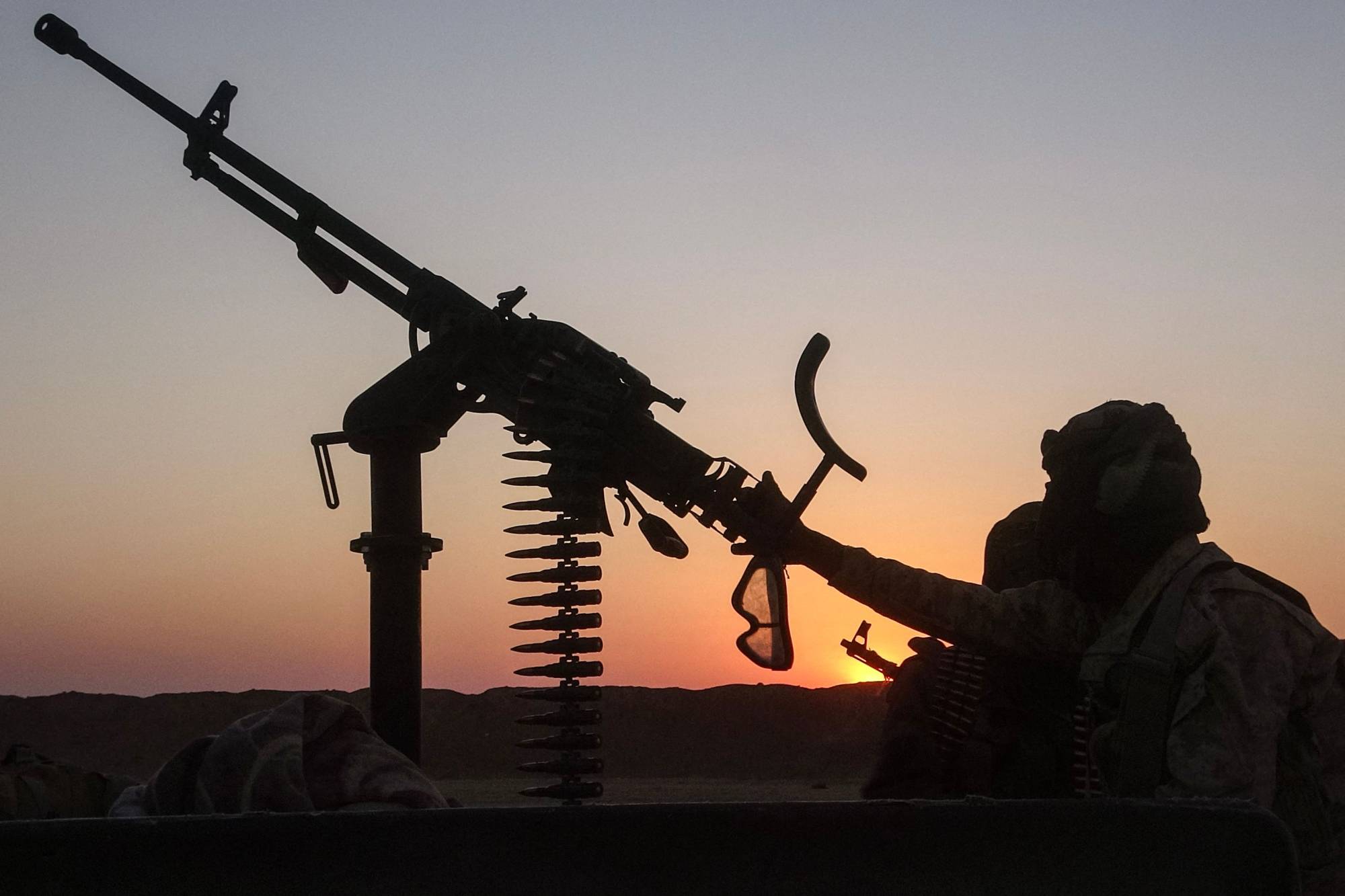
Yemeni forces sit on a pick-up truck mounted with a heavy machine-gun as they hold a position during clashes with Iran-backed Houthis in Yemen's northwestern al-Jawf province on November 2, 2026. (AFP)

This territorial gain holds strategic importance due to the mountainous terrain and its proximity to routes leading to al-Hazm, the Houthis' primary administrative and military hub in the governorate. Government forces are currently working to secure these newly recaptured positions before pressing forward with further operations.

In an attempt to contain this advance, the Houthi group launched a broad attack on government force positions in the Halhalan area. However, government forces managed to repel the assault and force the militants to retreat, said government military sources.

In Lahj, government forces have regained the initiative after reorganizing their military deployment along the Tur al-Baha axis, launching a swift counteroffensive to recapture areas seized by the Houthi group in the al-Maqatirah district.

Supported by warplanes, government troops breached the border of the district and advanced into Bani Abdan village, where heavy fighting continues in the surrounding vicinity. Military operations also expanded to target Houthi positions in the Hayfan and al-Zuraiqah al-Sham regions of the neighboring Taiz governorate.

These latest field updates indicate that government forces have successfully shifted from containing the initial Houthi push in al-Maqatirah to executing direct offensive operations to reclaim lost ground.

Military officials said the transition follows a strategic reinforcement of troops and a reorganization of the military command along the Tur al-Baha axis, effectively shifting the balance of power on this front.