
A Year into Ceasefire, Israel Wages a Scaled-Down War in Gaza

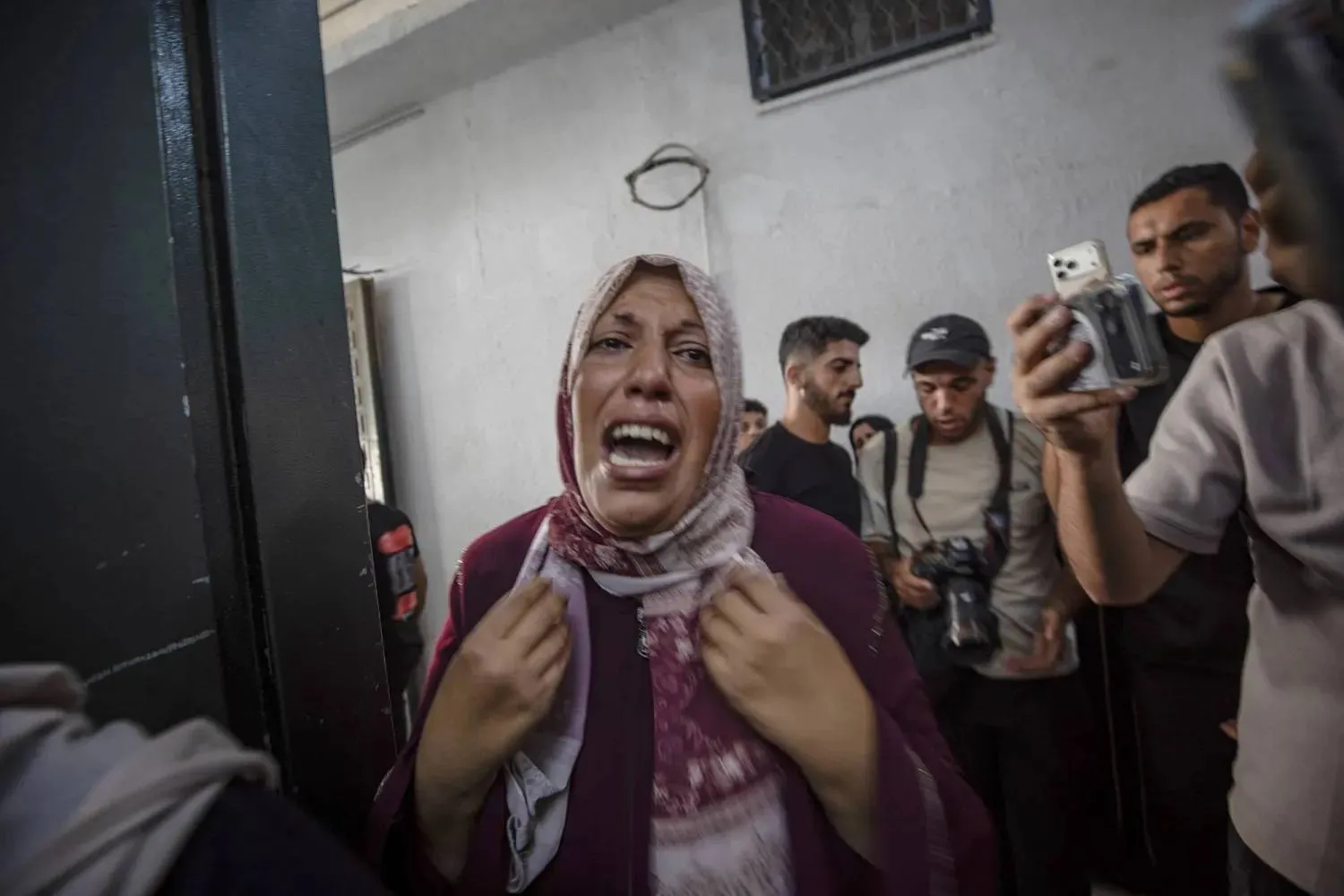
A Palestinian woman weeps during the funeral of an eight-year-old boy killed in an Israeli airstrike in Gaza City on Friday. (EPA)
TT

A Year into Ceasefire, Israel Wages a Scaled-Down War in Gaza

A Palestinian woman weeps during the funeral of an eight-year-old boy killed in an Israeli airstrike in Gaza City on Friday. (EPA)

October 10, 2026, marks one year since the announcement of an end to the war in Gaza, even as Israel continues to wage it on a smaller scale, killing more Palestinians and destroying their homes on the grounds that Hamas refuses to disarm.

On the eve of the fragile ceasefire’s first anniversary, Gaza endured a night of intense attacks that reminded thousands of residents of the war’s harshest days.

The Israeli military ordered residential blocks evacuated at night before bombing and destroying homes and apartment buildings in Gaza City and Khan Younis. A child and a woman were killed while trying to evacuate homes where families had sought refuge.

Shortly before midnight on Thursday, Israeli warplanes twice bombed homes in a residential block in the Katiba area, north of the al-Amal neighborhood in Khan Younis, in southern Gaza. The strikes destroyed or severely damaged several homes, displacing hundreds of Palestinians who lost their only shelter.

Israeli warplanes also destroyed two residential buildings in Gaza City. One housed displaced people in apartments in the Sabra neighborhood in the city’s south.

The Israeli military ordered the entire surrounding residential block evacuated, but some families did not have enough time to leave.

A child and a woman from the Abu Asr family, displaced from the Shujaiya neighborhood, were killed. At least seven people were wounded, including a journalist who put down his camera to help residents evacuate their homes.

The second building was destroyed in Gaza City’s Old City, west of Shujaiya and north of Zeitoun, after orders to evacuate it and the entire surrounding area.

Palestinians observed that Israeli warplanes fired several missiles at the targeted buildings, particularly in Gaza City, that failed to explode, prompting repeated attacks.

The strikes displaced hundreds of Palestinians living in those residential blocks. Unable to find alternative shelter, they had to spend the night in hospital courtyards, at shelters or with relatives.

The Israeli military said the strikes aimed to destroy four weapons storage facilities belonging to Hamas and Islamic Jihad. It has offered the same explanation in statements about similar strikes in the past.

Palestinian factions have repeatedly denied those claims, accusing Israel of deliberately destroying the homes and buildings still standing in Gaza.

Targeted killings and ground operations

The nighttime strikes came hours after six Palestinians were killed in a series of airstrikes in two separate incidents. Those killed included a woman and two members of the Al-Quds Brigades, Islamic Jihad’s armed wing, whose vehicle was attacked by an Israeli drone in the industrial area south of Gaza City.

A third member was killed in a targeted strike on a tent in the Tawam area northwest of the city.

On Friday morning, a Palestinian was killed and five others, including two women and a child, were wounded by gunfire from Israeli military vehicles that advanced into al-Masdar and the Maghazi refugee camp in the eastern part of central Gaza.

Two Palestinians were also wounded in a strike on al-Mawasi in Khan Younis.

For the third time in less than a week, Israeli military vehicles advanced from the Abu Hamam military position east of Deir al-Balah toward areas north of al-Masdar village, firing as engineering vehicles bulldozed land.

Israel is digging a wide trench and erecting an earth embankment in that area near the Yellow Line, as part of a broader plan being implemented along Gaza’s borders.

Figures covering the fragile ceasefire’s first year show that more than 1,478 Palestinians have been killed and more than 5,000 wounded since it took effect, according to Gaza’s Health Ministry and government media office.

The government media office said Israel had committed 5,223 violations on the ground since the agreement began, including bombing, gunfire, the demolition of homes and buildings, and incursions. More than 200 Palestinians have also been detained.

Israel controls more than 63% of Gaza’s territory after expanding the area within the so-called Yellow Line over the past year of the ceasefire. The agreement announced at the time designated it as an initial withdrawal line.

The UN Office for the Coordination of Humanitarian Affairs (OCHA) said 196 Palestinians, including 18 women and 43 children, were killed near that line between the start of the ceasefire and early April 2026.

OCHA said areas subject to access restrictions accounted for about 64.9% of Gaza’s territory. It said those areas were under tighter and more direct Israeli control, with Palestinians barred from entering most of them and humanitarian organizations required to coordinate access in advance.


Egypt, Iran FMs Discuss Regional Developments

Egypt's Foreign Minister Badr Abdelatty speaks during a plenary session of the International Institute for Strategic Studies (IISS) Manama Dialogue 2026 in Manama on October 31, 2026. (AFP)
TT

Egypt, Iran FMs Discuss Regional Developments

Egypt's Foreign Minister Badr Abdelatty speaks during a plenary session of the International Institute for Strategic Studies (IISS) Manama Dialogue 2026 in Manama on October 31, 2026. (AFP)

Egyptian Foreign Minister Badr Abdelatty held telephone talks on Thursday with his Iranian counterpart Abbas Araghchi on the latest regional developments and efforts to ease tensions, reported dpa.

An Egyptian Foreign Ministry spokesman said the ministers exchanged views on the latest developments and concerns over the possibility of renewed military conflict and its impact on regional and international security and stability.

Abdelatty underlined the importance of prioritizing diplomatic solutions and urged all parties to demonstrate the necessary openness to reach a political settlement to the crisis.

He stressed that exercising flexibility and arriving at compromises would serve the interests of all sides and prevent the region from sliding into a new wave of escalation, which could otherwise yield severe political, economic, and humanitarian repercussions for the region and the entire world.


Yemen Warns against Houthis Using Red Sea to Extort Int’l Community

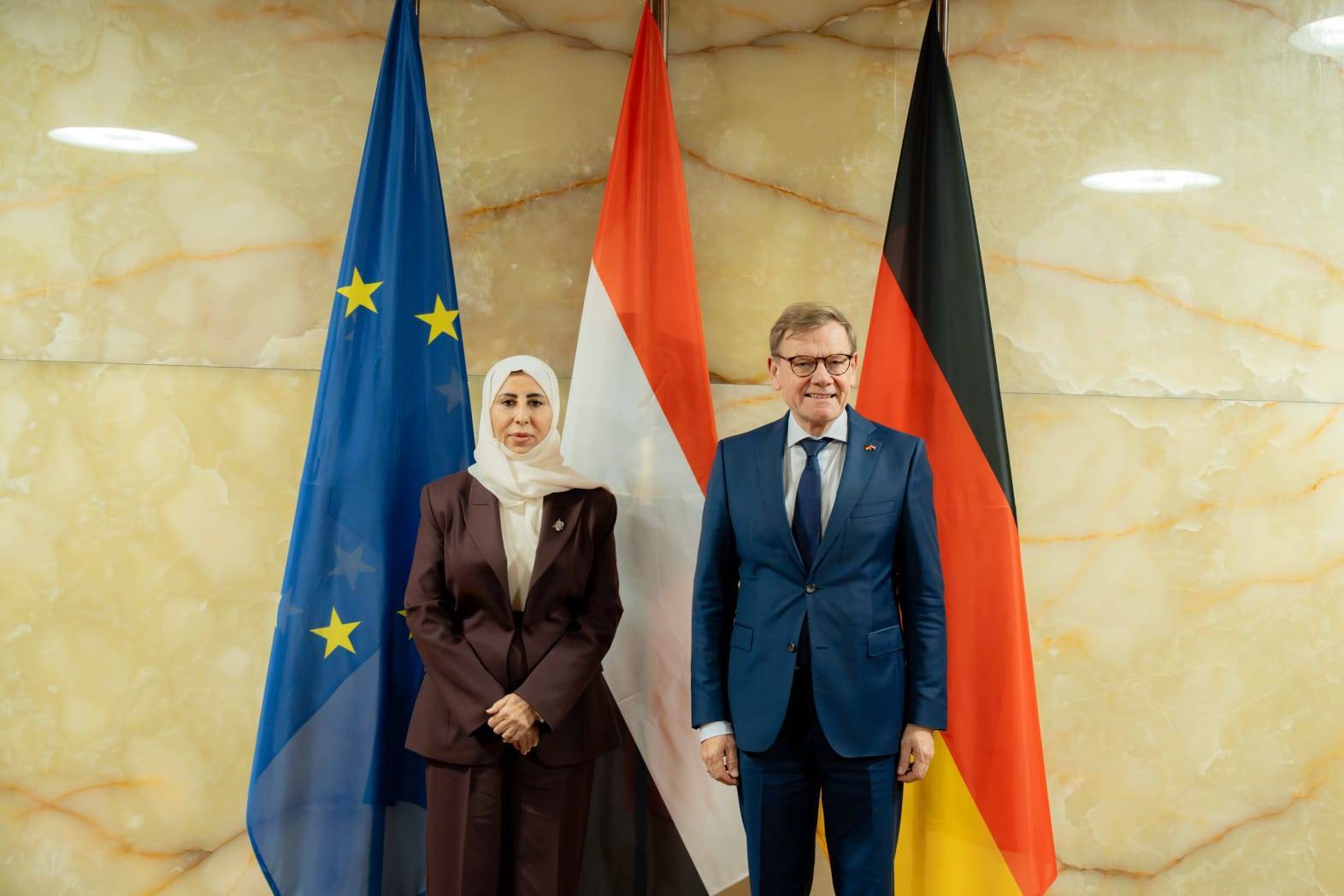
The Yemeni and German delegations meet in Berlin. (Yemeni government media)
TT

Yemen Warns against Houthis Using Red Sea to Extort Int’l Community

The Yemeni and German delegations meet in Berlin. (Yemeni government media)

The Yemeni government warned of an expanding threat posed by the terrorist Houthi militia to regional security and international navigation, citing growing Iranian involvement in managing Houthi military operations and growing ties with terrorist organizations in the Horn of Africa. The warning coincided with continued Houthi attacks on civilians and the tightening of the siege on the city of Taiz.

Yemeni Foreign Minister Afrah Al-Zouba presented these concerns during a series of meetings in Berlin with German officials and experts at think tanks and research centers specialized in Yemeni affairs.

The discussions addressed the developments of the Houthi escalation since last June, as well as its military, humanitarian, and security repercussions on Yemen and the wider region.

Al-Zouba stated that the Houthis intensified their attacks following the landing of an aircraft belonging to Iran's Mahan Air, which is linked to the Iranian Revolutionary Guard Corps (IRGC), at Hodeidah airport.

She explained that the plane carried Iranian experts, funds, and advanced weaponry to support Houthi military operations, in direct violation of Yemeni sovereignty and international laws and resolutions.

The escalation reached the west coast and Bab al-Mandeb regions prior to a government deployment under Operation Dawn of Yemen.

Authorities cautioned against renewed efforts by the militia to expand along the west coast, threaten shipping lanes in the Red Sea and Bab al-Mandeb Strait, and leverage maritime corridors to pressure the international community.

Meeting with German Foreign Minister Johann Wadephul, Al-Zouba warned that the Houthi threat extends beyond Yemen's borders, pointing to the militia’s targeting of Saudi territory and international shipping lanes, and the resulting risks to regional security and global energy and food supplies.

Yemeni Foreign Minister Afrah Al-Zouba meets with her German counterpart Johann Wadephul. (Yemeni government media)

She presented the Yemeni government's announcements regarding the participation of experts from the IRGC and Hezbollah in managing Houthi operations, in addition to the group's links with terrorist organizations in the Horn of Africa, chief among them the Somali Al-Shabaab movement.

These ties raise the level of threat to maritime security and regional stability, she warned.

The two sides discussed ways to develop the capabilities of the Yemeni Coast Guard to protect territorial waters and secure international trade routes, while strengthening bilateral consultation and information exchange regarding security developments in Yemen and the region.

Al-Zouba delivered a written letter from Chairman of the Presidential Leadership Council Dr. Rashad Al-Alimi to German Chancellor Friedrich Merz.

The message addressed bilateral relations, regional issues, and the latest updates on the situation in Yemen.

On the humanitarian level, Al-Zouba highlighted the Houthi siege on the city of Taiz, the targeting of civilian and health facilities, and the resulting closure of medical centers, medicine shortages, and lack of safe corridors, warning of catastrophic impacts on civilians.

She detailed the Houthi recruitment of child soldiers, indiscriminate landmine deployment, and the ongoing detention of UN and humanitarian personnel, noting the death of several detainees including UN staff member Mohammed Ibrahim Al-Shami.


Houthis Under Govt Pressure in al-Jawf, Lahj

Yemeni troops hold a position during clashes with Iran-backed Houthis in Yemen's northwestern al-Jawf province on November 2, 2026. (AFP)
TT

Houthis Under Govt Pressure in al-Jawf, Lahj

Yemeni troops hold a position during clashes with Iran-backed Houthis in Yemen's northwestern al-Jawf province on November 2, 2026. (AFP)

Yemeni government forces have advanced to a new phase of offensive operations against the Houthis in al-Jawf and Lahj governorates, according to military developments reflecting the expanding scope of Operation Dawn of Yemen.

The shift to offensive maneuvers coincided with government forces thwarting Houthi attempts to recapture previously lost positions in Marib and Taiz.

In the latest field updates, government forces successfully secured their positions across strategic mountain ranges in eastern Al-Jawf. This follows tactical advances into areas formerly controlled by the terrorist Houthi group.

Military officials said the breakthrough reinforces current positions and establishes the necessary conditions to sustain the advance toward al-Hazm, the governorate's capital.

Armed forces spokesman Majed al-Nuzaili said troops managed to recapture positions from the Houthis in several regions in al-Jawf.

He stressed that the operations will continue to reclaim positions from the group.

Government forces have advanced through the al-Dahidha mountain range, breaching Houthi fortifications and seizing military equipment. Airstrikes and drone operations also targeted Houthi strongholds and weapons depots across several locations.

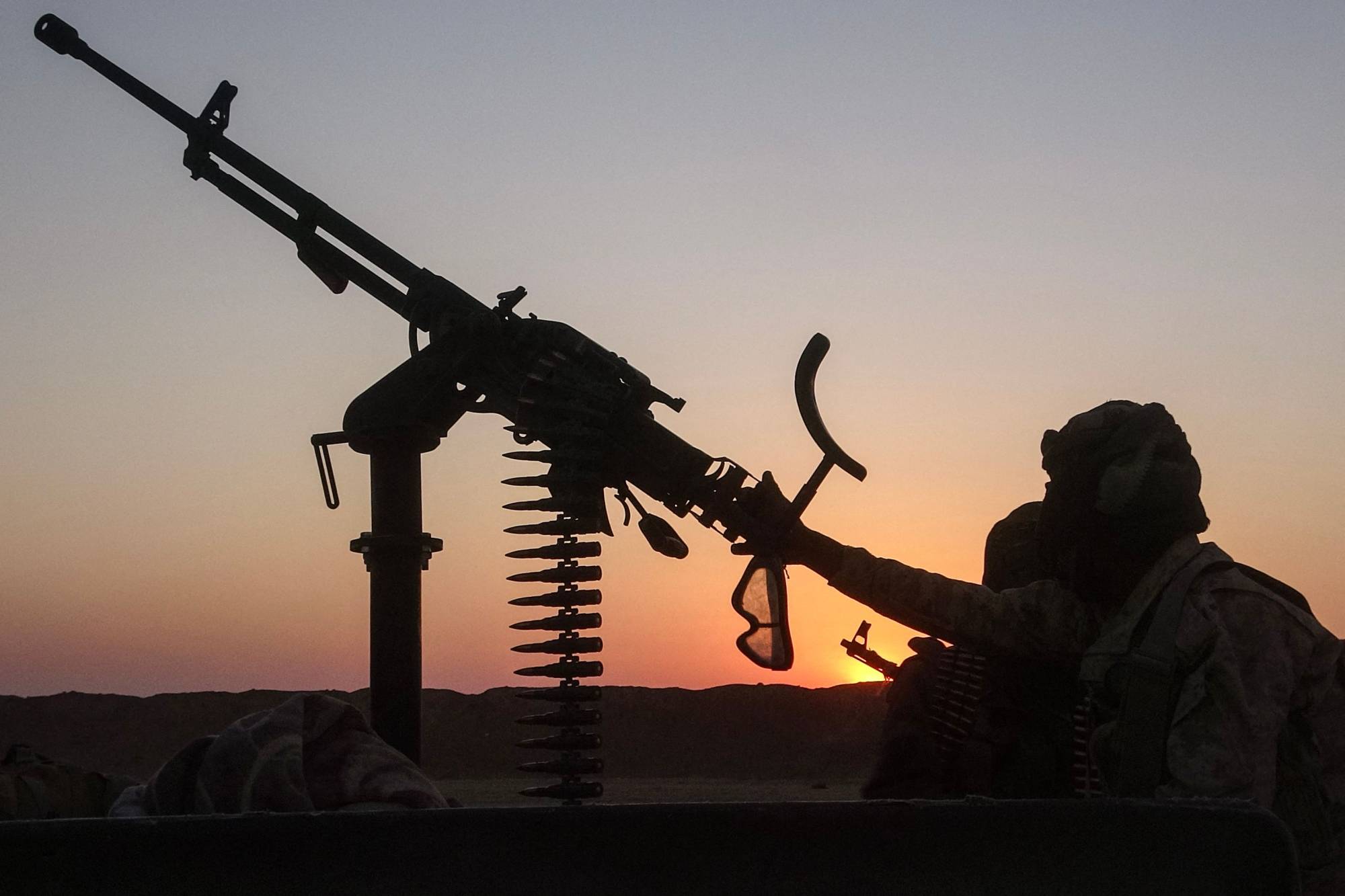
Yemeni forces sit on a pick-up truck mounted with a heavy machine-gun as they hold a position during clashes with Iran-backed Houthis in Yemen's northwestern al-Jawf province on November 2, 2026. (AFP)

This territorial gain holds strategic importance due to the mountainous terrain and its proximity to routes leading to al-Hazm, the Houthis' primary administrative and military hub in the governorate. Government forces are currently working to secure these newly recaptured positions before pressing forward with further operations.

In an attempt to contain this advance, the Houthi group launched a broad attack on government force positions in the Halhalan area. However, government forces managed to repel the assault and force the militants to retreat, said government military sources.

In Lahj, government forces have regained the initiative after reorganizing their military deployment along the Tur al-Baha axis, launching a swift counteroffensive to recapture areas seized by the Houthi group in the al-Maqatirah district.

Supported by warplanes, government troops breached the border of the district and advanced into Bani Abdan village, where heavy fighting continues in the surrounding vicinity. Military operations also expanded to target Houthi positions in the Hayfan and al-Zuraiqah al-Sham regions of the neighboring Taiz governorate.

These latest field updates indicate that government forces have successfully shifted from containing the initial Houthi push in al-Maqatirah to executing direct offensive operations to reclaim lost ground.

Military officials said the transition follows a strategic reinforcement of troops and a reorganization of the military command along the Tur al-Baha axis, effectively shifting the balance of power on this front.