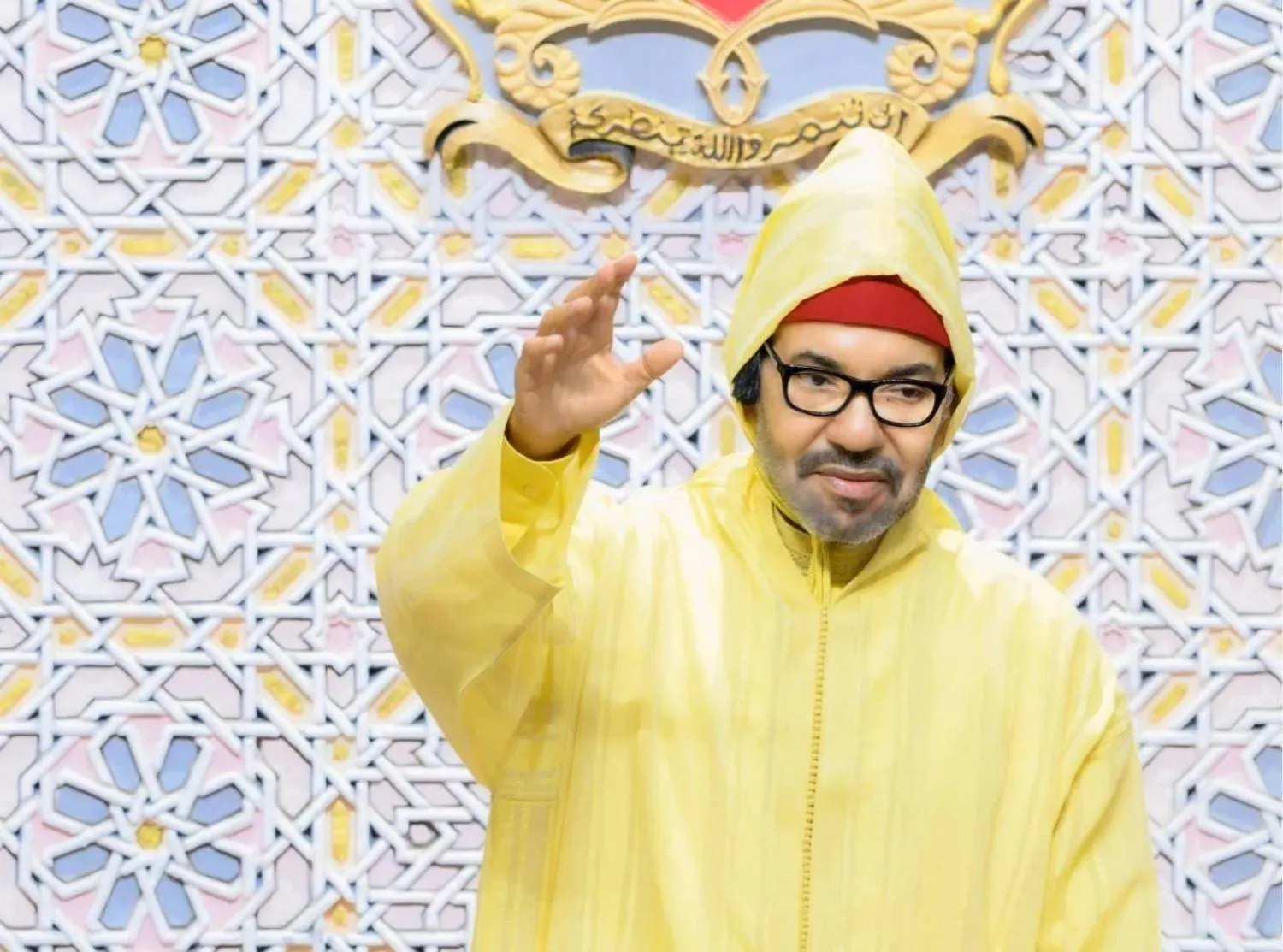
Morocco’s King Calls for Youth Issues to Top Public Policy Agenda

Morocco’s king called for the new parliamentary and government term to mark a turning point in advancing the country’s ambition as a rising economic power (MAP)
TT

Morocco’s King Calls for Youth Issues to Top Public Policy Agenda

Morocco’s king called for the new parliamentary and government term to mark a turning point in advancing the country’s ambition as a rising economic power (MAP)

Morocco’s King Mohammed VI called for the new parliamentary and government term to mark a genuine turning point in advancing Morocco’s ambition as a rising, trusted economic power, balancing economic growth with greater social and regional equity. He stressed that youth issues must be a public policy priority.

Speaking in Rabat on Friday at the opening of the first session of the first legislative year of the 12th parliamentary term, the king said the term came at an exceptional moment, with opportunities that might not recur to build on achievements across various fields. He congratulated members of the House of Representatives on winning voters’ confidence.

King Mohammed VI urged governance bodies to put youth issues first through an integrated approach that ensures equal opportunities and covers education, training and economic inclusion.

The royal address linked this approach to strengthening young people’s confidence in their prospects for upward social mobility, in their country’s institutions and in the opportunities it offers to build a better future in freedom, dignity and stability.

On territorial governance, the king said the central challenge in the coming period was to work on the ground, identify each area’s actual problems and find realistic solutions.

He said integrated development, better public services and productive investment were closely tied to advanced regionalization and the implementation of administrative decentralization.

He warned that delays and shortcomings hampering decentralization undermined economic and social development programs and hindered responses to citizens’ actual concerns.

“Any delay or procrastination in fully implementing the Decentralization Charter is no longer acceptable,” King Mohammed VI said. This requires transferring powers and the necessary human and financial resources from the central administration to provinces and regions.

He also called for removing obstacles to regional institutions’ work by defining their powers more clearly, increasing their human and material resources, organizing relations between the state and the regions, and establishing coordination and contractual mechanisms that enable regions to make decisions and carry out projects.

On the economy, the king called for accelerating planned infrastructure projects and launching a new generation of major strategies, particularly in water, energy and food security, industrial development, the digital economy and artificial intelligence.

He also urged more efficient management and stronger national capacity in strategic reserves, along with secure supplies of essential goods.

He called on the domestic private sector to become a strategic actor in the country’s development transformation, with greater initiative, innovation and capacity to create jobs, invest and export.

On migration and the crisis that erupted with Spain, King Mohammed VI said Morocco’s balanced approach to managing migration had delivered tangible results. But recurring crises showed that the current cooperation model had become outdated.

He said the partnership with Spain had made significant progress across various fields, including efforts to combat irregular migration. It now faced major challenges, however, from certain outdated legal provisions and court rulings detached from reality.

He said these provisions and rulings regrettably prevented the repatriation of minors and people falsely claiming asylum status, while encouraging criminal networks’ ambitions.

Addressing irresponsible statements from some political and media circles, King Mohammed VI stressed that the partnership was a political choice and a voluntary commitment, and would never be subject to pressure, threats or blackmail.

He said Morocco would present its partners with a clear, practical strategic document laying the foundations for a new form of partnership to strengthen shared development and economic competitiveness.

In a message to lawmakers, King Mohammed VI said a parliamentary mandate was “a position of trust, a political commitment and a moral contract” binding them to citizens.

He urged members of parliament to fulfill their national responsibility.

“Be equal, may God protect you, to this national responsibility that you bear before God, before the citizens and before history,” he said.

King Mohammed VI was accompanied by Crown Prince Moulay Hassan, Prince Moulay Rachid and Prince Moulay Ahmed.


Lebanese Foreign Ministry Sources to Asharq Al-Awsat: US Declares Consul Charara Persona Non Grata

People enter the US State Department building in Washington (File/Reuters)
TT

Lebanese Foreign Ministry Sources to Asharq Al-Awsat: US Declares Consul Charara Persona Non Grata

People enter the US State Department building in Washington (File/Reuters)

Sources at Lebanon's Foreign Ministry confirmed to Asharq Al-Awsat that the Lebanese Embassy in Washington had been officially notified by the US State Department of its decision to declare Ibrahim Charara, Lebanon's consul in Detroit, persona non grata and order him to leave the United States within 48 hours.

Reports had indicated that the decision followed controversy sparked by American media coverage of old social media posts attributed to Charara, in which he described the 1983 bombing of the US Marine barracks in Beirut as an act of "heroic resistance."

His participation in political events in Michigan, including an event supporting Democratic candidate Abdul El-Sayed, also attracted media attention in the United States.


From Tehran to Beirut: Who Controls Hezbollah's Decision to Go to War?

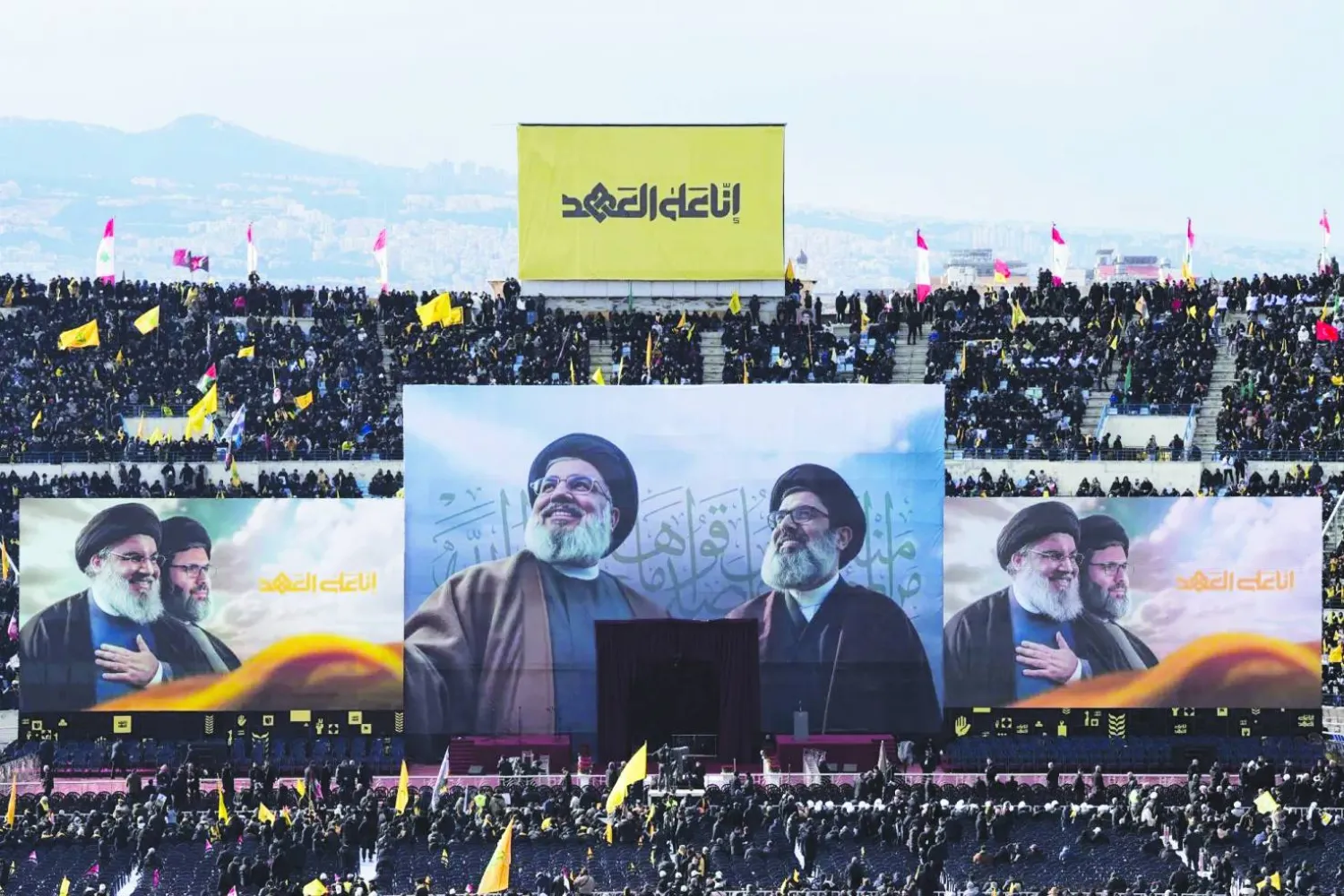
A photo of former Hezbollah Secretary-General Hassan Nasrallah and senior official Hashem Safieddine at Beirut's Sports City during their funeral last February (Reuters)
TT

From Tehran to Beirut: Who Controls Hezbollah's Decision to Go to War?

A photo of former Hezbollah Secretary-General Hassan Nasrallah and senior official Hashem Safieddine at Beirut's Sports City during their funeral last February (Reuters)

As Lebanese citizens await the repercussions of the US and Israeli election results on their country's domestic situation, and whether these will lead to a regional war involving Lebanon or a major political agreement that inevitably includes it, reports have recently emerged of reassurances conveyed to several Lebanese officials that Hezbollah does not intend to participate in any future war in support of Iran.

For many, however, these reassurances appear insufficient, given the experience of the latest round of fighting. At the time, Hezbollah was reportedly said to have informed Parliament Speaker Nabih Berri that it would not join the conflict, only to reverse its position and open fire toward Israel on March 2.

Some reports at the time pointed to conflicting decisions between the group's political and military wings, with the position of those controlling operations on the ground, and Tehran behind them, ultimately prevailing.

This raises serious questions about whether decision-making within Hezbollah remains centralized, with a political and organizational leadership whose decisions are binding on all its institutions, or whether the military wing and commanders on the ground now have the final say.

More importantly, does Hezbollah still retain any independence in its decision-making, or are strategic decisions concerning war now determined in Tehran according to Iranian interests and calculations?

Assessments differ between those who believe Hezbollah continues to operate under a centralized organizational structure that leaves no room for conflicting political and military decisions, and those who argue that the transformations the group has undergone, particularly following the latest confrontations and the losses suffered by its leadership, have made military decision-making more closely tied to Iran and significantly weakened the political leadership's room for maneuver.

What Is the Decision-Making Shura Council?

Political writer Dr. Qassem Qassir, who closely follows Hezbollah's positions, explained that the group's leadership is represented by the Decision-Making Shura Council, which makes decisions binding on all its bodies and institutions, including the Political Council and the Jihad Council.

Qassir denied that the Political Council could adopt one position while the Jihad Council made a conflicting decision.

"There is one centralized decision made by the Decision-Making Shura Council, and everyone abides by it," he said.

According to Qassir, the council includes Hezbollah's secretary-general, the head of its Executive Council, the head of its parliamentary bloc, the head of its Political Council and the secretary-general's political aide.

But what about the reassurances reportedly delivered to Lebanese officials that Hezbollah does not intend to become involved in another war?

Speaking to Asharq Al-Awsat, Qassir stressed that "there are no serious, definitive guarantees or promises of this kind."

He explained that Hezbollah determines its position according to developments on the ground and cannot make decisions in advance without knowing the nature of unfolding events.

He also argued that the likelihood of war had diminished following the US and Israeli elections, as Washington and Tel Aviv were preoccupied with their domestic affairs, unless Israel decided to launch a new attack on Lebanon.

The Decision Lies With the Revolutionary Guards

Political writer Ali Al-Amin, editor-in-chief of the Janoubia news website, offered a different assessment.

He argued that "the final say within Hezbollah has always belonged, and continues to belong, to those on the ground," adding that the military wing controls operations and represents a direct and effective extension of Iran's Islamic Revolutionary Guard Corps (IRGC).

Speaking to Asharq Al-Awsat, Al-Amin asserted that "the decision to ignite a war in Lebanon, whether during the previous round or in any future confrontation, is primarily an Iranian decision governed by Iranian interests. Hezbollah has no real room to alter or oppose it."

Al-Amin also pointed to recent statements by Iranian Supreme Leader Ali Khamenei about opening the battle across multiple fronts and geographical areas.

He argued that these remarks "reflect a single rhythm controlled by Tehran, which the other parties are required to follow."

Al-Amin maintained that the room for maneuver once available to Hezbollah's political wing under former Secretary-General Hassan Nasrallah and other senior leaders no longer exists, given the changes that have affected the group's structure and leadership.


Sudanese Army, RSF Clash in Fierce Battles in Kordofan

A man walks on his home debris following a strike in Imtidad Nasser, a neighborhood east of Khartoum's airport, Sudan, Tuesday, Oct. 20, 2026. (AP Photo/Marwan Ali)
TT

Sudanese Army, RSF Clash in Fierce Battles in Kordofan

A man walks on his home debris following a strike in Imtidad Nasser, a neighborhood east of Khartoum's airport, Sudan, Tuesday, Oct. 20, 2026. (AP Photo/Marwan Ali)

Fierce fighting in western Sudan raged for a second straight day after the army launched simultaneous attacks on Rapid Support Forces (RSF) positions in North and West Kordofan on Thursday, with both sides making conflicting claims of battlefield gains.

The Sudanese army has released no official details of the fighting, but Major Mutawakkil Ali Wakil, spokesman for the army-allied Joint Force, said the two forces had launched sweeping operations across Kordofan, recapturing Umm Sumayma, Kazgeil, Al-Hammadi and Abu Quoud.

The operations inflicted heavy losses in fighters and equipment on the RSF, he said.

"Our forces destroyed 40 combat vehicles and seized another 43 with all their equipment," Wakil said in a statement, adding that troops were pursuing RSF fighters who had fled the battlefield.

He said the Joint Force would continue fighting alongside the army and allied forces until all RSF-held territory was recaptured.

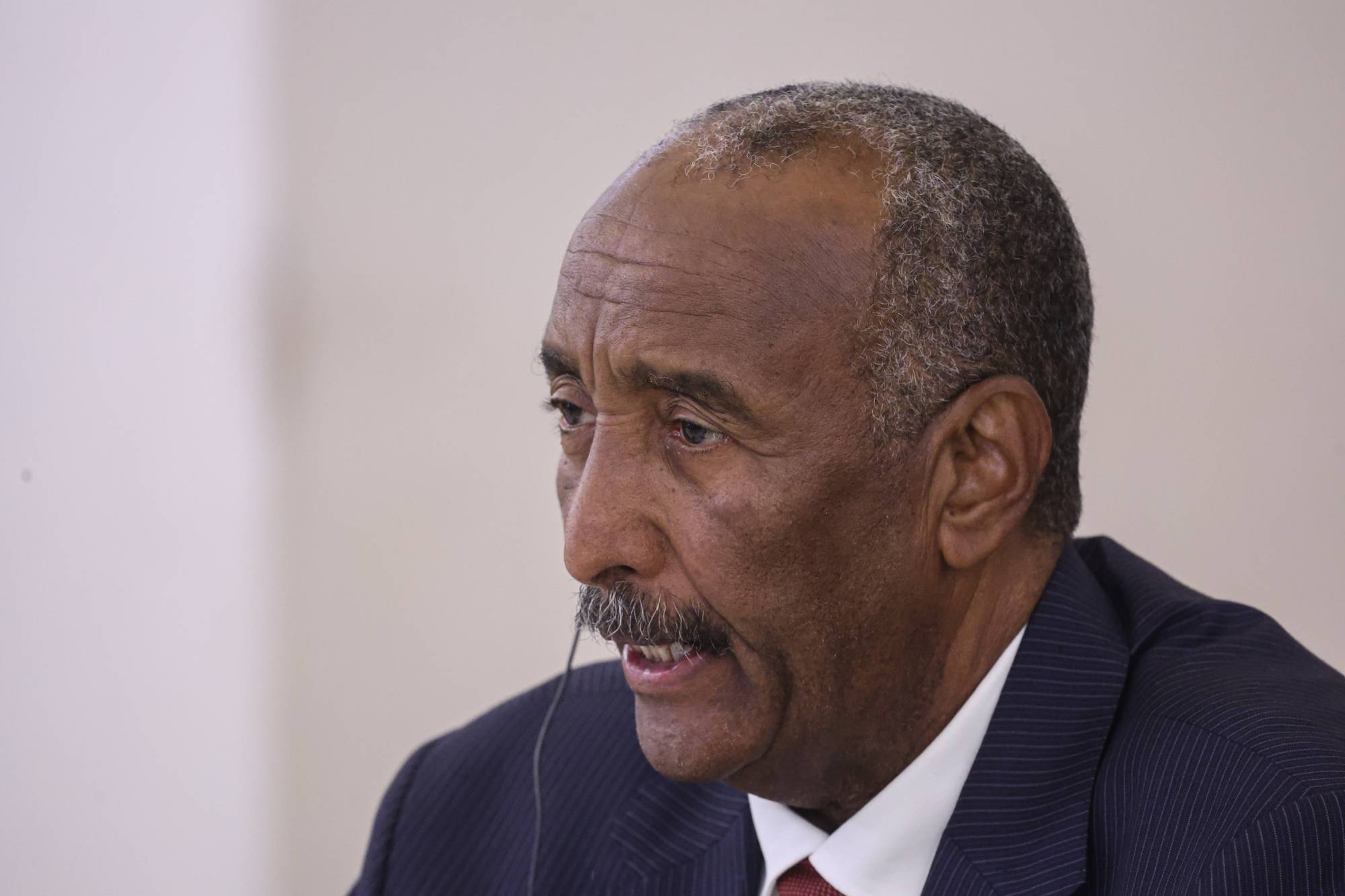
Chairman of Sudan's Transitional Sovereign Council Abdel Fattah al-Burhan speaks with Russian President Vladimir Putin (not pictured) during their talk on the sidelines of the third Russia-Africa Summit in Moscow, Russia, 30 October 2026. EPA/MAXIM SHIPENKOV / POOL

The Joint Force's claims of territorial gains could not be independently verified.

The Joint Force of Armed Struggle Movements, which previously joined the Sudanese army in its war against the RSF, includes the Justice and Equality Movement, led by Jibril Ibrahim, and the Sudan Liberation Movement/Army, headed by Darfur Governor Minni Arko Minnawi.

Pro-RSF media platforms, however, painted a sharply different picture, claiming RSF fighters had ambushed the advancing troops, killed large numbers of them and seized fully equipped combat vehicles before retaking the contested areas.

The platforms suggested the army had retreated to El Obeid, the capital of North Kordofan state, after suffering setbacks on several fronts.

Neither side typically acknowledges losing territory until its opponent declares full control.

The latest clashes follow months of advances by the army and allied forces, which have recaptured key areas of North Kordofan while pushing to gain control of neighboring West Kordofan, a state rich in oil.

Reports have circulated for days that the army was preparing sweeping counteroffensives to reclaim RSF-held territory in West Kordofan.

The towns of Kazgeil and Al-Hammadi have already changed hands several times between the warring sides.

The army has not officially disclosed its latest troop movements, but commanders have previously signaled plans for offensives on multiple fronts to reclaim RSF-held areas.

They said the goal was to retake towns across West Kordofan and open a route into the Darfur region in western Sudan.