
Syrian Security Forces Step Up anti-ISIS Operations, Pursue Former Regime Loyalists

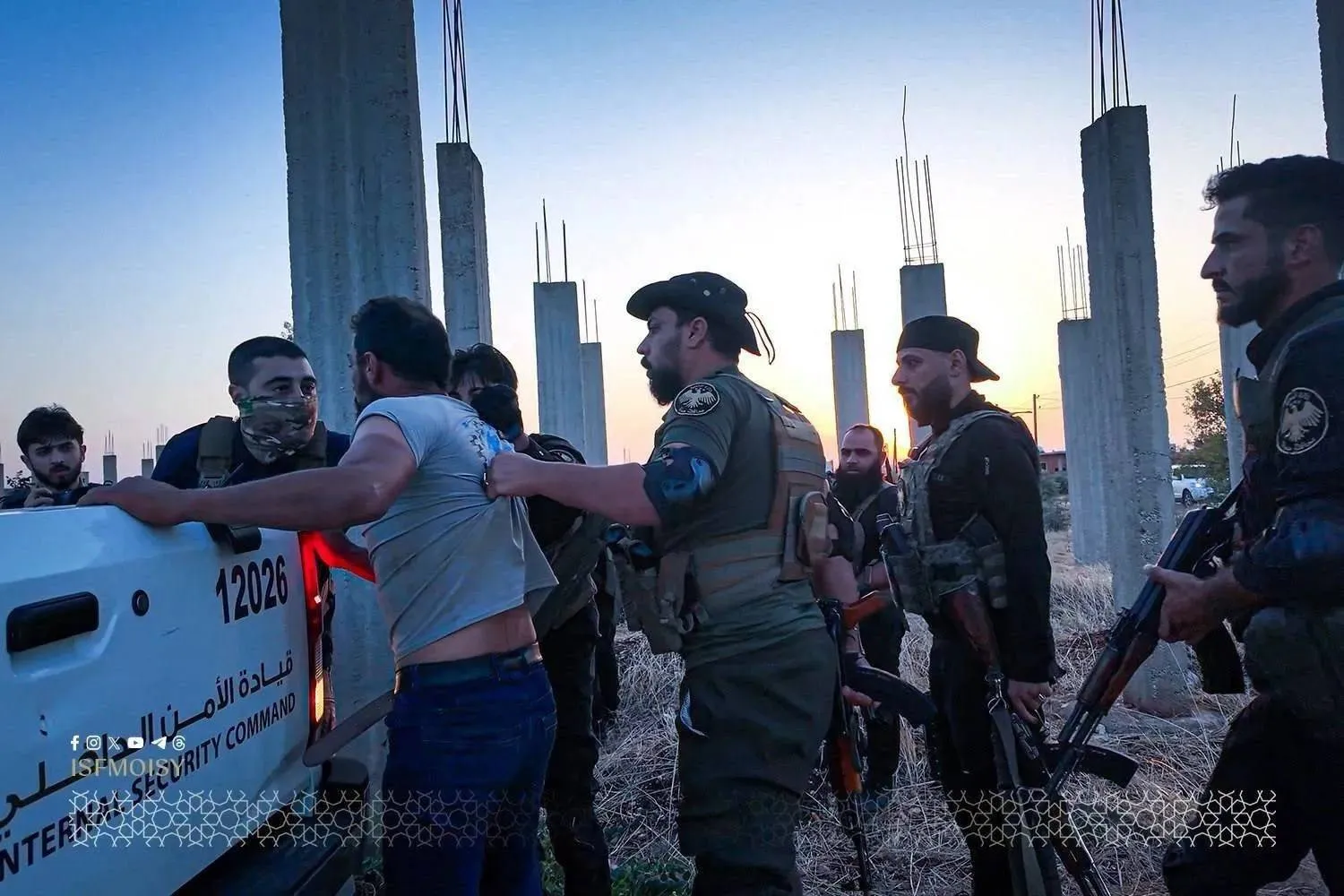
A scene from the arrests carried out in Masyaf (Hama Security Correspondent).
TT

Syrian Security Forces Step Up anti-ISIS Operations, Pursue Former Regime Loyalists

A scene from the arrests carried out in Masyaf (Hama Security Correspondent).

Syrian security forces have intensified operations against ISIS cells following a deadly September bus attack near Masyaf in central Syria, while separately pursuing former regime operatives accused of crimes against civilians.

Within a week, authorities announced the dismantling of an ISIS cell in Homs province, following the arrest of the group’s alleged military commander there. Seven former regime suspects were also detained as part of transitional justice efforts.

The Internal Security Forces announced that raids in the Houla area of northern Homs, conducted with the General Intelligence Directorate, had dismantled an ISIS-linked cell and foiled planned attacks on places of worship and security patrols.

Two suspects were arrested and two explosive devices were seized. Preliminary investigations indicated that the detainees had received and transported explosives and monitored potential targets as part of plans to incite unrest and undermine security.

One suspect was caught attempting to plant an explosive device on a railway track, authorities reported. Investigations are continuing to identify other cell members and their connections.

The operation followed the arrest about three days earlier of Khaled Raed Bayrouni, known as Abu Hassan Doshka, in Hujayra, near Damascus. The Interior Ministry described him as ISIS’s operational arm in Homs and the group’s overall military commander in its so-called Homs province.

Bayrouni is accused of planning and overseeing bombings and sectarian attacks, including an explosion at an Alawite mosque in Homs that killed eight people in late 2025.

Authorities also launched raids and arrests following a Sept. 27 attack on a bus transporting workers near the Masyaf bypass bridge, on the road linking Masyaf and Homs, that killed seven civilians.

Despite ISIS’s territorial defeat in Syria and Iraq, its small cells remain a security threat, exploiting instability and security gaps, particularly in remote areas.

In early October, the international coalition against ISIS pledged more than $75 million to support Syria’s counterterrorism efforts, including measures to address security vulnerabilities and dismantle dormant cells.

Separately, the Defense Ministry reported Saturday that a Syrian army soldier had died of wounds sustained in a shooting by unidentified gunmen Tuesday evening in Buqrus, eastern Deir Ezzor province.

Two customs patrol members were also wounded when unidentified attackers opened fire near Izraa bridge in Daraa province as officers escorted a transit convoy, the General Authority for Ports and Customs announced Saturday.

Former regime suspects arrested

In a parallel operation, security forces detained seven former regime suspects in Masyaf, Hama province, accusing them of serious abuses against civilians.

Nabil Adnan Ismail and Ghazi Mohammed Ismail allegedly commanded groups within militias affiliated with the former Air Force Intelligence Directorate and participated in kidnappings, looting and massacres, including violence in Aqrab village. They also face extortion allegations.

Brothers Taher Youssef al-Mohammed and Talal Youssef al-Mohammed, who served in Air Force Intelligence and the Scientific Studies and Research Center, are accused of repression, arrests and exploiting access to detainees’ files to extort their families.

Faisal Badour, nicknamed “Tiger Cub” for his alleged brutality toward civilians, joined armed militias in 2012 and participated in former regime military operations in Hama and Aleppo provinces.

Another detainee, Assef Salameh, served as a noncommissioned officer at defense factories until 2018.

Authorities had earlier arrested Shaheen Hamdan al-Shaheen, a founder of the Air Force Intelligence-linked Shaheen Regiment militia.

He is accused of involvement in massacres in eastern Hama and along the Athriya–Raqqa road in 2017. His militia allegedly committed killings, arrests, torture and destruction in Palmyra and Deir Ezzor province through 2019.


EU Urges ‘Immediate, Unimpeded’ Flood Aid to Gaza

 Displaced Palestinians walk through a rain-soaked tent camp following heavy rainfall in Deir al-Balah, central Gaza Strip, Saturday, Nov. 7, 2026. (AP)
Displaced Palestinians walk through a rain-soaked tent camp following heavy rainfall in Deir al-Balah, central Gaza Strip, Saturday, Nov. 7, 2026. (AP)
TT

EU Urges ‘Immediate, Unimpeded’ Flood Aid to Gaza

 Displaced Palestinians walk through a rain-soaked tent camp following heavy rainfall in Deir al-Balah, central Gaza Strip, Saturday, Nov. 7, 2026. (AP)
Displaced Palestinians walk through a rain-soaked tent camp following heavy rainfall in Deir al-Balah, central Gaza Strip, Saturday, Nov. 7, 2026. (AP)

The European Union on Saturday demanded Israel grant urgent access for aid groups to Gaza to help the victims of devastating floods there.

"We urge Israel to allow immediate, unimpeded access and sustained distribution of humanitarian assistance and early recovery support at scale, and to reopen all Gaza border crossings," it said in a statement.


Israeli Drone Strike Kills 2 Palestinians in Gaza

 Palestinians walk through a tent camp housing displaced people amid buildings destroyed by Israeli strikes during the Israel-Hamas war in Gaza City, Sunday, Nov. 8, 2026. (AP)
Palestinians walk through a tent camp housing displaced people amid buildings destroyed by Israeli strikes during the Israel-Hamas war in Gaza City, Sunday, Nov. 8, 2026. (AP)
TT

Israeli Drone Strike Kills 2 Palestinians in Gaza

 Palestinians walk through a tent camp housing displaced people amid buildings destroyed by Israeli strikes during the Israel-Hamas war in Gaza City, Sunday, Nov. 8, 2026. (AP)
Palestinians walk through a tent camp housing displaced people amid buildings destroyed by Israeli strikes during the Israel-Hamas war in Gaza City, Sunday, Nov. 8, 2026. (AP)

An Israeli drone strike killed two Palestinians in the Gaza Strip on Saturday, hospital officials said.

The drone struck two Palestinians walking down a street in Jabaliya, on the northern edge of Gaza City, said Mohamed Abu Selmiya, director of Shifa Hospital in Gaza City, where the casualties were taken.

The American field hospital said several other people were wounded but did not provide a number.

Asked about the attack, the Israeli military said it had struck two Hamas fighters in the area.

Near-daily Israeli fire and airstrikes have continued in Gaza more than a year after Israel and Hamas reached a ceasefire deal.

At least 1,600 Palestinians have been killed since the ceasefire, according to Gaza’s Health Ministry. The ministry, part of the Hamas-run government, maintains detailed records and is seen as generally reliable by UN agencies and independent experts. It does not distinguish between civilians and combatants in its toll but says women and children make up around half the dead.


Thousands Mourn al-Alwani as Lebanese Probe Awaited

Relatives receive former MP Ahmed al-Alwani's coffin upon its arrival at Baghdad airport on Saturday. (X)
TT

Thousands Mourn al-Alwani as Lebanese Probe Awaited

Relatives receive former MP Ahmed al-Alwani's coffin upon its arrival at Baghdad airport on Saturday. (X)

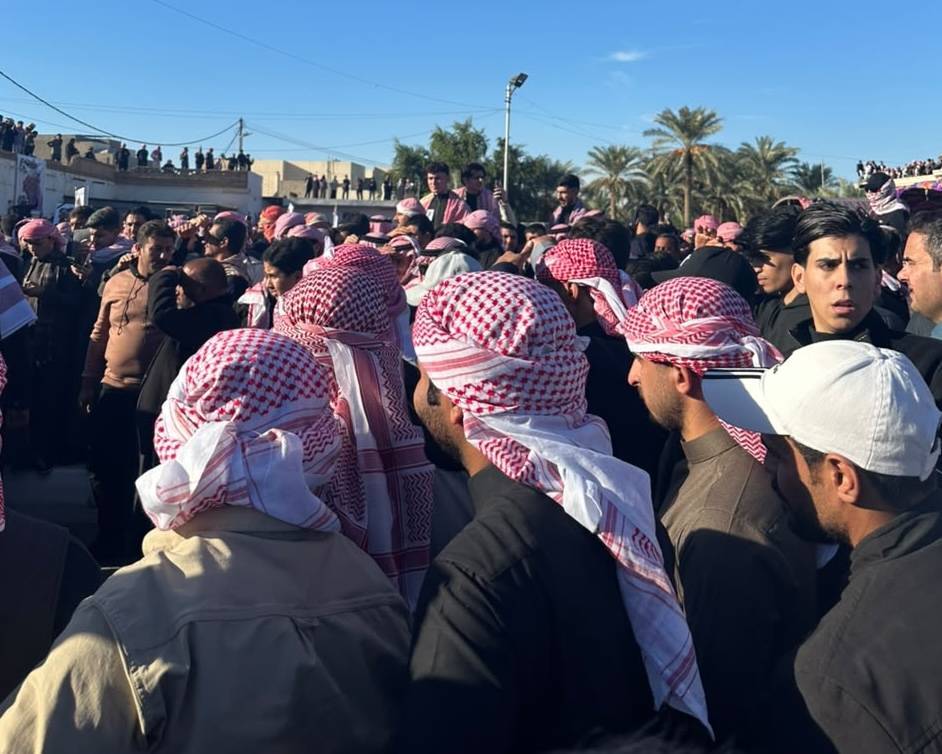
Thousands of Iraqis on Saturday escorted the body of former MP Ahmed al-Alwani from Baghdad Airport to Ramadi in Anbar Governorate, where tribespeople and residents from across the province awaited his arrival amid scenes of grief and anger.

Meanwhile, the circumstances surrounding his killing in Beirut remain under investigation, even as Lebanese authorities have made progress in identifying two suspects.

A private jet carrying al-Alwani's body from the Lebanese capital landed at Baghdad Airport in the morning, with large crowds of mourners gathering at the airport.

Local media reported that Iraqi politician Khamis al-Khanjar, head of the Sovereignty Alliance, covered the cost of transporting the body aboard the private aircraft.

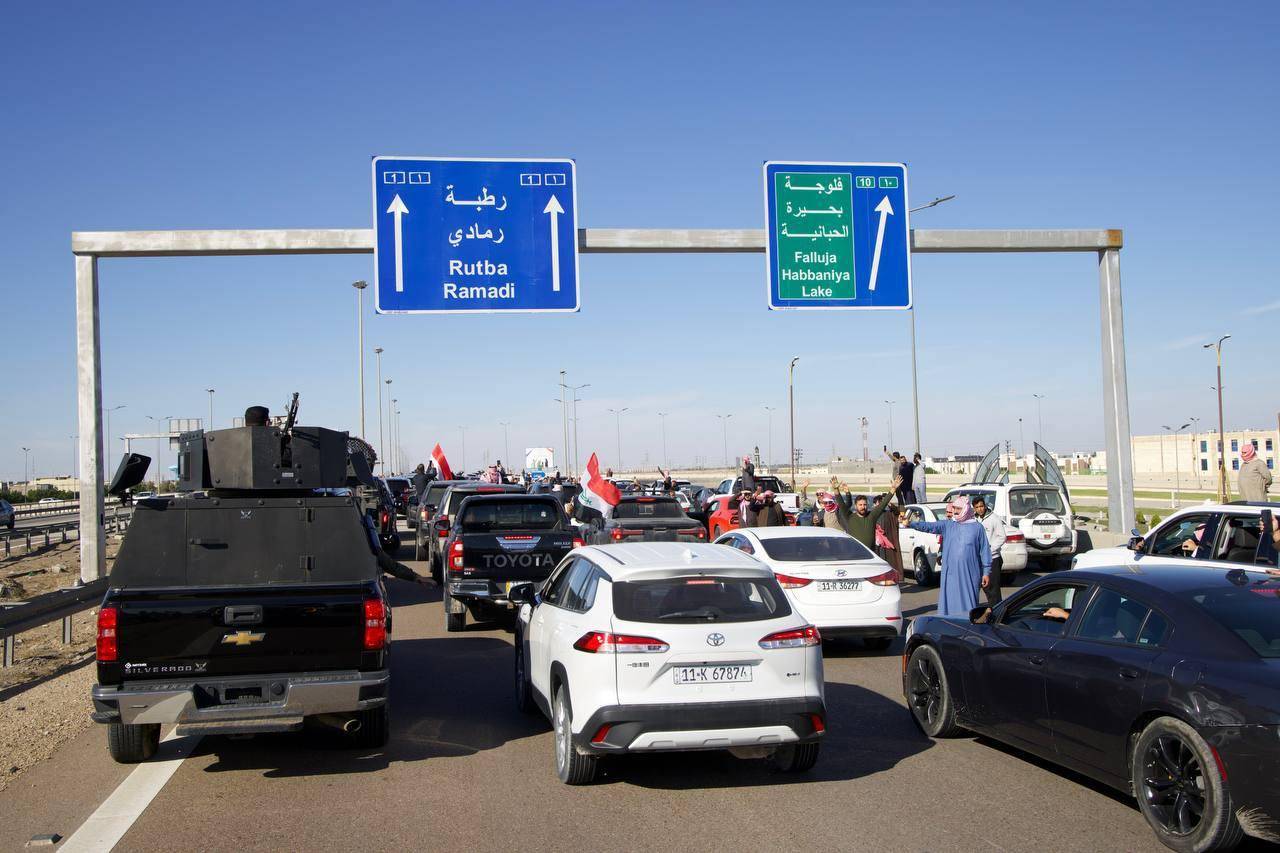
The funeral procession traveled toward Ramadi, located 110 kilometers from Baghdad, under heavy security and accompanied by military vehicles.

Mourners are seen at al-Alwani's funeral on Saturday. (Asharq Al-Awsat)

The Security Media Cell had urged the public to await the investigation's findings and refrain from reading broader motives into the case before it concludes, noting the ongoing coordination between the Iraqi Embassy in Beirut, Lebanese judicial and security authorities, and the Iraqi National Intelligence Service.

Al-Alwani's killing has sparked uproar across Iraq, particularly in his home province of Anbar. Discussion of the case has been accompanied by political debates and sectarian commentary on social media, amid demands to identify those responsible for his death.

Kamel al-Dulaimi, former head of the Iraqi Presidential Diwan, told Asharq Al-Awsat that the circumstances and motives behind the crime still require clear and transparent disclosure to the public, underscoring the Iraqi state's responsibility to uncover the truth.

The funeral procession traveled toward Ramadi, located 110 kilometers from Baghdad, under heavy security and accompanied by military vehicles. (Asharq Al-Awsat)

He added that the case requires security and judicial cooperation among Iraq, Lebanon, and Syria to track down the perpetrators and those behind them, particularly if the investigation calls for cross-border coordination.

He warned that the sectarian rhetoric surrounding the incident reflects a persistent tendency to view national issues through a narrow lens, emphasizing that the matter concerns the sanctity of Iraqi blood and must not be reduced to the affiliation of an individual or a governorate.

Legal researcher Saif al-Saadi, who hails from Anbar, said al-Alwani was not merely a former lawmaker, but a prominent tribal, social, and political figure in the province, adding that the funeral reflects the depth of grief and anger across Anbar's cities.

Al-Alwani, who rose to prominence during the late 2013 Anbar protests, was arrested in December of that year and sentenced to death in 2014 after being convicted of killing two soldiers during clashes accompanying his arrest.

He was released in April 2025 after spending more than 11 years in prison, following the withdrawal of a complaint by one of the victims' families and his inclusion under the General Amnesty Law.