Yemen Dismantles Houthi Network That Plotted to Destabilize Security, Target Security and Military Leaders

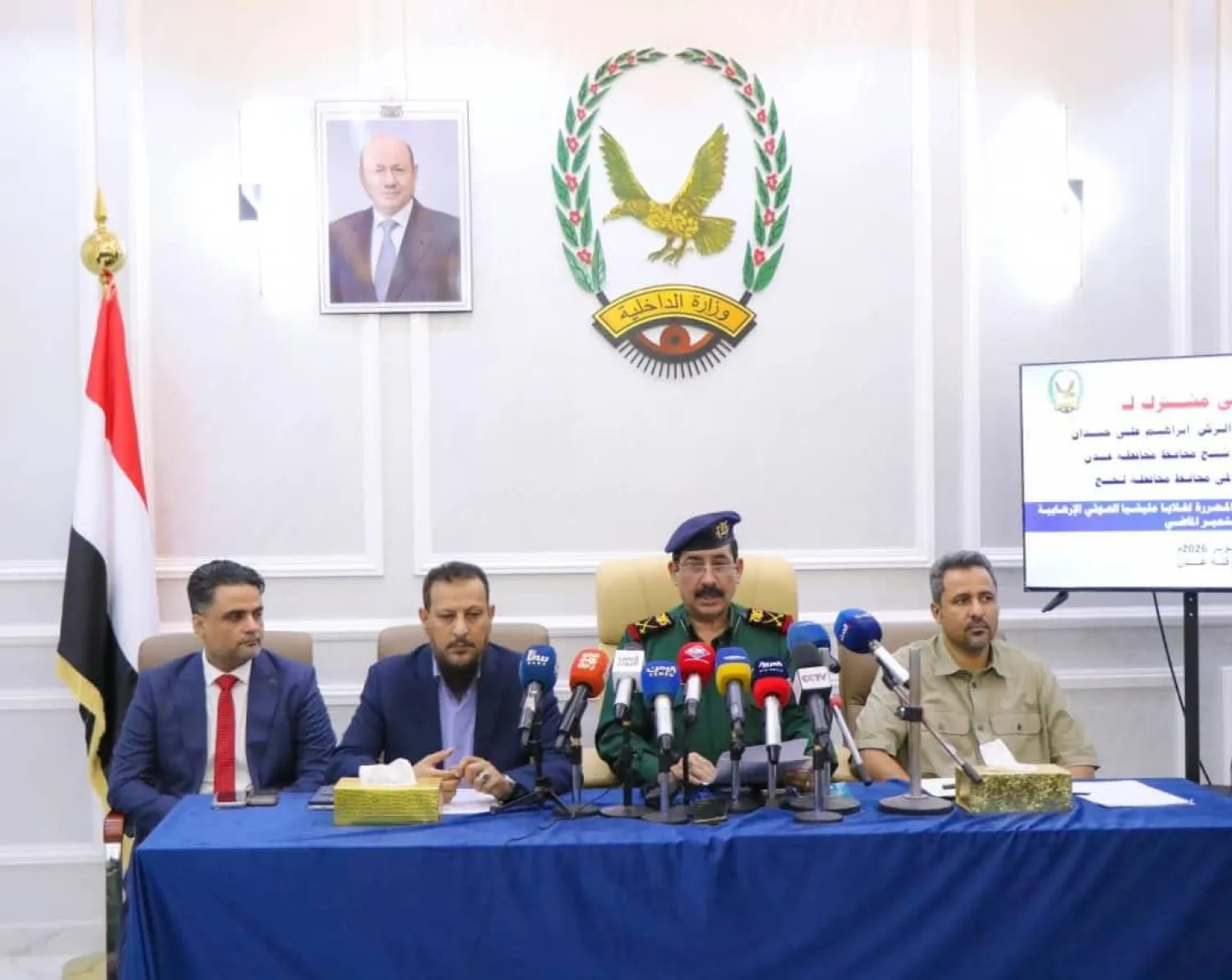
Yemeni Interior Minister and Aden Governor during the press conference (Yemeni Interior Ministry)
TT

Yemen Dismantles Houthi Network That Plotted to Destabilize Security, Target Security and Military Leaders

Yemeni Interior Minister and Aden Governor during the press conference (Yemeni Interior Ministry)

Yemen's Interior Ministry arrested members of and dismantled Houthi-affiliated terrorist cells in the temporary capital Aden and the governorates of Lahj and Abyan in September. The ministry said the cells had been planning to target security and military leaders and vital facilities, as well as military reinforcements and supply lines heading to the battlefronts.

Yemeni Interior Minister Staff Maj. Gen. Ibrahim Haidan said at a press conference in Aden on Monday that the most prominent of these cells was an 18-member network apprehended in Lahj governorate on September 26. He said the network operated under the supervision of Houthi leaders and that its members had received specialized training in several areas under the group's control, including Saada, Dhamar and Al-Hawban in Taiz governorate.

Haidan said investigations revealed that the network's members had been trained to plant explosive devices, use booby traps and carry out attacks against security and military figures and sites. He added that the network was divided into two groups, one responsible for surveillance, monitoring and intelligence gathering, and the other for carrying out bombings and attacks.

The minister confirmed that security and intelligence agencies had thwarted the plots before they could be carried out. He said the cells had sought to undermine security and stability in the liberated governorates, disrupt conditions on the battlefronts and create conditions that would enable the Houthis to seize control of cities.

"The security agencies are waging a continuous battle that has not stopped for a single moment against the terrorist plots of the Iran-backed Houthi militia in order to strengthen security and stability," he said.

He stressed that the successes achieved by all security units in securing the home front constitute a fundamental pillar and a genuine starting point toward completing the battle for liberation and achieving the long-awaited victory that the Yemeni people have eagerly anticipated for more than a decade.

Haidan added: "We are fighting our battle against the Houthi militia, which has made terrorism part of its ideological doctrine and abandoned the teachings of our true Islamic faith. Its terrorism has gone beyond targeting communities in the liberated governorates to targeting Islamic holy sites, Makkah and Madinah, the holiest places for Muslims, which hold a special place in the hearts of more than a billion Muslims around the world and are deeply connected to their faith and religious identity."

He said the Houthi militia had abandoned all customs, traditions and deeply rooted societal values, resorting to what he described as despicable methods, including recruiting children, women, African migrants and the elderly to pursue its terrorist and extremist objectives of undermining security and stability and disturbing public peace and tranquility in the liberated governorates.

Haidan stressed that despite what he described as unlimited support provided by the terrorist Houthi militia to these cells, along with direct supervision of their training by experts from Iran's Islamic Revolutionary Guard Corps (IRGC) and Hezbollah, the preparedness, vigilance and courage of Interior Ministry personnel, working alongside their intelligence counterparts, had helped dismantle the cells one after another and deal them severe blows in recent months.

He said these operations had thwarted the militia's reliance on the cells to spread chaos, undermine security and stability, disrupt conditions on the battlefronts in the liberated governorates, particularly Aden, Lahj and Abyan, and create conditions for the Houthis to seize control of cities.

In Aden, security forces in the Dar Saad district arrested a member of the cell who, according to the ministry, was found in possession of explosive devices and materials linked to a plot to target security and military leaders and vital facilities. Investigations also uncovered other targets the cell had intended to attack within the city.

The ministry also announced the arrest of an all-female cell in Lahj on September 22, saying its members had been tasked with surveillance, tracking, recruitment and sabotage activities.

In addition, security forces apprehended a two-member cell in the Lawdar district of Abyan governorate earlier that month on suspicion of planning attacks against security and military forces and citizens.

Haidan praised Saudi Arabia's support for Yemen, particularly in the security sector, highlighting its role in strengthening the capabilities of security agencies and contributing to successes in combating terrorist cells.

For his part, Minister of State and Aden Governor Abdulrahman Sheikh said local authorities had taken security and precautionary measures to address the consequences of a wave of displacement caused by Houthi escalation in the governorates of Hodeidah and Taiz.

He explained that the governorate had set up 800 tents equipped with the necessary services and facilities, accommodating around 7,000 displaced people over half a month.

Meanwhile, Lahj Governor Murad Al-Halimi said coordination between security agencies in the governorates and the Interior Ministry had contributed to apprehending the cells and thwarting the terrorist and sabotage operations they had planned.

He called on everyone to recognize their responsibilities and work diligently to safeguard security in the liberated governorates and prevent them from falling victim to Houthi militia plots.

The Interior Ministry confirmed that the suspects would be referred to the relevant judicial authorities once investigations and evidence collection were completed, ahead of their trials.

Israeli Detonations Reshape South Lebanon Villages, Deepen Their Isolation

Israeli tanks and military vehicles on a road between destroyed houses in southern Lebanon near the border with northern Israel, April 29, 2026. (AFP)
TT

Israeli Detonations Reshape South Lebanon Villages, Deepen Their Isolation

Israeli tanks and military vehicles on a road between destroyed houses in southern Lebanon near the border with northern Israel, April 29, 2026. (AFP)

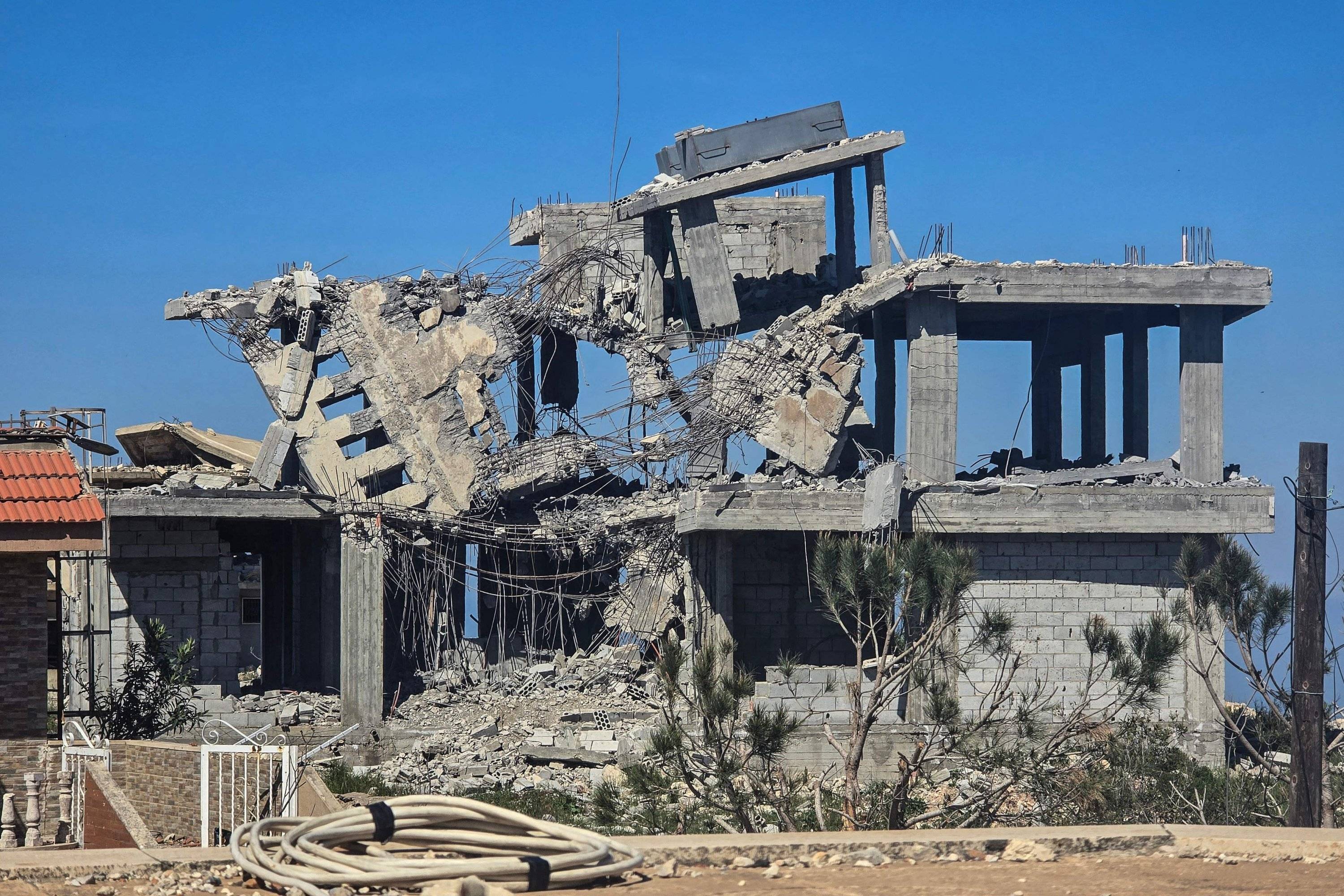
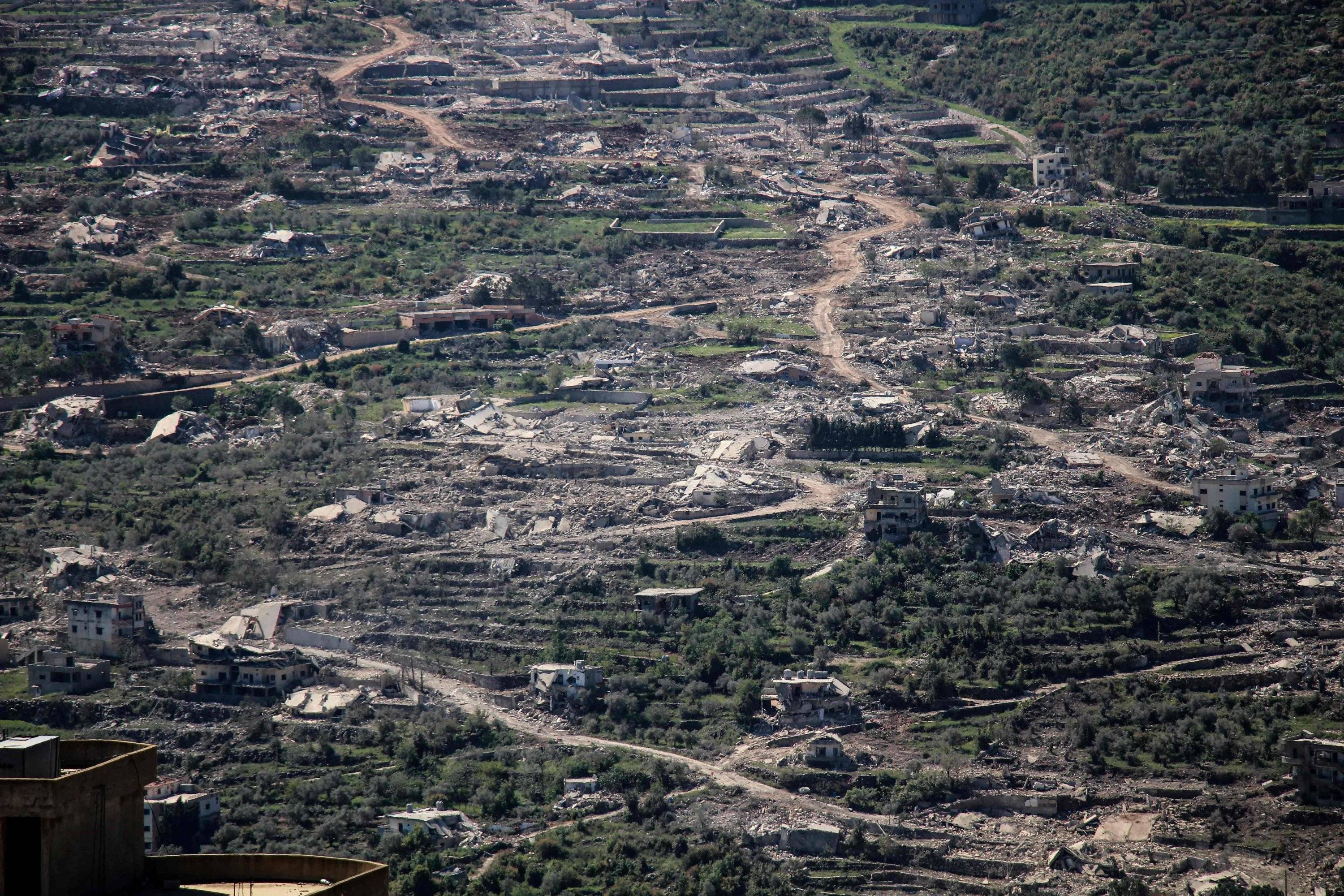
Israeli forces are blasting homes, farmland, roads and bridges across southern Lebanon, leaving villages stripped of familiar landmarks and raising fears that residents may never be able to return.

The destruction extends far beyond military positions and hilltops, according to scientific data and a study of war damage. A military expert says the pattern points to an Israeli effort to reshape the region's population and landscape.

Officials at Lebanon's National Council for Scientific Research told Asharq Al-Awsat that 2,057 Israeli explosions were recorded between April 17 and Oct. 29, reflecting the scale of Israeli military operations. No published breakdown of their geographic distribution or counting methodology was available.

An earlier scientific report published by the council documented 1,731 mining and demolition operations in southern Lebanon between March 2 and September 10, including 1,128 after the June 26 “framework agreement”.

The daily average surged from 5.15 operations before the agreement to about 15 afterward.

Homes and bridges in ruins

More than 90,000 homes across Lebanon had been damaged or destroyed by mid-June, according to preliminary estimates cited in a study by Information International. The figure was not limited to southern Lebanon.

The study documented seven bridges completely destroyed and partial damage to the Qasmieh Bridge, among eight bridges targeted along routes linking the area south of the Litani River to surrounding areas.

Citing the International Organization for Migration, the study said 499,784 people remained internally displaced as of July 1, highlighting the struggle to restore stability even as returns began.

The National Council for Scientific Research also documented a massive blast in Majdal Zoun on June 28 and ground waves triggered by an explosion in Shaqif overnight on July 30-31, equivalent to a magnitude 3.8 earthquake, according to the National Center for Geophysics.

A separate explosion in Ali al-Taher on September 10 coincided with a magnitude 4.1 seismic event recorded by the US Geological Survey.

The Shaqif blast raised concerns over the historic Beaufort castle, which has temporary enhanced protection and is listed among the "Castles of Jabal Amel" on the World Heritage List.

The remains of a home destroyed by the Israeli army in the village of Beit Lif, southern Lebanon, April 22, 2026. (AFP)

'Eliminating the foundations of life'

Retired Staff Brigadier General Khalil al-Gemayel described the destruction as a systematic scorched-earth policy designed to wipe out residential communities, deprive them of the basic necessities of life and prevent residents from returning.

He said the operations were paving the way for a prolonged Israeli presence in areas under its control.

The council's tally of 2,057 explosions since April was consistent with the scale of Israeli operations on the ground, Gemayel said, pointing to almost daily blasts targeting not only military positions and hilltops but also homes, neighborhoods, buildings and infrastructure.

The destruction was particularly concentrated around major population centers such as Bint Jbeil, Khiam and Aita al-Shaab, as well as villages including Zawtar al-Sharqiyeh, he said.

Gemayel said the pattern closely followed Israeli troop deployments, with built-up areas and population centers facing Israeli positions bearing the brunt of the demolitions.

The operations went beyond immediate military objectives and were intended to bring about sweeping demographic and environmental changes, he added.

"Destroying homes, infrastructure, vegetation and farmland effectively eliminates the foundations of life, rather than merely preventing military use of these areas," he said.

Gemayel compared the operations to Israel's actions in Syria's Golan Heights after its occupation in 1967, when villages were demolished and cleared.

He said the same approach was now being repeated in southern Lebanon, with the landscape altered and the traces of residential communities erased.

Even a political settlement and Israeli withdrawal would not guarantee a swift return of the displaced, he warned.

Rebuilding communities could take years, perhaps decades, with some residents potentially unable even to locate their former homes after entire streets, buildings and village landmarks disappeared.

A general view shows homes and structures demolished by the Israeli army in the village of Beit Lif, southern Lebanon, April 22, 2026. (AFP)

Imposing a new reality

Gemayel said the demolitions were concentrated in several areas along built-up stretches extending roughly 1,000 meters in front of Israeli positions, targeting buildings and residential communities facing deployed troops.

He identified Majdal Zoun and Mansouri, along with areas around Srebbine, Yater, Beit Yahoun, Hadatha, Baraachit and Aita al-Jabal, as examples.

He said Israeli aerial surveillance and other technological capabilities often allowed its forces to distinguish civilian from military movements, but that had not stopped the destruction from spreading.

Gemayel said the ultimate aim was to prevent residents from returning to areas occupied by Israeli forces or facing their positions by destroying villages and residential communities capable of sustaining everyday life.

The scale and pattern of destruction suggested Israel intended to maintain a long-term presence while imposing a new geographic and demographic reality that could prove difficult to reverse even after military operations ended, he said.


Syria Says Foiled Hezbollah-Linked Plot to Bomb Oil Refinery

Explosives and other equipment that were seized in possession of the detainees. (Syrian internal security forces)
TT

Syria Says Foiled Hezbollah-Linked Plot to Bomb Oil Refinery

Explosives and other equipment that were seized in possession of the detainees. (Syrian internal security forces)

Syrian authorities said on Tuesday they had prevented a sabotage attempt against an important refinery by figures linked to Lebanon's Hezbollah group, which denied the accusation.

The announcement comes after a series of unclaimed attacks against oil and gas pipelines across several parts of Syria.

Domestic intelligence and security forces "foiled a terrorist plot by a cell affiliated with the Hezbollah militia that was targeting the Homs refinery", the security forces said in a statement.

They said they had arrested two members of the cell and seized explosives intended for use in the attack.

In a statement later, Hezbollah denied the accusations "in their entirety", condemning "the repetition of these accusations".

It reiterated that it "has no presence or connections in Syrian territory and has nothing to do with any activity that undermined Syria's security and stability".

The Homs refinery, in central Syria, is the only operational one in a country devastated by more than a decade of civil war that ended in late 2024.

Another refinery, on the coast at Banias, is undergoing maintenance.

Damascus has previously announced the dismantling of cells linked to Hezbollah, which has denied the allegations each time.

The Lebanese group took part in Syria's war on the side of the since-overthrown Bashar al-Assad, fighting against those now in power in Damascus and earning their ongoing enmity.

On Sunday, Syrian news agency SANA reported a foiled plot against the refinery, while in early October Damascus reported sabotage attacks first against an oil pipeline and then a gas one.

Syrian President Ahmed al-Sharaa and Hezbollah leader Naim Qassem have both raised the possibility of meeting each other.


Jordan Charges Church Attack Suspects with Terrorism

 Relatives mourn as they hold a framed portrait of a victim killed in an attack on a Greek Orthodox church during a funeral ceremony in Karak, Jordan, Sunday, Oct. 25, 2026. (AP)
Relatives mourn as they hold a framed portrait of a victim killed in an attack on a Greek Orthodox church during a funeral ceremony in Karak, Jordan, Sunday, Oct. 25, 2026. (AP)
TT

Jordan Charges Church Attack Suspects with Terrorism

 Relatives mourn as they hold a framed portrait of a victim killed in an attack on a Greek Orthodox church during a funeral ceremony in Karak, Jordan, Sunday, Oct. 25, 2026. (AP)
Relatives mourn as they hold a framed portrait of a victim killed in an attack on a Greek Orthodox church during a funeral ceremony in Karak, Jordan, Sunday, Oct. 25, 2026. (AP)

Jordanian prosecutors on Tuesday charged three men with terrorism-related offences over a deadly gun attack last month on a church in the kingdom's south.

On October 23, gunmen killed nine people and wounded 25 others when they stormed a funeral at a Greek Orthodox church in Hammoud village, in Jordan's Karak governorate.

Authorities said the suspected gunmen, two Jordanian brothers and their relative by marriage, fled after the attack but were arrested three days later.

According to a statement from Jordan's state security prosecutor, "the public prosecution has completed all investigative procedures... related to the terrorist attack carried out at Saint George Church".

The seven charges include "committing terrorist acts resulting in the death of a person, carrying out terrorist acts using weapons and ammunition, possessing weapons and ammunition for terrorist purposes, conspiring to carry out terrorist acts and promoting the ideology of a terrorist group".

Under Jordan's anti-terrorism law, a conviction on the most serious charge -- carrying out terrorist acts resulting in death -- is punishable by death.

Authorities have described the suspects as followers of a hardline extremist ideology.

The attack shocked the kingdom, where Christians make up around three percent of Jordan's Muslim-majority population.

Jordan retaliated by launching deadly strikes on "terrorist organizations" in Syria, claiming to have killed more than 20 extremists, but sparking a brief diplomatic crisis with its neighbor.