Operation Dawn of Yemen Intensifies Air and Ground Strikes to Weaken Houthi Capabilities

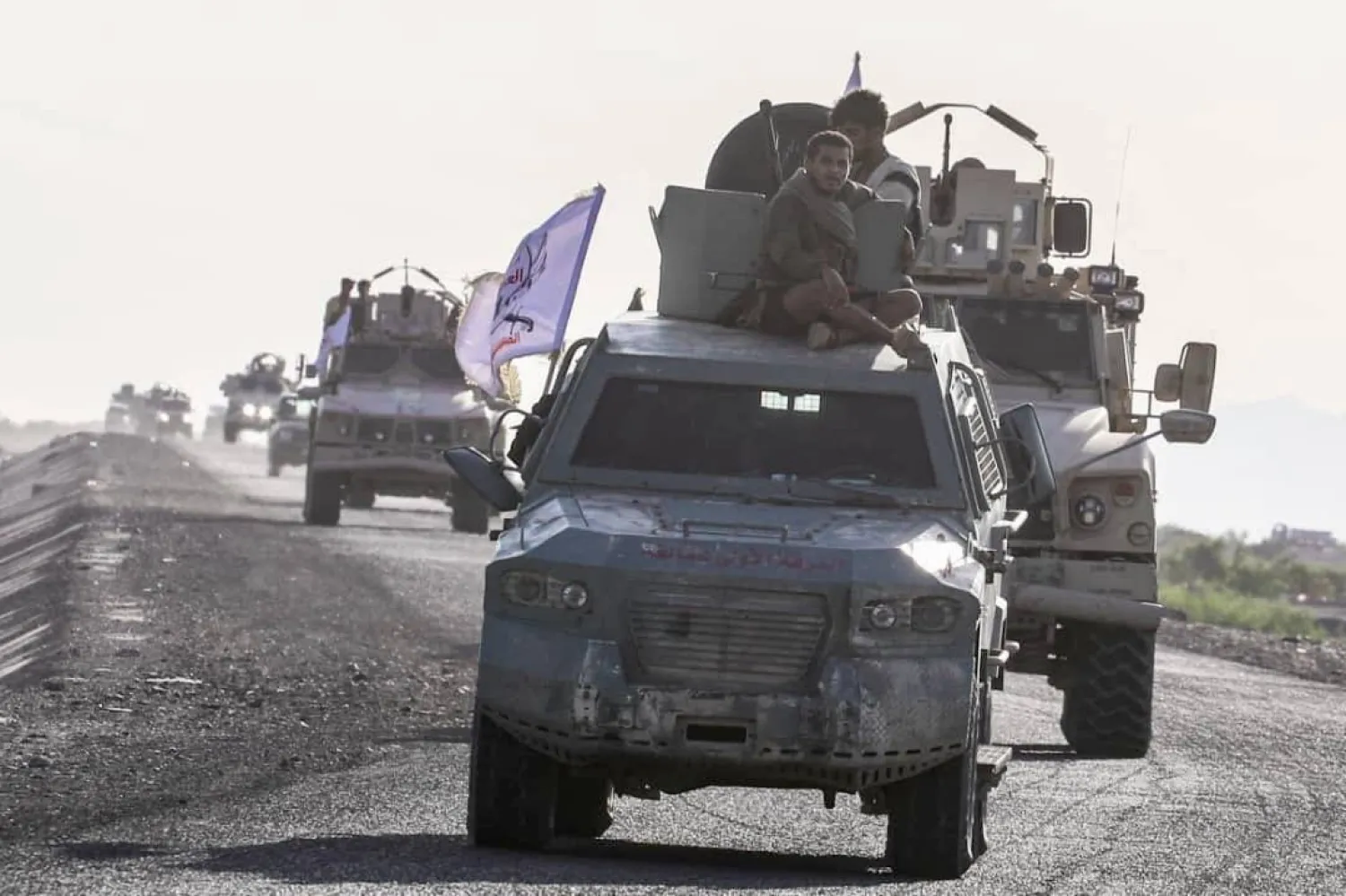
Troops from the Southern Giants Brigades on their way to reinforce front lines in western Lahj (Military Media)
TT

Operation Dawn of Yemen Intensifies Air and Ground Strikes to Weaken Houthi Capabilities

Troops from the Southern Giants Brigades on their way to reinforce front lines in western Lahj (Military Media)

The Yemeni military's Operation Dawn of Yemen entered its tenth day on Wednesday, with some of the fiercest fighting continuing on the front lines in Taiz Governorate in the southwest, as well as in Marib and Al-Jawf.

Air and ground strikes have intensified as government forces say they are seeking to weaken the combat capabilities of the Iran-backed Houthis and cut off their supply lines.

Meanwhile, casualties and displacement continue to rise, placing mounting pressure on hospitals, markets and essential services.

The Yemeni Armed Forces announced that they had carried out 2,200 precision strikes over 24 hours, involving fighter jets, drones, field artillery, rocket launchers and sniper units. They said preliminary battlefield assessments indicated that approximately 1,200 Houthi fighters had been neutralized, while more than 440 military vehicles and other equipment had been destroyed or damaged across various fronts.

Armed Forces spokesperson Col. Majed Al-Nuzaili said the operations focused on command and control centers, fortifications, firing positions, observation and reconnaissance posts, as well as troop assembly areas, weapons and ammunition depots, transportation and supply assets, and what he described as high-value military targets.

He added that government forces had continued to expand their offensive operations on the eastern and southern fronts, making territorial gains under intensive fire support. In Taiz, strikes targeted Houthi fighter concentrations and reinforcements in an effort to disrupt the group's ability to support its positions and regroup its forces.

Field sources say the group is suffering daily casualties, including fighters killed, wounded and captured, among them field commanders. Estimates suggest that approximately 15,000 Houthi fighters have been killed or wounded over the past ten days, although the group has not released a comprehensive casualty toll.

Fighting on Multiple Fronts

In Taiz, fighting in recent hours has been concentrated on fronts south, east and west of the city, with renewed clashes in Al-Aqrud. Military sources reported that battles erupted in Al-Sarari, Dhi al-Birah and Dhahih following Houthi attempts to attack government positions.

The sources said government forces had forced Houthi fighters to retreat from Al-Sarari in the Sabir al-Mawadim district, while airstrikes targeted a gathering and a facility belonging to the group in the Al-Hawban area east of the city.

On the western front, clashes continued around Jabal Han, Al-Sayahi and Jabal Hadhran, within the Al-Dhabab front overlooking the main road leading into the city.

Fighting also spread to the Al-Shaqab and Al-Aqrud fronts southeast of Taiz, coinciding with intensified battles in the Al-Mahawilah and Al-Aghabirah areas along the Al-Waziiyah axis in the southwest of the governorate, as well as continued clashes on the Al-Mudaribah front in neighboring Lahj Governorate.

According to a government statement, military engineering units are working to clear mines and improvised explosive devices from recaptured positions on the western front and secure roads and passageways in an effort to protect civilians and facilitate their return to areas they fled.

Decision to Continue the Operation

On the political front, Yemeni Presidential Leadership Council Chairman Rashad al-Alimi affirmed that Operation Dawn of Yemen would continue toward its declared objective of ending the Houthi takeover, restoring state institutions and placing weapons and decisions of war and peace exclusively under the authority of constitutional institutions.

In an address marking the 63rd anniversary of the October 14 Revolution, Al-Alimi said the armed forces had performed well since the operation began and that temporary changes on the ground would not deter the state from fulfilling its responsibilities, with support from brotherly and friendly countries.

He added that the Houthi threat was not confined to a particular governorate or region but extended to the security and future of Yemenis in both the north and south. He stressed that developments in Taiz and Marib were closely linked to the security of Aden, Hadramout and the country's other governorates.

Al-Alimi justified the launch of the operation by citing the exhaustion of opportunities for de-escalation and continued Houthi attacks on cities, villages, neighboring countries and international waterways. He stressed that the decision to restore state institutions had taken effect and was irreversible.

Humanitarian Warnings

The expansion of military operations has coincided with international warnings about their impact on civilians, particularly as the number of wounded and displaced people rises and healthcare facilities become increasingly unable to respond to growing needs.

The International Committee of the Red Cross (ICRC) said Wednesday that hospitals across Yemen were facing mounting difficulties in coping with a sharp increase in the number of people wounded in the fighting. It noted that some frontline healthcare facilities in Marib, Taiz and along the Red Sea coast had admitted more than 700 wounded patients in a single week.

Firas Abu Samra, the ICRC's health coordinator, said medical teams were under enormous pressure, while only a small proportion of functioning healthcare facilities were capable of providing comprehensive trauma care.

The organization warned of shortages of surgical supplies, anesthetics, oxygen and medicines, as well as the limited capacity of Yemen's already strained healthcare system to cope with another wave of mass casualties should the fighting expand.

On displacement, the International Organization for Migration (IOM) reported that it had recorded 217,303 displaced people, representing 36,216 households, as of October 12. Approximately 55 percent of those displaced were concentrated in Taiz Governorate, while Lahj recorded more than 45,000 affected people and Aden more than 26,000.

The consequences extend beyond displacement and injuries. The United Nations warned of dwindling essential supplies in Taiz, with wheat and flour stocks potentially running out in less than three weeks, according to reports from its humanitarian partners.

UN spokesperson Stéphane Dujarric said food prices had risen by approximately 50 percent, while gasoline prices had tripled and cooking gas had become largely unavailable. Fuel shortages have also threatened water supplies, amid overcrowded displacement sites, limited access to clean water and inadequate healthcare services.

These conditions are heightening the risk of worsening food insecurity and deteriorating health conditions in a city of more than 1.5 million people, which has endured years of Houthi restrictions on movement and supplies because of the siege imposed on its access routes.


Bab al-Mandeb Close to Liberation, Houthis Intensify Fighting in Lahj

A Yemeni solider in battle near Taiz city. (AFP)
TT

Bab al-Mandeb Close to Liberation, Houthis Intensify Fighting in Lahj

A Yemeni solider in battle near Taiz city. (AFP)

Yemeni government forces are close to ending the Houthi presence in most positions the group still holds in the Bab al-Mandeb region, coinciding with intensifying battles in Lahj governorate.

There, the group has escalated its attacks on government force positions in the Al-Maqatirah district in an attempt to achieve a military breakthrough that would allow it to bypass toward Bab al-Mandeb and advance toward the Tur Al-Baha district.

The Giants Brigades continue to pressure the remaining Houthi pockets in Bab al-Mandeb, as government forces and the Popular Resistance are engaged in escalating confrontations along the Taiz and Lahj fronts. The clashes come amid Houthi attempts to reclaim positions lost over the past few days and open new advance routes toward strategic areas overlooking the west coast.

These developments were accompanied by decrees by Chairman of the Presidential Leadership Council Rashad Al-Alimi, the Supreme Commander of the Armed Forces, under which he reorganized the leadership of the Tur Al-Baha axis and the military command of the Taiz front.

The development took place following setbacks at certain positions over the past weeks, and coincides with the political leadership's reaffirmation to press ahead with the Dawn of Yemen Operation until its declared goals are achieved.

According to field sources, the Houthis only hold one main in the Bab al-Mandeb region, as well as a handful of hills where a limited number of fighters are positioned.

The sources said government forces are close to establishing full control over these sites; however, the high density of mines and improvised explosive devices (IEDs) planted by the group is hindering the advance and poses a direct threat to the troops, requiring clearing operations before military objectives can be fully completed.

Houthi pressure on Lahj

The Houthis launched a violent pre-dawn attack on Tuesday against government positions on the Al-Maqatirah front north of Lahj governorate.

Units from the National Resistance successfully repelled the assault for the second consecutive day, following a similar attack on Monday.

Government forces targeted Houthi positions in the Sawalihah mountains of the Al-Nusayrah area with medium and heavy weapons, inflicting casualties and equipment losses.

According to military information, forces managed to reclaim positions in the Al-Khazzan Al-Ahmar area on the Al-Nusayrah front and expel Houthi elements.


Yemen: 21 Foreign ‘Experts’ from Iran’s IRGC, Hezbollah Operating with the Houthis

In this file photo, Houthi supporters hold posters of late Iranian Supreme Leader Ali Khamenei and Iranian flags during a rally against Israel and the United States in Sanaa, Yemen, Sunday, March 1, 2026. (AP)
TT

Yemen: 21 Foreign ‘Experts’ from Iran’s IRGC, Hezbollah Operating with the Houthis

In this file photo, Houthi supporters hold posters of late Iranian Supreme Leader Ali Khamenei and Iranian flags during a rally against Israel and the United States in Sanaa, Yemen, Sunday, March 1, 2026. (AP)

The Yemeni Ministry of Interior revealed Tuesday the presence of 21 foreign experts working with the terrorist Houthi militia, including 14 operatives from the Iranian Revolutionary Guard Corps (IRGC) and seven from the Lebanese Hezbollah, threatening the security of Yemen and international marine navigation and undermining regional and international security.

Distributed across six Yemeni governorates, these experts handle funding, arming, training, direct supervision, and operational planning to build the militias' military capabilities. This runs parallel to political, organizational, social, and media activities designed to cement long-term influence and establish networks of loyalty aimed at "placing Yemen outside its Arab surroundings."

The specializations of these foreign experts encompass operations management, command and control, ballistic missiles, drones, surveillance systems, communications, and electronic warfare, alongside overseeing supply lines and military component smuggling networks.

Their expertise also extends to coordinating maritime operations, selecting commercial vessel targets, developing booby-trapped boats, engineering autonomous submarines, and training elements in mine-laying and urban warfare tactics for city sieges.

A ministry statement said the operatives were working in Hodeidah, Sanaa, Saada, Hajjah, Amran and al-Kokha.

They are led by a military figure from the Revolutionary Guard, “who appears before cameras as an ambassador for a state that claims to respect international law.”

He serves as the general supervisor of operations, a strategic advisor, and the director of the joint operations room, alongside senior and mid-level officers specializing in drone workshops, smart missiles, and ballistic missiles, as well as naval experts and specialists in radar, communications, and electronic warfare.

“These activities threaten the security of the region, the lives of mariners, and the freedom of navigation in Bab al-Mandab and the Red Sea, as well as trade routes and energy supplies,” said the statement.

It warned “of the potential transfer of military expertise and technology to other terrorist groups that share the same extremist ideology.”

It stressed the importance of the international community designating the Houthi militia as a terrorist organization, dismantling its financing and arming networks, and enforcing the arms embargo established under UN Security Council Resolutions 2216 and 2624.

“What the Houthis possess in terms of decision-making is merely the microphone, as the decisions are written in Tehran, announced in Sanaa, and paid for in Taiz, Hodeidah, and the rest of the governorates,” it added.

“The siege imposed by the terrorist Houthi militia on Taiz is one of the outcomes of this presence and support by experts from the IRGC and the terrorist Lebanese Hezbollah. It stands as evidence of the blatant presence, interference, and support for proxies in the region, which places the free world before a responsibility to stop these interventions and malicious acts,” it stressed.

Addressing the people, Interior Minister Ibrahim Haidan said: “This war into which the Houthis are driving you under the pretext of supporting Palestine is not your war; rather, the Houthis merely announce it, while Iran is the one guiding it, and you are the ones paying its price.”


Houthis Commit More Violations in Taiz and Lahj, Drawing EU Condemnation

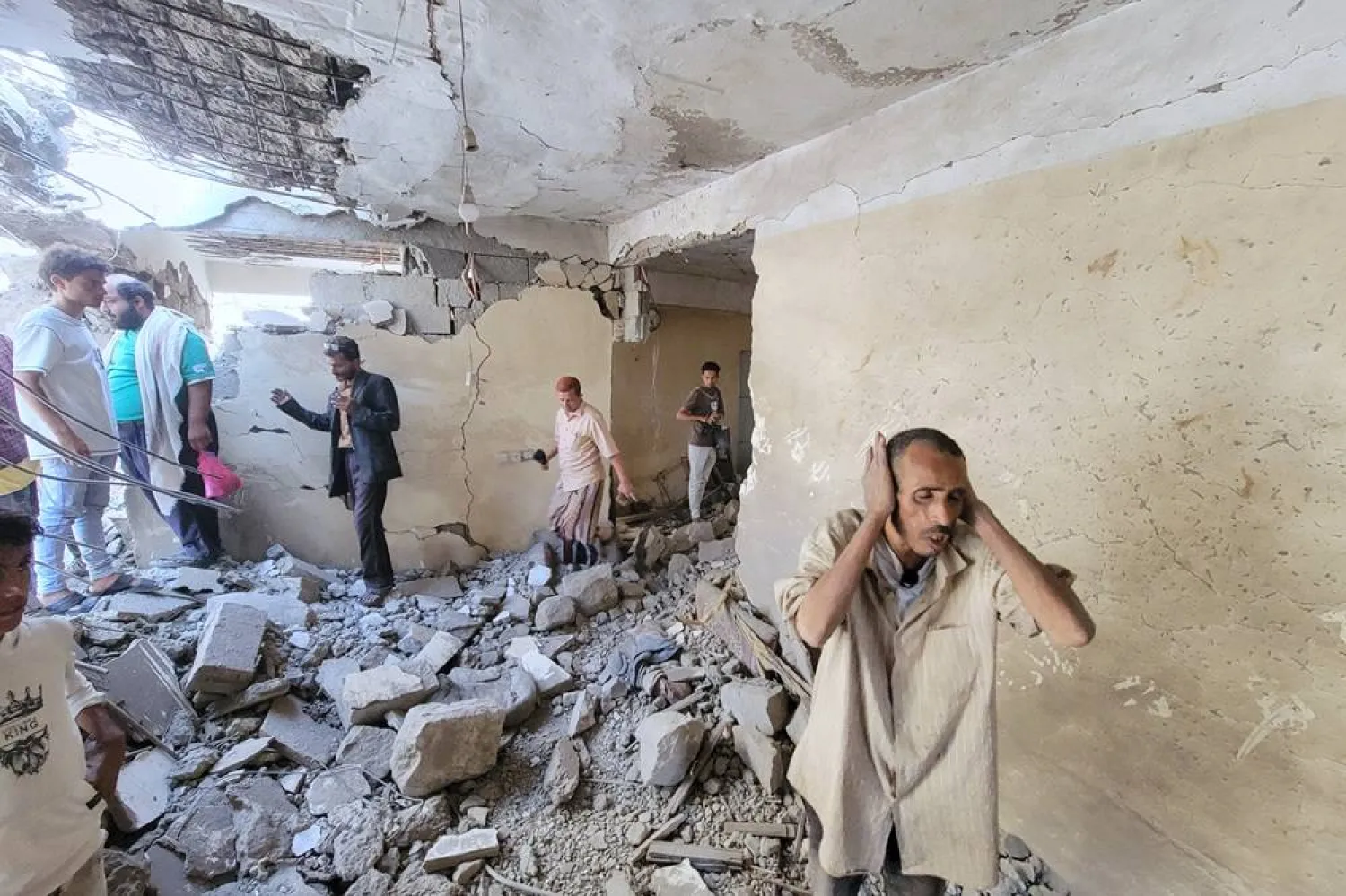
 Residents walk on debris of their homes at Seina district in Taiz, Yemen, after a missile strike, Tuesday, Oct. 20, 2026. (AP)
Residents walk on debris of their homes at Seina district in Taiz, Yemen, after a missile strike, Tuesday, Oct. 20, 2026. (AP)
TT

Houthis Commit More Violations in Taiz and Lahj, Drawing EU Condemnation

 Residents walk on debris of their homes at Seina district in Taiz, Yemen, after a missile strike, Tuesday, Oct. 20, 2026. (AP)
Residents walk on debris of their homes at Seina district in Taiz, Yemen, after a missile strike, Tuesday, Oct. 20, 2026. (AP)

The Yemeni Network for Rights and Freedoms documented 164 crimes and violations committed by the terrorist Houthis within 48 hours across the Taiz and Lahj governorates, reflecting the widening scope of their targeting of civilians and vital infrastructure in southwestern Yemen.

The attacks involved firing around 450 projectiles at populated areas, killing 28 civilians and injuring 57 others. The surge in violence coincided with the targeting of a health center in Lahj and a popular market in Taiz, drawing sharp condemnations from government officials, human rights organizations, and the European Union.

This Houthi offensive comes amid mounting humanitarian pressure on local populations, particularly in Taiz, which continues to endure a relentless blockade alongside severe restrictions on the delivery of supplies and aid.

Meanwhile, military clashes are expanding across the southern and western fronts of the governorate, as civilian and medical facilities are increasingly transformed into targets.

In its report on Tuesday, the Network stated that the death toll reached 28 civilians, including five children and three women. Furthermore, 57 others were injured, including 14 children and six women, with 10 healthcare workers among the casualties.

According to the report, the Houthi violations included killing and injuring individuals through shelling and sniper fire, committing two massacres against civilians, abduction, and detention. The acts also involved targeting residential neighborhoods, public roads, ambulance crews, and private vehicles, alongside recruiting young people from marginalized groups and subjecting them to enlistment programs.

Among the most prominent incidents documented by the rights network was the Houthi targeting of the Al-Saqiya health center in the Al-Mudharaba district in Lahj on Monday with a ballistic missile.

The attack caused deaths and injuries among medical personnel and triggered a wave of official condemnations, as it was a direct assault on a facility providing humanitarian services to civilians.

The Ministry of Public Health and Population announced that the attack resulted, according to an initial toll, in the death of five people, including three members of the medical team working at the center, and the injury of 15 others, including seven healthcare workers.

It said the attack was a blatant violation of humanitarian, international laws and norms that guarantee the protection of medical facilities, their workers, patients, and visitors, warning of the dangerous repercussions of such attacks on the capacity of health facilities, which are already limited, to continue providing their services.

It called on the United Nations, the international community, and humanitarian organizations, foremost among them the World Health Organization and the International Committee of the Red Cross, to condemn the attack, investigate it, hold those responsible accountable, and work toward providing the necessary protection for health facilities, medical personnel, and ambulance crews.

Yemeni Prime Minister Shaya Al-Zindani described the attack as a "full-fledged terrorist crime" and a violation of international humanitarian law.

It reveals a pattern of targeting civilian and medical facilities, and an assault on citizens' rights to life and medical treatment, he said in a telephone call with Lahj Governor Murad Al-Halimi.

European condemnation

In a statement on Monday, the European Union “strongly condemned the Houthis' continued military escalation in Yemen and their attacks against Saudi Arabia, particularly those targeting civilians and civilian infrastructure.”

“We express our full solidarity with the legitimate Government of Yemen and the Kingdom of Saudi Arabia and their people,” it declared.

“The recent attacks against Aden’s Al-Maashiq palace, the continued siege of Taiz, the military action along Yemen's west coast, and attacks against Saudi Arabia, were heinous acts. All Houthi military action must end immediately,” it demanded.

“We call on all actors, including Iran to cease all military support to the Houthis, in violation of several United Nations Security Council resolutions,” it added.

“The EU reaffirms its firm commitment to Yemen's unity, sovereignty, independence and territorial integrity. We remain fully committed and will increase our support to the legitimate Government of Yemen and the Presidential Leadership Council, including in their efforts to advance reforms, strengthen governance and address the deteriorating economic, humanitarian and human rights situation,” it said.

“The EU reiterates that there can be no military solution to the conflict in Yemen and reaffirms its full support to the UN Special Envoy and for UN-led peace efforts in Yemen, in line with relevant UN Security Council Resolutions, including UNSCR 2216, aimed at achieving an inclusive, sustainable, Yemeni-led and Yemeni-owned political settlement,” it stressed.

It continued: “The Houthis’ military escalation and the crisis of access and affordability of essential goods across the country compound an already catastrophic humanitarian situation, worsening food insecurity and lack of access to healthcare and safe water, with more than 22 million people in need of assistance.”

The city of Taiz currently shelters 800,000-950,000 civilians, including displaced persons.

“The city is once again under siege, threatened by a major Houthi military build-up. The use of starvation of civilians as a method of warfare is prohibited under international law. Civilians must not be used as a shield for military objectives or operations. We call on the Houthis to urgently open a humanitarian corridor in Taiz and ensure safe, rapid and unhindered humanitarian access to all those in need,” said the EU statement.

“The safety and freedom of humanitarian staff to operate must be ensured at all times. All parties to the conflict must comply with international humanitarian and human rights law, including the obligation to protect civilians and civilian infrastructure,” it said.

“We reiterate our call for the immediate and unconditional release of all humanitarian personnel including the 70 UN staff who remain arbitrarily detained by the Houthis in Sanaa.”