Four Syrians, One Lebanese Involved in Capture of ‘Baniyas Butcher’ in Lebanon

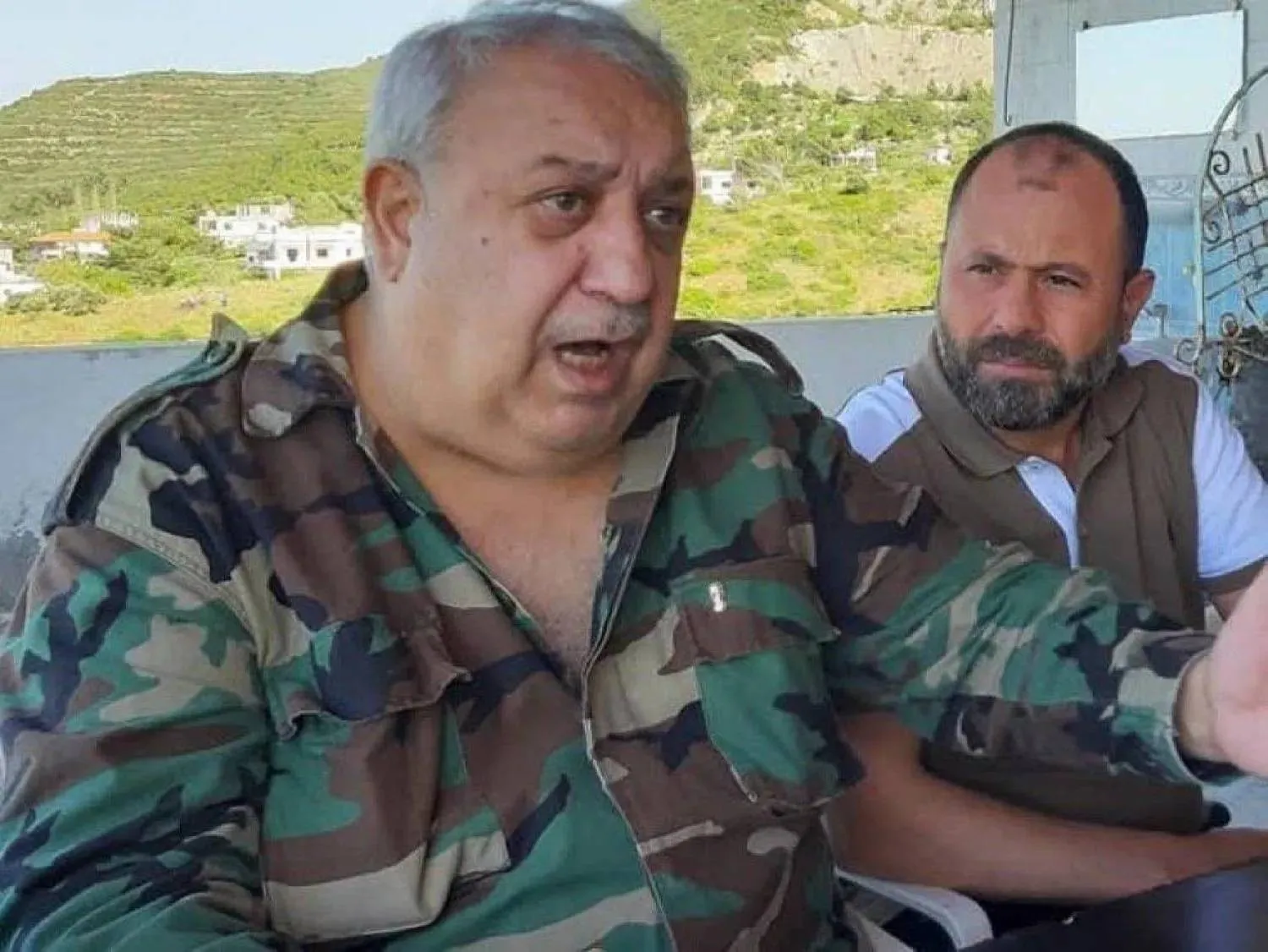
Ali Kayali (Mihrac Ural) in an undated file photo circulated on Syrian social media
TT

Four Syrians, One Lebanese Involved in Capture of ‘Baniyas Butcher’ in Lebanon

Ali Kayali (Mihrac Ural) in an undated file photo circulated on Syrian social media

Lebanese judicial and security authorities are investigating the abduction of former Syrian regime officer Ali Kayali, also known as Mihrac Ural, from Mount Lebanon and his transfer to Syria in a covert operation that Lebanese officials say was carried out without their prior knowledge.

Accounts differed over how the operation was carried out and the route taken by those who seized him from the Metn area of Mount Lebanon into Syrian territory.

A day after the Syrian side announced the operation without any prior coordination with the Lebanese state, Public Prosecutor at the Court of Cassation Judge Ahmad Rami al-Haj issued judicial instructions to Lebanese Army Intelligence, the Internal Security Forces’ Information Branch and General Security, tasking them with investigating the circumstances of the operation and identifying those who carried it out.

Four Syrians and one Lebanese

A judicial source said preliminary information indicated that the operation was “carried out by four Syrians and one Lebanese.”

The source told Asharq Al-Awsat that tracking the phones used by those involved in the operation, as well as lines active around Kayali’s home, showed that they seized him inside his residence in Mansourieh before taking the coastal road through Jounieh and Tripoli to the Abboudieh border crossing in Akkar.

The source denied reports that Kayali had been taken to the Syrian Embassy compound in Yarzeh, saying footage from the embassy and surrounding surveillance cameras had been secured and showed that “he was never taken to the embassy.”

Syrian authorities accuse Kayali of responsibility for the 2013 massacres in al-Bayda and Baniyas on Syria’s coast, when he was leading an armed group fighting alongside forces loyal to Bashar al-Assad.

Human Rights Watch documented the execution of at least 248 people in the two areas, including women and children, and described the killings in al-Bayda as among the “deadliest instances of mass summary executions” in the Syrian conflict.

Conflicting accounts

Syrian and Lebanese accounts of the abduction differed.

Agence France-Presse quoted a Syrian security source as saying the operation “took place in coordination with the Lebanese side.”

The Lebanese judicial source, however, denied that Lebanese authorities had prior knowledge of it, saying Lebanese security agencies “were unaware that Kayali was in Lebanon or that he had been abducted until the Syrian side announced it.”

The source said security investigations conducted in recent hours showed that Kayali had entered Lebanon clandestinely with his wife in 2025 and had remained in hiding, moving with extreme caution until he was abducted.

According to information reported by Türkiye’s Anadolu news agency, Kayali was born in 1956 in Hatay province in southern Türkiye, near the Syrian border.

Ankara also accuses him of having led an armed group known as the “Syrian Resistance” and the “Popular Front for the Liberation of the Sanjak of Iskenderun,” and of involvement with Syrian intelligence under Bashar al-Assad in the Reyhanli bombings that killed 53 people.

Officers taking refuge in Lebanon

The incident has again brought attention to the flight of dozens of officers from the former Syrian regime to Lebanon following Bashar al-Assad’s departure and the fall of his government in late 2024.

The Lebanese judicial source said the case could not be separated from the arrest several weeks ago of Suleiman Hilal al-Assad, or the earlier detention of Major General Adel Issa inside the Syrian Embassy in Beirut. Lebanese judicial authorities later decided to hand Issa over to Damascus.

The source said the succession of such cases “indicates the presence in Lebanon of officers and figures from the former regime,” adding that some may be “receiving security protection from parties allied with the Assad regime, such as Hezbollah and others, while some are residing illegally or using forged documents to avoid having their identities discovered.”

The judicial source stressed that Lebanon “is cooperating with the Syrian authorities on correspondence concerning wanted figures from the former regime, and is also cooperating with international bodies on arrest requests and Interpol notices involving Syrian security officials accused of serious violations.”

Among the most prominent are former National Security Bureau chief Major General Ali Mamlouk, former Air Force Intelligence chief Major General Jamil Hassan, and Brigadier General Abdul Salam Mahmoud, former head of the Air Force Intelligence investigation branch.

The source said, however, that “no information has emerged indicating that they are present on Lebanese territory.”


Egypt, Iran FMs Discuss Regional Developments

Egypt's Foreign Minister Badr Abdelatty speaks during a plenary session of the International Institute for Strategic Studies (IISS) Manama Dialogue 2026 in Manama on October 31, 2026. (AFP)
TT

Egypt, Iran FMs Discuss Regional Developments

Egypt's Foreign Minister Badr Abdelatty speaks during a plenary session of the International Institute for Strategic Studies (IISS) Manama Dialogue 2026 in Manama on October 31, 2026. (AFP)

Egyptian Foreign Minister Badr Abdelatty held telephone talks on Thursday with his Iranian counterpart Abbas Araghchi on the latest regional developments and efforts to ease tensions, reported dpa.

An Egyptian Foreign Ministry spokesman said the ministers exchanged views on the latest developments and concerns over the possibility of renewed military conflict and its impact on regional and international security and stability.

Abdelatty underlined the importance of prioritizing diplomatic solutions and urged all parties to demonstrate the necessary openness to reach a political settlement to the crisis.

He stressed that exercising flexibility and arriving at compromises would serve the interests of all sides and prevent the region from sliding into a new wave of escalation, which could otherwise yield severe political, economic, and humanitarian repercussions for the region and the entire world.


Yemen Warns against Houthis Using Red Sea to Extort Int’l Community

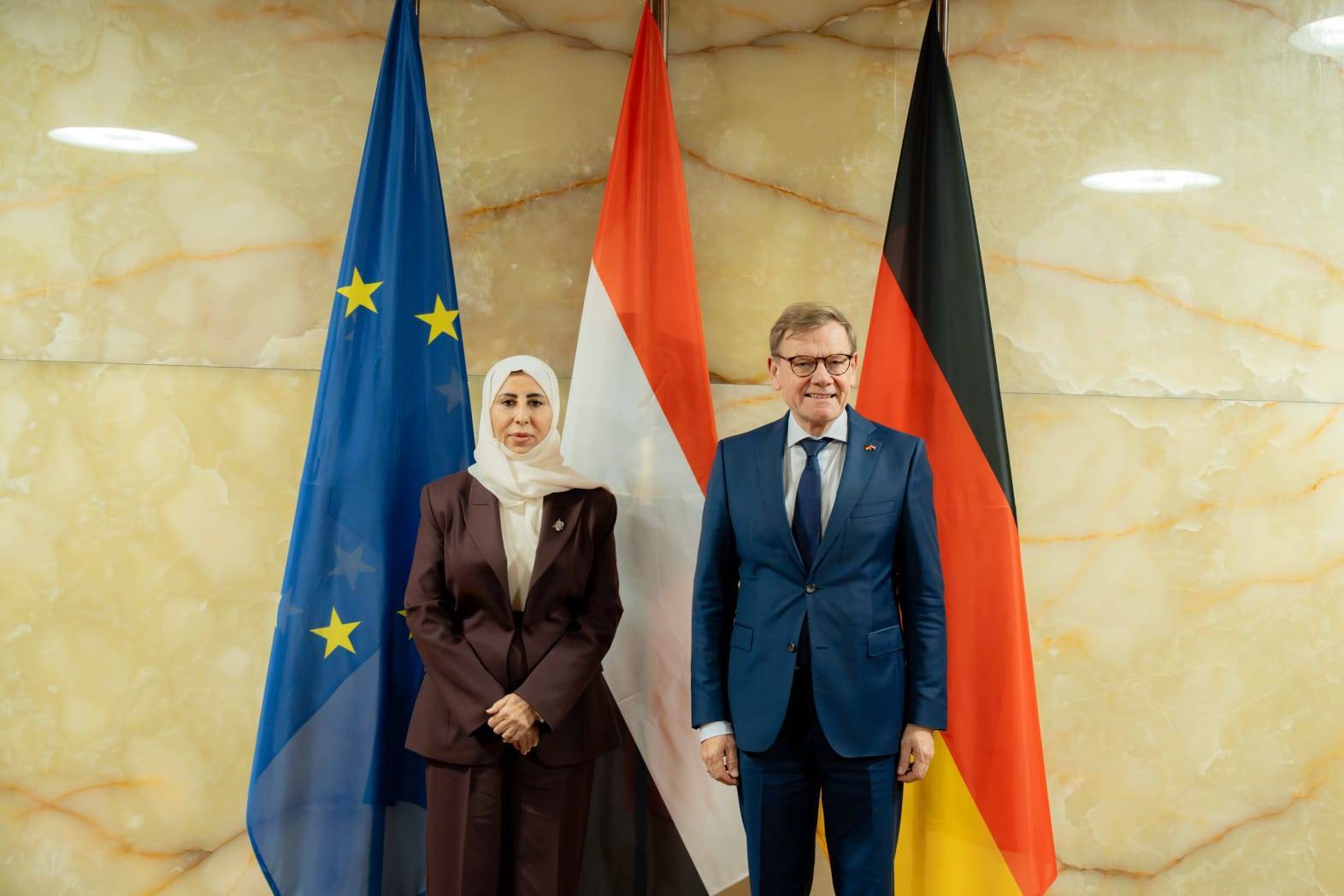
The Yemeni and German delegations meet in Berlin. (Yemeni government media)
TT

Yemen Warns against Houthis Using Red Sea to Extort Int’l Community

The Yemeni and German delegations meet in Berlin. (Yemeni government media)

The Yemeni government warned of an expanding threat posed by the terrorist Houthi militia to regional security and international navigation, citing growing Iranian involvement in managing Houthi military operations and growing ties with terrorist organizations in the Horn of Africa. The warning coincided with continued Houthi attacks on civilians and the tightening of the siege on the city of Taiz.

Yemeni Foreign Minister Afrah Al-Zouba presented these concerns during a series of meetings in Berlin with German officials and experts at think tanks and research centers specialized in Yemeni affairs.

The discussions addressed the developments of the Houthi escalation since last June, as well as its military, humanitarian, and security repercussions on Yemen and the wider region.

Al-Zouba stated that the Houthis intensified their attacks following the landing of an aircraft belonging to Iran's Mahan Air, which is linked to the Iranian Revolutionary Guard Corps (IRGC), at Hodeidah airport.

She explained that the plane carried Iranian experts, funds, and advanced weaponry to support Houthi military operations, in direct violation of Yemeni sovereignty and international laws and resolutions.

The escalation reached the west coast and Bab al-Mandeb regions prior to a government deployment under Operation Dawn of Yemen.

Authorities cautioned against renewed efforts by the militia to expand along the west coast, threaten shipping lanes in the Red Sea and Bab al-Mandeb Strait, and leverage maritime corridors to pressure the international community.

Meeting with German Foreign Minister Johann Wadephul, Al-Zouba warned that the Houthi threat extends beyond Yemen's borders, pointing to the militia’s targeting of Saudi territory and international shipping lanes, and the resulting risks to regional security and global energy and food supplies.

Yemeni Foreign Minister Afrah Al-Zouba meets with her German counterpart Johann Wadephul. (Yemeni government media)

She presented the Yemeni government's announcements regarding the participation of experts from the IRGC and Hezbollah in managing Houthi operations, in addition to the group's links with terrorist organizations in the Horn of Africa, chief among them the Somali Al-Shabaab movement.

These ties raise the level of threat to maritime security and regional stability, she warned.

The two sides discussed ways to develop the capabilities of the Yemeni Coast Guard to protect territorial waters and secure international trade routes, while strengthening bilateral consultation and information exchange regarding security developments in Yemen and the region.

Al-Zouba delivered a written letter from Chairman of the Presidential Leadership Council Dr. Rashad Al-Alimi to German Chancellor Friedrich Merz.

The message addressed bilateral relations, regional issues, and the latest updates on the situation in Yemen.

On the humanitarian level, Al-Zouba highlighted the Houthi siege on the city of Taiz, the targeting of civilian and health facilities, and the resulting closure of medical centers, medicine shortages, and lack of safe corridors, warning of catastrophic impacts on civilians.

She detailed the Houthi recruitment of child soldiers, indiscriminate landmine deployment, and the ongoing detention of UN and humanitarian personnel, noting the death of several detainees including UN staff member Mohammed Ibrahim Al-Shami.


Houthis Under Govt Pressure in al-Jawf, Lahj

Yemeni troops hold a position during clashes with Iran-backed Houthis in Yemen's northwestern al-Jawf province on November 2, 2026. (AFP)
TT

Houthis Under Govt Pressure in al-Jawf, Lahj

Yemeni troops hold a position during clashes with Iran-backed Houthis in Yemen's northwestern al-Jawf province on November 2, 2026. (AFP)

Yemeni government forces have advanced to a new phase of offensive operations against the Houthis in al-Jawf and Lahj governorates, according to military developments reflecting the expanding scope of Operation Dawn of Yemen.

The shift to offensive maneuvers coincided with government forces thwarting Houthi attempts to recapture previously lost positions in Marib and Taiz.

In the latest field updates, government forces successfully secured their positions across strategic mountain ranges in eastern Al-Jawf. This follows tactical advances into areas formerly controlled by the terrorist Houthi group.

Military officials said the breakthrough reinforces current positions and establishes the necessary conditions to sustain the advance toward al-Hazm, the governorate's capital.

Armed forces spokesman Majed al-Nuzaili said troops managed to recapture positions from the Houthis in several regions in al-Jawf.

He stressed that the operations will continue to reclaim positions from the group.

Government forces have advanced through the al-Dahidha mountain range, breaching Houthi fortifications and seizing military equipment. Airstrikes and drone operations also targeted Houthi strongholds and weapons depots across several locations.

Yemeni forces sit on a pick-up truck mounted with a heavy machine-gun as they hold a position during clashes with Iran-backed Houthis in Yemen's northwestern al-Jawf province on November 2, 2026. (AFP)

This territorial gain holds strategic importance due to the mountainous terrain and its proximity to routes leading to al-Hazm, the Houthis' primary administrative and military hub in the governorate. Government forces are currently working to secure these newly recaptured positions before pressing forward with further operations.

In an attempt to contain this advance, the Houthi group launched a broad attack on government force positions in the Halhalan area. However, government forces managed to repel the assault and force the militants to retreat, said government military sources.

In Lahj, government forces have regained the initiative after reorganizing their military deployment along the Tur al-Baha axis, launching a swift counteroffensive to recapture areas seized by the Houthi group in the al-Maqatirah district.

Supported by warplanes, government troops breached the border of the district and advanced into Bani Abdan village, where heavy fighting continues in the surrounding vicinity. Military operations also expanded to target Houthi positions in the Hayfan and al-Zuraiqah al-Sham regions of the neighboring Taiz governorate.

These latest field updates indicate that government forces have successfully shifted from containing the initial Houthi push in al-Maqatirah to executing direct offensive operations to reclaim lost ground.

Military officials said the transition follows a strategic reinforcement of troops and a reorganization of the military command along the Tur al-Baha axis, effectively shifting the balance of power on this front.